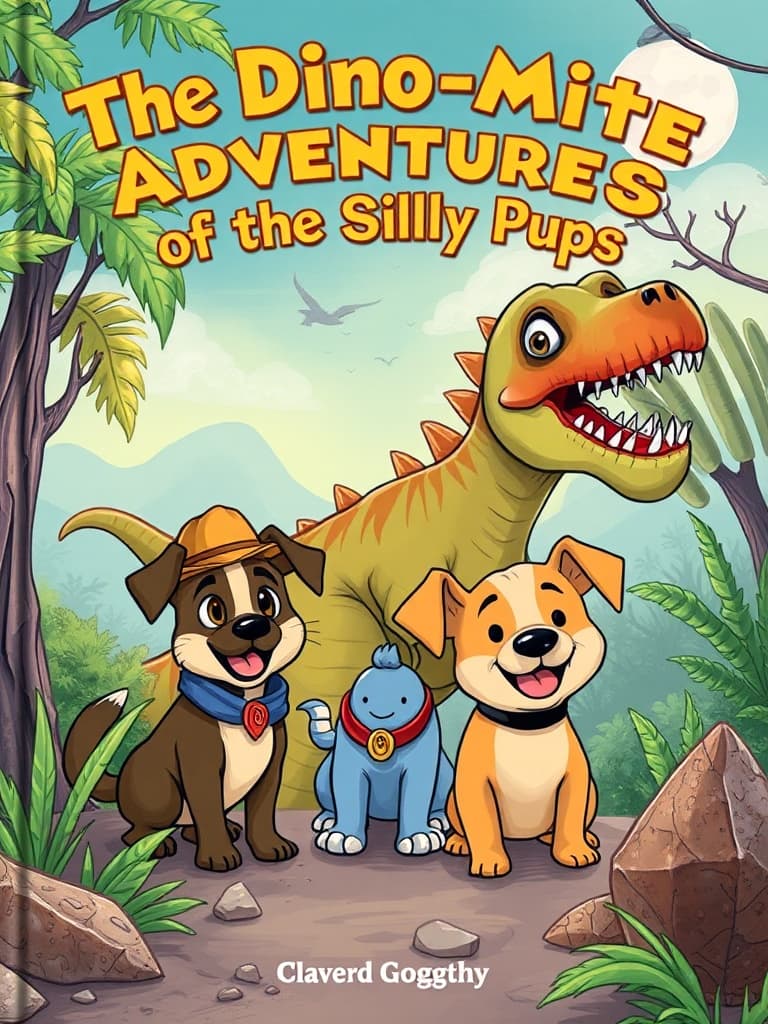
About this book
The Dino-Mite Adventures of the Silly Pups
57
0
48
0
Miss Lily takes the Spookyween Detective Agency and Friends to The Natural History Museum to Learn about Dinosaurs and Prehistoric Life Baby Blue,Russo and Teddy meet a super nice boy named Jared who also loves dinosaurs...
Chapters
- 1The Great Fossil Frenzy Begins!Miss Lily, with a twinkle in her eye and a binder full of lesson plans, gathers the Spookyween Detective Agency and Friends – Baby Blue, Russo, and Teddy – for an exciting announcement. The air in their clubhouse, usually buzzing with talk of mysteries and capes, is about to be filled with the thunderous roars of the past. Miss Lily unveils the day's grand adventure: a field trip to the prestigious Natural History Museum, with a special focus on the awe-inspiring world of dinosaurs and prehistoric life. The pups' ears perk up, their tails wagging furiously, as Miss Lily paints a picture of towering skeletons, ancient fossils, and creatures that once ruled the Earth. Baby Blue, ever the explorer, bounces on his paws, already imagining himself face-to-face with a Tyrannosaurus Rex. Russo, loyal and eager, looks to his friends, ready for whatever excitement awaits. Teddy, the thoughtful one, mentally prepares to absorb every fascinating fact Miss Lily shares, her brow furrowed in anticipation. Miss Lily emphasizes the importance of observation, respect for the museum's artifacts, and the joy of learning. She reminds them of their detective skills, suggesting that even in a museum, there might be subtle clues to uncover, not of crime, but of history. The pups are buzzing with anticipation, their minds already racing with questions about the colossal beasts that once roamed the planet. The chapter will establish the core excitement for the trip, introduce the main characters' personalities in relation to this new adventure, and set the stage for the museum visit. It will detail Miss Lily's enthusiasm for education and her knack for making learning an adventure. The pups' individual reactions will be highlighted: Baby Blue's boundless curiosity, Russo's eagerness for shared experiences, and Teddy's intellectual engagement. The chapter ends with the pups practically vibrating with excitement as they pile into Miss Lily's sturdy minivan, ready to embark on their 'Dino-Mite' expedition. The initial setting will be their cozy, slightly cluttered clubhouse, filled with detective gear and drawings of their past exploits, contrasting with the grand, echoing halls of the museum they are about to enter. Miss Lily's dialogue will be encouraging and informative, sparking the children's imaginations. The emotional arc will move from anticipation and excitement to pure, unadulterated joy. Continuity notes: The Spookyween Detective Agency and Friends are established as a group of curious and adventurous children. Miss Lily is their capable and enthusiastic leader. The specific focus is dinosaurs and prehistoric life. Ending hook: The minivan pulls up to the grand entrance of the Natural History Museum, its imposing facade promising wonders within, and the pups tumble out, ready to explore.
- 3Jared: A Fellow Fossil FanaticFollowing Baby Blue's enthusiastic question about 'living' dinosaurs, Miss Lily smiles gently, explaining that while there are no dinosaurs alive today like the ones they see as fossils, there are many fascinating creatures that have descended from them, and the museum has many more wonders to explore. They continue their journey through the Hall of Dinosaurs, moving towards exhibits detailing the Mesozoic Era, with dioramas depicting ancient landscapes and smaller fossil finds. It's in a slightly less crowded alcove, dedicated to the smaller theropods and early bird fossils, that they encounter Jared. He's a boy of similar age to the pups, his face alight with an intense, focused passion as he examines a display case filled with fossilized eggs. His backpack is adorned with dinosaur patches, and he’s holding a well-worn field guide. Baby Blue, always the first to strike up a conversation, trots over, his tail giving a tentative wag. 'Wow! You really like dinosaurs too!' Baby Blue exclaims, pointing at Jared's patches. Jared looks up, a friendly, open smile spreading across his face. 'Oh, yeah! They’re the best! My favorite is the Velociraptor, but I love all of them,' he says, his voice brimming with enthusiasm. Russo sidles up, intrigued by Jared’s obvious knowledge. 'Velociraptors? They were so fast and smart, right?' Jared nods vigorously. 'Exactly! And they hunted in packs. Imagine seeing that!' Teddy, usually a bit reserved around new people, is drawn in by Jared's genuine passion and the depth of his knowledge. She steps closer, observing the fossilized eggs. 'Did you know that some dinosaur eggs had very thick shells to protect them from predators and the elements?' she asks, her analytical nature surfacing. Jared’s eyes widen in pleasant surprise. 'That’s a great point! And some had speckled patterns, like modern birds, to help with camouflage,' he adds, quickly referencing a page in his field guide. A natural connection forms between the pups and Jared. They begin to share their favorite dinosaur facts, pointing out exhibits they found particularly interesting, and discussing theories about dinosaur behavior. Jared is not just knowledgeable; he's incredibly kind and encouraging, making them feel instantly comfortable. He asks them about their favorite dinosaurs and their impressions of the museum so far. Miss Lily observes the interaction with a warm smile, recognizing the spark of a new friendship. The chapter will focus on the introduction of Jared, emphasizing his shared passion for dinosaurs, his friendly demeanor, and his immediate rapport with Baby Blue, Russo, and Teddy. The setting will be a specific, perhaps slightly less overwhelming, section of the dinosaur exhibit, allowing for focused interaction. The pups' individual personalities will be highlighted in how they interact with Jared – Baby Blue's outgoing nature, Russo's social curiosity, and Teddy's intellectual engagement. Jared's role as a catalyst for further discovery will be hinted at. The emotional arc will be one of happy coincidence, burgeoning friendship, and shared enthusiasm. Continuity notes: Jared is introduced as a new character who shares the pups' interest. The foundation for a strong friendship is laid. The pups are still exploring the dinosaur exhibits. Ending hook: As they discuss their favorite parts of the exhibit, Jared suddenly says, 'You know, I heard a rumor... about a hidden exhibit somewhere in the museum. Something really special.' His eyes gleam with a hint of mystery.
- 4The Scroll of SecretsJared’s whispered mention of a ‘hidden exhibit’ ignites the detective instincts within Baby Blue, Russo, and Teddy. Their ears perk up, and their tails give an excited twitch. Miss Lily, overhearing the hushed conversation, raises an eyebrow with mild interest, encouraging them to explore their curiosity while reminding them to stay within sight. The pups, now a united front with their new friend Jared, decide to investigate this intriguing rumor. They move away from the main dinosaur displays, their eyes scanning the less-trafficked areas of the museum. They venture into a quieter wing, perhaps one dedicated to early human history or ancient civilizations, where the displays are more subdued and the crowds thinner. This section of the museum is characterized by dimmer lighting, glass display cases filled with pottery shards, ancient tools, and faded tapestries. The air here feels heavier, more still, as if holding onto centuries of forgotten stories. While examining a display of archaic navigational instruments – astrolabes, sextants, and ancient compasses – Jared notices something out of place. Tucked away behind a rather dusty, uninteresting diorama of Bronze Age farming, almost entirely obscured from view, is a narrow recess. His curiosity piqued, he gently pushes aside a loose flap of fabric used to cover the diorama. Behind it, wedged between the back of the display and the wall, is a rolled-up document, tied with a faded piece of twine. It looks incredibly old, its parchment brittle and yellowed with age. 'Whoa, what's this?' Jared murmurs, carefully extracting it. Baby Blue, Russo, and Teddy crowd around, their detective hats metaphorically on. The document is a map, but not like any map they've seen before. It's drawn on what appears to be aged vellum, with intricate, hand-drawn lines and symbols that are unfamiliar. There are no modern place names, only stylized drawings of museum features – perhaps a specific statue, a grand staircase, or a distinctive archway – interspersed with strange, cryptic markings. The ink is faded, and the edges are ragged. 'It looks like a map!' exclaims Baby Blue, his eyes shining. 'A map to what?' Russo wonders, a thrill of adventure coursing through him. Teddy peers closely, her analytical mind already trying to decipher the symbols. 'These aren't like any letters I know,' she observes. 'They look more like… pictures, or codes.' The map itself is a puzzle, hinting at a journey through the museum's less-explored territories. The chapter will focus on the discovery of the map, emphasizing its mysterious nature and its potential to lead to the rumored hidden exhibit. The setting shifts to a quieter, less-visited part of the museum, creating an atmosphere of subtle intrigue. The pups’ detective skills are activated, and their collaboration with Jared begins in earnest. Teddy’s analytical nature is highlighted as she begins to process the map’s symbols. The emotional arc is one of discovery, excitement, and the thrill of uncovering a secret. Continuity notes: The map is the central object of discovery. It is old, cryptic, and appears to be a guide to somewhere within the museum. Jared is instrumental in finding it. Ending hook: As they unfurl the map fully, Teddy points to a symbol near the edge. 'This symbol… it looks like a fossilized fern. And it’s next to a drawing of that big, spiral staircase in the Mesozoic wing, isn't it?'
- 6The Cipher of the AncientsThe dead-end corridor, marked by the enigmatic keyhole symbol on the map and the dark tapestry, presents a significant puzzle. Russo is hesitant, convinced they've hit a wall, while Baby Blue is already trying to push at the tapestry, hoping for a secret passage. Jared, ever observant, notices that the tapestry isn't just decorative; it seems to be woven with subtle patterns that, if you look closely, are not random. Teddy, meanwhile, is intensely focused on the map, comparing the 'keyhole' symbol to other markings they've encountered. 'Wait,' she says, her voice filled with dawning realization. 'The keyhole isn't a real keyhole. Look at the symbols around it on the map. They're the same ones we saw near the exhibit of ancient writing tablets!' She points to a section of the map where similar, abstract symbols are arranged in a specific sequence. These tablets, displayed earlier in their journey, featured cuneiform script and other archaic forms of writing. The group revisits the memory of that exhibit, trying to recall the patterns. Teddy realizes that the symbols on the map, when placed in the sequence indicated, form a sort of code or cipher. She remembers seeing some of the same symbols on the tapestry itself, woven into its intricate design. 'It’s not a keyhole to open a door,' Teddy explains excitedly, 'it's a key to deciphering the tapestry! We need to find the symbols on the tapestry that match the sequence on the map, and then… maybe they mean something specific!' Working together, they carefully examine the tapestry. Baby Blue, with his sharp eyes, spots the first symbol from the sequence. 'Here it is!' he calls out. Jared helps him trace the pattern. Russo, overcoming his caution, uses his flashlight to illuminate the darker parts of the fabric, revealing more of the sequential symbols. Together, they identify the entire sequence woven into the tapestry. The challenge now is to understand what this sequence means. Teddy, recalling the ancient writing exhibit, suggests that the symbols might represent sounds or concepts from an ancient language. 'If we can match these symbols to the ones on the writing tablets, maybe we can translate them,' she proposes. They recall the layout of the writing tablet exhibit and decide to backtrack slightly, armed with their newfound understanding. Miss Lily, observing their focused collaboration, offers subtle guidance, perhaps pointing them towards the general direction of the ancient writing exhibit without giving away the solution. The chapter will focus on the intellectual challenge of deciphering the map's symbols, highlighting Teddy's analytical skills and the collaborative effort of the entire group. The setting will involve navigating back to a previous exhibit (ancient writing) to gain context, then returning to the tapestry, emphasizing the cyclical nature of detective work. The symbols on the map and tapestry will be described in detail, and the process of deciphering them will be the central conflict. The emotional arc will be one of intellectual triumph, frustration followed by breakthrough, and growing confidence in their problem-solving abilities. Continuity notes: The map's cryptic symbols are the focus. Teddy's analytical skills are key to unlocking their meaning. The group works collaboratively to decipher a code. Ending hook: After painstakingly matching the symbols and consulting their memories of the ancient writing exhibit, Teddy exclaims, 'I think I've got it! The sequence spells out… 'Press the stone where the guardian sleeps.'' They look around the corridor, searching for a 'guardian'.
- 7Whispers of the Stone GuardianThe deciphered clue, 'Press the stone where the guardian sleeps,' sends a jolt of excitement through the group. They immediately scan their surroundings in the dimly lit corridor, their eyes darting towards any feature that could be interpreted as a 'guardian' or a 'sleeping stone.' Baby Blue, ever the one to act first, points towards a large, somewhat imposing statue of an ancient Egyptian sphinx that stands sentinel at the far end of the corridor, partially shrouded in shadow. 'Look! That looks like a guardian!' he exclaims, his voice echoing slightly. Russo eyes the sphinx warily. 'It looks pretty awake to me,' he mutters, but he sees the logic. Teddy, however, gently corrects him. 'Maybe 'sleeps' means something else. Like, it's a stone guardian that isn't actively moving or part of a main exhibit. It's just… there.' Jared, meanwhile, is examining the base of the sphinx. He notices that some of the stone blocks forming its pedestal are slightly discolored or appear to have been subtly worked, unlike the rougher finishing of the surrounding wall. 'This one,' Jared says, pointing to a particular rectangular stone block at the base of the sphinx's pedestal, 'it looks different. Almost like it doesn't quite fit perfectly.' The stone is smooth, almost unnaturally so compared to the textured walls of the corridor, and its edges seem too precise. It doesn't appear to be a loose stone, but rather a carefully fitted one. The map, they recall, had a symbol near the 'keyhole' clue that looked like a stylized eye – the same symbol Teddy had interpreted as 'look closely.' This stone fits that description perfectly. Baby Blue, emboldened, reaches out to touch the stone. It feels cool and solid beneath his paw. 'So, we press it?' Russo asks, a hint of nervousness in his tone. Miss Lily, observing from a discreet distance, offers a subtle nod of encouragement, trusting the children's process. Teddy advises caution. 'Let's make sure we've checked everything else. The map mentioned 'stone,' plural, in some of the earlier symbols, but this clue is singular. Perhaps there's a specific sequence or way to press it.' Jared uses his flashlight to examine the stone more closely. He notices faint etchings on its surface, almost invisible to the naked eye, that seem to form a subtle pattern. 'There are markings here! They almost look like… a constellation?' he observes. Teddy remembers seeing star charts in another exhibit earlier, perhaps in the astronomy section they briefly passed. The idea of a 'sleeping guardian' could refer to a celestial guardian, like a constellation depicted in stone. They debate whether to press it, how to press it, and if there’s a specific order. Baby Blue, impatient but trusting his friends, agrees to let Teddy and Jared take the lead. Jared gently presses the stone. Nothing happens. They try pressing it again, harder. Still nothing. Russo suggests maybe it needs to be pushed in a specific spot. Teddy points to a small indentation on the stone, barely visible, which might correspond to the 'eye' symbol from the map. 'Try pressing right here,' she instructs. Jared presses the indentation. With a soft, almost imperceptible click, the stone recedes slightly into the pedestal. A low grinding sound emanates from the wall behind the tapestry. The tapestry itself begins to shift, revealing not a solid wall, but the edge of a hidden doorway. The chapter will detail the process of identifying and interacting with the 'stone guardian,' culminating in the discovery of the hidden doorway. The setting will be the corridor with the sphinx statue and the tapestry. The focus will be on interpreting the deciphered clue and applying it to their surroundings. The pups' individual skills and their collaborative problem-solving will be central. The emotional arc will be one of suspense, anticipation, and the thrill of a major breakthrough. Continuity notes: The 'guardian' and 'sleeping stone' are identified. The clue leads to the activation of a hidden mechanism. A hidden doorway is about to be revealed. Ending hook: As the grinding sound intensifies and the tapestry slowly pulls aside, a dark, mysterious passage is revealed beyond, beckoning them forward into the unknown.
- 12The Secret's Out (Almost!)Dr. Albright’s pronouncement that their discovery will be instrumental in the exhibit's upcoming debut sends a thrill of importance through Baby Blue, Russo, Teddy, and Jared. They are not just visitors; they are now integral to the museum's narrative of discovery. Miss Lily looks on, a proud smile gracing her lips, as her Spookyween Detective Agency and Friends are recognized for their keen observation and adventurous spirit. Dr. Albright explains that while the exhibit will indeed open to the public soon, the story of *how* it was found – the map, the hidden passage, their detective work – will be a special highlight, a testament to curiosity and exploration. He envisions a small dedication plaque, perhaps, or a mention in the museum's promotional materials, crediting their discovery. The children, puffed up with pride, eagerly ask questions about the public opening. They imagine other children experiencing the same wonder they felt. Dr. Albright assures them that the exhibit will be a major new attraction, drawing visitors from all over. He discusses the potential for educational programs and special events centered around the animatronic dinosaurs. He might even suggest a special 'Kids' Discovery Day' where they could be honored guests. Teddy, ever the pragmatist, asks about the logistics of such a large exhibit. Dr. Albright explains the sophisticated engineering and safety protocols involved, reassuring her (and Russo) that the animatronics are designed with utmost care. Baby Blue is already planning how he’ll tell everyone about their adventure, while Russo is excited about the possibility of returning with more friends. Jared, grateful for the experience and the validation, feels a deep sense of connection to the museum and to his new friends. The conversation shifts to the museum's official announcement. Dr. Albright explains that they will need to coordinate with the museum's marketing and public relations departments. He assures them that the story will be presented in a way that celebrates their achievement without revealing the exact location of the hidden passage (to maintain the element of surprise for future visitors). He might even sketch out a rough idea for a display that tells the story of their discovery. Miss Lily emphasizes the importance of respecting the museum's procedures and the curator’s vision. The chapter will focus on the aftermath of the animatronic reveal, with Dr. Albright outlining the plan for the exhibit's public debut and how the children's discovery will be incorporated into the museum's narrative. The setting remains the animatronic exhibit, now imbued with a sense of purpose and future excitement. The dialogue will center on the implications of their discovery for the museum and the children's roles in it. The emotional arc will be one of pride, accomplishment, and a shared sense of purpose. Continuity notes: The children's discovery is acknowledged as significant by the museum. A plan is forming to highlight their role in the exhibit's opening. The secret of the hidden passage itself will be maintained. Ending hook: As they prepare to leave the hidden chamber, Dr. Albright turns to them with a twinkle in his eye. 'Now, before you go, there's just one more thing… the museum director is dying to meet the brilliant young detectives who've made such an incredible find. Shall we go introduce ourselves?'
- 13Friendship's Fossil RecordThe prospect of meeting the museum director adds another layer of excitement to an already extraordinary day. Baby Blue, Russo, Teddy, and Jared feel a surge of accomplishment and camaraderie as they prepare to be formally recognized. Miss Lily, ever the steady presence, guides them towards the director's office, a place that feels even grander and more important than the curator’s domain. The director, a sophisticated and welcoming individual, greets them warmly, having already been briefed by Dr. Albright. They listen with rapt attention as the director expresses his profound gratitude for their discovery, emphasizing how their curiosity and investigative spirit embody the very essence of a museum – one of discovery, learning, and wonder. He reiterates Dr. Albright’s sentiments about their role in the upcoming 'Prehistoric Awakening' exhibit, perhaps suggesting a special ceremony or a mention in the museum's newsletter. The children, emboldened by the positive attention, start to share their favorite dinosaur facts and their experiences exploring the museum. Teddy recounts the process of deciphering the map, Russo talks about the thrill of navigating the hidden corridors, Baby Blue expresses his awe at the animatronic dinosaurs, and Jared enthusiastically shares his passion for paleontology. During this sharing, the bond between the pups and Jared solidifies further. They are no longer just acquaintances made over a shared interest; they are true friends who have navigated a shared adventure. They instinctively look out for each other, finishing each other’s sentences, and laughing at shared jokes. Baby Blue might share a particularly interesting dinosaur fact he learned from Jared, and Russo might give Jared a friendly nudge of appreciation. Teddy might ask Jared a follow-up question about a specific dinosaur species, and Jared readily provides the answer, demonstrating their easy rapport. Miss Lily observes this deepening friendship with immense satisfaction. She sees how their shared experience has created a unique connection, one built on mutual respect, shared excitement, and a common passion. The director notices this too, perhaps commenting on how wonderful it is to see new friendships blossom through the pursuit of knowledge and adventure. The chapter will focus on the formal recognition of the children's discovery by the museum director, emphasizing the validation of their efforts and the significance of their find. The core of the chapter will be the solidifying of the friendship between the pups and Jared, showcasing their camaraderie and shared experiences. The setting will transition to the museum director’s office, a space that signifies official acknowledgement. The emotional arc will be one of deep satisfaction, mutual respect, and the heartwarming development of a strong friendship. Continuity notes: The friendship between the pups and Jared is cemented through their shared experience and recognition. The museum director formally acknowledges their role in the discovery. Ending hook: As the meeting with the director concludes and they prepare to depart, Jared turns to Baby Blue, Russo, and Teddy. 'This has been the best day ever,' he says, a genuine smile on his face. 'Are you guys free next Saturday? I know another amazing place with some really cool fossils nearby…'
- 15A Promise of Future AdventuresBaby Blue’s wistful wish for a 'real, live dinosaur' hangs in the air as the minivan journeys homeward, a sweet reminder of the boundless imagination that fuels their adventures. Miss Lily, hearing his sentiment, offers a gentle smile. 'Well, Baby Blue,' she begins, her voice warm and encouraging, 'while we can't visit dinosaurs that are alive today in the same way, the world is full of amazing creatures, and you never know what adventures might be just around the corner.' The conversation naturally turns to future possibilities, solidifying the friendships forged during their dino-mite day. Jared, still buzzing from the experience, turns to the pups. 'Hey, that place I mentioned before… the one with the cool fossils? It’s not too far from here. We could go next weekend, if you’re free!' The invitation is met with immediate enthusiasm from Baby Blue and Russo. 'Yeah! Let's do it!' Russo exclaims, already picturing another expedition. Baby Blue adds, 'We can be the Fossil Finding Friends!' Teddy, ever thoughtful, asks, 'What kind of fossils are we talking about? Are they well-preserved? What geological period are they from?' Jared grins, clearly delighted by their eagerness. 'It’s an old quarry,' he explains, 'and people have found ammonites and trilobites there. Really old stuff!' This new prospect excites Teddy, who sees the potential for further scientific discovery. Miss Lily, observing the genuine connection and shared enthusiasm, readily agrees to facilitate another outing, perhaps even coordinating with Jared's parents. She sees the immense value in nurturing these friendships and encouraging their pursuit of knowledge and adventure. The chapter will focus on the solidification of the friendships between the pups and Jared, with concrete plans for future adventures being made. The dialogue will revolve around the invitation to explore a fossil site, allowing Teddy to ask relevant scientific questions and the other pups to express their excitement. Miss Lily's supportive role in facilitating these future plans will be highlighted. The setting will primarily be the minivan, symbolizing their journey home and the transition to future possibilities. The emotional arc will be one of heartwarming friendship, shared excitement for future endeavors, and a sense of hopeful anticipation. Continuity notes: A specific plan for a future adventure (fossil hunting) is made between the pups and Jared. The friendships are clearly established and strengthened. Miss Lily supports these future plans. Ending hook: As the minivan pulls up to Baby Blue's house, Jared waves goodbye, a wide smile on his face. 'See you next Saturday, Fossil Finding Friends! Get ready for some real digging!'
- 16Miss Lily's PrideThe journey home is filled with a comfortable silence, punctuated by the occasional contented sigh or a murmured recollection of a favorite dinosaur. Miss Lily, steering the minivan with a gentle hand, observes her charges. Baby Blue is gazing out the window, a dreamy look on his face, likely replaying the T-Rex’s roar in his mind. Russo is slumped comfortably in his seat, a satisfied exhaustion evident in his posture, perhaps already planning his next imaginary adventure. Teddy is quietly reviewing some notes she jotted down in a small notebook, her analytical mind still processing the day’s wealth of information. And Jared, their new friend, sits beside Teddy, occasionally pointing out landmarks that remind him of a specific fossil formation or geological feature, further cementing their shared passion. Miss Lily feels a profound sense of pride swell within her. This field trip, designed to be educational and fun, had blossomed into something more. It had ignited their curiosity, expanded their knowledge of the natural world, and, most importantly, fostered a genuine, meaningful friendship. She reflects on their individual strengths: Baby Blue’s boundless enthusiasm and bravery, Russo’s loyalty and cautious observation, Teddy’s sharp intellect and analytical skills, and Jared’s infectious passion and helpful nature. She sees how these traits, when combined, created a formidable team, capable of uncovering not just museum secrets but also the value of collaboration and friendship. She recalls their initial apprehension about navigating the less-visited parts of the museum, Russo’s slight nervousness giving way to courage as he trusted his friends. She remembers Teddy’s quiet determination in deciphering the map’s cryptic symbols, and how the others supported her efforts. She thinks of Baby Blue’s uninhibited joy at the animatronic dinosaurs, and Jared’s willingness to share his own knowledge and excitement. Miss Lily understands that the true success of the day wasn't just finding the hidden exhibit, but in the way the children learned, grew, and connected with each other. She feels a deep satisfaction in knowing she has provided them with an experience that will resonate long after the museum visit. The chapter will focus on Miss Lily's internal reflections and her feelings of pride regarding the children's accomplishments, their teamwork, and the new friendships they've formed. The setting will primarily be the minivan, providing a quiet space for her contemplation. Her observations of each child, highlighting their individual contributions and growth throughout the day, will be central. The emotional arc will be one of profound satisfaction, pride, and a quiet acknowledgment of the positive impact of education and shared experience. Continuity notes: Miss Lily reflects on the day's events and the children's growth. The success of the field trip is measured not just by the discovery but by the development of the children and their friendships. Ending hook: As the minivan turns onto their familiar neighborhood street, Miss Lily smiles. 'You know,' she says softly, looking at her passengers, 'that was truly a dino-mite adventure. And I couldn't be prouder of all of you.'
- 18Teddy's Treasure Trove of FactsTeddy’s observation about hidden secrets naturally transitions the conversation towards the more factual and intellectual aspects of their museum experience. While Baby Blue and Russo are still buzzing about the roars and the chases, Teddy, with her characteristic thoughtfulness, begins to meticulously recall and articulate the most profound scientific insights she gained. She’s likely pulling out her notebook again, flipping through the pages filled with scribbled notes and small drawings. 'Okay,' she begins, her voice clear and focused, 'so, the most incredible thing I learned is about the K-Pg extinction event. It wasn't just one thing, but a combination of factors, including the asteroid impact, which caused widespread wildfires and plunged the Earth into darkness for months, blocking the sun.' She might explain the concept of a 'global winter.' Russo, who had previously only thought of dinosaurs as big, scary creatures, is now intrigued by the scientific explanation for their demise. 'So, they didn't just… disappear? Something really bad happened?' he asks, his voice tinged with a newfound understanding of prehistoric fragility. Baby Blue, typically more focused on the action, listens intently, picturing the dramatic scenario Teddy describes. Jared, ever the knowledgeable companion, adds to Teddy's explanation, perhaps mentioning the geological evidence for the asteroid impact, like the Chicxulub crater. 'And the iridium layer found in rock strata all over the world,' he might say, 'that's a key piece of evidence pointing to an extraterrestrial source.' Teddy continues, perhaps delving into the evolutionary lineage. 'And it's fascinating how some small, feathered dinosaurs survived and evolved into modern birds. So, technically, we *are* seeing living dinosaurs every day, flying in the sky!' She might point out a bird flying past the minivan window, connecting the ancient past to the present. She could also discuss the different types of evidence paleontologists use – fossils, trace fossils like footprints and coprolites (fossilized dung), and even the study of modern animals to infer dinosaur behavior. Her detailed recall and structured explanation impress everyone, including Miss Lily, who nods approvingly. The chapter will focus on Teddy’s role in articulating the key scientific learnings from the museum trip, particularly focusing on complex topics like extinction events and dinosaur evolution. This will be presented as her 'treasure trove' of facts, showcasing her intellectual prowess. The setting will likely be the continuing minivan ride, allowing for a more educational segment. The dialogue will be rich with scientific terminology and explanations, delivered in a way that is understandable for children. The emotional arc will be one of intellectual discovery, appreciation for scientific inquiry, and the satisfaction of understanding complex concepts. Continuity notes: Teddy's detailed recall of scientific facts reinforces the educational aspect of the trip. Her explanations provide depth and context to the dinosaurs they saw. Ending hook: As Teddy concludes her explanation of dinosaur evolution, she looks thoughtfully at her friends. 'It makes you realize how interconnected everything is, doesn't it? From a tiny fossil to a massive asteroid, it all tells a story of life on Earth.'
- 19Baby Blue's Big Safari DreamsTeddy's profound scientific insights, while fascinating, often lead Baby Blue’s imaginative mind to drift towards the more tangible, experiential aspects of the prehistoric world. As Teddy discusses extinction and evolution, Baby Blue’s eyes glaze over slightly, his mind conjuring vivid images of lush, primeval jungles teeming with life. He might interrupt Teddy gently, not to dismiss her facts, but to reframe them through his own adventurous lens. 'Wow, Teddy, that's super smart! But when you say 'living dinosaurs,' I imagine running through a jungle, you know? Like a real safari, but with Triceratops instead of giraffes!' His voice is filled with a dreamy yearning. He pictures himself, perhaps clad in khaki explorer gear (a mental image he’s been cultivating since they entered the museum), cautiously navigating through dense foliage, the distant trumpeting of a Parasaurolophus echoing through the trees. He sees himself observing a herd of gentle herbivores grazing peacefully in a sun-dappled clearing, or perhaps spotting a majestic Stegosaurus with its iconic plates silhouetted against a prehistoric sunset. His dreams aren't about scientific classification or extinction events; they're about the raw, untamed experience of encountering these magnificent creatures in their natural habitat. He might even imagine a friendly encounter, perhaps sharing a berry with a small, bird-like dinosaur, or watching a Pterodactyl glide effortlessly overhead. Russo, always ready to join in on an adventure, might add to Baby Blue’s vision. 'Yeah! And we'd have to be super quiet so the T-Rex doesn't hear us!' he adds, injecting a dose of his characteristic caution and excitement. Jared, understanding Baby Blue's imaginative leap, might contribute by describing what the prehistoric landscape might have looked like, based on his knowledge of fossilized plants and ancient climates. 'There would have been giant ferns, cycads, and maybe even early conifers,' he might say, adding a layer of environmental detail to Baby Blue's dream safari. Miss Lily, witnessing Baby Blue's vivid imagination take flight, smiles. She recognizes that this is the essence of wonder – the ability to transport oneself to another time and place, fueled by knowledge and imagination. She sees how the museum trip has ignited this spark within him, transforming abstract facts into tangible, thrilling possibilities. The chapter will focus on Baby Blue’s imaginative interpretation of the dinosaur world, translating the scientific facts into vivid dreams of a prehistoric safari. This will showcase his adventurous spirit and his ability to visualize grand, exciting scenarios. The setting will be the continuing minivan ride, serving as a backdrop for his daydreams. The dialogue will be descriptive and evocative, painting a picture of Baby Blue’s imagined adventures. The emotional arc will be one of pure imagination, wonder, and the joy of dreaming big. Continuity notes: Baby Blue's imaginative response to the museum visit is highlighted, showing how the trip has fueled his dreams of adventure. His dreams are informed by the facts learned, but filtered through his own unique perspective. Ending hook: As Baby Blue describes the thrill of spotting a herd of majestic Brachiosaurus in the distance, he sighs contentedly. 'One day… maybe one day, there will be a way to really travel back in time and see them for real.'
- 20The Museum's Echoing HallsAs the minivan finally pulls up to Baby Blue’s house, the final destination of their extraordinary day, a collective sense of contentment and a touch of wistful farewell settles over the group. The adventure within the Natural History Museum, with its towering skeletons, hidden passages, and astonishing animatronics, has come to an end, but its echoes will resonate long after. Baby Blue, Russo, Teddy, and Jared spill out of the van, their minds still buzzing with the day’s discoveries and the promise of future escapades. They exchange heartfelt goodbyes, promising to see each other again very soon, perhaps even mentioning their upcoming fossil-finding expedition. Miss Lily watches them go, a warm smile on her face, her heart full of pride for the children and the enriching experience they’ve shared. The chapter will focus on the concluding moments of the field trip, capturing the essence of their departure from the museum and their return home. It will emphasize the lingering feelings of wonder, accomplishment, and the strong bonds of friendship that have been forged. The setting will encompass the museum’s exterior as they leave, the minivan ride home, and their individual goodbyes at their respective homes. The dialogue will be reflective, filled with expressions of gratitude, promises for future meetings, and fond farewells. The emotional arc will be one of happy conclusion, lingering excitement, and the warmth of fulfilled friendships. Continuity notes: The field trip officially concludes. The children have successfully learned about dinosaurs, discovered a secret exhibit, and made a new friend. The bonds of friendship are solidified. Ending hook: As Baby Blue waves goodbye to Jared and his friends, he glances back at the imposing facade of the Natural History Museum, now bathed in the soft glow of the setting sun. 'That was truly the best museum day ever,' he murmurs to himself, a wide, satisfied smile spreading across his face.
- 21Learning about Dinosaurs is so much fun..Miss Lily and the Museum Curator have a special surprise for the pups..Let's go into this room boys and girls and We can pretend that We are digging for fossils...
- 22Who wants to do arts and crafts asked the Curator..The puppies became so excited "Yes Please" said the Pups eyes all wide with happy grins...
- 23Who can tell Me the names of the Dinosaurs and what they eat asked Miss LilyI can ,I can said little Teddy.. Ne too said Blue and Russo..arf arf arf said Blaze ,Archie and Robert...
- 24What's Your favourite Dinosaur and why asked the Curator8 love the Tricerotops because it has a nose to bump mea dinosaurs and to knock trees for food said Lanie..
- 25who is hungry asked the Museum Guide...Me Me Me said the.pups..can Jared have lunch with Us Miss Lily..certainly said Miss Lily there are plenty of bronto burgers and dino drinks plus pterodactyl cookies...mmmmmm said everyone .Thank you Miss Lily said Jared with ketchup on his chin...
- 26Let's go outside on the Prehistoric Playground..As the children started to play a roar came out of no where. Out of the sky came screaming and squacking...a great shadow covered the sky..oh My said Archie .look They Are Alive...eeeeeeek. Don't worry they are just pretend they won't hurt You
- 27The Planetarium and the amazing light show about the days of the dinosaur and pre historic manThe puppies and Jared were all in awe...
- 28Out of nowhere across the screen came a parade of every dinosaur of the land and my...followed by all sorts of prehistoric animals and cavemen and women...What's that asked Annie and Charlie?
- 29The children were taken to the gift shop for a big supriseThe puppies because they were all so well behaved received a special stuffed dinosaur toy
- 30Now class I would like for each of You to write a poem about DinosaursEach puppy took out their pencils and papers and wrote a heartfelt poem
- 31What We think about Dinosaurs by the Spookyween Detective AgencyDinosaurs are really neat some have small so have really big feet ..
- 32I'm glad Most Dinosaurs are vegetables and fruit...I'm glad most dinosaurs ate vegetables and fruit be cause if most ate meat I'd have to scoot said Blaze...
- 33Miss Lily Sked..Class can You tell Me what animals We have today came from Dinosaurs?The Pups eyes grew wide...We still have Dinosaurs? Asked Spice the Cat...
- 34Chickens ,dogs,cats,birds, elephants and so many more are from Dinosaurs...They are??? Yipped the class...
- 35Sharks came from much larger fish...Eeeeek said the Puppies...
- 36Where do You think Puppies and Kittens originally come from?The Puppies scratched their heads...
- 37the Cave man drew on walls to record history and their huntsThey did??? asked the Puppies
- 38What do You think Cavemen ate and wore?Ummmmmm ummmm clothes and food...said Charlie puppy
- 39What did the Cavemen use to catch their food...Rabbit snares? Asked Archie
- 40Did the Cavemen go fishing?Miss Lily Sked Lanie,how did the Cavemen catch fish?
- 41How did the Dinosaurs catch food?That's a very good question Blue said Miss Lily...
- 42Can We put on a play about Dinosaurs chimed the class?Time to be Dinosaurs ...
- 43Poems about DinosaursA collection of Poems about Dinosaurs
- 44A poem about herbivores...Oh how sweet the herbivore...
- 45A poem to the T RexOh Mighty scary meat eater...
- 46Oh I wish I was a DinosaurI wish I was a Dinosaur I like the way they roar and snore ..
- 47The Spookyween Detective Agency list of DinosaursA to Z A Aardonyx - An early stage in the evolution of sauropods. Abelisaurus - "Abel's lizard" has been reconstructed from a single skull. Abrictosaurus - An early relative of Heterodontosaurus. Abrosaurus - A close Asian relative of Camarasaurus. Abydosaurus - This sauropod's intact skull was discovered in 2010. Acanthopholis - No, it's not a city in Greece. Achelousaurus - Might this have been a growth stage of Pachyrhinosaurus? Achillobator - This fierce raptor was discovered in modern-day Mongolia. Acristavus - This early hadrosaur lacked any ornamentation on its skull. Acrocanthosaurus - The largest meat-eating dinosaur of the early Cretaceous period. Acrotholus - North America's earliest bone-headed dinosaur. Adamantisaurus - This titanosaur was named 50 years after its discovedy Adeopapposaurus - A close relative of Massospondylus. Aegyptosaurus - Try and guess which country this dinosaur was found in. Aeolosaurus - Could this titanosaur have reared up on its hind legs? Aerosteon - This air-boned dinosaur may have breathed like a bird. Afrovenator - One of the few carnivores ever to be dug up in northern Africa. Agathaumas - The first ceratopsian dinosaur ever discovered. Agilisaurus - This "agile lizard" was one of the earliest ornithopods. Agujaceratops - It was once classified as a species of Chasmosaurus. Agustinia - A large, spiny-backed sauropod. Ajkaceratops - The first ceratopsian ever to be discovered in Europe. Alamosaurus - No, it wasn't named after the Alamo, but it should have been. Alaskacephale - Can you guess which state this pachycephalosaur was found in? Albalophosaurus - One of the few dinosaurs ever to be discovered in Japan. Albertaceratops - The most basal "centrosaurine" yet identified. Albertadromeus - This petite ornithopod was recently discovered in Canada. Albertonykus - A tiny, birdlike North American dinosaur. Albertosaurus - This carnivorous dinosaur was a close relative of T. Rex. Alectrosaurus - Few specimens of this "unmarried lizard" have been found. Aletopelta - The first ankylosaur known to have lived in Mexico. Alioramus - Everything we know about this tyrannosaur is based on a single skull. Allosaurus illustration Allosaurus. Getty Images Allosaurus - The apex predator of late Jurassic North America. Altirhinus - This "high-nosed" plant-eater resembled an early hadrosaur. Alvarezsaurus - A bird-like dinosaur of the Late Cretaceous. Alwalkeria - This Indian dinosaur was one of the earliest saurischians. Alxasaurus - An early relative of the bizarre Therizinosaurus. Amargasaurus - A bizarre, spined sauropod from South America. Amazonsaurus - One of the few dinosaurs to be found in the Amazon basin. Ammosaurus - This may (or may not) have been the same dinosaur as Anchisaurus. Ampelosaurus - One of the best-known of the armored titanosaurs. Amphicoelias - Could it have been the biggest dinosaur that ever lived? Amurosaurus - The most complete hadrosaur to be discovered in Russia. Anabisetia - The best-attested South American ornithopod. Anatosaurus - This dinosaur is now known as either Anatotitan or Edmontosaurus. Anatotitan - This hadrosaur's name means "giant duck." Anchiceratops - This dinosaur had a distinctively shaped frill. Anchiornis - A four-winged dino-bird that resembled a Microraptor. Anchisaurus - One of the first dinosaurs ever to be dug up in the U.S. Andesaurus - This titanosaur rivaled Argentinosaurus in size. Angaturama - A Brazilian relative of Spinosaurus. Angolatitan - The first dinosaur ever to be discovered in Angola. Angulomastacator - This dinosaur had a strangely shaped upper jaw. Animantarx - This "living fortress" was discovered in an unusual way. Ankylosaurus - This dinosaur was the Cretaceous equivalent of a Sherman tank. Anodontosaurus - This "toothless lizard" actually had a full set of choppers. Anserimimus - This "goose mimic" didn’t bear much of a resemblance. Antarctopelta - The first dinosaur fossil ever discovered in Antarctica. Antarctosaurus - This titanosaur may or may not have lived in Antarctica. Antetonitrus - Either a very late prosauropod or a very early sauropod. Anzu - This Oviraptor relative was recently discovered in North America. Aorun - A small theropod of late Jurassic Asia. Apatosaurus - The dinosaur formerly known as Brontosaurus. Appalachiosaurus - One of the few dinosaurs ever to be found in Alabama. Aquilops - The earliest ceratopsian ever to be discovered in North America. Aragosaurus - Named after the Aragon region of Spain. Aralosaurus - Not much is known about this central Asian duck-billed dinosaur. Archaeoceratops - Possibly the smallest ceratopsian that ever lived. Archaeopteryx - This ancient dino-bird was about the size of a modern pigeon. Archaeornithomimus - A likely ancestor of Ornithomimus. Arcovenator - This fierce abelisaur was recently discovered in France. Arcusaurus - This prosauropod was recently discovered in South Africa. Argentinosaurus - Possibly the largest dinosaur that ever lived. Argyrosaurus - A plus-sized titanosaur from South America. Aristosuchus - This "noble crocodile" was actually a dinosaur. Arrhinoceratops - This ceratopsian was named for its "missing" nose horn. Astrodon - The official state dinosaur of Maryland. Asylosaurus - This "unharmed lizard" escaped destruction in World War II. Atlasaurus - This sauropod had unusually long legs. Atlascopcosaurus - Named after a manufacturer of digging equipment. Atrociraptor - This "cruel thief" wasn't as atrocious as its name implies. Aublysodon - This tyrannosaur was named after a single tooth. Aucasaurus - This predator was a close relative of Carnotaurus. Auroraceratops - A close relative of Archaeoceratops. Australodocus - This sauropod was found in modern-day Tanzania. Australovenator - A recently discovered carnivore from Australia. Austroraptor - The largest raptor from South America. Austrosaurus - This titanosaur was discovered near a train station. Avaceratops - This ceratopsian is represented by a single juvenile. Aviatyrannis - This "grandmother tyrant" was one of the first tyrannosaurs. Avimimus - A particularly bird-like cousin of Oviraptor. B Bactrosaurus - One of the earliest of the duck-billed dinosaurs. Bagaceratops - A small ceratopsian from central Asia. Bagaraatan - No one is quite sure how to classify this theropod. Bahariasaurus - This obscure carnivore may have been the size of T. Rex. Balaur - This "stocky dragon" was recently discovered in Romania. Bambiraptor - Yes, this tiny raptor was named after you-know-who. Barapasaurus - Probably the first of the giant sauropods. Barilium - Yet another iguanodontid ornithopod of the British Isles. Barosaurus - An enormous plant-eater with a tiny head. Barsboldia - This hadrosaur was named after Rinchen Barsbold. Baryonyx - You wouldn't want to clip this dinosaur's claws. Batyrosaurus - One of the most basal hadrosaurs yet identified. Becklespinax - A strangely named theropod of the early Cretaceous period. Beipiaosaurus - The only known feathered therizinosaur. Beishanlong - This bird mimic weighed over half a ton. Bellusaurus - A herd of this sauropod drowned in a flash flood. Berberosaurus - This "Berber lizard" has proven difficult to classify. Bicentenaria - This dinosaur was named for Argentina's 200th anniversary. Bistahieversor - This tyrannosaur had more teeth than T. Rex. Bonapartenykus - This feathered dinosaur was found in close proximity to its eggs. Bonitasaura - This titanosaur wasn't as beautiful as its name implies. Borogovia - This theropod was named after a Lewis Carroll poem. Bothriospondylus - A case study in dinosaur confusion. Brachiosaurus - This dinosaur was a giant, gentle, long-necked plant-eater. Brachyceratops - A little-known ceratopsian from North America. Brachylophosaurus - This duck-billed dinosaur's beak looked more like a parrot's. Brachytrachelopan - This sauropod had an unusually short neck. Bravoceratops - This ceratopsian was recently discovered in Texas. Brontomerus - Its name is Greek for "thunder thighs." Bruhathkayosaurus - Was this Titanosaur bigger than Argentinosaurus? Buitreraptor - The oldest raptor ever discovered in South America. Byronosaurus - This theropod was a close relative of Troodon. C Camarasaurus - The most common sauropod of Jurassic North America. Camarillasaurus - A ceratosaur of early Cretaceous western Europe. Camelotia - An early member of the line that evolved into sauropods. Camptosaurus - A close relative of Iguanodon. Carcharodontosaurus - Its name means "great white shark lizard." Impressed yet? Carnotaurus - The shortest arms of any meat-eating dinosaur with horns to match. Caudipteryx - A birdlike dinosaur that changed the views of paleontologists. Centrosaurus - Like a unicorn, this ceratopsian only had one horn. Cerasinops - A small ceratopsian of the late Cretaceous. Ceratonykus - This dino-bird was discovered in Mongolia in 2009. Ceratosaurus - This primitive carnivore is hard to classify. Cetiosauriscus - Not to be confused with the more famous Cetiosaurus. Cetiosaurus - This "whale lizard" was once mistaken for the Loch Ness Monster. Changyuraptor - Was this feathered dinosaur capable of flight? Chaoyangsaurus - An early ceratopsian of the late Jurassic period. Charonosaurus - This duck-billed dinosaur was much bigger than an elephant. Chasmosaurus - The only dinosaur that came with its own awning. Chialingosaurus - One of the earliest Asian stegosaurs. Chilantaisaurus - This large theropod may have been ancestral to Spinosaurus. Chilesaurus - This plant-eating theropod was recently discovered in Chile. Chindesaurus - This early dinosaur was a close relative of Herrerasaurus. Chirostenotes - This birdlike dinosaur has been known by three different names. Chubutisaurus - This titanosaur was on Tyrannotitan's lunch menu. Chungkingosaurus - This early stegosaur had some primitive characteristics. Citipati - This Mongolian theropod was a close relative of Oviraptor. Claosaurus - This "broken lizard" was a primitive hadrosaur. Coahuilaceratops - It had the longest horns of any known ceratopsian dinosaur. Coelophysis - One of the most ancient dinosaurs ever to roam the earth. Coelurus - This tiny dinosaur was a close relative of Compsognathus. Colepiocephale - This thick-skulled dinosaur's name is Greek for "knucklehead." Compsognathus - This dinosaur was the size of a chicken, but much meaner. Concavenator - This large theropod had a bizarre hump on its back. Conchoraptor - This "conch thief" may have lunched on mollusks. Condorraptor - A small theropod of middle Jurassic South America. Coronosaurus - This "crown lizard" was once classified as a species of Centrosaurus. Corythosaurus - This "Corinthian-helmeted" dino had a distinctive mating call. Crichtonsaurus - This dinosaur was named after the author of Jurassic Park. Cruxicheiros - This "cross-handed" dinosaur was named in 2010. Cryolophosaurus -This crested dinosaur was once known as "Elvisaurus." Cryptovolans - Was this the same dinosaur as Microraptor? Cumnoria - It was once mistakenly classified as a species of Iguanodon. D Dacentrurus - The first stegosaur ever to be described. Daemonosaurus - This "evil lizard" was a close relative of Coelophysis. Dahalokely - A rare theropod from the island of Madagascar. Dakotaraptor - This giant raptor was recently discovered in South Dakota. Daspletosaurus - This "frightful lizard" was a close cousin of T. Rex. Datousaurus - A medium-sized sauropod from middle Jurassic Asia. Darwinsaurus - "Darwin's lizard" may or may not be a valid dinosaur genus. Deinocheirus - All we know for sure about this dinosaur is the shape of its arms. Deinodon - This "terrible tooth" is important from a historical perspective. Deinonychus - One of the most fearsome raptors of the Cretaceous period. Delapparentia - This ornithopod was initially classified as a species of Iguanodon. Deltadromeus - An unusually speedy theropod of the middle Cretaceous. Demandasaurus - A poorly understood sauropod of early Cretaceous Europe. Diabloceratops - it looked like a cross between a Triceratops and a Centrosaurus. Diamantinasaurus - This titanosaur was recently discovered in Australia. Diceratops - Was this two-horned dinosaur really a specimen of Triceratops? Dicraeosaurus - A medium-sized, spiny-necked sauropod. Dilong - This "emperor dragon" may have been an ancestor of T. Rex. Dilophosaurus - This dinosaur was distinguished by the bony crests on its noggin. Dimetrodon - This ancient synapsid had a huge sail on its back. Diplodocus - "Thin at one end, much thicker in the middle, and thin again at the far end." Dollodon - Named after the Belgian paleontologist Louis Dollo. Draconyx - This "dragon claw" lived in late Jurassic Portugal. Dracopelta - This early ankylosaur was discovered in Portugal. Dracorex - The only dinosaur to be named after the Harry Potter books. Dracovenator - This "dragon hunter" was a close relative of Dilophosaurus. Dravidosaurus - This "dinosaur" may actually have been a marine reptile. Dreadnoughtus - This huge titanosaur was recently discovered in Argentina. Drinker - Named after the famous paleontologist Edward Drinker Cope. Dromaeosauroides - The only dinosaur ever to be discovered in Denmark. Dromaeosaurus - This "running lizard" was probably covered with feathers. Dromiceiomimus - Possibly the fastest dinosaur that ever lived. Dryosaurus - A typical ornithopod of the late Jurassic. Dryptosaurus - The first tyrannosaur to be discovered in the U.S. Dubreuillosaurus - This megalosaur had a long, low snout. Duriavenator - Yet another theropod that was once assigned to Megalosaurus. Dyoplosaurus - This ankylosaur was once confused with Euoplocephalus. Dysalotosaurus - We know a lot about this dinosaur's growth stages. Dyslocosaurus - Its name means "hard-to-place lizard." Dystrophaeus - This Diplodocus-like sauropod was named by Edward Cope. E Echinodon - One of the few ornithopods to sport a set of canines. Edmarka - This may have been a species of Torvosaurus. Edmontonia - This armored dinosaur never actually lived in Edmonton. Edmontosaurus - This large, duck-billed herbivore was a contemporary of T. Rex. Efraasia - This Triassic herbivore may have been ancestral to sauropods. Einiosaurus - This ceratopsian was a close relative of Centrosaurus. Ekrixinatosaurus - Its name means "explosion-born lizard." Elaphrosaurus - A lightweight theropod from the late Jurassic. Elmisaurus - This "foot lizard" was a close relative of Oviraptor. Elopteryx - This Transylvanian dinosaur is almost as controversial as Dracula. Elrhazosaurus - Once classified as a species of Valdosaurus. Enigmosaurus - This "puzzle lizard" was closely related to Therizinosaurus. Eoabelisaurus - The earliest abelisaurid theropod yet identified. Eobrontosaurus - This "dawn brontosaurus" isn't accepted by most experts. Eocarcharia - This "dawn shark" prowled the woodlands of northern Africa. Eocursor - This late Triassic reptile was one of the earliest true dinosaurs. Eodromaeus - Yet another ancient theropod from South America. Eolambia - An early hadrosaur from North America. Eoraptor - This tiny dinosaur was among the first of its kind. Eosinopteryx - A tiny feathered dinosaur of the late Jurassic period. Eotriceratops - This "dawn Triceratops" was recently discovered in Canada. Eotyrannus - This early tyrannosaur looked more like a raptor. Epachthosaurus - This "heavy lizard" was relatively primitive for its time and place. Epidendrosaurus - Did this tiny dino-bird spend its life up a tree? Epidexipteryx - This feathered dinosaur predated Archaeopteryx. Equijubus - Its name is Greek for "horse mane." Erectopus - This "upright-footed" dinosaur is a 19th-century enigma. Erketu - This titanosaur had an unusually long neck. Erliansaurus - A basal therizinosaur from central Asia. Erlikosaurus - This late therizinosaur roamed the Mongolian forests. Euhelopus - The first sauropod to be discovered in China. Euoplocephalus - Even this ankylosaur's eyelids were armored. Europasaurus - The smallest sauropod ever discovered. Europelta - This early nodosaur was recently discovered in Spain. Euskelosaurus - The first dinosaur ever to be discovered in Africa. Eustreptospondylus - A close cousin of Megalosaurus. F Fabrosaurus - This early ornithopod may have been a species of Lesothosaurus. Falcarius - A bizarre, feathered theropod from North America. Ferganasaurus - The first dinosaur ever to be discovered in the USSR. Fruitadens - One of the tiniest dinosaurs ever to live in North America. Fukuiraptor - One of the few carnivorous dinosaurs ever to be dug up in Japan. Fukuisaurus - This ornithopod was discovered in Japan. Fulgurotherium - Very little is known about this "lightning beast." Futalognkosaurus - A very big, and very strangely named sauropod. G Gallimimus - This "chicken mimic" roamed the plains of the late Cretaceous. Gargoyleosaurus - This "gargoyle lizard" was an ancestor of Ankylosaurus. Garudimimus - A relative slowpoke compared to other ornithomimids. Gasosaurus - Yes, that's its real name, and no, it isn't for the reason you think. Gasparinisaura - One of the few ornithopods known to have lived in South America. Gastonia - This ankylosaur was probably on Utahraptor's lunch menu. Genyodectes - This dinosaur is represented by an impressive set of teeth. Gideonmantellia - Guess what naturalist this dinosaur was named after. Giganotosaurus - Not quite a "Gigantosaurus," but close enough. Gigantoraptor - This huge oviraptorosaur weighed over two tons. Gigantspinosaurus - It may or may not have been a true stegosaur. Gilmoreosaurus - One of the few dinosaurs known to have suffered from cancer. Giraffatitan - Might this "giant giraffe" have been a species of Brachiosaurus? Glacialisaurus - This "frozen lizard" was a close relative of Lufengosaurus. Gobiceratops - This ceratopsian's tiny skull was found in the Gobi Desert. Gobisaurus - An unusually large ankylosaur of central Asia. Gobivenator - This feathered dinosaur gave Velociraptor a run for its money. Gojirasaurus - This early predator was named after Godzilla. Gondwanatitan - Yet another titanosaur from South America. Gorgosaurus - Might this tyrannosaur have been a species of Albertosaurus? Goyocephale - A primitive bonehead from Asia. Graciliraptor - This tiny dino-bird was a close relative of Microraptor. Gryphoceratops - A tiny ceratopsian of Cretaceous North America. Gryponyx - This "hooked claw" was a distant sauropod ancestor. Gryposaurus - One of the most common of the duck-billed dinosaurs. Guaibasaurus - Was this early dinosaur a theropod or a prosauropod? Guanlong - Probably the first tyrannosaur ever to walk the earth. H Hadrosaurus - The official state dinosaur of New Jersey. Hagryphus - The largest North American oviraptor yet discovered. Halticosaurus - A "nomen dubium" theropod of the early 20th century. Haplocanthosaurus - A typical sauropod of the late Jurassic period. Haplocheirus - This feathered dinosaur predated Archaeopteryx by millions of years. Harpymimus - Named after the winged creature of Greek myth. Haya - This dinosaur was named after a horse-headed Mongolian god. Herrerasaurus - This carnivore roamed present-day South America. Hesperonychus - A tiny North American dinosaur. Hesperosaurus - The oldest stegosaur discovered in North America. Heterodontosaurus - This "different-toothed" dinosaur was a dentist's nightmare. Hexing - This early ornithomimid was recently discovered in China. Hexinlusaurus - Named after the Chinese professor He Xin-Lu. Heyuannia - Yet another close relative of Oviraptor. Hippodraco - This "horse dragon" was recently discovered in Utah. Homalocephale - This herbivore had a very flat--and very thick--skull. Hongshanosaurus - This early ceratopsian is known by two skulls. Hoplitosaurus - Named after the heavily armored soldiers of classical Greece. Huabeisaurus - A titanosaur from northern China. Huanghetitan - Yet another contender for the biggest dinosaur that ever lived. Huaxiagnathus - One of the biggest dino-birds of its time. Huaxiaosaurus - Might it be an unusually large specimen of Shantungosaurus? Huayangosaurus - Could this have been the ancestor of all the stegosaurs? Huehuecanauhtlus - Its name is Aztec for "ancient duck." Hungarosaurus - The best-attested ankylosaur ever discovered in Europe. Huxleysaurus - Named after the famous biologist Thomas Henry Huxley. Hylaeosaurus - One of the first creatures ever to be called a dinosaur. Hypacrosaurus - We know a lot about this dinosaur's family life. Hypselosaurus - This titanosaur's eggs were a foot in diameter. Hypselospinus - It was once classified as a species of Iguanodon. Hypsibema - The official state dinosaur of Missouri. Hypsilophodon - This man-sized herbivore liked to eat and romp in yhecwater I Ichthyovenator - This sail-backed dinosaur was recently discovered in Laos. Ignavusaurus - Its name means "cowardly lizard." Iguanacolossus - A brand-new ornithopod from North America. Iguanodon - The second dinosaur in history ever to receive a name. Ilokelesia - A primitive abelisaur from South America. Incisivosaurus - This buck-toothed dinosaur was the Cretaceous equivalent of a beaver. Indosuchus - This "Indian crocodile" was actually a dinosaur. Ingenia - A small, birdlike dinosaur from central Asia. Irritator - This spinosaur was named by a very frustrated paleontologist. Isanosaurus - One of the first sauropods ever to walk the earth. Isisaurus - Otherwise known as the Indian Statistical Institute Lizard. J Jainosaurus - Named after the Indian paleontologist Sohan Lal Jain. Janenschia - The earliest titanosaur in the fossil record. Jaxartosaurus - A poorly known hadrosaur from central Asia. Jeholosaurus - This ornithopod may have had an omnivorous diet. Jeyawati - Its name is Zuni for "grinding mouth." Jianchangosaurus - One of the earliest therizinosaurs in the fossil record. Jinfengopteryx - This feathered dinosaur was once thought to be a true bird. Jingshanosaurus - A close relative of Yunnanosaurus. Jinzhousaurus - This Asian dinosaur was one of the first hadrosaurs. Jobaria - A strange, short-tailed African sauropod. Judiceratops - The earliest Chasmosaurus ancestor yet identified. Juratyrant - This early tyrannosaur was discovered in England. Juravenator - Why didn't this presumed "dino-bird" have feathers? K Kaatedocus - This Diplodocus relative had a characteristic grin. Kaijiangosaurus - This might have been the same dinosaur as Gasosaurus. Kazaklambia - This duck-billed dinosaur was discovered in Kazakhstan. Kentrosaurus - A smaller, African cousin of Stegosaurus. Kerberosaurus - Named after the three-headed dog of Greek myth. Khaan - Few small mammals dared face the wrath of this dinosaur. Kileskus - Yet another "basal" tyrannosaur from central Asia. Kinnareemimus - This "bird mimic" dinosaur was recently discovered in Thailand. Kol - It's tied with Mei for "shortest dinosaur name." Koreaceratops - There's evidence that this ceratopsian liked to go swimming. Koreanosaurus - Guess what country this ornithopod was discovered in. Kosmoceratops - This ceratopsian had a bizarre, downward-folding frill. Kotasaurus - One of the few sauropods to be discovered in India. Kritosaurus - A famous, but poorly understood hadrosaur. Kryptops - This dinosaur came equipped with its own face mask. Kukufeldia Yet another ornithopod that was once lumped in with Iguanodon. Kulindadromeus - Why did this ornithopod dinosaur have feathers? Kundurosaurus - This hadrosaur was discovered in the far east of Russia. L Labocania - It may or may not have been a true tyrannosaur. Lagosuchus - Could this have been the ancestor of all the dinosaurs? Lambeosaurus - This duck-billed dinosaur had a hatchet-shaped crest on its noggin. Lamplughsaura - This early sauropod was discovered in India. Lanzhousaurus - This herbivore's teeth were half a foot long. Laosaurus - This dubious ornithopod was named by Othniel C. Marsh. Lapparentosaurus - This sauropod was discovered in Madagascar. Laquintasaura - The first plant-eating dinosaur ever to be discovered in Venezuela. Latirhinus - This duck-billed dinosaur had an enormous nose. Leaellynasaura - One of the few dinosaurs to be named after a little girl. Leinkupal - The latest surviving diplodocid sauropod. Leonerasaurus - This prosauropod was recently discovered in Argentina. Leptoceratops - One of the most primitive of all ceratopsians. Leshansaurus - Did this meat-eater feast on small, armored dinosaurs? Lesothosaurus - One of the earliest of all the ornithischian dinosaurs. Lessemsaurus - Named after the popular science writer Don Lessem. Lexovisaurus - One of the oldest European stegosaurs. Leyesaurus - A newly discovered prosauropod from South America. Liaoceratops - A tiny ceratopsian of early Cretaceous Asia. Liaoningosaurus - One of the smallest ankylosaurs in the fossil record. Liliensternus - One of the largest carnivores of the Triassic period. Limaysaurus It was once classified as a species of Rebbachisaurus. Limusaurus - Was this toothless theropod a vegetarian? Linhenykus - This tiny dinosaur had single-clawed hands. Linheraptor - This Mongolian raptor was discovered in 2008. Linhevenato -r This troodont was recently discovered in Mongolia. Lophorhothon - The first dinosaur ever to be discovered in Alabama. Lophostropheus - This theropod lived near the Triassic/Jurassic boundary. Loricatosaurus - This stegosaur was once classified as a species of Lexovisaurus. Lourinhanosaurus - Not to be confused with Lourinhasaurus, below. Lourinhasaurus - Not to be confused with Lourinhanosaurus, above. Luanchuanraptor - A small, poorly understood Asian raptor. Lufengosaurus - A common sight at Chinese natural history museums. Lurdusaurus - This ornithopod resembled a giant sloth. Lusotitan - This sauropod was once classified as a species of Brachiosaurus. Lycorhinus - This dinosaur was once thought to be a mammal-like reptile. Lythronax - This tyrannosaur lived on the island of Laramidi M Machairasaurus - This "short scimitar lizard" was a close relative of Oviraptor. Macrogryphosaurus - Otherwise known as the Big Enigmatic Lizard. Magnapaulia - The largest lambeosaurine hadrosaur yet identified. Magnirostris - This ceratopsian had an unusually big beak. Magnosaurus - Once thought to be a species of Megalosaurus. Magyarosaurus - This dwarf titanosaur was probably confined to a small island. Mahakala - This dino-bird was named after a Buddhist deity. Maiasaura - This "good mother lizard" kept close tabs on her young. Majungasaurus - Fairly--or unfairly--known as the "cannibal dinosaur." Malawisaurus - The first titanosaur to be found with an intact skull. Mamenchisaurus - The longest-necked dinosaur that ever lived. Manidens - A strangely toothed relative of Heterodontosaurus. Mantellisaurus - Named after the famous fossil hunter Gideon Mantell. Mantellodon - This Iguanodon refugee may or may not deserve its own genus. Mapusaurus - This huge carnivore was closely related to Giganotosaurus. Marshosaurus - Named after the famous paleontologist Othniel C. Marsh. Martharaptor - This dinosaur was named after a Utah paleontologist. Masiakasaurus - A bizarre, buck-toothed predator of the late Cretaceous. Massospondylus - This small, lithe, bipedal plant-eater roamed the plains of South Africa. Maxakalisaurus - One of the biggest titanosaurs ever found in Brazil. Medusaceratops - This frilled dinosaur was a close relative of Centrosaurus. Megalosaurus - The first dinosaur ever to be discovered and named. Megapnosaurus - Its name is Greek for "big dead lizard." Megaraptor - Despite its name, it wasn't really a raptor. Mei - The current record-holder for "shortest dinosaur name." Melanorosaurus - Probably the largest prosauropod that ever lived. Mendozasaurus - This titanosaur was ancestral to Futalognkosaurus. Mercuriceratops - This ceratopsian was discovered on the U.S./Canada border. Metriacanthosaurus - Yet another dinosaur that was once mistaken for Megalosaurus. Microceratops - Probably the smallest ceratopsian that ever lived. Micropachycephalosaurus - The current record-holder for the longest dinosaur name. Microraptor - This tiny feathered dinosaur had four wings rather than two. Microvenator - This "tiny hunter" actually measured 10 feet from head to tail. Minmi - An early (and very dumb) ankylosaur from Australia. Minotaurasaurus - Named after the half-man, half-bull of Greek myth. Miragaia - This stegosaur had an unusually long neck. Mirischia - Its name means "wonderful pelvis." Mochlodon - One of the few dinosaurs ever to be discovered in Austria. Mojoceratops - This ceratopsian had a heart-shaped frill. Monkonosaurus - The first dinosaur ever to be discovered in modern-day Tibet. Monoclonius - Might this have been a species of Centrosaurus? Monolophosaurus - This Jurassic predator had a single crest on its skull. Mononykus - This dinosaur may have dug into termite mounds for its lunch. Montanoceratops - A primitive ceratopsian of the late Cretaceous period. Mussaurus - This "mouse lizard" lived in Triassic South America. Muttaburrasaurus - The most complete dinosaur fossil ever found in Australia. Mymoorapelta - Named after the Mygand-Moore quarry in Colorado. N Nankangia - A recently discovered oviraptor from China. Nanosaurus - This "tiny lizard" was named by Othniel C. Marsh. Nanotyrannus - Could this have been a juvenile T. Rex? Nanshiungosaurus - A bizarre therizinosaur from Asia. Nanuqsaurus - This "polar lizard" was recently discovered in Alaska. Nanyangosaurus - An iguanodontid ornithopod of middle Cretaceous Asia. Nasutoceratops - This dinosaur had horns like a modern steer. Nebulasaurus - This "nebula lizard" was recently discovered in China. Nedcolbertia - Named after the famous paleontologist Edwin Colbert. Neimongosaurus - A rare therizinosaur from inner Mongolia. Nemegtomaia - This dinosaur had a bizarrely shaped skull. Nemegtosaurus - This titanosaur has been recreated from a single, incomplete skull. Neovenator - One of the largest carnivorous dinosaurs of western Europe. Neuquenraptor - It may actually be a species (or specimen) of Unenlagia. Neuquensaurus - Was this titanosaur really a species of Saltasaurus? Nigersaurus - This African sauropod had a huge number of teeth. Nipponosaurus - This hadrosaur was discovered on the island of Sakhalin. Noasaurus - Were this predator's giant claws on its hands, or on its feet? Nodocephalosaurus - This armored dinosaur has been reconstructed from a single skull. Nodosaurus - One of the first armored dinosaurs ever discovered in North America. Nomingia - This small dinosaur had a peacock-like tail. Nothronychus - The first therizonosaur to be found outside Asia. Notohypsilophodon - A rare South American ornithopod. Nqwebasaurus - One of the few theropods to be discovered in sub-Saharan Africa. Nuthetes - This raptor was named after the modern monitor lizard. Nyasasaurus - Could this be the earliest dinosaur in the fossil record? O Ojoceratops - A very close relative of Triceratops. Olorotitan - One of the most complete dinosaur fossils ever found in Russia. Omeisaurus - One of the most common Chinese sauropods. Oohkotokia - Its name is Blackfoot for "large stone." Opisthocoelicaudia - A clumsily named titanosaur of the late Cretaceous period. Orkoraptor - The southernmost theropod ever to live in South America. Ornithodesmus - This mysterious raptor was once thought to be a pterosaur. Ornitholestes - This "bird robber" probably preyed on small lizards instead. Ornithomimus - This "bird mimic" resembled a modern ostrich. Ornithopsis - This "bird face" was actually a genus of titanosaur. Orodromeus - This tiny herbivore was on Troodon's dinner menu. Orthomerus - One of the few dinosaurs to be discovered in Holland. Oryctodromeus - The only ornithopod known to have lived in burrows. Ostafrikasaurus - Could this have been the earliest known spinosaur? Othnielia - Named after the famous paleontologist Othniel C. Marsh. Othnielosaurus - Also named after the famous paleontologist Othniel C. Marsh. Ouranosaurus - Scientists can't decide if this herbivore had a sail or a hump. Overosaurus - This dwarf titanosaur was announced to the world in 2013. Oviraptor - Turns out that this "egg thief" got a bad rap. Oxalaia - This spinosaur was recently discovered in Brazil. Ozraptor - Not much is known about this Australian theropod. P Pachycephalosaurus - This plant-eater gave new meaning to the word "blockhead." Pachyrhinosaurus - This "thick-nosed lizard" roamed the North American forests. Palaeoscincus - This "ancient skink" was actually an armored dinosaur. Paluxysaurus - The official Texas state dinosaur. Pampadromaeus - This "Pampas runner" was ancestral to sauropods. Pamparaptor - This raptor was discovered in the Argentinian Pampas. Panamericansaurus - This titanosaur was named after an energy company. Panoplosaurus - A squat, stocky nodosaur of the late Cretaceous. Panphagia - Its name is Greek for "eats everything." Pantydraco - No, this dinosaur didn't wear you-know-what. Paralititan - This huge sauropod was discovered recently in Egypt. Paranthodon - This stegosaur was discovered over 150 years ago. Pararhabdodon - The Western European equivalent of Tsintaosaurus. Parksosaurus - It was once classified as a species of Thescelosaurus. Paronychodon - This "tooth taxon" didn't make it out of the 19th century. Parvicursor - One of the smallest dinosaurs yet identified. Patagosaurus - This "Patagonian lizard" hailed from South America. Pawpawsaurus - This ancient nodosaur was discovered in Texas. Pedopenna - One of the earliest known dino-birds. Pegomastax - This dinosaur was covered with porcupine-like bristles. Pelecanimimus - This "pelican mimic" sported over 200 teeth. Peloroplites - This "monstrous Hoplite" was recently discovered in Utah. Pelorosaurus - The first sauropod ever to be discovered. Pentaceratops - This "five-horned" herbivore really had only three. Philovenator - As its name says this dinosaur "loved to hunt." Phuwiangosaurus - This titanosaur was discovered in modern-day Thailand. Piatnitzkysaurus - Its teeth were as sharp as its name is funny. Pinacosaurus - Did this ankylosaur roam central Asia in herds? Pisanosaurus - One of the earliest known ornithischian dinosaurs. Piveteausaurus - No one is quite sure what to make of this theropod dinosaur. Planicoxa - A medium-sized iguanodont of early Cretaceous North America. Plateosaurus - This herd dinosaur blackened the plains of the late Triassic. Pleurocoelus - It was the official state dinosaur of Texas. Pneumatoraptor - This "air thief" was recently discovered in Hungary. Podokesaurus - One of the earliest dinosaurs to live in eastern North America. Poekilopleuron - It may (or may not) have been a species of Megalosaurus. Polacanthus - An extremely spiky ankylosaur of the middle Cretaceous. Prenocephale - This "bonehead" had a round, thick skull. Prenoceratops - A close relative of Leptoceratops. Proa - This ornithopod was named after its prow-shaped jaw. Probactrosaurus - An early stage in hadrosaur evolution. Proceratosaurus - Despite its name, it's not a close relative of Ceratosaurus. Procompsognathus - Was it an archosaur or an early dinosaur? Propanoplosaurus - This baby ankylosaur was recently discovered in Maryland. Prosaurolophus - The likely ancestor of both Saurolophus and Parasaurolophus. Protarchaeopteryx - "Before Archaeopteryx?" It actually lived millions of years later. Protoceratops - A famous dinosaur with a very funky frill. Protohadros - Despite its name, it wasn't really the "first hadrosaur." Psittacosaurus - This dinosaur's noggin wouldn't have looked out of place on a parrot. Puertasaurus - This titanosaur rivaled Argentinosaurus in size. Pyroraptor - This "fire thief" prowled the plains of prehistoric Freelands Q Qantassaurus - Named after the national airline of Australia. Qianzhousaurus - This long-snouted tyrannosaur has been nicknamed Pinocchio Rex. Qiaowanlong - An Asian relative of Brachiosaurus. Qiupalong - This "bird mimic" dinosaur was recently discovered in China. Quaesitosaurus - This titanosaur may have had remarkably sharp hearing. Quilmesaurus - This dinosaur was named after an indigenous South American tribe. R Rahiolisaurus - This Indian dinosaur is represented by seven tangled individuals. Rahonavis - Was it a raptor-like bird or a bird-like raptor? Rajasaurus - This "prince lizard" lived in what is now modern-day India. Rapator - No, this mysterious Australian theropod wasn't a raptor. Rapetosaurus - The only sauropod ever to be discovered in modern-day Madagascar. Raptorex - A pint-sized precursor of T. Rex. Rebbachisaurus - A poorly understood sauropod from northern Africa. Regaliceratops - This ceratopsian had a huge, crown-shaped frill. Regnosaurus - This stegosaur lived in what is now modern-day England. Rhabdodon - A possible "missing link" between Iguanodon and Hypsilophodon. Rhinorex - This duck-billed dinosaur had an unusually large nose. Rhoetosaurus - A medium-sized sauropod from Down Under. Richardoestesia - Named after the paleontologist Richard Estes. Rinchenia - Named after the famous paleontologist Rinchen Barsbold. Rinconsaurus - A modestly sized titanosaur of South America. Riojasaurus - One of the few prosauropods known to have lived in South America. Rubeosaurus - A ceratopsian dinosaur from the Two Medicine Formation. Rugops - This wrinkly-faced carnivore probably fed on abandoned carcasses. S Sahaliyania - This hadrosaur's name is Manchurian for "black." Saichania - This ankylosaur's name is Chinese for "beautiful." Saltasaurus - The first armored sauropod ever to be discovered. Saltopus - Experts aren't sure if this was a dinosaur or an archosaur. Sanjuansaurus - An early theropod from South America. Santanaraptor - Named after Brazil's Santana formation. Sarahsaurus - This prosauropod had unusually strong hands. Sarcolestes - The most likely ancestor of the ankylosaurs. Sarcosaurus - This "flesh lizard" roamed early Jurassic England. Saturnalia - The earliest dinosaur known to have had a herbivorous diet. Saurolophus - One of the few hadrosaurs known to have lived on two continents. Sauroniops - This dinosaur's name means "Eye of Sauron." Sauropelta - This ankylosaur's armor helped keep raptors at bay. Saurophaganax - The official state dinosaur of Oklahoma. Sauroposeidon - One of the tallest dinosaurs ever to walk the earth. Saurornithoides - A Troodon-like predator from central Asia. Saurornitholestes - A close cousin of Velociraptor. Savannasaurus - This titanosaur was recently discovered in Australia. Scansoriopteryx - This early proto-bird probably lived in trees. Scelidosaurus - Among the earliest of all the armored dinosaurs. Scipionyx - One of the most perfectly preserved dinosaur fossils ever found. Sciurumimus - This "squirrel mimic" was one of the earliest feathered dinosaurs. Scolosaurus - It was once classified as a species of Euoplocephalus. Scutellosaurus - Probably the smallest of all the armored dinosaurs. Secernosaurus - The first hadrosaur to be discovered in South America. Seitaad - This small dinosaur may have been buried in an avalanche. Segisaurus - An early dinosaur closely related to Coelophysis. Segnosaurus - One of the most unusual (and poorly understood) Cretaceous dinosaurs. Seismosaurus - It was huge, to be sure, but might it have been a species of Diplodocus? Sellosaurus - Another early prosauropod of the Triassic period. Serendipaceratops - Was this really an Australian ceratopsian? Shamosaurus - This Mongolian ankylosaur was a close relative of Gobisaurus. Shanag - A basal raptor of early Cretaceous Asia. Shantungosaurus - The biggest of all the duck-billed dinosaurs. Shaochilong - Its name is Chinese for "shark-toothed dragon." Shenzhousaurus - A small, primitive ornithomimid from China. Shunosaurus - Anatomically speaking, probably the best known of all the sauropods. Shuvosaurus - Was this meat eater an early dinosaur or a two-legged crocodile? Shuvuuia - Scientists can't decide if it was a dinosaur or a bird. Siamodon - This ornithopod was recently discovered in Thailand. Siamosaurus - This may (or may not) have been a spinosaur from Thailand. Siamotyrannus - Despite its name, it wasn't a true tyrannosaur. Siats - One of the largest theropods ever to live in North America. Sigilmassasaurus - Was this really a species of Carcharodontosaurus? Silvisaurus - This primitive nodosaur was discovered in Kansas. Similicaudipteryx - The juveniles may have been differently feathered than the adults. Sinocalliopteryx - The biggest "dino-bird" yet discovered. Sinoceratops - A rare ceratopsian from late Cretaceous China. Sinornithoides - A small, feathered dinosaur closely related to Troodon. Sinornithomimus - This ornithomimid is known from over a dozen skeletons. Sinornithosaurus - A typical dino-bird of the early Cretaceous. Sinosauropteryx - The first dinosaur proven to have feathers. Sinosaurus - It was once classified as an Asian species of Dilophosaurus. Sinotyrannus - This "Chinese tyrant" was an ancient ancestor of tyrannosaurs. Sinovenator - This "Chinese hunter" preyed on its fellow dino-birds. Sinraptor - Despite its name, this allosaur wasn't any better or worse than other dinosaurs. Sinusonasus - It sounds like a disease, but it was actually a feathered dinosaur. Skorpiovenator - This "scorpion hunter" really ate meat. Sonorasaurus - The remains of this sauropod were discovered in Arizona. Sphaerotholus - Yet another dome-headed dino from North America. Spinophorosaurus - This early sauropod had a "thagomizer" on its tail. Spinops - This ceratopsian was named 100 years after its bones were found. Spinosaurus - This dinosaur was distinguished by the sail-like structure on its back. Spinostropheus - This theropod was once thought to be a species of Elaphrosaurus. Staurikosaurus - Another primitive theropod of the Triassic period. Stegoceras - This small herbivore was built for high-speed head-butting. Stegosaurus - The small-brained, spike-tailed, plant-eating dinosaur. Stenopelix - Experts aren't sure how to classify this dinosaur. Stokesosaurus - Some experts think this was the earliest tyrannosaur. Struthiomimus - This "ostrich mimic" roamed the plains of North America. Struthiosaurus - The smallest nodosaur yet discovered. Stygimoloch - Its name means "demon from the river of death." Got your attention yet? Styracosaurus - Winner of the "most elaborate head display" competition. Suchomimus - A fish-eating dinosaur with a distinct crocodilian profile. Sulaimanisaurus - One of the few dinosaurs ever to be discovered in Pakistan. Supersaurus - No, it didn't wear a cape, but this giant dino was still impressive. Suuwassea - Its name is Native American for "ancient thunder." Suzhousaurus - A large, early Cretaceous therizinosaur. Szechuanosaurus - This theropod was a close relative of Sinraptor. T Tachiraptor - The first meat-eating dinosaur ever to be discovered in Venezuela. Talarurus - This ankylosaur was discovered in the Gobi Desert. Talenkauen A rare ornithopod from South America. Talos - This dinosaur was found with an injured big toe. Tangvayosaurus - This Laotian titanosaur was closely related to Phuwiangosaurus. Tanius - Not much is known about this Chinese hadrosaur. Tanycolagreus - This mysterious theropod was once thought to be a species of Coelurus. Taohelong - The first "polacanthine" ankylosaur ever to be discovered in Asia. Tapuiasaurus - A recently discovered titanosaur from South America. Tarascosaurus - The only known abelisaur of the northern hemisphere. Tarbosaurus - The second-biggest tyrannosaur after T. Rex. Tarchia - Its name means "brainy," but that may be an exaggeration. Tastavinsaurus - This titanosaur was discovered in Spain. Tatankacephalus - A brand-new ankylosaur from North America. Tatankaceratops - Was this really a juvenile specimen of Triceratops? Tataouinea - No, this dinosaur wasn't named after Tatooine in Star Wars. Tawa - This ancient theropod points to a South American origin for dinosaurs. Tazoudasaurus - This Vulcanodon relative was one of the earliest sauropods. Technosaurus - This early herbivore was named after Texas Tech University. Tehuelchesaurus - This sauropod was named after an indigenous South American people. Telmatosaurus - This duck-billed dinosaur was discovered in Transylvania. Tendaguria - This Tanzanian sauropod has proven difficult to classify. Tenontosaurus - This long-tailed herbivore was hunted by Deinonychus. Teratophoneus - This "monstrous murderer" wasn't all that big. Tethyshadros - One of the few dinosaurs to be found in modern-day Italy. Texacephale - This Texan pachycephalosaur was named in 2010. Thecocoelurus - Is this the earliest ornithomimid in the fossil record? Thecodontosaurus - The first prosauropod ever to be discovered. Theiophytalia - Its name means "garden of the gods." Therizinosaurus - What did Little Orphan Annie say to this dinosaur? "Reaping lizards!" Thescelosaurus - Did paleontologists find this dinosaur's mummified heart? Tianchisaurus - This dinosaur's species name honors "Jurassic Park." Tianyulong -Why did this ornithopod have feathers? Tianyuraptor - A small, long-legged raptor from eastern Asia. Tianzhenosaurus - This ankylosaur's skull has been spectacularly preserved. Timimus - The only ornithomimid ever discovered in Australia. Titanoceratops - The biggest of all the horned, frilled dinosaurs. Titanosaurus - This sauropod may—or may not—have been a unique member of its genus. Tochisaurus - A large troodont of late Cretaceous Asia. Tornieria - This sauropod has a complicated taxonomic history. Torosaurus - Was it really an elderly specimen of Triceratops? Torvosaurus - One of the largest predators of Jurassic North America. Triceratops Triceratops. Getty Images Triceratops - The famous, three-horned, plant-eating dinosaur. Trinisaura - The first ornithopod ever to be discovered in Antarctica. Troodon - Possibly the smartest dinosaur that ever lived. Tsaagan - One of the earliest raptors yet discovered. Tsintaosaurus - Also known as the "Unicorn Dinosaur." Tuojiangosaurus - One of the most well-known Chinese stegosaurs. Turanoceratops - What was this ceratopsian doing in late Cretaceous Asia? Turiasaurus - The largest dinosaur ever to be discovered in Europe. Tylocephale - The tallest-domed of all the pachycephalosaurs. Tyrannosaurus Rex - The once—and always—king of the dinosaurs. Tyrannotitan - We know very little about this fearsomely named dinosaur. U Uberabatitan - Discovered in the Uberaba region of Brazil. Udanoceratops - The largest ceratopsian to run on two legs. Unaysaurus - One of the oldest prosauropods yet discovered. Unenlagia - This bird-like raptor was native to South America. Unescoceratops - Named after the United Nation's UNESCO. Urbacodon - This Troodon-like predator was discovered in Uzbekistan. Utahceratops - Guess what state this dinosaur was discovered in. Utahraptor - Probably the biggest raptor that ever lived. Uteodon - It was once classified as a species of Camptosaurus. V Vagaceratops - This big-frilled dinosaur was closely related to Kosmoceratops. Vahiny - Its name is Malagasy for "traveler." Valdoraptor - This early "bird mimic" dinosaur lived in England. Valdosaurus - This ornithopod was discovered on the Isle of Wight. Variraptor - The first raptor ever to be discovered in France. Velafrons - A new addition to the duck-billed dinosaur f A Aardonyx - An early stage in the evolution of sauropods. Abelisaurus - "Abel's lizard" has been reconstructed from a single skull. Abrictosaurus - An early relative of Heterodontosaurus. Abrosaurus - A close Asian relative of Camarasaurus. Abydosaurus - This sauropod's intact skull was discovered in 2010. Acanthopholis - No, it's not a city in Greece. Achelousaurus - Might this have been a growth stage of Pachyrhinosaurus? Achillobator - This fierce raptor was discovered in modern-day Mongolia. Acristavus - This early hadrosaur lacked any ornamentation on its skull. Acrocanthosaurus - The largest meat-eating dinosaur of the early Cretaceous period. Acrotholus - North America's earliest bone-headed dinosaur. Adamantisaurus - This titanosaur was named 50 years after its discovery. Adeopapposaurus - A close relative of Massospondylus. Aegyptosaurus - Try and guess which country this dinosaur was found in. Aeolosaurus - Could this titanosaur have reared up on its hind legs? Aerosteon - This air-boned dinosaur may have breathed like a bird. Afrovenator - One of the few carnivores ever to be dug up in northern Africa. Agathaumas - The first ceratopsian dinosaur ever discovered. Agilisaurus - This "agile lizard" was one of the earliest ornithopods. Agujaceratops - It was once classified as a species of Chasmosaurus. Agustinia - A large, spiny-backed sauropod. Ajkaceratops - The first ceratopsian ever to be discovered in Europe. Alamosaurus - No, it wasn't named after the Alamo, but it should have been. Alaskacephale - Can you guess which state this pachycephalosaur was found in? Albalophosaurus - One of the few dinosaurs ever to be discovered in Japan. Albertaceratops - The most basal "centrosaurine" yet identified. Albertadromeus - This petite ornithopod was recently discovered in Canada. Albertonykus - A tiny, birdlike North American dinosaur. Albertosaurus - This carnivorous dinosaur was a close relative of T. Rex. Alectrosaurus - Few specimens of this "unmarried lizard" have been found. Aletopelta - The first ankylosaur known to have lived in Mexico. Alioramus - Everything we know about this tyrannosaur is based on a single skull. Allosaurus illustration Allosaurus. Getty Images Allosaurus - The apex predator of late Jurassic North America. Altirhinus - This "high-nosed" plant-eater resembled an early hadrosaur. Alvarezsaurus - A bird-like dinosaur of the Late Cretaceous. Alwalkeria - This Indian dinosaur was one of the earliest saurischians. Alxasaurus - An early relative of the bizarre Therizinosaurus. Amargasaurus - A bizarre, spined sauropod from South America. Amazonsaurus - One of the few dinosaurs to be found in the Amazon basin. Ammosaurus - This may (or may not) have been the same dinosaur as Anchisaurus. Ampelosaurus - One of the best-known of the armored titanosaurs. Amphicoelias - Could it have been the biggest dinosaur that ever lived? Amurosaurus - The most complete hadrosaur to be discovered in Russia. Anabisetia - The best-attested South American ornithopod. Anatosaurus - This dinosaur is now known as either Anatotitan or Edmontosaurus. Anatotitan - This hadrosaur's name means "giant duck." Anchiceratops - This dinosaur had a distinctively shaped frill. Anchiornis - A four-winged dino-bird that resembled a Microraptor. Anchisaurus - One of the first dinosaurs ever to be dug up in the U.S. Andesaurus - This titanosaur rivaled Argentinosaurus in size. Angaturama - A Brazilian relative of Spinosaurus. Angolatitan - The first dinosaur ever to be discovered in Angola. Angulomastacator - This dinosaur had a strangely shaped upper jaw. Animantarx - This "living fortress" was discovered in an unusual way. Ankylosaurus - This dinosaur was the Cretaceous equivalent of a Sherman tank. Anodontosaurus - This "toothless lizard" actually had a full set of choppers. Anserimimus - This "goose mimic" didn’t bear much of a resemblance. Antarctopelta - The first dinosaur fossil ever discovered in Antarctica. Antarctosaurus - This titanosaur may or may not have lived in Antarctica. Antetonitrus - Either a very late prosauropod or a very early sauropod. Anzu - This Oviraptor relative was recently discovered in North America. Aorun - A small theropod of late Jurassic Asia. Apatosaurus - The dinosaur formerly known as Brontosaurus. Appalachiosaurus - One of the few dinosaurs ever to be found in Alabama. Aquilops - The earliest ceratopsian ever to be discovered in North America. Aragosaurus - Named after the Aragon region of Spain. Aralosaurus - Not much is known about this central Asian duck-billed dinosaur. Archaeoceratops - Possibly the smallest ceratopsian that ever lived. Archaeopteryx - This ancient dino-bird was about the size of a modern pigeon. Archaeornithomimus - A likely ancestor of Ornithomimus. Arcovenator - This fierce abelisaur was recently discovered in France. Arcusaurus - This prosauropod was recently discovered in South Africa. Argentinosaurus - Possibly the largest dinosaur that ever lived. Argyrosaurus - A plus-sized titanosaur from South America. Aristosuchus - This "noble crocodile" was actually a dinosaur. Arrhinoceratops - This ceratopsian was named for its "missing" nose horn. Astrodon - The official state dinosaur of Maryland. Asylosaurus - This "unharmed lizard" escaped destruction in World War II. Atlasaurus - This sauropod had unusually long legs. Atlascopcosaurus - Named after a manufacturer of digging equipment. Atrociraptor - This "cruel thief" wasn't as atrocious as its name implies. Aublysodon - This tyrannosaur was named after a single tooth. Aucasaurus - This predator was a close relative of Carnotaurus. Auroraceratops - A close relative of Archaeoceratops. Australodocus - This sauropod was found in modern-day Tanzania. Australovenator - A recently discovered carnivore from Australia. Austroraptor - The largest raptor from South America. Austrosaurus - This titanosaur was discovered near a train station. Avaceratops - This ceratopsian is represented by a single juvenile. Aviatyrannis - This "grandmother tyrant" was one of the first tyrannosaurs. Avimimus - A particularly bird-like cousin of Oviraptor. B Bactrosaurus - One of the earliest of the duck-billed dinosaurs. Bagaceratops - A small ceratopsian from central Asia. Bagaraatan - No one is quite sure how to classify this theropod. Bahariasaurus - This obscure carnivore may have been the size of T. Rex. Balaur - This "stocky dragon" was recently discovered in Romania. Bambiraptor - Yes, this tiny raptor was named after you-know-who. Barapasaurus - Probably the first of the giant sauropods. Barilium - Yet another iguanodontid ornithopod of the British Isles. Barosaurus - An enormous plant-eater with a tiny head. Barsboldia - This hadrosaur was named after Rinchen Barsbold. Baryonyx - You wouldn't want to clip this dinosaur's claws. Batyrosaurus - One of the most basal hadrosaurs yet identified. Becklespinax - A strangely named theropod of the early Cretaceous period. Beipiaosaurus - The only known feathered therizinosaur. Beishanlong - This bird mimic weighed over half a ton. Bellusaurus - A herd of this sauropod drowned in a flash flood. Berberosaurus - This "Berber lizard" has proven difficult to classify. Bicentenaria - This dinosaur was named for Argentina's 200th anniversary. Bistahieversor - This tyrannosaur had more teeth than T. Rex. Bonapartenykus - This feathered dinosaur was found in close proximity to its eggs. Bonitasaura - This titanosaur wasn't as beautiful as its name implies. Borogovia - This theropod was named after a Lewis Carroll poem. Bothriospondylus - A case study in dinosaur confusion. Brachiosaurus - This dinosaur was a giant, gentle, long-necked plant-eater. Brachyceratops - A little-known ceratopsian from North America. Brachylophosaurus - This duck-billed dinosaur's beak looked more like a parrot's. Brachytrachelopan - This sauropod had an unusually short neck. Bravoceratops - This ceratopsian was recently discovered in Texas. Brontomerus - Its name is Greek for "thunder thighs." Bruhathkayosaurus - Was this Titanosaur bigger than Argentinosaurus? Buitreraptor - The oldest raptor ever discovered in South America. Byronosaurus - This theropod was a close relative of Troodon. C Camarasaurus - The most common sauropod of Jurassic North America. Camarillasaurus - A ceratosaur of early Cretaceous western Europe. Camelotia - An early member of the line that evolved into sauropods. Camptosaurus - A close relative of Iguanodon. Carcharodontosaurus - Its name means "great white shark lizard." Impressed yet? Carnotaurus - The shortest arms of any meat-eating dinosaur with horns to match. Caudipteryx - A birdlike dinosaur that changed the views of paleontologists. Centrosaurus - Like a unicorn, this ceratopsian only had one horn. Cerasinops - A small ceratopsian of the late Cretaceous. Ceratonykus - This dino-bird was discovered in Mongolia in 2009. Ceratosaurus - This primitive carnivore is hard to classify. Cetiosauriscus - Not to be confused with the more famous Cetiosaurus. Cetiosaurus - This "whale lizard" was once mistaken for the Loch Ness Monster. Changyuraptor - Was this feathered dinosaur capable of flight? Chaoyangsaurus - An early ceratopsian of the late Jurassic period. Charonosaurus - This duck-billed dinosaur was much bigger than an elephant. Chasmosaurus - The only dinosaur that came with its own awning. Chialingosaurus - One of the earliest Asian stegosaurs. Chilantaisaurus - This large theropod may have been ancestral to Spinosaurus. Chilesaurus - This plant-eating theropod was recently discovered in Chile. Chindesaurus - This early dinosaur was a close relative of Herrerasaurus. Chirostenotes - This birdlike dinosaur has been known by three different names. Chubutisaurus - This titanosaur was on Tyrannotitan's lunch menu. Chungkingosaurus - This early stegosaur had some primitive characteristics. Citipati - This Mongolian theropod was a close relative of Oviraptor. Claosaurus - This "broken lizard" was a primitive hadrosaur. Coahuilaceratops - It had the longest horns of any known ceratopsian dinosaur. Coelophysis - One of the most ancient dinosaurs ever to roam the earth. Coelurus - This tiny dinosaur was a close relative of Compsognathus. Colepiocephale - This thick-skulled dinosaur's name is Greek for "knucklehead." Compsognathus - This dinosaur was the size of a chicken, but much meaner. Concavenator - This large theropod had a bizarre hump on its back. Conchoraptor - This "conch thief" may have lunched on mollusks. Condorraptor - A small theropod of middle Jurassic South America. Coronosaurus - This "crown lizard" was once classified as a species of Centrosaurus. Corythosaurus - This "Corinthian-helmeted" dino had a distinctive mating call. Crichtonsaurus - This dinosaur was named after the author of Jurassic Park. Cruxicheiros - This "cross-handed" dinosaur was named in 2010. Cryolophosaurus -This crested dinosaur was once known as "Elvisaurus." Cryptovolans - Was this the same dinosaur as Microraptor? Cumnoria - It was once mistakenly classified as a species of Iguanodon. D Dacentrurus - The first stegosaur ever to be described. Daemonosaurus - This "evil lizard" was a close relative of Coelophysis. Dahalokely - A rare theropod from the island of Madagascar. Dakotaraptor - This giant raptor was recently discovered in South Dakota. Daspletosaurus - This "frightful lizard" was a close cousin of T. Rex. Datousaurus - A medium-sized sauropod from middle Jurassic Asia. Darwinsaurus - "Darwin's lizard" may or may not be a valid dinosaur genus. Deinocheirus - All we know for sure about this dinosaur is the shape of its arms. Deinodon - This "terrible tooth" is important from a historical perspective. Deinonychus - One of the most fearsome raptors of the Cretaceous period. Delapparentia - This ornithopod was initially classified as a species of Iguanodon. Deltadromeus - An unusually speedy theropod of the middle Cretaceous. Demandasaurus - A poorly understood sauropod of early Cretaceous Europe. Diabloceratops - it looked like a cross between a Triceratops and a Centrosaurus. Diamantinasaurus - This titanosaur was recently discovered in Australia. Diceratops - Was this two-horned dinosaur really a specimen of Triceratops? Dicraeosaurus - A medium-sized, spiny-necked sauropod. Dilong - This "emperor dragon" may have been an ancestor of T. Rex. Dilophosaurus - This dinosaur was distinguished by the bony crests on its noggin. Dimetrodon - This ancient synapsid had a huge sail on its back. Diplodocus - "Thin at one end, much thicker in the middle, and thin again at the far end." Dollodon - Named after the Belgian paleontologist Louis Dollo. Draconyx - This "dragon claw" lived in late Jurassic Portugal. Dracopelta - This early ankylosaur was discovered in Portugal. Dracorex - The only dinosaur to be named after the Harry Potter books. Dracovenator - This "dragon hunter" was a close relative of Dilophosaurus. Dravidosaurus - This "dinosaur" may actually have been a marine reptile. Dreadnoughtus - This huge titanosaur was recently discovered in Argentina. Drinker - Named after the famous paleontologist Edward Drinker Cope. Dromaeosauroides - The only dinosaur ever to be discovered in Denmark. Dromaeosaurus - This "running lizard" was probably covered with feathers. Dromiceiomimus - Possibly the fastest dinosaur that ever lived. Dryosaurus - A typical ornithopod of the late Jurassic. Dryptosaurus - The first tyrannosaur to be discovered in the U.S. Dubreuillosaurus - This megalosaur had a long, low snout. Duriavenator - Yet another theropod that was once assigned to Megalosaurus. Dyoplosaurus - This ankylosaur was once confused with Euoplocephalus. Dysalotosaurus - We know a lot about this dinosaur's growth stages. Dyslocosaurus - Its name means "hard-to-place lizard." Dystrophaeus - This Diplodocus-like sauropod E Echinodon - One of the few ornithopods to sport a set of canines. Edmarka - This may have been a species of Torvosaurus. Edmontonia - This armored dinosaur never actually lived in Edmonton. Edmontosaurus - This large, duck-billed herbivore was a contemporary of T. Rex. Efraasia - This Triassic herbivore may have been ancestral to sauropods. Einiosaurus - This ceratopsian was a close relative of Centrosaurus. Ekrixinatosaurus - Its name means "explosion-born lizard." Elaphrosaurus - A lightweight theropod from the late Jurassic. Elmisaurus - This "foot lizard" was a close relative of Oviraptor. Elopteryx - This Transylvanian dinosaur is almost as controversial as Dracula. Elrhazosaurus - Once classified as a species of Valdosaurus. Enigmosaurus - This "puzzle lizard" was closely related to Therizinosaurus. Eoabelisaurus - The earliest abelisaurid theropod yet identified. Eobrontosaurus - This "dawn brontosaurus" isn't accepted by most experts. Eocarcharia - This "dawn shark" prowled the woodlands of northern Africa. Eocursor - This late Triassic reptile was one of the earliest true dinosaurs. Eodromaeus - Yet another ancient theropod from South America. Eolambia - An early hadrosaur from North America. Eoraptor - This tiny dinosaur was among the first of its kind. Eosinopteryx - A tiny feathered dinosaur of the late Jurassic period. Eotriceratops - This "dawn Triceratops" was recently discovered in Canada. Eotyrannus - This early tyrannosaur looked more like a raptor. Epachthosaurus - This "heavy lizard" was relatively primitive for its time and place. Epidendrosaurus - Did this tiny dino-bird spend its life up a tree? Epidexipteryx - This feathered dinosaur predated Archaeopteryx. Equijubus - Its name is Greek for "horse mane." Erectopus - This "upright-footed" dinosaur is a 19th-century enigma. Erketu - This titanosaur had an unusually long neck. Erliansaurus - A basal therizinosaur from central Asia. Erlikosaurus - This late therizinosaur roamed the Mongolian forests. Euhelopus - The first sauropod to be discovered in China. Euoplocephalus - Even this ankylosaur's eyelids were armored. Europasaurus - The smallest sauropod ever discovered. Europelta - This early nodosaur was recently discovered in Spain. Euskelosaurus - The first dinosaur ever to be discovered in Africa. Eustreptospondylus - A close cousin of Megalosaurus. F Fabrosaurus - This early ornithopod may have been a species of Lesothosaurus. Falcarius - A bizarre, feathered theropod from North America. Ferganasaurus - The first dinosaur ever to be discovered in the USSR. Fruitadens - One of the tiniest dinosaurs ever to live in North America. Fukuiraptor - One of the few carnivorous dinosaurs ever to be dug up in Japan. Fukuisaurus - This ornithopod was discovered in Japan. Fulgurotherium - Very little is known about this "lightning beast." Futalognkosaurus - A very big, and very strangely named sauropod. G Gallimimus - This "chicken mimic" roamed the plains of the late Cretaceous. Gargoyleosaurus - This "gargoyle lizard" was an ancestor of Ankylosaurus. Garudimimus - A relative slowpoke compared to other ornithomimids. Gasosaurus - Yes, that's its real name, and no, it isn't for the reason you think. Gasparinisaura - One of the few ornithopods known to have lived in South America. Gastonia - This ankylosaur was probably on Utahraptor's lunch menu. Genyodectes - This dinosaur is represented by an impressive set of teeth. Gideonmantellia - Guess what naturalist this dinosaur was named after. Giganotosaurus - Not quite a "Gigantosaurus," but close enough. Gigantoraptor - This huge oviraptorosaur weighed over two tons. Gigantspinosaurus - It may or may not have been a true stegosaur. Gilmoreosaurus - One of the few dinosaurs known to have suffered from cancer. Giraffatitan - Might this "giant giraffe" have been a species of Brachiosaurus? Glacialisaurus - This "frozen lizard" was a close relative of Lufengosaurus. Gobiceratops - This ceratopsian's tiny skull was found in the Gobi Desert. Gobisaurus - An unusually large ankylosaur of central Asia. Gobivenator - This feathered dinosaur gave Velociraptor a run for its money. Gojirasaurus - This early predator was named after Godzilla. Gondwanatitan - Yet another titanosaur from South America. Gorgosaurus - Might this tyrannosaur have been a species of Albertosaurus? Goyocephale - A primitive bonehead from Asia. Graciliraptor - This tiny dino-bird was a close relative of Microraptor. Gryphoceratops - A tiny ceratopsian of Cretaceous North America. Gryponyx - This "hooked claw" was a distant sauropod ancestor. Gryposaurus - One of the most common of the duck-billed dinosaurs. Guaibasaurus - Was this early dinosaur a theropod or a prosauropod? Guanlong - Probably the first tyrannosaur ever to walk the earth. H Hadrosaurus - The official state dinosaur of New Jersey. Hagryphus - The largest North American oviraptor yet discovered. Halticosaurus - A "nomen dubium" theropod of the early 20th century. Haplocanthosaurus - A typical sauropod of the late Jurassic period. Haplocheirus - This feathered dinosaur predated Archaeopteryx by millions of years. Harpymimus - Named after the winged creature of Greek myth. Haya - This dinosaur was named after a horse-headed Mongolian god. Herrerasaurus - This carnivore roamed present-day South America. Hesperonychus - A tiny North American dinosaur. Hesperosaurus - The oldest stegosaur discovered in North America. Heterodontosaurus - This "different-toothed" dinosaur was a dentist's nightmare. Hexing - This early ornithomimid was recently discovered in China. Hexinlusaurus - Named after the Chinese professor He Xin-Lu. Heyuannia - Yet another close relative of Oviraptor. Hippodraco - This "horse dragon" was recently discovered in Utah. Homalocephale - This herbivore had a very flat--and very thick--skull. Hongshanosaurus - This early ceratopsian is known by two skulls. Hoplitosaurus - Named after the heavily armored soldiers of classical Greece. Huabeisaurus - A titanosaur from northern China. Huanghetitan - Yet another contender for the biggest dinosaur that ever lived. Huaxiagnathus - One of the biggest dino-birds of its time. Huaxiaosaurus - Might it be an unusually large specimen of Shantungosaurus? Huayangosaurus - Could this have been the ancestor of all the stegosaurs? Huehuecanauhtlus - Its name is Aztec for "ancient duck." Hungarosaurus - The best-attested ankylosaur ever discovered in Europe. Huxleysaurus - Named after the famous biologist Thomas Henry Huxley. Hylaeosaurus - One of the first creatures ever to be called a dinosaur. Hypacrosaurus - We know a lot about this dinosaur's family life. Hypselosaurus - This titanosaur's eggs were a foot in diameter. Hypselospinus - It was once classified as a species of Iguanodon. Hypsibema - The official state dinosaur of Missouri. Hypsilophodon - This man-sized herbivore liked to eat and run. I Ichthyovenator - This sail-backed dinosaur was recently discovered in Laos. Ignavusaurus - Its name means "cowardly lizard." Iguanacolossus - A brand-new ornithopod from North America. Iguanodon - The second dinosaur in history ever to receive a name. Ilokelesia - A primitive abelisaur from South America. Incisivosaurus - This buck-toothed dinosaur was the Cretaceous equivalent of a beaver. Indosuchus - This "Indian crocodile" was actually a dinosaur. Ingenia - A small, birdlike dinosaur from central Asia. Irritator - This spinosaur was named by a very frustrated paleontologist. Isanosaurus - One of the first sauropods ever to walk the earth. Isisaurus - Otherwise known as the Indian Statistical Institute Lizard. J Jainosaurus - Named after the Indian paleontologist Sohan Lal Jain. Janenschia - The earliest titanosaur in the fossil record. Jaxartosaurus - A poorly known hadrosaur from central Asia. Jeholosaurus - This ornithopod may have had an omnivorous diet. Jeyawati - Its name is Zuni for "grinding mouth." Jianchangosaurus - One of the earliest therizinosaurs in the fossil record. Jinfengopteryx - This feathered dinosaur was once thought to be a true bird. Jingshanosaurus - A close relative of Yunnanosaurus. Jinzhousaurus - This Asian dinosaur was one of the first hadrosaurs. Jobaria - A strange, short-tailed African sauropod. Judiceratops - The earliest Chasmosaurus ancestor yet identified. Juratyrant - This early tyrannosaur was discovered in England. Juravenator - Why didn't this presumed "dino-bird" have feathers? K Kaatedocus - This Diplodocus relative had a characteristic grin. Kaijiangosaurus - This might have been the same dinosaur as Gasosaurus. Kazaklambia - This duck-billed dinosaur was discovered in Kazakhstan. Kentrosaurus - A smaller, African cousin of Stegosaurus. Kerberosaurus - Named after the three-headed dog of Greek myth. Khaan - Few small mammals dared face the wrath of this dinosaur. Kileskus - Yet another "basal" tyrannosaur from central Asia. Kinnareemimus - This "bird mimic" dinosaur was recently discovered in Thailand. Kol - It's tied with Mei for "shortest dinosaur name." Koreaceratops - There's evidence that this ceratopsian liked to go swimming. Koreanosaurus - Guess what country this ornithopod was discovered in. Kosmoceratops - This ceratopsian had a bizarre, downward-folding frill. Kotasaurus - One of the few sauropods to be discovered in India. Kritosaurus - A famous, but poorly understood hadrosaur. Kryptops - This dinosaur came equipped with its own face mask. Kukufeldia Yet another ornithopod that was once lumped in with Iguanodon. Kulindadromeus - Why did this ornithopod dinosaur have feathers? Kundurosaurus - This hadrosaur was discovered in the far east of Russia. L Labocania - It may or may not have been a true tyrannosaur. Lagosuchus - Could this have been the ancestor of all the dinosaurs? Lambeosaurus - This duck-billed dinosaur had a hatchet-shaped crest on its noggin. Lamplughsaura - This early sauropod was discovered in India. Lanzhousaurus - This herbivore's teeth were half a foot long. Laosaurus - This dubious ornithopod was named by Othniel C. Marsh. Lapparentosaurus - This sauropod was discovered in Madagascar. Laquintasaura - The first plant-eating dinosaur ever to be discovered in Venezuela. Latirhinus - This duck-billed dinosaur had an enormous nose. Leaellynasaura - One of the few dinosaurs to be named after a little girl. Leinkupal - The latest surviving diplodocid sauropod. Leonerasaurus - This prosauropod was recently discovered in Argentina. Leptoceratops - One of the most primitive of all ceratopsians. Leshansaurus - Did this meat-eater feast on small, armored dinosaurs? Lesothosaurus - One of the earliest of all the ornithischian dinosaurs. Lessemsaurus - Named after the popular science writer Don Lessem. Lexovisaurus - One of the oldest European stegosaurs. Leyesaurus - A newly discovered prosauropod from South America. Liaoceratops - A tiny ceratopsian of early Cretaceous Asia. Liaoningosaurus - One of the smallest ankylosaurs in the fossil record. Liliensternus - One of the largest carnivores of the Triassic period. Limaysaurus It was once classified as a species of Rebbachisaurus. Limusaurus - Was this toothless theropod a vegetarian? Linhenykus - This tiny dinosaur had single-clawed hands. Linheraptor - This Mongolian raptor was discovered in 2008. Linhevenato -r This troodont was recently discovered in Mongolia. Lophorhothon - The first dinosaur ever to be discovered in Alabama. Lophostropheus - This theropod lived near the Triassic/Jurassic boundary. Loricatosaurus - This stegosaur was once classified as a species of Lexovisaurus. Lourinhanosaurus - Not to be confused with Lourinhasaurus, below. Lourinhasaurus - Not to be confused with Lourinhanosaurus, above. Luanchuanraptor - A small, poorly understood Asian raptor. Lufengosaurus - A common sight at Chinese natural history museums. Lurdusaurus - This ornithopod resembled a giant sloth. Lusotitan - This sauropod was once classified as a species of Brachiosaurus. Lycorhinus - This dinosaur was once thought to be a mammal-like reptile. Lythronax - This tyrannosaur lived on the island of Laramidia. M Machairasaurus - This "short scimitar lizard" was a close relative of Oviraptor. Macrogryphosaurus - Otherwise known as the Big Enigmatic Lizard. Magnapaulia - The largest lambeosaurine hadrosaur yet identified. Magnirostris - This ceratopsian had an unusually big beak. Magnosaurus - Once thought to be a species of Megalosaurus. Magyarosaurus - This dwarf titanosaur was probably confined to a small island. Mahakala - This dino-bird was named after a Buddhist deity. Maiasaura - This "good mother lizard" kept close tabs on her young. Majungasaurus - Fairly--or unfairly--known as the "cannibal dinosaur." Malawisaurus - The first titanosaur to be found with an intact skull. Mamenchisaurus - The longest-necked dinosaur that ever lived. Manidens - A strangely toothed relative of Heterodontosaurus. Mantellisaurus - Named after the famous fossil hunter Gideon Mantell. Mantellodon - This Iguanodon refugee may or may not deserve its own genus. Mapusaurus - This huge carnivore was closely related to Giganotosaurus. Marshosaurus - Named after the famous paleontologist Othniel C. Marsh. Martharaptor - This dinosaur was named after a Utah paleontologist. Masiakasaurus - A bizarre, buck-toothed predator of the late Cretaceous. Massospondylus - This small, lithe, bipedal plant-eater roamed the plains of South Africa. Maxakalisaurus - One of the biggest titanosaurs ever found in Brazil. Medusaceratops - This frilled dinosaur was a close relative of Centrosaurus. Megalosaurus - The first dinosaur ever to be discovered and named. Megapnosaurus - Its name is Greek for "big dead lizard." Megaraptor - Despite its name, it wasn't really a raptor. Mei - The current record-holder for "shortest dinosaur name." Melanorosaurus - Probably the largest prosauropod that ever lived. Mendozasaurus - This titanosaur was ancestral to Futalognkosaurus. Mercuriceratops - This ceratopsian was discovered on the U.S./Canada border. Metriacanthosaurus - Yet another dinosaur that was once mistaken for Megalosaurus. Microceratops - Probably the smallest ceratopsian that ever lived. Micropachycephalosaurus - The current record-holder for the longest dinosaur name. Microraptor - This tiny feathered dinosaur had four wings rather than two. Microvenator - This "tiny hunter" actually measured 10 feet from head to tail. Minmi - An early (and very dumb) ankylosaur from Australia. Minotaurasaurus - Named after the half-man, half-bull of Greek myth. Miragaia - This stegosaur had an unusually long neck. Mirischia - Its name means "wonderful pelvis." Mochlodon - One of the few dinosaurs ever to be discovered in Austria. Mojoceratops - This ceratopsian had a heart-shaped frill. Monkonosaurus - The first dinosaur ever to be discovered in modern-day Tibet. Monoclonius - Might this have been a species of Centrosaurus? Monolophosaurus - This Jurassic predator had a single crest on its skull. Mononykus - This dinosaur may have dug into termite mounds for its lunch. Montanoceratops - A primitive ceratopsian of the late Cretaceous period. Mussaurus - This "mouse lizard" lived in Triassic South America. Muttaburrasaurus - The most complete dinosaur fossil ever found in Australia. Mymoorapelta - Named after the Mygand-Moore quarry in Colorado. N Nankangia - A recently discovered oviraptor from China. Nanosaurus - This "tiny lizard" was named by Othniel C. Marsh. Nanotyrannus - Could this have been a juvenile T. Rex? Nanshiungosaurus - A bizarre therizinosaur from Asia. Nanuqsaurus - This "polar lizard" was recently discovered in Alaska. Nanyangosaurus - An iguanodontid ornithopod of middle Cretaceous Asia. Nasutoceratops - This dinosaur had horns like a modern steer. Nebulasaurus - This "nebula lizard" was recently discovered in China. Nedcolbertia - Named after the famous paleontologist Edwin Colbert. Neimongosaurus - A rare therizinosaur from inner Mongolia. Nemegtomaia - This dinosaur had a bizarrely shaped skull. Nemegtosaurus - This titanosaur has been recreated from a single, incomplete skull. Neovenator - One of the largest carnivorous dinosaurs of western Europe. Neuquenraptor - It may actually be a species (or specimen) of Unenlagia. Neuquensaurus - Was this titanosaur really a species of Saltasaurus? Nigersaurus - This African sauropod had a huge number of teeth. Nipponosaurus - This hadrosaur was discovered on the island of Sakhalin. Noasaurus - Were this predator's giant claws on its hands, or on its feet? Nodocephalosaurus - This armored dinosaur has been reconstructed from a single skull. Nodosaurus - One of the first armored dinosaurs ever discovered in North America. Nomingia - This small dinosaur had a peacock-like tail. Nothronychus - The first therizonosaur to be found outside Asia. Notohypsilophodon - A rare South American ornithopod. Nqwebasaurus - One of the few theropods to be discovered in sub-Saharan Africa. Nuthetes - This raptor was named after the modern monitor lizard. Nyasasaurus - Could this be the earliest dinosaur in the fossil record? O Ojoceratops - A very close relative of Triceratops. Olorotitan - One of the most complete dinosaur fossils ever found in Russia. Omeisaurus - One of the most common Chinese sauropods. Oohkotokia - Its name is Blackfoot for "large stone." Opisthocoelicaudia - A clumsily named titanosaur of the late Cretaceous period. Orkoraptor - The southernmost theropod ever to live in South America. Ornithodesmus - This mysterious raptor was once thought to be a pterosaur. Ornitholestes - This "bird robber" probably preyed on small lizards instead. Ornithomimus - This "bird mimic" resembled a modern ostrich. Ornithopsis - This "bird face" was actually a genus of titanosaur. Orodromeus - This tiny herbivore was on Troodon's dinner menu. Orthomerus - One of the few dinosaurs to be discovered in Holland. Oryctodromeus - The only ornithopod known to have lived in burrows. Ostafrikasaurus - Could this have been the earliest known spinosaur? Othnielia - Named after the famous paleontologist Othniel C. Marsh. Othnielosaurus - Also named after the famous paleontologist Othniel C. Marsh. Ouranosaurus - Scientists can't decide if this herbivore had a sail or a hump. Overosaurus - This dwarf titanosaur was announced to the world in 2013. Oviraptor - Turns out that this "egg thief" got a bad rap. Oxalaia - This spinosaur was recently discovered in Brazil. Ozraptor - Not much is known about this Australian theropod. P Pachycephalosaurus - This plant-eater gave new meaning to the word "blockhead." Pachyrhinosaurus - This "thick-nosed lizard" roamed the North American forests. Palaeoscincus - This "ancient skink" was actually an armored dinosaur. Paluxysaurus - The official Texas state dinosaur. Pampadromaeus - This "Pampas runner" was ancestral to sauropods. Pamparaptor - This raptor was discovered in the Argentinian Pampas. Panamericansaurus - This titanosaur was named after an energy company. Panoplosaurus - A squat, stocky nodosaur of the late Cretaceous. Panphagia - Its name is Greek for "eats everything." Pantydraco - No, this dinosaur didn't wear you-know-what. Paralititan - This huge sauropod was discovered recently in Egypt. Paranthodon - This stegosaur was discovered over 150 years ago. Pararhabdodon - The Western European equivalent of Tsintaosaurus. Parksosaurus - It was once classified as a species of Thescelosaurus. Paronychodon - This "tooth taxon" didn't make it out of the 19th century. Parvicursor - One of the smallest dinosaurs yet identified. Patagosaurus - This "Patagonian lizard" hailed from South America. Pawpawsaurus - This ancient nodosaur was discovered in Texas. Pedopenna - One of the earliest known dino-birds. Pegomastax - This dinosaur was covered with porcupine-like bristles. Pelecanimimus - This "pelican mimic" sported over 200 teeth. Peloroplites - This "monstrous Hoplite" was recently discovered in Utah. Pelorosaurus - The first sauropod ever to be discovered. Pentaceratops - This "five-horned" herbivore really had only three. Philovenator - As its name says this dinosaur "loved to hunt." Phuwiangosaurus - This titanosaur was discovered in modern-day Thailand. Piatnitzkysaurus - Its teeth were as sharp as its name is funny. Pinacosaurus - Did this ankylosaur roam central Asia in herds? Pisanosaurus - One of the earliest known ornithischian dinosaurs. Piveteausaurus - No one is quite sure what to make of this theropod dinosaur. Planicoxa - A medium-sized iguanodont of early Cretaceous North America. Plateosaurus - This herd dinosaur blackened the plains of the late Triassic. Pleurocoelus - It was the official state dinosaur of Texas. Pneumatoraptor - This "air thief" was recently discovered in Hungary. Podokesaurus - One of the earliest dinosaurs to live in eastern North America. Poekilopleuron - It may (or may not) have been a species of Megalosaurus. Polacanthus - An extremely spiky ankylosaur of the middle Cretaceous. Prenocephale - This "bonehead" had a round, thick skull. Prenoceratops - A close relative of Leptoceratops. Proa - This ornithopod was named after its prow-shaped jaw. Probactrosaurus - An early stage in hadrosaur evolution. Proceratosaurus - Despite its name, it's not a close relative of Ceratosaurus. Procompsognathus - Was it an archosaur or an early dinosaur? Propanoplosaurus - This baby ankylosaur was recently discovered in Maryland. Prosaurolophus - The likely ancestor of both Saurolophus and Parasaurolophus. Protarchaeopteryx - "Before Archaeopteryx?" It actually lived millions of years later. Protoceratops - A famous dinosaur with a very funky frill. Protohadros - Despite its name, it wasn't really the "first hadrosaur." Psittacosaurus - This dinosaur's noggin wouldn't have looked out of place on a parrot. Puertasaurus - This titanosaur rivaled Argentinosaurus in size. Pyroraptor - This "fire thief" prowled the plains of prehistoric France. Q Qantassaurus - Named after the national airline of Australia. Qianzhousaurus - This long-snouted tyrannosaur has been nicknamed Pinocchio Rex. Qiaowanlong - An Asian relative of Brachiosaurus. Qiupalong - This "bird mimic" dinosaur was recently discovered in China. Quaesitosaurus - This titanosaur may have had remarkably sharp hearing. Quilmesaurus - This dinosaur was named after an indigenous South American tribe. R Rahiolisaurus - This Indian dinosaur is represented by seven tangled individuals. Rahonavis - Was it a raptor-like bird or a bird-like raptor? Rajasaurus - This "prince lizard" lived in what is now modern-day India. Rapator - No, this mysterious Australian theropod wasn't a raptor. Rapetosaurus - The only sauropod ever to be discovered in modern-day Madagascar. Raptorex - A pint-sized precursor of T. Rex. Rebbachisaurus - A poorly understood sauropod from northern Africa. Regaliceratops - This ceratopsian had a huge, crown-shaped frill. Regnosaurus - This stegosaur lived in what is now modern-day England. Rhabdodon - A possible "missing link" between Iguanodon and Hypsilophodon. Rhinorex - This duck-billed dinosaur had an unusually large nose. Rhoetosaurus - A medium-sized sauropod from Down Under. Richardoestesia - Named after the paleontologist Richard Estes. Rinchenia - Named after the famous paleontologist Rinchen Barsbold. Rinconsaurus - A modestly sized titanosaur of South America. Riojasaurus - One of the few prosauropods known to have lived in South America. Rubeosaurus - A ceratopsian dinosaur from the Two Medicine Formation. Rugops - This wrinkly-faced carnivore probably fed on abandoned carcasses. S Sahaliyania - This hadrosaur's name is Manchurian for "black." Saichania - This ankylosaur's name is Chinese for "beautiful." Saltasaurus - The first armored sauropod ever to be discovered. Saltopus - Experts aren't sure if this was a dinosaur or an archosaur. Sanjuansaurus - An early theropod from South America. Santanaraptor - Named after Brazil's Santana formation. Sarahsaurus - This prosauropod had unusually strong hands. Sarcolestes - The most likely ancestor of the ankylosaurs. Sarcosaurus - This "flesh lizard" roamed early Jurassic England. Saturnalia - The earliest dinosaur known to have had a herbivorous diet. Saurolophus - One of the few hadrosaurs known to have lived on two continents. Sauroniops - This dinosaur's name means "Eye of Sauron." Sauropelta - This ankylosaur's armor helped keep raptors at bay. Saurophaganax - The official state dinosaur of Oklahoma. Sauroposeidon - One of the tallest dinosaurs ever to walk the earth. Saurornithoides - A Troodon-like predator from central Asia. Saurornitholestes - A close cousin of Velociraptor. Savannasaurus - This titanosaur was recently discovered in Australia. Scansoriopteryx - This early proto-bird probably lived in trees. Scelidosaurus - Among the earliest of all the armored dinosaurs. Scipionyx - One of the most perfectly preserved dinosaur fossils ever found. Sciurumimus - This "squirrel mimic" was one of the earliest feathered dinosaurs. Scolosaurus - It was once classified as a species of Euoplocephalus. Scutellosaurus - Probably the smallest of all the armored dinosaurs. Secernosaurus - The first hadrosaur to be discovered in South America. Seitaad - This small dinosaur may have been buried in an avalanche. Segisaurus - An early dinosaur closely related to Coelophysis. Segnosaurus - One of the most unusual (and poorly understood) Cretaceous dinosaurs. Seismosaurus - It was huge, to be sure, but might it have been a species of Diplodocus? Sellosaurus - Another early prosauropod of the Triassic period. Serendipaceratops - Was this really an Australian ceratopsian? Shamosaurus - This Mongolian ankylosaur was a close relative of Gobisaurus. Shanag - A basal raptor of early Cretaceous Asia. Shantungosaurus - The biggest of all the duck-billed dinosaurs. Shaochilong - Its name is Chinese for "shark-toothed dragon." Shenzhousaurus - A small, primitive ornithomimid from China. Shunosaurus - Anatomically speaking, probably the best known of all the sauropods. Shuvosaurus - Was this meat eater an early dinosaur or a two-legged crocodile? Shuvuuia - Scientists can't decide if it was a dinosaur or a bird. Siamodon - This ornithopod was recently discovered in Thailand. Siamosaurus - This may (or may not) have been a spinosaur from Thailand. Siamotyrannus - Despite its name, it wasn't a true tyrannosaur. Siats - One of the largest theropods ever to live in North America. Sigilmassasaurus - Was this really a species of Carcharodontosaurus? Silvisaurus - This primitive nodosaur was discovered in Kansas. Similicaudipteryx - The juveniles may have been differently feathered than the adults. Sinocalliopteryx - The biggest "dino-bird" yet discovered. Sinoceratops - A rare ceratopsian from late Cretaceous China. Sinornithoides - A small, feathered dinosaur closely related to Troodon. Sinornithomimus - This ornithomimid is known from over a dozen skeletons. Sinornithosaurus - A typical dino-bird of the early Cretaceous. Sinosauropteryx - The first dinosaur proven to have feathers. Sinosaurus - It was once classified as an Asian species of Dilophosaurus. Sinotyrannus - This "Chinese tyrant" was an ancient ancestor of tyrannosaurs. Sinovenator - This "Chinese hunter" preyed on its fellow dino-birds. Sinraptor - Despite its name, this allosaur wasn't any better or worse than other dinosaurs. Sinusonasus - It sounds like a disease, but it was actually a feathered dinosaur. Skorpiovenator - This "scorpion hunter" really ate meat. Sonorasaurus - The remains of this sauropod were discovered in Arizona. Sphaerotholus - Yet another dome-headed dino from North America. Spinophorosaurus - This early sauropod had a "thagomizer" on its tail. Spinops - This ceratopsian was named 100 years after its bones were found. Spinosaurus - This dinosaur was distinguished by the sail-like structure on its back. Spinostropheus - This theropod was once thought to be a species of Elaphrosaurus. Staurikosaurus - Another primitive theropod of the Triassic period. Stegoceras - This small herbivore was built for high-speed head-butting. Stegosaurus - The small-brained, spike-tailed, plant-eating dinosaur. Stenopelix - Experts aren't sure how to classify this dinosaur. Stokesosaurus - Some experts think this was the earliest tyrannosaur. Struthiomimus - This "ostrich mimic" roamed the plains of North America. Struthiosaurus - The smallest nodosaur yet discovered. Stygimoloch - Its name means "demon from the river of death." Got your attention yet? Styracosaurus - Winner of the "most elaborate head display" competition. Suchomimus - A fish-eating dinosaur with a distinct crocodilian profile. Sulaimanisaurus - One of the few dinosaurs ever to be discovered in Pakistan. Supersaurus - No, it didn't wear a cape, but this giant dino was still impressive. Suuwassea - Its name is Native American for "ancient thunder." Suzhousaurus - A large, early Cretaceous therizinosaur. Szechuanosaurus - This theropod was a close relative of Sinraptor. T Tachiraptor - The first meat-eating dinosaur ever to be discovered in Venezuela. Talarurus - This ankylosaur was discovered in the Gobi Desert. Talenkauen A rare ornithopod from South America. Talos - This dinosaur was found with an injured big toe. Tangvayosaurus - This Laotian titanosaur was closely related to Phuwiangosaurus. Tanius - Not much is known about this Chinese hadrosaur. Tanycolagreus - This mysterious theropod was once thought to be a species of Coelurus. Taohelong - The first "polacanthine" ankylosaur ever to be discovered in Asia. Tapuiasaurus - A recently discovered titanosaur from South America. Tarascosaurus - The only known abelisaur of the northern hemisphere. Tarbosaurus - The second-biggest tyrannosaur after T. Rex. Tarchia - Its name means "brainy," but that may be an exaggeration. Tastavinsaurus - This titanosaur was discovered in Spain. Tatankacephalus - A brand-new ankylosaur from North America. Tatankaceratops - Was this really a juvenile specimen of Triceratops? Tataouinea - No, this dinosaur wasn't named after Tatooine in Star Wars. Tawa - This ancient theropod points to a South American origin for dinosaurs. Tazoudasaurus - This Vulcanodon relative was one of the earliest sauropods. Technosaurus - This early herbivore was named after Texas Tech University. Tehuelchesaurus - This sauropod was named after an indigenous South American people. Telmatosaurus - This duck-billed dinosaur was discovered in Transylvania. Tendaguria - This Tanzanian sauropod has proven difficult to classify. Tenontosaurus - This long-tailed herbivore was hunted by Deinonychus. Teratophoneus - This "monstrous murderer" wasn't all that big. Tethyshadros - One of the few dinosaurs to be found in modern-day Italy. Texacephale - This Texan pachycephalosaur was named in 2010. Thecocoelurus - Is this the earliest ornithomimid in the fossil record? Thecodontosaurus - The first prosauropod ever to be discovered. Theiophytalia - Its name means "garden of the gods." Therizinosaurus - What did Little Orphan Annie say to this dinosaur? "Reaping lizards!" Thescelosaurus - Did paleontologists find this dinosaur's mummified heart? Tianchisaurus - This dinosaur's species name honors "Jurassic Park." Tianyulong -Why did this ornithopod have feathers? Tianyuraptor - A small, long-legged raptor from eastern Asia. Tianzhenosaurus - This ankylosaur's skull has been spectacularly preserved. Timimus - The only ornithomimid ever discovered in Australia. Titanoceratops - The biggest of all the horned, frilled dinosaurs. Titanosaurus - This sauropod may—or may not—have been a unique member of its genus. Tochisaurus - A large troodont of late Cretaceous Asia. Tornieria - This sauropod has a complicated taxonomic history. Torosaurus - Was it really an elderly specimen of Triceratops? Torvosaurus - One of the largest predators of Jurassic North America. Triceratops - The famous, three-horned, plant-eating dinosaur. Trinisaura - The first ornithopod ever to be discovered in Antarctica. Troodon - Possibly the smartest dinosaur that ever lived. Tsaagan - One of the earliest raptors yet discovered. Tsintaosaurus - Also known as the "Unicorn Dinosaur." Tuojiangosaurus - One of the most well-known Chinese stegosaurs. Turanoceratops - What was this ceratopsian doing in late Cretaceous Asia? Turiasaurus - The largest dinosaur ever to be discovered in Europe. Tylocephale - The tallest-domed of all the pachycephalosaurs. Tyrannosaurus Rex - The once—and always—king of the dinosaurs. Tyrannotitan - We know very little about this fearsomely named dinosaur U Uberabatitan - Discovered in the Uberaba region of Brazil. Udanoceratops - The largest ceratopsian to run on two legs. Unaysaurus - One of the oldest prosauropods yet discovered. Unenlagia - This bird-like raptor was native to South America. Unescoceratops - Named after the United Nation's UNESCO. Urbacodon - This Troodon-like predator was discovered in Uzbekistan. Utahceratops - Guess what state this dinosaur was discovered in. Utahraptor - Probably the biggest raptor that ever lived. Uteodon - It was once classified as a species of Camptosaurus. V Vagaceratops - This big-frilled dinosaur was closely related to Kosmoceratops. Vahiny - Its name is Malagasy for "traveler." Valdoraptor - This early "bird mimic" dinosaur lived in England. Valdosaurus - This ornithopod was discovered on the Isle of Wight. Variraptor - The first raptor ever to be discovered in France. Velafrons - A new addition to the duck-billed dinosaur family. Velociraptor - This dinosaur was vicious but a lot smaller than you thought. Velocisaurus - A small, speedy theropod of late Cretaceous South America. Venenosaurus - This "poison lizard" was really a gentle plant-eater. Veterupristisaurus - One of the earliest carcharodontosaurs yet identified. Vulcanodon - An early sauropod of the Jurassic period. W Wannanosaurus - Probably the smallest of all the bone-headed dinosaurs. Wellnhoferia - Was it really a species of Archaeopteryx? Wendiceratops - This dinosaur honors Canadian fossil hunter Wendy Sloboda. Willinakaqe - A rare duck-billed dinosaur from South America. Wintonotitan - Another new titanosaur from Australia. Wuerhosaurus - Could this have been the last of the stegosaurs? Wulagasaurus - The earliest saurolophine hadrosaur in the fossil record. X Xenoceratops - This "alien horned face" was announced in 2012. Xenoposeidon - Experts aren't sure how to classify this sauropod. Xenotarsosaurus - A poorly understood abelisaur from South America. Xiaosaurus - A small ornithopod from late Jurassic Asia. Xiaotingia - This feathered dinosaur predated Archaeopteryx. Xinjiangtitan - This huge sauropod was a close relative of Mamenchisaurus. Xiongguanlong - A small, primitive tyrannosaur from Asia. Xixianykus - A long-legged dino-bird from eastern Asia. Xuanhanosaurus - You didn't think there'd be so many X's on this list, did you? Xuanhuaceratops - An early ceratopsian of the late Jurassic. Xuwulong - This iguanodontid ornithopod was recently discovered in China. Y Yamaceratops - No, it didn't have a sweet potato for a head. Yandusaurus - A small ornithopod of middle Jurassic China. Yangchuanosaurus - A large theropod of late Jurassic Asia. Yaverlandia - A classic case of mistaken dinosaur identity. Yi Qi - This strange Jurassic dinosaur had bat-like wings. Yimenosaurus - One of the better-known Chinese prosauropods. Yinlong - This "hidden dragon" was an early ceratopsian. Yixianosaurus - How did this dino-bird use its long fingers? Yizhousaurus - The earliest intact sauropod yet discovered. Yongjinglong - This titanosaur was recently discovered in China. Yueosaurus - This basal ornithopod was discovered by construction workers. Yulong - The smallest oviraptor yet identified. Yunnanosaurus - One of the last prosauropods to walk the earth. Yutyrannus - The largest feathered tyrannosaur yet identified. Z Zalmoxes - A strange-looking ornithopod from Romania. Zanabazar - Named after a Buddhist spiritual leader. Zapalasaurus - This "diplodocoid" sauropod lived in early Cretaceous South America. Zby - This dinosaur's name was inversely proportional to its size. Zephyrosaurus - Otherwise known as the Western Wind Lizard. Zhanghenglong - A transitional hadrosaur of late Cretaceous Asia. Zhejiangosaurus - The first identified nodosaur from Asia. Zhenyuanlong - Also known as the "fluffy feathered poodle from hell." Zhongyuansaurus - The only known ankylosaur to lack a tail club. Zhuchengceratops - It probably figured on the lunch menu of Zhuchengtyrannus. Zhuchengosaurus - This hadrosaur was even bigger than Shantungosaurus. Zhuchengtyrannus - This Asian tyrannosaur was the size of T. Rex. Zuniceratops - This horned dinosaur was discovered by an eight-year-old boy. Zuolong - It was named after General Tso, of Chinese restaurant fame. Zupaysaurus - This "devil lizard" was one of the earliest theropods
- 48A Job Well DoneThat was hard work but sure did prove that We earned a lot this field trip said a class of sleepy Pus. Thank You Jared for helping US We hope that You can come on Our next adventure...
More Children's stories
Browse all Children's →- The robot
0:00 – 0:10 | Introduction & Greeting • Music: The upbeat "I'm a Little Teapot" melody begins on playful electronic synthesizers and a steady techno-pop beat. • Rhyme Line: "I’m a little robot, short and bright..." • Visual Scene: A friendly, metallic robot stands under a bright spotlight. It waves cheerily at the screen. Its polished silver chassis shimmers, and neon-blue panels light up. • Action / Gesture: The robot steps forward, drops into a comical crouch on the word "short", and snaps back up, throwing its hands wide with jazz hands on the word "bright". 0:10 – 0:25 | Musical Interlude 1 • Music: The melody continues instrumentally for 15 seconds with fun mechanical sound effects (whirrs, clicks, hydraulic hisses). • Visual/Action: The robot does a robotic "vogue" dance, moving its arms in sharp 90-degree angles and shifting its head side-to-side to the rhythm of the music. 0:25 – 0:35 | The Antenna Blast • Music: The music drops in volume slightly to let the rhyme take center stage. • Rhyme Line: "Here is my antenna, blinking its light..." • Visual Scene: The camera zooms into a tight close-up of the robot's head. A sleek silver antenna with a transparent bulb on top begins to rapidly pulse with a neon-green light. • Action / Gesture: The robot points a rigid metallic finger straight up next to the antenna, winking at the audience as the light flashes. 0:35 – 0:45 | Receiving Orders • Music: The melody slows into a playful, suspenseful march. • Rhyme Line: "When I get a command, hear me beep..." • Visual Scene: A digital screen on the robot’s chest lights up with a scrolling green Wi-Fi signal icon. • Action / Gesture: The robot freezes, puts its hand over its ear sensor, and leans forward dramatically toward the audience. On the word "beep", it delivers a loud, high-pitched double chirp ("Beep-beep!") while its eyes flash red then green. 0:45 – 1:00 | The Big Finale • Music: The synthesizers build to a crescendo, speeding up for the final line. • Rhyme Line: "Spin my gears and take a leap!" • Visual Scene: Colorful, interlocking gears on the robot’s chest start spinning rapidly, throwing off harmless, sparkly digital particles
- The crazy world of Kyle Dennison And his butt naked cousin Kari
Kari is Kyle's older cousin she's a bus driver but she's butt naked for real and when a kid points it out she's embarrassed same thing when they get to school
- Riah A. Rachel J.
This story is of a little melanated boy named Lil Bruh that has adventures with his family The Bruh Family in his Urban neighborhood called Urban Town. His motto is "Everyday is an adventure." and "BRUH!" This book Lil Bruh has special Holiday adventures where he has spooky moments to fun parties with family and friends. He also learns about traditions and spirituality such as The Nativity Story, Kwanzaa and New Years. He invites you to join him on these special adventures in this book.
- Narnijos rainis
Katinu pletkai apie girtuokliu duju balionus ir karves mesla.
- When the Stars Fell Down
A young astronomer discovers that the falling stars are actually tiny, lost creatures from another world and must help them find their way home. A greedy collector of rare artifacts wants to capture the star creatures for his own exhibit, threatening to expose their hidden world. This story blends whimsical fantasy with themes of conservation and the wonder of the unknown.
- The Alien Turtle Head
An alien spaceship the size of a beach ball gets lost flying around the galaxy. As it turns out, the spaceship ends up in a 10 year old boy’s bedroom. A little creature gingerly emerges and tries to explain that he is a young boy on his planet and decided to joyride his elder’s astroflyer.
Want to write a story like this?
Learn the craft in our free AI story generator, then draft your first chapter with an AI co-writer.
What stayed with you?
Read a chapter and leave the author a comment.
Reader notes
Loading reader notes…