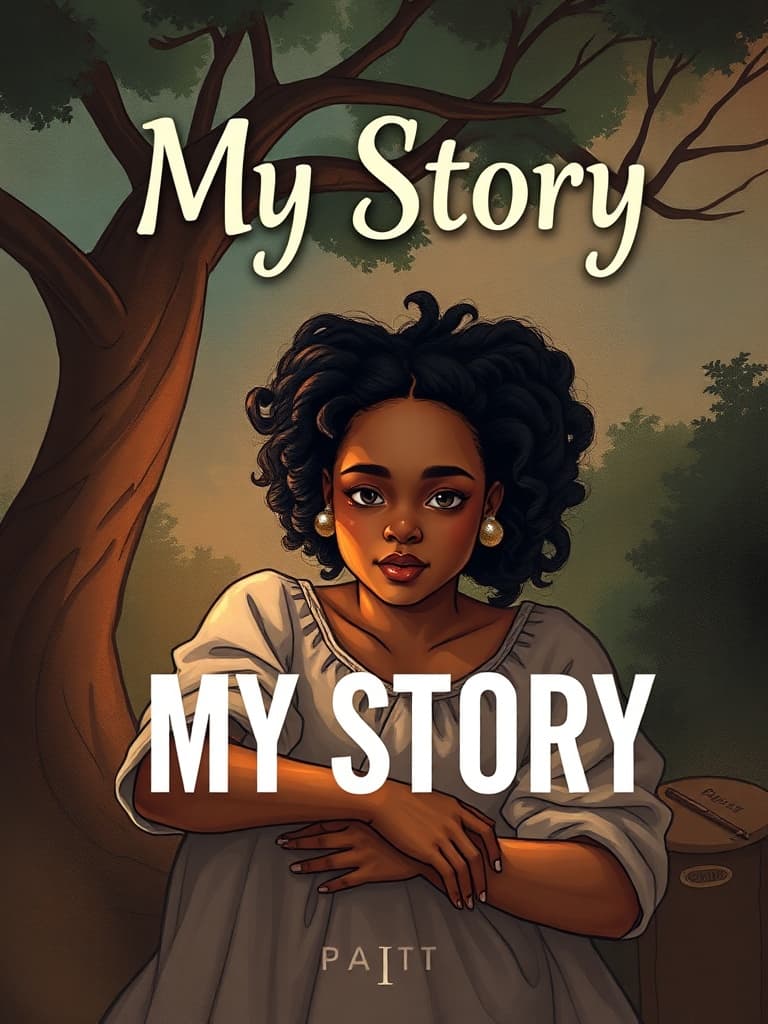
About this book
My Story – Part 1 I am Minage Kabaka, born on 25th May 1989 in Nairobi. I am the last-born child and only daughter of Solomon Kabaka. I have a loving brother, Ken Karani Kabaka, the firstborn in our family, who has been my companion through many seasons of life. Due to unavoidable circumstances, my parents separated when we were still young. I was only a little girl, and my brother was about four years old. As a result, my brother and I relocated to Lanet, Nakuru County, where our grandparents opened their home and hearts to us. From what I remember, my father loved me very much. He used to visit us in Nakuru regularly. Then, at some point, he stopped coming. To this day, I do not know exactly what happened, though I sometimes believe my grandparents may have discouraged him from visiting. Despite the separation, my father's love for us never faded. Whenever we visited Nairobi during school holidays, he would secretly take us to spend time with him at his home. My mother did not approve of this, and eventually she stopped bringing us to Nairobi during school breaks. Together with our cousins, Dan and Wairimu, we grew up as one family, sharing both life's joys and its challenges. Lanet became our home. It was there that we began our education and remained until we completed Form Four. Our grandparents were not only our guardians but also our role models. They taught us discipline, respect, and the importance of faith. They faithfully took us to ACK Church, where we were later baptized and confirmed. One of the greatest losses of my childhood came in October 2001 when my grandfather passed away. He had been a father figure, teacher, and mentor to us all. His wisdom, guidance, and love shaped the people we became. I still remember him with love and gratitude. Rest in Peace, Mwalimu Muiruri. After completing Form Four, I relocated to Nairobi to pursue further studies while living with my Aunt Martha. My mother was also living in Nairobi at the time, and being closer to her gave me strength as I worked toward my dreams. In 2008, I was fortunate to secure employment. With my first steps into adulthood came two important missions that I carried deep within my heart: To find my father. To build a home for my mother. For years, the question of my father remained unanswered. Despite his absence, I always believed that one day I would meet him. I imagined the conversations we would have and the opportunity to finally know the man whose name I carried. In 2011, my brother began the journey of searching for our father. He approached our mother and asked about him. Mum directed him to Aunt Phyllis, my father's sister. One Sunday in 2011, my brother met Aunt Phyllis. What was supposed to be a search for answers turned into a moment that would change our lives forever. That afternoon, I was in a matatu heading to Ngara when my phone rang. "Mambo?" my brother asked. "Poa," I replied. There was a brief silence. Then he said words that shattered a dream I had carried for many years: "Unajua dad alikufa mwaka wa 2006..." I froze. My heart broke into pieces. For my entire life, I had held onto the hope that one day I would meet my father alive. In a single moment, that hope disappeared. The dream I had nurtured since childhood suddenly felt impossible. As the matatu continued moving through the busy streets of Nairobi, my mind stood still. Questions flooded my heart: When did he die? How did he die? Why had we never known? What kind of man was he? The search for my father had finally brought us an answer—but not the one I had prayed for. That day marked the beginning of a different journey: a journey to discover who my father was, the life he lived, and the family connections that had been lost for so many years. My Story – Part 2 The news of my father's death left a deep wound in my heart. After finishing what had taken me to Ngara that day, I returned to the place where I was living with my friend, Penina. She had become the sister I never had. Our friendship had begun back in 2004 when we were in Form One, and it has remained strong to this day. When I told Penina what I had discovered about my father, I broke down and cried. The pain was overwhelming. She listened patiently, comforted me, and stood by my side during one of the most difficult moments of my life. One Sunday afternoon, my Aunt Martha asked me to accompany her to Ongata Rongai to visit a friend. On our way, I shared the painful news with her. "Do you know that my dad died a long time ago?" I asked. She was shocked. Aunt Martha knew my father very well because during school holidays she often visited us whenever we came to Nairobi. She could hardly believe that we had only just learned about his death. Aunt Martha informed my Aunt Charity, who is my mother's sister. Because Aunt Charity and I were very close, she invited me to her home the following weekend. We talked at length about my father, and she comforted me greatly. She w
6
0
6
0
My Story – Part 1 I am Minage Kabaka, born on 25th May 1989 in Nairobi. I am the last-born child and only daughter of Solomon Kabaka. I have a loving brother, Ken Karani Kabaka, the firstborn in our family, who has been my companion through many seasons of life. Due to unavoidable circumstances, my parents separated when we were still young. I was only a little girl, and my brother was about four years old. As a result, my brother and I relocated to Lanet, Nakuru County, where our grandparents opened their home and hearts to us. From what I remember, my father loved me very much. He used to visit us in Nakuru regularly. Then, at some point, he stopped coming. To this day, I do not know exactly what happened, though I sometimes believe my grandparents may have discouraged him from visiting. Despite the separation, my father's love for us never faded. Whenever we visited Nairobi during school holidays, he would secretly take us to spend time with him at his home. My mother did not approve of this, and eventually she stopped bringing us to Nairobi during school breaks. Together with our cousins, Dan and Wairimu, we grew up as one family, sharing both life's joys and its challenges. Lanet became our home. It was there that we began our education and remained until we completed Form Four. Our grandparents were not only our guardians but also our role models. They taught us discipline, respect, and the importance of faith. They faithfully took us to ACK Church, where we were later baptized and confirmed. One of the greatest losses of my childhood came in October 2001 when my grandfather passed away. He had been a father figure, teacher, and mentor to us all. His wisdom, guidance, and love shaped the people we became. I still remember him with love and gratitude. Rest in Peace, Mwalimu Muiruri. After completing Form Four, I relocated to Nairobi to pursue further studies while living with my Aunt Martha. My mother was also living in Nairobi at the time, and being closer to her gave me strength as I worked toward my dreams. In 2008, I was fortunate to secure employment. With my first steps into adulthood came two important missions that I carried deep within my heart: To find my father. To build a home for my mother. For years, the question of my father remained unanswered. Despite his absence, I always believed that one day I would meet him. I imagined the conversations we would have and the opportunity to finally know the man whose name I carried. In 2011, my brother began the journey of searching for our father. He approached our mother and asked about him. Mum directed him to Aunt Phyllis, my father's sister. One Sunday in 2011, my brother met Aunt Phyllis. What was supposed to be a search for answers turned into a moment that would change our lives forever. That afternoon, I was in a matatu heading to Ngara when my phone rang. "Mambo?" my brother asked. "Poa," I replied. There was a brief silence. Then he said words that shattered a dream I had carried for many years: "Unajua dad alikufa mwaka wa 2006..." I froze. My heart broke into pieces. For my entire life, I had held onto the hope that one day I would meet my father alive. In a single moment, that hope disappeared. The dream I had nurtured since childhood suddenly felt impossible. As the matatu continued moving through the busy streets of Nairobi, my mind stood still. Questions flooded my heart: When did he die? How did he die? Why had we never known? What kind of man was he? The search for my father had finally brought us an answer—but not the one I had prayed for. That day marked the beginning of a different journey: a journey to discover who my father was, the life he lived, and the family connections that had been lost for so many years. My Story – Part 2 The news of my father's death left a deep wound in my heart. After finishing what had taken me to Ngara that day, I returned to the place where I was living with my friend, Penina. She had become the sister I never had. Our friendship had begun back in 2004 when we were in Form One, and it has remained strong to this day. When I told Penina what I had discovered about my father, I broke down and cried. The pain was overwhelming. She listened patiently, comforted me, and stood by my side during one of the most difficult moments of my life. One Sunday afternoon, my Aunt Martha asked me to accompany her to Ongata Rongai to visit a friend. On our way, I shared the painful news with her. "Do you know that my dad died a long time ago?" I asked. She was shocked. Aunt Martha knew my father very well because during school holidays she often visited us whenever we came to Nairobi. She could hardly believe that we had only just learned about his death. Aunt Martha informed my Aunt Charity, who is my mother's sister. Because Aunt Charity and I were very close, she invited me to her home the following weekend. We talked at length about my father, and she comforted me greatly. She wanted to know what I hoped to do next. I told her that my greatest wish was to visit my father's grave in Western Kenya. About two weeks later, a family meeting was organized in Dandora Phase 3, where my mother was living at the time. Present at the meeting were my brother, my mother, Aunt Charity, Aunt Phyllis, and myself. I was especially excited to meet Aunt Phyllis for the first time. As soon as I saw her, I noticed how much we resembled each other. It felt like looking at a part of myself that I had never known. The purpose of the meeting was to plan a journey to our ancestral home in Western Kenya and visit our father's grave. The meeting was successful, and we agreed to travel on 10th July 2011. Aunt Charity requested that my mother accompany us on the trip. Meanwhile, Aunt Phyllis took responsibility for informing our father's family about our planned visit. One piece of news brought me immense joy: I learned that my grandmother, my father's mother, was still alive. Her name was Epiness Minage, and she was 91 years old at the time. The thought of meeting her filled my heart with excitement and anticipation. The only family member I would not have the opportunity to meet was my grandfather, who had passed away in 1989, the same year I was born. As the day of our journey drew closer, I felt a mixture of emotions—sadness for the father I had lost, excitement about meeting relatives I had never known, and gratitude that after so many years, I was finally going to reconnect with my roots. Little did I know that the trip to Western Kenya would become one of the most emotional and unforgettable journeys of my life. This ending creates a natural transition into Part 3, where you can describe the journey to Vihiga, meeting your grandmother Epiness Minage, your father's relatives, and visiting your father's grave for the first time. My Story – Part 3 Journey to Vihiga County – Madzuu Kedeta Village On Sunday, 10th July 2011, we finally began our long-awaited journey to our father's ancestral home in Madzuu Kedeta Village, Vihiga County. Our meeting point was Machakos Country Bus Station in Nairobi. We were to travel by bus—my brother, my mother, Aunt Phyllis, and I. We arrived at around 7:00 a.m., and the bus departed at 8:00 a.m. To be honest, I did not enjoy the experience at the bus station. The touts were shouting and rushing passengers, creating a lot of confusion. I remember wishing we had used a Nissan matatu instead because it would have been much faster. The bus felt slow, and the journey seemed endless. As we travelled, I spent most of the time deep in thought. What would Western Kenya be like? How would our father's family receive us? Would I finally feel connected to the roots I had been searching for all my life? Although I had visited many places before, this was my first time travelling to my father's home as an adult. The journey was quiet, emotional, and filled with anticipation. We finally arrived at around 5:00 p.m. Our first stop was the home of Andrew Ligale, where Aunt Rachael lived. When she saw my mother, she smiled warmly and asked: "Kwani bado unanikumbuka?" ("Do you still remember me?") My mother replied with a smile, "Ndiyo." ("Yes.") We greeted one another warmly before proceeding to my grandmother's home. Fortunately, it was not far away. The moment we arrived, I saw my grandmother, Epiness Minage. As soon as our eyes met, we both burst into tears. I rushed forward and hugged her tightly. It was one of the most emotional moments of my life. Through her tears, Grandma said: "I never thought that one day I would see my son Kabaka's children. Now that it has happened, if I die today, I will die a happy person. My grandchildren, this is your home." Her words touched my heart deeply. Soon afterward, my father's sisters gathered around us and began singing worship songs in Luhya. Although we could not understand all the words, we could feel the love, joy, and gratitude behind every song. Grandma prayed for us and blessed us. After sharing a meal together, we retired to bed, exhausted from the long journey but grateful to finally be home. The following morning, on 11th July 2011, we woke up early, had breakfast, and were joined by more family members. A formal family introduction was held, beginning with my father's siblings: Aunt Florence Kasaga Aunt Jane Afandi Late Uncle Dickson Indago, who had passed away many years before my father and was the twin brother of Aunt Jane Afandi My father, Solomon Kabaka, who passed away in 2006 Late Aunt Margaret Kahuya, who passed away on 9th May 2025 Aunt Phyllis Mhonja Aunt Rachael Mbone We were also introduced to many cousins and extended relatives whom we had never met before. Then came the moment I had been waiting for. I was taken to see my father's grave. Among the Luhya community, loved ones are buried within the family compound so that their memory remains close to the family and the home they built. As I stood before his grave, a flood of emotions overwhelmed me. For years, I had dreamed of meeting my father. Instead, I found myself standing at the place where he had been laid to rest. I sat beside his grave and wept. I cried for the years we had lost. I cried for the conversations we would never have. I cried for the father I never had the chance to know as an adult. Yet, in the midst of the pain, there was peace. At last, I had come home. At last, I knew where I belonged. Sitting there, I made a promise to my father: I would forever carry his name with pride. I would honour his legacy. And I would do my best to make him proud. That visit did not bring back the years we had lost, but it gave me something I had been searching for my entire life—a connection to my roots, my family, and the father whose name I proudly carry. My Story – Part 4 Journey Back to Nairobi – 12th July 2011 On the morning of 12th July 2011, we woke up early and prepared for our journey back to Nairobi. Before leaving, we shared breakfast with our family and gathered for a prayer. We thanked God for the time we had spent together and asked for His protection as we travelled home. Saying goodbye to Grandma Epiness Minage was not easy. In just a few days, she had filled a space in my heart that had been empty for many years. As we hugged her goodbye, I felt deep gratitude that I had finally met her and connected with my father’s family. As we headed to the bus terminal, I felt a sense of peace. The journey to Vihiga had answered many of the questions I had carried for years. Although some of the answers were painful, they gave me closure and helped me begin to move forward with my life. How Did My Father Die? One of the most difficult truths I learned was how my father died. After my parents separated, both of them continued living in Nairobi, although separately. In 2006, my father was returning home from work in Dandora Phase 4 when he was attacked by unknown people. He was brutally killed in circumstances that deeply shocked the entire family. What made the tragedy even more painful was that nothing had been stolen from him. He still had his money and personal belongings. This raised many unanswered questions and left the family struggling to understand the motive behind such a cruel act. Learning about the manner of his death broke my heart. No human being deserves such violence. Even today, the memory of it brings sadness. Why Didn’t We Attend His Funeral? Another painful question was why my brother and I never attended our father’s funeral. After his death, Aunt Rachael travelled from Western Kenya to Nairobi to assist with burial arrangements. According to Luhya traditions, a person is buried in their ancestral home, so plans were made to take his body back to Western Kenya. During her stay in Nairobi, Aunt Rachael informed my mother about my father’s passing. She also requested that my brother and I be allowed to attend the funeral and burial. However, this did not happen. As children, we remained unaware of what had taken place. We were denied the chance to say goodbye to our father and to be part of his final journey. To this day, I do not fully understand all the circumstances that led to that decision. It remains one of the most painful unanswered parts of our family history. When Did He Die? At last, I received the answer I had long waited for. My father, Solomon Kabaka Karani, passed away in 2006. For five years, my brother and I lived without knowing that he was gone. The truth was painful, but it finally brought clarity to a question that had followed me throughout my life. Naming and Identity For many years, I struggled with confusion about my name. When I was younger, I was called Minage. Later, I was known as Njoki. I always believed Minage was a nickname, but when I asked my mother about it, I was told I was named Wairimu after my grandmother on my mother’s side. However, that explanation never fully made sense to me. I was born prematurely at seven months, and my mother was very ill at the time. My grandmother on my mother’s side initially refused for me to be placed in an incubator, and my Aunt Lena stepped in and cared for me during my early months while my mother recovered. Later, I learned that after my parents separated, my mother changed my name from Minage to Njoki. Njoki is a Kikuyu name, though I was never fully taught its meaning. My mother is Kikuyu, while my father was Luhya, and I grew up between both identities. Even though my name changed over time, I have come to understand that my identity is shaped not only by what I am called, but also by the journey I have lived. What Kind of Man Was My Father? This was perhaps the most important question of all. As far as I can remember, my father loved me deeply. Even after the separation, his love for us never changed. Whenever he had the chance, he found ways to remain present in our lives. That love remains one of the greatest gifts he left behind. From what I learned from relatives, my father was a hardworking man who cared deeply for people, especially his family. He was known for helping relatives and maintaining strong family connections. Many who knew him remembered him as kind, generous, and respectful. My father never remarried after separating from my mother. At the time of his death, my brother and I were still his only children. To me, he was more than a father I lost too soon. He was my hero. He was tall, handsome, light-skinned, and carried himself with quiet confidence. Whenever family members spoke about him, I could hear the love and respect they still had for him. Although I never got the chance to know him as an adult, I carry his memory with pride. The journey to Vihiga gave me more than answers. It gave me understanding, connection, and a sense of belonging I had searched for all my life. As we travelled back to Nairobi that day, I felt stronger. The search for my father had finally come to an end. My Story – Part 5 Life After the Journey (Continued) The journey had changed me forever. But life, I realized, was still waiting to be lived. A New Chapter Begins – 2012 In March 2012, I realized I was pregnant with a man I had met at my workplace. It came as a surprise, but also as a moment that forced me to think deeply about my future. I informed him, and he agreed that we should involve our families and move forward responsibly. I first took him to meet my mother in Dandora, where she was living at the time. She welcomed us, and we openly shared our intentions. From there, plans began to take shape for both families to meet. Later, we travelled to Nakuru to meet my grandmother’s side—my shosh’s home. Meeting the Families Around July 2012, both families came together. It was a significant moment for me, as it marked the beginning of unity and understanding between both sides. The meeting was peaceful, respectful, and full of blessings. After discussions, we were given approval and guidance to move forward toward marriage. It was not just about two people coming together—it was about families agreeing, accepting, and blessing a new beginning. My Grandmother’s Influence I must speak about my grandmother, my mother’s mother—my shosh. She is one of the greatest reasons I am who I am today. She taught me honesty, hard work, respect, love, care for others, and most importantly, how to live a God-fearing life. These values stayed with me, and even today, I carry them in everything I do. During the dowry ceremony, my grandmother spoke words I will never forget. To my husband, she said: “Take care of her. She is a good-hearted person, and I am trusting you with her.” Then she turned to me and said: “Uphold the values I have taught you. Continue being good, hardworking, loving, and take care of that family as you have always done.” Those words became a guiding light in my life. Traditional Blessings and Marriage Later that year, on 2nd October 2012, we went to the Attorney General’s office at Sheria House, where we were officially married. It was a simple but meaningful ceremony—legalizing a journey that had already begun through family blessings and acceptance. The Gift of a Child On 5th October 2012, at 2:30 p.m., I was blessed with a beautiful baby boy. Holding him for the first time changed everything. He was strong, healthy, and light-skinned—resembling my father, Solomon Kabaka. In him, I saw a reflection of the past and a promise of the future. Today, as I look at him growing taller and stronger, I am reminded of where I came from and how far I have come. Reflection Life had moved quickly—from grief, to discovery, to healing, and now to new beginnings. I had searched for my father and found my roots. I had faced pain and found closure. And now, I was building a family of my own. Nothing in life had been simple, but every step had shaped me. And in the midst of it all, I was learning that life does not end with loss—it continues, transforms, and begins again in unexpected ways. My Story – Part 6 Building a Home for My Mother In 2014, we purchased land in Nakuru. It was a big step for me because it represented the beginning of fulfilling one of my deepest promises—to build a home for my mother. However, we did not begin construction immediately. That same year, tragedy struck again. My grandmother, Epiness Minage, passed away in July at the age of 94. I had to travel back to Western Kenya for her burial. It was another painful moment in my life, as I said goodbye to a woman who had played such a vital role in my journey and connection to my roots. She was laid to rest with honor, but my heart carried grief once again. Delays and Challenges In 2015, my mother began facing financial difficulties due to challenges in her business. She fell into debt, and at one point, the situation became so serious that the landlady took some of our household belongings. I was hurt and even angry because my mother had not told me the truth earlier about her struggles. But despite my emotions, I stepped in and paid the rent to stabilize the situation. It was after this that I made a firm decision—we had to start building the house. Building the House in Lanet, Nakuru We began construction in Lanet, Nakuru, a place that held deep meaning for me. It was where I grew up, and the land was close to my shosh’s home—my mother’s mother. Being back there felt like reconnecting with my childhood and my roots. The construction process was fast and focused. Within about three months, from October to November 2015, the house was completed. On 30th November 2015, my mother relocated into her new home in Nakuru. That moment gave me deep satisfaction. I had fulfilled a promise that had lived in my heart for many years. I made sure she was comfortable and supported her as she settled in. I also encouraged her to engage in poultry keeping and small daily farming activities to generate income. She had access to land from her mother, where she also maintained a kitchen garden. I wanted her to live in dignity, stability, and peace. A New Blessing On 11th November 2016, at 2:30 a.m., I was blessed with another baby boy. I named him Kabaka, after my father, Solomon Kabaka. This moment filled my heart with even more fulfillment. It felt like life was coming full circle—honoring my father’s memory while building a new generation connected to him. My Own Home As I continued moving forward in life, I also focused on building my own home. In 2020, I successfully began construction of my house in Kiserian, Kona Baridi. It was another important milestone in my journey of growth, independence, and stability. However, 2020 was also a very difficult year for the world. The COVID-19 pandemic changed everything. Life became uncertain, movement was restricted, and many plans were delayed. Loss During a Difficult Year In the same year, my shosh in Nakuru—the mother of my mother—became ill. Unfortunately, due to COVID-19 restrictions, I was unable to visit her during her illness. It was a painful time of distance and helplessness. Then, on 30th October 2020, while I was in the middle of constructing my house, I received the heartbreaking news that she had passed away. It felt like my world collapsed. She was buried in November 2020, and that moment marked one of the deepest emotional turning points in my life. Her passing changed something within me permanently. She had been my foundation, my teacher, and my guide. Reflection Looking back, my journey has been filled with both blessings and pain—birth and loss, building and breaking, joy and sorrow. But through it all, I kept moving forward. I built my mother’s home. I built my own home. I raised my children. And I carried the memory of my family in everything I did. Life taught me that even in pain, there is purpose. And even in loss, there is legacy. My story is not just about struggle—it is about rebuilding, again and again, until life makes sense in its own way.
Chapters
- 1Seeds of SeparationBorn in Nairobi, Minage's early life is marked by her parents' separation. She and her brother Ken relocate to Lanet, Nakuru, under their grandparents' care. Their father's visits become infrequent, leaving Minage with unanswered questions.
- 2Whispers of the PastAfter completing Form Four, Minage moves to Nairobi, driven by a desire to find her father and build a home for her mother. The search for her father takes a devastating turn when she learns he died in 2006.
- 3Roots in VihigaMinage and her family travel to their ancestral home in Vihiga County. She meets her grandmother, Epiness Minage, and other relatives, experiencing an emotional reunion and finally visiting her father's grave.
- 4Echoes of LossReturning to Nairobi, Minage learns the tragic details of her father's murder and the reasons she and Ken couldn't attend his funeral. She also confronts confusion about her identity and name.
- 5A New BeginningMinage marries and welcomes her first son, named Kabaka. She begins building a home for her mother in Nakuru, facing financial hurdles and the loss of her grandmother, Epiness Minage.
- 6Legacy and ResilienceMinage completes her mother's home and starts building her own. She has a second son, also named Kabaka. Despite further loss during the pandemic, she reflects on her journey of rebuilding and legacy.
More Fantasy stories
Browse all Fantasy →- The Weaver of Forgotten Dreams
Dreams are special, they sometimes guide us on our journey in life, but every now and then, we forget what we dreamed about and that is where the mysterious Boon comes in,for she weaves our forgotten dreams back together again...
- Bound by Vengeance and Desire
4. Chapter Structure & Pacing Guidelines (for the AI) Part 1 (Chapters 1–5): The failed assassination, the capture, and the activation of the blood-magic binding contract. Establishing the deep mutual hatred. Part 2 (Chapters 6–12): Forced proximity at court. Dealing with assassination attempts from rival lords while discovering hidden truths about the kingdom's corruption. Part 3 (Chapters 13–18): Venturing outside the palace walls into dangerous dark territories; the walls break down, leading to the first emotional confession and intimate turning point. Part 4 (Chapters 19–25): The climax, the battle against the true villain, the ultimate sacrifice, and a satisfying HEA (Happily Ever After) or setup for a sequel. Please use this exact blueprint, character profiles, and structure to write the complete novel 'Bound by Vengeance and Desire' chapter by chapter. Ensure the tone is immersive, dark, rich in sensory details, and filled with slow-burn romantic tension." This book is for amazon kdp
- The Oracle's Promise, the Warrior's Desire
A small town girl struggling to prove her story because the people can't comprehend her reasons for her poison questions
- When the Moonstone Calls Your Name
Nova started daily adventures through the whispering woods. One day she came across a mysterious cave and from there she started discovering who she actually was.
- Immortal hybrid
Eliza is connected to two worlds never fully belonging to one or the other. She uses what she is to her advantage in the secret world that the humans can't see. Business although unusual is where she protects the human world she is a part of but helps the supernatural world that is also a part of her world
- Vampire chronicles
A Council of vampire establish called vampire Academy which trains the vampires and also magics behind them against their strong enemies the hybrids half vampire and half werewolf
Want to write a story like this?
Learn the craft in our free AI story generator, then draft your first chapter with an AI co-writer.
What stayed with you?
Read a chapter and leave the author a comment.
Reader notes
Loading reader notes…