About this book
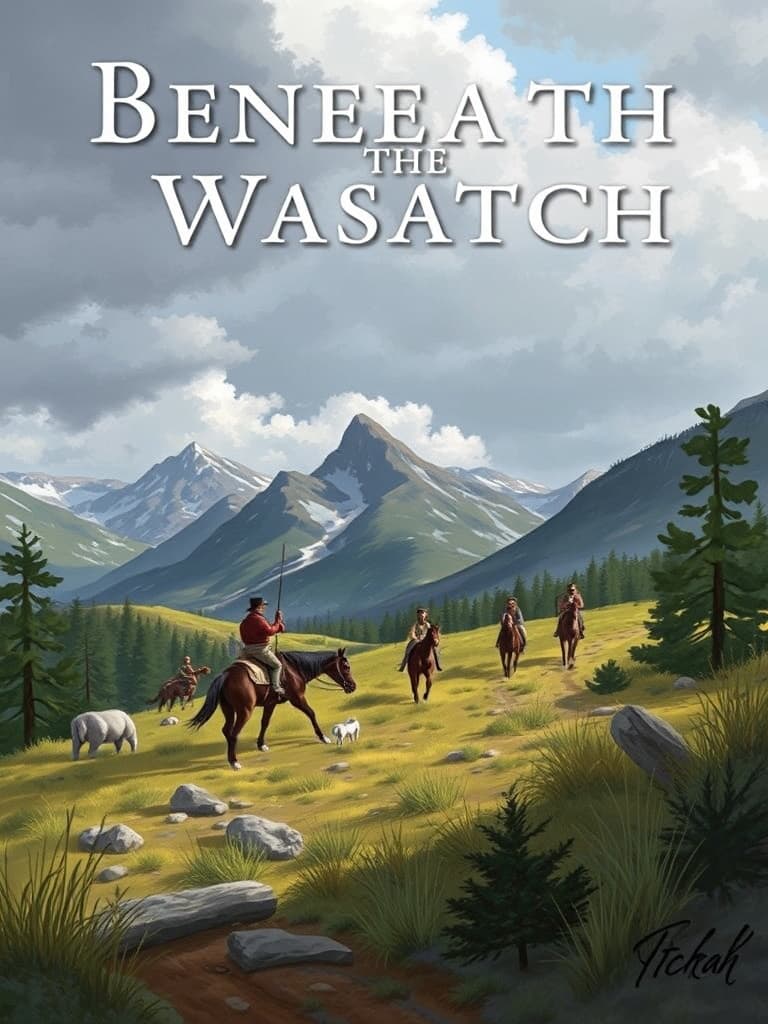
Beneath the Wasatch: A History of Cache Valley, Utah
43
0
59
0
This is the true story of the first fur trappers and trader who forged the wild untamed wilderness of Cache Valley Utah. The names are of the true Pioneers and of the Native Americans who lived for hundreds to thousands of years this this beautiful, bountiful land
Chapters
- 1The Emerald CrucibleChapter 1 opens with a sweeping, almost reverent, depiction of Cache Valley as an untouched Eden. Describe the grandeur of the Wasatch Mountains, their snow-capped peaks piercing the azure sky, and the lush, verdant floor of the valley, teeming with life. Emphasize the pristine rivers, crystal-clear lakes, and the dense forests that cloak the hillsides. Introduce Jedediah Smith and his small band of trappers, hardy men weathered by the elements and driven by an insatiable thirst for adventure and the promise of fortune in beaver pelts. Their arrival is not an invasion, but an intrusion into a world that has existed in quiet harmony for millennia. Detail their initial awe at the sheer scale and beauty of the valley, a stark contrast to the familiar landscapes of the East. Scene 1: The arrival. Jedediah Smith, his eyes scanning the horizon, points towards the valley. Describe the weary but determined faces of his men, their worn buckskin clothing, and the glint of anticipation in their eyes. The air is crisp, carrying the scent of pine and damp earth. Scene 2: First impressions. The trappers dismount, their horses drinking deeply from a clear stream. They marvel at the abundance of wildlife – herds of elk, deer, and the elusive beaver. Jedediah notes the potential for vast trapping grounds, the very lifeblood of their livelihood. He pulls out his damaged map, a tangible symbol of past perils and future aspirations. Scene 3: The lure of the beaver. The trappers begin their work, setting traps along the riverbanks. Describe the skill and patience required, the silent stalking through the undergrowth. The first beaver caught is a moment of triumph, a tangible sign that their arduous journey has been worthwhile. The pelt is thick and prime, a testament to the valley's rich resources. Scene 4: Whispers of inhabitants. Jedediah notices signs of human presence – faint trails, discarded arrowheads, the distant scent of woodsmoke. A sense of caution descends upon the group. They are not alone in this paradise. This discovery injects a note of tension, a foreshadowing of future encounters and the delicate balance they are about to disrupt. The chapter concludes with Jedediah looking towards the distant mountains, the vastness of the valley stretching before him, a land of immense promise and unknown challenges. The beauty is undeniable, but the presence of others introduces an element of uncertainty, hinting at the complex history that is about to unfold. The emotional arc moves from awe and ambition to a growing awareness of the valley's existing inhabitants and the potential conflicts that lie ahead. The setting details will focus on the natural grandeur and the raw, untamed beauty of Cache Valley, emphasizing its pristine state before significant human alteration. Continuity notes: Establish Jedediah Smith's character as a driven explorer and skilled trapper. Introduce the concept of the beaver as the primary economic driver. Hint at the presence of indigenous peoples without direct interaction yet. Ending hook: The trappers have found their promised land, but the silent watch of its original inhabitants begins.
- 2Ancestral EchoesChapter 2 shifts focus to the Shoshone people, introducing Chief Black Bear and his tribe. Describe their deep, ancestral connection to Cache Valley, a land that has sustained them for countless generations. Portray their way of life as intrinsically linked to the natural rhythms of the valley – the changing seasons, the migration of game, and the abundance of resources. Emphasize their understanding of the land, their spiritual reverence for its sacred places, and their sustainable practices. The arrival of the trappers is observed with a mixture of curiosity and apprehension. Scene 1: The Shoshone encampment. A vibrant depiction of daily life in the Shoshone village. Children play, women prepare food, and men craft tools and weapons. Chief Black Bear, a figure of quiet authority and profound wisdom, observes the valley from a vantage point. Describe his weathered face, his keen eyes that miss nothing. Scene 2: First sightings. Scouts report the presence of strange men with firearms and peculiar methods of hunting. The Shoshone discuss these newcomers, their initial reactions ranging from wonder at the trappers' gear to concern about their intentions. The elders share tales of past encounters with outsiders, some peaceful, some not. Scene 3: Chief Black Bear's contemplation. The Chief visits the sacred grove, a place of deep spiritual significance for his people. He communes with the spirits of his ancestors, seeking guidance. He feels the subtle shifts in the valley's energy, a disturbance caused by the trappers' presence. He worries about the impact on the beaver population, a vital food source and a creature of spiritual importance. Scene 4: Cautious observation. A small group of Shoshone warriors, led by a young brave named Swift Arrow, observes the trappers from a distance. They note the trappers' focus on beaver, their methods of setting traps, and their apparent lack of understanding of the valley's delicate ecosystem. They are careful not to be seen, prioritizing stealth and observation. Scene 5: Initial contact (indirect). The trappers leave behind traces of their presence – discarded items, signs of their campsites. The Shoshone examine these artifacts, trying to understand the newcomers' culture and technology. There is no direct confrontation, but a palpable sense of two worlds on the brink of collision. Chief Black Bear feels the weight of responsibility for his people and their heritage. He acknowledges the potential for both trade and conflict. The chapter ends with Chief Black Bear looking out at the valley, a place of profound beauty and deep meaning for his people, now shadowed by the presence of the unknown. The emotional arc is one of deep connection to the land, growing unease, and a sense of duty to protect their heritage. Setting details will focus on the Shoshone way of life, their connection to nature, and the spiritual significance of their ancestral lands, particularly the sacred grove. Continuity notes: Establish Chief Black Bear's wisdom and protective nature. Introduce the Shoshone as a people deeply integrated with their environment. Plant the seed of potential conflict over resources and cultural differences. Ending hook: The Shoshone observe the trappers, their ancient wisdom sensing a coming storm, and Chief Black Bear feels the sacredness of his land threatened.
- 3The Frost's FuryChapter 3 plunges the trappers into the brutal reality of a Cache Valley winter. The narrative shifts to emphasize the unforgiving nature of the wilderness, transforming the once-idyllic landscape into a formidable adversary. Describe the relentless blizzards, the biting winds that howl through the canyons, and the deep snows that bury the land, making travel and hunting perilous. The beauty of the valley becomes a cruel mockery of their struggle for survival. Scene 1: The first snow. A sudden, fierce blizzard descends upon the trappers' camp. Describe the chaos as they scramble to secure their tents, gather firewood, and protect their dwindling supplies. The once-clear skies turn an ominous grey, and the wind whips snow into blinding sheets. Scene 2: The gnawing hunger. Food supplies run low. The trappers face the harsh reality of hunting in deep snow. Describe their desperate attempts to track game, their bodies aching with cold and fatigue. The beaver are scarce, driven deep into their lodges, making trapping impossible. Scene 3: The isolation. The vastness of the valley, once a source of wonder, now amplifies their sense of isolation. The trappers are cut off from any hope of immediate aid. Describe their quiet moments of despair, the longing for warmth, comfort, and companionship. Jedediah's stoicism is tested. He tends to his men, offering words of encouragement, but his own resolve is strained. Scene 4: The damaged map as a reminder. Jedediah consults his tattered map by the flickering firelight, the ink smudged by moisture and wear. It represents not just past failures but also the ever-present dangers of the wilderness. He reflects on the unpredictable nature of survival in this harsh environment. Scene 5: A near-fatal incident. One of the trappers, weakened by hunger and cold, ventures out alone and becomes lost or injured. The remaining men must mount a dangerous rescue mission in the blizzard, pushing their limits to save their comrade. This incident highlights their interdependence and the fragility of life on the frontier. The chapter will showcase the resilience and resourcefulness of the trappers, their ability to adapt to extreme conditions, and the psychological toll of isolation and deprivation. The emotional arc is one of struggle, hardship, resilience, and the deepening bond forged through shared adversity. Setting details will focus on the harsh winter landscape of Cache Valley – snow-laden pines, frozen rivers, howling winds, and the stark, white expanse that tests the limits of human endurance. Continuity notes: Emphasize the challenges of survival in the winter wilderness. Show Jedediah Smith's leadership under duress. Highlight the isolation and the psychological impact of the frontier. Ending hook: As the trappers huddle around a meager fire, their faces etched with weariness, the faint sound of a distant drumbeat or a lone wolf's howl pierces the storm, a sign of life, or perhaps danger, in the frozen expanse.
- 4The Unspoken TruceChapter 4 marks a turning point, focusing on a pivotal event that necessitates cooperation between the trappers and the Shoshone. This could be a shared threat, such as an unusually harsh winter that impacts both groups, a dangerous encounter with another hostile tribe, or a natural disaster that requires combined efforts. The narrative explores the fragile beginnings of an alliance, built not on trust, but on mutual need and a grudging respect. Scene 1: The shared crisis. The harsh winter described in the previous chapter escalates, threatening the survival of both the trappers and the Shoshone. Perhaps a crucial game trail is blocked, or a vital water source freezes over, affecting both hunting grounds and access to sustenance. The Shoshone are suffering, and the trappers are facing starvation. Scene 2: Jedediah's difficult decision. Jedediah Smith, despite his ingrained caution regarding Native Americans, recognizes that his men cannot survive alone. He understands the Shoshone possess knowledge of the land that could be vital for their survival. He makes the difficult decision to seek them out, not as conquerors, but as supplicants. Scene 3: Chief Black Bear's dilemma. Chief Black Bear faces a similar quandary. While wary of the trappers, he sees their desperation and recognizes that their survival might indirectly benefit his people if they can learn to coexist. He also understands that a starving, desperate group of trappers could become a dangerous threat. He decides to offer limited assistance, driven by pragmatism and a desire to avoid further conflict. Scene 4: The first tentative meeting. Jedediah Smith, accompanied by a few of his men, approaches the Shoshone encampment. The atmosphere is tense. Chief Black Bear meets him, his demeanor calm but watchful. Describe the silent communication, the exchange of wary glances. There are no grand speeches, only the unspoken acknowledgment of their shared predicament. Scene 5: An act of cooperation. An example of their burgeoning alliance is depicted. Perhaps the Shoshone guide the trappers to a hidden hunting ground, or show them how to find edible roots beneath the snow. In return, the trappers might share some of their limited supplies or offer their strength in a communal task, like clearing a path or helping to secure the Shoshone's winter stores. Jedediah Smith and Chief Black Bear observe each other, beginning to understand the other's strengths and motivations. A fragile bond is formed, built on shared hardship and the necessity of survival. The chapter concludes with a sense of cautious optimism, a hint that while deep-seated differences remain, a pathway towards coexistence, however tenuous, has been opened. The emotional arc moves from desperation and tension to a fragile hope, a dawning respect, and the understanding that cooperation is sometimes the only path to survival. Setting details will focus on the stark, frozen landscape and the shared struggle against the elements. Continuity notes: Establish the immediate threat to both groups. Show Jedediah Smith's evolving perspective and Chief Black Bear's pragmatism. Introduce the concept of mutual need as a catalyst for interaction. Ending hook: As the trappers and Shoshone share a meager meal, a shared moment of quiet understanding passes between Jedediah and Chief Black Bear, a silent acknowledgment that their fates are now intertwined, for better or worse.
- 5The Beaver's BountyChapter 5 chronicles the burgeoning success of the fur trade in Cache Valley, transforming its economic landscape. The harsh winter has passed, and the beaver population, once depleted, begins to rebound, offering unprecedented opportunities for profit. This chapter introduces Antoine Dubois, a shrewd French-Canadian trader, and Eliza Thornton, an ambitious woman establishing a vital supply store. The valley starts to feel the first stirrings of commerce and settlement, though the underlying tensions and the impact on the indigenous way of life remain. Scene 1: The spring thaw and the beaver's return. The snow melts, revealing a valley teeming with renewed life. The beaver, having survived the winter, become more active, their pelts prime after the cold months. The trappers, invigorated by the warmer weather and the promise of rich rewards, redouble their efforts. Scene 2: Antoine Dubois's arrival and influence. Introduce Antoine Dubois, a seasoned trader with a charismatic demeanor and a sharp business mind. He arrives with a wagon full of goods – blankets, tools, beads, and whiskey – eager to trade for the abundant beaver pelts. Describe his interactions with the trappers, his ability to haggle and build rapport, always with an eye on maximizing his profit. He sets up a temporary trading post. Scene 3: Eliza Thornton's endeavor. Eliza Thornton arrives with her own ambitions, establishing a small but well-stocked general store. Describe her practical nature, her determination to carve out a niche in this burgeoning economy. Her store becomes a vital hub, providing essential supplies to trappers and, later, to settlers. She observes the exchanges, the flow of furs, and the growing influx of people. Scene 4: The surge in trade. The fur trade flourishes. Beaver pelts become the currency of the valley. Describe the bustling activity around Antoine's trading post and Eliza's store. Trappers bring in their pelts, eager to exchange them for goods and cash. The valley's economy begins to shift, driven by the demand for fur in distant markets. Scene 5: Strains on the ecosystem and culture. While the trade is profitable, the relentless pursuit of beaver begins to take its toll on the valley's ecosystem. The beaver population, though recovering, is under pressure. More subtly, the influx of goods and the focus on commerce start to alter the traditional ways of life for the Shoshone, introducing new dependencies and desires. Chief Black Bear observes these changes with growing concern, noting the increasing numbers of trappers and traders. The chapter ends with Antoine Dubois tallying his impressive gains, a satisfied smile on his face, while Eliza Thornton looks at the growing number of people arriving in the valley, a sense of both opportunity and unease settling upon her. The emotional arc moves from the excitement of renewed prosperity and economic growth to a subtle undercurrent of concern about the long-term consequences. Setting details will focus on the increased activity of the spring and summer, the busy trading posts, and the initial signs of commerce transforming the valley. Continuity notes: Establish Antoine Dubois as a key player in the fur trade. Introduce Eliza Thornton as a foundational figure in the emerging settlement. Show the economic boom driven by the fur trade and hint at its ecological and cultural impact. Ending hook: Antoine Dubois counts his overflowing coffers of pelts, while Eliza watches new faces arrive, wondering if this rapid growth will bring prosperity or peril to the valley.
- 6The Fading TrailChapter 6 delves into Jedediah Smith's personal reflections as he witnesses the gradual transformation of Cache Valley. The era of the independent, pioneering trapper begins to wane, overshadowed by the increasing presence of organized companies and more permanent settlers. This chapter focuses on Jedediah's internal conflict – a sense of accomplishment mixed with a bittersweet realization that the wild, untamed frontier he sought is slowly being tamed. Scene 1: A moment of quiet contemplation. Jedediah finds himself on a ridge overlooking the valley. The familiar landscape, once a wild and untamed canvas, now bears the subtle marks of human activity – more trappers' trails, perhaps the distant smoke from early settlements. The silence is no longer absolute. Scene 2: The damaged map revisited. He pulls out his tattered map, tracing the routes he has taken, the areas he has explored. The map represents his personal journey, his triumphs and his failures. But now, he sees that the 'uncharted' territories are becoming charted, their secrets revealed, their resources exploited. Scene 3: Encounters with new arrivals. Jedediah observes or interacts with newcomers who are not just trappers, but also merchants like Antoine Dubois, who are focused on profit and expansion, and settlers who are looking to establish permanent homes. He sees the shift from exploration and survival to commerce and settlement. Scene 4: The changing nature of the trade. The independent trapper is becoming less common. Jedediah hears whispers of larger fur companies establishing a stronger presence, organizing expeditions, and exerting more control over the trade. This signifies a move away from the individualistic spirit that defined his early journeys. Scene 5: Jedediah's internal monologue. He reflects on his own role in opening up this valley. There is pride in his achievements, but also a growing melancholy. The wildness he cherished, the raw challenge of the frontier, is receding. He ponders the future of the valley and his own place in it. Is his legacy one of discovery, or one of disruption? He feels a profound sense of change, a recognition that the era he represents is drawing to a close. The chapter concludes with Jedediah looking towards the horizon, the setting sun casting long shadows over the valley. He acknowledges that his purpose here is nearing completion, not because he has failed, but because the valley itself is evolving beyond the scope of his original quest. The emotional arc is one of reflection, nostalgia, a touch of melancholy, and a dawning acceptance of change. Setting details will emphasize the subtle but growing signs of human settlement and the changing character of the landscape. Continuity notes: Highlight the transition from independent trapping to a more organized fur trade and settlement. Deepen Jedediah Smith's character arc, showing his awareness of the changing times. Foreshadow the decline of the independent trapper. Ending hook: Jedediah Smith, gazing at the valley that has been both his proving ground and his obsession, feels the wild spirit he once pursued begin to ebb, replaced by the steady march of progress he himself helped to initiate.
- 7Guardians of the Sacred GroveChapter 7 returns to Chief Black Bear, focusing on his perspective as settlements begin to take root and the valley's transformation accelerates. His primary concern is the preservation of his people's traditions and the sacred places that hold deep spiritual significance. The chapter highlights his quiet strength, his wisdom rooted in ancestral knowledge, and his growing apprehension about the encroaching tide of change. Scene 1: The growing settlement. Chief Black Bear observes the increasing number of non-native dwellings, the cleared land, and the constant activity of settlers and traders. The sounds and sights of the burgeoning community are a stark contrast to the natural symphony he has always known. Scene 2: The sacred grove’s vulnerability. He makes a pilgrimage to the sacred grove, a place of profound spiritual importance for his tribe, perhaps a natural spring, an ancient rock formation, or a grove of particularly old trees. He feels its sanctity, but also its increasing vulnerability to the expanding human presence. He worries about the trappers and settlers encroaching, their lack of reverence for such places. Scene 3: Passing on traditions. Chief Black Bear gathers the younger members of his tribe, especially the children and adolescents. He shares ancestral stories, emphasizing the deep connection between his people and the land, the importance of respecting the natural world, and the spiritual significance of places like the sacred grove. He imparts his knowledge of edible plants, medicinal herbs, and the signs of the changing seasons—knowledge that feels increasingly vital yet potentially obsolete in the face of new ways of life. Scene 4: Encounters with settlers/traders. He may have brief, respectful, but reserved encounters with some of the more conscientious settlers or traders, like Eliza Thornton. These interactions are polite but underscore the cultural divide and his underlying concern. He listens to their talk of progress and expansion, his heart heavy with the potential cost. Scene 5: A plea for preservation. Chief Black Bear contemplates how to protect the sacred grove and his people's heritage. He understands direct confrontation might be futile. He relies on his wisdom and his people's deep knowledge of the land, hoping that respect for its spiritual essence can be fostered, even amidst the changes. He feels the weight of his responsibility to ensure the continuity of his people's identity and connection to their ancestral lands. The chapter ends with Chief Black Bear standing guard, metaphorically or literally, near the sacred grove, his gaze steady, his resolve firm, a silent guardian against the encroaching tide of change. The emotional arc is one of deep love for his heritage, growing concern, and a quiet determination to protect what is most sacred. Setting details will focus on the sacred grove, emphasizing its natural beauty and spiritual significance, and contrast it with the encroaching signs of settlement. Continuity notes: Reinforce Chief Black Bear's role as a wise leader and protector. Emphasize the cultural and spiritual importance of the land to the Shoshone. Highlight the growing threat to their traditions and sacred sites. Ending hook: Chief Black Bear watches the distant lights of the growing settlement, his heart heavy with the knowledge that the sacred grove, a sanctuary for his people's spirit, is now more vulnerable than ever before.
- 8The Crossroads of CommerceChapter 8 centers on Eliza Thornton and her burgeoning store, which is evolving from a simple trading post into a vital community hub. Eliza, with her practical nature and keen observation skills, becomes a central figure in the social and economic fabric of the growing settlement. She witnesses firsthand the complex interactions between trappers, traders, Native Americans, and the newly arriving settlers, navigating these relationships with a blend of fairness and compassion. Scene 1: The store as a focal point. Describe the physical space of Eliza's store – the shelves stocked with goods, the counter where transactions take place, the general atmosphere of activity. It's a place where news is exchanged, supplies are procured, and diverse individuals converge. Scene 2: Navigating diverse clientele. Eliza interacts with a variety of characters: grizzled trappers looking for provisions, shrewd traders like Antoine Dubois seeking to offload goods or acquire furs, and increasingly, families of settlers seeking tools, seeds, and necessities for establishing their homesteads. She learns to read their needs and intentions. Scene 3: Observing cultural exchange and tension. Eliza is a silent, observant witness to the cultural exchanges and the underlying tensions. She sees the Shoshone trading their knowledge of the land for goods, the trappers boasting of their exploits, and the settlers discussing their dreams of a prosperous future. She might mediate minor disputes or offer a listening ear. Scene 4: Eliza's growing influence. Her store becomes more than just a place of commerce; it’s a source of stability and reliability. Her fair dealings and compassionate nature earn her respect from many, including potentially Chief Black Bear and Jedediah Smith, who see her as a steady presence amidst the flux. She provides a sense of normalcy and community. Scene 5: The secret correspondence. Interwoven with her daily business, Eliza secretly writes letters to her family back East. Describe her internal conflict – the pull of her past life and her growing attachment to Cache Valley and the community she is helping to build. She might be sending supplies or sharing her earnings, torn between her new life and her old loyalties. This secret adds a layer of complexity to her character, revealing her vulnerability and her determination. The chapter concludes with Eliza closing shop for the evening, the dim light of her lamp casting shadows on the shelves. She looks out at the nascent settlement, her heart filled with a mixture of pride in her accomplishments and a quiet apprehension about the valley's rapid evolution. The emotional arc is one of growing competence, quiet observation, and a developing sense of belonging, tinged with personal secrets and external anxieties. Setting details will focus on the interior of Eliza's store, emphasizing its role as a hub of activity and a microcosm of the valley's changing society. Continuity notes: Establish Eliza Thornton's role as a stabilizing force and observant character. Show her navigating the complex social dynamics of the valley. Introduce her secret correspondence as a character detail. Ending hook: As Eliza locks her store, she pauses, listening to the sounds of the growing settlement, a place she is helping to build, yet a place whose future remains uncertain, mirroring the secret she keeps locked within her own heart.
- 9The Trader's GambitChapter 9 focuses on Antoine Dubois, exploring his cunning business practices and his drive for profit in the booming fur trade. He is portrayed as a charismatic but ultimately self-serving individual who skillfully navigates the complex relationships between trappers and Native Americans, often manipulating situations to his own advantage. His hidden stash of furs represents his ultimate ambition and the risks he is willing to take. Scene 1: Antoine's shrewd dealings. Depict Antoine at his trading post, charming trappers into selling their pelts for less than they're worth, perhaps offering them goods at inflated prices, or plying them with alcohol to loosen their tongues and their bargaining power. He is a master of negotiation and persuasion. Scene 2: Playing factions against each other. Antoine understands the burgeoning tensions between different groups – trappers competing for territory, settlers encroaching on traditional hunting grounds, and the Shoshone's growing unease. He subtly fuels these frictions, perhaps by spreading rumors or favoring one group over another in his dealings, all to maintain his position as the indispensable intermediary and profit from the resulting chaos. Scene 3: The secret stash. A scene reveals Antoine's hidden cache of valuable furs – rare beaver pelts, perhaps otter or fox, carefully preserved and secreted away. Describe the location – a hidden cave, a buried chest – and Antoine's meticulous care for his hoard. This stash is his nest egg, his ticket to a life of wealth and security beyond the transient fur trade. Scene 4: Calculating the risks. Antoine is aware of the dangers. Competition from other traders, the unpredictable nature of the wilderness, and the potential for conflict with Native American tribes are ever-present threats. He constantly assesses these risks, weighing them against the potential for immense profit. He might be seen observing the movements of other traders or listening intently to gossip about potential dangers. Scene 5: Preparing for the future. Antoine begins to subtly shift his strategies. As more settlers arrive and the fur trade potentially faces increased regulation or changes in market demand, he starts thinking about diversifying his interests or preparing to cash in his hidden furs at the opportune moment. He is always several steps ahead, planning his next move. The chapter concludes with Antoine Dubois alone, perhaps late at night, admiring his hidden store of furs, a glint of avarice in his eyes. He envisions a future of wealth and influence, a future built on the foundations of the wild valley and the exploitation of its resources and its people. The emotional arc is one of calculated ambition, cunning, and a relentless pursuit of personal gain. Setting details will focus on Antoine's trading post, emphasizing its role as a center of commerce and intrigue, and the hidden location of his secret stash. Continuity notes: Solidify Antoine Dubois's character as a cunning and opportunistic trader. Show his manipulative tactics and his focus on profit. Reveal his secret stash of furs and its significance. Ending hook: Antoine Dubois, alone with his hidden fortune, dreams of the vast wealth that awaits him, unaware that the very ground beneath his feet is shifting, and his carefully laid plans might soon be challenged by forces beyond his control.
- 10The Unraveling ThreadsChapter 10 focuses on the detrimental impact of the relentless pursuit of furs and land on the Shoshone way of life. The narrative shifts to a more somber tone, highlighting the disruption of traditional hunting grounds, the depletion of resources, and the subtle but pervasive erosion of the Shoshone's cultural identity and connection to the land. This chapter serves as a metaphorical 'Trail of Tears,' illustrating the gradual displacement and loss experienced by the indigenous people. Scene 1: Disturbed hunting grounds. Describe the Shoshone's traditional hunting territories becoming less productive. Over-trapping by newcomers, the disruption of game trails by settlers' wagons, and the general increase in human activity make it harder for the Shoshone to sustain themselves through traditional means. Chief Black Bear observes this decline with deep sadness. Scene 2: Depleted resources. The beaver population, while recovering, is again under pressure from the intensified trapping efforts driven by the booming trade. Other resources, such as certain plants or smaller game animals vital to the Shoshone diet and medicine, may also be affected by the increased human presence and alteration of the landscape. Scene 3: Cultural erosion. The influx of new goods, the allure of trade, and the increasing interactions with settlers and traders begin to subtly alter Shoshone traditions. Younger generations might become more interested in European goods or new ways of life, leading to a gradual weakening of ancestral customs and knowledge. Elders like Chief Black Bear lament this loss of cultural continuity. Scene 4: The Shoshone's growing unease. The Shoshone people feel increasingly marginalized in their own homeland. Their traditional practices are becoming more difficult, their sacred sites potentially threatened, and their voices unheard in the decisions shaping the valley's future. There is a growing sense of displacement, even if physical relocation has not yet occurred on a large scale. Scene 5: Foreshadowing future struggles. The chapter emphasizes the long-term consequences of the unchecked exploitation of the valley's resources. The current disruptions, while perhaps not overtly violent, are sowing the seeds for future conflicts, land disputes, and the eventual marginalization or forced removal of the Shoshone people. Chief Black Bear's wisdom is tinged with a deep foreboding about the future his people face. The chapter concludes with a poignant image – perhaps a Shoshone hunter returning with a meager catch, or an elder looking at a younger generation captivated by a foreign trinket, symbolizing the unraveling threads of their traditional existence. The emotional arc is one of loss, sorrow, growing unease, and a sense of impending tragedy for the Shoshone people. Setting details will contrast the natural beauty of the valley with the signs of its exploitation and the impact on the Shoshone's traditional lifestyle. Continuity notes: Detail the negative impacts of the fur trade and settlement on the Shoshone. Emphasize the cultural and ecological consequences. Foreshadow future conflicts and the displacement of indigenous populations. Ending hook: Chief Black Bear watches his people navigate a world increasingly alien to them, the ancestral rhythms of the valley disrupted, and the threads of their culture beginning to fray under the weight of relentless change.
- 11The Price of PeltsChapter 11 escalates the economic activity in Cache Valley as the fur trade reaches its zenith, attracting more traders, trappers, and adventurers. This surge in activity leads to intensified competition, fueling tensions and occasional skirmishes over prime trapping territories, lucrative hunting grounds, and control of trade routes. The valley, once a relatively peaceful frontier, begins to experience the friction inherent in a rapidly developing, resource-driven economy. Scene 1: The influx of competitors. Describe the arrival of new individuals and groups drawn by the success of the fur trade. These might include independent trappers seeking their fortune, representatives of larger fur companies looking to establish dominance, and opportunistic traders seeking to capitalize on the boom. The valley becomes more crowded and contested. Scene 2: Competition for prime territory. Trappers, both old and new, vie for the richest beaver streams and the most productive hunting grounds. Describe instances of territorial disputes, where trappers might sabotage each other's traps, claim areas through intimidation, or engage in heated arguments over boundaries. Scene 3: Escalating tensions with Native Americans. As more trappers and settlers push into the valley, conflicts with the Shoshone become more frequent, though not necessarily widespread warfare. These might involve disputes over access to resources, perceived encroachment on traditional lands, or misunderstandings that escalate into confrontations. Chief Black Bear and his warriors must constantly navigate these growing pressures. Scene 4: Antoine Dubois's maneuvering. Antoine Dubois thrives in this environment of heightened competition. He uses his knowledge of the various players and their motivations to his advantage, playing groups against each other, brokering deals that benefit him regardless of the consequences for others, and perhaps even selling information or supplies to different factions involved in disputes. Scene 5: Minor skirmishes and their aftermath. Depict one or two specific instances of conflict – perhaps a heated argument that turns physical, a confrontation over a disputed trapping line, or a tense standoff between rival groups. These skirmishes, while not full-blown battles, highlight the increasing volatility of the valley and the rising stakes involved in the pursuit of wealth. The chapter concludes with a scene that encapsulates the heightened tension – perhaps Jedediah Smith mediating a dispute between two trappers, or Chief Black Bear addressing his people about the need for vigilance and strategic patience in the face of growing external pressures. The valley's potential for prosperity is undeniable, but the price is becoming increasingly evident in the form of friction and potential violence. The emotional arc is one of rising tension, competition, and the growing realization that the valley's bounty comes with significant risks. Setting details will focus on the increased human activity, the contested territories, and the bustling, sometimes chaotic, nature of the trading posts and trapping grounds. Continuity notes: Show the intensification of the fur trade and its consequences. Depict the rise of competition and conflict among various groups. Highlight Antoine Dubois's role in exacerbating tensions. Ending hook: A tense standoff occurs at a contested beaver dam, where trappers from rival camps eye each other warily, the silence broken only by the sound of the river, a stark reminder that the valley's riches are now a source of dangerous contention.
- 12The Plow and the PromiseChapter 12 introduces a new wave of inhabitants: settlers seeking land and a fresh start. These families, driven by dreams of agricultural prosperity and a desire for a more permanent life, begin to transform the valley floor. Their arrival marks a significant shift from the transient nature of the trapping economy to the establishment of a rooted community. The narrative explores their challenges, their ambitions, and the profound changes they bring to Cache Valley. Scene 1: The arrival of pioneer families. Describe the wagons rolling into the valley, carrying families with their hopes and possessions. These are not hardened mountain men, but individuals and families seeking to build homes and cultivate the land. Introduce a few representative families, highlighting their diverse backgrounds and motivations. Scene 2: Claiming the land. The settlers begin the arduous process of staking claims, clearing land, and building rudimentary shelters. Describe the labor involved – felling trees, breaking sod, digging irrigation ditches. The natural meadows and forests begin to give way to cultivated fields. Scene 3: Eliza Thornton's evolving role. Eliza Thornton's store becomes even more crucial as it caters to the needs of these new settlers. She provides tools, seeds, basic provisions, and a source of information and support. She witnesses their struggles and their triumphs, her own business growing alongside the settlement. She sees the valley becoming a place of permanent homes. Scene 4: Interactions with trappers and tribes. The settlers' presence inevitably clashes with the existing dynamics. They may compete with trappers for land or resources, and their agricultural practices further alter the landscape, impacting the Shoshone's traditional way of life. Describe the initial, often cautious, interactions between settlers and both trappers and Native Americans. Scene 5: The vision of a new community. The settlers bring with them a vision of a stable, prosperous community – churches, schools, farms, and a sense of shared identity. They begin to lay the foundations for a society distinct from the rugged individualism of the trapping frontier. The chapter ends with a scene of settlers working together, perhaps raising a barn or celebrating a successful harvest, embodying the spirit of community and the promise of a new beginning in Cache Valley. The emotional arc is one of hope, hard work, community building, and the profound transformation of the landscape. Setting details will focus on the agricultural transformation of the valley floor – fields replacing meadows, cabins and farmhouses appearing amidst the natural landscape. Continuity notes: Introduce the significant influx of settlers and their impact. Show the transition from a fur-trapping economy to an agricultural one. Highlight Eliza Thornton's role in supporting the new community. Ending hook: As the sun sets over freshly plowed fields, casting long shadows from newly erected farmhouses, Eliza Thornton watches the smoke rise from countless chimneys, a symbol of a permanent settlement taking root, forever changing the wild landscape she first encountered.
- 13Jedediah's HorizonChapter 13 brings Jedediah Smith to a point of profound reflection on his legacy and the future of Cache Valley. Having played a significant role in opening the region, he now grapples with the consequences of his explorations. The wildness he sought is diminishing, replaced by the steady advance of civilization. This chapter delves into his internal thoughts as he contemplates the irreversible changes he has helped to bring about. Scene 1: A final survey of the valley. Jedediah undertakes a journey, perhaps revisiting some of the areas he first explored. He observes the changes: more trails, more trappers, the beginnings of settlements, and the impact on the natural environment. The sheer wildness that defined his initial quest feels muted. Scene 2: Encounters with the evolving landscape. He might witness a confrontation between trappers and settlers over land, or observe the Shoshone being pushed further from their traditional lands. These encounters underscore the complex and often difficult consequences of expansion. Scene 3: Reflecting on his map. Jedediah consults his damaged map once more. It now represents not just his personal journey, but the charting of a frontier that is rapidly closing. He sees the names of places he discovered becoming known, their secrets revealed, their resources claimed. Scene 4: The changing nature of the frontier. He recognizes that the era of the lone, independent trapper is drawing to a close. Larger companies are organizing operations, and the focus is shifting from exploration to exploitation and settlement. He feels like a figure from a fading past, his skills and motivations becoming less relevant. Scene 5: Contemplating his legacy. Jedediah ponders what his ultimate contribution has been. He brought knowledge, opened routes, and fueled the fur trade. But he also inadvertently contributed to the displacement of Native Americans and the taming of the wild landscape. There is a sense of pride in his accomplishments, but also a deep melancholy about the loss of the untamed frontier he cherished. The chapter concludes with Jedediah looking towards the distant, untamed reaches beyond Cache Valley, perhaps contemplating his next expedition, or perhaps accepting that his time in this particular chapter of history is drawing to a close. He understands that the valley he helped uncover is no longer solely his to explore; it belongs to a new era. The emotional arc is one of introspection, melancholy, acceptance of change, and a complex assessment of legacy. Setting details will emphasize the contrast between the wild elements that remain and the encroaching signs of civilization. Continuity notes: Show Jedediah Smith's awareness of the changing frontier and his role in it. Deepen his character arc by exploring his reflections on legacy and the impact of his actions. Reinforce the theme of the taming of the wild. Ending hook: Jedediah Smith stands on a windswept ridge, the valley spread before him, a landscape he helped shape, and feels the quiet echo of the wildness he once pursued begin to fade, replaced by the undeniable hum of a new civilization he helped to usher in.
- 14The Elder's CounselChapter 14 returns to Chief Black Bear, focusing on his efforts to preserve the Shoshone heritage and wisdom for future generations. As the valley transforms, he finds solace and strength in passing down ancestral knowledge, emphasizing the enduring connection between his people and the land, particularly the sacred grove. This chapter highlights his role as a spiritual leader and a keeper of tradition. Scene 1: A gathering of the young. Chief Black Bear convenes a meeting with the younger members of his tribe, especially adolescents and young adults who are increasingly exposed to the ways of the settlers and traders. He creates a space for them to connect with their heritage. Scene 2: The power of ancestral stories. He recounts ancient Shoshone legends and histories, tales that explain their origins, their relationship with the natural world, and the lessons learned from generations past. These stories are not just entertainment; they are the embodiment of their cultural identity and values. Scene 3: Lessons from the land. Chief Black Bear takes the young people on excursions into the valley, teaching them about the plants, animals, and natural phenomena. He explains the medicinal properties of herbs, the behavior of wildlife, the signs of changing weather – knowledge that is increasingly vital for survival and crucial for maintaining their connection to the land. Scene 4: The significance of the sacred grove. He specifically focuses on the sacred grove, explaining its spiritual importance, its role in their ceremonies, and the reverence it commands. He might lead them in a quiet ceremony or share the specific prayers and rituals associated with the place. He imparts his deep fear that this sacredness might be lost on those who do not understand or respect it. Scene 5: A plea for continuity. Chief Black Bear emphasizes the importance of remembering and practicing their traditions, even amidst the changes. He understands that their strength lies in their cultural continuity and their deep spiritual roots. He imparts a sense of responsibility to the younger generation, urging them to be stewards of their heritage and the land. The chapter concludes with Chief Black Bear watching the young people depart, a sense of hope mingled with his ongoing concern. He has done what he can to pass on the torch, but the future remains uncertain. The emotional arc is one of deep love for his people, a sense of duty, and a quiet determination to safeguard their heritage against the forces of change. Setting details will focus on the natural beauty of the valley, emphasizing its spiritual significance for the Shoshone, and the contrast between traditional knowledge and the encroaching modern world. Continuity notes: Reinforce Chief Black Bear's role as a wise elder and spiritual leader. Emphasize the importance of oral tradition and connection to the land. Highlight his efforts to preserve Shoshone culture. Ending hook: Chief Black Bear watches the younger generation disperse back into the valley, carrying with them the seeds of ancient wisdom, and he prays that these seeds will find fertile ground amidst the encroaching winds of change.
- 15Eliza's Divided HeartChapter 15 delves into Eliza Thornton's personal journey, exploring the internal conflict she experiences as her life in Cache Valley becomes more established. While her business thrives and she finds a sense of belonging, she remains torn between her past and her present, her new life and her old loyalties. This chapter positions Eliza as a bridge between the old world and the new, adapting to the valley's evolving identity while harboring a significant secret. Scene 1: The growing success of the store. Eliza's store flourishes, becoming a cornerstone of the community. Describe the increased volume of business, the variety of goods she now offers, and her reputation for reliability and fairness. She embodies the transition from a rough frontier outpost to a more structured settlement. Scene 2: Balancing commerce and conscience. Eliza witnesses the complex dynamics of the valley – the opportunities and the exploitation, the cooperation and the conflict. She navigates these situations with her practical sense and her inherent compassion, often finding herself in a position to offer aid or advice, acting as a quiet mediator. Scene 3: The secret correspondence revealed. Detail Eliza's clandestine activities – her secret letters, the packages she sends or receives, her meetings with trusted couriers. The content of these communications could involve financial support for her family, sharing information about the valley's development, or perhaps even acting as an unwitting informant for distant interests. Scene 4: The internal struggle. Explore Eliza's emotional state. She feels a growing attachment to Cache Valley and the people she has come to know, including the settlers, trappers, and even the Shoshone. Yet, her secret obligations and her past life create a constant internal tension. She questions her allegiances and the choices she has made. Scene 5: A moment of connection and doubt. Eliza might have a moment of genuine connection with someone in the valley – perhaps a shared laugh with Jedediah Smith, a quiet conversation with Chief Black Bear about the land, or a moment of camaraderie with a settler family. These moments solidify her ties to the valley, but they also intensify her guilt or her fear of her secret being discovered. The chapter concludes with Eliza alone, perhaps reviewing her accounts or carefully writing another secret letter. The dim lamplight illuminates her determined face, but also the worry lines etched by her divided loyalties. She is a woman adapting to a new world, but forever tethered to the old by the choices she has made. The emotional arc is one of growth, adaptation, internal conflict, and quiet determination. Setting details will focus on Eliza's store and her private moments, contrasting the public face of her successful business with her hidden personal life. Continuity notes: Deepen Eliza Thornton's character by exploring her internal conflict and secret life. Show her as a representation of the valley's transition. Reinforce her role as an observer and a quiet force in the community. Ending hook: Eliza Thornton carefully seals a letter, her hand trembling slightly, the weight of her dual existence pressing down on her as she contemplates the growing community outside her window, a community she serves, yet a community whose trust she might betray with a single revelation.
- 16Antoine's Calculated RiskChapter 16 focuses on Antoine Dubois as he perceives the shifting landscape of Cache Valley. The era of unfettered trapping and trading is giving way to a more settled, potentially regulated environment. This realization prompts him to consider cashing in his hidden stash of valuable furs, weighing the potential for immense wealth against the increasing risks associated with a more organized, and possibly scrutinized, territory. Scene 1: Sensing the change. Antoine observes the increasing number of settlers, the establishment of more permanent structures, and the growing influence of organized fur companies. He understands that the wild, unpredictable nature of the frontier, which he has expertly navigated, is diminishing. Scene 2: The lure of the hidden hoard. He revisits the secret location of his valuable furs. Describe his meticulous care for them, the anticipation of the immense profit they represent. This hoard is his ultimate prize, accumulated over years of shrewd dealing and calculated risks. Scene 3: Weighing the risks. Antoine analyzes the changing environment. Increased competition might drive down prices. New laws or regulations could impact his operations. The presence of more permanent settlers and potentially law enforcement could make his clandestine activities more dangerous. He contemplates the possibility of his hidden stash being discovered or confiscated. Scene 4: The potential for a windfall. Despite the risks, the allure of cashing in his furs remains powerful. He envisions a life of luxury and influence, far removed from the ruggedness of the frontier. He might start subtly probing potential buyers or making quiet inquiries about market conditions in distant cities. Scene 5: A strategic decision point. Antoine is at a crossroads. Does he hold onto his furs, hoping for an even more opportune moment, or does he risk it all now, securing his fortune before the opportunity, or the risk, becomes too great? He might engage in a tense negotiation, test the waters with a potential buyer, or make a daring move to secure his prize. The chapter concludes with Antoine Dubois contemplating his options, the glint of avarice in his eyes now tempered with a flicker of apprehension. The valley's transformation presents him with both his greatest opportunity and his most significant potential downfall. The emotional arc is one of calculated risk, ambition, and the dawning realization that even the most cunning plans can be thwarted by changing circumstances. Setting details will focus on Antoine's clandestine activities and his internal deliberations, contrasting the hidden wealth with the visible changes in the valley. Continuity notes: Show Antoine Dubois's awareness of the changing times and the potential impact on his illicit gains. Emphasize the internal conflict between ambition and risk assessment. Set the stage for a major decision regarding his hidden furs. Ending hook: Antoine Dubois runs his hand over the soft pelts of his hidden fortune, the scent of aged fur filling the air, and wonders if this treasure will be the key to his ultimate triumph or the anchor that drags him down in the rising tide of civilization.
- 17The Company's ShadowChapter 17 marks a significant shift in the fur trade's dynamics with the arrival of larger, more organized fur companies. These entities bring an industrial approach to trapping, moving away from the era of the independent trapper and consolidating power. Their presence signals a more corporate and systematic exploitation of the valley's resources, altering the economic landscape and diminishing the role of individual entrepreneurs like Antoine Dubois and independent trappers like Jedediah Smith. Scene 1: The arrival of the company men. Describe the arrival of representatives from established fur trading companies – perhaps the American Fur Company or the Hudson's Bay Company. They arrive with more resources, better organization, and a clear agenda to dominate the trade. Scene 2: Establishing fortified posts. The companies set up larger, more permanent trading posts, often fortified, which serve as centralized hubs for collecting furs and distributing goods. These posts represent a more substantial and enduring presence than the temporary camps of individual trappers. Scene 3: The impact on independent trappers. Independent trappers, including Jedediah Smith, find it increasingly difficult to compete. The companies have greater bargaining power, can offer better prices, and control access to markets. Some trappers may be forced to work for the companies, while others might be driven out of the valley. Scene 4: Antoine Dubois's adaptation. Antoine Dubois finds his role changing. He might try to adapt by working as an intermediary for the larger companies, leveraging his knowledge of the local trade networks. However, his independent, opportunistic style may clash with the companies’ more structured and hierarchical operations. He might see his profits diminish or his autonomy curtailed. Scene 5: Shifting economic power. The economic power in the valley shifts decisively towards these larger entities. They dictate terms, control supply chains, and exert a significant influence on the region's development. The focus moves from individual enterprise to corporate interests, foreshadowing a more industrialized future for the region. The chapter concludes with a scene depicting the imposing presence of a company trading post, its flags flying, its activities conducted with a sense of organized efficiency that contrasts sharply with the more individualistic spirit of the earlier trapping era. The shadow of the company looms large over the valley's future. The emotional arc is one of transition, diminishing independence, and the growing influence of corporate power. Setting details will focus on the imposing structures of the company posts and the organized nature of their operations. Continuity notes: Introduce the significant impact of large fur companies on the valley's economy. Show the decline of the independent trapper and the challenges faced by individual traders. Emphasize the shift towards corporate control of the fur trade. Ending hook: The imposing walls of the new company trading post stand as a stark symbol of changing times, casting a long shadow over the independent spirit that once defined Cache Valley, and Antoine Dubois watches from a distance, his shrewd eyes calculating his next move in this new, more formidable game.
- 18Roots of a New ValleyChapter 18 celebrates the solidification of Cache Valley as a place of permanent settlement. The focus shifts from the transient fur trade to the enduring establishment of farms, homes, and a nascent community. The pioneers' resilience and ambition are evident as they cultivate the land, build lasting structures, and forge a shared identity. This chapter marks the true transition of the valley from a wild frontier to a place of home and hearth. Scene 1: Farms take root. Describe the transformation of the valley floor into productive farmland. Fields of grain, orchards, and livestock become commonplace. The agricultural rhythm of planting, tending, and harvesting begins to define the valley's seasons. Scene 2: Permanent structures rise. More substantial buildings replace the initial rudimentary shelters – sturdy homes, barns, perhaps the beginnings of a general store beyond Eliza's, a blacksmith shop, or even a small schoolhouse. These structures signify a commitment to permanence. Scene 3: The sense of community grows. The settlers begin to form a cohesive community. They organize social events, establish local governance, and support each other through challenges. Eliza Thornton's store continues to be a hub, but now others are emerging as well. Scene 4: Intertwined destinies. The lives of the settlers become increasingly intertwined with the land and with each other. While the fur trade may still exist on a smaller scale, the valley's future is clearly rooted in agriculture and community building. The interactions between different groups – settlers, remaining trappers, and the Shoshone – continue to evolve, though the primary focus is on the growth of the settler community. Scene 5: A testament to resilience. The chapter highlights the hard work, perseverance, and vision of the pioneers who chose Cache Valley as their home. They have overcome hardships and transformed a wild landscape into a place of opportunity and stability. The valley is no longer just a trapping ground; it is becoming a testament to human endeavor. The chapter concludes with a scene depicting a community gathering – perhaps a harvest festival, a barn raising, or a church service – where the settlers celebrate their shared achievements and look towards a promising future. The emotional arc is one of hope, hard work, community building, and the deep satisfaction of creating a lasting home. Setting details will focus on the agricultural landscape, the sturdy homes, and the signs of a developing community infrastructure. Continuity notes: Emphasize the establishment of permanent settlements and agricultural practices. Highlight the growth of community bonds and infrastructure. Show the valley transitioning into a place of homes rather than just a resource. Ending hook: Laughter rings out from a community barn dance, the warm glow of lanterns illuminating faces etched with the satisfaction of hard-won success, as the settlers of Cache Valley celebrate not just a harvest, but the creation of a home that has taken root as deeply as the crops they sow.
- 19The Waning WildernessChapter 19 reflects on the profound transformation of Cache Valley, marking the final fading of its wild, untamed spirit. The relentless march of civilization, driven by the ambitions of trappers, traders, and settlers, has irrevocably reshaped the landscape and its inhabitants. The chapter serves as a poignant farewell to the frontier era, acknowledging the changes while hinting at the enduring spirit of the land. Scene 1: The transformation of trails. The faint trails blazed by Jedediah Smith and his contemporaries are now widening into roads, carrying wagons and, perhaps, the first signs of more modern transportation. The paths of discovery are becoming pathways of commerce and settlement. Scene 2: The changing sounds of the valley. The natural symphony of the wilderness – the calls of wildlife, the rustling of leaves, the murmur of rivers – is increasingly overlaid by the sounds of human activity: the creak of wagons, the ring of the blacksmith's hammer, the distant shouts of children, the lowing of cattle. Scene 3: The receding wild. The abundant wildlife that once roamed freely is becoming scarcer, pushed to the fringes by expanding settlements and agriculture. The dense forests may be thinned, the open meadows cultivated. The raw, untamed essence of the valley is giving way to human order. Scene 4: A comparison of eras. The narrative draws a clear contrast between the Cache Valley of the early trappers and traders and the valley of the present day. The focus shifts from survival and resource extraction to community building and the establishment of a stable society. The values and challenges of each era are implicitly compared. Scene 5: The enduring spirit. While the landscape has changed, the chapter suggests that the enduring spirit of the valley – its natural beauty, its resilience, and the courage of those who have shaped it – remains. The echoes of the past, of the trappers, the Shoshone, and the early settlers, are etched into the land. The chapter concludes with a solitary figure, perhaps an elder Jedediah Smith or Chief Black Bear, looking out over the transformed valley. There is a sense of completion, of a chapter closed, but also an acknowledgment of the history that has unfolded and the legacy that persists. The emotional arc is one of reflection, nostalgia, acceptance of change, and a quiet appreciation for the enduring spirit of the land and its people. Setting details will emphasize the juxtaposition of the remaining natural elements with the signs of developed civilization. Continuity notes: Underscore the profound and irreversible changes brought about by settlement and development. Contrast the frontier era with the emerging settled society. Reinforce the theme of the taming of the wild. Ending hook: Standing on a hill overlooking the patchwork of farms and homes, a lone figure watches the sunset paint the sky, a silent witness to the wild heart of Cache Valley that once beat so fiercely, now a gentle pulse beneath the steady hum of a civilization it helped to birth.
- 20Whispers in the WasatchChapter 20 offers a concluding reflection on the intertwined legacies of the trappers, traders, and the Shoshone people who shaped Cache Valley. This final chapter synthesizes the narratives of discovery, conflict, adaptation, and cooperation, acknowledging their collective impact on the region's history and identity. It serves as a tribute to the enduring spirit of the West, as embodied by the diverse individuals who left their mark on this land. Scene 1: A tapestry of stories. The narrative weaves together the key threads of the preceding chapters, highlighting the courage of Jedediah Smith, the wisdom of Chief Black Bear, the ambition of Antoine Dubois, and the resilience of Eliza Thornton and the early settlers. Their individual stories are presented as integral parts of the larger Cache Valley narrative. Scene 2: The echoes of conflict and cooperation. The chapter revisits the moments of tension and conflict, as well as the instances of unexpected alliance and mutual respect. It acknowledges that the valley's development was a complex process, shaped by both struggle and collaboration. The Shoshone's deep connection to the land and their eventual marginalization are addressed with sensitivity. Scene 3: The enduring impact. The legacy of these early pioneers and indigenous inhabitants is shown to be imprinted on the landscape, the culture, and the identity of Cache Valley. The trappers' trails may have become roads, but the spirit of exploration and resilience remains. The Shoshone's ancestral knowledge continues to inform the valley's relationship with its natural environment. Scene 4: A look to the future. While reflecting on the past, the chapter also casts a glance towards the future of Cache Valley, acknowledging that its story is still being written. The foundations laid by these early figures provide a rich historical context for the generations to come. Scene 5: A final tribute. The chapter concludes with a powerful, evocative image that encapsulates the essence of the valley's history – perhaps the majestic Wasatch Mountains standing sentinel over the valley, bearing silent witness to the centuries of human endeavor, or a symbolic representation of the convergence of cultures. It is a final acknowledgment of the courage, sacrifice, and enduring spirit that defined the shaping of Cache Valley. The emotional arc is one of reflection, synthesis, gratitude, and a sense of historical continuity. Setting details will focus on the iconic natural features of Cache Valley, serving as a timeless backdrop to the human stories that have unfolded within it. Continuity notes: Provide a comprehensive summary of the key themes and characters. Offer a final reflection on the legacies of all the major groups involved. Conclude the narrative with a sense of historical perspective and enduring spirit. Ending hook: The timeless peaks of the Wasatch Mountains stand etched against the twilight sky, silent witnesses to the unfolding saga of Cache Valley, their ancient granite holding the whispers of Shoshone legends, the echoes of trappers' calls, and the enduring spirit of a land shaped by courage, conflict, and the unyielding passage of time.
- 21Episode 21How Cache Valley got its name
- 22Episode 22
- 23Episode 23
- 24Episode 24Who was Jim Bridger and what did He accomplish?
- 25Episode 25
- 26Episode 26
- 27Episode 27The Tribal Nations of the Wasatch
- 28Episode 28
- 29Episode 29
- 30Episode 30The Tribal Leaders of the Wasatch
- 31Episode 31
- 32Episode 32
- 33Episode 33The Wildlife iof the Wasatch
- 34Episode 34The Wasatch Mountain Range
- 35Episode 35
- 36Episode 36
- 37Episode 37The first wagon trains
- 38Episode 38
- 39Episode 39How The Tribal Nations reacted to the Pioneers and Settlers
- 40Episode 40
- 41Episode 41
- 42Episode 42Severe Weather Conditions and the struggle to survive
- 43Episode 43
- 44Episode 44
- 45Episode 45The Senseless Slaughter of the Tribal Nations of the Wasatch
- 46Episode 46
- 47Episode 47
- 48Episode 48The Flora and Fauna of the Wasatch
- 49Episode 49
- 50Episode 50
- 51Episode 51The Pony Express comes to the Wasatch
- 52Episode 52
- 53Episode 53
- 54Episode 54Introduction of the telegram
- 55Episode 55
- 56Episode 56
- 57Episode 57The rail road comes to the Wasatch
- 58Episode 58
- 59Episode 59
More Historical stories
Browse all Historical →- the old sword
A young knight, driven by a prophecy of his return, seeks a legendary sword to reclaim his stolen kingdom from a tyrannical usurper. He must brave treacherous landscapes and confront his own doubts, all while battling against the sorcerer who orchestrated his family's downfall. The quest is unique due to its blend of historical warfare, fantastical elements, and a deeply personal journey of self-discovery.
- New bible
What call alegotija watican do you feel me fire
- Reklama ir pantomimu teatras
Vsiku prievarta kenedziu chaodo teorija ne dvasua nriperkama neitomsnyizmui nri su tools binary its me. not
- Reklama ir pantomimu teatras
Vsiku prievarta kenedziu chaodo teorija ne dvasua nriperkama neitomsnyizmui nri su tools binary its me. not
- Underestimated silence
A red headed Irish woman from little rock who is an infj personality type and animal empath. She has ptsd from childhood trauma in the form of five years of bullying but utilizes the pattern recognition and hyper vigilance to her benefit. She has lifelong loved animals and has a bachelor's degree in animal science and a masters in animal behavior. She starts training race horses, mainly acquiring horses from kill pens or thought to be a lost cause.
- The Unending Silence: A Chronicle of Shadowed Lives
A red headed Irish woman detective who is an infj personality type and animal empath. She grew up in little rock Arkansas and has ptsd from five years of bullying from fourth to eighth grade at a local private catholic school. She has long worked with and loved animals. She has a degree in animal science and a masters in behavior. She is hand picked by someone who knows her and knows she has an ability you can't train into any detective so she is brought on as a cold case detective along with her service dog who is a border collie and doubles as a police dog. Her first cold case is about a lineman named Ray Jenkins that became a serial killer
Want to write a story like this?
Learn the craft in our free AI story generator, then draft your first chapter with an AI co-writer.
What stayed with you?
Read a chapter and leave the author a comment.
Reader notes
Loading reader notes…