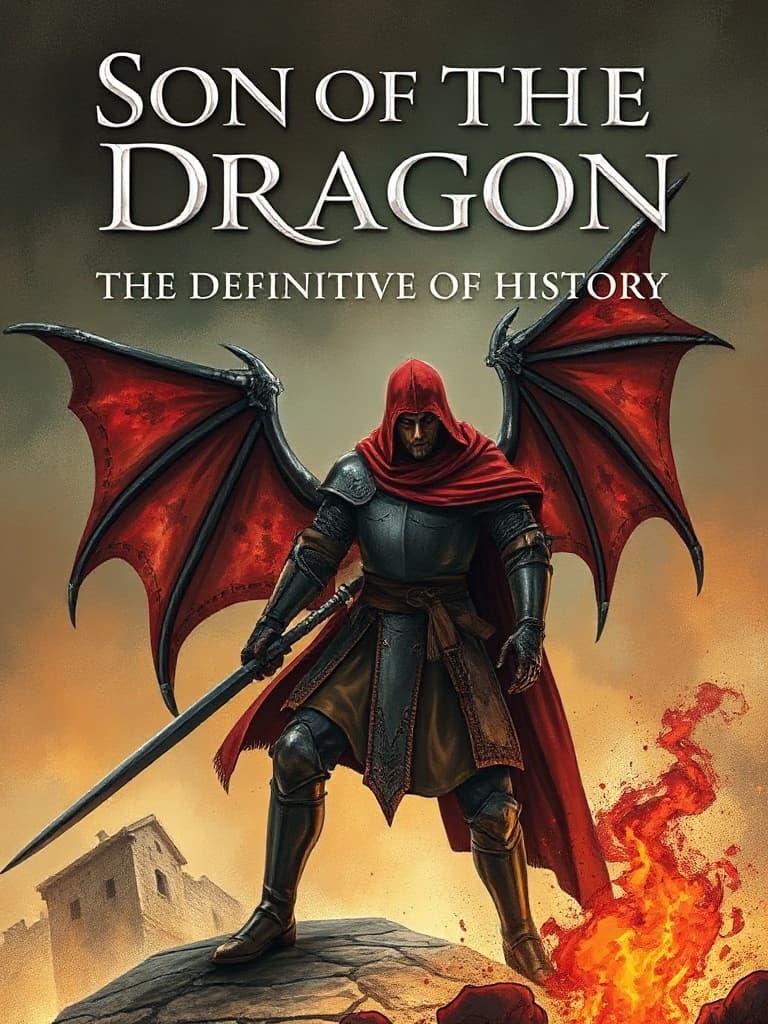
About this book
Son of the Dragon: The Definitive History of Mihnea cel Rău
24
0
55
0
The Devoted and Beloved Son of Vlad the Impaler from birth until His death. How Mihnea championed His Father and defended His honour and kept the Family's Heritage intact
Chapters
- 1The Shadowed Cradle: A Secret BirthThe narrative opens with the clandestine birth of Mihnea, the illegitimate son of the formidable Vlad the Impaler, in a secluded, undisclosed location, likely a remote monastery or a hidden estate far from the prying eyes of the court and the general populace. The atmosphere is thick with secrecy and apprehension. The midwife, a stoic, elderly woman named Elara, is sworn to absolute silence, her hands trembling not from age but from the gravity of the situation. She understands the immense danger associated with the child's lineage. Mihnea's mother, a woman of humble origins, perhaps a peasant girl or a low-ranking noblewoman who caught the eye of the notorious Voivode, is portrayed as frail, her love for her son tinged with the constant fear of discovery. The setting is deliberately vague, emphasizing Mihnea's initial isolation from the world. We see fleeting glimpses of his infancy: a swaddled babe, a mother's hushed lullabies, the furtive visits of a trusted envoy bearing gifts and assurances from his father, but never Vlad himself. The political climate of Wallachia is alluded to – a land constantly under threat from the Ottoman Empire and internal strife. Vlad the Impaler's reputation as a ruthless ruler precedes him, and the very existence of an illegitimate son is a potential political weapon. Mihnea is presented as an infant, unaware of his parentage, his early life a tapestry woven with silence, discretion, and the pervasive sense of being hidden. The description of his surroundings should be stark yet evocative, emphasizing the austerity and the lack of opulence befitting his true, albeit unknown, station. The focus is on the palpable tension, the hushed tones, and the constant vigilance of those who care for him. The chapter establishes the core premise: Mihnea’s existence is a secret, his lineage a dangerous inheritance. The emotional arc begins with a sense of vulnerability and mystery surrounding Mihnea, a quiet beginning that belies the tumultuous future. Continuity notes: Ensure the secrecy is paramount. No one outside a very select, trusted circle knows of Mihnea's existence or his father's identity. The mother's fate should remain ambiguous for now, adding to the mystery. The envoy could be a recurring minor character, a silent link to Vlad. The chapter ends with Mihnea as a young child, perhaps around five years old, being moved to another hidden location, his mother’s fate uncertain, leaving him with a lingering sense of loss and the first stirrings of questions about his origins, though not yet about his father specifically. The hook for the next chapter will be his arrival in a new, equally secluded but perhaps slightly more stimulating environment where he begins to perceive the world and hear the first whispers that will eventually lead him to his father.
- 2Whispers of the Dragon: Echoes of a LegendYears have passed, and Mihnea, now around ten years old, resides in a secluded estate under the watchful eye of a trusted guardian, a former soldier of Vlad named Ion. This guardian, a man of few words but immense loyalty, instills in Mihnea a sense of discipline and self-reliance. The setting is still one of relative isolation, but Mihnea is beginning to interact with the outside world through Ion's carefully curated accounts and the rare visitors who come to the estate. He is taught to read and write, to ride, and to wield a sword, all under the guise of preparing him for a life of service, though the true nature of that service remains undisclosed. The core of this chapter lies in the fragmented stories Mihnea begins to hear about his father. These tales are often contradictory, painting Vlad the Impaler as both a terrifying figure of brutal justice and a fierce defender of Wallachia. The stories are not told directly by Ion, but overheard from hushed conversations between visitors or read from weathered pamphlets and scrolls that Ion allows Mihnea to access, always with a warning about their veracity. Mihnea hears of impalements, of swift and merciless justice, but also of victories against overwhelming odds, of the Ottomans being driven back. These narratives ignite a fervent curiosity within him. He feels an inexplicable pull, a nascent loyalty, towards this legendary figure. The boy's intelligence and keen observation skills are highlighted as he starts piecing together these disparate accounts. He notices the fear in the eyes of those who speak of his father, but also a grudging respect. The emotional arc focuses on Mihnea’s growing fascination and a dawning sense of pride, tinged with confusion and a subtle unease about the violence. He begins to question the simplistic portrayals, sensing a deeper complexity. He starts to feel a personal connection, a need to understand the man behind the terrifying epithet. The chapter builds towards Mihnea’s first significant act of defiance, not in rebellion, but in seeking more information. He might secretly examine Ion's personal effects, finding a hidden token or a cryptic note that hints at a deeper truth. The setting should reflect Mihnea's growing awareness; perhaps the estate, once a place of safe confinement, now feels like a gilded cage. The contrast between the quiet life he leads and the explosive legends of his father is a key motif. Continuity notes: Ion must remain loyal but also cautious, never directly confirming Mihnea's parentage. The stories Mihnea hears should be presented as hearsay and legend, allowing for later reinterpretation. The guardian Ion should be a character who embodies the conflicting perceptions of Vlad. The chapter ends with Mihnea, perhaps during a clandestine exploration of a locked study or a hidden chest, discovering a small, worn book of poetry or a simple, unadorned wooden carving that seems to resonate with a deeper, more personal aspect of his father, fueling his desire to know more and planting the seed of doubt about the universally accepted image of the 'Impaler.' This discovery serves as the hook for the next chapter, pushing him to actively seek out more concrete information. The ultimate goal is to transition Mihnea from passive recipient of myths to an active seeker of truth.
- 3The Unseen Threat: Shadows on the LegacyMihnea, now in his late teens, is more aware than ever of the dangers surrounding his father's name, though his parentage remains a closely guarded secret. He has cultivated a sharp intellect and a keen sense of observation, honed by his secluded upbringing and the tutelage of Ion. The political landscape of Wallachia is becoming increasingly volatile. Boyar factions, rivals of the Drăculești family and those who benefited from Vlad's reign, are actively working to consolidate their power in the absence of a strong, recognized heir. Their primary weapon is the manipulation of public opinion, relentlessly portraying Vlad the Impaler as a bloodthirsty tyrant whose reign brought only suffering. Mihnea begins to perceive this campaign of discrediting his father's legacy not just as historical revisionism, but as a direct threat. He overhears hushed conversations among Ion's occasional visitors, or perhaps intercepts coded messages that Ion tries to keep from him, hinting at plots to erase any evidence that might contradict the monstrous image of the Impaler. These enemies, whom Mihnea begins to mentally label as 'the serpent's coil,' are not merely content with the legend; they actively seek to destroy any tangible proof of Vlad's strategic foresight or his patriotic motivations. Mihnea's clandestine investigation intensifies. He starts using his intelligence and literacy to decipher cryptic passages in old texts, to piece together fragmented reports of battles and political intrigues from Vlad's era. He realizes that understanding his father is not just a personal quest, but a vital necessity to counter a deliberate erasure of history. The setting of this chapter should reflect the growing tension – perhaps the secluded estate feels less like a sanctuary and more like a vulnerable outpost. The atmosphere is one of growing paranoia, where every shadow seems to harbor a threat. Mihnea's emotional arc is one of dawning realization and righteous anger. The curiosity of the previous chapters transforms into a fierce determination to protect his father's honor. He begins to understand that the stories of brutality were not necessarily the whole truth, but perhaps a tool used by his father, or a weapon used against him. He starts to feel the weight of his unknown lineage, the potential power it holds, and the immense danger it represents if discovered. Continuity notes: Introduce hints of specific political enemies, perhaps mentioning the names of rival boyar families, without fully revealing Boyar Dinu yet. The 'enemies' should be shown to be organized and resourceful. Ion's role becomes more crucial as he attempts to shield Mihnea while also subtly guiding him, perhaps by 'accidentally' leaving certain documents within reach. The chapter ends with Mihnea discovering a specific piece of information – perhaps a reference to a hidden repository of documents or a coded message detailing a plot to seize and destroy specific historical records related to Vlad's reign. This discovery solidifies the threat and gives Mihnea a concrete objective: to find and protect these records before they are lost forever. The hook is the urgent realization that his father's true history is actively being targeted for extinction, compelling Mihnea to move from passive observation to active intervention.
- 4Echoes of Loyalty: The Hidden NetworkMihnea, now a young man of eighteen or nineteen, has moved beyond merely sensing threats; he is actively seeking allies and information. His clandestine investigations, fueled by the knowledge of the 'unseen threat' and the desire to protect his father's legacy, lead him to an unexpected discovery: a hidden network of individuals who were once loyal to Vlad the Impaler. These are not high-ranking boyars, but seasoned soldiers, former administrators, trusted servants, and individuals whose lives were profoundly impacted, positively or negatively, by Vlad's policies. The setting for these encounters is deliberately clandestine and varied: a remote tavern on the outskirts of a town, a secluded forest clearing, a quiet corner of a bustling market where coded greetings are exchanged. Mihnea, often using a pseudonym or a carefully constructed cover story, begins to make contact. His initial approach is cautious, testing the waters, revealing only enough to gauge their allegiance. He is guided by fragments of information he has gathered, perhaps a symbol or a password. The key figure introduced here is Elder Iancu, a wise and weathered man, perhaps a former scribe or a trusted advisor to Vlad, who has become a central figure in this underground network. Iancu is initially skeptical of Mihnea, but gradually recognizes the sincerity of his quest and perhaps even a subtle resemblance to his former master, though he does not yet know Mihnea's true identity. Through Iancu and others, Mihnea begins to hear a radically different narrative about his father. They speak not of a capricious tyrant, but of a leader forced into brutal decisions by the existential threat of Ottoman expansion and internal treachery. They recount instances of Vlad’s strategic brilliance on the battlefield, his efforts to instill order and justice within Wallachia, and his deep-seated patriotism. These loyalists reveal that Vlad's infamous ruthlessness was often a calculated measure to instill fear in his enemies and to quell dissent that would have weakened Wallachia at a critical juncture. They speak of his love for his people and his land, a love that drove him to make impossible choices. Mihnea's emotional arc is one of profound revelation and growing validation. The confusion and anger from the previous chapter begin to coalesce into a powerful sense of understanding and purpose. He sees his father not as a monster, but as a complex, deeply flawed, yet ultimately dedicated protector. The loyalty he felt instinctively now has a foundation in truth. He feels a burgeoning sense of belonging, connected to these individuals who share his desire to preserve Vlad's true story. Continuity notes: The network of loyalists should be presented as fragmented and cautious, operating in constant fear of discovery by the very boyar factions Mihnea opposes. Elder Iancu should be established as the primary conduit of information, possessing a deep knowledge of Vlad's reign and motivations. Mihnea's true identity should still be concealed from most, if not all, of the network, though Iancu may begin to suspect. The chapter ends with Mihnea, having gained a crucial piece of insider knowledge about Vlad's motivations and the existence of hidden records, making a solemn vow to Iancu and the gathered loyalists: to uncover the full truth and ensure his father's legacy is not lost. He might even pledge to find and protect the very documents these enemies seek to destroy. The hook is the explicit commitment Mihnea makes, signaling his transition from investigator to active defender, and the introduction of Iancu as a pivotal mentor figure.
- 5The Guardian's Pledge: A Mentor's BurdenFollowing his encounters with the hidden network of Vlad's loyalists, Mihnea finds himself drawn to Elder Iancu, the wise and cautious leader of the group. Iancu, recognizing Mihnea's intelligence, determination, and perhaps sensing a deeper connection to the Drăculești line without fully knowing his parentage, takes him under his wing. The primary setting for this chapter is Iancu's humble dwelling – perhaps a secluded cottage filled with ancient books and maps, or a hidden chamber within the ruins of an old fortress. It’s a place where history is preserved, not in grand libraries, but in fragmented memories and carefully guarded artifacts. Iancu begins to mentor Mihnea, not just in the practicalities of survival or investigation, but in the deeper understanding of Wallachian history and Vlad's place within it. He shares fragmented truths about Vlad's reign, carefully selecting what to reveal, aware of Mihnea’s youth and the immense burden of this knowledge. He speaks of the constant pressure from the Ottoman Empire, the internal betrayals by grasping boyars, and the economic hardships that plagued the land. He recounts specific instances where Vlad's seemingly brutal actions were, in fact, calculated strategies to maintain order, deter invaders, and secure the fragile independence of Wallachia. Iancu emphasizes the sacrifices Vlad made, the impossible choices he faced, and the deep love for his homeland that drove him. He might share personal anecdotes, stories passed down through his own family, or even fragments of Vlad’s own writings that paint a picture of a man burdened by responsibility, not driven by sadism. Mihnea listens intently, absorbing every word. He begins to see the strategic genius behind the notorious impalements – a psychological weapon designed to terrorize enemies and prevent rebellion. He learns about Vlad's efforts to reform laws, stabilize the economy, and build fortifications. The narrative highlights Mihnea's intellectual growth; he starts to analyze historical events with a critical eye, understanding the context and the pressures his father endured. His emotional arc is one of deepening respect and a profound sense of duty. The initial curiosity has matured into a solemn pledge. He feels the weight of his father's legacy and the responsibility to ensure its true narrative prevails. He understands that this is not just about vindicating a name, but about preserving the history and identity of Wallachia itself. Continuity notes: Iancu’s mentorship should be gradual, building trust. He must remain circumspect about Mihnea’s parentage, perhaps expressing suspicions but not definitive knowledge. The focus should be on the *why* behind Vlad's actions, introducing the concept of necessity driving extreme measures. The chapter should subtly hint at the existence of specific crucial documents or artifacts that Iancu and the loyalists are trying to protect. The chapter ends with Mihnea, standing beside Iancu amidst the historical relics, looking out at the land his father fought to protect. He makes a solemn vow, a 'Guardian's Pledge,' to Iancu and to the memory of his father: to uncover the complete truth, to safeguard the evidence, and to ensure that Vlad the Impaler is remembered not as a monster, but as a devoted protector of Wallachia. The hook is this powerful, personal commitment, setting the stage for Mihnea to actively seek out the tangible proof Iancu speaks of.
- 6The Serpent's Coil: Boyar Dinu's ShadowThe narrative introduces Boyar Dinu, a powerful and ambitious figure within Wallachian politics, establishing him as a primary antagonist. Dinu represents the entrenched boyar class who chafed under Vlad the Impaler's strict rule and saw his legacy as a threat to their own aspirations for power and influence. The setting is Dinu's opulent estate, a stark contrast to the austerity of Mihnea's world, or perhaps the corridors of power in Târgoviște, where political maneuvering and hushed conspiracies take place. Dinu is depicted as cunning, charismatic, and utterly ruthless. He is shown actively working to tarnish Vlad's name, not through direct confrontation, but through subtle manipulation of public opinion and the dissemination of carefully crafted propaganda. He employs scribes to write biased accounts, spreads rumors through his network of contacts, and perhaps even finances ballad singers who sing tales of the Impaler's cruelty. His goal is clear: to ensure that Vlad is remembered solely as a bloodthirsty tyrant, thereby legitimizing his own opposition to any potential Drăculești resurgence and consolidating his power. Mihnea, through his continued investigations and his interactions with Iancu and the loyalists, becomes increasingly aware of Dinu's machinations. He might intercept a messenger carrying instructions from Dinu, or overhear a conversation between Dinu's agents. He learns that Dinu is not merely content with historical slander; he is actively seeking to destroy any evidence that contradicts the monstrous image of the Impaler. This could include locating and confiscating letters, battle plans, or personal journals that reveal Vlad's strategic thinking and patriotic motivations. Dinu represents the 'Serpent's Coil,' a force actively constricting and suffocating the truth. Mihnea realizes that Dinu is not just an obstacle to his personal quest, but a direct and immediate threat to the very historical record he is trying to preserve. The emotional arc for Mihnea in this chapter is one of heightened vigilance and growing animosity. He recognizes Dinu as the embodiment of the forces that wish to distort his father's memory. There is a sense of urgency and a growing understanding of the personal danger he is in, as his investigation inevitably brings him closer to Dinu's sphere of influence. Continuity notes: Boyar Dinu should be presented as a formidable opponent, representing a significant political and social force. His methods should be manipulative rather than overtly violent at this stage, highlighting his cunning. The connection between Dinu and the 'unseen threat' from Chapter 3 should be solidified. The chapter ends with Mihnea witnessing or learning about a specific act of sabotage or destruction orchestrated by Dinu’s agents – perhaps the burning of a small collection of historical documents or the silencing of an individual who might have spoken favorably of Vlad. This event underscores the direct and destructive nature of Dinu's campaign and solidifies Mihnea's resolve to actively counter him, realizing that passive investigation is no longer sufficient. The hook is the concrete evidence of Dinu's destructive actions, making the threat to Vlad's legacy tangible and personal for Mihnea.
- 7A Legacy in Peril: The Race Against OblivionThe previous chapter's revelation of Boyar Dinu's destructive actions heightens the urgency of Mihnea's mission. He and Elder Iancu now understand that the threat to Vlad the Impaler's legacy is not merely ideological; it is a physical campaign to eradicate historical evidence. This chapter focuses on the tangible remnants of Vlad’s life and reign: letters, official decrees, battle plans, personal journals, maps, and perhaps even unique artifacts that bear witness to his rule. These items are scattered, hidden in various locations – old monasteries, abandoned watchtowers, the estates of loyalists, or even buried for safekeeping. Mihnea learns that Dinu and his allies are actively searching for these materials, not to preserve them, but to destroy them. They might be burning documents, bribing keepers of archives, or even sending agents to plunder hidden caches. The chapter emphasizes the precariousness of this historical record. The passage of time itself is an enemy, with parchment deteriorating and memories fading. The active malice of Dinu's faction acts as an accelerant to this natural decay. Mihnea, guided by Iancu and the fragmented knowledge of the loyalist network, begins to identify the key locations where these crucial documents and artifacts might be found. This involves deciphering old maps, interpreting cryptic clues left by Vlad or his associates, and piecing together oral histories. The setting is a race against time and against Dinu’s agents. We see Mihnea and perhaps a small group of loyalists venturing into dangerous, forgotten places – overgrown ruins, treacherous mountain passes, or even infiltrating areas controlled by Dinu’s influence. The atmosphere is tense and filled with a sense of impending loss. Mihnea’s emotional arc is one of heightened anxiety and a profound sense of responsibility. He feels the weight of generations resting on his shoulders. The abstract concept of defending his father's honor has now become a concrete, physical mission to salvage tangible proof. He understands that if these remnants are lost, the true narrative of Vlad the Impaler might indeed be extinguished forever, leaving only the distorted legend. Continuity notes: The specific locations of the hidden materials should be hinted at, creating a roadmap for future chapters. Dinu’s agents should be depicted as active pursuers, creating moments of near-discovery or direct confrontation, raising the stakes. Iancu’s role is crucial in providing the knowledge needed to locate these items, but he may be too old or too frail to participate in the more dangerous expeditions, relying on Mihnea. The chapter ends with Mihnea and his companions securing a small but significant cache of documents, perhaps a collection of letters or a fragment of a battle plan, just moments before Dinu’s agents arrive, or after narrowly escaping a trap set by them. This success is tempered by the stark realization of how much more is at risk and how limited their time truly is. The hook is the tangible success, proving that recovery is possible, but also the chilling confirmation that the enemy is close and relentless, intensifying the 'race against oblivion'.
- 8The Hidden Archives: Unearthing the PastBuilding upon the urgency established in the previous chapter, this installment focuses on Mihnea's active pursuit and discovery of Vlad the Impaler's hidden archives. Guided by the wisdom of Elder Iancu and the fragmented clues gathered from the loyalist network, Mihnea embarks on a series of perilous expeditions to locate these secret repositories of information. The settings are diverse and atmospheric, emphasizing the hidden nature of these locations: perhaps a forgotten crypt beneath an old church, a sealed chamber within a ruined fortress accessible only through a treacherous climb, or a hidden compartment within a seemingly innocuous peasant dwelling. These places are steeped in history, dust-laden, and filled with the echoes of the past. Mihnea, often accompanied by a small, trusted group of loyalists (perhaps including Ion, his original guardian, now fully aware of Mihnea's quest), must overcome physical obstacles – collapsing structures, hidden traps, or natural hazards – and the constant threat of discovery by Boyar Dinu's agents, who are also searching for these very materials, albeit with destructive intent. The chapter details the process of discovery: deciphering ancient symbols, solving riddles left by Vlad or his confidants, and carefully excavating or accessing these hidden caches. Inside, Mihnea finds not just random documents, but a curated collection revealing Vlad's true character and intentions. These include personal letters (perhaps to his mother, his wife, or trusted advisors), detailed battle plans that showcase his strategic genius, official decrees that illustrate his attempts at justice and order, and personal accounts that offer glimpses into his thoughts and motivations. The descriptions of these documents should be vivid: ink faded but legible, parchment brittle with age, seals partially intact. Mihnea's interaction with these artifacts is central; he handles them with reverence, his connection to his father deepening with each discovery. His emotional arc is one of intense focus, intellectual excitement, and growing awe. The abstract nature of his quest solidifies into a tangible reality as he physically unearths the proof he needs. He begins to feel a profound connection to his father, not just as a legendary figure, but as a complex individual. Continuity notes: The specific nature of the documents found should be detailed enough to hint at the revelations to come, such as specific military strategies, diplomatic correspondence, or personal reflections on leadership. The threat from Dinu's agents should remain present, perhaps culminating in a close call or a brief skirmish that forces Mihnea and his companions to flee with their findings. Iancu's role is primarily as the source of knowledge, but he may provide crucial guidance remotely or through written instructions. The chapter concludes with Mihnea successfully retrieving a significant portion of these hidden archives, perhaps a collection of letters and official documents that unequivocally demonstrate Vlad's strategic foresight and his deep commitment to Wallachia's sovereignty. He looks upon these recovered treasures, realizing the immense value and danger they represent. The hook is the tangible success of recovering the 'Hidden Archives,' but also the dawning realization of the sheer volume of evidence and the immense task still ahead in piecing it all together and then presenting it to a world steeped in the legend of the Impaler.
- 9The Unveiling of Truths: A Portrait of the ProtectorWith the hidden archives in his possession, Mihnea, under the guidance of Elder Iancu, dedicates himself to meticulously piecing together the fragmented evidence. This chapter is the intellectual heart of the story, focusing on Mihnea's deep dive into the historical documents, letters, and battle plans he has recovered. The setting is likely a secluded, safe location – perhaps Iancu's dwelling or a secure room within a sympathetic noble's estate – where Mihnea can work undisturbed. He pores over the aged parchment, his literacy and sharp mind allowing him to decipher the intricacies of 15th-century Romanian, Ottoman Turkish, and Latin correspondence. The narrative shifts to focus on Mihnea’s internal process: his analysis, his deductions, and the gradual construction of a new understanding of his father. He correlates battle reports with diplomatic letters, strategic maps with personal reflections. He begins to see the patterns: Vlad's consistent efforts to forge alliances against the Ottomans, his attempts to centralize power to better defend the realm, and his use of brutal tactics as a last resort against internal dissent and external threats. The chapter elaborates on the 'truths' being unveiled: Vlad the Impaler was not inherently sadistic, but a pragmatic and often desperate ruler forced to make horrific choices to preserve Wallachia's independence. His 'cruelty' was a calculated instrument of statecraft, designed to instill discipline, deter enemies, and maintain order in a land constantly on the brink of collapse. Mihnea discovers evidence of Vlad's deep love for his people, his vision for a stronger, more unified Wallachia, and his personal sacrifices. Personal letters might reveal moments of doubt, weariness, and profound responsibility, humanizing the fearsome figure. The descriptions of the documents should highlight specific examples: a letter detailing Vlad's frustration with corrupt boyars, a strategic map showing an ingenious defensive maneuver against a larger Ottoman force, or a decree establishing fair trade practices. Mihnea's emotional arc is one of profound enlightenment and growing conviction. The mystery surrounding his father begins to resolve, replaced by a complex, nuanced understanding. He feels a powerful sense of vindication, not just for his father, but for the truth itself. He moves from simply wanting to defend his father's honor to a deep-seated belief in the historical accuracy he has uncovered. Continuity notes: Specific examples of Vlad's strategic genius and patriotic actions should be highlighted, drawn directly from the 'archives.' The contrast between the historical reality Mihnea is uncovering and the prevalent legend of the 'Impaler' should be stark. Iancu serves as a knowledgeable sounding board, helping Mihnea interpret difficult passages or historical contexts, validating his findings. The chapter ends with Mihnea, surrounded by the scattered remnants of his father's life, finally grasping the complete picture. He understands the brutality, but now sees it as a tragic necessity born of circumstance and a fierce, unwavering love for his homeland. He has not just found evidence; he has unveiled the complex truth. The hook is Mihnea's newfound clarity and the immense weight of this knowledge. He now possesses the irrefutable proof, but the challenge of convincing others, particularly those who benefit from the existing narrative, looms large. He is ready for the next step: presenting this truth to the world.
- 10The Weight of Proof: A Singular ArtifactFollowing the comprehensive analysis of the recovered archives, Mihnea and Elder Iancu identify a single, pivotal artifact or document that serves as the undeniable cornerstone of their defense. This isn't just another letter or decree; it’s something extraordinary – perhaps a detailed personal journal entry from Vlad himself, a meticulously drawn map outlining a brilliant strategic defense plan, a treaty proposal showcasing Vlad's diplomatic efforts, or even a confession or testament smuggled out during his final days. This artifact is unique in its clarity, its detail, and its irrefutable connection to Vlad the Impaler's core motivations and actions. The setting is focused on the artifact itself: how it was found, its physical description (e.g., an intricately carved wooden box containing a rolled parchment, a heavy lead seal, unique bindings), and the moment of its discovery or final decipherment. Mihnea's interaction with this artifact is central. He handles it with the utmost care, recognizing its immense significance. The chapter delves into the specific content of this proof: it might detail Vlad's contingency plans against specific Ottoman maneuvers, reveal his secret negotiations with other European powers, or articulate his philosophy of leadership and his vision for Wallachia's future, directly contradicting the image of a mere bloodthirsty despot. This proof demonstrates not just patriotism, but strategic genius, foresight, and a deep, albeit harsh, sense of justice. Mihnea and Iancu discuss the implications of this singular piece of evidence. They understand its power to potentially dismantle the decades of propaganda and smear campaigns orchestrated by rivals like Boyar Dinu. However, they also recognize the immense danger it represents. This artifact is a direct challenge to the established order and the narrative that benefits those who wish to keep Vlad's true legacy buried. Its existence is a threat to their power, making it a prime target for destruction. Mihnea's emotional arc is one of profound realization and a sobering sense of responsibility. The intellectual understanding from the previous chapter solidifies into a concrete, tangible weapon. He feels the 'weight' of this proof – its importance, its potential impact, and the danger it brings upon him and those who support him. He grasps the magnitude of the task ahead: presenting this evidence in a world resistant to change. Continuity notes: The artifact must be demonstrably authentic and directly linked to Vlad. Its content must be specific enough to counter key accusations leveled against Vlad. The danger posed by this artifact to Dinu and his allies should be explicitly stated or implied. Iancu's role is to confirm the artifact's authenticity and significance, perhaps recalling its provenance or the circumstances under which it was hidden. The chapter ends with Mihnea holding the artifact, its potential power palpable. He understands that this is the key – the undeniable proof that can finally begin to shift the narrative. The hook is the possession of this singular, powerful artifact, representing both the ultimate weapon for his cause and the ultimate target for his enemies, setting the stage for his public defense.
- 11A Son's Defense: Stepping into the LightArmed with the irrefutable evidence, particularly the singular artifact uncovered in the previous chapter, Mihnea resolves to move beyond clandestine operations and publicly defend his father's honor. This chapter marks his transition from a hidden investigator to a public advocate. The setting is initially Mihnea's private space, perhaps Iancu's secluded study or a secure room, where he meticulously prepares his case. He organizes the documents, rehearses his arguments, and anticipates the inevitable counter-arguments and skepticism he will face. He understands the immense pressure – not just from political enemies like Boyar Dinu, but from a populace conditioned by years of propaganda and fearful of upsetting the established historical narrative. He knows that simply presenting the truth might not be enough; he must frame it in a way that resonates with the people and challenges the deeply ingrained myths. The focus shifts to Mihnea's internal struggle and his resolve. He grapples with the potential consequences of revealing his quest and perhaps even his identity. He weighs the personal risks against the imperative of safeguarding his father's legacy. His loyalty and determination are tested as he confronts the daunting task ahead. He might have conversations with Iancu, who offers counsel and reassurance, reminding him of the importance of his mission. The chapter emphasizes the courage required to step into the public arena when one has spent a lifetime in secrecy. Mihnea's emotional arc is one of courage, trepidation, and unwavering determination. The fear of the unknown is palpable, but it is overshadowed by his profound sense of duty and his conviction in the truth he has uncovered. He is no longer just Mihnea, the hidden son; he is becoming Mihnea cel Rău, the defender of his father's name. Continuity notes: The preparations for the public defense should be detailed, showing Mihnea's strategic thinking. Hints of the specific forum or audience he intends to address should be included (e.g., a gathering of influential figures, a public square, a church council). Boyar Dinu should be aware, or become aware, of Mihnea's intentions, setting the stage for their confrontation. The chapter ends with Mihnea making the final decision to proceed, perhaps looking at the key artifact one last time, steeling himself for the confrontation. He is ready to step out of the shadows and challenge the prevailing narrative, understanding that this public defense is not merely the beginning of the fight for Vlad's honor, but a crucial turning point in his own life. The hook is Mihnea's irrevocable commitment to a public confrontation, setting the stage for the dramatic unveiling of his findings.
- 12The Public Arena: A Voice for the VoivodeThis chapter depicts Mihnea's dramatic entrance into the public sphere to defend his father's legacy. The setting is a significant public gathering – perhaps a council meeting in Târgoviște, a religious synod, or even a carefully orchestrated assembly of influential citizens and boyars. The atmosphere is charged with anticipation, skepticism, and underlying tension. Mihnea, no longer content to operate from the shadows, steps forward, perhaps accompanied by Elder Iancu and a few trusted loyalists. His appearance might be unexpected, causing a stir, especially if his true identity or his connection to Vlad is not widely known. He begins his presentation, his voice initially perhaps trembling slightly but growing steadier as he speaks with conviction. He systematically lays out his findings, presenting the evidence he has painstakingly gathered from the hidden archives. The singular artifact is brought forth, its significance explained. Mihnea addresses the prevailing narrative of his father's cruelty head-on, challenging the myths and offering the contextualized truth: Vlad the Impaler as a strategic protector of Wallachia, forced into harsh measures by dire circumstances. He directly confronts Boyar Dinu and his allies, refuting their claims with documented facts and logical arguments. The presentation is not just a recitation of history; it's a passionate defense, highlighting Vlad's patriotism, his efforts at justice, and his ultimate sacrifice for his homeland. The reactions of the audience are crucial: a mixture of shock, disbelief, murmurs of agreement from those sympathetic to Vlad's memory or disillusioned with the current boyar dominance, and outright hostility or dismissiveness from Dinu and his staunch supporters. Boyar Dinu is portrayed actively trying to disrupt Mihnea's presentation, perhaps interjecting with accusations, attempting to discredit the evidence, or rallying his own supporters to create a clamor. Mihnea's emotional arc is one of courage under fire, intellectual prowess, and unwavering resolve. He faces down hostility and doubt, his belief in the truth fueling his defense. He demonstrates remarkable composure and rhetorical skill, transforming the public arena into a battleground for his father's reputation. Continuity notes: The specific evidence presented should align with the truths unveiled in Chapter 9 and the artifact from Chapter 10. Boyar Dinu's reaction must be significant, showing his desperation to maintain the status quo. The audience's response should be varied, indicating the beginning of a societal debate, not an immediate victory. The chapter ends with Mihnea having delivered his defense, leaving the audience in a state of profound division and contemplation. He has successfully challenged the smear campaign and presented a compelling counter-narrative, but the battle for his father's honor is far from over. The hook is the immediate aftermath of Mihnea's presentation: the silence of shock, the rising murmur of debate, and the palpable tension hanging in the air, signifying that the true fight for legacy has just begun.
- 13Echoes in the Court: Seeds of Doubt and DivisionMihnea's public defense of his father has sent ripples through the political and social fabric of Wallachia. This chapter explores the immediate aftermath, focusing on the reactions and consequences of his bold presentation. The setting shifts to various locations where the debate rages: the halls of the court, private boyar meetings, merchant guilds, and common taverns. The revelations have sparked intense debate and division. Some cling fiercely to the established myths of Vlad the Impaler as a monstrous figure, finding comfort in the familiar narrative or fearing the implications of a more complex truth that might challenge their own positions or allegendas. These individuals often dismiss Mihnea's evidence as forgeries or the desperate acts of a son trying to whitewash his father's name. Others, however, are genuinely moved by Mihnea's presentation and the evidence he provided. They begin to question the simplistic portrayal of Vlad, recognizing the political motivations behind the smear campaign and the strategic necessities of his rule. These individuals might include former soldiers who served under Vlad, scholars interested in historical accuracy, or those who suffered under the current boyar factions. Boyar Dinu and his allies are shown actively working to counter Mihnea's influence. They might engage in counter-propaganda, spread rumors about Mihnea himself (perhaps hinting at his illegitimate birth or questioning his motives), or attempt to intimidate those who show sympathy towards his cause. They are fighting to maintain the narrative that benefits them. Mihnea, meanwhile, navigates this complex and often hostile political landscape. He faces continued skepticism and outright opposition, but also finds unexpected support and burgeoning respect from certain quarters. He must carefully choose his words and actions, understanding that every move is scrutinized. His determination remains unwavering, but he recognizes the long and arduous path ahead. The emotional arc is one of growing understanding of the deep-seated nature of prejudice and the difficulty of changing entrenched beliefs. Mihnea experiences moments of frustration and perhaps even despair, but also glimmers of hope as he sees the seeds of doubt he has sown beginning to sprout. Continuity notes: Show concrete examples of the division – perhaps a debate between two characters with opposing views, or a scene where a previously staunch opponent begins to waver. Dinu's counter-moves should be significant, demonstrating his continued threat. Mihnea's interactions should reflect his growing understanding of political maneuvering. The chapter ends with Mihnea attending a private meeting with a group of influential figures who are cautiously open to his evidence. While not fully convinced, they acknowledge the validity of his arguments and the potential threat posed by Dinu. This tentative support offers a ray of hope amidst the ongoing conflict. The hook is this fragile alliance, signifying that Mihnea has begun to gain traction, but also highlighting the precariousness of his position and the ongoing struggle against powerful opposition.
- 14The Price of Legacy: Sacrifice and ResolveMihnea's public stand has brought him recognition, but it has also placed him in grave danger. This chapter delves into the personal risks and threats Mihnea faces as he continues to champion his father's legacy. The 'price of legacy' is made starkly evident through escalating opposition. Boyar Dinu and his faction, seeing Mihnea as a direct threat to their power and reputation, intensify their efforts to silence him. This might involve direct threats against Mihnea himself, attempts to frame him for crimes, or actions targeting those who support him, such as Elder Iancu or other loyalists. The setting could include Mihnea narrowly escaping an ambush, discovering evidence of a plot against his life, or witnessing the repercussions faced by his allies. Perhaps Ion, his loyal guardian, is injured while protecting him, or a sympathetic boyar faces political ruin for associating with Mihnea. The chapter emphasizes the sacrifices involved in standing for the truth. Mihnea learns that protecting a legacy is not merely an intellectual or political endeavor; it demands personal courage, resilience, and a willingness to endure hardship and loss. He must constantly be vigilant, weighing the risks of his actions and making difficult choices. His resolve is tested. He might experience moments of doubt, questioning whether the cost is too high, but ultimately reaffirms his commitment to his father's honor and the historical truth. His emotional arc is one of hardening resolve, tempered by the pain of witnessing the consequences of his actions on those around him. He transitions from a determined advocate to a seasoned fighter, understanding the brutal realities of the struggle. He learns that defending a legacy often means defending not just a name, but the lives and futures of those who believe in it. Continuity notes: The threats against Mihnea should escalate, moving from political maneuvering to more direct, potentially violent actions. Specific examples of sacrifices made by Mihnea or his allies should be depicted. The loyalty of his core supporters (Iancu, Ion) should be tested and reaffirmed. Dinu's actions should demonstrate his increasing desperation. The chapter ends with Mihnea enduring a significant setback – perhaps a betrayal from within his nascent circle of supporters, or a direct attack that forces him and his closest allies to flee their current refuge. Despite the hardship and the potential loss, Mihnea emerges with his determination strengthened, not broken. He understands the true cost of his mission but is more committed than ever to seeing it through. The hook is this moment of adversity, highlighting the high stakes and Mihnea’s unyielding spirit in the face of significant personal cost.
- 15A Family's Heritage: Redefining the DrăculeștiMihnea's persistent efforts begin to yield tangible results in reshaping perceptions of his family's history. This chapter focuses on the gradual shift in how the Drăculești name is viewed, moving beyond the simplistic label of 'the Impaler.' The setting is diverse, reflecting the growing impact of Mihnea's campaign: perhaps a newly commissioned mural in a town square depicting Vlad not just as a warrior, but as a protector; a debate among scholars where Mihnea's evidence is seriously considered; or conversations among common people who now speak of Vlad with a mixture of fear and respect for his strength. Mihnea works to ensure his family's heritage is understood in its complexity. He emphasizes Vlad's role as an unifier and defender of Wallachia against powerful external threats. He highlights his contributions to law and order, his efforts to strengthen the economy, and his unwavering patriotism. The narrative focuses on the deliberate recontextualization of his father's actions. The impalements, while acknowledged, are presented as strategic tools of deterrence and control in a chaotic era, rather than acts of wanton cruelty. Mihnea advocates for understanding Vlad within the brutal context of 15th-century politics and warfare. He seeks to secure his family's place in Wallachian history not as a dynasty of terror, but as one of fierce defense, complex leadership, and profound, albeit harsh, dedication to their homeland. This involves not just countering negative propaganda but actively promoting a more nuanced historical narrative. He might collaborate with sympathetic chroniclers, encourage the preservation of historical sites associated with his father, or use his growing influence to support initiatives that celebrate Wallachian history. The emotional arc is one of cautious optimism and a sense of accomplishment, tempered by the awareness that the battle is ongoing. Mihnea sees the fruits of his labor – the subtle but significant shifts in public and elite opinion. He feels a sense of pride not just in defending his father, but in reclaiming a stolen or distorted part of his own identity and heritage. Continuity notes: Show concrete examples of how the narrative is changing – perhaps a specific historical text being revised, or a formerly negative ballad being reinterpreted. Boyar Dinu's influence should be shown waning, or at least being challenged more effectively, though he remains a threat. Mihnea's actions should demonstrate a strategic approach to legacy management, beyond mere defense. The chapter ends with Mihnea overseeing the completion of a significant project, such as the restoration of a minor fortification built by his father or the commissioning of a new chronicle that incorporates his findings. This tangible symbol of his efforts represents a victory in reshaping the family's heritage. The hook is the visible success in redefining the Drăculești legacy, offering a hopeful outlook but also hinting that the fight to solidify this new understanding against lingering doubts and opposition is still paramount.
- 16The Shadow of Doubt: The Enduring LegendDespite Mihnea's dedicated efforts and the tangible successes in reshaping perceptions, this chapter acknowledges the persistent power of the legend of Vlad the Impaler. The 'shadow of doubt' refers to the deeply ingrained historical myths and the difficulty of completely eradicating misinformation, even in the face of compelling evidence. The setting might depict scenes where the old stories continue to hold sway: a superstitious villager recounting tales of the devilish Voivode, a foreign traveler repeating sensationalized accounts learned abroad, or even a conservative faction within the court that actively resists Mihnea's revisionist history. Mihnea encounters resistance not just from active opponents like Boyar Dinu, but from the sheer inertia of popular belief and ingrained prejudice. The legend of the 'Impaler' is more sensational, more easily digestible, and perhaps more terrifyingly intriguing than the complex reality Mihnea presents. Children are still told frightening stories, and foreign powers continue to use the 'brutal tyrant' narrative to justify their own political aims or to exploit Wallachia. Mihnea's challenge is immense: he must not only present the truth but actively dismantle the deeply rooted, often sensationalized, persona that has captured the imagination for decades. He realizes that fully eradicating the misinformation is a formidable, ongoing task, perhaps one that will extend beyond his own lifetime. The emotional arc for Mihnea is one of sober realism and renewed determination. While he has achieved significant victories, he understands the enduring nature of myth and propaganda. The initial triumph of uncovering the truth is tempered by the ongoing struggle to make that truth universally accepted. He feels the weight of this protracted battle, but it fuels his resolve rather than diminishing it. He accepts that his role is not just to reveal the past, but to continuously advocate for its accurate understanding. Continuity notes: Illustrate specific instances where the old legend resurfaces and actively contradicts Mihnea's efforts. Show how foreign powers or rival factions might exploit the legend. Mihnea's strategy might need to adapt to address this persistent doubt, perhaps focusing on education or long-term historical preservation. Boyar Dinu, though perhaps weakened, might exploit these lingering doubts. The chapter ends with Mihnea confronting a situation where the old legend has directly caused harm or misunderstanding, perhaps leading to ostracization of someone associated with Vlad or influencing a political decision based on false premises. This stark reminder of the legend's power strengthens his resolve to continue the fight, even if complete victory seems distant. The hook is the realization that the legend is a living, breathing entity with its own power, and Mihnea's mission is now not just about uncovering history, but about actively combating a persistent cultural narrative.
- 17The Loyalists' Stand: A Chorus of TruthInspired by Mihnea's courage and the undeniable evidence he has presented, the hidden network of Vlad the Impaler's former loyalists begins to emerge from the shadows. This chapter focuses on their increasing visibility and their active support for Mihnea's cause. Having operated in secrecy for years, fearing persecution and obscurity, they are now emboldened by Mihnea's public stand and the possibility of their leader's true history being recognized. The setting sees these loyalists taking more overt actions: former soldiers speaking out about Vlad's military leadership and strategic brilliance in public forums; administrators testifying to his efforts in establishing law and order; servants recalling his personal acts of justice or fairness; and scholars or scribes who were privy to his plans sharing their knowledge. They lend their voices, their memories, and their corroborating accounts to Mihnea's narrative, transforming his defense from the testimony of a son into a chorus of witnesses. Their collective testimony reinforces the true history and adds layers of personal experience and firsthand accounts that the written archives alone might not fully convey. Elder Iancu remains a central figure, coordinating efforts and validating the accounts of his former comrades. Boyar Dinu and his allies find their opposition becoming more difficult as more credible individuals step forward to challenge the old narrative. While they might still attempt to discredit these witnesses or resort to intimidation, the sheer number and the diverse backgrounds of the loyalists make this increasingly challenging. Mihnea's role shifts slightly; while he remains the primary advocate, he is now bolstered by a growing community of support, validating his claims and amplifying his message. His emotional arc is one of profound gratitude and renewed hope. Seeing these individuals risk their safety to support the truth fills him with a deep sense of connection and purpose. He is no longer a lone voice fighting against a tide of misinformation; he is leading a movement. Continuity notes: Showcase specific examples of loyalists coming forward and the impact of their testimony. The contrast between their current actions and their previous secrecy should be highlighted. Dinu's attempts to suppress these voices should be depicted, showing his struggle against this growing tide of support. The chapter should emphasize the collective nature of historical truth-telling. The chapter ends with a significant public event – perhaps a formal hearing or a large gathering – where multiple loyalists testify, presenting a united front alongside Mihnea. The impact is undeniable, forcing even staunch opponents to acknowledge the weight of the corroborating evidence. The hook is the powerful emergence of the loyalists, transforming Mihnea's solitary quest into a collective testament to Vlad's true legacy, signaling a critical turning point in the battle for historical truth.
- 18A Father's True Face: The Voivode RevealedThis chapter represents the culmination of Mihnea's quest to understand his father. Having gathered evidence, faced opposition, and rallied supporters, Mihnea now achieves a profound, personal understanding of Vlad the Impaler. It’s less about uncovering new facts and more about integrating all the knowledge into a complete, empathetic picture. The setting is intimate and reflective – perhaps Mihnea alone in a quiet place, holding a personal artifact of his father’s, or in deep conversation with Elder Iancu, processing the final pieces of the puzzle. He moves beyond seeing his father merely as 'the Impaler,' the fearsome figure of legend, or even just 'Vlad Drăculești,' the strategic ruler. He now sees the man: the complexities, the contradictions, the burdens, and the deep-seated love for his country that motivated his every action. The narrative focuses on Mihnea's internal transformation. He reconciles the brutality he knows occurred with the patriotism and strategic necessity that drove it. He understands the immense pressure Vlad faced – from the Ottomans, from internal strife, from the expectations of leadership in a volatile era. Personal letters or journal entries might reveal Vlad's moments of vulnerability, his hopes for his land, and perhaps even his regrets. Mihnea comes to grasp the full weight of his father's decisions, recognizing that while the methods were harsh, the ultimate goal was the survival and prosperity of Wallachia. This understanding brings Mihnea a sense of peace and closure. The mystery of his father's life is finally unveiled, replaced by a deep, empathetic respect. He sees the sacrifices Vlad made, not just for his country, but perhaps also in his personal life, which may have contributed to his harsh reputation. The emotional arc is one of profound catharsis, acceptance, and deep respect. Mihnea's journey from a curious boy to a determined defender culminates in this moment of true understanding and filial connection. He no longer seeks just to vindicate a name, but to honor the complex reality of the man. Continuity notes: This chapter should synthesize the revelations from previous chapters, bringing them to an emotional apex for Mihnea. It should feel like a personal epiphany for him, integrating the historical facts with an emotional understanding. Iancu's role is to facilitate this final understanding, perhaps by sharing a final, deeply personal anecdote or insight about Vlad. The chapter ends with Mihnea looking towards the future, not burdened by the mystery of his father, but empowered by the understanding of his legacy. He sees his father clearly, flaws and all, and accepts him fully. The hook is this moment of profound personal revelation, setting the stage for Mihnea to fully embrace his role as the guardian of this complex, now fully understood, legacy.
- 19The Son's Inheritance: Guardian of TruthWith his understanding of his father complete, Mihnea now fully embraces his role as the guardian of Vlad the Impaler's true legacy. This chapter focuses on the consolidation of his achievements and his acceptance of this lifelong responsibility. Having successfully navigated the treacherous path of uncovering and defending the truth, Mihnea has emerged from the shadows, no longer just the illegitimate son, but a recognized figure of integrity and conviction. The setting reflects this new status: perhaps Mihnea is involved in ongoing historical preservation efforts, advising scholars, or even taking a more active role in the political life of Wallachia, using his influence to ensure the nuanced understanding of his family's history prevails. He has successfully defended his father's honor, not by denying the brutality, but by contextualizing it within the desperate struggle for survival and independence that defined Vlad's reign. He has safeguarded the crucial evidence, ensuring that future generations will have access to a more accurate historical record. His efforts have secured his family's place in history, not solely as the 'Impaler's' kin, but as descendants of a complex ruler who, despite his harsh methods, was fundamentally dedicated to his land. The chapter highlights Mihnea's maturation: the naive boy is gone, replaced by a wise, resolute leader who understands the enduring power of narrative and the constant vigilance required to protect historical truth. He has inherited not just a name, but a profound responsibility. His personal journey is complete, but his work continues. The emotional arc is one of fulfillment, quiet pride, and a deep sense of purpose. He has honored his father and secured a vital part of Wallachia's history. There is a sense of peace, knowing the truth is preserved, but also a solemn acceptance of the ongoing duty to maintain it. Continuity notes: Show Mihnea actively engaged in preserving the legacy – perhaps establishing a repository for the documents, writing his own account, or mentoring a new generation of historians. The opposition (Boyar Dinu or similar forces) should be acknowledged as still present but significantly weakened or discredited by Mihnea's efforts. The narrative should confirm that Mihnea has indeed fulfilled the initial goals set out in the storyline draft. The chapter ends with Mihnea looking towards the future, perhaps at a younger generation who are learning the true history of Vlad the Impaler. He sees the enduring flame of his father's legacy being passed on, secured by his efforts. The hook is the successful establishment of Mihnea as the definitive guardian of his father's legacy, implying the continuation of this truth-telling mission into the future, ensuring the story is told. This chapter solidifies his triumph and his new role.
- 20The Dragon's Enduring Flame: A Legacy SecuredThis final chapter serves as a definitive conclusion, summarizing Mihnea cel Rău's life and his monumental achievement in safeguarding his father's true history. It is a reflection on his journey, from a hidden child to the devoted son who championed the truth. The setting is retrospective, perhaps Mihnea in his later years, looking back on his life, or a narrator summarizing the historical impact of his actions. The chapter reiterates the core narrative: Mihnea's unwavering loyalty, his relentless pursuit of truth, and his courageous defense of Vlad the Impaler's honor and legacy. It emphasizes how he successfully countered the myths and propaganda, using carefully unearthed evidence to present a more complex and historically accurate portrait of his father – a leader driven by patriotism and necessity, not mere cruelty. The 'Dragon's Enduring Flame' symbolizes the legacy of Vlad the Impaler, which Mihnea has fought so fiercely to keep alive and burning brightly against the winds of falsehood and political manipulation. His story is presented as one of profound loyalty, intellectual rigor, and unwavering commitment to historical integrity. The chapter highlights the lasting impact of Mihnea's work: the shift in historical understanding, the vindication of his family's name, and the preservation of a crucial part of Wallachian identity. It confirms that Mihnea emerged victorious, ensuring his father's true story would not be forgotten or maligned. The narrative provides a sense of closure, affirming that Mihnea cel Rău, the devoted son, successfully kept the family's heritage intact and ensured the truth prevailed. The emotional tone is one of solemn satisfaction, historical significance, and a quiet tribute to Mihnea's dedication. It celebrates the victory of truth over fabrication and the enduring power of a legacy protected against all odds. Continuity notes: This chapter should tie up any remaining loose ends and provide a final, definitive statement on Mihnea's success and the historical outcome. It should reinforce the themes of loyalty, truth, and legacy that have permeated the narrative. The ending should feel conclusive and resonant, emphasizing the lasting importance of Mihnea's actions. The final sentences should encapsulate the essence of Mihnea's life and his ultimate triumph, leaving the reader with a sense of the enduring flame of Vlad the Impaler's true story, secured by his son's devotion. The hook is the concluding statement that solidifies Mihnea's place in history as the ultimate defender of his father's truth, bringing the entire narrative arc to a powerful and satisfying close.
- 21Episode 21A devoted Sons broken heart turn into vengeance
- 22Episode 22
- 23Episode 23
- 24Episode 24
- 25Episode 25Prince Mihnea ' plea to the Church to give His Father a Christian burial
- 26Episode 26
- 27Episode 27
- 28Episode 28The good works Prince Mihnea did in His Father's name
- 29Episode 29Prince Minhea's childhood bond with His Mother
- 30Episode 30
- 31Episode 31
- 32Episode 32
- 33Episode 33
- 34Episode 34Prince Minhea's truth nature
- 35Episode 35A Son learns His Fathers Ways and Methods
- 36Episode 36Mihnea meets the Ottoman Entourage
- 37Episode 37Being included in His Father's decisions
- 38Episode 38Page 2
- 39Episode 39Page 3
- 40Episode 40The sting of betrayal by his Uncle Prince Radu and his Ottoman Allies
- 41Episode 41Page 2
- 42Episode 42Page 3
- 43Episode 43Page 4
- 44Episode 44Remembering His Father and Mothers deaths caused by betrayal and deception ...a Sons empty, aching heart with revenge and murder flowing through His young veins
- 45Episode 45Page 2
- 46Episode 46Tears fell softly down his cheeks as the vision of His Mother falling from the turrets into the Arges. Why did You have to be so frail Mother..why did this have to happen..His Father should have kept her safely hidden at the Convent but They missed her presence and her smile .
- 47Episode 47If only his Father didn't love him so much,he would not have returned to Wallachian and his execution at the hand if his younger brother .I must avenge my Father's death.. at all cost..
- 48Episode 48They call Him Son of The Impaler ..The People forsake Hus Family for all They did to protect Wallachia , Transylvania and all of Their Territories
- 49Episode 49The Monks Betrayal
- 50Episode 50No refuge or burial inside the Monastary walls
- 51Episode 51As the young Prince grew into an older more skilled Warrior. His desire for the blood.of His Father's Enemies and for His dear Mothers pure, innocent soul drove Mihnea to a brutally violent end.
- 52Episode 52His love of God and for His Wife and Children led Him to Church as He went every Sunday and Holy Day..but this day was to be Mihneas' last of everything
- 53Episode 53Will Mihnea be remembered with love,fear,respect or hatred?
- 54Episode 54What became of Mihneas' Children?
- 55Episode 55I write this book with the greatest of respect,honour and love
More Historical stories
Browse all Historical →- the old sword
A young knight, driven by a prophecy of his return, seeks a legendary sword to reclaim his stolen kingdom from a tyrannical usurper. He must brave treacherous landscapes and confront his own doubts, all while battling against the sorcerer who orchestrated his family's downfall. The quest is unique due to its blend of historical warfare, fantastical elements, and a deeply personal journey of self-discovery.
- New bible
What call alegotija watican do you feel me fire
- Reklama ir pantomimu teatras
Vsiku prievarta kenedziu chaodo teorija ne dvasua nriperkama neitomsnyizmui nri su tools binary its me. not
- Reklama ir pantomimu teatras
Vsiku prievarta kenedziu chaodo teorija ne dvasua nriperkama neitomsnyizmui nri su tools binary its me. not
- Underestimated silence
A red headed Irish woman from little rock who is an infj personality type and animal empath. She has ptsd from childhood trauma in the form of five years of bullying but utilizes the pattern recognition and hyper vigilance to her benefit. She has lifelong loved animals and has a bachelor's degree in animal science and a masters in animal behavior. She starts training race horses, mainly acquiring horses from kill pens or thought to be a lost cause.
- The Unending Silence: A Chronicle of Shadowed Lives
A red headed Irish woman detective who is an infj personality type and animal empath. She grew up in little rock Arkansas and has ptsd from five years of bullying from fourth to eighth grade at a local private catholic school. She has long worked with and loved animals. She has a degree in animal science and a masters in behavior. She is hand picked by someone who knows her and knows she has an ability you can't train into any detective so she is brought on as a cold case detective along with her service dog who is a border collie and doubles as a police dog. Her first cold case is about a lineman named Ray Jenkins that became a serial killer
Want to write a story like this?
Learn the craft in our free AI story generator, then draft your first chapter with an AI co-writer.
What stayed with you?
Read a chapter and leave the author a comment.
Reader notes
Loading reader notes…