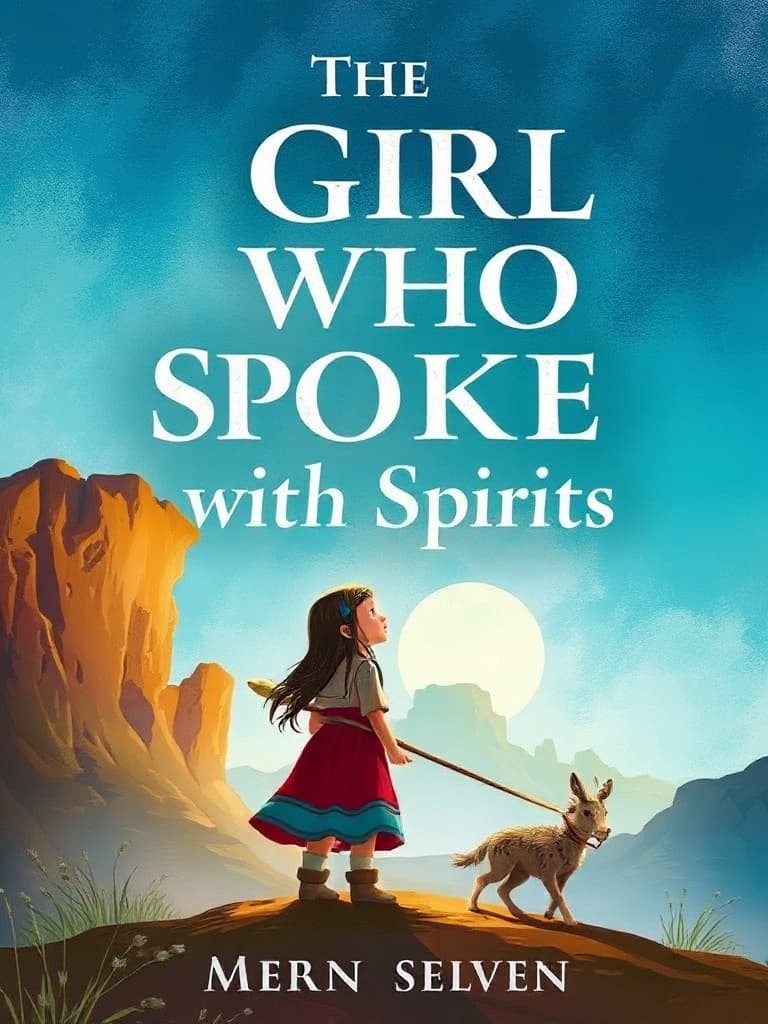
About this book
The Girl Who Spoke with Spirits: An American Indian's True Account
18
0
20
0
After having moved back to the USA from Izmir, Turkiye My adopted family was Stationed at Fort Carson, Colorado and We lived in Colorado Springs until they were transfered again. I was a loner who saw things most people didn't understand. One day I wandered off quite a ways from the house down a vast sandy field with tumble weeds , cactus,yucca ,lots of vast emptiness with scattered flowers amongst patches of grass. The field was surrounded by fencing and barbed wire.
Chapters
- 1Echoes from Izmir: The Transplanted SeedChapter 1 delves into the profound sense of displacement experienced by the young narrator, an adopted child recently uprooted from the exotic vibrancy of Izmir, Turkiye, to the stark, open landscapes of Colorado Springs, USA. The narrative will meticulously detail the sensory contrasts: the lingering scent of the Aegean Sea and spice markets versus the crisp, dry air of the American West; the bustling, ancient streets versus the wide, quiet expanses punctuated by the lonely call of distant birds. The narrator's internal monologue will be rich with fragmented memories of her former life, juxtaposed against the overwhelming newness of her surroundings. Her adopted family, though loving, represents a cultural and biological disconnect, their features, customs, and language subtly alienating. The chapter will establish her as an observer, a child keenly aware of differences, both external and internal. We will explore the initial days at Fort Carson, the sterile military environment, and the subsequent move to Colorado Springs, highlighting the physical and emotional space that begins to form between the narrator and her new family. The vastness of Colorado will be introduced not just as a landscape, but as a metaphor for her internal solitude. The description of her room, a space meant to be comforting yet feeling alien, will be detailed, emphasizing the lack of personal touch and familiar elements. The family's attempts at integration, perhaps well-meaning but ultimately unsuited to her unique background, will be subtly depicted. The chapter will end with the narrator gazing out of a window, the vast, indifferent Colorado sky mirroring the emptiness she feels within, a silent prelude to her solitary wanderings. The sheer scale of the sky, the unfamiliar flora visible from her window, the distant, imposing mountains – all will contribute to the feeling of being a small, lost entity in a world that doesn't quite fit. Her dreams might be a place where Izmir still exists, offering fleeting moments of respite, only to be shattered by the harsh light of the Colorado morning. The narrative will emphasize her quiet nature, her tendency to observe rather than engage, a defense mechanism against the overwhelming sense of being an outsider. The inherent contradictions of her existence – a child of one world living in another, carrying memories and instincts that have no place in her current reality – will be the core emotional landscape of this chapter. The physical act of unpacking her few belongings from Turkiye, each item a poignant reminder of a life left behind, will be a key scene. The chapter aims to establish the narrator’s profound isolation and the underlying yearning for connection that will drive her subsequent experiences, all while painting a vivid picture of her new, alien environment. The feeling of being 'other' will be palpable, stemming not just from her adoption but from a deeper, ineffable sense of difference that she herself doesn't yet understand. The descriptions will be rich in sensory detail, aiming for a poetic quality that reflects the narrator's sensitive nature and her nascent spiritual awareness, even before the explicit encounters begin. The silence of the American West will be a character in itself, a heavy blanket that amplifies her internal solitude. The chapter will conclude with a sense of anticipation, a quiet dread mixed with an unconscious pull towards the vast, unexplored territories outside her immediate world, hinting at the profound encounters that await her.
- 2The Whispering Field: A Solitary StrollChapter 2 focuses on the narrator's involuntary, yet deeply compelling, draw towards a specific, desolate landscape on the outskirts of Colorado Springs. This vast, sandy field, bordered by forbidding barbed-wire fencing, becomes the stage for her first profound spiritual encounter. The narrative will meticulously describe the sensory experience of this place: the crunch of dry earth and pebbles underfoot, the rustle of tumbleweeds skittering across the ground, the sharp, sculptural forms of cacti and yucca plants standing sentinel against the immense blue sky. The overwhelming sense of emptiness and isolation will be palpable, yet paradoxically, it is within this void that the narrator begins to feel a nascent connection. The chapter will detail her wandering, a seemingly aimless journey that is, in fact, guided by an unseen force. The wind, initially a gentle caress, will become a more insistent presence, a tangible touch that feels inexplicably like a comforting embrace. This sensation will be a significant emotional turning point, shifting her feeling of loneliness to one of tentative curiosity and unexpected warmth. The clarity of the sky, a recurring motif, will be emphasized, its boundless expanse reflecting the potential for discovery. The subtle beauty of scattered wildflowers and sparse patches of grass amidst the arid terrain will be highlighted, suggesting life and resilience in unexpected places. The narrator’s smallness against the immensity of the landscape will be a constant visual element, underscoring her vulnerability but also her unique perspective. The internal monologue will reflect a mixture of apprehension and fascination. She will be aware of the strangeness of her own actions, of wandering so far from the safety of home, yet an inner compulsion will drive her forward. The physical boundaries of the field – the fencing and barbed wire – will serve as a metaphor for the limitations she perceives in her life and the potential barriers to understanding. The chapter will culminate in the moments just before the spiritual manifestation, with the wind’s touch intensifying, the air charged with an unseen energy, and the narrator turning, not in fear, but in a dawning awareness that something extraordinary is about to occur. The narrative will build suspense, focusing on the subtle shifts in atmosphere and the narrator's heightened senses. The description of her small hands reaching out, perhaps to touch a resilient desert flower or the rough bark of a yucca, will emphasize her connection to the natural world, a connection that precedes her spiritual awakening. The stark beauty of the landscape, devoid of human presence, will be rendered poetically, preparing the reader for the sacredness of the encounter to come. The chapter will end on a precipice, the narrator poised on the brink of a revelation, her senses keenly attuned to the unspoken language of the earth and the wind.
- 3A Sacred Gathering: Spirits in the SunChapter 3 marks the pivotal moment of the narrator's first direct encounter with the spirit world. As she stands in the vast, empty field, the gentle breeze that had felt like a hug suddenly intensifies, and she feels a distinct, comforting pressure on her shoulders. This physical sensation, inexplicable and profound, prompts her to turn. The narrative will meticulously describe the visual manifestation of the four Native American spirits. They are not spectral apparitions but appear solid, real, and dressed in full, vibrant regalia. The detail of their clothing – the feathers, beads, intricate patterns, the textures of the materials – will be rendered with a poet's eye, emphasizing their dignity and sacredness. The group consists of two older men, exuding an aura of wisdom and experience; a young woman, perhaps representing a connection to feminine energy and continuity; and a male warrior, embodying strength and vigilance. Their presence in this desolate, empty landscape is a striking and surreal image. The narrator's reaction will be one of awe, not fear. The profound sense of loneliness that has permeated her young life begins to recede, replaced by an overwhelming feeling of being seen and acknowledged. The spirits are not distant observers but have come specifically to visit her. The chapter will explore the immediate emotional impact of this visitation: the sudden warmth that dispels the Colorado chill, the quiet joy that blossoms in her heart, the feeling of belonging that she has never before experienced. The contrast between the vibrant, sacred presence of the spirits and the stark, empty surroundings will be a key visual and thematic element. The narration will convey the narrator's internal processing of this impossible event – her young mind struggling to comprehend but her spirit readily accepting the reality of the encounter. The silent communication that passes between them, a connection beyond words, will be emphasized. The spirits' gaze will be described as gentle, understanding, and filled with a profound sadness, a premonition of their inevitable departure and the underlying tension of their presence near her adopted family's world. The chapter will focus on the immediate aftermath of their appearance, the stillness that descends as the narrator simply beholds them, absorbing the reality of their presence. The details of their regalia will be described with reverence, each element carrying significance. The sheer impossibility of their appearance in this remote location will be underscored, making the experience feel both miraculous and deeply personal. The chapter will end with the spirits beginning to communicate, perhaps not with spoken words initially, but through gestures, expressions, and a palpable energy that conveys their purpose and their sorrow, leaving the narrator on the cusp of understanding their message and their connection to her.
- 4The Vision Unveiled: A Council of SoulsChapter 4 expands upon the initial manifestation, focusing on the specific roles and symbolic significance of the four primary spirit figures who have appeared before the narrator. In front of her, the figures solidify into distinct entities: a Tribal Leader, radiating ancient authority and profound wisdom; a Medicine Man, emanating serene spiritual power and knowledge; a young Princess, embodying grace, innocence, and perhaps a connection to a noble lineage; and a Warrior, exuding quiet strength and unwavering protection. The narrative will delve into the visual details of each figure, emphasizing their unique presence and the distinct aura they project. The Tribal Leader's gaze might be penetrating yet kind, his posture regal. The Medicine Man's eyes could hold a deep, knowing calm, his hands perhaps adorned with symbolic objects. The Princess, with her youthful beauty and gentle demeanor, might offer a shy smile or a gesture of acceptance. The Warrior, stoic and alert, will stand as a silent guardian, his presence a source of reassurance. The chapter will explore the narrator's dawning realization that these are not ordinary individuals but powerful spiritual entities who have intentionally sought her out. This 'chosen visitation' in the vast, indifferent landscape of Colorado becomes a deeply personal and validating experience for the lonely child. The stark contrast between the majesty of these figures and the emptiness of the field amplifies the significance of their presence. The narrator's internal world will be depicted as shifting rapidly from isolation to a sense of profound connection and destiny. The descriptions will be rich with imagery, likening the figures to elements of nature – the strength of a mountain, the flow of a river, the resilience of a desert flower. The chapter will emphasize the feeling of being 'chosen,' a concept that counters her previous feelings of being an outsider and an unwanted transplant. The narrative will also hint at the depth of their spiritual authority and the sacredness of their council, suggesting that their gathering is not a casual occurrence but a significant event with purpose. The narrator’s young mind will grapple with the symbolic weight of each figure – the leader, the healer, the royal, the protector – and how they collectively represent a complete spectrum of spiritual guidance. The chapter will focus on the silent communion, the unspoken understanding that passes between the narrator and these ancestral guides. The sheer visual impact of this 'sacred sight' will be paramount, leaving an indelible mark on the narrator's memory. The beauty and power of their presence will be described in vivid detail, creating a stark contrast with the arid, seemingly lifeless landscape surrounding them. The chapter will end as these figures begin to communicate more directly, their initial messages hinting at the profound spiritual heritage they represent and their concern for the narrator's well-being within her adopted world.
- 5Guardians of the Plains: The Sacred HerdChapter 5 introduces the powerful animal companions that accompany the spiritual figures, expanding the sacred tableau into a communion of spirit and nature. Behind the human-like spirits, a breathtaking vision unfolds: a majestic White Buffalo, an animal of immense spiritual significance in Native American traditions, appears with an almost ethereal glow. Its presence signifies purity, abundance, and a profound connection to the Great Spirit. Alongside the buffalo, four horses materialize – symbols of freedom, journey, and untamed spirit. One of these horses is pure white, adding an element of divine grace and prophecy to the scene. The narrative will describe the powerful, silent energy radiating from these animals, their movements fluid and deliberate, their eyes holding an ancient, knowing light. Further enhancing this sacred gathering, a White Wolf emerges, representing instinct, intelligence, and the wild heart of the plains. Its silent vigilance and keen awareness add a layer of protective power to the group. Finally, a delicate white deer appears, symbolizing gentleness, intuition, and the interconnectedness of all living things. The chapter will focus on the profound impact of these animals on the narrator. Their presence amplifies the spiritual energy of the encounter, grounding the ethereal figures in the tangible world of nature. The narrator will feel an immediate, instinctive connection to these creatures, recognizing their sacred status on a level that transcends human understanding. The narrative will explore the symbolism of each animal, drawing upon traditional Native American lore where appropriate, to deepen the reader's understanding of their significance. The color white, recurring across the buffalo, one horse, the wolf, and the deer, will be emphasized as a symbol of purity, spirit, and the sacred. The silent communication between the narrator and these animals will be as profound as that with the human spirits, conveyed through shared energy, mutual recognition, and a sense of deep peace. The landscape of the field, previously perceived as empty, now teems with sacred life. The chapter will culminate in a moment of shared reverence, the narrator standing amidst this extraordinary assembly, feeling a profound sense of belonging and awe, her loneliness temporarily eclipsed by the overwhelming presence of these spirit guardians and their sacred animal companions. The sheer visual spectacle of these pure white creatures against the dusty landscape will be rendered with striking clarity, creating an unforgettable image of spiritual power and natural beauty. The chapter will emphasize the feeling of being protected and cherished by this unlikely, yet deeply resonant, gathering.
- 6Fleeting Joy, Lingering Sadness: The Price of WitnessingChapter 6 delves into the emotional paradox of the narrator's spiritual encounters: the immense joy they bring contrasted with the inevitable sadness of their departure. The visits from the spirits and sacred animals are described as moments of pure, unadulterated happiness, a balm to her deep-seated loneliness. The narrator revels in their presence, absorbing their energy, feeling truly seen and understood for the first time. The chapter will meticulously detail these moments of connection – perhaps a shared glance with the Princess, a silent nod from the Warrior, the comforting weight of the Tribal Leader’s gaze, the serene presence of the Medicine Man, and the silent, powerful communion with the white animals. The narrative will emphasize the feeling of ‘coming home’ during these encounters, a sense of rightness that permeates her being. However, this profound joy is always tinged with an underlying tension. The spirits’ awareness of the human world, specifically her adopted family, creates a palpable sense of fear in their demeanor. This fear is particularly evident when there is any sign of human approach – a distant car, a sound on the wind. Their reactions are swift and decisive; they must disappear, leaving the narrator behind. The chapter will focus on the emotional impact of these hurried departures. The tears that well up in the spirits' eyes, particularly the Tribal Leader’s, as they explain their need to leave, are a source of deep sorrow for the narrator. Their promises to return, while offering a glimmer of hope, underscore the ephemeral nature of these visits. The narrator is left with a void once more, the silence and emptiness of the field returning with amplified intensity. The contrast between the vibrant spiritual world and the mundane reality she must return to becomes even more stark. The chapter will explore the narrator's internal struggle to reconcile these two worlds. She cherishes the memories of the visits, replaying them in her mind, but the pain of their leaving is a recurring wound. The fear the spirits exhibit towards her family becomes a source of confusion and hurt for the narrator, as she perceives her family as loving, even if distant. This creates a subtle dissonance, hinting that her family’s unknowing is a form of unintentional harm. The chapter will end with the narrator standing alone in the field after a visitation, the wind now feeling cold and desolate, the joy of the encounter fading, replaced by the familiar ache of loneliness and a dawning understanding that her connection comes with a significant emotional cost. The lingering scent of sage or the faint echo of a horse's whinny might be the only remnants of the sacred presence, intensifying her longing.
- 7The Tribal Leader's Lament: A Veil of IgnoranceChapter 7 zeroes in on a specific, poignant interaction with the Tribal Leader, whose words carry the weight of a profound, sorrowful revelation. During one of their fleeting encounters, as the spirits prepare to depart due to the perceived threat of human observation, the Tribal Leader fixes his gaze upon the narrator. His eyes, described as ancient and filled with an inexpressible sadness, hold hers. It is then that he utters the cryptic, heart-wrenching phrase: 'They don't want you to know. They don't want you to know us.' This statement, delivered with a heavy sigh or a mournful tone, becomes a central mystery and a source of deep emotional pain for the young narrator. The chapter will explore the immediate impact of these words. The narrator, still grappling with the joy of their presence, is now confronted with the idea that her adopted family actively wishes to suppress this vital part of her existence. This contradicts her perception of their love and care, creating a profound internal conflict. The narrative will delve into her attempts to understand the meaning behind 'They.' Is it her parents? The wider world? The narrative will emphasize the cultural chasm implied by this statement – a deliberate separation from her true heritage, from the spiritual world that resonates so deeply within her. The Tribal Leader's lament is not just about the spirits' need to hide; it's about the loss imposed upon the narrator, the denial of her innate connection and identity. The chapter will highlight the deep empathy and protective instinct of the spirits, who fear for the narrator's exposure to a world that might misunderstand or reject her unique gifts. The sorrow in the Tribal Leader's eyes reflects not only the pain of their forced separation but also the burden of knowledge he carries about the narrator's true origins and the reasons for her adoption. The narrative will contrast the clarity and truth offered by the spirits with the perceived ignorance or willful blindness of her adopted family. The chapter will focus on the emotional weight of this revelation, the feeling of betrayal, and the dawning awareness that her journey is more complex and perhaps more dangerous than she initially understood. The image of the Tribal Leader turning away, his words echoing in the vastness, will serve as a powerful closing image, leaving the narrator with a deep sense of unease and a burning question: why don't they want her to know?
- 8A Loner's Solace: Islands in the EmptinessChapter 8 focuses on the narrator's internal experience of navigating her life between the profound spiritual encounters and the pervasive loneliness of her everyday existence. The visits from the spirits and sacred animals are portrayed as precious 'islands of joy' in a vast 'sea of loneliness.' The narrative will meticulously detail the narrator's coping mechanisms for dealing with the emptiness that returns after each visitation. She will replay the memories of the spirits' presence, recalling their faces, their movements, the feeling of their energy, the silent wisdom in their eyes. These mental replays become a form of solace, a way to keep the connection alive when physical presence is absent. The stark contrast between the vibrant, sacred world she glimpses and the quiet, ordinary reality of her adopted family life will be emphasized. Her room, though perhaps filled with toys or books, feels hollow without the spiritual resonance she experiences in the field. The silence of the house, the mundane routines, the lack of deep understanding from her family – all these elements contribute to her persistent feeling of isolation. The chapter will explore the narrator's growing attachment to the field itself, the place where these miraculous events occur. It becomes her sanctuary, a place where she can reconnect with her true self, even when the spirits are not physically present. She might return there simply to sit, to feel the wind, to absorb the residual energy, hoping for another fleeting glimpse. The narrative will emphasize the bittersweet nature of these spiritual encounters. While they offer profound comfort and a sense of belonging, they also highlight the depth of her isolation when they are gone. The joy they bring is intense but temporary, making the subsequent return to loneliness all the more painful. The chapter will explore the narrator's internal yearning, a deep-seated desire for this connection to be constant, for the spiritual world to be an integrated part of her daily life rather than a fleeting escape. The descriptions will be imbued with a sense of longing, capturing the quiet ache of a child who possesses a secret, beautiful world that she cannot fully share or inhabit. The chapter will end with the narrator finding a small, seemingly insignificant object – perhaps a feather, a smooth stone, or a dried wildflower – in the field, a tangible token left behind by the spirits, which she treasures as a reminder of their presence and a source of strength during the long periods of solitude. This object becomes a focal point for her longing and her hope.
- 9Innate Knowing: The Unspoken LanguageChapter 9 shifts the focus inward, exploring the narrator's extraordinary innate abilities that set her apart from her adopted family and hint at a deeper, ancestral heritage. The narrative will meticulously detail these inherent gifts, emphasizing that they are not learned but simply *known*. She possesses an intuitive understanding of intricate dances, not learned from any teacher, but flowing through her as if from a distant memory. The chapter will describe her ability to perfectly call and imitate the sounds of wildlife – birdsong, the howl of a coyote, the rustle of small creatures in the undergrowth – with uncanny accuracy, a skill that baffles her family. Furthermore, she finds herself understanding different dialects, not just of English, but perhaps catching nuances of other languages or even recognizing patterns in sounds that resonate with a forgotten familiarity. These abilities manifest spontaneously, often in moments of solitude or when she feels a particular connection to the natural world. The stark contrast between these innate skills and the 'normal' world of her adopted family will be a central theme. Her family might dismiss these talents as childish imagination or peculiar quirks, failing to recognize their profound significance. The narrator, however, feels a deep sense of rightness when she engages these abilities; they are extensions of her true self. The chapter will explore the internal conflict this creates: the joy and validation she feels when expressing these gifts versus the confusion and potential alienation from her family. The narrative will emphasize that these are not mere talents but echoes of a lost culture, a deep connection to the earth and its peoples. The descriptions will be poetic, portraying her movements in dance as fluid and ancestral, her animal calls as a form of communication with the spirit of the wild, and her understanding of dialects as a bridge across divides. The chapter will culminate in a moment where one of these innate abilities manifests in a particularly striking way, perhaps during a family gathering or an interaction with someone outside her immediate circle, causing a flicker of unease or curiosity in her adopted parents, but ultimately being explained away, reinforcing the narrator's sense of holding a profound secret. This event underscores the disconnect between her inner reality and the perceived reality of her family, highlighting the hidden depths of her being that remain largely unseen and unacknowledged by those closest to her. The chapter aims to establish these innate abilities not just as unusual traits, but as evidence of a powerful, ancestral spirit residing within her.
- 10A Different Reflection: The Mirror of DifferenceChapter 10 delves into the physical and biological disparities between the narrator and her adopted family, using these outward differences as a potent metaphor for her deeper sense of internal disconnect. The narrative will meticulously describe the narrator's physical appearance: her skin tone, perhaps a warm hue that contrasts with the lighter complexions of her family; her blood type, an unknown factor that subtly underscores her biological otherness; and her thick, coarse hair, a texture and style that doesn't align with conventional expectations within her family. These physical markers are not presented judgmentally but as undeniable facts that contribute to her feeling of being an anomaly within the household. The chapter will explore the subtle ways these differences manifest in daily life. Perhaps comments are made, albeit perhaps unintentionally, about her hair needing to be 'tamed' or her skin needing 'protection' from the sun in ways that differ from her siblings. The way she is looked at in family photos, often slightly apart or with a different expression, will be highlighted. The narrative will emphasize that these physical differences are a constant, silent reminder of her origins, a visible representation of the fact that she does not biologically belong to this family unit. This external difference mirrors and reinforces the internal disconnect she feels – the sense that her experiences, her innate knowledge, and her spiritual connections are fundamentally at odds with the world her adopted family inhabits. The chapter will explore the narrator's own perception of her reflection in the mirror. She sees herself, but she also sees the stark contrast between her image and the images of those around her. This can lead to moments of self-doubt or a reinforced sense of isolation, wondering if she is truly 'normal' or 'like them.' The narrative will convey the quiet sadness associated with this realization, the longing to blend in, to be fully understood, and yet the simultaneous understanding that this is impossible. The chapter will culminate in a moment of quiet introspection, perhaps while looking at old photographs or observing her family interacting amongst themselves, where the narrator fully grasps the depth of her otherness, both physically and experientially. This understanding, while painful, is also a crucial step in her journey towards self-acceptance, as it acknowledges the reality of her unique position. The descriptions will be sensitive, focusing on the emotional resonance of these physical differences rather than merely listing them, highlighting how they contribute to her feeling of being a stranger in her own home.
- 11The Family's Unknowing: A Silent BarrierChapter 11 focuses on the profound disconnect between the narrator's rich inner spiritual life and the unawareness of her adopted family. Despite their love and care, they remain oblivious to the extraordinary encounters she experiences in the vast Colorado landscape. The narrative will depict scenes of everyday family life – shared meals, conversations, outings – highlighting the narrator's participation while simultaneously underscoring her internal separation. She is physically present, but her mind often drifts to the spirits, the sacred animals, the whispered secrets of her heritage. Her family’s attempts to engage with her, to understand her quiet nature or her occasional withdrawn behavior, are met with polite responses or shy smiles, masking the vibrant, otherworldly reality she inhabits. Their ignorance, though likely stemming from a place of love and a desire for her to have a 'normal' childhood, creates an invisible barrier between them. They cannot comprehend her innate abilities, her deep connection to nature, or the profound spiritual experiences that shape her world. Consequently, they offer no framework for understanding or validating these aspects of her identity. The narrator’s innate knowledge, her ability to speak with animals, her understanding of different dialects – these are perceived as quirks, not as evidence of a deeper heritage. The spirits’ fear of discovery, mentioned in previous chapters, is rooted in this very unknowing; her family’s lack of understanding is perceived as a potential threat to the sacred connection. The chapter will explore the narrator’s feelings about this situation: a mixture of loneliness, frustration, and a protective instinct towards her spiritual guides. She understands, on some level, that revealing her experiences might lead to disbelief, dismissal, or even attempts to 'cure' her perceived strangeness. This forces her to compartmentalize her life, leading to a sense of isolation even within the family unit. The narrative will highlight specific instances where the narrator’s spiritual world nearly intersects with her family’s reality, but is averted by chance or the spirits’ quick departure. A poignant scene might involve her family noticing her talking to herself or gazing intently into the distance, attributing it to imagination, while the narrator is actually communicating with unseen guides. The chapter will emphasize the silent burden the narrator carries, the weight of a secret world that isolates her from the very people who raised her. The ending will underscore the profound gulf that exists, a chasm of understanding that shapes her unique journey and her relationship with both the seen and unseen worlds. The family's love is a tangible comfort, but their lack of awareness creates a subtle, pervasive sense of being fundamentally alone, even in their presence.
- 12Whispers of Heritage: Unlocking the PastChapter 12 positions the narrator's spiritual encounters not merely as sources of comfort, but as active conduits to her hidden heritage. The visits from the Tribal Leader, Medicine Man, Princess, and Warrior, along with the sacred animals, are portrayed as a gentle, persistent unveiling of a past that has been deliberately obscured. The innate knowledge the narrator possesses – her understanding of dances, wildlife calls, and dialects – is presented as the key, the undeniable evidence of a lineage and culture that her adopted family cannot comprehend, and perhaps, as the Tribal Leader suggested, do not wish her to comprehend. The narrative will explore how each visitation serves to reinforce this connection to her heritage. The Medicine Man’s serene presence might impart fragments of ancient wisdom, the Warrior’s stoicism a sense of ancestral strength, the Princess’s grace a connection to feminine lineage, and the Tribal Leader’s words a direct link to the narrative of her people. The White Buffalo, the horses, the wolf, and the deer become symbols not just of the spirit world, but of the natural world her ancestors were intimately connected to. The narrator begins to piece together fragments, not through conscious learning, but through intuitive recognition. The feeling of 'home' she experiences in the presence of the spirits is directly linked to this rediscovered heritage. The chapter will emphasize the internal shift within the narrator as she starts to trust these whispers of her past. Her innate abilities are no longer just peculiar quirks but are reinterpreted as gifts, echoes of her true identity. The narrative will explore the emotional journey of this rediscovery: the initial confusion, the dawning realization, the sense of validation, and the growing acceptance of a self that is far more complex and profound than she previously imagined. The contrast between the limited understanding of her adopted family and the vast, rich tapestry of her ancestral world becomes increasingly apparent. The spirits are not just comforting her; they are actively guiding her, helping her to reclaim a history that was taken from her. The chapter will culminate in a moment where the narrator consciously connects one of her innate abilities to a specific piece of spiritual guidance she has received, solidifying her understanding that her heritage is not lost, but alive within her, waiting to be fully embraced. This connection might be a specific dance step that suddenly makes sense in the context of a story told by the Tribal Leader, or a bird call that resonates with a particular meaning shared by the Medicine Man. The narrative will highlight the courage it takes to acknowledge this heritage, especially in the face of her family's unknowing.
- 13The Warrior's Watch: Silent StrengthChapter 13 focuses on the presence and symbolic role of the Warrior within the spirit council. While the other spirits engage more directly in communication or impart specific wisdom, the Warrior often remains a figure of quiet observation and stoic strength. His presence is a constant, a silent guardian who offers a palpable sense of protection to the narrator. The narrative will describe his physical bearing – perhaps tall and imposing, yet with an air of calm vigilance rather than aggression. His eyes, though perhaps not as overtly expressive as the Tribal Leader's or as gentle as the Princess's, convey a deep sense of watchfulness and unwavering resolve. The chapter will explore the narrator's perception of the Warrior. She may not understand his specific role or history, but she feels an innate sense of safety when he is near. His presence acts as a shield, not necessarily against physical harm, but against the emotional turmoil and potential dangers associated with navigating the spirit world and her complex identity. The narrative will weave in moments where the Warrior's presence seems to deter unseen negative influences or simply provides a grounding energy amidst the more ethereal aspects of the visitations. His stoicism serves as a powerful counterpoint to the narrator's own vulnerability and the sadness often expressed by the Tribal Leader. He embodies a resilience and a quiet fortitude that the narrator may need to draw upon as she embraces her unique path. The chapter will delve into the symbolism of the warrior archetype in Native American culture – courage, discipline, protection of the people. The narrator begins to internalize these qualities, finding strength in his silent example. The narrative will contrast his steadfastness with the fleeting nature of the spirits' visits, suggesting that his protective presence is a more constant element of her spiritual support system. The chapter will culminate in a moment of perceived challenge or heightened emotion for the narrator, perhaps during a particularly difficult departure of the spirits or a moment of intense loneliness. In this moment, the Warrior’s steady gaze meets hers, offering a silent reassurance, a reinforcement of her inner strength, and a subtle promise of enduring protection. This encounter solidifies his role not just as a guide, but as a foundational source of courage for her journey. The description of his regalia, though perhaps less ornate than others, will be detailed to emphasize its practicality and martial significance, further reinforcing his role as a protector.
- 14The Princess's Gentle Hand: Echoes of KinshipChapter 14 centers on the Young Princess, a spirit guide who offers the narrator a unique connection based on shared youth, innocence, and a gentle spirit. Unlike the gravitas of the Tribal Leader or the stoicism of the Warrior, the Princess represents a more accessible, tender aspect of the spirit world. The narrative will describe her appearance with delicate details – perhaps her regalia is adorned with symbols of nature, flowers, or gentle creatures, and her expression is one of kindness and understanding. The chapter will focus on the specific nature of their interactions. The Princess might offer the narrator a comforting touch, a shared smile, or a quiet moment of companionship that bypasses the need for profound spiritual discourse. This connection is about shared feeling, a recognition of kindred spirits across the veil of existence. For the narrator, who feels so isolated from her peers in the mundane world, the Princess's presence offers a precious sense of belonging and validation. She sees in the Princess a reflection of a part of herself that longs for simple connection and understanding. The narrative will explore the emotional resonance of this bond. The Princess’s gentle hand, offered in a gesture of friendship, can soothe the narrator’s anxieties and ease her sense of otherness. Her youthful energy might mirror the narrator’s own suppressed joy and playfulness, offering a safe space for these emotions to surface. The chapter will delve into the symbolism of the Princess. She may represent a lost aspect of the narrator's own potential, a connection to a noble or pure lineage, or simply the enduring spirit of innocence that transcends hardship. Her presence serves as a reminder that even within the profound and sometimes heavy spiritual guidance she receives, there is also room for lightness, tenderness, and the simple beauty of connection. The narrative will contrast the Princess’s gentle approach with the more weighty roles of the other spirits, highlighting the multifaceted nature of the spiritual support system available to the narrator. The chapter will culminate in a quiet, shared moment between the narrator and the Princess, perhaps sitting together in comfortable silence, observing the sacred animals, or exchanging a look of deep mutual understanding. This moment reinforces the theme of kinship and shared spirit, leaving the narrator with a renewed sense of comfort and a feeling of being cherished not just as a recipient of wisdom, but as a young soul worthy of gentle companionship. The lingering feeling will be one of warmth and a subtle affirmation of the narrator's own inherent goodness and potential.
- 15The Medicine Man's Wisdom: Currents of KnowledgeChapter 15 centers on the serene and profound presence of the Medicine Man, a figure embodying ancient wisdom and the deep spiritual knowledge of the earth and its energies. His role within the spirit council is that of a healer, a keeper of sacred traditions, and a conduit to the deeper mysteries of existence. The narrative will describe his aura as one of deep calm and profound knowing. His eyes might seem to hold the wisdom of centuries, and his presence radiates a peaceful energy that can soothe and center the narrator. While he may not engage in lengthy dialogues, his wisdom is conveyed through subtle cues: a gesture, a knowing glance, a shared moment of silent contemplation, or perhaps brief, impactful pronouncements that carry immense weight. The chapter will explore the narrator's intuitive understanding of his significance. She recognizes him as a pillar of spiritual authority, a source of healing not just for the body, but for the soul. His presence suggests that the narrator's journey involves more than just understanding her heritage; it involves tapping into a deeper wellspring of spiritual power and healing. The narrative will hint at the vastness of the knowledge he possesses – about the natural world, the cycles of life and death, the unseen forces that govern the universe, and the path towards spiritual wholeness. The Medicine Man represents the sacred rituals and practices that connect the physical and spiritual realms. His presence signifies that the narrator is on a path that requires not only courage and connection but also understanding and the potential for healing. The chapter will focus on the narrator’s internal response to his presence. She might feel a sense of awe, a deep respect, and a burgeoning curiosity about the deeper spiritual truths he embodies. His wisdom acts as a subtle guide, encouraging her to look beyond the immediate circumstances of her life and to connect with the underlying spiritual currents. The narrative will contrast his serene wisdom with the more immediate concerns of survival or protection represented by the Warrior or the lament of the Tribal Leader, showing the holistic nature of the spiritual guidance she receives. The chapter will culminate in a moment where the Medicine Man imparts a subtle but significant piece of wisdom to the narrator, perhaps through a symbolic gesture or a brief, resonant phrase. This wisdom might relate to the importance of balance, the interconnectedness of all things, or the power of inner peace, leaving the narrator with a profound sense of understanding and a deeper appreciation for the multifaceted nature of her spiritual guides. The enduring impression will be one of ancient, healing knowledge offered with gentle serenity.
- 16The White Buffalo's Omen: Purity and ProphecyChapter 16 highlights the appearance of the White Buffalo, elevating its significance beyond just a sacred animal companion to a powerful omen and symbol of transformative spiritual energy. The narrative will describe its arrival with heightened reverence. The White Buffalo is not merely present; it manifests with an almost luminescent quality, its purity and sacredness radiating outwards, bathing the scene in a soft, ethereal light. Its presence commands attention, silencing the rustle of the wind and stilling the movements of the other animals. The chapter will delve deeply into the symbolic meaning of the White Buffalo in Native American traditions – as a symbol of hope, abundance, healing, prayer, and the sacred connection between the physical and spiritual worlds. Its appearance during the narrator’s encounters signifies a moment of profound spiritual importance, a turning point, or a blessing. The narrative will explore the narrator's reaction to this magnificent creature. She will feel an overwhelming sense of awe and reverence, perhaps even a sense of being chosen or blessed by its presence. The White Buffalo’s gaze might seem to hold a special significance for her, conveying a message of purity, truth, and the sacredness of her own unique path. The chapter will emphasize the omenic quality of its appearance. It suggests that something significant is unfolding or about to unfold in the narrator's life. This could be a deepening of her spiritual connection, a revelation about her heritage, or a call to a particular purpose. The White Buffalo serves as a powerful affirmation of the sacredness of her experiences, validating the spiritual realm she is beginning to navigate. The narrative will contrast the quiet power of the White Buffalo with the more active guidance of the human spirits, suggesting that this animal embodies a more primal, unadulterated spiritual force. Its presence is a silent testament to the sacredness of life and the profound mysteries that lie beyond the veil of the ordinary. The chapter will culminate in a moment of profound connection between the narrator and the White Buffalo. Perhaps she feels a sense of peace wash over her as their eyes meet, or she receives a subtle, intuitive understanding of its message. The image of the White Buffalo standing majestically, a beacon of purity against the Colorado landscape, will be a lasting impression, signifying a sacred event and marking a crucial stage in the narrator's spiritual awakening and her acceptance of her unique destiny. The chapter will end with the White Buffalo slowly fading, leaving behind a lingering sense of peace and a profound understanding that she is part of something far greater and more sacred than she had ever imagined.
- 17The Fear of Discovery: Tears on the WindChapter 17 revisits and deepens the theme of the spirits' fear regarding the narrator's adopted family and the precariousness of their connection. The narrative will meticulously describe the palpable tension that arises whenever there is a hint of human presence. This could be the distant rumble of a car, the sound of voices carried on the wind, or even a shift in the natural environment that suggests human activity nearby. The spirits' reactions are immediate and marked by a visible distress. The chapter will focus on the emotional weight of these hurried departures. The tears in the eyes of the Tribal Leader, the quick, anxious glances exchanged between the spirits, the way they seem to dissolve into the air with a sense of urgency – all these details will be rendered with poignant clarity. The narrator experiences a profound sadness and confusion witnessing this fear. She loves her family, and while she understands their unawareness creates a barrier, she cannot reconcile their perceived kindness with the terror it instills in her spiritual guides. This creates a painful dissonance within her. The chapter will explore the narrator’s attempts to shield her guides, perhaps by trying to create diversions or by signaling to them when she senses danger. However, she is ultimately powerless to prevent their necessary departures. The fear the spirits exhibit underscores the profound difference between the world they inhabit and the world her family represents. It highlights the potential danger not necessarily from malice, but from misunderstanding and the imposition of a different worldview onto her unique spiritual reality. The narrative will emphasize the bittersweet nature of these encounters; the joy of their presence is always shadowed by the knowledge that it is temporary and conditional. The promise to return, while comforting, is tinged with the sorrow of their forced secrecy. The chapter will culminate in a particularly distressing departure, where the spirits are forced to vanish mid-conversation or mid-gesture, leaving the narrator feeling abandoned and heartbroken. The lingering image will be of the spirits dissolving into the vastness, their sorrowful farewells echoing in the wind, leaving the narrator alone once more, wrestling with the complex emotions of love for her family and a deep, protective empathy for her unseen guides. The vulnerability of their connection, a secret shared only between them, becomes the central focus, emphasizing the fragile beauty of her spiritual life.
- 18Bridging Two Worlds: The Inward JourneyChapter 18 focuses on the narrator's internal struggle to reconcile the two disparate realities she inhabits: the mundane, everyday world of her adopted family and the vibrant, spiritually rich realm she secretly navigates. This chapter delves into the psychological and emotional challenges of living a dual existence. The narrator grapples with the dissonance between the love and stability her family provides and the profound sense of belonging and truth she finds in her spiritual encounters. The narrative will explore the internal conflict: the desire to share her experiences versus the fear of disbelief and rejection; the longing to integrate her spiritual self into her daily life versus the necessity of maintaining secrecy; the feeling of being fundamentally 'other' in both worlds, yet uniquely whole when embracing her spiritual connection. The chapter will depict scenes where the narrator consciously tries to bridge these two worlds. This might involve attempting to incorporate lessons learned from the spirits into her interactions with her family, perhaps showing more empathy or understanding, or trying to explain her innate abilities in ways her family might accept, framing them as 'special talents' rather than spiritual gifts. However, these attempts are often met with subtle misunderstandings or a reinforcement of the existing divide. The narrative will emphasize the emotional toll of this constant balancing act – the fatigue, the loneliness, the feeling of being fragmented. The spiritual encounters, while joyous, also serve to highlight the limitations of her earthly life, making the return to normalcy more difficult. The chapter will explore the narrator’s growing self-awareness. She begins to understand that bridging these worlds is not about forcing one to conform to the other, but about finding a way to hold both realities within herself. This involves a journey of self-acceptance, recognizing the validity and importance of her spiritual experiences, even if they remain unseen by others. The narrative will culminate in a moment of quiet resolve. The narrator understands that the true bridging of worlds happens within her own heart and mind. While she may never be able to fully share her spiritual life with her family, she can learn to honor and integrate it into her own sense of self. This realization marks a significant step towards inner peace, acknowledging that her unique journey, though isolating, is also a source of profound strength and wisdom. The focus shifts from external validation to internal integration, emphasizing the beginning of her mature acceptance of her dual identity.
- 19Seeds of Understanding: Trusting the Inner KnowingChapter 19 focuses on the narrator's gradual process of internalizing the wisdom gained from her spiritual encounters and beginning to trust her own innate knowing, despite the persistent feelings of loneliness. The narrative will depict how the seeds planted by the spirits – the comfort, the glimpses of heritage, the understanding of her unique gifts – begin to take root within her. Even when the spirits are absent, their influence remains, guiding her thoughts and actions in subtle ways. The chapter will explore the narrator's evolving relationship with her own intuition. She starts to rely more on her inner voice, recognizing the validity of her feelings and perceptions, even when they contradict the expectations of her adopted family or the logic of the mundane world. This trust is hard-won, built upon the foundation of the profound experiences in the whispering field. The narrative will highlight moments where the narrator consciously chooses to act on her intuition, perhaps making a decision that seems unconventional to others but feels inherently right to her. These actions, though perhaps small, represent a growing confidence in her inner compass. The persistent loneliness is acknowledged, but it no longer defines her entirely. Instead, it becomes a backdrop against which the growing strength of her inner knowing shines more brightly. The spiritual encounters are no longer just escapes from loneliness but sources of ongoing wisdom that she can access internally. The chapter will explore how the narrator begins to reframe her experiences. The isolation she feels is not necessarily a sign of being broken or flawed, but a consequence of her unique connection to a deeper reality. Her innate abilities are not just quirks but valuable gifts that she is learning to understand and perhaps even hone. The narrative will culminate in a moment where the narrator faces a challenge or a difficult decision. Instead of solely relying on external guidance or succumbing to loneliness, she turns inward, accessing the wisdom and strength she has cultivated through her spiritual journey. This act of self-reliance, of trusting her own inner knowing, signifies a profound maturation and a deeper acceptance of her unique path. The seeds of understanding have indeed taken root, allowing her to navigate her world with a newfound sense of quiet confidence and inner resilience, even amidst the enduring solitude. The chapter emphasizes a shift from seeking solace *from* the spirits to drawing strength *from* the wisdom they have helped her uncover within herself.
- 20The Enduring Spirit: Echoes in TimeChapter 20 serves as a reflective conclusion, looking back on the enduring impact of the narrator's spiritual encounters and the profound wisdom gained from her unseen guides. Years have passed since those initial, transformative visitations in the Colorado field. The narrator, now older and perhaps having navigated many of life's complexities, reflects on the indelible mark left by the spirits and the sacred animals. The memory of the White Buffalo, the horses, the wolf, the deer, and the wise, compassionate spirits remains vivid, not as fleeting apparitions, but as foundational elements of her identity and her understanding of the world. The narrative will emphasize how the wisdom imparted during those encounters has continued to guide her throughout her life. The lessons of resilience from the Warrior, the importance of kindness from the Princess, the depth of knowledge from the Medicine Man, and the sorrowful truths from the Tribal Leader have all shaped her perspective and her choices. The chapter will explore how the narrator has learned to integrate her spiritual experiences into her adult life. Perhaps she has found ways to honor her heritage, connect with nature more deeply, or even act as a bridge of understanding for others who feel like outsiders. The initial loneliness, while perhaps never fully extinguished, has been transformed. It is no longer a source of pain but a reminder of the unique connection she possesses, a quiet space where the echoes of the spirit world can still be heard. The narrative will revisit the core themes of the story: the pain of displacement, the search for belonging, the power of innate knowing, and the profound connection between the physical and spiritual realms. The chapter will emphasize the enduring power of these connections, suggesting that the spirits and animals, though perhaps no longer appearing in the same dramatic fashion, remain a constant, guiding presence in her life. The narrator’s reflection will be imbued with a sense of gratitude and acceptance. She understands that her journey, marked by isolation and extraordinary encounters, has gifted her with a unique perspective and a deep wellspring of inner strength. The story concludes not with a resolution that erases her past, but with an affirmation of its enduring significance, celebrating the wisdom found in the unseen and the lasting legacy of the girl who spoke with spirits. The final image might be of the narrator, perhaps in a quiet, natural setting, feeling a familiar breeze, a subtle echo of the past, and acknowledging the timeless connection that continues to enrich her life.
More Poetry stories
Browse all Poetry →- The Muse's Whisper
A soul grappling with identity discovers solace and meaning in embracing the multifaceted nature of the self, finding inspiration and purpose in the very act of questioning.
- The Poet's Poison
The lady with a drug addiction
- Journey of a lost mind
Short stories about diffrent struggles with mental illness and other trumatic events and how u deal with them
- A very sad place
A girl name ria and. Miles they are.
- The pedals of love
Magnolia tree and pedals and a couple in love 
- Mzlifeezii
Poetry/mystery
Want to write a story like this?
Learn the craft in our free AI story generator, then draft your first chapter with an AI co-writer.
What stayed with you?
Read a chapter and leave the author a comment.
Reader notes
Loading reader notes…