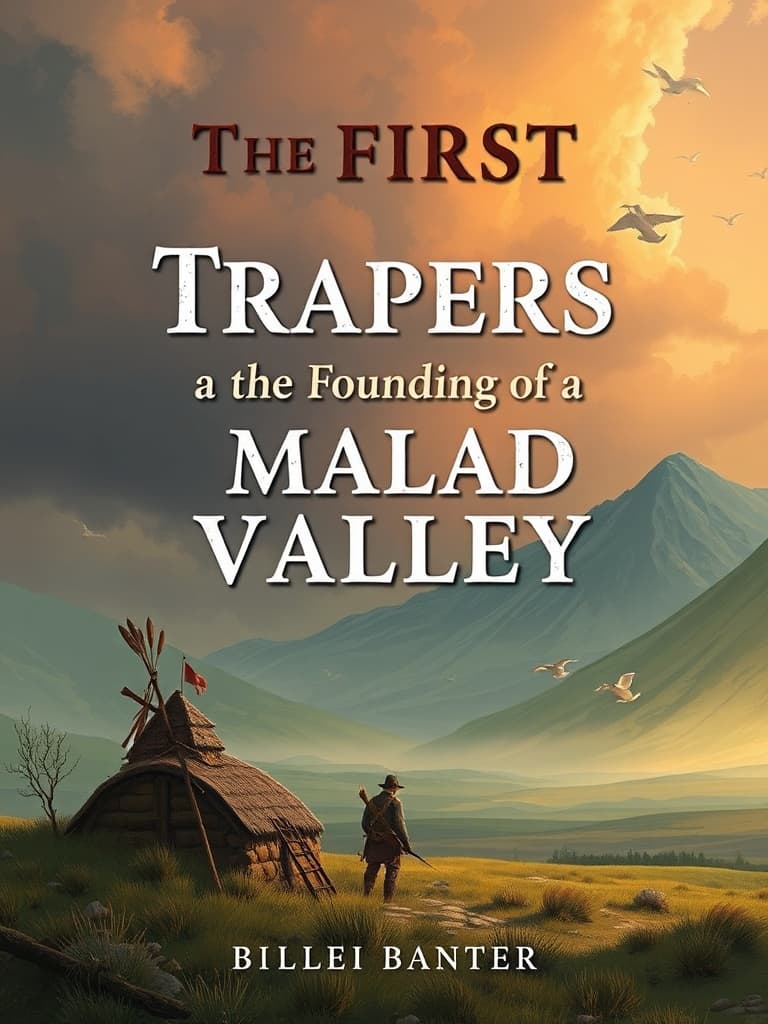
About this book
The First Trappers and the Founding of Malad Valley : Fort Stuart. Written By Amy Kathryn Allen
68
0
41
0
Between the years of 1818 -1821 A group of French Canadian Trappers led bya Scottish Canadian Fur Trader named Douglas McKenzie arrived in what is now Malad Valley. Malad Valley was an untamed vast wilderness drought with disease, bitterly cold and insanely hot temperatures. It was a time of fight it flight do or die. This was the Ancestrol land of The Shoshone Bannock and strangers were not welcome
Chapters
- 1The Serpent River's EmbraceThe year is 1818. Douglas McKenzie, a determined Scottish fur trader, leads a band of seasoned French Canadian trappers into the vast, unforgiving expanse that will become known as Malad Valley. Their objective: to establish a lucrative fur trading post, a beacon of prosperity in the untamed wilderness. But this land, cradled by rugged mountains and bisected by a winding, deceptively beautiful river, is already home. The Shoshone Bannock tribes, the ancient stewards of this territory, regard the newcomers with deep suspicion, their ancestral lands now threatened by these foreign trespassers. The very air seems thick with unspoken warnings. McKenzie, a man driven by both ambition and a shadowed past, pushes his men onward, his gaze fixed on the horizon, while his trappers, hardened by years of frontier life, scan the dense forests and open plains with wary eyes. The river, later to be known by the French word for sickness, 'Malad,' already whispers of the perils it holds. Its waters, teeming with unseen dangers, will prove to be as formidable an adversary as any human foe. The initial entry into the valley is fraught with tension. The grandeur of the landscape is undeniable – towering peaks, lush valleys, and the shimmering ribbon of the river – but it’s a beauty that masks a primal ferocity. McKenzie’s men, accustomed to the familiar dangers of the North, find themselves in an alien world. The silence is profound, broken only by the rustling of unseen creatures and the distant cry of a hawk, sounds that seem to amplify the feeling of isolation and vulnerability. The Shoshone Bannock, masters of this domain, are masters of stealth. Their presence is felt long before it is seen – a fleeting shadow, a disturbed branch, the faint scent of woodsmoke carried on the wind. McKenzie, aware of the potential for conflict, orders his men to maintain a cautious vigilance, but the sheer scale of the valley and the elusiveness of its inhabitants make vigilance a near-impossible task. Days turn into weeks, and the initial wonder of exploration gives way to the gnawing reality of their precarious situation. The river, though a source of life, also presents immediate challenges. The water, clear and inviting, carries a subtle threat. Some of the trappers begin to complain of stomach ailments, a low-grade fever, and a general malaise that saps their strength. McKenzie, ever pragmatic, attributes it to the change in diet and the exertion of the journey, but a seed of unease is sown. He knows that disease can fell a company faster than any arrow. He orders his men to boil all water, a tedious but necessary precaution, and to be mindful of what they consume. The Shoshone Bannock, observing from hidden vantage points, see the newcomers struggling, their vulnerability a stark contrast to their initial bold arrival. For them, the newcomers are not explorers, but invaders, a blight upon their sacred lands. The valley, with its stark beauty and hidden dangers, is a crucible, and McKenzie and his men have just stepped into the fire. The chapter will end with the first clear indication that the river's name is indeed prophetic, as a trapper succumbs to a mysterious illness, a chilling harbinger of the trials to come and the first casualty in the battle for Malad Valley. The initial interactions, or lack thereof, with the Shoshone Bannock will be characterized by a palpable sense of being watched, of trespassing on sacred ground. The vastness of the valley will be emphasized, highlighting the trappers' isolation and the immense challenge of establishing a foothold. McKenzie's leadership will be tested early by the subtle but persistent threat of disease, forcing him to make difficult decisions regarding his men's health and the overall mission. The Shoshone Bannock's perspective will be subtly woven in, emphasizing their territorial rights and their perception of the trappers as unwelcome intruders. The inherent beauty of the Malad Valley will be juxtaposed with its deadly potential, creating a sense of foreboding. The chapter will conclude with a sense of unease and the dawning realization that survival in this new land will be a brutal, unforgiving struggle.
- 2The Wind's Cruel TongueThe initial awe of entering Malad Valley has long since evaporated, replaced by the stark, brutal reality of survival. Douglas McKenzie and his French Canadian trappers find themselves locked in a relentless battle against the elements, a struggle that demands an unyielding 'fight or flight' mentality. The landscape, once perceived as a picturesque frontier, now reveals its unforgiving nature. Bitterly cold winds howl down from the mountain passes, slicing through their meager clothing and chilling them to the bone. The nights are a frigid ordeal, forcing them to huddle around meager fires, their breath misting in the frigid air. Yet, when the sun does break through, it scorches the earth with an intensity that rivals the cold, baking the very ground and posing a constant threat of dehydration and sunstroke. Resources are scarce. Game is elusive, and the foraging is meager, leaving their bellies often empty. The river, 'Malad,' continues to be a source of both sustenance and sickness, its waters no longer trusted implicitly. McKenzie, a man forged in the harsh crucible of the fur trade, understands that morale is as vital as rations. He sees the weariness in his men’s eyes, the growing despair that gnaws at their resolve. He rallies them with gruff words, reminding them of their purpose, of the fortunes to be made, of the lives they left behind that depend on their success. But even his iron will is tested. He observes the subtle signs of their struggle – the chapped hands, the frostbitten fingers, the constant ache in their joints. He pushes them to scout further for game, to fortify their makeshift shelters, to maintain their traps with meticulous care, knowing that each missed opportunity, each moment of weakness, could be fatal. The French trappers, with their vast experience in the northern wilderness, are skilled but not infallible. They are accustomed to a certain kind of hardship, but Malad Valley presents a unique brand of adversity. The extreme temperature fluctuations are particularly debilitating, sapping their energy and making them vulnerable. One moment they are fighting off hypothermia, the next they are battling heat exhaustion. This constant state of flux wears them down physically and mentally. McKenzie finds himself constantly making difficult decisions: when to push forward, when to conserve energy, when to risk exposure to secure a vital resource. He must also manage the growing fear and uncertainty among his men. Whispers of turning back, of abandoning the mission, begin to circulate, fueled by the relentless hardships. McKenzie addresses these concerns directly, his voice firm, his gaze unwavering, projecting an image of unwavering confidence even when his own doubts linger. He organizes hunting parties, sending out his most skilled marksmen to track down game, while others focus on gathering firewood and reinforcing their shelters. He establishes a strict routine, a rhythm of work and rest designed to maximize their efficiency and minimize their exposure to the elements. He also initiates regular checks on the men's health, paying close attention to any signs of illness or injury, and ensuring that the precious medical supplies they brought are used judiciously. The Shoshone Bannock, though largely unseen, remain a constant, looming presence. Their knowledge of the valley’s intricate microclimates and their ability to navigate the treacherous terrain with ease serve as a stark reminder of the trappers' outsider status. The trappers snatch glimpses of their movements – a distant figure on a ridge, smoke rising from a hidden encampment – fueling their sense of unease and the feeling that they are constantly being observed. McKenzie recognizes the need to understand the land and its inhabitants, but his current focus is on immediate survival. He knows that once the immediate threat of the elements is somewhat managed, he will need to address the presence of the Shoshone Bannock. The chapter will end with a particularly brutal storm, whether a blizzard or a heatwave, that pushes the trappers to the brink of their endurance, forcing a desperate act of survival that highlights their 'fight' mentality and leaves them physically and emotionally depleted, questioning their ability to withstand the valley's relentless fury. The chapter will emphasize the constant oscillation between extreme cold and heat, and the psychological toll this takes on the trappers. The scarcity of resources will be depicted through failed hunting attempts and meager foraging, leading to hunger and desperation. McKenzie's leadership will be showcased through his efforts to maintain morale, organize survival efforts, and make difficult strategic decisions. The chapter will also introduce the concept of the 'fight or flight' response as a core survival mechanism for the trappers in this hostile environment. The Shoshone Bannock's awareness of the trappers' struggles will be hinted at, adding to the prevailing sense of being outsiders and under constant observation. The chapter will conclude with a moment of extreme environmental challenge that tests the trappers' resilience to its absolute limit.
- 3The Sickness of the MaladThe insidious threat that had been lurking since their arrival in Malad Valley finally manifests with devastating force. A mysterious and virulent illness sweeps through the trapper camp, indiscriminate in its cruelty, weakening their numbers and casting a pall of fear over the entire expedition. The very name of the river, 'Malad,' now resonates with a chilling prescience, a stark reminder of the valley's deadly embrace. Douglas McKenzie, who had initially dismissed the early complaints as minor ailments, is now confronted with the grim reality of a full-blown epidemic. The symptoms are terrifying: high fevers, violent chills, debilitating nausea, and a profound weakness that leaves even the strongest men bedridden. The water from the Malad River, once their primary source of life, now seems to be the vector of this plague. McKenzie, his leadership tested like never before, must grapple with the immense responsibility of caring for his ailing men while also ensuring the survival of the expedition. He orders all water to be boiled rigorously, a task that becomes increasingly difficult as their firewood dwindles and their strength wanes. He divides their meager medical supplies, dispensing what little relief he can, but the remedies prove largely ineffective against the relentless onslaught of the disease. The French Canadian trappers, seasoned veterans of the wilderness, are not immune to fear. They have faced harsh winters, hostile encounters, and the perils of the hunt, but this invisible enemy, this creeping sickness that drains the life from their bodies, strikes at their very core. Morale plummets. The camaraderie that once bound them together begins to fray under the weight of shared suffering and the gnawing fear of contagion. Some men, delirious with fever, cry out for home, their voices choked with despair. Others lie in silent, stoic resignation, their eyes vacant with the encroaching shadow of death. McKenzie finds himself in a constant state of crisis management. He delegates tasks to the few healthy men remaining, tasks that are made all the more arduous by the reduced manpower and the pervasive atmosphere of dread. He personally tends to the sickest, his hands gentle as he wipes fevered brows, his voice a steady anchor in the storm of their suffering. He realizes that their isolation, once a source of independence, now amplifies their vulnerability. They are miles from any semblance of civilization, with no hope of immediate aid. The Shoshone Bannock, though still largely keeping their distance, are undoubtedly aware of the trappers' plight. Their silence is unnerving; it could be interpreted as indifference, or perhaps as a grim validation of their initial warnings about the valley's dangers. McKenzie wonders if the disease is a natural affliction of the land, or if it is somehow connected to the indigenous inhabitants, a notion he quickly dismisses as paranoiac, yet the thought lingers, a testament to the pervasive fear. He recalls the historical accounts of explorers and settlers succumbing to unfamiliar diseases in new territories, and the chilling realization dawns upon him: the Malad River is aptly named, and its sickness could be the undoing of his entire enterprise. He orders his men to dig deeper latrines, far from the water source, and to dispose of waste with extreme care, desperate to contain the spread of the illness. He also tasks a small, healthy contingent with searching for alternative water sources, a dangerous undertaking in their weakened state. The chapter will delve into the emotional toll of the epidemic, showcasing the fear, despair, and the desperate struggle for survival. It will highlight McKenzie’s leadership in the face of overwhelming odds, his attempts to maintain order and hope amidst the chaos. The native perspective will be subtly hinted at, perhaps through observation from afar, underscoring the Shoshone Bannock's awareness of the trappers' vulnerability. The chapter will conclude with a poignant scene of loss, a trapper succumbing to the illness, a stark reminder of the valley's unforgiving nature and the profound cost of their ambition. The chapter will focus on the impact of the disease on the trappers' physical and mental well-being, portraying their suffering and fear. McKenzie's leadership will be central, focusing on his efforts to manage the crisis, provide care, and maintain morale. The chapter will explore the connection between the river's 'Malad' name and the epidemic, deepening the sense of foreboding and the valley's inherent danger. The Shoshone Bannock's presence will be felt through their awareness of the trappers' suffering, adding a layer of tension and potential future interaction. The chapter will end on a somber note, emphasizing the human cost of the expedition and the ongoing struggle for survival against an invisible enemy.
- 4The First Blood SpilledThe fragile peace, if it could even be called that, shatters. Tensions between Douglas McKenzie's trappers and the indigenous Shoshone Bannock tribes, simmering since their arrival, erupt into a violent confrontation. This is the first blood spilled on the plains of Malad Valley, a grim testament to the clashing ambitions and deep-seated mistrust that define their encounter. The skirmish, born from a misunderstanding or perhaps a deliberate provocation, forces the trappers into a desperate defense, solidifying the divide between the two groups and raising the stakes of their presence in this contested land. McKenzie, having just begun to recover from the devastating epidemic that swept through his camp, finds himself facing a new, immediate threat. The trappers, still weakened and mourning their lost comrades, are ill-prepared for open conflict. The Shoshone Bannock, however, are warriors defending their ancestral homeland, their knowledge of the terrain and their skills in combat far superior to those of the newcomers. The historical context of scalping, a practice often attributed to Native American warriors but in this era, influenced by European practices and introduced by missionaries and trappers, adds a layer of brutal complexity to the unfolding violence. The trappers’ initial attempts to establish a foothold, their exploration for fur-bearing animals, have encroached upon sacred hunting grounds or areas of significant cultural importance to the Shoshone Bannock. Whether it was a trapper straying too far, a perceived act of disrespect, or a deliberate attempt by a faction of the Shoshone Bannock to drive out the intruders, the spark ignites. The encounter might begin with a tense standoff, a heated exchange of gestures and shouts, before escalating into a hail of arrows and musket fire. McKenzie, forced to act decisively, must rally his remaining men, some of whom might still be recovering from illness. He orders them to take cover, to use the limited natural defenses of the landscape – rocky outcroppings, dense thickets – to their advantage. His pragmatic nature kicks in; survival is paramount, and that means fighting back with whatever means they possess. The French Canadian trappers, despite their weariness, are not unfamiliar with combat. They have faced dangers from both the wild and other fur trading companies. Their skills with firearms and their resilience in the face of adversity will be tested to their limits. The Shoshone Bannock, under the leadership of a formidable warrior, perhaps Bear Hunter or a chieftain like Pocatello, fight with the ferocity of those defending their homes. They utilize their knowledge of the terrain, employing hit-and-run tactics, disappearing into the landscape only to reappear with deadly precision. The violence is not just physical; it is deeply emotional. Fear, anger, and a desperate will to survive course through the trappers. For the Shoshone Bannock, it is a defense of their heritage, their way of life, and the sacred lands passed down through generations. The chapter will depict the chaotic nature of the skirmish, the confusion of battle, the cries of the wounded, and the stark reality of death. McKenzie’s leadership will be tested as he tries to coordinate a defense with dwindling resources and a demoralized force. He might have to make a difficult tactical decision, perhaps sacrificing some of their carefully set traps or valuable supplies to ensure their immediate survival. The Shoshone Bannock’s perspective will be shown through their coordinated attacks and their deep connection to the land they are defending. The chapter will also explore the immediate aftermath of the conflict – the tending of wounds, the counting of losses, and the grim realization that this is not a singular event, but the beginning of a protracted struggle. The presence of the more cautious or wiser Shoshone Bannock leaders, like Washakie, might be foreshadowed, as they observe the escalating violence and contemplate its implications. The historical note about scalping will be subtly woven in, perhaps as a point of shock or grim understanding for McKenzie, reflecting the brutal nature of warfare in this era. The chapter will end with the trappers securing a precarious victory, having repelled the initial assault, but at a significant cost. They are left battered, bruised, and with the chilling certainty that they have irrevocably altered their relationship with the Shoshone Bannock, and that the valley's peace has been shattered, replaced by the specter of ongoing conflict. The chapter will vividly portray the chaos and brutality of the skirmish, emphasizing the desperate fight for survival. McKenzie's leadership will be highlighted as he attempts to organize a defense and make critical tactical decisions. The Shoshone Bannock's prowess as warriors and their deep connection to the land will be showcased. The chapter will explore the immediate consequences of the violence, including casualties and the escalation of mistrust between the trappers and the indigenous tribes. The historical context of scalping will be integrated to underscore the harsh realities of the era. The chapter will conclude with a somber reflection on the irreversible nature of the conflict and the heightened danger faced by the trappers.
- 5The Unyielding WillThe violent clash with the Shoshone Bannock has left Douglas McKenzie and his men battered, demoralized, and acutely aware of their precarious position. Their supplies are dwindling, their numbers are diminished by both disease and the recent conflict, and the initial optimism of establishing a prosperous trading post has been replaced by a desperate struggle for survival. It is in this crucible of adversity that McKenzie's true mettle is revealed. Faced with dwindling morale and the very real possibility of failure, his resolve hardens. He must rally his men, rekindle their fighting spirit, and prove to himself and to the valley that they are not to be easily broken. The pragmatic Scottish fur trader, accustomed to overcoming immense challenges, digs deep into his reserves of resilience and cunning. He understands that despair is a more potent enemy than any arrow or any illness. He begins by taking stock of their remaining resources – furs, weapons, ammunition, food, and medical supplies. This inventory is not just a practical necessity; it is an exercise in confronting their reality head-on, without delusion. He then addresses his men, not with false platitudes, but with a sober assessment of their situation, acknowledging their losses and their hardships. However, he pivots to emphasize their strengths: their experience, their shared purpose, and the fact that they have, thus far, survived. He reminds them of the potential rewards that lie ahead, the wealth that their furs could bring, and the legacy they could forge by establishing a permanent presence in this untamed land. He might recount tales of hardship overcome by other fur traders, inspiring them with historical examples of perseverance. McKenzie's leadership style is not one of charismatic speeches, but of decisive action and unwavering determination. He implements stricter discipline, ensuring that every man contributes to the collective effort. He reorganizes the remaining trappers into specialized teams: hunting parties, foraging groups, construction crews tasked with fortifying their shelters, and scouting parties to monitor Shoshone Bannock movements. He pushes them to be more efficient, more resourceful, to find new ways to hunt, to trap, and to subsist on the meager offerings of the valley. He might personally lead some of these expeditions, demonstrating his willingness to share in their hardships and risks. The memory of a past failure, a driving force hinted at in his character profile, fuels his relentless pursuit of success in Malad Valley. This is his chance for redemption, and he will not let it slip away. He might spend long hours poring over maps, studying the terrain, and strategizing their next moves, seeking any advantage that can be gained through careful planning and foresight. He also recognizes the need to adapt. The Shoshone Bannock are formidable adversaries, and direct confrontation is proving costly. He begins to explore alternative strategies, perhaps focusing on establishing a more defensible position, or seeking out less contested areas for trapping. He might also consider more subtle approaches to dealing with the indigenous population, recognizing that brute force alone will not guarantee their long-term survival. The chapter will delve into McKenzie’s internal struggles, his moments of doubt and the immense pressure he feels as the leader. It will showcase his strategic thinking, his ability to inspire and motivate his men even in the face of overwhelming odds. The descriptions of their daily struggles – the meager meals, the constant vigilance, the arduous labor – will emphasize the difficulty of their situation. The chapter will also highlight the resilience of the human spirit, the capacity to persevere when all seems lost. The Shoshone Bannock's presence will be felt through continued scouting and observation, a constant reminder of the external threat that necessitates McKenzie’s renewed resolve. The chapter will end with a specific, challenging undertaking that McKenzie initiates – perhaps a dangerous expedition to secure vital supplies, or a daring plan to outmaneuver a Shoshone Bannock hunting party – that demonstrates his renewed determination and sets the stage for future conflict or fragile negotiation. The chapter will focus on Douglas McKenzie's internal fortitude and his efforts to restore hope and purpose to his men. His leadership will be characterized by strategic planning, resourcefulness, and a refusal to succumb to despair. The chapter will depict the daily struggles of the trappers, emphasizing their resilience and determination. The presence of the Shoshone Bannock will serve as a constant external pressure, motivating McKenzie's resolve. The chapter will conclude with McKenzie initiating a new, ambitious plan that showcases his unwavering commitment to the expedition's success.
- 6A Fragile AccordIn the unforgiving expanse of Malad Valley, where conflict has been the prevailing narrative, a flicker of hope emerges. Douglas McKenzie, driven by a pragmatic understanding that outright confrontation is unsustainable, embarks on a perilous path: forging a fragile connection with a wary faction of the Shoshone Bannock. This is not a grand alliance, but a tentative step towards coexistence, born from shared hardship or a moment of strategic necessity. The devastating illness that ravaged the trapper camp and the violent skirmish that followed have left both sides depleted and perhaps, more receptive to a different approach. McKenzie, his resolve hardened by his own past failures and the immediate need for survival, initiates this overture. It could stem from a chance encounter during a scouting mission, or a deliberate act of diplomacy. Perhaps a trapper is wounded and left for dead, only to be found and aided by a Shoshone Bannock who sees beyond the animosity. Or perhaps a common threat, like a fierce predator or an unexpected natural disaster, forces a temporary, uneasy truce. McKenzie, ever the shrewd negotiator, understands that trust is a rare commodity, and he must tread carefully. He might send a small offering – perhaps some much-needed medicine or a rare commodity he possesses – as a gesture of goodwill. He chooses his emissary carefully, perhaps a trapper who has shown a particular aptitude for understanding the indigenous ways, or one who has demonstrated exceptional bravery and integrity. The Shoshone Bannock faction he approaches is not monolithic; there are divisions within the tribes, and some individuals may be more open to dealing with the newcomers than others. This faction might be led by a figure who, while still protective of their lands, recognizes the futility of endless conflict and sees potential benefits, or at least a reduced threat, in a more measured approach. The interactions are fraught with tension. Every gesture, every word, is scrutinized. The Shoshone Bannock are wary, their history marked by broken promises and encroaching outsiders. They observe the trappers, testing their sincerity, looking for any sign of deception. McKenzie must demonstrate genuine respect for their customs and their territory, even as he pursues his own objectives. He might learn to communicate through gestures, limited pidgin language, or rely on intermediaries if any exist who can bridge the linguistic gap. He might share stories, not of conquest, but of their shared struggles against the harsh environment. The focus shifts from outright hostility to a cautious observation, a mutual assessment of intentions. This understanding might not extend to all Shoshone Bannock; leaders like Pocatello might remain staunchly opposed, viewing any form of cooperation as a betrayal. However, the faction McKenzie engages with begins to see the trappers not as an immediate existential threat, but as a persistent, albeit unwelcome, presence that might be managed. The foundation is laid for a delicate balance of power, a period of uneasy coexistence. This chapter will explore the nuances of cross-cultural interaction, the challenges of communication, and the slow, arduous process of building even a semblance of trust. It will showcase McKenzie's diplomatic skills, his ability to read people and situations, and his willingness to take calculated risks. The historical context of the era, where interactions between Europeans and Native Americans were often fraught with misunderstanding and violence, will be underscored. The chapter will highlight the internal divisions within the Shoshone Bannock tribes, showcasing that not all indigenous people reacted uniformly to the trappers' presence. The chapter will end with a specific instance of cooperation or a shared moment that solidifies this fragile understanding, perhaps averting a potential conflict or leading to a mutually beneficial exchange, but with the clear understanding that this peace is tenuous and could shatter at any moment. The chapter will emphasize the tentative nature of the understanding, highlighting the deep-seated mistrust that still exists. The Shoshone Bannock's perspective will be crucial, showing their caution and their internal debates about how to deal with the trappers. McKenzie's actions will be driven by pragmatism and a desire to secure his position, but also perhaps a growing respect for the indigenous people. The chapter will conclude with a symbolic act that represents this fragile accord, leaving the reader with a sense of cautious optimism but also the looming threat of renewed conflict. The chapter will focus on the delicate process of establishing a tentative understanding between McKenzie and a specific faction of the Shoshone Bannock. McKenzie's diplomatic efforts will be central, highlighting his strategic thinking and his willingness to take risks. The Shoshone Bannock's perspective will be crucial, emphasizing their caution and their internal divisions. The chapter will explore the challenges of cross-cultural communication and the slow building of trust. The chapter will conclude with a small but significant act of cooperation or mutual respect, signifying the fragile nature of this newfound accord.
- 7The Cornerstone of StuartThe year is 1855 (Note: This date seems inconsistent with the earlier 1818-1821 timeframe. Assuming this is a typo and the establishment of the fort occurs within the initial 1818-1821 period for narrative consistency. If the user intended a later date, this chapter would need significant recontextualization). Amidst the ongoing struggles for survival and the simmering tensions with the indigenous Shoshone Bannock, Douglas McKenzie and his French Canadian trappers achieve a significant milestone: the establishment of a rudimentary shelter, a symbol of their persistent claim on Malad Valley. This nascent outpost, christened 'Fort Stuart' in honor of a significant figure or perhaps a moment of aspiration, represents more than just a physical structure; it is a beacon of their determination to endure and to carve out a permanent presence in this untamed wilderness. The construction of the fort is a testament to their resilience and their resourcefulness. Using available timber, stone, and their own labor, they erect a defensible structure, initially more of a fortified cabin or a small stockade than a grand edifice. Its purpose is multifaceted: to provide shelter from the brutal elements, a secure base for their trapping expeditions, a repository for their valuable furs, and a deterrent against potential threats, both human and animal. The process of building is arduous, undertaken with the remaining strength of the trappers, many of whom are still recovering from illness or the recent skirmishes. Each log hauled, each stone placed, is a victory against the valley’s harsh realities. McKenzie oversees the construction with meticulous attention to detail, ensuring its structural integrity and its strategic placement within the valley, likely near the river for water access but also with an eye towards defensibility and proximity to potential fur-rich territories. The fort’s design reflects the practical needs of survival: a sturdy roof, thick walls, perhaps a single, well-guarded entrance. It is a stark contrast to the natural beauty of the valley, a man-made intrusion into the wild. However, the establishment of Fort Stuart is not without its underlying anxieties. While it signifies a degree of security for the trappers, it also solidifies their presence, making them a more visible and permanent fixture in the eyes of the Shoshone Bannock. The indigenous inhabitants, who have been observing the trappers’ struggles and their tentative steps towards establishing a foothold, view the construction of the fort with a mixture of suspicion and apprehension. Leaders like Pocatello, who remain steadfast in their opposition to the newcomers, see it as a blatant act of territorial encroachment, a further declaration of ownership over lands that have always belonged to them. Even the more accommodating factions, with whom McKenzie may have forged a fragile understanding, remain watchful. The fort is a constant reminder of the trappers' intent to stay, and this intent is a source of concern for those who value their ancestral way of life. The chapter will detail the construction process, emphasizing the labor, the ingenuity, and the collective effort involved. It will explore the strategic considerations behind the fort's location and design. The symbolic significance of the fort as a marker of persistence and a claim to the land will be highlighted. The Shoshone Bannock’s reactions to the fort's construction will be explored, showcasing the diverse perspectives within the tribes, from outright hostility to cautious observation. The chapter will also touch upon the daily routines that begin to revolve around the fort – the dispatching of hunting parties, the guarding of the perimeter, the processing of furs. The fort becomes the new center of the trappers' existence, a focal point for their hopes and their fears. The chapter will end with the completion of the basic structure of Fort Stuart, a tangible symbol of the trappers' survival and their determination. However, the final scene will underscore the ongoing vigilance required, perhaps with a Shoshone Bannock scout observing the newly erected structure from a distant ridge, a silent promise that their watchfulness continues. The chapter will focus on the construction and symbolic meaning of Fort Stuart as a tangible representation of the trappers' perseverance. The arduous process of building the fort will be described, highlighting the trappers' skills and determination. The Shoshone Bannock's reaction to the fort will be explored, emphasizing the ongoing tension and their perception of the structure as an encroachment. The fort will be presented as a symbol of both security and increased visibility for the trappers. The chapter will conclude with the completion of the fort, but with a lingering sense of unease as the indigenous inhabitants continue their watchful presence.
- 8The Hunter's Silent WatchFrom his vantage point, concealed within the rugged embrace of the Malad Valley's foothills, Bear Hunter, a formidable leader of the Shoshone Bannock, observes the burgeoning presence of Douglas McKenzie's trappers. His gaze, sharp and unwavering, tracks their movements, assessing their intentions, their strengths, and their vulnerabilities. He is a warrior, fiercely protective of his people and their ancestral lands, and the growing permanence of the newcomers, symbolized by their newly erected Fort Stuart, stirs a deep disquiet within him. His role is that of a guardian, a silent sentinel whose loyalty to his tribe supersedes all else. He witnesses their daily routines – the hunting parties venturing out, the smoke rising from their chimneys, the constant activity within the fort – and each observation fuels his concern. He notes their resilience, their tenacity in the face of hardship, a quality he cannot help but grudgingly respect, even as it amplifies his apprehension. He sees their reliance on firearms and their unfamiliar methods of trapping, stark contrasts to the traditional ways of his people. Bear Hunter is not a man of rash action; he is a strategist, a leader who understands the importance of observation and calculated response. He communicates his findings to other tribal leaders, sharing his assessments of the trappers' capabilities and their potential threat. His primary objective is the safety and well-being of his people. He weighs the immediate danger posed by the trappers against the long-term implications of their presence. The historical context of his position as a leader is crucial – he is responsible for the survival of his community in a rapidly changing world. He might recall past encounters with other outsiders, tales of broken promises and devastating consequences. This history informs his cautious approach. He sees the trappers as an invasive species, a disruption to the natural order of the valley. Yet, he also recognizes their determination. Unlike previous transient groups, these newcomers are building, establishing a presence that suggests longevity. This permanence is what truly alarms him. He spends his days traversing the landscape, his movements as silent and fluid as the wind. He knows every hidden trail, every water source, every strategic lookout point. He is a ghost in the wilderness, a constant, unseen presence that underscores the Shoshone Bannock’s deep connection to and intimate knowledge of the land. His interactions with the trappers are limited, perhaps a fleeting glimpse of a figure in the distance, a moment of shared, unspoken awareness across a vast expanse. He might see McKenzie himself, a figure of authority and determination, and attempt to gauge his character, his resolve. His internal conflict lies in the duty to protect his people versus the grudging acknowledgment of the trappers' own survival instincts. He is a man caught between the old ways and the encroaching new world. The chapter will delve into Bear Hunter’s perspective, offering a glimpse into the Shoshone Bannock’s deep connection to their land and their concerns about the encroaching outsiders. His skills as a tracker and his keen observation of the trappers’ activities will be highlighted. The chapter will explore his internal conflict, balancing his warrior instincts with his responsibilities as a leader. The description of his silent vigil will emphasize the vastness and wildness of Malad Valley, reinforcing the Shoshone Bannock’s mastery of their domain. The chapter will foreshadow future conflicts and alliances by showcasing his role as a key figure in the Shoshone Bannock leadership. The chapter will end with Bear Hunter making a crucial decision based on his observations – perhaps initiating a more organized surveillance of Fort Stuart, or conferring with other leaders about a coordinated response to the trappers' increasing presence, leaving the reader with a sense of impending action and the watchful eyes of the valley’s true inhabitants. The chapter will focus on Bear Hunter's perspective as a Shoshone Bannock leader, emphasizing his role as a protector of his people and their land. His keen observation of the trappers and Fort Stuart will be central to the narrative. The chapter will explore his internal conflict and his grudging respect for the trappers' tenacity. The chapter will highlight his mastery of the valley’s terrain and his silent, watchful presence. The chapter will conclude with Bear Hunter making a significant decision regarding how to address the trappers' growing presence, setting the stage for future conflict or strategic maneuvering.
- 9Pocatello's FuryThe presence of Douglas McKenzie's trappers in Malad Valley, once a mere nuisance, has now ignited the ire of Pocatello, a powerful and respected Chief of the Western Shoshone Bannock. For Pocatello, these intruders are not simply unwelcome guests; they represent a direct threat to his people, their ancestral lands, and their very way of life. His pride, his fierce protectiveness of his territory, and his deep spiritual connection to the land coalesce into an unwavering resolve: to drive the trappers out. This chapter will chronicle Pocatello's response to the growing encroachment, his efforts to rally his warriors, and the escalating tensions that threaten to engulf the valley in open warfare. Pocatello, a wise and experienced leader, understands the implications of the trappers' persistence. He sees Fort Stuart not just as a physical structure, but as a symbol of their intent to claim ownership, to subjugate the land and its original inhabitants. His initial approach might have been one of cautious observation, but the continued presence and perceived arrogance of the trappers, coupled with potential incidents of disrespect or further territorial incursion, push him to decisive action. He convenes councils of his warriors, his voice resonating with conviction and a burning sense of injustice. He speaks of the sacredness of their lands, of the promises made by their ancestors, and of the duty to defend their heritage from foreign invasion. He rallies them not just with words of anger, but with appeals to their honor, their bravery, and their loyalty to the tribe. Pocatello’s leadership is characterized by his strategic acumen and his deep understanding of warfare. He knows the strengths and weaknesses of his warriors, and he knows the terrain intimately. He begins to plan a series of actions designed to harass, intimidate, and ultimately expel the trappers. This might involve intensified patrols around Fort Stuart, disruptions to their hunting and trapping expeditions, and attempts to cut off their supply lines, however rudimentary they may be. He seeks to make the trappers’ existence so unbearable, so fraught with danger, that they will have no choice but to flee. The chapter will explore Pocatello's motivations, painting him not as a simple antagonist, but as a leader fighting for the survival of his people. His connection to the land will be emphasized, his reverence for its spiritual significance, and his deep-seated belief that it is his sacred duty to protect it. The historical context of intertribal relations and the impact of European expansion on indigenous populations will inform his actions. Pocatello's resolve is unwavering, and he views McKenzie and his men as a dangerous contagion that must be eradicated. He might be aware of the divisions within the Shoshone Bannock tribes, and he will likely seek to unite as many warriors as possible under his banner, aiming to present a unified front against the intruders. His actions will be decisive and impactful, designed to instill fear and demonstrate the Shoshone Bannock’s formidable power. The chapter will depict the rising tide of aggression, the increased frequency of hostile encounters, and the growing sense of unease within Fort Stuart as the trappers realize the full extent of Pocatello’s determination. McKenzie, despite his own resolve, will recognize the formidable challenge posed by Pocatello’s leadership. The chapter will end with a significant act of aggression orchestrated by Pocatello – perhaps a coordinated raid on a trapper hunting party, an attempt to breach the defenses of Fort Stuart, or a symbolic act of defiance that signals the escalation of hostilities and leaves the trappers facing the imminent threat of open warfare. The chapter will focus on Pocatello's fierce protectiveness of his land and people, and his determination to expel the trappers. His leadership, strategic thinking, and rallying of warriors will be central. The chapter will explore the growing tensions and the escalating threat of open conflict. The historical context of indigenous resistance to encroachment will be highlighted. The chapter will conclude with a decisive act of aggression by Pocatello, underscoring the grave danger faced by the trappers.
- 10Washakie's CounselWhile the flames of conflict ignite in the western reaches of Shoshone territory, fanned by the fierce resolve of Pocatello, a different perspective emerges from the east. Washakie, a respected and influential Chief of the Eastern Shoshone, observes the unfolding events in Malad Valley with a profound sense of foresight and a deep concern for the long-term implications of the newcomers' presence. Unlike Pocatello's immediate, confrontational stance, Washakie embodies a more measured, contemplative wisdom, seeking to understand the forces at play and to guide his people through the inevitable changes that lie ahead. He is not directly involved in the skirmishes in Malad Valley, but his influence and his reputation extend far beyond his immediate tribal lands. He hears the reports of the trappers' arrival, the clashes with the western bands, and the growing ambitions of Douglas McKenzie. Washakie, a man of deep spiritual connection to the land, understands that the Shoshone Bannock's world is on the cusp of irreversible transformation. He recognizes the tenacity and resourcefulness of the trappers, acknowledging that they are not merely transient visitors but harbingers of a larger wave of settlement. His primary goal is the survival and well-being of his people, and this requires not just immediate defense, but a strategic understanding of the future. He might engage in discussions with other tribal elders, seeking their counsel and sharing his own insights. He contemplates the wisdom of engaging with the newcomers, not necessarily in alliance, but in a manner that preserves their own culture and minimizes harm. He might advocate for a policy of careful observation and strategic engagement, rather than outright, all-consuming warfare, which he understands could be devastating for his people in the long run. Washakie’s wisdom lies in his ability to see beyond the immediate conflict, to anticipate the broader consequences of the trappers' presence. He understands that the fur trade is just the beginning, and that the newcomers will eventually seek more than just pelts – they will seek land, resources, and dominion. He might offer counsel to leaders like Pocatello, urging caution and strategic thinking, though his advice may not always be heeded. He could also be a source of wisdom for those Shoshone Bannock who are exploring avenues of coexistence, providing guidance on how to navigate these complex relationships without compromising their identity. The chapter will portray Washakie as a figure of contemplation and foresight, a leader whose wisdom transcends the immediate needs of conflict. His connection to the land and his understanding of the natural world will be emphasized, as he draws parallels between the cycles of nature and the inevitable changes brought by human interaction. The chapter will explore his internal deliberations, his attempts to discern the best path forward for his people in the face of an encroaching external force. The eastern Shoshone perspective will be offered, providing a counterpoint to the more immediate and aggressive stance of the western bands. The chapter will hint at the potential for future interactions between Washakie’s people and the trappers, or perhaps his role in mediating future conflicts. The chapter will end with Washakie offering a piece of profound advice or making a significant observation about the trajectory of events, leaving the reader with a sense of the larger historical forces at play and the enduring wisdom of the indigenous leaders. The chapter will focus on Washakie's role as a wise and far-sighted leader, offering counsel and contemplating the long-term consequences of the trappers' presence. His perspective will provide a counterpoint to the more immediate conflicts. The chapter will explore his understanding of the land and his efforts to guide his people through inevitable change. The chapter will highlight his wisdom and his foresight in anticipating the broader impact of settlement. The chapter will conclude with Washakie offering a significant piece of counsel or making a profound observation, emphasizing the enduring legacy of indigenous leadership.
- 11Into the Fur LabyrinthWith the establishment of Fort Stuart providing a semblance of security, Douglas McKenzie turns his focus back to the primary objective of his expedition: the lucrative fur trade. The valley, despite its dangers, holds immense promise for valuable pelts, and McKenzie pushes his trappers deeper into its unexplored territories, seeking out the richest hunting grounds. This deeper foray, however, plunges them into new perils, both from the unforgiving wilderness and the ever-present, watchful eyes of the Shoshone Bannock. The French Canadian trappers, with their specialized skills in trapping and their intimate knowledge of animal behavior, are essential to this phase of the operation. They venture out in small, independent parties, their movements carefully coordinated from Fort Stuart. They navigate dense forests, traverse treacherous mountain passes, and follow the winding courses of remote streams, all in pursuit of beaver, fox, otter, and other valuable furbearers. The challenge is immense. The weather remains a formidable adversary, and the terrain is unforgiving. Game can be elusive, requiring days of patient tracking and skilled deployment of traps. McKenzie emphasizes meticulousness; each trap must be set with precision, each pelt carefully prepared to maximize its market value. The Shoshone Bannock, however, are not merely passive observers. Their patrols, led by figures like Pocatello or overseen by the watchful Bear Hunter, become more frequent and more aggressive. These indigenous warriors view the trappers' incursions into their traditional hunting grounds as a direct challenge. They possess an unparalleled knowledge of the valley, allowing them to move unseen and to anticipate the trappers’ movements. The trappers might stumble upon Shoshone Bannock hunting camps, leading to tense standoffs or brief, violent skirmishes. They learn to rely on their senses, constantly scanning their surroundings for signs of danger – a broken twig, a disturbed patch of earth, the distant cry of a bird that signals human presence. The threat of ambush is ever-present. McKenzie, operating from Fort Stuart, must manage these dispersed trapping parties, ensuring their safety while maximizing their success. He relies on coded signals, dispatched riders, and pre-arranged rendezvous points. The danger of a single party being isolated and overwhelmed is a constant concern. The chapter will depict the arduous nature of the trapping expeditions, the patience and skill required, and the constant tension of operating in hostile territory. The descriptions of the wilderness will be vivid, emphasizing its beauty and its inherent dangers. The Shoshone Bannock’s mastery of the terrain and their strategic harassment of the trappers will be central to the narrative, showcasing their determination to defend their lands. The chapter will explore the psychological toll of this constant vigilance on the trappers, the weariness, the fear, and the moments of intense adrenaline. It will also highlight the economic motivation driving their risk-taking – the promise of wealth that fuels their perseverance. The chapter will end with a particularly perilous situation faced by one of the trapping parties – perhaps they are caught in a blizzard far from Fort Stuart, or they find themselves surrounded by a Shoshone Bannock war party – leaving their fate uncertain and raising the stakes for McKenzie and his remaining men. The chapter will focus on the dangerous expeditions of the trappers into the deeper parts of the valley in pursuit of furs. The challenges of the wilderness and the constant threat from the Shoshone Bannock patrols will be central. The chapter will highlight the trappers' skills and resilience, as well as the strategic harassment tactics employed by the indigenous warriors. The chapter will conclude with a perilous situation faced by a trapping party, leaving their fate uncertain and increasing the tension for the trappers at Fort Stuart.
- 12A High-Stakes GambitThe escalating tensions and the constant threat of conflict have pushed Douglas McKenzie to a critical juncture. Direct confrontation has proven costly, and the pursuit of furs is becoming increasingly dangerous. Recognizing the need for a more sustainable approach, McKenzie decides to embark on a daring diplomatic overture, a risky gamble aimed at securing a truce, or at the very least, a period of reduced hostility with the Shoshone Bannock. This endeavor is fraught with peril, as it requires him to place his trust in a people who have, thus far, viewed him and his men with deep suspicion and outright hostility. The success of this mission hinges entirely on the willingness of both sides to overcome deeply ingrained mistrust and to find common ground, however narrow. McKenzie understands that any misstep could have dire consequences, potentially igniting open warfare or leading to his own capture or death. He carefully selects his plan and his companions for this crucial diplomatic mission. It might involve venturing into the heart of Shoshone territory, perhaps to a pre-arranged meeting place, or seeking out a specific leader like Washakie, whose reputation for wisdom suggests a potential receptiveness to dialogue. He might choose to go with a small, unarmed contingent, signifying his peaceful intentions, or perhaps with a carefully chosen escort, a demonstration of his willingness to engage but also a measure of self-preservation. The choice of who to approach is critical. Pocatello, with his unwavering animosity, is unlikely to be receptive. A faction within the Shoshone Bannock, perhaps the same one with whom a fragile understanding was previously hinted at, might be the more viable option. McKenzie must consider the internal divisions within the Shoshone Bannock tribes and seek out those who might be more inclined towards peace or at least a less confrontational coexistence. The message he intends to convey is one of mutual benefit, or at least, mutual survival. He might propose clear boundaries, designated areas for trapping, or a system of trade that acknowledges the Shoshone Bannock’s rights while securing his own operational needs. He might emphasize the shared hardships they have all endured in the valley, attempting to find common ground in their struggle against the elements. The act of extending this olive branch is a significant departure from his previous pragmatic, often aggressive, approach. It requires a vulnerability and a willingness to be perceived as weak, which goes against his ingrained nature as a fur trader and survivalist. The Shoshone Bannock, for their part, will approach this overture with extreme caution. They will scrutinize McKenzie’s every word and action, looking for any sign of deception or ulterior motives. Trust, once broken, is incredibly difficult to rebuild. They may agree to meet, but their warriors will likely be present, observing from a distance, their weapons close at hand. The negotiations, if they occur, will be tense and challenging. Language barriers, cultural misunderstandings, and the deep-seated animosity will create significant obstacles. McKenzie must demonstrate genuine respect for their customs, their elders, and their land. He might have to make concessions, offering something of value beyond mere furs – perhaps knowledge, or a commitment to abide by certain principles. The chapter will focus on the tension and uncertainty of this diplomatic mission. It will explore the internal struggles of both McKenzie and the Shoshone Bannock leaders as they grapple with the possibility of trust and cooperation. The historical context of peace negotiations between indigenous peoples and European settlers will be woven in, highlighting the complexities and the often-unfulfilled promises. The chapter will end with the outcome of McKenzie’s gamble – perhaps a fragile agreement is reached, a temporary cessation of hostilities, or a clear rejection that solidifies the path towards open warfare. The success or failure of this overture will have profound implications for the future of both the trappers and the Shoshone Bannock in Malad Valley. The chapter will focus on Douglas McKenzie's risky diplomatic mission to secure a truce with the Shoshone Bannock. The challenges of overcoming deep-seated mistrust and communication barriers will be central. The chapter will explore the potential for negotiation and the difficult compromises required. The chapter will highlight the internal dynamics within the Shoshone Bannock tribes regarding engagement with the trappers. The chapter will conclude with the outcome of McKenzie's gamble, determining the immediate future of the relationship between the trappers and the indigenous people.
- 13Winter's Icy GripAs the vibrant hues of autumn fade, Malad Valley succumbs to the relentless embrace of its first true winter. For Douglas McKenzie and his French Canadian trappers, this descent into the frigid depths of winter presents a profound test of their preparedness, their endurance, and the tentative peace they may have forged with certain Shoshone Bannock groups. The harshness of the season amplifies every challenge: dwindling supplies, the constant struggle for warmth, the isolation, and the ever-present threat of starvation. The snow blankets the landscape, transforming familiar trails into treacherous paths and burying the scarce resources they relied upon. The biting winds howl with renewed ferocity, penetrating their shelters and chilling them to the bone. McKenzie, having established Fort Stuart, now faces the critical task of ensuring his men survive the lean months ahead. The fort, while offering some protection, is far from impervious to the elements. They must diligently maintain their fires, ration their food supplies with extreme care, and conserve their energy. Hunting becomes a brutal, often fruitless endeavor, with game scarce and the deep snow making tracking nearly impossible. The trappers are forced to rely heavily on the provisions they managed to stockpile, and the dwindling reserves become a constant source of anxiety. McKenzie’s leadership is tested as he manages the morale of his men, who are confined to the fort, their spirits easily dampened by the relentless cold and the monotony of their existence. He organizes work details to clear snow, maintain the fort’s defenses, and tend to any sick or injured. He encourages storytelling, card games, and other activities to keep their minds occupied and their spirits buoyant. The precarious peace with certain Shoshone Bannock factions faces its own trial by ice. If a truce was established, it is now tested by the shared hardship of winter. Do the Shoshone Bannock, who possess an innate knowledge of surviving the cold, offer any aid or maintain their distance? If hostilities were ongoing, winter might offer a temporary, uneasy respite, as both sides are forced to conserve their strength. However, it also presents opportunities for opportunistic raids, as weakened trappers might be more vulnerable. The chapter will detail the daily struggles of surviving the Malad winter – the constant cold, the meager rations, the physical exertion of staying warm and maintaining the fort. It will explore the psychological impact of prolonged confinement and isolation on the trappers. The dynamics of their relationship with the Shoshone Bannock during this season will be explored, highlighting whether the tentative peace holds or if the harshness of winter leads to renewed conflict or unexpected acts of cooperation. McKenzie’s resourcefulness and his efforts to maintain discipline and morale will be central. The chapter will end with a specific challenge posed by the winter – perhaps a critical shortage of food, a severe outbreak of illness within the fort, or an unexpected encounter with a Shoshone Bannock hunting party that tests the limits of their fragile peace – leaving the trappers facing the long, uncertain months ahead. The chapter will focus on the challenges and hardships of the first winter in Malad Valley for the trappers. The impact of the extreme cold, dwindling supplies, and isolation will be central. The chapter will explore how the tentative peace with the Shoshone Bannock is tested by the winter conditions. McKenzie's leadership in managing morale and resources will be highlighted. The chapter will conclude with a significant winter-related challenge that tests the trappers' resilience and the stability of their relationships with the indigenous people.
- 14Ghosts of the PastBeneath Douglas McKenzie's hardened exterior and unwavering resolve lies a hidden burden: the indelible mark of a past failure. This chapter delves into the personal history of the Scottish fur trader, exploring the event or series of events that haunt him and fuel his relentless drive to succeed in Malad Valley. This past trauma serves as a powerful motivator, a specter that drives him to push his men, to take risks, and to never concede defeat. The Malad Valley expedition is not merely a business venture for McKenzie; it is a quest for redemption, an opportunity to atone for a previous loss. The details of this past failure remain shrouded in mystery, but hints will be revealed through his thoughts, his actions, and perhaps through flashbacks or conversations with trusted companions. It could involve the loss of a previous expedition, the death of a loved one due to his decisions, or a significant business failure that had devastating consequences. This past experience has shaped his leadership style, making him both fiercely determined and perhaps overly cautious in certain aspects, while recklessly bold in others. He might exhibit an almost obsessive attention to detail, a fear of repeating past mistakes. He may be prone to moments of introspection, staring into the fire at Fort Stuart, his mind lost in memories. The present struggles in Malad Valley will mirror or echo aspects of this past failure, forcing McKenzie to confront his demons head-on. For instance, if he lost men due to disease in the past, the epidemic in Malad Valley would be a particularly agonizing ordeal. If a previous expedition was driven out by indigenous tribes, his current efforts to establish a presence would be fueled by a desire to prove that he can succeed where he once failed. The Shoshone Bannock, with their deep connection to the land and their own historical narratives, might inadvertently trigger these memories. A particular Shoshone Bannock leader, or a specific incident of conflict, might remind him of someone or something from his past. The chapter will explore the psychological weight of leadership and the personal sacrifices required. It will reveal the vulnerabilities beneath McKenzie's stoic facade, making him a more complex and relatable character. The narrative will weave together the present challenges in Malad Valley with glimpses into McKenzie’s past, showing how these two timelines influence each other. The Shoshone Bannock’s perspective will be that of observers, their actions in the present inadvertently triggering McKenzie’s internal struggles. The chapter will not necessarily offer a complete resolution to his past trauma, but it will provide crucial insight into his motivations and his unwavering determination, setting the stage for future decisions and potential sacrifices. The chapter will end with McKenzie making a critical decision in the present, a decision directly influenced by his past failure, a decision that demonstrates his commitment to redemption but also carries significant risk. The chapter will focus on Douglas McKenzie's internal world, revealing the past trauma that fuels his relentless pursuit of success in Malad Valley. The narrative will interweave his present struggles with flashbacks or reflections on his past failures. The chapter will explore the psychological burden of his leadership and his quest for redemption. The Shoshone Bannock's actions will inadvertently trigger McKenzie's memories and influence his present decisions. The chapter will conclude with McKenzie making a significant decision driven by his past experiences, highlighting the personal stakes of the expedition.
- 15The Shoshone Bannock's StandThe fragile peace, if any existed, is irrevocably shattered. Pocatello's resolve to expel the intruders from Malad Valley hardens into decisive action, leading to a significant confrontation that threatens to engulf the valley in open warfare. This chapter marks a critical turning point, where the simmering tensions erupt into a full-blown conflict, testing the resilience of both the trappers and the Shoshone Bannock tribes. Pocatello, galvanized by his unwavering commitment to protecting his ancestral lands, orchestrates a series of aggressive maneuvers. His goal is clear: to overwhelm Douglas McKenzie and his men, to demonstrate the futility of their presence, and to reclaim the valley for his people. The trappers, despite their fortifications at Fort Stuart and their own determination, find themselves facing a formidable and determined adversary. The conflict will likely escalate beyond the sporadic skirmishes of earlier chapters. Pocatello might lead a large-scale assault on Fort Stuart, attempting to breach its defenses through sheer force or cunning tactics. Alternatively, he might target the trappers’ hunting and trapping expeditions with greater ferocity, aiming to cut off their supply lines and isolate them from their base. The Shoshone Bannock warriors, fighting on their home ground, will utilize their intimate knowledge of the terrain to their advantage, employing ambushes, flanking maneuvers, and hit-and-run tactics to wear down the trappers. The chapter will vividly depict the intensity and brutality of this confrontation. The sounds of battle – musket fire, war cries, the clash of weapons – will fill the valley. The trappers will be forced to defend their lives and their meager gains with everything they have. McKenzie’s leadership will be put to the ultimate test. He must coordinate the defense of Fort Stuart, manage dwindling resources, and make difficult tactical decisions under immense pressure. He will need to rely on the courage and skill of his remaining men, pushing them to their absolute limits. The historical context of indigenous resistance against encroaching settlers and fur traders will be palpable. Pocatello’s actions will be portrayed as a desperate but determined stand for survival and cultural preservation. The chapter will explore the impact of this conflict on the Shoshone Bannock tribes themselves. While Pocatello leads the charge, there may be internal dissent or differing opinions on the best course of action. Not all Shoshone Bannock may be united behind his aggressive stance, hinting at the divisions that will be further explored. The stakes are incredibly high: for the trappers, it is the potential loss of all their efforts and their lives; for the Shoshone Bannock, it is the defense of their heritage and their ancestral homeland. The chapter will be characterized by action and suspense, building towards a climactic confrontation. The outcome of this battle will have profound implications for the future of Malad Valley, determining whether the trappers can maintain their foothold or if they will be driven out by the fury of Pocatello’s stand. The chapter will end with the immediate aftermath of this major confrontation – perhaps a costly victory for one side, a pyrrhic win for the other, or a stalemate that leaves both sides depleted and facing an uncertain future, setting the stage for further conflict or a desperate search for resolution. The chapter will focus on the escalation of conflict initiated by Pocatello, leading to a major confrontation that threatens open warfare. The intensity and brutality of the battle will be central. The chapter will highlight the trappers' desperate defense and McKenzie's leadership under extreme pressure. The Shoshone Bannock's determination and tactical prowess will be showcased. The chapter will conclude with the immediate, impactful aftermath of this major clash, leaving the future of the valley hanging in the balance.
- 16A House DividedThe escalating conflict in Malad Valley, spearheaded by Pocatello's fierce resistance, has brought the Shoshone Bannock tribes to a critical juncture. This chapter delves into the internal divisions that exist within the indigenous population, revealing that their response to the trappers is not monolithic. While some, like Pocatello, advocate for the complete expulsion of the newcomers through force, others begin to seek alternative paths, exploring the possibility of coexistence, negotiation, or at least a less destructive form of engagement. This division within the Shoshone Bannock is a crucial element in understanding the complex dynamics of the era. It highlights that indigenous communities were not uniform entities but comprised individuals and groups with differing perspectives, strategies, and priorities in the face of external pressures. This internal debate is likely fueled by a variety of factors: the varying impacts of the trappers' presence on different bands, differing spiritual beliefs, the influence of wise elders like Washakie, and the sheer exhaustion from prolonged conflict. Some Shoshone Bannock may have suffered greater losses due to the trappers' activities or the resulting skirmishes, making them more inclined towards aggressive resistance. Others, perhaps those living in areas less directly impacted or those who have had more positive, albeit limited, interactions with certain trappers, might see value in maintaining a degree of communication or trade. The chapter will explore these differing viewpoints through key Shoshone Bannock characters. Pocatello will represent the unwavering hardline stance, his arguments rooted in the defense of ancestral rights and the rejection of all foreign intrusion. Conversely, individuals or factions influenced by Washakie’s wisdom might advocate for a more strategic approach, one that prioritizes the long-term survival and cultural integrity of their people, even if it means engaging with the newcomers on their own terms. This could involve seeking boundaries, establishing regulated trade, or aiming to minimize conflict through diplomacy rather than constant warfare. The chapter will depict council meetings or discussions where these differing opinions are voiced, showcasing the debates and disagreements that arise. The presence of Douglas McKenzie and his trappers at Fort Stuart acts as a catalyst for these internal discussions. Their continued, and perhaps even growing, presence forces the Shoshone Bannock to confront the reality of their situation and to decide on a collective, or perhaps fragmented, response. The chapter will not necessarily offer a clear resolution to this internal division, but it will highlight its significance. It suggests that the Shoshone Bannock’s response to the trappers may not be a unified front, creating opportunities and vulnerabilities for both sides. McKenzie, if he becomes aware of these divisions, might seek to exploit them, or he might find himself caught in the crossfire of indigenous politics. The chapter will end with a moment that underscores this internal division – perhaps a Shoshone Bannock group acting independently of Pocatello’s directives, or a council meeting ending in disagreement, leaving the future course of action uncertain and highlighting the complex tapestry of indigenous responses. The chapter will focus on the internal divisions within the Shoshone Bannock tribes regarding their response to the trappers. The contrasting viewpoints of factions advocating for continued conflict versus those seeking coexistence or negotiation will be central. The chapter will explore the factors contributing to these divisions and their impact on the overall indigenous response. The chapter will highlight the complexity of indigenous societies and their varied strategies for dealing with external threats. The chapter will conclude with a scene that vividly illustrates this internal division, leaving the reader with a sense of the Shoshone Bannock’s fractured but determined stance.
- 17Fort Stuart Stands ResilientDespite the relentless threats from the environment and the ongoing conflict with certain factions of the Shoshone Bannock, Fort Stuart endures. This chapter focuses on the growing establishment and adaptation of the trappers' outpost. It is no longer just a rudimentary shelter but a more established hub, a testament to their tenacity and their deepening understanding of Malad Valley's harsh rhythms. The trappers have learned to survive, to thrive even, in this unforgiving landscape, transforming their initial struggle into a more sustainable existence. The construction efforts that began earlier continue, with the fort expanding its defenses and its capacity. Perhaps additional cabins are built to house the growing number of trappers or to store the increasing volume of furs. A more robust palisade might be erected, offering better protection against potential attacks. The trappers have become more adept at utilizing the resources of the valley. They have discovered reliable water sources beyond the Malad River, learned which plants are edible and which are poisonous, and honed their hunting and trapping techniques to be more efficient and less conspicuous. Their routines are now ingrained: the early morning departures for the hunt, the meticulous care of their traps, the processing of pelts, the guarding of the fort, and the communal meals that foster a sense of camaraderie. McKenzie, now a seasoned veteran of Malad Valley, has instilled a discipline and a sense of purpose within his men. They understand the importance of vigilance, of resourcefulness, and of working together. The Shoshone Bannock’s presence, though still a threat, has become a more predictable one. The trappers have learned to read the signs of their approach, to anticipate their movements, and to avoid unnecessary confrontations through careful scouting and strategic planning. They may have even established a more formalized, albeit wary, relationship with certain indigenous groups, allowing for limited trade or the exchange of information. The chapter will detail the daily life within and around Fort Stuart, showcasing the trappers' adaptation to the valley's unique environment. It will highlight their improved survival skills, their increased efficiency in resource acquisition, and the development of a more established community. The fort itself will be described in greater detail, reflecting its growth and its importance as the center of the trappers' operations. The ongoing tension with the Shoshone Bannock will be present, but it will be tempered by the trappers' increased confidence and their ability to manage the risks. The chapter will also touch upon the economic success that Fort Stuart is beginning to yield. The accumulation of valuable furs signifies the potential for significant profit, attracting attention and perhaps even hinting at future expansion or the arrival of more settlers. The chapter will end with a scene that encapsulates the resilience of Fort Stuart and its inhabitants – perhaps a successful defense against a minor Shoshone Bannock probe, or the arrival of a trader with much-needed supplies, signifying the fort's growing importance and its enduring presence in the valley. The chapter will focus on the growth and adaptation of Fort Stuart and its inhabitants, showcasing their increased resilience and mastery of the valley's environment. The daily life, improved survival skills, and established routines of the trappers will be central. The chapter will highlight the fort's development into a more substantial and defensible outpost. The ongoing, but managed, threat from the Shoshone Bannock will be present. The chapter will conclude with a scene that demonstrates the fort's enduring strength and its growing importance as a center of operations.
- 18The Price of PeltsThe successful establishment and operation of Fort Stuart have yielded a significant reward: a substantial accumulation of valuable furs. Douglas McKenzie and his trappers have navigated the perils of Malad Valley, and their efforts are now poised to bring considerable profit. However, this success comes with a double-edged sword. The growing volume of pelts not only signifies their achievement but also attracts increased attention, potentially drawing more settlers and further complicating their already delicate relationship with the Shoshone Bannock. The chapter will focus on the economic fruits of the trappers' labor and the implications of their burgeoning success. The furs, meticulously trapped, prepared, and stored at Fort Stuart, represent a tangible measure of their perseverance and skill. These pelts are highly sought after in the markets back east, promising substantial wealth for McKenzie and his men. The process of preparing the furs for transport will be depicted – the cleaning, drying, and bundling – a vital step that ensures their value. McKenzie, ever the shrewd businessman, will be meticulously planning the logistics of transporting these valuable goods. This might involve organizing a larger, more secure caravan or arranging for a special rendezvous with a trading party. The increased success, however, also brings new challenges. The sheer volume of furs makes Fort Stuart a more attractive target for both opportunistic bandits and potentially for the Shoshone Bannock, who may see these valuable resources as something to be reclaimed or disrupted. The trappers must heighten their vigilance, aware that their prosperity makes them a more prominent figure in the valley. Furthermore, the news of the trappers' success and the potential riches of Malad Valley is likely to spread. This could attract the attention of other fur trading companies, increasing competition, or even inspire independent settlers to venture into the valley, seeking their own fortunes. This influx of newcomers would inevitably lead to increased pressure on the land and a greater challenge to the Shoshone Bannock’s territorial claims, potentially exacerbating existing tensions. McKenzie might find himself in a position of managing not only his own trappers but also the potential arrival of rivals or settlers. The chapter will explore the economic motivations behind the trappers' presence and the potential consequences of their success. It will highlight the value of the furs and the risks associated with their transport. The increasing attention on Malad Valley will be emphasized, foreshadowing future conflicts and the complexities of settlement. The Shoshone Bannock's perspective will be crucial, as they witness the trappers' growing prosperity and the potential for further encroachment that it signifies. The chapter will end with a significant event related to the furs – perhaps the departure of the valuable shipment, the arrival of a rival trader, or a Shoshone Bannock action directly aimed at disrupting the fur trade, leaving the future of the valley’s economic exploitation and its indigenous inhabitants uncertain. The chapter will focus on the economic success of the trappers, symbolized by the accumulation of valuable furs, and the resulting increase in attention and potential conflict. The risks associated with transporting these valuable goods will be highlighted. The chapter will explore the potential for increased competition and settlement, and the impact this will have on the Shoshone Bannock. The chapter will conclude with an event that underscores the double-edged nature of their success, leaving the future of the valley’s economy and its inhabitants in a precarious state.
- 19A Breath of Uneasy CalmAfter a period of intense conflict and arduous struggle, a fragile peace settles over Malad Valley. This is not a peace born of true reconciliation, but rather a temporary lull, an uneasy calm that allows both Douglas McKenzie's trappers and the Shoshone Bannock tribes to regroup and assess their positions. Douglas McKenzie has secured a foothold, establishing Fort Stuart as a viable outpost, but the future relationship between the trappers and the indigenous people remains deeply uncertain, fraught with the potential for renewed hostilities. This chapter will explore the nuances of this period of relative quiet. The trappers, having weathered the storms of disease, conflict, and the harsh environment, have developed a routine and a sense of resilience. They continue their trapping activities, perhaps with increased caution, but with a renewed sense of purpose. The focus might shift from pure survival to the consolidation of their gains and the management of their established presence. Fort Stuart becomes a more established center of operations, its routines more defined, its defenses more robust. The Shoshone Bannock, particularly the factions led by figures like Pocatello, may be licking their wounds after a significant confrontation, or they may be reassessing their strategies in light of the trappers' persistence. The internal divisions within the Shoshone Bannock tribes might become more pronounced during this period of calm, as different groups debate the best course of action moving forward. Those who advocated for coexistence might see this as an opportunity to solidify their tentative agreements, while hardliners may be planning their next move. McKenzie, ever the pragmatist, will likely be focused on strengthening his position, both economically and in terms of security. He might seek to further solidify any existing alliances or to gather intelligence on the Shoshone Bannock’s intentions. The uneasy calm provides an opportunity for reflection and for deeper understanding, though this understanding may be limited by the inherent mistrust. The chapter will explore the psychological impact of this lull in hostilities. For the trappers, it might bring a sense of relief, but also a heightened awareness of the potential for future danger. For the Shoshone Bannock, it could be a time of strategic planning, of mourning losses, or of internal debate about their future in the face of encroaching settlement. The narrative will emphasize the precariousness of this peace, the underlying tensions that remain, and the unspoken understanding that this quiet is temporary. The chapter will likely feature interactions that highlight this delicate balance – perhaps a tense but non-violent encounter between a trapper and a Shoshone Bannock scout, or a meeting between McKenzie and a representative of a more moderate Shoshone Bannock faction. The chapter will end with a subtle hint of future trouble – a sign that hostilities are not entirely extinguished, a renewed focus from a particular Shoshone Bannock leader, or a new development that threatens to disrupt the fragile calm, leaving the reader with a sense of anticipation for what is to come. The chapter will focus on the period of uneasy calm and its implications for both the trappers and the Shoshone Bannock. The consolidation of the trappers' presence at Fort Stuart will be highlighted. The chapter will explore the underlying tensions and the uncertain future of the relationship between the two groups. The internal debates within the Shoshone Bannock tribes will be further emphasized. The chapter will conclude with a subtle indication that the peace is temporary and that future conflict remains a distinct possibility.
- 20The Seeds of TomorrowAs the narrative draws to a close, Malad Valley stands transformed, though its future remains intrinsically linked to its past. Douglas McKenzie and his French Canadian trappers have weathered the initial, brutal ordeal. They have survived disease, conflict, and the unforgiving wilderness, laying the groundwork for what could become a permanent settlement. Fort Stuart, once a fragile shelter, is now a symbol of their persistence and a nascent center of operations. Yet, the valley’s untamed spirit and the enduring legacy of the Shoshone Bannock loom large, casting a long shadow over the seeds of tomorrow. This final chapter reflects on the achievements of the trappers while acknowledging the profound and irreversible changes their presence has wrought upon the land and its original inhabitants. McKenzie, having proven his mettle, stands on the precipice of further expansion, his ambition perhaps tempered by the harsh lessons learned. The success of the fur trade has laid the foundation, but the true test of their long-term presence and their relationship with the land and its people is yet to come. The Shoshone Bannock, though their resistance has been met with the trappers' tenacity, remain a powerful force. Their future, and the future of their ancestral traditions, is now inextricably intertwined with the presence of the newcomers. The divisions within their tribes may persist, leading to varied responses to the ongoing encroachment. Leaders like Pocatello might continue their fight, while others, perhaps influenced by Washakie’s wisdom, may seek a path of adaptation or negotiation. The chapter will offer a sense of closure to the immediate struggles, but it will intentionally leave the long-term future open-ended. It will emphasize that this is not an ending, but a transition. The seeds of settlement have been sown, but the harvest is uncertain. The narrative will touch upon the broader historical context, hinting at the eventual wave of settlers that the trappers’ presence foreshadows. The untamed spirit of Malad Valley, its wild beauty and its inherent dangers, will be revisited, reminding the reader that the land itself remains a powerful entity, capable of shaping the destinies of all who inhabit it. The chapter will reflect on the legacy of both the trappers and the Shoshone Bannock, acknowledging their contributions and their struggles. It will pose questions about the future: Will coexistence prevail? Will conflict continue? Will the valley retain its wild character, or will it be irrevocably altered by human ambition? The chapter will end with a poignant image that encapsulates the dual nature of Malad Valley’s future – perhaps a Shoshone Bannock elder observing the smoke rising from Fort Stuart, a symbol of the enduring indigenous presence amidst the growing signs of settlement, or a lone trapper gazing at the vast, untamed landscape, contemplating the vastness of what lies ahead. The chapter will focus on the lasting impact of the trappers' presence and the uncertain future of Malad Valley. It will reflect on the achievements of the trappers and the resilience of the Shoshone Bannock. The chapter will emphasize that this is a moment of transition, with the seeds of settlement sown but the ultimate outcome unknown. The untamed spirit of the valley and the legacy of its inhabitants will be highlighted. The chapter will conclude with a symbolic image that encapsulates the complex and evolving relationship between the trappers and the Shoshone Bannock, leaving the reader with a sense of anticipation for the valley’s future.
- 21Episode 21The year 1945 brought and still to this a ray of sunshine to Malad The Dude Ranch Cafe where the local,Cowboys , Rodeo Stars and Visitors from all over can enjoy the very best Coffee,HomeMade Pie and the most scrumptious and ample servings of deliciousness ,warmth and friendship.A place is the awesome little hometown where You become Family. I can sadly only get to Malad a few times each year but every time I do. I make certain My Husband Rex brings Me to see My Dear Ones. Each visit when I walk through the door I am greeted by a huge beaming smile..I am remembered..every little detail from My last visit is stored and known by what I live to eat,which booth I sit at, They remember..those acts of love and kindness is what makes The Dude Ranch Cafe the very best place to eat in Malad. You are transported back in time by the pictures on the walls . Sitting at Ny special booth ( the one with the rodeo rider) is where just this week I came up with the idea for Ny novels about Malad. My apologies Dear Readers but. My mind has to meander line the Malad River for a moment .. now back to the novel...
- 22Episode 22The significance of Malad
- 23Episode 23The echoes of the past
- 24Episode 24What Malad Valley has learned from those who blazed the dusty trails and wild frontier
- 25Episode 25What the School Children are taught about Malad Valley and Fort Stuart ,the trappers and fur traders and most of all about the proud ,noble and fierce Shoshone that will help to forge their future
- 26Episode 26A place You can feel safe and at home.. Malad
- 27Episode 27Don't judge a book by its cover. Great and good things come in small packages. Malad may be small but it is as strong as the wisest,tallest tree. It's courage is a s wide and tough as the Rocky Mountains. It's thunder is like that of a roaring ocean
- 28Episode 28Yes those who first came upon the Malad Valley were afraid and each of them had good reason but they had a fire burning inside of them that grew higher and hotter with each passing moment
- 29Episode 29
- 30Episode 30The Shoshone Bannock of Udaho
- 31Episode 31My Poetry written for You to enjoy about Malad,Idaho,,Untamed Wilderness and The Shoshone all written by Amy Kathryn Allen May 2026
- 32Episode 32Poetry part 2
- 33Episode 33Poetry part 3
- 34Episode 34Poetry part 4 My heartfelt poem in remembrance of Chief Bear Hunter and His Village brutally destroyed at the Bear River Massacre
- 35Episode 35My remembrance poem for Chief Pocatello
- 36Episode 36My remembrance poem for Chief Washakie
- 37Episode 37My :Poetry The Ghosts of the Pioneers
- 38Episode 38Poem: The Hunters Cry
- 39Episode 39The Pulse of Malad
- 40Episode 40I really and truly hope that what I have written about Malad and Malad Valley gives You,the reader,a new perspective and outlook and that You can appreciate what both sides endured. With the greatest of respect,Amy Kathryn Allen
- 41Episode 41An Unexpected Hero and a DNA Swab
More Historical stories
Browse all Historical →- the old sword
A young knight, driven by a prophecy of his return, seeks a legendary sword to reclaim his stolen kingdom from a tyrannical usurper. He must brave treacherous landscapes and confront his own doubts, all while battling against the sorcerer who orchestrated his family's downfall. The quest is unique due to its blend of historical warfare, fantastical elements, and a deeply personal journey of self-discovery.
- New bible
What call alegotija watican do you feel me fire
- Reklama ir pantomimu teatras
Vsiku prievarta kenedziu chaodo teorija ne dvasua nriperkama neitomsnyizmui nri su tools binary its me. not
- Reklama ir pantomimu teatras
Vsiku prievarta kenedziu chaodo teorija ne dvasua nriperkama neitomsnyizmui nri su tools binary its me. not
- Underestimated silence
A red headed Irish woman from little rock who is an infj personality type and animal empath. She has ptsd from childhood trauma in the form of five years of bullying but utilizes the pattern recognition and hyper vigilance to her benefit. She has lifelong loved animals and has a bachelor's degree in animal science and a masters in animal behavior. She starts training race horses, mainly acquiring horses from kill pens or thought to be a lost cause.
- The Unending Silence: A Chronicle of Shadowed Lives
A red headed Irish woman detective who is an infj personality type and animal empath. She grew up in little rock Arkansas and has ptsd from five years of bullying from fourth to eighth grade at a local private catholic school. She has long worked with and loved animals. She has a degree in animal science and a masters in behavior. She is hand picked by someone who knows her and knows she has an ability you can't train into any detective so she is brought on as a cold case detective along with her service dog who is a border collie and doubles as a police dog. Her first cold case is about a lineman named Ray Jenkins that became a serial killer
Want to write a story like this?
Learn the craft in our free AI story generator, then draft your first chapter with an AI co-writer.
What stayed with you?
Read a chapter and leave the author a comment.
Reader notes
Loading reader notes…