Explore storiesStart my first chapter
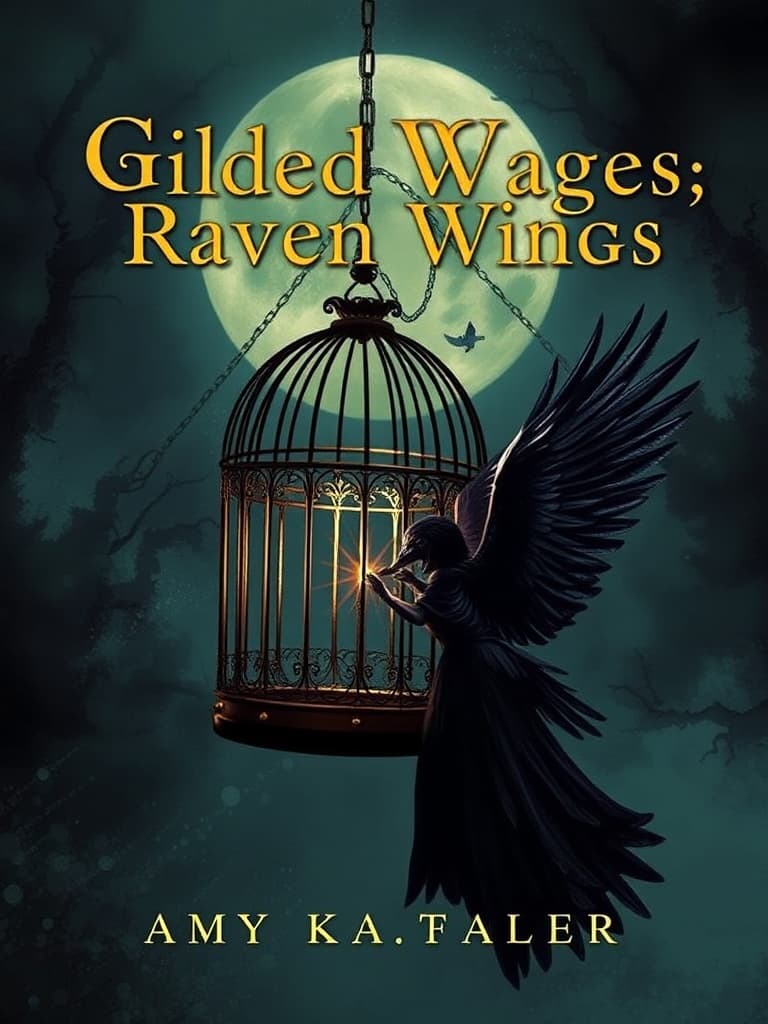
About this book
Gilded Cages, Raven Wings
PoetryHistoricalMysteryFantasy
Views
0
Likes
0
Chapters
38
Comments
0
I, Amy Kathryn Allen, am giving tio to You 150 of My original Gothic Poems of Love,death, victory and mourning written in the style of Edgar Allan Poe
Chapters
- 1Whispers from the DustThis inaugural chapter, 'Whispers from the Dust,' sets the stage for Amy Kathryn Allen's profound journey into the heart of her grief, manifested through her original Gothic poems. As a recluse, Amy inhabits a world steeped in shadow and memory, her existence a quiet testament to a past tragedy. The chapter opens with Amy in her solitary dwelling, a space that feels both sanctuary and tomb, filled with the accumulated detritus of a life lived largely in isolation. Sunlight struggles to penetrate the heavy draperies, casting long, dancing shadows that seem to whisper secrets only she can decipher. Her primary objective in this chapter is to begin the arduous task of gathering and organizing her poems, a collection born from the deepest wells of her sorrow. These verses are not mere scribblings; they are raw emanations of her soul, painstakingly crafted in the melancholic and macabre style of Edgar Allan Poe. The description of her surroundings should be rich in gothic detail: dust motes dancing in slivers of light, the scent of aged paper and dried ink, the oppressive silence broken only by the creak of old floorboards or the distant cry of a raven. The atmosphere must be one of profound introspection and lingering sadness. Scene-by-scene beats: 1. **Opening Scene: The Solitary Study.** Amy is introduced in her study, a room that mirrors her internal state – cluttered yet with a somber order, filled with books, decaying manuscripts, and mementos. She is surrounded by stacks of loose papers, each containing a poem. The visual should emphasize her reclusiveness and the weight of her past. Her initial action is to sort through these papers, a daunting task. The dust motes, the scent of old paper, the muted light are key sensory details. 2. **The First Poem Unveiled.** Amy picks up a particularly worn sheaf of papers. As she reads the first poem, the narrative shifts inward, offering a glimpse into the content and style of her work. This poem should immediately establish the Poe-esque tone – themes of loss, beauty intertwined with decay, and a pervasive sense of dread. The description of her reading should convey the emotional impact these words still have on her, perhaps a sigh, a trembling hand, or a faraway look. 3. **Echoes of Poe.** Amy reflects on her literary inspiration, Edgar Allan Poe. The chapter should subtly weave in why his work resonates so deeply with her – his exploration of the human psyche's darker corners, his musicality of language, his obsession with death and lost love. This isn't an academic analysis but an intuitive connection, as if Poe's spectral presence guides her hand. 4. **The Weight of Memory.** As she sorts, fragmented memories surface, triggered by specific lines or phrases in the poems. These memories are not fully revealed but are hinted at through Amy's reactions – a fleeting expression of pain, a tightening in her chest. The poems are a direct conduit to these buried emotions. The sheer volume of her work suggests a long period of sustained grief. 5. **The Purpose of Collection.** Amy articulates, perhaps internally or through a brief journal entry, her intention behind compiling these poems. It's not for publication (at this stage), but for herself – an act of cataloging her pain, an attempt to impose order on the chaos of her emotions. The collection is a map of her sorrow. 6. **A Glimpse of the Tragedy.** A particular poem or a collection of them hints at the nature of the loss that defines her existence. The language is veiled, using gothic archetypes and metaphors – a lost maiden, a spectral lover, a desolate landscape – but the depth of the sorrow is palpable. This section establishes that her grief stems from a specific, profound tragedy. 7. **The Reclusive Life.** The chapter reinforces Amy's isolation. Interactions with the outside world are minimal, perhaps suggested by a distant sound or a brief thought about the world beyond her walls. Her world is contained within her study and her mind. The descriptions of her physical appearance might subtly reflect her reclusiveness – perhaps pale skin, shadowed eyes, simple, dark clothing. 8. **The Beginning of a Process.** The chapter concludes with Amy having made some progress in organizing her poems. She has a sense of the monumental task ahead, but also a nascent resolve. The initial sorting is complete, and she has a clearer picture of the vast landscape of her grief as represented by her collected works. The final image is of Amy amidst her papers, the weight of her past heavy upon her, but with the first tentative steps taken towards confronting it through her art. Character Intent: Amy's primary intent is to begin the process of confronting her grief by gathering and organizing her poems. She seeks to understand the scope of her sorrow and to give form to the inchoate emotions that have consumed her. She is driven by an unconscious need for catharsis, even if she doesn't fully recognize it yet. Setting Details: The study is a character in itself – dimly lit, filled with the scent of old paper, dust, and perhaps a hint of dried flowers. Gothic elements abound: heavy velvet curtains, dark wood furniture, perhaps a raven motif in the decor. The atmosphere is one of oppressive quietude and melancholic beauty. Emotional Turns: The chapter begins with a pervasive sense of weariness and sorrow. As Amy engages with her poems, there are moments of sharp pain, followed by a somber reflection and a flicker of determined resolve. The overwhelming emotion is grief, but tinged with the nascent possibility of artistic expression. Continuity Notes: This chapter needs to establish the core themes (grief, lost love, death, Poe's influence) and Amy's reclusive nature. The nature of the tragedy should remain ambiguous, hinted at but not revealed. The Poe-esque style must be evident from the outset. Ending Hook: The chapter ends with Amy surrounded by her collected poems, having taken the first step. The sheer volume of her work suggests a long and arduous journey ahead. The hook is the question of what will emerge from this vast repository of sorrow, and whether Amy can truly find solace within it, or if she will be consumed by it. The image of her, a solitary figure amidst the paper ghosts of her past, looking towards the daunting task, provides a sense of anticipation for the unfolding narrative. The dust motes continue to dance, silent witnesses to her internal struggle and the beginning of her cathartic process.
- 2The Raven's ShadowChapter two, 'The Raven's Shadow,' delves deeper into the recurring theme of doomed love that permeates Amy Kathryn Allen's Gothic poetry. Building upon the foundation laid in 'Whispers from the Dust,' this chapter focuses on the verses that explore passionate, yet ultimately destructive, romantic entanglements. The spectral presence of a lost love, a figure central to Amy's grief, looms large, serving as both muse and tormentor. The poems presented here are characterized by their intensity, their exploration of beauty intertwined with decay, and the foreboding sense of inevitable loss. Amy's own emotional state in this chapter is one of deep longing and regret, as she revisits the verses that encapsulate the pain of this defining relationship. The narrative will follow Amy as she sifts through her collection, selecting and reflecting upon these specific poems, allowing their verses to transport her back to the emotional landscape of her past. Scene-by-scene beats: 1. **Revisiting the Heartbreak.** Amy intentionally seeks out the poems that speak most directly of her lost love. She might be drawn to a particular corner of her study, or a specific manuscript, where these verses are concentrated. The act of selecting these poems is deliberate, a conscious act of revisiting the source of her most profound pain, driven by a mixture of masochism and a desperate need to understand. 2. **Poem Excerpt 1: The Fleeting Flame.** Present a significant excerpt from a poem that depicts the initial intense passion of the love affair. Use vivid imagery of light, warmth, and overwhelming emotion, but juxtapose it with subtle hints of fragility and impending doom. For example, 'a kiss like summer's fleeting bloom,' or 'eyes that held the sun, yet promised endless night.' Describe Amy's physical reaction as she reads – perhaps a tear escapes, or a faint smile of remembrance that quickly fades. 3. **The Muse and the Tormentor.** Amy's internal monologue or journal entry delves into the nature of this 'Lost Love.' This figure is idealized, a paragon of beauty and affection, yet the relationship was inherently flawed or destined for tragedy. The poems reflect this duality – the ecstatic heights of love and the crushing depths of despair that followed. The 'raven's shadow' metaphor should be explicitly linked to this love, symbolizing its dark, inescapable influence. 4. **Poem Excerpt 2: The Inevitable Fall.** Present another excerpt that illustrates the decline of the relationship or the moment of separation/loss. This poem should be darker, more desperate, focusing on themes of betrayal, misunderstanding, or the cruel hand of fate. Use imagery of wilting flowers, fading light, encroaching darkness, and the chilling presence of an unseen force tearing them apart. 5. **The Illusion of Permanence.** Amy reflects on the nature of memory and idealized love. She grapples with the fact that the love she remembers might be a construct, a gilded memory polished by time and grief. The poems capture this struggle – the desperate clinging to an idealized past versus the harsh reality of its absence. This section explores the psychological aspect of mourning, where the deceased or departed lover can become more real in memory than they ever were in life. 6. **The Poe Connection Amplified.** Amy explicitly connects the themes of doomed love in her poems to Poe's own works, perhaps referencing specific poems or tales where similar motifs appear (e.g., 'Annabel Lee,' 'The Raven'). She sees her own narrative reflected in his, reinforcing the gothic sensibility and the tragic inevitability she feels. 7. **Poem Excerpt 3: The Lingering Echo.** Conclude the poetic selections with an excerpt that speaks to the enduring impact of this lost love. It's not about the immediate pain of loss, but the persistent echo, the way this love continues to shape Amy's present existence, casting a long shadow over her life. This could involve imagery of ghosts, haunting melodies, or inescapable memories. 8. **The Weight of Unexpressed Emotion.** Amy feels the weight of these unexpressed emotions, the sheer volume of love and pain contained within these verses. She might feel a sense of paralysis, trapped by the intensity of these feelings. However, the act of revisiting them, of giving them form through her poetry, is also a source of a strange, melancholic comfort. 9. **The Gilded Cage Tightens.** The chapter should subtly reinforce the idea that these poems, while cathartic, also contribute to her feeling of being trapped. The 'gilded cage' metaphor begins to take shape, as her focus on this past love, though artistically fruitful, prevents her from moving forward. The beauty of the remembered love is its 'gilding,' but the cage is the inescapable sorrow it has wrought. 10. **Ending Hook: The Shadow Deepens.** The chapter concludes with Amy feeling the pervasive influence of this lost love, the 'raven's shadow' seeming to grow longer and darker. She has revisited the core of her heartbreak, and while the act of writing about it is a form of processing, it also underscores the depth of her ongoing suffering. The hook is the question of whether this intense focus on doomed love will lead to her complete unraveling or if it's a necessary step towards understanding the nature of her loss before she can begin to heal. The final image could be Amy holding a poem, her face etched with a profound sadness, the shadows in the room seeming to deepen around her, mirroring the shadow cast by her lost love. Character Intent: Amy intends to confront the core of her grief by re-engaging with the poems about her lost love. She seeks to understand the intensity of her feelings and perhaps find a semblance of closure, even if that closure is steeped in sorrow. She is driven by a need to articulate the inexpressible pain of this particular loss. Setting Details: The setting remains Amy's study, but the atmosphere becomes more charged with the emotional residue of past love and loss. Shadows seem to lengthen, and the air feels heavy with unspoken words and spectral presence. Details might include faded photographs, dried flowers, or objects that belonged to the lost love, now imbued with melancholic significance. Emotional Turns: The emotional arc moves from a hesitant revisiting of painful memories to moments of intense longing, regret, and despair. There's a bittersweet quality to the remembrance, a painful recognition of beauty that is now irrevocably lost. The overarching emotion is a deep, pervasive melancholy centered on lost love. Continuity Notes: This chapter needs to solidify the 'Lost Love' as the primary source of Amy's grief and establish the theme of doomed romance. The Poe-esque style should be evident in the poem excerpts. The 'gilded cage' metaphor should begin to be visually or thematically represented. Ending Hook: The chapter concludes by emphasizing the enduring, almost suffocating, presence of the lost love's memory, leaving the reader with a sense of Amy's deep entanglement in her sorrow, questioning how she can possibly escape the 'raven's shadow' that now looms so large.
- 3Echoes of EternityChapter three, 'Echoes of Eternity,' pivots to the pervasive theme of death and its lingering presence, a cornerstone of Gothic literature and the driving force behind much of Amy Kathryn Allen's sorrow. The poems in this section are not merely about the cessation of life, but about the enduring grip of grief, the spectral existence of those who are gone, and the morbid fascination with mortality that often accompanies profound loss. Amy, in her reclusive state, finds herself perpetually surrounded by the 'echoes' of those she has lost, their absence a palpable entity. This chapter will explore Amy's internal struggle with the finality of death, juxtaposed with the unsettling persistence of memory and the haunting feeling that the departed are never truly gone. The narrative will trace Amy's engagement with these poems, revealing her complex relationship with mortality and remembrance. The Poe influence is particularly strong here, given his own obsessions with death, premature burial, and the supernatural. Scene-by-scene beats: 1. **The Threshold of Death.** Amy selects poems that directly address death and its aftermath. This might be initiated by a specific trigger – a falling leaf outside her window, the chime of a clock marking the passage of time, or a memory associated with a funeral. She seeks out verses that articulate the stark reality of mortality. 2. **Poem Excerpt 1: The Silent Tomb.** Present an excerpt that focuses on the physical finality of death – the coldness of the grave, the stillness of the body, the stark imagery of a tomb or crypt. The language should be stark and unflinching, emphasizing the physical cessation of life. Amy's reaction might be one of grim acceptance or a shudder of revulsion at the physical reality. 3. **The Persistence of Presence.** Contrast the finality of death with the haunting persistence of the departed. Amy's poems explore how the dead continue to inhabit the thoughts, dreams, and even the physical spaces of the living. This is where the 'echoes' truly manifest – a voice heard in the wind, a shadow glimpsed in the periphery, a scent that triggers a memory. The poems capture the unsettling ambiguity between absence and presence. 4. **Poem Excerpt 2: The Spectral Companion.** Present an excerpt that personifies death or the spirit of the deceased as a constant companion. This could be a spectral lover, a lost child, or a mentor figure, forever present yet forever untouchable. The imagery should evoke a sense of ghostly visitation, the uncanny feeling of being watched or accompanied by the unseen. Amy might feel a chilling presence as she reads these lines aloud, or in her mind. 5. **Grappling with Finality.** Amy's internal monologue grapples with the philosophical and emotional implications of death. Is it truly an end? Or is it a transformation? Her poems reflect this internal debate, oscillating between despair at the irreversible loss and a morbid curiosity about the afterlife or the persistence of the soul. This section delves into the existential dread that accompanies profound grief. 6. **Poe's Embrace of Mortality.** Amy reflects on Poe's masterful depictions of death – his fascination with beauty in decay, his exploration of the psychological impact of loss, his fear of premature burial. She sees her own grappling with mortality mirrored in his work, finding a strange kinship in his morbid sensibilities. This connection offers a sense of validation for her own dark preoccupations. 7. **Poem Excerpt 3: The Mourner's Vigil.** Present an excerpt that focuses on the ongoing vigil of the mourner. The poems depict the rituals of remembrance, the tending of graves, the reliving of memories, and the way grief becomes an eternal state. The imagery should convey a sense of unending sorrow, the passage of time having little effect on the depth of the pain. 8. **The Weight of Remembrance.** Amy feels the burden of carrying the memories of the dead. Each memory is a responsibility, a 'ghost' that demands attention. The poems express the exhausting nature of this constant remembrance, the way it consumes the present and overshadows the future. She might feel a sense of being trapped by the past, unable to escape the 'eternity' of her grief. 9. **The Shadow of the Tomb.** The chapter reinforces the gothic atmosphere. The descriptions of Amy's surroundings should emphasize the encroaching darkness, the symbolism of tombs, crypts, and decay. The poems themselves serve as extensions of this dark aesthetic, painting vivid pictures of mortality and the underworld. 10. **Ending Hook: The Unending Echo.** The chapter concludes with Amy feeling the overwhelming weight of death's presence, both physically and metaphorically. The 'echoes of eternity' seem to surround her, leaving her suspended in a state of perpetual mourning. The hook lies in the question of whether this constant proximity to death will ultimately crush her spirit or if it is a necessary confrontation before she can find any semblance of peace. The final image could be Amy staring into the darkness, perhaps by a window at night, feeling the presence of the departed more strongly than ever, the silence of her room amplifying the 'echoes' within her soul. Character Intent: Amy's intent is to explore and articulate the multifaceted nature of death as it relates to her grief. She seeks to capture the finality of loss, the haunting persistence of memory, and the existential dread associated with mortality. She is driven by a need to understand the ultimate consequence of the losses she has endured. Setting Details: The setting continues to be Amy's study, but now imbued with a heightened sense of morbidity. Details might include imagery of clocks ticking relentlessly, wilting flowers, perhaps a skull used as a paperweight, or books on necromancy or spiritualism. The atmosphere is heavy with the scent of decay and the chill of the grave. Emotional Turns: The emotional journey is one of confronting the stark reality of death, followed by the unsettling realization of the departed's continued presence in memory and spirit. There's a sense of morbid fascination mixed with profound sadness and existential fear. The overarching emotion is a deep, melancholic contemplation of mortality and eternal remembrance. Continuity Notes: This chapter must establish death as a central theme, distinct from but related to the doomed love explored previously. The Poe-esque style should be evident in the poem excerpts, focusing on Gothic tropes of mortality and the supernatural. The idea of memory as a persistent, almost tangible presence should be introduced. Ending Hook: The chapter concludes with Amy feeling utterly consumed by the presence of death and the eternal echo of her losses, leaving the reader with a sense of her deep immersion in the morbid, questioning if she can ever truly escape this 'eternal' state of mourning.
- 4A Crimson TearChapter four, 'A Crimson Tear,' introduces a crucial shift in Amy Kathryn Allen's poetic landscape, moving beyond pure lamentation to explore the concept of 'victory' – not as triumphant conquest, but as the profound resilience found in survival. This chapter focuses on poems born from the crucible of her suffering, verses that speak of enduring unimaginable storms and finding a flicker of strength amidst overwhelming darkness. Amy's grief is still palpable, but these poems represent her nascent ability to withstand its onslaught. The 'crimson tear' symbolizes the pain shed, but also the blood spilled in the struggle to survive, hinting at a hard-won, albeit mournful, triumph. The narrative will follow Amy as she revisits these specific, more defiant verses, reflecting on the moments that forged this inner resilience. The Poe influence remains, but here it is channeled into exploring the indomitable human spirit even in the face of utter despair. Scene-by-scene beats: 1. **Seeking Strength in Sorrow.** Amy deliberately seeks out poems that reflect a less passive form of grief – those that speak of endurance, of weathering the storm. This might be prompted by a moment of introspection where she recognizes that mere existence is, in itself, a form of victory. She looks for the verses that carry a spark of defiance. 2. **Poem Excerpt 1: The Unbowed Spirit.** Present an excerpt from a poem that depicts the struggle against overwhelming odds. Use imagery of storms, shipwrecks, battles against unseen forces, but with the central figure refusing to yield completely. The language should convey determination, even if it's a weary determination. For instance, 'Though tempests rage and darknesss reign, / My spirit clings, though rent with pain.' Describe Amy’s posture as she reads – perhaps sitting straighter, her gaze more focused. 3. **Defining Survival.** Amy reflects on what 'victory' means in the context of her life. It's not about happiness or forgetting, but about the act of continuing to exist, to breathe, to create, despite the pervasive sorrow. The poems articulate this definition: survival as a quiet, internal battle. The 'crimson tear' is introduced as a symbol of this painful endurance – a mark of the battles fought within her soul. 4. **Poem Excerpt 2: The Flicker in the Void.** Present an excerpt that captures a moment of nascent hope or resilience emerging from utter despair. This could be a metaphor of a single star in a black sky, a fragile bloom pushing through barren earth, or a quiet resolve forming in the heart of a storm. The imagery should be subtle but powerful, suggesting that even in the deepest darkness, life persists. Amy might feel a faint stirring of hope, a warmth spreading through her chest. 5. **The Will to Endure.** Explore the psychological fortitude required to simply keep going. Amy's poems delve into the moments where she chose life over succumbing to despair, even if those choices were made unconsciously or through sheer force of habit. This section emphasizes the internal strength that underlies her outward reclusiveness and melancholy. It’s about the quiet refusal to be extinguished. 6. **Poe's Resilience in Darkness.** Connect Amy's theme of survival to Poe's own explorations of the human psyche under extreme duress. While often depicting madness and despair, Poe also explored the tenacity of life and the desperate will to survive, even in the most horrific circumstances. Amy finds validation in seeing that even within the darkest literature, there is an acknowledgment of the struggle to endure. 7. **Poem Excerpt 3: The Scarred Survivor.** Present an excerpt that acknowledges the cost of survival. The victory is not without its price. The poems here speak of scars, of wounds that may never fully heal, but also of the strength derived from having borne them. The imagery might be of a weathered landscape, a battle-hardened warrior, or a body bearing the marks of its survival. This acknowledges that resilience doesn't mean being untouched by pain. 8. **The Power of Art as Refuge.** Amy recognizes that her poetry itself has become a form of survival. The act of channeling her pain into verse, of giving voice to her suffering, has been a way to manage, to contain, and ultimately, to endure. The poems in this section are testaments to the cathartic power of artistic creation. 9. **From Victim to Endurer.** This chapter marks a subtle shift in Amy's narrative arc. She is no longer solely defined by her victimhood; she is an endurer. The 'gilded cage' of her grief still exists, but she is learning to navigate within it, finding pockets of strength. The poems reflect this growing agency, even if it is expressed within the confines of her sorrow. 10. **Ending Hook: A Glimmer in the Gloom.** The chapter concludes with Amy holding one of these 'survival' poems, a sense of quiet resolve settling upon her. The 'crimson tear' is not a mark of defeat, but a symbol of her enduring spirit. The hook is the dawning realization that perhaps healing isn't about erasing the pain, but about learning to live with it, to find a measure of strength within its depths. The final image is of Amy, her expression less one of pure despair and more one of quiet fortitude, a subtle light beginning to pierce the gloom of her existence, hinting at the possibility of transformation. Character Intent: Amy intends to identify and articulate the moments of strength and resilience that have allowed her to survive her grief. She seeks to define 'victory' not as absence of pain, but as the capacity to endure it, and to recognize the power of her own will to continue living. She is driven by a need to validate her own existence despite her suffering. Setting Details: While still in her study, the atmosphere might feel slightly less oppressive. Perhaps a ray of sunlight manages to break through the clouds, illuminating the dust motes in a more hopeful way. The focus is less on decay and more on the enduring nature of things, like old wood or stone that has withstood the elements. Objects associated with struggle or perseverance might be subtly highlighted. Emotional Turns: The emotional journey shifts from pure lamentation to a more complex mix of sorrow, weariness, and nascent determination. There's a sense of hard-won acceptance, a recognition of inner strength. The overarching emotion is a resilient melancholy, a sadness tinged with the quiet pride of survival. Continuity Notes: This chapter must introduce the theme of survival and resilience as a form of victory, differentiating it from conventional triumph. The Poe-esque style should be present, focusing on the psychological strength required to endure suffering. The 'crimson tear' symbol needs to be established. The transition from victimhood towards agency should begin. Ending Hook: The chapter ends with Amy acknowledging her own resilience, symbolized by the 'crimson tear.' This realization offers a glimmer of hope, suggesting that her journey might lead not just to understanding her pain, but to transforming it. The hook is the question of how this newfound strength will evolve and whether it can truly lead to liberation from her sorrowful existence.
- 5The Masque of MourningChapter five, 'The Masque of Mourning,' plunges Amy Kathryn Allen into the intricate rituals and outward expressions of grief. This chapter focuses on poems that dissect the performance of sorrow – the funerals, the wakes, the public displays of remembrance, and the profound, often isolating, internal ache of absence that underlies them all. Amy, as a recluse, experiences mourning in a particularly internalized and solitary manner, yet her verses capture the universal elements of this somber rite of passage. The poems here are steeped in the atmosphere of death observances, highlighting the hollowness that can accompany prescribed rituals when the individual's pain transcends societal norms. The world outside Amy's solitude, while often ignored, intrudes in the form of these societal expectations and the stark realities of death's public face. The narrative follows Amy as she revisits these poems, reflecting on the performative nature of grief and the profound loneliness it can engender. The gothic tone is amplified, emphasizing the somber pageantry and the spectral presence of the departed. Scene-by-scene beats: 1. **The Spectacle of Loss.** Amy selects poems that deal with funerals, gravesites, and public mourning. She might be drawn to verses that describe the black attire, the solemn processions, the hushed whispers of condolence, and the stark imagery of the burial. The focus is on the external manifestations of grief. 2. **Poem Excerpt 1: The Funeral Dirge.** Present an excerpt vividly describing a funeral scene. Use sensory details: the scent of lilies and damp earth, the sound of weeping and eulogies, the sight of black-clad figures moving like shadows. The poem should capture the somber pageantry and the weight of collective sorrow, but also hint at the superficiality or inadequacy of these rituals in truly assuaging deep personal grief. Amy might recall specific details of a funeral she attended or observed. 3. **The Hollow Ache of Absence.** Contrast the external rituals with the internal reality of absence. The poems in this section focus on the emptiness left behind – the silence in a once-occupied room, the missing presence at the dinner table, the phantom limb sensation of a lost loved one. This is where the true 'mourning' resides, beyond the performance. 4. **Poem Excerpt 2: The Empty Chair.** Present an excerpt that captures the profound sense of void left by the deceased. Use imagery of empty spaces, silenced voices, and the chilling realization that life continues for others while the mourner feels frozen in time. The poem should convey the personal desolation that the public rituals cannot address. Amy might physically turn away from a chair in her room, or her gaze might linger on a space where someone used to be. 5. **The World Outside Fades.** Amy's reclusiveness is reinforced. While her poems engage with societal rituals of mourning, her personal experience of them is detached. The outside world, with its prescribed forms of grief, feels distant and alien compared to the raw, unmediated pain she harbors. Her poems serve as a bridge between her internal world and the external rituals, highlighting the disconnect. 6. **Poe and the Art of Melancholy.** Amy reflects on how Poe masterfully captured the essence of mourning, not just the act, but the psychological state. His works often explore the lingering effects of loss, the obsession with the dead, and the melancholic beauty found in sorrowful contemplation. She sees her own verses as continuing this tradition, delving into the deeper, more personal layers of grief. 7. **Poem Excerpt 3: The Masque Revealed.** Present an excerpt that critiques or exposes the performative aspect of mourning. The 'masque' is the facade worn by mourners, the outward show of grief that may or may not reflect the true depth of their feelings. The poem might question the sincerity of condolences or the adequacy of rituals in the face of profound, unshakeable loss. This reflects Amy's potential cynicism or disillusionment with societal expressions of grief. 8. **The Solitude of True Grief.** The chapter emphasizes that profound grief is often an intensely solitary experience, regardless of public rituals. Amy's poems express this isolation, the feeling that no one else can truly understand the depth of her pain. The 'masque' is necessary for social functioning, but it separates the mourner from genuine connection. 9. **The Gilded Cage Remains.** The focus on mourning rituals, even as a subject of poetry, reinforces Amy's confinement. While she observes the 'masque,' she remains largely separate from the world enacting it. Her cage is gilded by the beauty and depth of her poetic expression, but it is still a cage, defined by her isolation and her all-consuming grief. 10. **Ending Hook: The Silent Scream.** The chapter concludes with Amy contemplating the chasm between the outward performance of mourning and the silent, internal reality of her loss. The poems have laid bare the inadequacy of societal rituals for her profound grief. The hook is the lingering question of whether this detachment from external forms of grieving will lead to further isolation or if it is a necessary step towards finding a more authentic form of solace. The final image could be Amy looking out a window at a seemingly ordinary day, acutely aware of the hidden griefs beneath the surface of normalcy, her own silent scream echoing only within the confines of her heart and her verses. Character Intent: Amy intends to explore the societal rituals surrounding death and mourning, contrasting their public performance with the deeply personal and often isolating nature of her own grief. She seeks to articulate the feeling of disconnect between these external expressions and her internal reality. She is driven by a need to understand the limitations of conventional grieving processes. Setting Details: The study remains the primary setting, but now elements related to death observances might be present – perhaps a book of funeral elegies, a dried funeral wreath, or keepsakes associated with past ceremonies. The atmosphere is one of somber reflection, tinged with a sense of detachment from the outside world's more performative expressions of sorrow. Emotional Turns: The emotional journey involves a contemplation of somber rituals, a realization of their potential superficiality, and a deepening sense of personal isolation. There's a touch of cynicism or disillusionment regarding societal expressions of grief, balanced by the profound ache of genuine loss. The overarching emotion is a melancholic introspection on the solitary nature of true sorrow. Continuity Notes: This chapter must firmly establish the theme of mourning rituals and their inadequacy for profound, internalized grief. The Poe-esque style should be evident, focusing on the psychological impact of loss and the atmosphere of death observances. Amy's reclusiveness and her disconnect from societal norms should be highlighted. Ending Hook: The chapter concludes by emphasizing the profound isolation that can accompany deep grief, suggesting that Amy's true mourning occurs in silence, away from the performative 'masque.' The hook is the question of whether this solitary path will lead to healing or further entrenchment in her sorrow, leaving the reader pondering the true nature of solace beyond societal expectations.
- 6To My Lost BelovedChapter six, 'To My Lost Beloved,' represents a deeply personal and intensely emotional segment of Amy Kathryn Allen's poetic collection. The poems within this chapter are direct addresses, intimate outpourings of longing and regret directed towards the spectral figure of her 'Lost Love.' This chapter serves as a focal point for the rawest expressions of her grief, painting a portrait of an idealized past that is now irrevocably lost. Amy's intent here is to pour out her heart, to speak directly to the memory of this person, imbuing the verses with the intensity of their past connection and the crushing weight of its absence. The narrative follows Amy as she selects and perhaps even rereads these intensely personal poems, allowing herself to be fully immersed in the pain and beauty of what once was. The Poe influence is evident in the passionate, often melancholic, tone and the exploration of idealized, yet doomed, love. The descriptions should evoke a sense of intimate remembrance, tinged with the sorrow of impossibility. Scene-by-scene beats: 1. **The Sanctuary of Memory.** Amy deliberately seeks out the poems that are direct epistles to her Lost Love. These might be hidden away, or perhaps they represent the earliest and most passionate outpourings of her grief. She approaches them with a mixture of trepidation and desperate yearning, knowing they will plunge her back into the heart of her pain. 2. **Poem Excerpt 1: The Echo of a Name.** Present an excerpt that begins the address, perhaps invoking the Lost Love's name or a significant descriptor. The language should be filled with adoration and painful remembrance, focusing on cherished qualities – eyes, smile, voice, presence. The tone is one of intense longing for a return that cannot happen. Describe Amy’s quiet recitation of these lines, perhaps her voice trembling. 3. **Idealization and Regret.** Amy reflects on the nature of this idealized love. The poems are not necessarily objective portrayals but rather testaments to how deeply this person impacted her life. Intertwined with the idealization is profound regret – for words unsaid, actions not taken, or the circumstances that led to the separation. The verses capture the agony of 'what ifs.' 4. **Poem Excerpt 2: The Garden of Lost Time.** Present an excerpt that evokes a specific, cherished memory – a shared moment, a place, a particular season. The imagery should be beautiful and poignant, emphasizing the sweetness of the past, but underscored by the bitter knowledge that these moments are gone forever. Use metaphors of fading gardens, wilting flowers, or setting suns. Amy might close her eyes, fully immersed in the recalled moment. 5. **The Unbridgeable Chasm.** The poems powerfully convey the immense distance between Amy's present reality and the past she longs for. The 'chasm' is not just time, but the finality of loss. The verses articulate the pain of knowing that the person she addresses is forever out of reach, a memory that can be revisited but never recaptured. 6. **Poe's Echoes of Lost Love.** Amy draws parallels between her own laments and Poe's famous poems dedicated to lost loves, such as 'Annabel Lee.' She recognizes the shared archetype of the perfect, tragically lost beloved and the consuming nature of grief that follows. This comparison validates the intensity of her own feelings and artistic expression. 7. **Poem Excerpt 3: A Plea or a Farewell.** Present an excerpt that represents either a desperate plea for the Lost Love to return (even in spirit) or a sorrowful, yet resigned, farewell. This poem encapsulates the culmination of her longing and regret, the final articulation of her enduring love and pain. It might be a desperate whisper into the void or a quiet acknowledgment of permanent separation. 8. **The Weight of Unexpressed Devotion.** Amy feels the immense burden of this enduring love and devotion, now unrequited and unexpressed in the physical world. The poems are the only outlet for these powerful emotions. The intensity of her feelings, channeled into verse, is both a solace and a torment. 9. **The Gilded Cage of Remembrance.** The act of composing and revisiting these poems, while cathartic, also serves to reinforce her 'gilded cage.' Her devotion to the memory of this Lost Love keeps her tethered to the past, preventing her from fully engaging with the present or envisioning a future. The beauty of her remembrance is its 'gilding,' but the cage is the inescapable sorrow. 10. **Ending Hook: The Lingering Presence.** The chapter concludes with Amy deeply immersed in the memory of her Lost Love, the verses of her poems echoing in the silence of her study. She has poured out her heart, articulating the depth of her idealized love and the profound pain of its loss. The hook lies in the question of whether this intense outpouring will bring her any closer to peace or if she will remain forever captive to the memory of this singular, tragic connection. The final image could be Amy holding a treasured memento associated with the Lost Love, tears silently falling onto it, the intensity of her gaze fixed on a point in the distance, lost in the spectral embrace of her beloved. Character Intent: Amy's primary intent is to express the depth of her love and the profound sorrow of its loss directly to the memory of her beloved. She seeks to articulate the idealization of this past relationship and the overwhelming regret associated with its irreversible ending. She is driven by a need to give voice to the most intense and personal aspect of her grief. Setting Details: The setting remains Amy's study, but the atmosphere becomes intensely personal and intimate. Objects associated with the Lost Love might be more prominent – a portrait, a piece of jewelry, a dried flower. The lighting might be softer, more focused, as if illuminating a sacred space. The overall feeling is one of concentrated emotion and poignant remembrance. Emotional Turns: The emotional journey is characterized by intense longing, deep regret, bittersweet remembrance, and profound sadness. There's a sense of adoration for the past intertwined with the agony of its irretrievable loss. The overarching emotion is a powerful, sorrowful love that transcends death. Continuity Notes: This chapter must focus specifically on the poems addressed to the 'Lost Love,' emphasizing idealization, longing, and regret. The Poe-esque style should be evident in the passionate and melancholic tone. The connection between this specific loss and Amy's overall grief should be reinforced. The 'gilded cage' metaphor should be linked to her inability to let go of this memory. Ending Hook: The chapter concludes with Amy fully immersed in the memory of her Lost Love, having articulated the deepest expressions of her grief. The hook is the lingering question of whether this cathartic outpouring is a step towards healing or a deeper descent into the sorrowful past, leaving the reader uncertain if she can ever truly move beyond this singular, defining loss.
- 7The Crypt of MemoriesChapter seven, 'The Crypt of Memories,' takes Amy Kathryn Allen on a descent into the archives of her own mind, where cherished memories are preserved but simultaneously tainted by the sorrow of their ephemerality. These poems are not just recollections; they are ghosts inhabiting the vaults of her consciousness, each one a spectral echo of moments that once brought joy but are now steeped in the bitterness of loss. Amy's intent in this chapter is to meticulously catalogue these precious, yet painful, fragments of her past, acknowledging their transient nature and the inevitable decay that time inflicts upon even the most beloved recollections. The narrative follows Amy as she delves into these 'crypts,' carefully handling each memory-laden poem, aware that each recall is a ghostly encounter. The gothic atmosphere is heightened, emphasizing the idea of memories as preserved artifacts within a dark, internal vault. The Poe influence is strong in the exploration of the mind's darker recesses and the haunting power of memory. Scene-by-scene beats: 1. **Entering the Vault.** Amy decides to confront the repository of her most treasured, yet painful, memories. This might be initiated by finding an old keepsake or a particularly evocative poem that unlocks a floodgate of recollections. She approaches this task with a sense of solemnity, as if entering a sacred, yet haunted, space. 2. **Poem Excerpt 1: The Fading Portrait.** Present an excerpt from a poem that describes a specific memory, focusing on its visual or sensory details. The poem should capture the beauty of the moment but also hint at its impermanence – a fading photograph, a scent that dissipates, a sound that recedes. The language should convey a sense of preciousness tinged with the sadness of inevitable loss. Describe Amy’s careful handling of the manuscript, as if it were fragile parchment. 3. **The Ghost of Joy.** Amy reflects on how memories, once sources of happiness, are now imbued with sorrow. The joy is still present, but it is overlaid with the pain of absence. Her poems explore this duality – the ghost of laughter in a silent room, the phantom warmth of a touch. This section delves into the psychological complexity of grief, where happiness itself can become a source of pain. 4. **Poem Excerpt 2: Whispers in the Halls.** Present an excerpt that captures the auditory or sensory echoes of past experiences. This could be the memory of a particular song, a familiar phrase, or the sound of footsteps that no longer tread the floors. The poem should evoke the uncanny feeling of the past intruding upon the present, making the absence of the departed all the more acute. Amy might pause, straining to hear a phantom sound. 5. **The Ephemerality of Existence.** Amy contemplates the transient nature of life and happiness. Her poems grapple with the philosophical implications of existence – how moments of intense beauty and connection are fleeting, destined to fade. This reflection fuels her melancholic worldview, reinforcing the idea that all things beautiful are ultimately subject to decay. 6. **Poe's Haunted Mindscapes.** Amy connects her exploration of memory to Poe's fascination with the human mind, particularly its tendency to dwell on the past and its susceptibility to haunting recollections. She sees her own internal 'crypt' as a landscape akin to those described by Poe, filled with spectral remnants of lived experience. 7. **Poem Excerpt 3: The Keeper of Relics.** Present an excerpt that portrays the speaker as a custodian of memories, meticulously preserving them like relics in a crypt. The poem should convey the burden and the bittersweet comfort of this role – the act of remembrance as a form of continued connection, but also as a trap that keeps the speaker bound to the past. 8. **The Weight of Preservation.** Amy feels the immense emotional weight of holding onto these memories. Each recollection is a potential source of pain, yet letting go feels like a betrayal of the past. Her poems express this struggle – the desire to preserve versus the need to release, the constant tension between remembrance and oblivion. 9. **The Gilded Cage of Nostalgia.** The act of immersing herself in these cherished, yet painful, memories reinforces the 'gilded cage' of her existence. While the memories themselves are beautiful, her inability to move beyond them, her constant revisiting of the past, keeps her trapped in a cycle of sorrow. The nostalgia, though gilded with beauty, becomes a suffocating confinement. 10. **Ending Hook: The Ghostly Embrace.** The chapter concludes with Amy surrounded by the spectral remnants of her past, the poems in her hands acting as keys to these internal crypts. She has acknowledged the beauty and the pain of her memories, understanding their ephemeral nature. The hook lies in the question of whether this deep dive into her past will lead to a cathartic release or simply deepen her entanglement with the ghosts of what once was. The final image could be Amy sitting amidst her papers, a faint, melancholic smile on her face, as if communing with the spectral figures conjured by her verses, suspended between the beauty of remembrance and the sorrow of its passing. Character Intent: Amy intends to delve into her most cherished memories, acknowledging their beauty while confronting their inherent ephemerality and the sorrow they now evoke. She seeks to give voice to the spectral nature of remembrance and the burden of preserving the past. She is driven by a need to understand the complex relationship between memory, joy, and grief. Setting Details: The setting of the study takes on the quality of a dimly lit archive or crypt. Details might include old chests, dusty boxes filled with keepsakes, faded photographs, and perhaps anatomical drawings or diagrams related to memory and the brain, rendered in a gothic style. The atmosphere is one of reverent melancholy and spectral presence. Emotional Turns: The emotional journey involves a bittersweet revisiting of happy memories, a profound sadness at their transient nature, and a sense of the haunting power of recollection. There's a feeling of being simultaneously comforted and tormented by the past. The overarching emotion is a nostalgic melancholy, tinged with the existential awareness of impermanence. Continuity Notes: This chapter must focus on the theme of memory as both a treasure and a torment, emphasizing its transient nature. The Poe-esque style should be evident in the exploration of the mind's darker corners and the haunting power of recollection. The concept of memories as 'ghosts' should be clearly established. The 'gilded cage' metaphor should be linked to her inability to escape nostalgic longing. Ending Hook: The chapter concludes with Amy fully immersed in her memories, acknowledging their spectral beauty and ephemeral nature. The hook is the question of whether this deep dive into the 'crypt' of her past will free her from the ghosts of remembrance or bind her more tightly to them, leaving the reader wondering if she can ever truly escape the haunting allure of what has been lost.
- 8A Bell Tolling SilenceChapter eight, 'A Bell Tolling Silence,' explores the profound emptiness and deafening quiet that follows loss. The poems in this section capture the void left by the departed, the unnerving silence where laughter, conversation, and life once resonated. Amy Kathryn Allen, in her reclusive existence, is acutely sensitive to this silence, finding it to be a constant, oppressive reminder of her bereavements. This chapter focuses on verses that articulate the emptiness, the vacuum created by absence, and the way this silence echoes endlessly within the mourner's soul. Amy's intent is to give voice to this unsettling quietude, to articulate the palpable absence that silence represents. The narrative follows Amy as she selects and reflects upon these poems, allowing the verses to amplify the oppressive stillness of her surroundings. The gothic tone is amplified by the focus on emptiness, void, and the chilling absence of sound, which can be more terrifying than any noise. Scene-by-scene beats: 1. **The Sound of Absence.** Amy is drawn to poems that describe the unnerving quiet that follows death. This might be triggered by a particularly silent moment in her home, where the absence of any sound becomes almost deafening. She seeks verses that capture this specific quality of grief. 2. **Poem Excerpt 1: The Unheard Word.** Present an excerpt that focuses on the silence where a voice used to be. It could describe an empty room, a table set for one less, or the inability to hear a familiar greeting. The language should emphasize the void, the lack of sound, and the haunting quality of this absence. Describe Amy’s heightened awareness of the silence in her own room as she reads. 3. **The Deafening Void.** Amy reflects on the nature of this silence. It's not merely the absence of noise, but a palpable presence of emptiness, a void that seems to absorb all other sensations. Her poems explore how this silence can be more overwhelming than any clamor, filling the mind and heart with a sense of desolation. 4. **Poem Excerpt 2: The Echo in the Well.** Present an excerpt that uses metaphors of wells, chasms, or vast empty spaces to describe the internal feeling of emptiness. The silence 'echoes' within these voids, amplifying the sense of isolation and loss. The poem might describe the feeling of shouting into this void and hearing only the return of one's own desolate cry, or worse, nothing at all. Amy might feel a physical sensation of hollowness in her chest. 5. **The World Outside vs. The Silent Interior.** Amy contrasts the often noisy, bustling world outside her home with the profound silence within. This contrast serves to heighten her sense of isolation and the unique nature of her grief. The poems articulate how the external world's sounds seem distant and irrelevant compared to the overwhelming silence of her inner world. 6. **Poe's Mastery of Atmosphere.** Amy connects her exploration of silence and emptiness to Poe's ability to create atmosphere. His tales often rely on a sense of dread built through suggestion, isolation, and the psychological impact of silence and emptiness, such as in 'The Fall of the House of Usher.' She sees her own verses as similarly focused on mood and the psychological effects of absence. 7. **Poem Excerpt 3: The Clock's Mockery.** Present an excerpt that highlights the passage of time within the silence. A ticking clock, which normally marks progress, becomes a tormenting sound in the midst of oppressive quiet, emphasizing the stagnation of the mourner's existence. The silence renders the progression of time almost meaningless, yet the ticking mocks this stillness. 8. **The Weight of Unspoken Grief.** The silence represents not just the absence of the departed, but also the unexpressed depths of Amy's grief. The inability to articulate the full extent of her pain contributes to the oppressive quiet. Her poems are an attempt to break this silence, to give form to the formless ache. 9. **The Gilded Cage of Stillness.** The pervasive silence and emptiness contribute to Amy's feeling of being trapped within her 'gilded cage.' The stillness, while perhaps initially seeming peaceful, becomes suffocating. Her inability to fill this void, either with sound, connection, or forward momentum, keeps her confined within the beautiful but empty structure of her sorrow. 10. **Ending Hook: The Endless Echo.** The chapter concludes with Amy enveloped in the profound silence of her surroundings, the poems she has selected echoing the emptiness within her. The 'bell tolling silence' has become the soundtrack to her grief. The hook lies in the question of whether this confrontation with the void will lead to a breaking point or if she can find a way to coexist with this silence, perhaps even to find a strange form of peace within it. The final image could be Amy sitting perfectly still, eyes closed, listening intently to the silence, the absence of sound becoming her only companion, leaving the reader with a sense of profound, unsettling quietude. Character Intent: Amy intends to articulate the profound emptiness and deafening silence that follows loss. She seeks to capture the palpable void left by the departed and the way this silence becomes an oppressive, echoing presence. She is driven by a need to give voice to the disquieting quietude of grief. Setting Details: The setting of the study is emphasized by its silence. Any sounds that do occur – the creak of a floorboard, the rustle of paper – are magnified by the surrounding quiet. Details might include clocks with loud ticking, empty chairs, dusty surfaces where no hand has recently rested. The atmosphere is one of oppressive stillness and unnerving absence. Emotional Turns: The emotional journey involves a confrontation with emptiness, a sense of profound isolation, and the unsettling realization that silence can be more terrifying than noise. There's a feeling of being overwhelmed by the void. The overarching emotion is a deep, isolating melancholy characterized by the oppressive weight of absence. Continuity Notes: This chapter must focus on the theme of silence and emptiness as a direct consequence of loss. The Poe-esque style should be evident in the creation of atmosphere and the exploration of psychological dread stemming from absence. The concept of silence as a palpable entity should be established. The 'gilded cage' metaphor should be linked to the suffocating stillness. Ending Hook: The chapter concludes with Amy immersed in the profound silence of her grief, the 'bell tolling silence' resonating within her. The hook is the question of whether this confrontation with the void will lead to her complete despair or if she can somehow find a way to navigate this emptiness, leaving the reader with a sense of suspense regarding her ability to endure the profound quietude.
- 9The Unseen WoundChapter nine, 'The Unseen Wound,' delves into the veiled nature of Amy Kathryn Allen's central tragedy. While her poems consistently echo themes of loss and sorrow, this chapter focuses on verses that hint at the specific, defining event that haunts her, shrouding it in metaphor and gothic imagery. The poems here are characterized by their subtle allusions, their veiled confessions, and the palpable sense of a secret sorrow that remains a dark undercurrent beneath the surface of her more overt expressions of grief. Amy's intent is to approach the edges of her deepest pain, to articulate the wound without fully exposing its raw severity, acknowledging its profound impact while maintaining a protective layer of ambiguity. The narrative follows Amy as she selects and interprets these more cryptic poems, recognizing the veiled truths they contain. The Poe influence is strong in the use of psychological complexity, suggestion, and the portrayal of hidden trauma. Scene-by-scene beats: 1. **Probing the Scar.** Amy is drawn to poems that feel different – less about general sorrow and more about a specific, yet unnamed, source of pain. These might be verses she has hesitated to revisit or ones that feel particularly charged with unspoken emotion. She decides to explore these veiled allusions. 2. **Poem Excerpt 1: The Shattered Mirror.** Present an excerpt that uses metaphors of brokenness, fragmentation, or distortion to represent the tragedy. A shattered mirror reflecting a fractured self, a landscape irrevocably scarred, or a once-whole entity now in pieces. The poem should suggest a singular, devastating event without explicitly naming it. Describe Amy’s pensive expression as she reads, her gaze distant. 3. **The Burden of the Unspoken.** Amy reflects on the nature of secrets and hidden trauma. The poems articulate the heavy burden of carrying a pain that cannot be fully expressed or shared, the isolation that comes from harboring such a profound, unseen wound. The verses capture the feeling of being fundamentally altered by an event that remains shrouded in mystery, even to herself at times. 4. **Poem Excerpt 2: The Shadowed Event.** Present an excerpt that uses allegorical or symbolic language to allude to the tragedy. This could involve references to specific gothic archetypes – a fall from grace, a betrayal, a sudden, inexplicable disappearance, or a catastrophic accident. The poem should hint at the circumstances without providing concrete details, focusing instead on the emotional fallout. Amy might trace a pattern on the page, lost in thought. 5. **The Psychological Scarring.** The focus shifts to the lasting psychological impact of the trauma. The poems explore how the event has reshaped Amy's perception of the world, her relationships (or lack thereof), and her sense of self. The 'unseen wound' is not just emotional; it has fundamentally altered her psyche. 6. **Poe's Exploration of Hidden Torment.** Amy draws parallels between her veiled account of trauma and Poe's characters who are often tormented by hidden guilt, madness, or past events that they cannot fully confront or articulate (e.g., the narrator in 'The Tell-Tale Heart'). She recognizes the power of suggestion and psychological depth in conveying profound suffering. 7. **Poem Excerpt 3: The Lingering Phantom.** Present an excerpt that portrays the lingering presence or influence of the tragic event, like a phantom limb or a recurring nightmare. The poem should convey how the past continues to manifest in the present, disrupting peace and casting a long shadow, even if the source remains obscure. This emphasizes the enduring nature of the 'unseen wound.' 8. **The Protective Veil.** Amy understands that the ambiguity in her poems is a form of self-protection. By not fully revealing the details of the tragedy, she maintains a degree of control over her pain, preventing it from completely consuming her. The verses serve as both an expression and a shield. 9. **The Gilded Cage and its Keeper.** The 'unseen wound' is intrinsically linked to her 'gilded cage.' The trauma has driven her into reclusion, forming the bars of her confinement. Her inability or unwillingness to fully confront and articulate the source of her pain keeps her trapped within the beautiful, yet suffocating, confines of her self-imposed isolation. 10. **Ending Hook: The Unspoken Truth.** The chapter concludes with Amy holding these veiled poems, acknowledging the profound impact of the tragedy they hint at, yet remain unnamed. She has touched upon the edges of her deepest wound without fully exposing it. The hook lies in the question of whether this partial acknowledgment is sufficient for healing, or if the true nature of the 'unseen wound' must eventually be revealed for her to find genuine liberation. The final image could be Amy looking at her own reflection, perhaps in a darkened windowpane, seeing the shadows of her unspoken pain, leaving the reader with a sense of unresolved mystery and the lingering weight of hidden sorrow. Character Intent: Amy intends to explore the veiled nature of her central tragedy through metaphorical and symbolic language in her poetry. She seeks to acknowledge the profound impact of this 'unseen wound' without fully revealing its details, maintaining a degree of ambiguity for self-protection. She is driven by a need to articulate the pervasive influence of this hidden trauma. Setting Details: The study remains the setting, but the atmosphere becomes more charged with unspoken tension and psychological depth. Shadows seem to conceal more, and objects might take on symbolic meaning related to hidden pain or fragmentation (e.g., a cracked vase, a locked diary). The overall feeling is one of clandestine introspection and veiled suffering. Emotional Turns: The emotional journey involves a sense of probing into painful territory, a recognition of deep, unresolved trauma, and a feeling of being haunted by an unnamed event. There's a mix of vulnerability and guardedness. The overarching emotion is a pervasive, mysterious melancholy stemming from hidden suffering. Continuity Notes: This chapter must focus on the veiled nature of Amy's central tragedy, using metaphorical language rather than direct revelation. The Poe-esque style should be evident in the psychological depth and the use of suggestion. The concept of an 'unseen wound' as the source of her profound grief must be central. The link between the trauma and her reclusive 'gilded cage' should be solidified. Ending Hook: The chapter concludes with Amy acknowledging the profound, yet unnamed, tragedy that shapes her life. The hook is the question of whether this veiled exploration is enough to begin healing, or if the true nature of the 'unseen wound' must eventually surface, leaving the reader in suspense about the resolution of her deepest secret.
- 10Poe's Spectral HandChapter ten, 'Poe's Spectral Hand,' marks a significant deepening of Amy Kathryn Allen's stylistic and thematic emulation of Edgar Allan Poe. Her poetry, already imbued with gothic sensibilities, now consciously embraces Poe's specific rhythms, rhyme schemes, and thematic obsessions. This chapter explores how Poe's influence acts as a guiding force, shaping Amy's exploration into the macabre, the melancholic, and the psychological depths of human suffering. It's as if Poe's spectral hand is guiding her pen, pushing her to delve further into the darker aspects of life and death, love and loss. Amy's intent is to harness this powerful literary influence, not merely to imitate, but to find a more potent voice for her own deeply felt emotions. The narrative follows Amy as she consciously channels Poe's spirit, selecting poems that exemplify this heightened influence and reflecting on the resonance between their artistic visions. The chapter should feel like Amy is walking alongside Poe's ghost, exploring shared landscapes of sorrow and dread. Scene-by-scene beats: 1. **The Master's Guidance.** Amy consciously decides to lean into Poe's influence, perhaps finding comfort or inspiration in his work during a particularly difficult period. She selects poems where Poe's stylistic fingerprints are most evident in her own writing. 2. **Poem Excerpt 1: The Raven's Cadence.** Present an excerpt that clearly mimics Poe's characteristic meter and rhyme scheme, such as trochaic octameter or internal rhymes. The subject matter should align with Poe's typical themes – loss, madness, the supernatural, beauty in decay. For example, a stanza that echoes the rhythm and tone of 'The Raven.' Describe Amy’s focused intensity as she writes or reads these lines, perhaps her lips moving silently. 3. **Thematic Resonance.** Amy reflects on the specific themes she shares with Poe: the obsessive nature of grief, the allure of the forbidden or the macabre, the exploration of psychological deterioration, the beauty found in darkness and death. Her poems become a dialogue with Poe's own literary concerns. 4. **Poem Excerpt 2: Annabel Lee's Echo.** Present an excerpt that echoes Poe's treatment of lost love, particularly the idealized and tragically lost beloved, reminiscent of 'Annabel Lee.' The poem should convey intense passion, a sense of cosmic injustice in the separation, and a lingering, almost eternal devotion. Describe Amy’s emotional reaction – perhaps a mix of sorrow and a strange sense of kinship with Poe’s persona. 5. **Poe's Spectral Presence.** Amy perceives Poe not just as an author, but as a spectral guide. His influence feels almost supernatural, shaping her thoughts and guiding her pen. This section explores the idea of artistic lineage as a form of communion with the past, where the master's spirit seems to inhabit the student's work. 6. **The Macabre and the Melancholic.** Amy delves into the darker aspects of human experience, mirroring Poe's fascination with the grotesque, the terrifying, and the profoundly sad. Her poems explore the psychological underpinnings of fear, despair, and mortality with a newfound intensity, guided by Poe's example. 7. **Poem Excerpt 3: The Descent into Despair.** Present an excerpt that captures a descent into madness or extreme psychological distress, reflecting Poe's explorations of the unraveling mind. Use vivid, unsettling imagery and a tone of escalating dread. This poem should showcase Amy’s willingness to venture into the most disturbing territories of the human psyche, emboldened by Poe’s precedent. 8. **Art as a Shared Confession.** Amy feels that by adopting Poe's style, she is entering into a shared space of confession. His works provide a framework for expressing her own darkest thoughts and feelings, making her feel less alone in her morbid preoccupations. The poems become a testament to this shared artistic and emotional territory. 9. **The Gilded Cage and the Master's Shadow.** While Poe's influence provides a powerful voice, it also risks reinforcing Amy's confinement. The 'gilded cage' is now framed by the pervasive shadow of Poe's gothic world. Her art is beautiful and profound, but it is deeply rooted in themes of despair and entrapment, mirroring the very essence of Poe's most famous works. 10. **Ending Hook: The Echo of the Master.** The chapter concludes with Amy feeling the profound impact of Poe's spectral hand on her work. Her poetry has reached new depths of gothic intensity and emotional resonance, directly influenced by the master. The hook lies in the question of whether this powerful emulation will ultimately serve as a tool for catharsis and understanding, or if it will pull her deeper into the melancholic abyss that defined Poe's own life and work. The final image could be Amy holding a volume of Poe's work alongside her own manuscript, the shadows in the room seeming to coalesce around them, suggesting a merging of artistic spirits and a shared journey into the heart of darkness. Character Intent: Amy intends to consciously harness Edgar Allan Poe's literary influence to deepen the emotional and stylistic impact of her own poetry. She seeks to find a more potent voice for her grief and darker emotions by emulating his thematic and rhythmic mastery. She is driven by a desire to connect with a kindred artistic spirit and explore the furthest reaches of the macabre and melancholic. Setting Details: The study feels more like a dimly lit library or a gothic study, filled with copies of Poe's works alongside Amy's own manuscripts. The atmosphere is charged with literary energy and a palpable sense of artistic communion with the past. Shadows seem deeper, and the air might feel heavy with unspoken dread and gothic grandeur. Emotional Turns: The emotional journey involves a sense of artistic empowerment, a deeper exploration of dark themes, and a feeling of kinship with a literary master. There's an exhilaration in finding a powerful voice, but also a potential undercurrent of being drawn deeper into melancholy. The overarching emotion is a heightened gothic intensity, a blend of artistic discovery and melancholic immersion. Continuity Notes: This chapter must explicitly focus on Amy's emulation of Poe, highlighting stylistic and thematic parallels. The Poe-esque influence should be evident in the poem excerpts. The concept of Poe as a 'spectral hand' or guide needs to be established. The 'gilded cage' metaphor should be reinforced by the pervasive gothic atmosphere inspired by Poe. Ending Hook: The chapter concludes with Amy feeling the powerful, almost supernatural, influence of Poe guiding her poetry. The hook is the question of whether this deep immersion in the master's style will lead to her artistic liberation and catharsis or if it will tether her more firmly to the melancholic shadows that defined Poe's own existence, leaving the reader pondering the destiny shaped by such a profound literary influence.
- 11The Gilded CageChapter eleven, 'The Gilded Cage,' brings the central metaphor of Amy Kathryn Allen's existence into sharp focus. The poems within this chapter directly address Amy's feeling of being trapped – not by bars of iron, but by the suffocating beauty and perceived richness of her sorrowful life. Her reclusion, her grief, and her artistic focus have created a prison that is exquisitely decorated but ultimately inescapable. This chapter is crucial for understanding Amy's current state of being; the 'gilded cage' represents her past tragedy, her present isolation, and her inability to move forward. The poems here are introspective, melancholic, and tinged with a sense of resignation, yet also possess a haunting beauty. Amy's intent is to articulate the paradoxical nature of her confinement: the beauty found within her pain and the subsequent inability to relinquish it. The narrative follows Amy as she revisits these verses, confronting the reality of her self-imposed prison. The Poe influence is evident in the exploration of psychological entrapment and the melancholic beauty of despair. Scene-by-scene beats: 1. **Recognizing the Bars.** Amy selects poems that explicitly use the metaphor of a cage, or convey a strong sense of confinement and entrapment. This might stem from a moment of acute awareness of her isolation, perhaps triggered by observing the outside world or by a particularly poignant reflection on her inability to escape her grief. 2. **Poem Excerpt 1: The Ornate Prison.** Present an excerpt that describes the 'gilded cage.' Use imagery that contrasts beauty with confinement – golden bars, silken fetters, a room filled with beautiful objects that serve only to emphasize the lack of freedom. The poem should articulate the paradox of being surrounded by richness while feeling utterly imprisoned. Describe Amy’s sigh as she reads, a gesture of weary recognition. 3. **The Weight of Past Beauty.** Amy reflects on how the very things that once brought joy – memories, love, even her art – have become the elements that trap her. The 'gilding' comes from the intensity of her past experiences and the beauty of her poetic expression, but these elements now serve to keep her confined, preventing her from seeking a different reality. 4. **Poem Excerpt 2: The View from Within.** Present an excerpt that focuses on Amy's perspective from inside the cage. It might describe the tantalizing glimpse of the world outside – the birds flying free, the changing seasons – contrasted with her own inability to participate. The poem should convey a sense of longing for freedom mixed with a resigned acceptance of her confinement. 5. **The Paradox of Solace.** Amy explores the idea that her grief and her art, while sources of profound sorrow, have also become her primary solace. This solace, however, is intrinsically linked to her confinement. The act of writing, of immersing herself in her pain, provides comfort but also reinforces the bars of her cage. 6. **Poe's Entrapment Motifs.** Amy connects her experience to Poe's frequent portrayal of characters trapped by their circumstances, their minds, or their obsessions. She might reference Poe's depictions of characters confined in cells, catacombs, or the prisons of their own psychological states, recognizing a shared theme of inescapable entrapment. 7. **Poem Excerpt 3: The Unwilling Captive.** Present an excerpt that directly addresses the feeling of being an unwilling captive. The speaker expresses a desire for freedom but feels powerless to break free from the forces holding them bound – be it grief, memory, or psychological patterns. The poem should convey a sense of resignation, a melancholic acceptance of the cage. 8. **The Beauty of Despair.** Amy grapples with the aestheticization of her own suffering. Her poems are beautiful, gothic creations, and this very beauty, born from despair, becomes part of the 'gilding' of her cage. She recognizes that her art, while a potential path to healing, is also deeply intertwined with the elements that keep her confined. 9. **The Cage as Sanctuary.** Paradoxically, the cage has also become a sanctuary from the harshness of the outside world and the overwhelming pain of her loss. This duality – the cage as both prison and refuge – is central to Amy's current psychological state. The poems explore this complex relationship with her confinement. 10. **Ending Hook: The Lustrous Prison.** The chapter concludes with Amy fully confronting the reality of her 'gilded cage.' The poems have articulated its nature, its beauty, and its suffocating power. She recognizes that her confinement is both a result of her past tragedy and a self-perpetuating cycle. The hook lies in the question of whether she will ever find the will or the means to break free from this beautiful prison, or if she is doomed to remain within its lustrous confines forever. The final image could be Amy standing near a window, looking out at the free world, her back to the viewer, silhouetted against the light, embodying the poignant image of the captive bird within a beautiful, ornate cage. Character Intent: Amy intends to articulate the central metaphor of her existence – the 'gilded cage' – exploring its paradoxical nature as both a beautiful prison and a self-imposed sanctuary. She seeks to confront the reality of her confinement, driven by her grief and her artistic focus. She is motivated by a need to understand the elements that keep her trapped. Setting Details: The study is now strongly characterized by the 'gilded cage' metaphor. Objects of beauty that seem slightly out of place or serve as reminders of confinement might be emphasized: intricate birdcages (perhaps empty or containing dead birds), ornate mirrors reflecting only Amy's solitary figure, excessively decorated but heavy furniture. The atmosphere is one of melancholic opulence and oppressive stillness. Emotional Turns: The emotional journey involves a confrontation with entrapment, a sense of resignation mixed with longing, and a recognition of the paradoxical comfort found within confinement. There's a feeling of being aesthetically pleased by one's own sorrow, which is both compelling and damning. The overarching emotion is a profound, beautiful melancholy tinged with the helplessness of a captive. Continuity Notes: This chapter must solidify the 'gilded cage' metaphor as central to Amy's current state. The poems should directly address themes of entrapment and the paradoxical beauty of sorrow. The Poe-esque influence should be evident in the psychological exploration of confinement. The connection between her past tragedy and her present isolation must be clear. Ending Hook: The chapter concludes with Amy fully acknowledging her 'gilded cage,' recognizing its beauty and its suffocating power. The hook is the question of whether this acknowledgment will be the catalyst for seeking freedom or simply a deeper acceptance of her beautiful prison, leaving the reader pondering the possibility of her escape.
- 12A Flicker in the GloomChapter twelve, 'A Flicker in the Gloom,' marks a pivotal turning point in Amy Kathryn Allen's narrative arc. This chapter focuses on a specific, intensely cathartic poem that emerges from the depths of her despair, offering the first genuine glimmer of acceptance and resilience. It is not a sudden cure, but a fragile light piercing the pervasive darkness, a testament to the possibility of enduring the pain rather than being entirely consumed by it. The poems presented here, particularly the central cathartic piece, signify a shift in Amy's perspective, a subtle but crucial movement towards healing. Her intent is to capture this nascent moment of emotional breakthrough, to record the genesis of hope even amidst overwhelming sorrow. The narrative follows Amy as she revisits the creation or recollection of this pivotal poem, experiencing the emotional release it provided. The Poe influence might still be present, but now it serves as a backdrop against which this new light can be seen, perhaps highlighting the contrast between the darkness and the emerging hope. Scene-by-scene beats: 1. **The Genesis of Light.** Amy seeks out or recalls the specific poem that marked a turning point in her emotional landscape. This might be a poem she wrote during a moment of intense emotional release, or one she discovered that resonated with a newfound sense of possibility. The selection process is driven by a sense of significance. 2. **Poem Excerpt 1: The Cathartic Release.** Present the central poem of this chapter – the one born from catharsis. This poem should reflect a moment of intense emotional outpouring, where tears, words, or artistic expression lead to a release of pent-up grief. The language might be raw, urgent, and powerful, describing the breaking of emotional dams. Describe Amy’s physical reaction as she rereads or recalls writing it – perhaps deep breaths, a sense of lightness, or lingering tears that feel cleansing. 3. **The Nature of Acceptance.** Amy reflects on the meaning of this breakthrough. It's not about forgetting or minimizing her pain, but about accepting its presence and finding a way to coexist with it. The poem signifies a shift from fighting against her grief to acknowledging and integrating it. This acceptance is fragile, tentative. 4. **Poem Excerpt 2: A Tentative Hope.** Present another poem from this transitional period that expresses a nascent sense of hope or resilience. The imagery should be subtle – a crack in the wall, a single bird's song, the first hint of dawn. The tone is still melancholic, but underscored by a quiet determination to endure. Amy might feel a faint stirring of warmth or a sense of possibility. 5. **The Shift in Perspective.** Amy recognizes that this moment, however small, represents a change. Her perspective on her grief begins to shift. Instead of seeing it solely as a destructive force, she starts to view it as a part of her identity that can be understood and, perhaps, transformed. The poems articulate this dawning realization. 6. **Poe as the Shadow of Light.** While Poe's influence might still be felt, it now serves to highlight the emergence of hope. The darkness he so masterfully depicted makes the flicker of light seem even more profound. Amy acknowledges the power of the gothic, but also the human capacity to find light even within its deepest shadows. 7. **Poem Excerpt 3: Resilience in the Ruins.** Present an excerpt that speaks of finding strength not in spite of the ruins of her past, but *within* them. The poem acknowledges the damage but focuses on the enduring spirit, the ability to rebuild or simply to stand amidst the wreckage. The imagery might be of a weathered but standing structure, or a seed sprouting in scorched earth. 8. **The Fragility of Healing.** Amy understands that this flicker of hope is not a permanent state. Healing is a process, often marked by setbacks. The poems in this chapter represent a crucial step, but the journey is far from over. The fragility of this newfound acceptance is paramount. 9. **The Gilded Cage Begins to Shift.** While the 'gilded cage' still exists, this flicker of acceptance suggests a subtle shift. The bars might seem slightly less imposing, the light filtering through them a little brighter. The poems represent the first tentative movements towards challenging the confinement, not through escape, but through internal change. 10. **Ending Hook: The Dawn After the Longest Night.** The chapter concludes with Amy holding the central cathartic poem, the 'flicker in the gloom' illuminating her face. She has experienced a moment of profound emotional release and the birth of fragile acceptance. The hook lies in the question of whether this flicker will grow into a steady flame, guiding her towards true healing, or if it will be extinguished by the lingering darkness. The final image could be Amy looking towards a window, where the first hints of dawn are appearing, symbolizing the potential for a new beginning, leaving the reader hopeful yet aware of the ongoing struggle. Character Intent: Amy intends to capture and articulate a pivotal moment of emotional catharsis and the emergence of fragile acceptance. She seeks to document the genesis of hope within her overwhelming grief, recognizing it as a crucial step towards potential healing. She is driven by the need to record this breakthrough moment. Setting Details: The study might feel slightly less oppressive. Perhaps the curtains are drawn back a little further, allowing more natural light. Objects associated with catharsis – a tear-stained handkerchief, a discarded pen, a journal open to a raw entry – might be subtly highlighted. The atmosphere, while still melancholic, now contains an undercurrent of quiet hope. Emotional Turns: The emotional journey involves a powerful release of pent-up emotion, a dawning sense of acceptance, and the emergence of fragile hope. There's a feeling of profound relief, albeit tinged with the awareness of the long road ahead. The overarching emotion is a melancholic hopefulness, a sense of tentative optimism emerging from deep sorrow. Continuity Notes: This chapter must introduce the concept of catharsis and acceptance as a turning point. The central poem should exemplify this breakthrough. The Poe-esque style can be used to contrast the darkness with the emerging light. The 'gilded cage' metaphor should show the first signs of subtle change or awareness. Ending Hook: The chapter concludes with the emergence of a 'flicker in the gloom,' symbolizing hope and acceptance. The hook is the question of whether this fragile light will grow, guiding Amy towards healing, or be overshadowed by the persistent darkness, leaving the reader with a sense of cautious optimism about her journey.
- 13The Ink of ResilienceChapter thirteen, 'The Ink of Resilience,' focuses on the transformative power of Amy Kathryn Allen's writing process. Following the cathartic breakthrough in the previous chapter, Amy now actively uses her poetry as a tool for building inner strength and resilience. The act of creation itself, channeling her sorrow into artistic expression, begins to chip away at the walls of her despair, fostering a nascent sense of fortitude. This chapter explores how the sustained engagement with her craft becomes a therapeutic force, allowing her to process her grief in a way that strengthens, rather than weakens, her spirit. Amy's intent is to illustrate how her poetry evolves from a mere expression of suffering into a deliberate practice of healing and self-strengthening. The narrative follows Amy as she engages in the disciplined act of writing, finding power in the deliberate crafting of her verses. The Poe influence might be present in the dark subject matter, but the *process* of writing, as depicted here, is one of active resilience. Scene-by-scene beats: 1. **The Pen as a Weapon.** Amy consciously turns to her writing not just to express pain, but to actively combat it. She selects poems that reflect this deliberate effort to build strength through verse. The act of writing becomes a form of resistance against despair. 2. **Poem Excerpt 1: Forging the Shield.** Present an excerpt from a poem where the act of writing is depicted as a form of defense or fortification. Use metaphors of armor, shields, or building strong walls with words. The poem should convey a sense of deliberate effort to protect oneself from the onslaught of grief. Describe Amy’s focused, determined posture as she writes or reads these lines. 3. **The Alchemy of Verse.** Amy reflects on how the process of transforming her raw emotions into structured poetry is an alchemical act. The suffering is transmuted into something tangible, something that can be examined, understood, and ultimately, managed. This process fosters a sense of control and agency. 4. **Poem Excerpt 2: Etching Strength.** Present another poem that focuses on the themes of endurance and inner fortitude. The language might be less about the absence of pain and more about the capacity to withstand it. Imagery of deep roots, unbending trees, or enduring stone could be used. This poem embodies the growing resilience Amy is cultivating. 5. **Writing as Ritual.** The act of writing becomes a daily ritual, a grounding practice that helps Amy navigate the complexities of her grief. The discipline involved – the structure, the rhyme, the meter – provides order and stability in a life that often feels chaotic and overwhelming. 6. **Poe's Legacy of Expression.** Amy considers Poe's own dedication to his craft, even amidst personal tragedy. While his themes were often dark, his commitment to articulating them with precision and artistry speaks to the power of creative expression as a means of processing life's difficulties. She finds inspiration in his disciplined approach. 7. **Poem Excerpt 3: The Scar as a Mark of Strength.** Present an excerpt that reframes the scars of her past not as weaknesses, but as evidence of her survival and resilience. The poem acknowledges the wounds but celebrates the strength gained through enduring them. The ink, therefore, becomes a record of her resilience. 8. **Empowerment Through Articulation.** Amy realizes that giving voice to her pain, articulating her experiences through poetry, is inherently empowering. The act of naming her emotions, of shaping them into verse, diminishes their power to overwhelm her. The poems become tangible proof of her strength. 9. **The Gilded Cage with Openings.** While the 'gilded cage' still exists, the act of writing resilience begins to subtly alter its structure. The disciplined practice creates small openings, moments of clarity and strength that allow glimpses of a potential future beyond confinement. The ink of her words begins to etch pathways out of the cage. 10. **Ending Hook: The Unfolding Scroll.** The chapter concludes with Amy immersed in the act of writing, her pen moving with newfound purpose. She is actively cultivating resilience through her craft, transforming her sorrow into strength. The hook lies in the question of how this growing inner fortitude will manifest in her life and her poetry. Will it lead to a complete transformation, or will the darkness of her themes continue to temper the light of her resilience? The final image could be Amy holding a newly completed poem, her expression one of quiet determination, the ink on the page representing not just sorrow, but the enduring power of the human spirit, like an unfolding scroll of her own hard-won strength. Character Intent: Amy intends to actively use her poetry as a tool for building resilience and inner strength. She seeks to demonstrate how the act of writing itself can be a process of healing, transforming her suffering into a source of fortitude. She is driven by a need to cultivate agency and empowerment through her art. Setting Details: The study feels more like a writer's workspace, organized with purpose. Writing implements, stacks of paper, perhaps research materials related to coping mechanisms or psychology (albeit viewed through a gothic lens) might be present. The atmosphere is one of focused creation and quiet determination, the shadows less oppressive and more conducive to deep work. Emotional Turns: The emotional journey involves a shift from passive suffering to active engagement, a growing sense of agency, and the cultivation of inner strength. There's a feeling of empowerment derived from the creative process. The overarching emotion is one of determined melancholy, a sadness tempered by resilience and the will to endure. Continuity Notes: This chapter must focus on the *process* of writing as a means of building resilience. The poems should reflect themes of strength, endurance, and the transformative power of art. The Poe-esque style can still inform the subject matter, but the *act* of creation should be highlighted as a force for positive change. The 'gilded cage' should show signs of being subtly altered by this internal shift. Ending Hook: The chapter concludes with Amy actively forging resilience through her writing, the ink on the page symbolizing her growing strength. The hook is the question of how this cultivated inner fortitude will impact her journey towards healing and liberation, leaving the reader with a sense of anticipation for the unfolding transformation.
- 14Raven's First FlightChapter fourteen, 'Raven's First Flight,' signifies a crucial stage in Amy Kathryn Allen's transformation. The 'raven wings,' a symbol of her Gothic sensibility and her sorrow, begin to unfurl, marking a shift from being consumed by grief to finding a way to carry it. This chapter focuses on poems that reflect this subtle but significant change: the movement from victimhood to survivor, from being weighed down by sorrow to learning to navigate with it. The poems possess a nascent sense of freedom, a willingness to engage with the world, albeit cautiously, carrying the weight of her past rather than being crushed by it. Amy's intent is to capture this delicate transition, the initial movements towards liberation, symbolized by the raven's first tentative flight. The narrative follows Amy as she revisits these poems, recognizing in them the stirrings of a new, albeit still melancholic, freedom. The Poe influence might frame the imagery of the raven, but the action of flight suggests a departure from his often static portrayals of despair. Scene-by-scene beats: 1. **The Stirring of Wings.** Amy selects poems that convey a sense of burgeoning movement, a lifting of the oppressive weight of her grief. These verses might speak of tentative steps, a lifting of the gaze, or a feeling of air beneath her metaphorical wings. She is looking for the initial signs of departure from her static sorrow. 2. **Poem Excerpt 1: The Unfurling.** Present an excerpt that describes the 'raven wings' beginning to unfurl. Use imagery of stretching, testing the air, a slight lift off the ground. The poem should capture the tentative nature of this initial movement, acknowledging the darkness (the raven) but embracing the potential for flight. Describe Amy’s subtle shift in posture as she reads, perhaps a slight straightening of her shoulders. 3. **From Burden to Companion.** Amy reflects on how her grief is transitioning from an all-consuming burden to a companion she learns to carry. The poems articulate this shift: the sorrow is still present, but it no longer dictates her every move. It becomes a part of her, something she can integrate into her journey. 4. **Poem Excerpt 2: A Measured Step.** Present another poem that depicts a cautious engagement with the world outside her confines. This could involve a short journey, a brief interaction, or a renewed observation of nature. The step is measured, the engagement tentative, but the act itself signifies a movement away from complete isolation. Amy might look out her window with a different expression, one of curiosity rather than just longing. 5. **The Weight Carried, Not Crushing.** The poems explore the idea of carrying one's sorrow without being crushed by it. The 'raven wings' symbolize not an escape from darkness, but the ability to navigate through it with a degree of grace and purpose. The weight of her past is still there, but it is now integrated into her movement. 6. **Poe's Raven and Amy's Flight.** Amy considers Poe's iconic raven, a symbol of unending grief and despair. She contrasts her own raven, now equipped with wings, with Poe's stationary symbol. Her raven represents not just sorrow, but the enduring spirit capable of carrying that sorrow forward, transforming it into a form of motion. 7. **Poem Excerpt 3: The Sky Awaits.** Present an excerpt that looks towards the sky, the vast expanse representing possibility and freedom, even if approached with trepidation. The poem should convey a sense of looking beyond the confines of her immediate sorrow, acknowledging the potential for movement and change, even within the context of her melancholic nature. 8. **The Courage to Move.** Amy recognizes the courage required for this 'first flight.' It's not about abandoning her past or her identity, but about finding the strength to move forward *with* it. The poems articulate this newfound courage, the willingness to face the unknown, carrying her grief as a part of her journey. 9. **The Gilded Cage Loosens.** This 'first flight' begins to loosen the bars of the 'gilded cage.' The movement, the engagement with the world, however tentative, represents a departure from static confinement. The cage is still present, but the possibility of leaving it is becoming more tangible. 10. **Ending Hook: Towards the Horizon.** The chapter concludes with the image of the raven's wings beginning their flight, carrying Amy's sorrow towards a new horizon. She has taken the first step away from the static despair of her past. The hook lies in the question of how far this flight will take her, whether she will soar towards liberation or remain tethered to the shadows, even in motion. The final image could be Amy standing at her doorway, a raven perched on her shoulder, looking out at the open landscape, ready to take that first, uncertain step into the world, leaving the reader anticipating the journey ahead. Character Intent: Amy intends to capture the initial stages of her transformation, moving from being consumed by grief to learning to carry it. She seeks to portray the tentative unfurling of her 'raven wings' and the first steps towards engaging with the world as a survivor, not a victim. She is driven by the need to document this crucial transition towards potential liberation. Setting Details: The study might feel slightly less confining, perhaps with the door slightly ajar, or a window open. Objects associated with flight or travel – maps, perhaps a collection of feathers – might subtly appear. The atmosphere is one of cautious anticipation and the stirrings of movement, a departure from the static melancholy of previous chapters. Emotional Turns: The emotional journey involves a sense of tentative hope, burgeoning courage, and a dawning realization of agency. There's a feeling of cautious optimism, a lifting of the oppressive weight of grief. The overarching emotion is a resilient melancholy, tinged with the quiet excitement of potential freedom. Continuity Notes: This chapter must focus on the transition from being overwhelmed by grief to carrying it. The 'raven wings' metaphor should be central, symbolizing this movement. The Poe-esque style can inform the imagery of the raven, but the theme of flight signifies a departure from static despair. The 'gilded cage' should show signs of loosening its grip. Ending Hook: The chapter concludes with the symbolic 'first flight' of the raven's wings, representing Amy's tentative steps towards a new phase of her journey. The hook is the question of whether this movement will lead to true liberation or simply a different form of confinement, leaving the reader eager to see where this flight will lead.
- 15The Alchemy of SorrowChapter fifteen, 'The Alchemy of Sorrow,' delves into the profound process of transformation that Amy Kathryn Allen is undergoing. Her poetry is no longer merely an expression of suffering; it has become a potent force for healing, a means of transmuting her pain into cathartic, artistic release. This chapter explores the idea that sorrow, when channeled through creativity, can be transformed into something valuable, something that purifies and strengthens the soul. Amy's intent is to articulate this alchemical process, demonstrating how her deepest pain is being transmuted into art, leading her towards a more profound sense of peace. The narrative follows Amy as she engages in the deliberate practice of transforming her grief through verse, finding power in this creative alchemy. The Poe influence might still color the subject matter, but the *process* of transmutation is the focus here, suggesting a departure from pure despair towards a form of healing. Scene-by-scene beats: 1. **The Crucible of Creation.** Amy consciously approaches her writing as a process of transformation, seeking to transmute her raw grief into something refined and meaningful. She selects poems that reflect this deliberate alchemical act. 2. **Poem Excerpt 1: The Fiery Transformation.** Present an excerpt from a poem that uses alchemical imagery – fire, purification, transmutation – to describe the process of turning sorrow into art. The poem should convey the intensity of this process, acknowledging the pain involved but emphasizing the resulting purification or refinement. Describe Amy’s focused intensity as she writes or reads these lines, perhaps her brow furrowed in concentration. 3. **From Lead to Gold.** Amy reflects on the core of alchemy: turning base elements (her grief, despair) into something precious (her poetry, her resilience). The poems explore this metaphor, demonstrating how her darkest emotions, when subjected to the 'fire' of creativity, yield valuable insights and inner strength. 4. **Poem Excerpt 2: Refined Melancholy.** Present another poem that showcases a more refined form of melancholy. The raw edges of despair have been smoothed, resulting in a deeper, more resonant sadness that carries a sense of wisdom and acceptance. The language is still poetic and gothic, but the tone is less desperate and more contemplative. 5. **The Power of Art as Healing.** Amy articulates the profound healing power of her artistic practice. The act of creation itself becomes a therapeutic ritual, allowing her to process her emotions in a controlled and constructive manner. The poems are not just reflections of her pain, but active agents of her healing. 6. **Poe's Dark Materials, Amy's Refinement.** Amy considers how Poe often explored the raw, dark materials of the human psyche. While he masterfully depicted despair, Amy sees her own work as taking those dark materials and, through the process of alchemy, refining them into something that offers not just expression, but also a path towards healing and understanding. 7. **Poem Excerpt 3: The Phoenix from Ashes.** Present an excerpt that uses the metaphor of a phoenix rising from ashes to symbolize the rebirth that can come from profound loss and suffering. The poem should convey a sense of renewal, not by erasing the past, but by integrating it into a transformed self. This embodies the ultimate goal of her alchemical process. 8. **The Value of Transmuted Pain.** Amy recognizes that the pain itself, once transmuted, holds value. It has shaped her, deepened her understanding, and fueled her creative fire. The poems become testaments to the idea that suffering, when processed, can lead to profound personal growth and artistic creation. 9. **The Gilded Cage Transformed.** The 'gilded cage' is no longer just a prison; it is becoming a crucible. The alchemy of her sorrow is transforming the very nature of her confinement. The beauty of the cage remains, but it is now imbued with the power of transformation, suggesting that even within her circumstances, profound change is possible. 10. **Ending Hook: The Radiant Residue.** The chapter concludes with Amy reflecting on the alchemical process, recognizing that her deepest sorrows have been transformed into the radiant residue of her art and her growing inner peace. The hook lies in the question of how this transformed pain will continue to shape her journey. Will it lead to a complete shedding of her past sorrows, or will the refined melancholy remain a guiding force? The final image could be Amy holding a manuscript, the ink seeming to shimmer with an inner light, symbolizing the successful transmutation of her pain into something beautiful and healing, leaving the reader with a sense of profound change and artistic catharsis. Character Intent: Amy intends to illustrate the process by which her sorrow is transmuted into art and healing. She seeks to demonstrate how her creative practice acts as an alchemical force, transforming pain into strength and wisdom. She is driven by a need to articulate the therapeutic power of her artistic endeavors. Setting Details: The study takes on the atmosphere of an alchemist's workshop, albeit a gothic one. Elements might include vials, alembics (symbolically represented), scales, and perhaps texts on spiritual or artistic transformation alongside her poetry. The lighting might suggest a controlled fire or a glowing ember. The overall feeling is one of focused, transformative creation. Emotional Turns: The emotional journey involves a sense of active engagement with grief, a feeling of empowerment through artistic creation, and a growing sense of inner peace derived from transformation. There's a profound sense of catharsis and release. The overarching emotion is one of resilient hope, a sadness that has been refined into wisdom and strength. Continuity Notes: This chapter must focus on the *process* of transforming sorrow into art and healing. Alchemical metaphors should be central. The Poe-esque style can inform the subject matter, but the emphasis is on the transformative *outcome*. The 'gilded cage' should be depicted as evolving through this alchemical process. Ending Hook: The chapter concludes with Amy embracing the 'alchemy of sorrow,' transforming her pain into art and resilience. The hook is the question of whether this transformation will lead to complete liberation or a more profound understanding and integration of her melancholic nature, leaving the reader contemplating the enduring power of art to heal.
- 16A Mournful SerenadeChapter sixteen, 'A Mournful Serenade,' signals a shift towards a more settled and profound melancholy. The intense, raw pain explored in earlier chapters begins to soften, replaced by a deep, resonant sadness that carries an undercurrent of peace. The poems in this section are less about the acute agony of loss and more about the quiet acceptance of its enduring presence. Amy Kathryn Allen's intent in this chapter is to articulate this state of mournful peace, where sorrow is not overcome, but integrated into the fabric of her being with a sense of quiet dignity. The narrative follows Amy as she revisits these more settled verses, recognizing the shift in her emotional landscape. The Poe influence remains, but it is now expressed through a lens of resigned wisdom rather than frantic despair. The 'serenade' suggests a musicality to her sorrow, a gentle, ongoing expression rather than a violent outburst. Scene-by-scene beats: 1. **The Quieter Sorrow.** Amy seeks out poems that reflect a less agitated state of grief, verses that speak of a deep, enduring sadness rather than sharp anguish. She is looking for the sounds of a settled melancholy. 2. **Poem Excerpt 1: The Lullaby of Loss.** Present an excerpt from a poem that functions like a 'mournful serenade' – a gentle, melodic expression of sorrow. The language is soft, perhaps using imagery of twilight, quiet streams, or gentle breezes. The tone is one of deep sadness, but without the desperation of earlier works. Describe Amy’s relaxed posture as she reads, a sense of quiet contemplation settling over her. 3. **Integrated Sadness.** Amy reflects on how her sadness has become an intrinsic part of her identity. It is no longer an external force overwhelming her, but an internal landscape she inhabits with a degree of familiarity and acceptance. The poems articulate this integration, portraying sorrow not as an enemy, but as a constant companion. 4. **Poem Excerpt 2: The Echo of Peace.** Present another poem from this phase that hints at a nascent sense of peace found within the melancholy. This peace is not happiness, but a quiet resignation, an acceptance of life's inherent sorrows. The imagery might involve a still lake reflecting a somber sky, or a solitary figure finding solace in quietude. Amy might feel a subtle easing of tension in her shoulders. 5. **The Wisdom of Grief.** Amy recognizes that her prolonged experience with grief has endowed her with a certain wisdom. The poems express this newfound understanding of life, loss, and the human condition. The melancholy is now tinged with a depth of insight that was absent in her earlier, more turbulent verses. 6. **Poe's Melancholy Refined.** Amy considers how Poe often depicted intense, consuming grief. She sees her own current state as a refinement of that melancholy – less about the dramatic descent into madness and more about the profound, enduring weight of sorrow carried with dignity. Her serenade is a more controlled, musical echo of Poe's darker themes. 7. **Poem Excerpt 3: The Gentle Requiem.** Present an excerpt that serves as a gentle 'requiem' – a song for the dead, but one offered with peace rather than anguish. The poem acknowledges the loss but focuses on the enduring love and the quiet remembrance, free from the torment of regret or anger. It’s a final, tender farewell. 8. **The Beauty in Resignation.** Amy finds a unique beauty in her settled melancholy. It is a profound sadness, but one that allows for appreciation of life's quieter moments and deeper truths. The poems capture this aesthetic of resigned sorrow, finding elegance in the enduring ache. 9. **The Gilded Cage as a Sanctuary of Sorrow.** The 'gilded cage,' while still a symbol of confinement, now feels more like a carefully curated sanctuary for her sorrow. The opulence of her artistic expression and the depth of her integrated melancholy create a space where she can exist peacefully within her grief. The cage is less a prison and more a chosen abode. 10. **Ending Hook: The Resonant Chord.** The chapter concludes with Amy finding a measure of peace within her enduring melancholy. The 'mournful serenade' has found its resonant chord, a harmonious blend of sadness and acceptance. The hook lies in the question of whether this settled state is a final destination or a prelude to further transformation. Will this peace allow her to finally embrace her 'raven wings,' or is it a beautiful, albeit melancholic, stasis? The final image could be Amy sitting quietly, perhaps by a window at dusk, a faint, peaceful smile on her face, the silence of the room filled with the gentle, unheard music of her sorrowful acceptance, leaving the reader with a sense of profound, albeit somber, tranquility. Character Intent: Amy intends to articulate a state of settled melancholy and mournful peace. She seeks to express how deep sorrow can be integrated into one's being, leading to a sense of acceptance and quiet dignity. She is driven by a need to convey the possibility of finding peace within enduring sadness. Setting Details: The study feels more like a quiet library or a contemplative space. Perhaps classical music sheets or a musical instrument (like a harp or cello) are subtly present. The lighting is soft and diffused, like twilight or candlelight. The atmosphere is one of profound tranquility, tinged with a deep, resonant sadness. Emotional Turns: The emotional journey involves a transition from acute pain to settled melancholy, a growing sense of acceptance, and the discovery of peace within sadness. There's a feeling of quiet resignation and profound introspection. The overarching emotion is a deep, resonant melancholy imbued with a sense of calm and wisdom. Continuity Notes: This chapter must focus on the theme of settled melancholy and the emergence of peace within sorrow. The 'mournful serenade' metaphor should be central. The Poe-esque style can inform the themes of sadness, but the tone should be more refined and accepting. The 'gilded cage' should be depicted as evolving into a sanctuary of sorrow. Ending Hook: The chapter concludes with Amy finding a measure of peace within her deep melancholy, symbolized by the 'mournful serenade.' The hook is the question of whether this settled state represents true healing or a beautiful stasis, leaving the reader pondering the potential for further growth and liberation.
- 17Wings Against the WindChapter seventeen, 'Wings Against the Wind,' depicts Amy Kathryn Allen actively moving forward, her 'raven wings' carrying her away from the confines of her past. The poetry in this section reflects a growing courage and a willingness to face the world, not necessarily with joy, but with a determined resilience. Amy is no longer merely enduring; she is actively navigating her life, her sorrow integrated but not incapacitating. This chapter focuses on poems that embody this forward momentum, the courage to face challenges, and the strength derived from her journey of healing. Amy's intent is to portray this active phase of her transformation, showcasing her burgeoning agency and her ability to confront the elements, both internal and external, with newfound fortitude. The narrative follows Amy as she revisits these poems, recognizing in them the spirit of one who is actively embracing life, however melancholic. The Poe influence might still underpin the gothic imagery, but the action of moving 'against the wind' signifies a conscious effort to overcome, rather than succumb. Scene-by-scene beats: 1. **The Gust of Change.** Amy selects poems that convey a sense of motion, of facing adversity head-on. These verses speak of confronting storms, navigating difficult paths, and the courage required to move forward despite the presence of sorrow. She looks for the poetry of active engagement. 2. **Poem Excerpt 1: The Tempest's Embrace.** Present an excerpt from a poem that depicts Amy facing a metaphorical storm – challenges, setbacks, or lingering grief – but doing so with resilience. The imagery should convey the force of the 'wind' (adversity) but emphasize the strength of her 'wings' (her spirit, her coping mechanisms) in navigating it. Describe Amy’s confident expression as she reads, a sense of inner resolve. 3. **Courage in Motion.** Amy reflects on the courage it takes to move forward when weighed down by sorrow. Her poems articulate this bravery, not as an absence of fear, but as the determination to act despite it. The focus is on the active journey, the deliberate steps taken towards a new phase of life. 4. **Poem Excerpt 2: The Path Ahead.** Present another poem that looks towards the future, acknowledging the lingering presence of her past but focusing on the path unfolding before her. The imagery might involve a journey through a landscape that is still somber but holds the promise of change or discovery. Amy might trace a route on a map or gaze thoughtfully out of her window. 5. **Integrating Sorrow into Movement.** The poems explore how her integrated sorrow becomes a part of her forward momentum. It is not left behind, but carried, shaping her perspective and strengthening her resolve. The 'raven wings' carry the weight of her past, but they propel her forward. 6. **Poe's Darkness Meets Forward Motion.** Amy considers Poe's often static portrayals of despair. While his darkness is profound, her current journey involves moving *through* that darkness. Her poems acknowledge the gothic roots but emphasize the active struggle against stagnation, the courage to face the unknown, even if it involves carrying the shadows. 7. **Poem Excerpt 3: The Unyielding Spirit.** Present an excerpt that celebrates the unyielding nature of the human spirit, even in the face of continued hardship. The poem should convey a sense of determination, of rising again after falling, of continuing the journey despite obstacles. This embodies the active resilience she is cultivating. 8. **Agency and Choice.** Amy recognizes her growing agency. She is actively choosing how to engage with her grief and her life. The poems reflect this sense of making conscious choices, of steering her own course, even if that course is still marked by melancholy. 9. **The Gilded Cage Left Behind.** The 'wings against the wind' symbolize a departure from the 'gilded cage.' The movement, the courage, the active engagement with life represent a loosening of the bars, a step towards liberation. The cage is still a part of her history, but it is no longer her sole reality. 10. **Ending Hook: The Open Sky Beckons.** The chapter concludes with Amy embracing the challenge of moving forward, her 'raven wings' beating strongly against the wind. She has found the courage to navigate her life with her sorrow integrated. The hook lies in the question of how far this journey will take her. Will she find true liberation in the open sky, or will the forces she battles reshape her path in unexpected ways? The final image could be Amy standing on a windswept hill, her gaze fixed on the horizon, her wings catching the light, symbolizing her active pursuit of a future beyond the confines of her past, leaving the reader anticipating the culmination of her transformative journey. Character Intent: Amy intends to portray her active movement forward, demonstrating courage and resilience in navigating life with her integrated sorrow. She seeks to capture the spirit of actively embracing challenges and moving beyond the confines of her past. She is driven by a need to showcase her burgeoning agency and the strength gained through her transformative journey. Setting Details: The setting might expand beyond the study, perhaps depicting Amy venturing into nature – a garden, a windswept moor, a path leading away from her home. The atmosphere is one of bracing air, dynamic movement, and a sense of open possibility, even if tinged with the somber beauty of the gothic landscape. Emotional Turns: The emotional journey involves a growing sense of courage, determination, and active engagement with life. There's a feeling of empowerment derived from facing challenges and moving forward. The overarching emotion is one of resilient resolve, a melancholic determination to embrace the journey ahead. Continuity Notes: This chapter must focus on Amy's active movement and courage in facing life's challenges with her integrated sorrow. The 'raven wings against the wind' metaphor should be central. The Poe-esque style can inform the gothic elements, but the theme of forward motion and active resilience is key. The 'gilded cage' should be depicted as actively being left behind. Ending Hook: The chapter concludes with Amy actively embracing her journey forward, her 'raven wings' carrying her against the wind. The hook is the question of whether this determined movement will lead to complete liberation or unforeseen challenges, leaving the reader eager to witness the unfolding of her courageous path.
- 18The UnveilingChapter eighteen, 'The Unveiling,' marks a profound moment of clarity and resolution for Amy Kathryn Allen. While the specific details of her central tragedy may not be laid bare in explicit prose, the 'unveiling' occurs through the resolved themes and emotional depth of her poems. Through the culmination of her artistic journey, Amy achieves a measure of peace by confronting and understanding the buried pain that has haunted her. This chapter focuses on poems that signify this resolution, where the veiled allusions of the past are finally understood, and the emotional knots begin to untangle. Amy's intent is to articulate this process of understanding and acceptance, showing how her poetry has served as a conduit for confronting her deepest trauma and finding a measure of peace. The narrative follows Amy as she revisits these concluding poems, recognizing the clarity and resolution they represent. The Poe influence might linger in the acknowledgment of past darkness, but the prevailing tone is one of hard-won understanding and peace. Scene-by-scene beats: 1. **The Final Layers.** Amy selects the poems that represent the culmination of her journey, those that seem to bring closure to the veiled mysteries of her past. These are the verses where the emotional arc finds its resolution, even if the narrative details remain somewhat ambiguous. 2. **Poem Excerpt 1: The Shadow's Clarity.** Present an excerpt from a poem that illuminates the nature of Amy's past tragedy, not through explicit detail, but through a profound emotional understanding. The veiled language of earlier poems now makes sense in the context of this resolution. The poem should convey a sense of looking back with understanding, perhaps even compassion for her past self. Describe Amy’s reflective expression as she reads, a sense of quiet knowing. 3. **Understanding the Wound.** Amy reflects on the 'unseen wound' explored in earlier chapters. The poems here articulate the nature of the trauma and its impact, but crucially, they also frame it within a context of acceptance and resolution. The pain is understood, its hold lessened. 4. **Poem Excerpt 2: The Release of Burden.** Present another poem that signifies the release of the emotional burden associated with the tragedy. This could involve metaphors of shedding weight, breaking chains, or finding peace after a long struggle. The poem should convey a sense of letting go, of surrendering the fight against the past. 5. **The Path to Peace.** Amy articulates how her poetry, through its process of exploration and expression, has led her to this point of resolution. The act of writing, of confronting her darkest fears and sorrows, has ultimately paved the way for peace. The poems are the map of this journey towards understanding. 6. **Poe's Acknowledgment of Resolution.** Amy considers how Poe often depicted characters trapped in cycles of despair or madness. While her journey has embraced the gothic and melancholic, this chapter signifies a departure from being perpetually trapped. She acknowledges Poe's exploration of darkness but finds her own path towards resolution, a testament to the possibility of healing even after profound loss. 7. **Poem Excerpt 3: The Gentle Dawn.** Present an excerpt that symbolizes the dawn after a long night – a gentle awakening into a state of peace. The imagery should be serene, hopeful, and indicative of a quiet resolution. The poem signifies the end of the intense struggle and the beginning of a new phase, one marked by acceptance. 8. **Clarity Through Art.** Amy realizes that her artistic practice has provided the clarity she needed. By giving form to her inchoate feelings and veiled memories, she has been able to understand and process them. The poems are not just expressions of grief, but tools for achieving insight. 9. **The Gilded Cage Dissolves.** The 'gilded cage' metaphor begins to dissolve. The unveiling of her past trauma and the subsequent resolution allow Amy to see beyond the confines of her grief. The bars weaken, the opulence fades, replaced by a sense of open space and liberation. 10. **Ending Hook: The Horizon of Peace.** The chapter concludes with Amy holding these poems of resolution, a profound sense of peace settling within her. She has confronted the core of her pain and found understanding. The hook lies in the question of what this newfound peace means for her future. Will it lead to a complete transformation, or will the echoes of her past continue to shape her journey in subtle ways? The final image could be Amy looking towards a serene, open landscape, the shadows of her past receding, replaced by the gentle light of acceptance and peace, leaving the reader with a sense of hopeful closure regarding her internal struggle. Character Intent: Amy intends to articulate the resolution of her central trauma through her poetry, achieving emotional clarity and a measure of peace. She seeks to demonstrate how confronting buried pain, even metaphorically, leads to understanding and acceptance. She is driven by a need to convey the culmination of her healing journey. Setting Details: The study feels calmer, perhaps bathed in softer light. Objects associated with resolution – a completed puzzle, a carefully pruned plant, a clear sky visible through the window – might be subtly present. The atmosphere is one of quiet contemplation, clarity, and a profound sense of peace. Emotional Turns: The emotional journey involves a sense of understanding, acceptance, release, and profound peace. There's a feeling of catharsis and the shedding of a long-held burden. The overarching emotion is one of serene melancholy, a sadness that has found its resolution and peace. Continuity Notes: This chapter must focus on the resolution of Amy's central trauma through thematic clarity in her poetry. The Poe-esque style can acknowledge the darkness of the past, but the emphasis is on the outcome of peace and understanding. The 'gilded cage' should be depicted as dissolving or becoming irrelevant. Ending Hook: The chapter concludes with Amy achieving a sense of peace through the 'unveiling' of her past trauma within her poetry. The hook is the question of what this resolution means for her future, leaving the reader with a sense of hopeful closure regarding her internal battle.
- 19A Solace in VerseChapter nineteen, 'A Solace in Verse,' celebrates Amy Kathryn Allen finding her voice fully and discovering a profound sense of solace within her own artistry. Having navigated the complex landscape of her grief, articulated her deepest fears, and confronted the roots of her sorrow, Amy now recognizes the enduring power of her poetry as a source of comfort and self-understanding. This chapter focuses on the poems that represent this final stage of integration, where the act of creation itself has become a sanctuary. Amy's intent is to articulate this discovery of solace, showcasing how her journey through darkness has led her to a place of inner peace, anchored by her poetic voice. The narrative follows Amy as she reflects on her completed collection, recognizing the healing power inherent in the verses. The Poe influence is still present as a foundational element, but the emphasis is now on Amy's unique voice and the solace she has found within her own artistic expression. Scene-by-scene beats: 1. **The Voice Found.** Amy selects poems that represent the full realization of her artistic voice, where her unique perspective and emotional depth are clearly expressed. These are the verses that feel most authentically hers, born from her journey of healing. 2. **Poem Excerpt 1: The Sanctuary of Words.** Present an excerpt from a poem that describes the solace found in writing and reading her poetry. Use metaphors of a sanctuary, a refuge, or a guiding light. The poem should convey a sense of peace and comfort derived from the act of artistic expression. Describe Amy’s serene expression as she reviews her work, a sense of deep satisfaction. 3. **Art as Self-Discovery.** Amy reflects on how her poetry has been a continuous process of self-discovery. Each poem, each exploration of grief, has revealed new facets of herself and her capacity for resilience. The verses are not just expressions, but discoveries. 4. **Poem Excerpt 2: The Echo of Strength.** Present another poem that reaffirms the strength she has cultivated. This poem speaks not just of enduring, but of thriving, of finding beauty and meaning even amidst lingering melancholy. It celebrates the resilience that has been forged through her artistic practice. 5. **The Harmony of Grief and Peace.** Amy articulates how she has found a harmony between her enduring sorrow and her newfound peace. The solace is not the absence of sadness, but the ability to hold both simultaneously, to find beauty and comfort within the complex tapestry of her emotions. 6. **Poe's Foundation, Amy's Structure.** Amy acknowledges Poe as the initial architect of her gothic world, but now sees herself as having built upon that foundation with her own unique structure of healing and solace. Her voice is distinct, informed by Poe but ultimately her own. 7. **Poem Excerpt 3: The Final Cadence.** Present an excerpt that signifies the completion of her journey, a final, resonant cadence that encapsulates her transformation. This poem should express a sense of closure, acceptance, and profound peace, solidifying the solace she has found in her verse. 8. **The Power of Articulation.** Amy recognizes that the power of her poetry lies in its ability to articulate the inexpressible. By giving voice to her deepest sorrows and her journey towards healing, she has created a lasting testament to her resilience and found enduring solace. 9. **The Gilded Cage Transcended.** The 'gilded cage' is no longer a relevant metaphor. Through her art, Amy has transcended its confines, finding freedom not necessarily in escape, but in the internal transformation and the solace she has created for herself. Her poetry has become her wings. 10. **Ending Hook: The Lasting Echo.** The chapter concludes with Amy surrounded by her completed collection of poems, a profound sense of solace emanating from her work. She has found her voice and discovered enduring comfort within her artistry. The hook lies in the question of what this solace signifies for her future. Will it lead to a renewed engagement with the world, or will she continue to find her peace primarily within the sanctuary of her verse? The final image could be Amy holding her manuscript, a gentle smile gracing her lips, the poems themselves radiating a quiet strength and peace, leaving the reader with a sense of profound artistic and personal fulfillment. Character Intent: Amy intends to articulate the profound solace she has discovered within her poetry and her artistic practice. She seeks to express how her journey through grief has led to self-discovery and inner peace, anchored by her unique creative voice. She is driven by a need to celebrate the healing power of art. Setting Details: The study feels like a place of accomplishment and peace. Perhaps the light is brighter, more natural. Books are organized, writings are neatly compiled. The atmosphere is one of quiet triumph, reflective contentment, and the serene presence of artistic fulfillment. Emotional Turns: The emotional journey involves a sense of profound peace, self-acceptance, artistic fulfillment, and enduring solace. There's a feeling of quiet joy derived from the completion of a significant personal and artistic journey. The overarching emotion is one of serene contentment and lasting peace, found within the depths of her own creative expression. Continuity Notes: This chapter must focus on Amy finding solace and her definitive voice through her poetry. The poems should reflect themes of peace, acceptance, and the healing power of art. The Poe-esque style can be acknowledged as a foundation, but the emphasis is on Amy's unique, resolved voice. The 'gilded cage' should be depicted as having been transcended. Ending Hook: The chapter concludes with Amy finding profound solace in her finished poetic collection, her voice fully realized. The hook is the question of how this solace will shape her future interactions with the world, leaving the reader with a sense of hopeful anticipation for her continued journey beyond the confines of her past sorrow.
- 20Raven Wings, Open SkyChapter twenty, 'Raven Wings, Open Sky,' serves as the culmination of Amy Kathryn Allen's transformative journey. The 'gilded cages' of her past – her grief, her isolation, her trauma – are finally left behind. Amy, now embodying the transformed symbol of her 'raven wings,' embraces a state of mournful peace and liberation through the enduring power of her Gothic poetry. This final chapter encapsulates the complete arc of her healing, where sorrow is not erased but integrated, and her artistic expression has become the vehicle for her freedom. Amy's intent is to provide a sense of closure, illustrating the final liberation achieved through her poetic endeavors. The narrative follows Amy as she embraces this new state of being, her poetry serving as a testament to her resilience and transformation. The Poe influence, having guided her through darkness, now serves as a backdrop to her own emergent light, symbolizing the journey from inescapable despair to a form of liberated melancholy. Scene-by-scene beats: 1. **The Final Ascent.** Amy selects poems that represent her ultimate state of being: one of peace, integration, and liberation, symbolized by the unfurled 'raven wings' against an open sky. These verses encapsulate the completion of her journey. 2. **Poem Excerpt 1: The Skyward Flight.** Present an excerpt from a poem that depicts the full flight of the 'raven wings.' Use imagery of open skies, soaring, freedom, and the integration of darkness (the raven) with light (the sky). The poem should convey a sense of liberation, not necessarily from sadness, but from the *confinement* of it. Describe Amy’s posture as she reads – perhaps standing tall, her gaze directed upwards, a sense of boundless possibility. 3. **Liberation Through Integration.** Amy reflects on how true liberation came not from escaping her sorrow, but from integrating it. Her raven wings carry the darkness of her past, but they allow her to fly. The poems articulate this paradox: that embracing her full self, including her grief, has led to freedom. 4. **Poem Excerpt 2: The Horizon of Peace.** Present another poem that looks towards a peaceful horizon, representing the future she has forged. This poem should convey a sense of enduring calm, where the memory of past struggles lends depth rather than pain. The melancholy is still present, but it is now a gentle undercurrent, not an overwhelming tide. 5. **The Transformation Complete.** Amy acknowledges the profound transformation she has undergone. From the initial whispers of dust to the soaring flight of her raven wings, her journey has been one of deep emotional processing and artistic healing. The poems in this chapter serve as the final testament to this arc. 6. **Poe's Legacy as a Launchpad.** Amy recognizes Poe's work as a crucial foundation, a necessary exploration of darkness that ultimately propelled her towards her own light. Her raven wings carry the echo of Poe's darkness, but they are now directed towards an open sky, symbolizing a departure from pure, static despair. 7. **Poem Excerpt 3: The Echo of Wings.** Present an excerpt that looks back, not with regret, but with understanding and gratitude for the journey. The poem acknowledges the past struggles and the beauty found even in the 'gilded cages,' but celebrates the ultimate freedom found in the open sky. It’s a final, resonant note of peace and acceptance. 8. **The Enduring Power of Verse.** Amy reaffirms the power of her poetry as the vehicle for her liberation. The collection stands as a testament to her resilience, her ability to transform pain into art, and ultimately, into freedom. 9. **Beyond the Cage.** The 'gilded cage' is no longer a relevant symbol. It has been transcended, replaced by the vastness of the open sky. Amy’s existence is now defined not by confinement, but by the freedom to soar, carrying her experiences with grace. 10. **Ending Hook: The Eternal Flight.** The chapter concludes with Amy fully embracing her transformed self, her raven wings carrying her towards an endless horizon. The collection is complete, her journey marked by profound healing and liberation. The final hook is not one of suspense, but of enduring peace and the quiet celebration of a spirit set free. The final image could be Amy soaring against a vast, twilight sky, her silhouette a powerful symbol of resilience and freedom, leaving the reader with a sense of profound catharsis and the enduring beauty of a soul transformed by art and sorrow. The open sky represents not just freedom, but the infinite possibilities that lie beyond the confines of past suffering. Character Intent: Amy intends to provide a sense of ultimate closure and liberation, showcasing her transformation from a soul trapped by grief to one soaring with integrated sorrow. She seeks to demonstrate the profound healing power of her poetry and her embrace of a peaceful, yet melancholic, freedom. She is driven by a need to celebrate the culmination of her journey and the enduring strength of the human spirit. Setting Details: The setting expands dramatically. While the study might be revisited briefly as a place of origin, the dominant imagery is of vast, open spaces – skies, horizons, perhaps windswept landscapes. The atmosphere is one of expansive freedom, gentle light, and profound peace. The gothic elements are still present in the imagery of the raven, but they are now integrated into a larger, more hopeful vista. Emotional Turns: The emotional journey culminates in profound peace, liberation, acceptance, and a serene integration of past sorrow. There's a feeling of quiet joy, deep contentment, and a sense of being truly free. The overarching emotion is one of transcendent peace, a melancholic beauty that has found its ultimate expression and freedom. Continuity Notes: This chapter must represent the complete arc of Amy's transformation, culminating in liberation and peace. The 'raven wings, open sky' metaphor should be central, symbolizing freedom and integration. The Poe-esque style can inform the gothic elements, but the emphasis is on the positive outcome of healing and freedom. The 'gilded cage' should be definitively left behind. Ending Hook: The chapter concludes with Amy achieving a state of profound peace and liberation, her 'raven wings' carrying her towards an open sky. The ending is one of cathartic resolution and hopeful continuation, leaving the reader with a lasting impression of Amy's transformative journey and the enduring power of art to heal and liberate.
- 21Requiem For My Dead Son
- 22The Poetry of Many UnRequited Loves
- 23Poetry of a Different Time a Different PlacePoetry of a Different Time a Different Place
- 24Poetry of an Unloved UnWanted DaughterPoetry of an unloved unwanted Daughter
- 25Poetry for 5 Dead Classmates lost in Their YouthPoetry for 5 dead Classmates lost in Their Youth
- 26Poetry of a Life's Sacrifice to save Innocent LivesPoetry of a life's sacrifice to save innocent lives
- 27Unbridled Passion
- 28Vampiric LoveVampiric Love
- 29The Unbreakable bond between a Widow and Her dead Husband
- 30The Poetry of living in the pastThe Poetry of living in the past
- 31Darkness is My Loyal,Trusted Friend
- 32The Glass BetweenI can see You but You can't see Me I can't reach You You can't reach Me I can hear You can You hear Me..the glass between seen yet unseen ..
- 33The hours of night between one and threeEach night You call for Me to come into a darkened room to show Me things lost in time to share stories and history it boggles My mind. Why is it that You have chosen Me You've broken My heart brought forth melancholy Yo seek Me help You light the way for Me to help You finally rest what more doth thou say
- 34Whilst I ponder I doth seekAn empty cradle board oh tattered shoes a rattle smashed across the room. A spinning wheel full of rust covered thickly in dust a feather fed straw on the floor tipi smoke. Blood and death abhorred. A sunken ship all battle worn. A rams horn to warn of great storms. A gallows creak a dungeons howl poisoned flasks held in deaths grip but sadly they doth took that final sip...
- 35Oh Nana lost My Nana dear please wait for Me as My time draws nearYour.u conditional love for Me was like no other,even though You weren't My Mother. You filled My heart like no one other
- 36I fear each time I go to sleepThe angels in the clouds they do sweep. Singing Ne gently to My sleep. Wilst tomorrow be another morning that I awake or be taken by the moonbeams..
- 37This I promise to You My AncestorsWith each day that I am given still to live My heart My love and compassion I'll humbly give...
- 38I,Amy Kathryn Allen,do so hope that I have made Edgar Allan Poe proudIf one Persons life I can help to save them let tomorrow add another day...
More Poetry stories
Browse all Poetry →- The Muse's Whisper
A soul grappling with identity discovers solace and meaning in embracing the multifaceted nature of the self, finding inspiration and purpose in the very act of questioning.
- The Poet's Poison
The lady with a drug addiction
- Journey of a lost mind
Short stories about diffrent struggles with mental illness and other trumatic events and how u deal with them
- A very sad place
A girl name ria and. Miles they are.
- The pedals of love
Magnolia tree and pedals and a couple in love 
- Mzlifeezii
Poetry/mystery
Want to write a story like this?
Learn the craft in our free AI story generator, then draft your first chapter with an AI co-writer.
What stayed with you?
Read a chapter and leave the author a comment.
Reader notes
Loading reader notes…