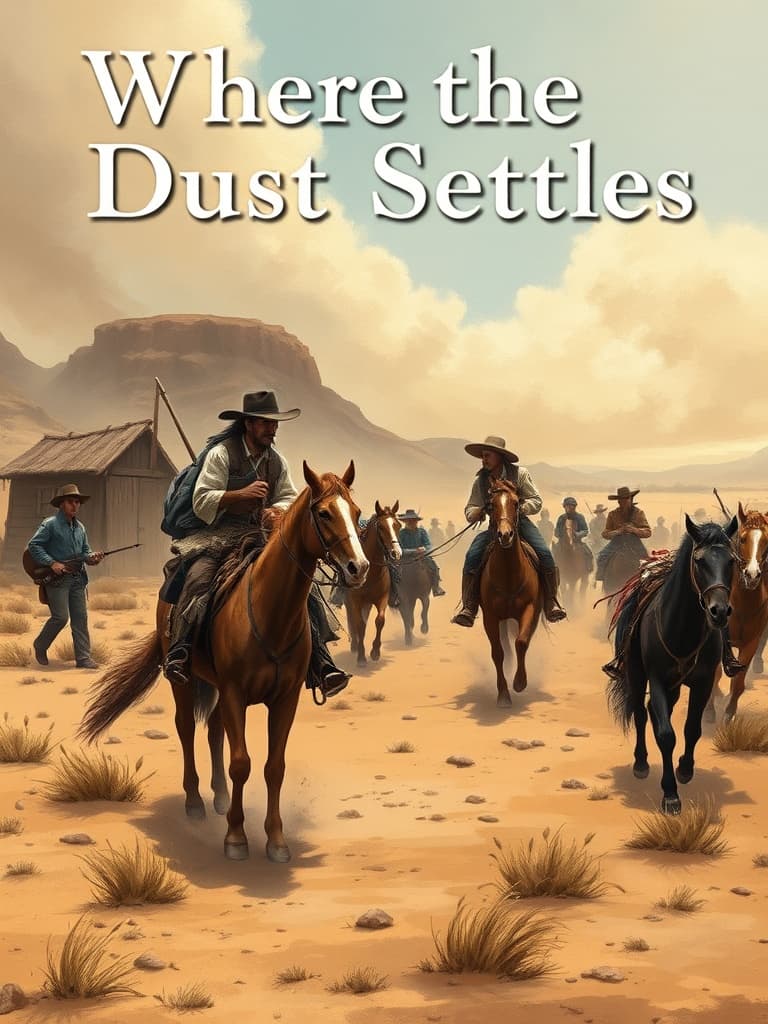
About this book
Where the Dust Settles: Paiute-Shoshone Against the Pony Express
22
0
28
0
This is the story historical fact about The Norther Paiutte,The Gashone Shoshone against The Pony Express
Chapters
- 1The Ancestral Breath of the LandChapter 1: Whispers on the Wind Scene 1: Dawn over the Great Basin. Description: The sun’s first light paints the rugged, high-desert landscape in hues of ochre and rose. Vast, open skies dominate, stretching over an immense territory characterized by sagebrush flats, stark mountain ranges, and the occasional ribbon of a life-giving river. The air is crisp, carrying the scent of juniper and the distant murmur of wind. Character Intent: Establish the profound spiritual and physical connection the Northern Paiute and Shoshone peoples have with their ancestral lands. Show, rather than tell, their deep understanding of the natural world – the signs in the sky, the tracks of animals, the medicinal properties of plants, the cyclical rhythms of the seasons. Setting Details: Focus on the specific flora and fauna that are vital to their survival and culture: the mule deer, pronghorn antelope, rabbits, piñon pine nuts, tubers, and the precious, often scarce, water sources. Depict their traditional dwellings – brush shelters, lean-tos, or more permanent structures depending on the season and location – integrated seamlessly into the environment. Emphasize the subtle beauty and harsh realities of this landscape that has sustained them for millennia. Illustrate the vastness of the territory, highlighting how their lives are intertwined with its every feature, from the highest peaks to the driest alkali flats. Emotional Turn: Foster a sense of peace, harmony, and timelessness. The scenes should evoke a feeling of belonging, of being an intrinsic part of a grand, ancient tapestry. The initial tone should be one of serene continuity, a way of life that has endured for generations, seemingly immutable. Continuity Notes: This chapter sets the foundation for the entire narrative. The descriptions of the land and the people's relationship with it are crucial for understanding the magnitude of the disruption that will soon occur. Introduce key elements of their culture – hunting techniques, gathering practices, spiritual beliefs tied to specific landmarks (mountains, rivers, rock formations), and the importance of oral traditions. Hint at the existence of different bands and their territories within the larger Paiute and Shoshone domains, establishing a sense of established, though sometimes fluid, boundaries. The chapter should feel like a deep immersion into a world that operates on principles fundamentally different from the encroaching Western civilization. The focus is on sustainability, respect for life, and a deep, intuitive knowledge of the land. The initial portrayal should be idyllic, emphasizing what is at stake. Ending Hook: A subtle shift in the wind, a distant, unfamiliar sound, or a fleeting, unusual track on the ground that hints at an impending change, a ripple in the otherwise undisturbed waters of their existence.
- 2The Shadow of the Iron HorseChapter 2: Iron Horses on the Horizon Scene 1: Reconnaissance and Whispers. Description: Strangers in strange clothing, riding unfamiliar mounts, are seen at a distance. They move with a purpose that is alien to the land – marking trees, measuring distances, sketching maps. These are the surveyors, the vanguard of the Pony Express. The tribes observe them from afar, their movements cautious, their curiosity mixed with apprehension. The unusual activity is discussed around evening fires, the elders exchanging concerned glances. The wind carries not just the scent of sage but also the hushed tones of speculation. Character Intent: Show the initial, indirect impact of the Pony Express's arrival. The tribes are not yet directly confronted, but the signs of intrusion are undeniable. The focus is on observation and the dawning realization that their world is about to change. Convey the subtle unease that begins to permeate the generally peaceful existence. Setting Details: The vastness of the landscape is now a double-edged sword; it allows for observation from a distance but also emphasizes the vulnerability of their territories. Focus on the stark contrast between the natural environment and the surveyors' tools – compasses, chains, notebooks – symbols of a foreign order being imposed. The sheer scale of the proposed route, even if only a concept at this stage, begins to dawn on the observers. Highlight the specific areas being traversed – perhaps a known wintering ground, a vital water source, or a pass through a mountain range that has always been theirs to control. The descriptions should emphasize the foreignness of the activity against the backdrop of the timeless land. Emotional Turn: A gradual shift from curiosity and mild concern to a more palpable sense of unease and suspicion. The initial feeling of invasion is subtle, like a shadow lengthening, but it begins to cast a pall over their sense of security. The elders feel the weight of responsibility, while the younger warriors feel a nascent anger. Continuity Notes: This chapter marks the tangible beginning of the conflict. The surveyors’ actions are the first physical manifestations of the Pony Express’s encroachment. Establish the initial reactions of different tribal members – some dismissive, some fearful, some curious. Introduce the concept that the proposed route might disrupt traditionally recognized boundaries or sacred sites. The focus is on the *observation* of the intrusion, building suspense before direct contact. The intelligence gathering by the tribes is crucial here; they are trying to understand the scale and intent of this new presence. The descriptions should convey the alien nature of the surveyors' technology and methods, emphasizing the disconnect between their goals and the land's natural order. The narrative should subtly introduce the idea that this is not just a few travelers, but an organized effort with a specific, linear purpose. Ending Hook: A young warrior, perhaps Kona himself, spots a surveyor marking a specific, deeply significant landmark – a sacred rock, a burial site, or a place of ceremony – solidifying the threat in his mind.
- 3The Scar Across the LandChapter 3: The Disruption of Balance Scene 1: The Route is Drawn. Description: The physical manifestation of the Pony Express route begins to appear. Surveyors have done their work, and now construction crews, often accompanied by armed guards, start establishing the telegraph poles and the rudimentary stations. Fences may appear, corrals are built, and the land is irrevocably altered. The linear path of the route cuts across rolling hills, through canyons, and potentially near vital water sources. The sound of hammers, saws, and the shouts of men replace the natural sounds of the desert. Character Intent: Depict the direct consequences of the Pony Express's physical presence. Show how the route disrupts traditional hunting paths, blocks access to water, and intrudes upon sacred or culturally significant sites. The focus is on the tangible loss and the growing anger and frustration among the tribes. Setting Details: Emphasize the contrast between the natural landscape and the imposed infrastructure. The stark, straight lines of the route, the raw lumber of the stations, the churned earth around the construction sites – all stand in harsh opposition to the organic curves and textures of the desert. Highlight specific examples of disruption: a vital spring now fenced off, a traditional buffalo or deer migration route now bisected, a ceremonial site now overshadowed by a noisy station. The introduction of livestock – horses, mules – also strains the local vegetation and water resources. The scale of the operation, even if just a few stations, begins to loom large. Emotional Turn: A deepening sense of violation and resentment. The initial unease transforms into anger and a feeling of powerlessness as their ancestral lands are actively changed and their access restricted. The harmony is broken, replaced by a growing discord. Continuity Notes: This chapter solidifies the conflict by showing the physical impact of the Pony Express. The narrative needs to detail specific instances of disruption that resonate with the tribes' way of life. This is where the abstract threat becomes a concrete problem. Introduce the concept of “sacred ground” not just as a spiritual place but as a place vital for survival or history. The chapter should showcase the tribes’ attempts to understand, and perhaps circumvent, these new barriers, leading to initial minor skirmishes or tense standoffs. The introduction of the Pony Express personnel – riders, station keepers, laborers – who may show little regard for the land or its inhabitants, adds another layer of friction. The descriptions should focus on the sensory experience of this disruption: the noise, the smell of cut wood and horse dung, the visual blight of the new structures against the natural beauty. The contrast between the ephemeral nature of the Pony Express’s presence and the permanence of the damage it inflicts on the land should be subtly highlighted. Ending Hook: Kona, witnessing a particularly egregious act of desecration – perhaps a sacred grove being cleared for firewood or a burial ground being disturbed – feels an overwhelming surge of protective fury, solidifying his resolve to act.
- 4The Fire in Kona's HeartChapter 4: A Warrior's Resolve Scene 1: Witnessing Desecration. Description: Kona, a young Paiute warrior, is on a solitary hunt or patrol when he stumbles upon a scene that ignites his anger. He sees Pony Express workers carelessly discarding refuse near a vital water source, or perhaps trampling sacred plants, or worse, disrespecting a burial site. The sheer indifference of the newcomers, their blatant disregard for the land that is his lifeblood, shocks and enrages him. He observes the scene from concealment, his heart pounding with a mixture of fury and a profound sense of loss. Character Intent: Introduce Kona as the primary protagonist and establish his motivation. Show the specific incident that transforms his passive observation into active indignation and a desire for resistance. Highlight his deep connection to his heritage and his growing awareness of the threat posed by the Pony Express. Setting Details: Focus on the specific natural elements that are being disrespected – a clear stream, a grove of ancient piñon trees, a cluster of healing herbs, a distinctive rock formation with cultural significance. The beauty and purity of these elements should be emphasized to contrast with the careless actions of the Pony Express personnel. The setting should also reflect Kona’s perspective – the vantage point from which he observes, the pathways he uses, the elements of the landscape that hold personal meaning for him. The weather could mirror his internal state – a sudden gust of wind, a darkening sky, or the oppressive heat of the sun. Emotional Turn: A powerful shift from sorrow and anger to a fierce determination. Kona’s protective instincts are fully awakened. He feels a personal responsibility to defend his people and their traditions, moving beyond mere observation to a commitment to action. The feeling of helplessness begins to recede, replaced by a burgeoning sense of purpose. Continuity Notes: This chapter is crucial for establishing Kona’s character arc. His internal struggle and his growing resolve need to be palpable. The incident he witnesses should be specific and impactful, serving as the catalyst for his future actions. His internal monologue should reveal his deep spiritual beliefs and his growing understanding of the existential threat the Pony Express represents. Introduce his immediate family or close friends, perhaps a younger sibling or a parent, to whom he feels a particular duty of protection. His observations of the Pony Express's methods – their speed, their reliance on horses, their seemingly endless supply lines – should inform his nascent strategic thinking. The chapter should emphasize that his anger is not just about destruction, but about the loss of balance and respect. His resolve to act, even if initially vague, should be clear by the end. He is no longer just an observer; he is becoming a protector. Ending Hook: Kona, fueled by righteous anger, makes a silent vow to his ancestors and to the land itself: the Pony Express will not stand unchallenged on his people's soil. He begins to mentally formulate his first steps towards organized resistance.
- 5The Weight of the Council FireChapter 5: Council of Elders Scene 1: Gathering of Leaders. Description: Tribal leaders, including the respected Shoshone Chief Black Bear and Paiute elders, convene for a council. The air is thick with solemnity and the weight of shared concern. They sit in a circle, their faces etched with the wisdom of years and the gravity of the situation. The Pony Express is the sole topic of discussion. They recount stories of observed intrusions, of blocked paths, of uneasy encounters. The elders speak of tradition, of past wisdom, and the delicate balance of their existence. Character Intent: Present the initial tribal response to the Pony Express, showcasing the cautious and deliberative nature of their leadership. Introduce Chief Black Bear as a key figure, representing a more conservative and pragmatic approach. Highlight the differing perspectives within the tribes regarding how to handle this new threat – observation, diplomacy, or potential conflict. Setting Details: The council is held in a significant natural location – perhaps a secluded canyon, beneath an ancient tree, or near a spiritually important spring. The setting should reflect the gravity and tradition of the gathering. The natural elements – the wind, the rustling leaves, the chirping of crickets – serve as a backdrop to the hushed, serious discussions. The fire at the center of the circle symbolizes unity and shared purpose, but also illuminates the worried expressions of the leaders. The vastness of the surrounding territory serves as a constant reminder of what is at stake. Emotional Turn: A mix of apprehension, weariness, and a dawning sense of urgency. The elders express concern for the future but are tempered by the knowledge of past conflicts and the potential consequences of rash action. There is a palpable sense of responsibility for their people's well-being. Some frustration may bubble up regarding the slow pace of decision-making, especially for younger warriors like Kona who might be present or whose sentiments are represented. Continuity Notes: This chapter establishes the political and social landscape of the tribal response. It is crucial to show the internal deliberations and the range of opinions. Chief Black Bear’s character should be fleshed out here – his pragmatism, his deep concern for his people, and perhaps a hint of his past experiences that make him wary of hasty decisions. The existence of alliances and potential rivalries between different bands or tribes should be subtly explored. The chapter should convey the wisdom of the elders but also their potential slowness to adapt to a rapidly changing threat. The discussions should cover various strategies: sending emissaries, attempting to ignore the intrusion, or preparing for defensive actions. The seeds of division or unity among the tribes will be sown here. The narrative needs to capture the respectful, yet firm, tone of the elders. The descriptions should emphasize the cultural rituals surrounding such councils – the sharing of tobacco, the specific seating arrangements, the role of storytelling in conveying historical context and lessons learned. The chapter should feel like a deep dive into the decision-making process of a people facing an unprecedented challenge, highlighting their commitment to deliberation and consensus, even under duress. Ending Hook: Chief Black Bear, after listening to all arguments, makes a pronouncement that leans towards continued observation and cautious diplomacy, much to the frustration of those, like Kona, who feel immediate action is necessary. He may, however, concede to increased vigilance along the borders of their territories.
- 6The First Spark of FireChapter 6: First Contact, First Clash Scene 1: A Confrontation at a Water Source. Description: A group of Pony Express riders or a work crew, perhaps weary from their journey or the labor, approaches a water source vital to the local Paiute or Shoshone. The tribesmen perceive their presence as an intrusion, perhaps a violation of an unwritten rule about shared resources, or they witness a disrespectful act – their horses trampling the delicate vegetation around the spring, or their rough behavior disturbing the peace. A tense exchange ensues, fueled by misunderstanding, mistrust, and the underlying tension of recent encroachments. Words escalate, and the situation devolves into a brief, chaotic scuffle. It might involve a shove, a dropped rifle, or a thrown stone, but it stops short of widespread bloodshed, serving as a stark warning. Character Intent: Depict the first direct, albeit minor, hostile encounter between the tribes and the Pony Express. Show the immediate friction points – resource competition, cultural misunderstandings, and the volatile combination of fear and anger. This event serves as a critical turning point, moving the conflict from observation to active, albeit small-scale, confrontation. Setting Details: The setting is crucial – a contested water source, a vital game trail, or a narrow canyon pass where movement is restricted. The natural environment, usually a source of life, becomes the stage for conflict. The weather could be oppressive, mirroring the heat of the confrontation, or a sudden storm could erupt, symbolizing the turmoil. The Pony Express equipment – horses, saddles, perhaps even the nascent telegraph wires strung nearby – are visible symbols of their alien presence. The tribal attire and weapons, in contrast, are a part of the natural landscape. Emotional Turn: A sharp escalation of emotions – from apprehension to anger, fear, and a sense of violation. For the tribes, it’s a confirmation of their worst fears about the newcomers’ disrespect. For the Pony Express personnel, it might be a moment of surprise, annoyance, or even fear, solidifying their perception of the tribes as hostile obstacles. The initial shock of violence, even minor, leaves a lasting impression on both sides. Continuity Notes: This chapter needs to illustrate the volatile nature of the situation and the ease with which misunderstandings can ignite conflict. The specific cause of the clash should be believable and rooted in the practical realities of resource competition or cultural differences. It’s important to show both perspectives, even if briefly, to understand the motivations. This incident should serve as a catalyst, reinforcing the beliefs of those who advocate for a stronger response (like Kona) and validating the fears of those who advocate for caution (like some elders). The Pony Express personnel involved will likely report this incident, leading to a reaction from their superiors. The chapter should end with the immediate aftermath of the skirmish, leaving a lingering sense of unease and the question of what will happen next. The descriptions should be visceral, capturing the adrenaline and confusion of the moment, the sounds of shouting, the clatter of equipment, the sharp crack of a whip or the thud of a body hitting the ground. The focus is on the *immediate* consequences – the realization that violence has occurred, and the fear that it will escalate. Ending Hook: A tribal warrior, perhaps injured in the scuffle, is tended to by Little Dove, who senses a dark premonition of greater conflict to come. Meanwhile, the Pony Express rider involved vows to return with greater force.
- 7The Superintendent's GazeChapter 7: Silas Walker's Vision Scene 1: The Superintendent's Office. Description: Silas "Swift" Walker, a man driven by ambition and the relentless pursuit of efficiency, reviews reports from the frontier. His office, perhaps a makeshift headquarters at a central station or a bustling town on the periphery, is a stark contrast to the natural world. Maps are spread out, schedules are meticulously planned, and the air buzzes with the energy of commerce and progress. He reads about minor disruptions, encounters with "hostiles," and delays. His focus is solely on the operational integrity and profitability of the Pony Express. The land and its original inhabitants are viewed as mere obstacles to be managed or overcome. Character Intent: Introduce Silas Walker as the primary antagonist representing the forces of expansion and commercialism. Establish his motivations – profit, ambition, and a belief in the inevitability of progress – and his perspective on the Native American tribes, whom he sees as impediments to his grand vision. Setting Details: The setting should emphasize order, efficiency, and the imposition of human will upon the landscape. Think of a functional, perhaps somewhat stark, station office filled with ledgers, telegraph equipment (if applicable to the exact timeline), maps, and travel itineraries. The contrast with the wild, natural beauty described in earlier chapters should be stark. The sounds are those of human activity: the clatter of typewriters (if anachronistic, substitute with scribes), the ticking of clocks, the ringing of bells, the urgent voices of messengers. The lighting might be artificial or harsh sunlight streaming through dusty windows, illuminating the stark reality of his business. Emotional Turn: Walker embodies a cold, calculating ambition. There is no room for sentimentality or empathy in his worldview. His emotions, if they surface, are likely those of frustration when his plans are thwarted, or a steely determination to overcome any obstacle. He views the land as a resource to be exploited and the people as inconvenient variables. Continuity Notes: This chapter is critical for establishing the opposing force to Kona's resistance. Walker's character should be multifaceted enough to be believable, not just a caricature of greed. He might genuinely believe he is bringing civilization and progress. His interactions with his subordinates should reveal his leadership style – demanding, focused, and perhaps occasionally showing a flicker of respect for competence, even in his adversaries, though he would never admit it. The reports he receives should detail the growing friction, providing the audience with the Pony Express’s perspective on the tribal actions. His plans for dealing with these "incidents" should be laid out, foreshadowing future conflicts. The chapter should emphasize his detachment from the human and environmental cost of his enterprise. The narrative should hint at the immense logistical challenges of the Pony Express and Walker’s relentless drive to overcome them, regardless of the consequences for others. His secret fear of the untamed land adds a layer of complexity, suggesting his drive is partly a defense mechanism against his own insecurities about operating in such a wild environment. Ending Hook: Walker, after reading a particularly alarming report about a tribal "incident," slams his fist on the desk and issues a directive: "Find me a solution. I want these savages dealt with. Swiftly and decisively. The route must be secured."
- 8Visions of SufferingChapter 8: Little Dove's Foreboding Scene 1: A Vision by the Sacred Spring. Description: Little Dove, a young healer with a deep spiritual connection to the land, is meditating or seeking guidance near a place of power – perhaps a secluded spring, an ancient grove, or a mountain overlook. As she enters a trance-like state, she receives a powerful, disturbing vision. She sees the land itself weeping, the water turning murky, the animals fleeing in terror, and the spirits of her ancestors anguished. She witnesses flashes of conflict – fire, shouting, the glint of metal, and the faces of both her people and the newcomers contorted in pain. The vision is overwhelming, filled with a sense of impending doom and suffering. Character Intent: Introduce Little Dove as a voice of spiritual wisdom and compassion. Through her visions, foreshadow the escalating conflict and its devastating consequences, emphasizing the spiritual and emotional toll on the land and its inhabitants. Her character serves as a counterpoint to the more pragmatic or aggressive stances of others. Setting Details: The setting for her vision should be serene and imbued with spiritual significance, making the intrusion of violence and suffering all the more jarring. Describe the natural beauty in detail – the patterns of light filtering through leaves, the sound of flowing water, the scent of herbs – to emphasize what is being threatened. The contrast between this peace and the violent imagery of her vision should be stark. The specific elements of the vision should be symbolic: the fouled water representing corruption, the fleeing animals representing the disruption of natural order, the fire representing destruction. Emotional Turn: A profound sense of sorrow, fear, and urgency. Little Dove is deeply disturbed by her visions, feeling the pain of the land and her people as if it were her own. Her compassion extends beyond tribal lines, recognizing the suffering that will befall all involved. This fuels her desire to find a path towards healing and understanding, even amidst growing hostility. Continuity Notes: Little Dove’s visions should be specific enough to foreshadow future events without giving away the entire plot. Her character serves as a moral compass and a source of spiritual insight. Her connection to Kona should be evident; she may seek him out or he may seek her counsel, and her words will likely temper his impulsiveness. The chapter should emphasize her role as a healer, not just of physical wounds but of the spiritual malaise affecting the land. Her understanding that the conflict will harm both sides is crucial. The descriptions of her visions should be evocative and symbolic, tapping into the spiritual beliefs of the Paiute and Shoshone. The chapter should highlight the contrast between the spiritual, holistic worldview of the tribes and the materialistic, linear worldview of the Pony Express. Her struggle will be to translate these spiritual insights into actionable guidance in a world increasingly driven by brute force and ambition. Her visions are not just predictions but warnings, imbued with the collective memory and spirit of her people and the land itself. Ending Hook: Shaken but resolute, Little Dove prepares to seek out Kona, determined to warn him of the terrible price of escalating violence and to implore him to seek a path other than pure retaliation.
- 9A Stone Cast in DefianceChapter 9: The Spark of Defiance Scene 1: Frustration Boils Over. Description: Kona, frustrated by the elders' cautious approach and the continued encroachments of the Pony Express, decides to take matters into his own hands. He gathers a small group of like-minded, impatient young warriors. Under the cover of darkness or during a moment of perceived vulnerability, they execute a minor act of sabotage or defiance against a Pony Express asset. This could be as simple as cutting a few telegraph wires (if applicable to the specific timeline of the Pony Express), spooking horses at a remote relay station, stealing a small cache of supplies, or leaving a symbolic warning. The act is intended to be a clear message, a test of the Pony Express’s response, and a rallying point for those who feel the need for direct action. Character Intent: Show Kona’s growing impatience and his transition from contemplation to action. Depict his first organized act of resistance, establishing his leadership style – bold, perhaps impulsive, but driven by a genuine desire to protect his people. This act is a calculated risk, designed to provoke a reaction and gauge the strength of the opposition. Setting Details: The setting for this act of defiance should be a relatively isolated Pony Express outpost or a section of the communication line (if telegraph wires are present). The darkness of night or the harsh conditions of the desert (a dust storm, extreme heat) can provide cover and enhance the sense of clandestine operation. The focus should be on the vulnerability of the Pony Express infrastructure and the stealth and resourcefulness of Kona and his followers. The natural elements – the wind, the rocks, the shadows – are their allies. The descriptions should emphasize the quiet efficiency of their movements contrasted with the potential chaos they aim to create. Emotional Turn: A mixture of exhilaration, fear, and grim determination. For Kona and his group, there is the thrill of taking action, of striking back, but also the underlying fear of discovery and reprisal. The act solidifies their commitment to resistance and sends a jolt of adrenaline through the community, dividing opinion between admiration for their courage and anxiety about the consequences. Continuity Notes: This is Kona’s first overt act of rebellion. It needs to be significant enough to attract attention but not so large-scale as to invite immediate, overwhelming retaliation. The consequences of this act will directly influence the next phase of the story. The chapter should explore the motivations of the other young warriors who join Kona, highlighting their shared frustrations. The planning and execution of the act should showcase Kona’s resourcefulness and growing tactical thinking. The chapter should also hint at the internal division this creates within the tribe, with some elders perhaps condemning the act while others secretly admire the courage. The descriptions should focus on the tension, the hushed commands, the rapid movements, and the palpable sense of risk involved. The act itself should be symbolic of disrupting the Pony Express’s flow of communication or resources. Ending Hook: The morning after the act of defiance, the Pony Express discovers the damage. The message is clear, but the identity of the perpetrators is unknown, leaving Silas Walker seething and determined to find the responsible parties, promising a swift and harsh response.
- 10The Sharpening BladeChapter 10: Escalating Tensions Scene 1: The Pony Express Reacts. Description: News of the sabotage reaches Silas Walker. His initial reaction is one of cold fury. He views the act not as a protest but as a direct challenge to his authority and the efficiency of his operation. He immediately orders increased patrols, stricter security measures at the stations, and a more aggressive posture towards any perceived tribal activity near the route. He dispatches riders to gather intelligence and potentially engage any groups encountered. The Pony Express, once a symbol of rapid communication, now becomes a more militarized presence, its riders acting as scouts and enforcers. Character Intent: Show the Pony Express's response to Kona's act of defiance. Depict Silas Walker’s increasingly hardline approach, emphasizing his view of the tribes as obstacles to be dealt with through force. This chapter raises the stakes, moving the conflict towards a more dangerous and overt confrontation. Setting Details: The landscape, once a backdrop for observation and subtle intrusion, now becomes a theater of heightened tension. Describe the increased presence of Pony Express riders, their patrols becoming more frequent and visible. The stations, previously just points of transit, now feel more like fortified outposts. The vastness of the territory can be used to highlight the difficulty of the patrols but also the potential for ambushes. The weather might reflect the growing hostility – perhaps a harsh wind that whips up dust, obscuring vision, or a relentless sun that adds to the discomfort and tension of the riders. Emotional Turn: For the Pony Express personnel, the dominant emotions are likely increased vigilance, suspicion, and a growing sense of unease or even fear of the unknown tribes. For Walker, it’s cold determination and a desire to reassert control. For the tribes, particularly those observing the increased patrols, it’s a mix of apprehension and a hardening of resolve, recognizing that their initial act has provoked a dangerous reaction. Continuity Notes: This chapter is about the escalation initiated by the Pony Express. Walker’s response should be logical from his perspective – protecting his investment and ensuring the route’s operational integrity. The increased security measures will inevitably lead to more direct confrontations, potentially pushing the tribes further towards unified resistance. The chapter should show the Pony Express actively seeking out the perpetrators, perhaps through informants or by tracking. The descriptions should focus on the increased movement and visibility of the Pony Express riders, making their presence more oppressive. The chapter needs to set the stage for larger conflicts by demonstrating the Pony Express’s willingness to use force and by highlighting Walker's unwavering commitment to maintaining the route at all costs. The narrative should illustrate how the Pony Express’s actions, intended to quell resistance, are in fact fanning the flames of conflict, pushing moderate voices towards more extreme positions. The increased patrols could also inadvertently disrupt tribal activities in new ways, further fueling resentment. Ending Hook: During one of these intensified patrols, a Pony Express rider spots a small group of warriors, including Kona, observing them from a distance. A tense standoff occurs, but the warriors melt back into the landscape before any direct engagement, leaving the rider with a clear identification of at least one of the "troublemakers."
- 11The Chief's HesitationChapter 11: A Fragile Alliance Scene 1: Kona Seeks Black Bear's Counsel. Description: Recognizing the need for greater strength and unity, Kona travels to meet with Chief Black Bear. He presents his case, passionately arguing that the Pony Express is a threat to all their people and that a united front is the only way to drive them out. He recounts the escalating actions of the Pony Express and the growing danger. Black Bear listens intently, his expression unreadable. He acknowledges the threat but expresses his deep reservations, recalling past alliances that ended in tragedy or betrayal. He speaks of the wisdom of patience and the dangers of provoking a powerful, technologically superior enemy. Character Intent: Explore the challenges of forging an alliance between different tribal groups. Showcase Chief Black Bear’s pragmatic and cautious leadership, contrasting with Kona’s youthful urgency. The goal is to highlight the internal divisions and historical baggage that complicate unified resistance. Setting Details: The meeting takes place in a location significant to the Shoshone, perhaps Black Bear’s personal encampment or a traditional council ground. The setting should convey a sense of history and tradition, contrasting with the new, disruptive force of the Pony Express. The natural environment around them – perhaps a stark, windswept plateau or a sheltered valley – reflects the enduring strength and vulnerability of their people. The fire between them is a symbol of their shared heritage and the hope for unity, but also casts long shadows that speak of past sorrows. Emotional Turn: A complex interplay of respect, frustration, and cautious consideration. Kona feels the urgency and the injustice acutely, perhaps growing frustrated by Black Bear's perceived inaction. Black Bear feels the weight of responsibility, torn between the need to protect his people and the fear of leading them into a disastrous conflict. There’s a deep-seated weariness in his voice, stemming from past failures. The potential for alliance is present, but it's fraught with historical distrust and differing strategic philosophies. Continuity Notes: This chapter is crucial for developing the relationship between Kona and Black Bear and for exploring the complexities of inter-tribal politics. Black Bear’s skepticism should be rooted in historical events – perhaps a specific past conflict or failed negotiation where unity was shattered or promises were broken. The chapter needs to show the genuine reasons for his hesitation, making him a more nuanced character than a simple obstacle. Kona must present a compelling argument, demonstrating not just his courage but also his growing understanding of the need for strategic unity. Little Dove might offer her insight here, perhaps mediating or providing a spiritual perspective that bridges the gap between Kona’s fiery resolve and Black Bear’s seasoned caution. The chapter should end with Black Bear not fully committing, but perhaps agreeing to a limited cooperation or a period of observation, leaving the alliance fragile and uncertain. Ending Hook: Black Bear, after a long silence, agrees to a limited pact: his warriors will increase their vigilance along the Shoshone territories bordering the Pony Express route, and they will not interfere if the Paiute choose to act, but he will not commit his people to an open war unless directly provoked. He warns Kona, "A single spark can ignite a prairie fire, but not all fires warm the hearth; some only consume."
- 12The Rider FallsChapter 12: The Ambush Scene 1: A Calculated Trap. Description: Following the fragile agreement with Black Bear, Kona and a select group of Paiute warriors execute a meticulously planned ambush. They identify a section of the Pony Express route known for its isolation and difficult terrain. Using their intimate knowledge of the land, they create a natural-looking obstacle – perhaps a rockslide triggered at the right moment, or a cleverly concealed pitfall, or they simply lie in wait in a narrow canyon. Their target is a lone rider or a small, vulnerable group carrying important dispatches. The ambush is swift, brutal, and efficient, designed to neutralize the threat quickly, seize the mail, and disappear back into the landscape before any significant response can be mounted. Character Intent: Depict the first major act of violence directly orchestrated by Kona. Showcase his tactical acumen and the effectiveness of tribal warfare tactics against the linear, exposed infrastructure of the Pony Express. The goal is to demonstrate the tangible impact of their resistance and to further escalate the conflict. Setting Details: The setting is paramount – a remote, rugged stretch of territory offering concealment and tactical advantage. Describe the harsh beauty of the landscape that becomes the agents of the ambush: the scree slopes that can be dislodged, the dense brush that provides cover, the narrow passes that funnel the victim. The weather could play a role, perhaps a sudden storm that provides cover for the attackers or disorients the rider. The sounds of the natural environment – the wind, the cry of a hawk – are suddenly punctuated by the sharp sounds of conflict. Emotional Turn: A surge of adrenaline, grim satisfaction, and underlying tension for the warriors. For the targeted rider, it’s shock, terror, and perhaps a desperate fight for survival. The success of the ambush brings a sense of accomplishment but also the chilling realization of the violence they have unleashed and the inevitable, severe repercussions. Continuity Notes: This is a pivotal moment, demonstrating that the tribes are capable of organized, effective resistance. The ambush should be described with visceral detail, highlighting the speed and decisibility of the attack. The capture or destruction of the mail is a significant blow to the Pony Express’s operational efficiency and a symbolic victory for the tribes. The chapter should also touch upon the immediate aftermath for Kona’s group – the disposal of evidence, the care of any wounded among them, and the hurried retreat. The emotional toll on Kona, even in victory, should be subtly explored. He has crossed a significant threshold. The chapter needs to show how this event will be perceived by both sides: a triumph for the resistance, and a grave insult and catalyst for brutal retaliation by the Pony Express. The descriptions should be sharp and impactful, conveying the suddenness and violence of the ambush. The chapter must establish the effectiveness of tribal knowledge of the terrain as a weapon. Ending Hook: The stolen mail, containing critical dispatches and possibly valuable information, is brought back to Kona’s camp. As he looks at the sealed envelopes, he feels a moment of doubt mixed with grim resolve, wondering if this path of violence will truly lead to the preservation of his people or their destruction.
- 13The Price of VengeanceChapter 13: The Cost of War Scene 1: Retaliation and Suffering. Description: The Pony Express, enraged by the ambush and the loss of mail, initiates a brutal retaliatory campaign. Silas Walker, prioritizing the security of the route above all else, authorizes aggressive sweeps through tribal territories. His riders, now acting more like soldiers, are instructed to pursue and engage any suspected warriors, potentially targeting villages or encampments indiscriminately. The tribes, though skilled in guerrilla tactics, begin to suffer casualties. Women, children, and elders are caught in the crossfire. Wounded warriors are brought back to their camps, and Little Dove and other healers work tirelessly, but resources are stretched thin. Character Intent: Illustrate the devastating consequences of the escalating conflict. Show the human cost of the Pony Express’s retaliation, emphasizing the suffering inflicted upon the innocent and the difficult choices faced by the tribal leaders. Kona must confront the reality of the violence he has helped to unleash. Setting Details: The pristine beauty of the land is now marred by the violence. Describe scenes of hurried departures from camps, the smoke from burning lodges, the fear in the eyes of those fleeing. The landscape, once a source of sustenance and spiritual solace, becomes a place of danger and loss. The sounds are now of alarm calls, the distant reports of gunfire, and the cries of the wounded. The stations, once just points on a map, now represent points of conflict and fear. The harshness of the desert environment amplifies the suffering – lack of water, exposure, the difficulty of tending to the wounded in remote locations. Emotional Turn: Grief, fear, and a growing sense of desperation among the tribes. Kona is forced to confront the unintended consequences of his actions, wrestling with guilt and the heavy burden of leadership. There is anger at the Pony Express’s brutality, but also a deep sorrow for the losses. The initial exhilaration of resistance is replaced by the grim reality of war. Continuity Notes: This chapter marks a turning point in Kona’s character arc. He must grapple with the ethical implications of his choices and the suffering they have caused. The Pony Express’s response should be depicted as disproportionately harsh, highlighting their lack of understanding and respect for the tribes. The chapter should show the impact on the community as a whole – the disruption of daily life, the fear that permeates the camps, and the strain on resources. Little Dove’s role as a healer becomes even more critical, providing a stark contrast to the violence. The chapter should emphasize that the conflict is no longer just about territory or resources, but about survival and the preservation of their very existence. The narrative needs to convey the asymmetrical nature of the conflict – the tribes fighting for their homes and way of life, while the Pony Express fights for profit and efficiency, often with superior firepower and resources. The descriptions should be somber and impactful, focusing on the human element of the conflict and the profound sense of loss. Ending Hook: Kona, tending to a wounded warrior, looks at the pain in the man’s eyes and the emptiness in the faces of his family. He questions whether his path of resistance is truly protecting his people or leading them to annihilation, a doubt that gnaws at his resolve.
- 14Walker's Iron FistChapter 14: Walker's Ruthless Pursuit Scene 1: The Superintendent's Order. Description: Silas Walker is furious. The successful ambush and the ongoing disruptions are an intolerable affront to his authority and his business. He views the tribal actions not as resistance but as criminal acts that must be suppressed with extreme prejudice. He issues direct orders to his men: capture Kona and his key followers, dead or alive. He authorizes the use of any means necessary, including burning villages, confiscating supplies, and employing tracker teams. His focus sharpens intensely on eliminating the leadership of the resistance, believing that decapitating the movement will quell it entirely. Character Intent: Depict Silas Walker doubling down on his aggressive tactics, showcasing his ruthless determination to maintain the Pony Express route at any cost. Highlight his escalating cruelty and his dehumanizing view of the tribes, whom he now sees as pests to be eradicated. This chapter emphasizes the escalating power imbalance and the brutality of the Pony Express’s response. Setting Details: The landscape becomes a battleground. Describe the increased, more aggressive patrols of Pony Express riders, often accompanied by armed guards or hired trackers. The stations, under Walker’s direction, become more fortified, serving as bases for offensive operations. The harsh desert environment is now used as a tool of war – forcing tribes into exposed areas, cutting off water sources, and making escape increasingly difficult. The sounds are of marching boots, the jingle of harnesses, the barking of orders, and the distant crackle of fire. The contrast between the utilitarian, imposing structures of the Pony Express and the natural, organic life of the tribes is starker than ever. Emotional Turn: Walker is driven by cold fury, a sense of wounded pride, and an unwavering commitment to his goals. There is no room for empathy. For the tribes, the dominant emotions are fear, anger, and a growing sense of being hunted. The increased pressure forces them to become more elusive, but also more desperate. The sense of injustice fuels their determination to resist, even in the face of overwhelming odds. Continuity Notes: This chapter showcases the peak of Walker’s aggressive strategy. His orders should reflect a clear escalation in the level of violence and the targeting of tribal leadership. The narrative should illustrate the Pony Express’s resources – manpower, horses, possibly even rudimentary communication networks that allow for coordinated pursuit. The chapter needs to show the impact of these orders on the ground: the fear instilled in the tribes, the difficult choices they face in trying to evade capture, and the increased risk of open confrontation. Kona, now a primary target, must become even more resourceful and cautious. The chapter should emphasize the disparity in power and resources, making the tribes’ continued resistance all the more remarkable. The descriptions should focus on the relentless pursuit, the feeling of being cornered, and the stark choices faced by Kona and his people. Walker’s secret fear of the land might manifest here as an even greater need to control and dominate it, pushing him to ever more extreme measures. Ending Hook: Walker receives intelligence suggesting a possible gathering of Paiute and Shoshone leaders, perhaps a secret council. He sees this as the perfect opportunity to strike a decisive blow and orders his men to converge on the suspected location, intending to capture or eliminate the entire leadership in one fell swoop.
- 15The Healer's PleaChapter 15: Little Dove's Intervention Scene 1: Tending the Wounded. Description: In the aftermath of a brutal Pony Express raid on a tribal camp, Little Dove works tirelessly to tend to the injured. She moves among the wounded, her hands gentle but firm, applying poultices, bandaging wounds, and offering words of comfort. Her compassion extends beyond tribal lines; she tends to a gravely wounded Pony Express rider found abandoned by his comrades, seeing only a suffering human being. Her presence is a beacon of healing in the midst of destruction. She uses her spiritual knowledge to soothe not only physical pain but also the deep emotional wounds of loss and fear. Character Intent: Highlight Little Dove’s unwavering compassion and her role as a peacemaker. Show her attempting to bridge the divide between the warring factions through her actions, embodying a higher moral ground. Her intervention serves as a contrast to the violence and brutality, offering a glimmer of hope for understanding. Setting Details: The setting is a makeshift infirmary within a tribal camp or a hidden refuge, filled with the sounds of suffering – moans, coughs, whispered prayers. The air is thick with the smell of herbs, blood, and sweat. The natural beauty of the surroundings is juxtaposed with the grim reality of the wounded. Perhaps outside, the sounds of nature continue, oblivious to the human tragedy, or perhaps the weather mirrors the somber mood – a persistent rain, a heavy fog. The contrast between the delicate act of healing and the harshness of the conflict is central. Emotional Turn: Profound sorrow, empathy, and a deep-seated desire for peace dominate Little Dove’s actions. She feels the pain of all involved, the anguish of the tribes and the fear and desperation that likely drive the Pony Express riders. Her efforts are fueled by a spiritual conviction that violence only begets more violence, and that true strength lies in compassion and understanding. There is a quiet determination in her bearing, a refusal to succumb to hatred. Continuity Notes: This chapter provides a crucial moment of reflection amidst the escalating violence. Little Dove’s act of tending to the wounded rider is a powerful symbol. It challenges the simplistic narrative of “us versus them.” Her spiritual insights should be woven into her actions, emphasizing her belief in the interconnectedness of all life. She might try to communicate with the rider, or her actions might be observed by others, planting seeds of doubt or empathy. Her attempts to mediate or counsel Kona should be revisited here; she understands the necessity of defense but abhors the bloodshed. The chapter should emphasize the resilience of the human spirit and the power of compassion even in the darkest of times. The narrative should highlight the contrast between the spiritual, holistic healing practiced by Little Dove and the often brute-force approach of the Pony Express. Her quiet strength and unwavering moral compass provide a vital counterpoint to the machinations of Silas Walker and the fiery resolve of Kona. Ending Hook: As Little Dove tends to the wounded rider, he weakly grips her hand, a flicker of something other than hostility in his eyes. At the same moment, Kona arrives, his face grim, having heard of the raid. He sees Little Dove tending to the enemy, and a complex mix of emotions – admiration for her conviction, frustration at the perceived 'weakness,' and renewed anger at the Pony Express – washes over him.
- 16The Great Fire's FuryChapter 16: The Great Raid Scene 1: A Coordinated Assault. Description: United by shared suffering and a desperate need to strike a decisive blow, the Paiute and Shoshone warriors, under Kona’s increasingly recognized leadership and with Black Bear’s grudging but full support, launch a massive, coordinated raid on a major Pony Express station. This is not a subtle ambush but a full-scale assault. Warriors emerge from all directions, utilizing their knowledge of the terrain to bypass defenses and overwhelm the station’s small contingent of riders and guards. The goal is to cripple the Pony Express’s operations in this sector by destroying the station, its supplies, and its horses, and capturing or eliminating the personnel. Character Intent: Depict the culmination of the tribal resistance in a major act of defiance. Showcase the unity and effectiveness of the allied tribes when they fight together. This raid is intended to be a significant blow to the Pony Express, forcing them to reassess their commitment to this route. Setting Details: The target is a key Pony Express relay station – perhaps larger than most, strategically located, and manned by more personnel. Describe the station as a symbol of the Pony Express’s intrusion: its solid construction, its corrals filled with horses, stacks of supplies, and perhaps even the beginnings of telegraph infrastructure. The surrounding landscape is used to the tribes’ advantage – canyons for approach, high ground for observation, natural cover for the assault. The sounds are of war cries, the clash of weapons, the panicked neighing of horses, the roar of fire engulfing the station. The sky might be filled with smoke, obscuring the sun. Emotional Turn: A potent mix of fierce determination, courage, and the brutal exhilaration of battle on the tribal side. For the Pony Express personnel, it’s shock, terror, and a desperate fight for survival. The success of the raid brings a sense of powerful, albeit costly, victory, but the immense violence and destruction also weigh heavily. The unified action creates a temporary sense of solidarity among the tribes. Continuity Notes: This raid is the climax of the active resistance phase. It needs to be depicted with intensity and a clear sense of purpose. The coordination between the Paiute and Shoshone warriors should be evident, showing how they have overcome past differences. The destruction of the station and its resources should be significant enough to have a tangible impact on the Pony Express’s operations. The chapter should explore the tactical brilliance of the tribal warriors, leveraging their knowledge of the land against the more conventional military approach of the Pony Express. The cost of such an engagement, even in victory, should be acknowledged – casualties on both sides, the destruction of resources that the tribes themselves might rely on. The narrative should emphasize the desperation that led to such a bold and dangerous move. The chapter should feel like the peak of the storm, a violent confrontation that will inevitably lead to a reckoning. Ending Hook: As the station burns and the surviving Pony Express personnel are captured or flee, Kona stands amidst the chaos, his face streaked with soot and blood. He looks at the blazing structure, a symbol of the invaders’ power now reduced to ashes, and wonders if this victory has come at too high a price for his people.
- 17The Reckoning at the AshesChapter 17: A Reckoning at the Station Scene 1: The Aftermath of the Raid. Description: The dust settles over the smoldering ruins of the Pony Express station. The surviving Pony Express personnel, shaken and possibly wounded, are held captive or have managed a desperate escape. Kona and the tribal leaders survey the scene. The victory is undeniable, but the cost is also apparent – casualties among their own warriors, the destruction of valuable resources (like captured horses or supplies that could have been useful), and the grim realization of the immense power and ruthlessness the Pony Express will now unleash in retaliation. A pivotal confrontation occurs, perhaps between Kona and a captured superintendent, or a moment of profound reflection among the leaders about the future. Character Intent: Explore the immediate consequences and the moral complexities of the Great Raid. Force the characters, particularly Kona, to confront the true cost of their victory and the potential for further, devastating retaliation. This chapter serves as a moment of reckoning, where the path forward becomes critically uncertain. Setting Details: The setting is the desolate, smoking ruin of the Pony Express station. The air is thick with the smell of burnt wood and metal. The landscape, scarred by the battle, is a stark reminder of the violence. The natural elements – the wind whistling through the wreckage, the distant cry of a bird – create an eerie silence after the storm of battle. The captured Pony Express riders, huddled together, represent the defeated enemy, their faces a mixture of fear and defiance. The tribal warriors, weary but victorious, also bear the marks of the fight, their expressions a mixture of pride and somber reflection. Emotional Turn: A complex mix of triumph, exhaustion, grief, and dawning apprehension. The elation of victory is tempered by the heavy price paid. Kona experiences a profound internal conflict – pride in his people’s strength and unity, but also a deep unease about the escalating violence and the inevitable, brutal response from the Pony Express. The leaders grapple with the strategic implications of their actions. There’s a sense of having crossed a threshold from which there is no easy return. Continuity Notes: This chapter needs to delve into the immediate fallout of the Great Raid. The fate of the captured Pony Express personnel should be addressed, potentially leading to a moral dilemma for the tribes. The discussion among the tribal leaders is crucial: Do they press their advantage? Do they try to negotiate? Or do they prepare for the Pony Express’s full might? Silas Walker’s reaction to the news of the destroyed station should be depicted, emphasizing his unyielding resolve. The chapter should highlight the strategic dilemma: the tribes have proven they can inflict damage, but can they sustain this kind of conflict against a more powerful, well-resourced enemy? Little Dove’s presence here would be significant, offering a perspective of healing and reconciliation amidst the destruction. The descriptions should be vivid, focusing on the sensory details of the aftermath – the lingering smoke, the scattered debris, the quiet despair of the defeated. The chapter should feel like the eye of the storm, a moment of grim clarity before the final, inevitable confrontation or resolution. Ending Hook: As the leaders debate their next move, a lone, exhausted Pony Express rider stumbles into their midst, having escaped the raid. He carries a message, not of surrender, but of imminent, overwhelming reinforcements being dispatched by Walker, promising a retribution unlike anything the tribes have ever faced.
- 18The Longest RideChapter 18: The Long Ride Home Scene 1: The Unraveling Thread. Description: The Great Raid and its aftermath have sent shockwaves through the Pony Express company. The destruction of a key station, the loss of personnel, and the ongoing, costly efforts to secure the route prove to be too much. Silas Walker, despite his initial fury and promises of retribution, is forced to confront the harsh economic and logistical realities. The route has become a liability, too expensive and dangerous to maintain. The decision is made, likely from higher up in the company, to abandon this particular stretch of the Pony Express, acknowledging the insurmountable opposition and the unsustainable costs. The process of withdrawal begins – riders are recalled, stations are abandoned, and the infrastructure is left to decay. Character Intent: Depict the beginning of the end for the Pony Express on this territory. Show how the tribes' resistance, combined with the inherent difficulties of the route, leads to its eventual abandonment. Focus on the logistical and financial pressures that force the company's hand, rather than a change of heart from Walker. Setting Details: The focus shifts to the slow, deliberate process of withdrawal. Describe the abandoned stations, their structures beginning to succumb to the elements and the reclaiming power of nature. The once-busy route is now quiet, save for the sounds of the wind and wildlife. The remaining Pony Express riders, their mission now one of retreat rather than rapid delivery, carry a different sense of purpose – a journey home, rather than a vital service. The vastness of the landscape, once a challenge to overcome, now seems to swallow the remnants of the Pony Express’s presence. The silence is profound, a stark contrast to the recent violence. Emotional Turn: A sense of anticlimax and weariness on both sides. For the Pony Express, it’s the bitter taste of failure and financial loss. For the tribes, it’s a complex mix of relief, vindication, and the lingering trauma of the conflict. There’s no triumphant celebration, but rather a quiet reclaiming of their land. The relief is palpable, but the scars remain. Continuity Notes: This chapter marks the de facto end of the Pony Express’s significant presence. The narrative should focus on the practicalities of the withdrawal – the logistical challenges of moving equipment and personnel, the messages being sent back east, the financial implications for the company. Walker’s reaction to this decision should be portrayed – perhaps a grudging acceptance of defeat, or a continued bluster that masks his underlying frustration. The chapter should emphasize that this is not a negotiated peace, but a strategic retreat driven by circumstances. The focus is on the *process* of leaving, the gradual fading of the Pony Express’s footprint. The descriptions should convey a sense of abandonment and the slow return of the natural world to the places that were disrupted. The narrative should highlight the ephemeral nature of the Pony Express's presence – a brief, intense period of disruption in the long history of the land. Ending Hook: The last Pony Express rider, carrying the final dispatches from the abandoned route, disappears over the horizon. Kona and the tribal elders watch him go, a profound silence falling over them. The immediate threat is gone, but the land still bears the marks of the struggle, and the future remains uncertain.
- 19Whispers in the SagebrushChapter 19: Echoes in the Dust Scene 1: The Land Begins to Heal. Description: The Pony Express riders are gone. The abandoned stations stand as silent monuments to a fleeting, disruptive presence. Nature begins its slow, inexorable work of reclaiming the land. Vegetation grows over the churned earth, wind and rain erode the man-made structures, and the sounds of wildlife gradually return to the once-traversed routes. The tribes cautiously begin to move back into areas they had abandoned or avoided during the conflict. The immediate threat has passed, but the memory of the struggle, the losses, and the intense period of upheaval remains deeply etched in their collective consciousness. Character Intent: Depict the immediate aftermath of the Pony Express's departure. Focus on the gradual return to normalcy, the process of healing for both the land and the people, and the lasting impact of the conflict. This chapter emphasizes the resilience of the tribes and their connection to their ancestral home. Setting Details: The abandoned Pony Express stations are now central features, symbols of the past. Describe their decay – weathered wood, broken windows, rusting metal, overgrown corrals. The landscape itself is shown in recovery: wildflowers blooming in former encampment sites, animal tracks reappearing on trails, the water sources running clear again. The sounds are predominantly natural: the rustling of sagebrush, the calls of birds, the whisper of the wind. The focus is on the quiet reclamation, the slow restoration of balance. The descriptions should emphasize the contrast between the ephemeral, man-made structures and the enduring power of the natural world. Emotional Turn: A complex mix of relief, sorrow, gratitude, and a quiet determination. The overwhelming emotion is one of having survived, of having reclaimed their land. However, the memory of the conflict and the lives lost casts a long shadow. There is a sense of profound gratitude for the land and for their ability to endure, but also a solemn recognition of the sacrifices made. This is not a time for celebration, but for quiet reflection and the slow process of rebuilding. Continuity Notes: This chapter serves as a bridge between the direct conflict and the final reflection. It should focus on the tangible signs of the Pony Express’s absence and the beginnings of recovery. The narrative should touch upon how the tribes are processing the experience – the stories being told, the lessons being learned, the ways in which their culture has been irrevocably changed by the encounter. Kona’s journey continues here; he reflects on his role, the cost of his actions, and the future of his people. Black Bear and Little Dove also play roles in helping the community heal and find a new equilibrium. The chapter should emphasize the resilience of the human spirit and the enduring strength of cultural traditions in the face of adversity. The descriptions should be evocative, capturing the quiet beauty of the land beginning to heal and the subtle shifts in the lives of the people. Ending Hook: Kona stands on a high point overlooking the valley, now free of the Pony Express’s intrusive presence. He sees the smoke from his own people’s fires rising peacefully, a stark contrast to the smoke of the destroyed station. He feels a sense of hard-won peace, but also the weight of the stories he must now carry and pass on.
- 20The Enduring SpiritChapter 20: Where the Dust Settles Scene 1: Legacy and Reflection. Description: Years have passed since the Pony Express rode through these lands. The physical traces of their presence are fading, becoming mere footnotes in the long history of the Paiute and Shoshone. The story of the conflict is now a part of their oral traditions, a cautionary tale of intrusion, resistance, and survival. Kona, now an elder, shares the story with younger generations, emphasizing the lessons learned – the importance of unity, the deep connection to the land, and the enduring strength of their culture. Chief Black Bear’s wisdom and Little Dove’s compassion are remembered as vital forces that guided them through the darkness. The land, though scarred, has endured, and the tribes continue to live by its rhythms. Character Intent: Provide a concluding reflection on the entire narrative. Summarize the legacy of the Pony Express's passage, emphasizing the resilience of the tribes and the enduring connection to their ancestral lands. The focus is on the long-term impact and the lessons learned, offering a sense of closure and perspective. Setting Details: The setting is timeless, emphasizing the enduring nature of the land and the continuity of tribal life. Describe the landscape as it is now – perhaps in a season of abundance, or a moment of quiet reflection. The presence of tribal communities living in harmony with their environment is key. The stories are being told around a fire, under the vast sky, connecting the past, present, and future. The descriptions should evoke a sense of peace and continuity, but also acknowledge the indelible mark left by the conflict. The legacy is not just in the stories, but in the land itself – the places where battles were fought, where stations stood, now reclaimed by nature. Emotional Turn: A sense of profound peace, tempered by the solemnity of remembrance. There is gratitude for survival and for the preservation of their way of life, but also a deep respect for the sacrifices made. The tone is one of wisdom gained through hardship, and a quiet confidence in the enduring spirit of their people and their connection to the land. It's a reflection on resilience rather than victory, on continuity rather than conquest. Continuity Notes: This final chapter brings the story full circle, connecting back to the themes established in the beginning. The narrative should offer a sense of closure regarding the Pony Express itself, framing its presence as a brief but significant chapter in the tribes' long history. The focus shifts to the lasting impact on the tribes – their strengthened unity, their deepened appreciation for their heritage, and the stories that will be passed down. Kona’s role as a storyteller and elder is crucial, allowing him to offer his perspective on the events and his personal growth. The chapter should reinforce the central theme: the land endures, and the spirit of the people who are tied to it is equally resilient. The descriptions should be rich and evocative, capturing the essence of the Paiute and Shoshone culture and their unbreakable bond with the Great Basin. The ending should leave the reader with a sense of the vastness of time and the enduring power of heritage. Ending Hook: As the sun sets, casting long shadows across the land, Kona looks at the faces of the young children listening to his story. He sees in their eyes the reflection of the same sky that has watched over his people for countless generations, a sky that will continue to watch over them long after the dust of the Pony Express has settled forever.
- 21Poetry of the Wild West by Amy Kathryn Allen Poem #1Oh Great Spirit,Creator of all the the eye Brother Eagle can see
- 22Poem#2 by Amy Kathryn AllenBlessed Nakomis ,Mother of Hiawatha watch over and protect My Family and Village Elders as My Braces set out for war
- 23Poem #3 by Amy Kathryn AllenOh Great Manitou may Our hunting grounds be filled with meat to feed ,fur to clothe bones to make weapons and horns for music and jewelry to soothe My Tribes soul so that their spirits may be light and free when their end of the trail comes
- 24Poem #4 by Amy Kathryn AllenWhite Buffalo Woman I pray for safety,good health,long life, and peace for My people
- 25Poem #5 by Amy Kathryn AllenCorn Stalk Woman I pray for the earths soil,water,sun and wind to nourish the plantings of the three sisters to be plenty so that My people do not live in hunger
- 26Poem #6 by Amy Kathryn AllenEarth Mother I pray that the ashes and bones of Our fallen War Lords and Warriors be reborn by a great many so that Our Tribal Nations may be great and rise again
- 27Poem # 7 by Amy Kathryn AllenMy heart beats gladly as I see the gerds of the Prairie flourish,to see the great birds fly in the sky,every fish in the rivers,oceans,lakes and streams the animals of the mountains and plains I thank thee. Fir every fruitd nut,herb and vegetable I thank thee Each season and phase of the moon I thank thee
- 28Poem #8 by Amy Kathryn AllenA once free and peaceful land is no more My heart is torn til it beats no more. What once was Ours They took away not wanting My people to live or stay. The small pox blankets poisoned waters slaughtered gerds because of the greed and cruelty of those not like Me
More Historical stories
Browse all Historical →- the old sword
A young knight, driven by a prophecy of his return, seeks a legendary sword to reclaim his stolen kingdom from a tyrannical usurper. He must brave treacherous landscapes and confront his own doubts, all while battling against the sorcerer who orchestrated his family's downfall. The quest is unique due to its blend of historical warfare, fantastical elements, and a deeply personal journey of self-discovery.
- New bible
What call alegotija watican do you feel me fire
- Reklama ir pantomimu teatras
Vsiku prievarta kenedziu chaodo teorija ne dvasua nriperkama neitomsnyizmui nri su tools binary its me. not
- Reklama ir pantomimu teatras
Vsiku prievarta kenedziu chaodo teorija ne dvasua nriperkama neitomsnyizmui nri su tools binary its me. not
- Underestimated silence
A red headed Irish woman from little rock who is an infj personality type and animal empath. She has ptsd from childhood trauma in the form of five years of bullying but utilizes the pattern recognition and hyper vigilance to her benefit. She has lifelong loved animals and has a bachelor's degree in animal science and a masters in animal behavior. She starts training race horses, mainly acquiring horses from kill pens or thought to be a lost cause.
- The Unending Silence: A Chronicle of Shadowed Lives
A red headed Irish woman detective who is an infj personality type and animal empath. She grew up in little rock Arkansas and has ptsd from five years of bullying from fourth to eighth grade at a local private catholic school. She has long worked with and loved animals. She has a degree in animal science and a masters in behavior. She is hand picked by someone who knows her and knows she has an ability you can't train into any detective so she is brought on as a cold case detective along with her service dog who is a border collie and doubles as a police dog. Her first cold case is about a lineman named Ray Jenkins that became a serial killer
Want to write a story like this?
Learn the craft in our free AI story generator, then draft your first chapter with an AI co-writer.
What stayed with you?
Read a chapter and leave the author a comment.
Reader notes
Loading reader notes…