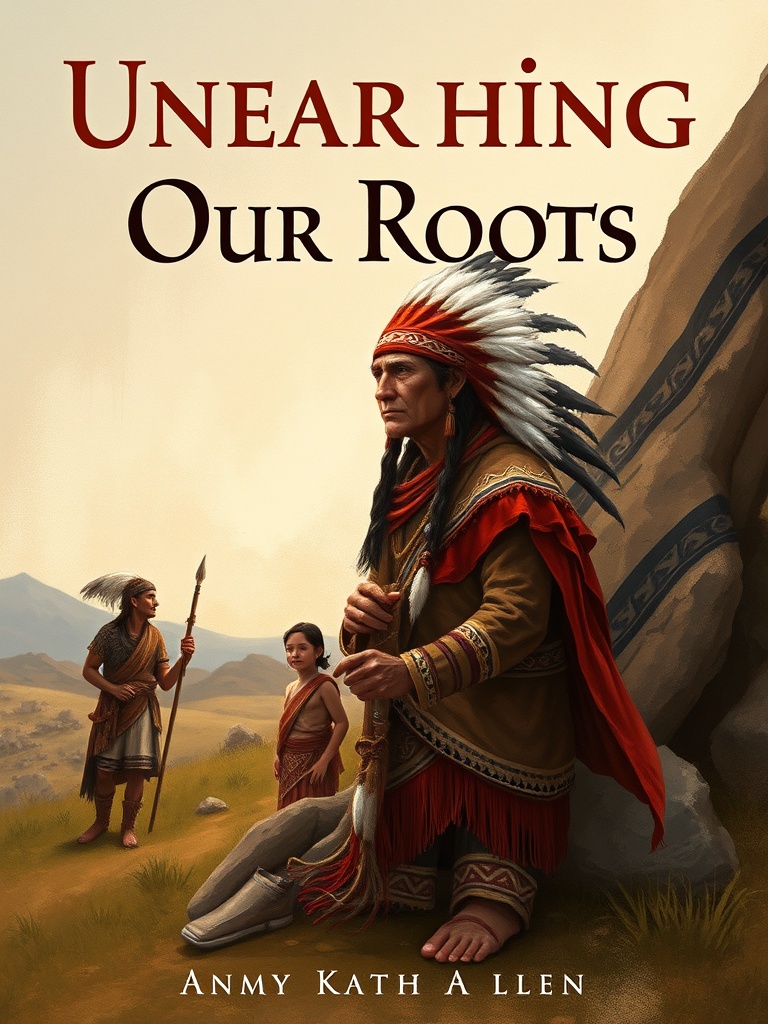
Story overview
Unearthing Our Roots: Native American and First Nation Narratives
5
0
64
published
This is finally a true his story of Native American and First Nation. Tribal Nations that is not taught in classrooms. This is what the People of the World need to know. This story is being narrated by Me( Amy Kathryn Allen )
Table of contents
- 1Whispers from the Unheard: A Calling to ChronicleChapter 1 will serve as Amy Kathryn Allen's heartfelt introduction, establishing her personal connection and the book's overarching mission: to bring forth the authentic, often suppressed, narratives of Native American and First Nation peoples. Amy will articulate her deep-seated motivation, emphasizing that this is not an academic treatise but a testament to what she has personally witnessed, heard, and learned directly from Indigenous individuals and communities. The narrative will begin with a evocative scene, perhaps Amy reflecting in a quiet, natural setting that holds personal significance, recalling the initial spark that ignited this journey. She will contrast the sterile, often inaccurate, historical accounts found in mainstream education with the vibrant, living histories passed down through oral traditions and lived experiences. The core of the chapter will be Amy's earnest plea to the reader, framing the book as a necessary act of remembrance and respect. She will explain her role not as an authority, but as a humble conduit, a witness committed to amplifying voices that have been systematically silenced. The tone will be warm, inviting, and deeply respectful, setting a tone of trust and shared purpose. Amy will introduce the concept of 'his story' versus 'her story' or 'their story,' highlighting the importance of Indigenous perspectives. She will hint at the richness and complexity of these cultures, hinting at the vastness of what has been overlooked. The emotional arc will move from a sense of personal calling to a broader sense of responsibility, culminating in a gentle invitation for the reader to embark on this journey of discovery alongside her. The chapter will conclude with a hook, perhaps a brief, poignant anecdote that encapsulates the essence of why these stories matter so profoundly, leaving the reader eager to delve deeper into the 'whispers' she has heard.
- 2Beyond the Classroom Walls: Deconstructing the Dominant NarrativeThis chapter will delve into Amy Kathryn Allen's critical examination of mainstream historical education, exposing its limitations and inherent biases regarding Native American and First Nation experiences. Amy will recount specific instances where the 'history' she was taught in school starkly contrasted with the truths she later encountered through her direct interactions. She will use vivid personal anecdotes to illustrate these discrepancies. For example, she might recall a textbook's portrayal of a specific historical event or figure versus the nuanced, deeply personal account she heard from an Elder or community member. The chapter will explore the 'why' behind this educational deficit, touching upon colonial perspectives, erasure, and the systemic marginalization of Indigenous voices. Amy will emphasize how these dominant narratives often reduce complex cultures to simplistic stereotypes or footnotes, failing to acknowledge their sovereignty, ingenuity, and profound contributions. The narrative will build a sense of urgency and righteous indignation, not in an accusatory tone, but as a necessary call to awareness. Amy will share her own process of questioning and unlearning, demonstrating that challenging established narratives is a vital step towards genuine understanding. She will highlight the power of oral traditions and lived experiences as counter-narratives, more potent and truthful than any written record by outsiders. The emotional journey will involve a growing realization of the profound impact of historical misrepresentation and a firm resolve to actively dismantle these harmful constructs. Amy will introduce the idea that reclaiming history is an act of resistance and healing. The chapter will end with a compelling question or statement that underscores the importance of seeking out these 'beyond the classroom' truths, perhaps posing a challenge to the reader to question what they thought they knew.
- 3The Elder's Wisdom: Threads of Oral TraditionChapter 3 centers on a profound encounter between Amy Kathryn Allen and Elder Anya, a revered keeper of traditions. This chapter will be a cornerstone for understanding the power and sanctity of oral history within Indigenous cultures. Amy will describe her first meeting with Elder Anya, detailing the setting—perhaps a quiet, traditional dwelling or a sacred natural space—and the palpable aura of wisdom and deep connection to the land that surrounds her. The narrative will focus on the lessons Elder Anya imparts, not just as historical facts, but as living wisdom. Amy will learn about the responsibility inherent in storytelling, the sacred protocols for sharing knowledge, and the spiritual significance of each word spoken. Elder Anya might recount a specific ancestral story, weaving in layers of meaning related to creation, natural laws, and the interconnectedness of all life. Amy's role will be that of an attentive, respectful listener, her internal monologue reflecting her awe and the profound shift in her understanding. She will detail the importance of 'listening with the heart' and the subtle ways in which knowledge is transmitted beyond mere words—through gestures, expressions, and the very presence of the Elder. The emotional arc will be one of deep reverence, humility, and a dawning understanding of the sacred trust placed upon storytellers. Amy will articulate how this encounter solidified her commitment to preserving and sharing these narratives with accuracy and respect. Elder Anya's teachings will serve as a guiding principle for the rest of the book, emphasizing the ethical considerations of sharing Indigenous stories. The chapter will conclude with a powerful reflection on how oral traditions are not static relics but dynamic, living entities that sustain communities, perhaps with Elder Anya imparting a final piece of advice or a blessing that resonates deeply with Amy.
- 4Echoes of Resilience: The Unyielding SpiritIn this chapter, Amy Kathryn Allen explores the extraordinary resilience of Native American and First Nation peoples, showcasing their enduring strength and adaptability in the face of immense historical adversity. Amy will share specific, compelling accounts of survival and perseverance that she has personally learned from individuals and communities. These narratives will move beyond mere descriptions of hardship to illuminate the proactive strategies, deep-seated cultural fortitude, and unwavering spirit that allowed Indigenous peoples to not only survive but to preserve their identities and traditions. She might recount stories of forced removals, detailing the harrowing journeys and the strength it took for families to rebuild their lives on unfamiliar lands. Other accounts could focus on resistance against assimilation policies, the clandestine continuation of ceremonies, or the innovative ways communities maintained their languages and cultural practices under extreme pressure. Amy will emphasize that resilience is not passive endurance, but an active force, a testament to profound spiritual beliefs, communal bonds, and an unyielding connection to their ancestral lands. The emotional tone will be one of profound admiration and respect, tinged with the sorrow of the injustices endured but ultimately uplifted by the sheer indomitable spirit of the people. Amy will reflect on how these stories have shaped her understanding of human strength and the deep wellsprings of hope that can be found even in the darkest of times. She will highlight the intergenerational transmission of this resilience, showing how the lessons and strength of ancestors continue to guide present-day communities. The chapter will conclude with a powerful testament to the enduring nature of Indigenous cultures, suggesting that their story is one of continuous renewal, leaving the reader with a sense of the profound, unshakeable spirit that defines these nations.
- 5The Young Warrior's Path: Modern Resilience in ActionChapter 5 introduces Young Warrior Kai, a compelling figure who embodies the contemporary struggles and triumphs of Indigenous youth. Amy Kathryn Allen will share her personal encounter with Kai, describing his context—perhaps a bustling urban environment or a revitalized reservation community—and the immediate impression his passion and determination made on her. Kai will represent a generation that is deeply connected to their ancestral heritage while navigating the complexities of the modern world. Amy will explore Kai's personal journey, highlighting his efforts to honor his ancestors, whether through activism, cultural revitalization projects, artistic expression, or academic pursuits. His story will be a testament to the fact that Indigenous cultures are not static relics of the past but are vibrant, evolving entities. Amy will detail the challenges Kai faces, which might include overcoming stereotypes, advocating for Indigenous rights, combating the ongoing effects of historical trauma, or simply finding his place in a world that often fails to recognize or respect his identity. The narrative will showcase Kai's strength, his commitment to his community, and his vision for the future. Amy's interactions with Kai will reveal the depth of his understanding of his heritage and his articulate articulation of its relevance today. The emotional tone will be one of inspiration and hope, demonstrating that the 'warrior spirit' of resilience and determination continues to thrive. Amy will reflect on how meeting Kai reinforced her belief in the importance of these untold stories, showing that they have a direct and vital impact on the present and future. The chapter will conclude with a forward-looking perspective, perhaps Kai sharing his aspirations or a powerful statement about the ongoing journey of his people, leaving the reader with a sense of the dynamic and evolving nature of Indigenous identity.
- 6Sacred Sites and Stories: Land as Living MemoryThis chapter focuses on the profound, inseparable connection between Indigenous peoples and their ancestral lands. Amy Kathryn Allen will recount her experiences visiting significant Indigenous sites, describing the unique atmosphere and the deep sense of presence she felt. These visits are not merely sightseeing; they are journeys into living history, where the land itself speaks. Amy will share how she learned the stories embedded within these places—the creation myths, the tales of great hunts, the accounts of important gatherings, and the memories of profound struggle and survival. She will emphasize that for Native American and First Nation peoples, land is not just territory or resources; it is a sacred relative, a repository of memory, and a source of spiritual sustenance. The narrative will detail specific examples: a mountain range that holds the spirits of ancestors, a river that is a lifeblood and a pathway, a forest that is a sacred pharmacy and a place of ceremony. Amy will articulate the deep ecological knowledge and sustainable practices that are intrinsically linked to these places, knowledge passed down through generations for the well-being of both the land and its inhabitants. The emotional tone will be one of reverence, awe, and a profound sense of connection, as Amy experiences the spiritual weight and living presence of these ancestral grounds. She will reflect on the deep sense of loss and ongoing trauma associated with the desecration or dispossession of these sacred sites. The chapter will highlight the enduring spiritual connection, illustrating how the land continues to hold and impart wisdom, even after centuries of disruption. It will conclude with Amy's realization that understanding Indigenous history requires understanding their relationship with the Earth, leaving the reader with a powerful sense of the sacredness of place and the deep roots of Indigenous identity.
- 7Art as a Living Chronicle: Preserving Culture Through CreationChapter 7 delves into the vital role of art—in its myriad forms—as a living chronicle of Native American and First Nation history, culture, and spirituality. Amy Kathryn Allen will share her observations and interactions with Indigenous artists, artisans, and cultural practitioners, showcasing how their creations are far more than mere aesthetics; they are vessels of profound meaning and historical record. Amy will describe specific examples: the intricate beadwork that tells stories of lineage, events, or spiritual journeys; the powerful carvings that embody ancestral beings and creation narratives; the resonant melodies and rhythms of traditional music and dance that preserve ceremonial knowledge and communal memory; the woven textiles that carry symbols of identity and connection to the land. She will explain how these artistic expressions serve as a form of resistance against cultural erasure, a means of transmitting knowledge across generations, and a powerful assertion of cultural continuity. Amy will detail the meticulous craftsmanship and the deep spiritual intention behind each piece, highlighting how the creative process itself is often imbued with ceremony and respect. The emotional tone will be one of admiration for the artistry, deep respect for the cultural significance, and a growing understanding of how art functions as a dynamic, ongoing historical record. Amy will reflect on how engaging with Indigenous art provided her with unique insights into the worldview, values, and historical experiences of the people. The chapter will emphasize that these are not static artifacts but living traditions, constantly evolving while remaining deeply rooted in ancestral wisdom. It will conclude with a powerful statement about the enduring beauty and resilience of Indigenous creative spirit, leaving the reader with a profound appreciation for art as a vital form of cultural preservation and expression.
- 8The Great Dispossession: Scars on the Land and SoulThis chapter confronts the painful history of dispossession, examining the injustices, broken treaties, and forced removals that have profoundly impacted Native American and First Nation communities. Amy Kathryn Allen will share firsthand accounts and learned histories of these devastating events, focusing on the human cost and the lasting trauma. She will recount stories of treaty violations, where promises made were systematically broken, leading to the seizure of ancestral lands. The narrative will detail the harrowing experiences of forced marches, such as the Trail of Tears, emphasizing the immense suffering, loss of life, and the profound disorientation and cultural disruption caused by being uprooted from sacred homelands. Amy will explore the policies of assimilation and cultural genocide, including the establishment of residential or boarding schools, which aimed to eradicate Indigenous languages, traditions, and identities. She will share the deeply personal testimonies of individuals who endured these traumatic experiences, revealing the profound emotional and psychological scars that continue to affect generations. The tone will be somber, respectful, and deeply empathetic, acknowledging the immense pain and injustice. Amy will challenge any simplistic or sanitized interpretations of this history, presenting the raw, unvarnished truth as she has learned it. She will highlight the resilience and resistance demonstrated even in the face of such overwhelming oppression. The chapter will underscore the ongoing impact of this historical trauma on contemporary Indigenous communities, connecting past injustices to present-day challenges. It will conclude with a powerful reflection on the imperative of acknowledging this history fully and honestly as a necessary step toward healing and reconciliation, leaving the reader with a profound understanding of the enduring legacy of dispossession.
- 9Revitalizing Traditions: Keeping the Fires BurningIn Chapter 9, Amy Kathryn Allen focuses on the inspiring efforts of Native American and First Nation peoples to revitalize and maintain their cultural practices, languages, and ceremonies. This chapter will move from the pain of historical dispossession to the hopeful, active work of cultural preservation and renewal. Amy will share personal encounters with individuals and communities dedicated to this vital mission. She will highlight specific initiatives: language immersion programs working to save endangered Indigenous languages, the re-establishment of traditional ceremonies that had been suppressed, the teaching of ancestral crafts and knowledge to younger generations, and the reclaiming of cultural narratives. Amy will introduce the passionate individuals who are at the forefront of these revitalization efforts—elders passing down wisdom, educators creating new learning resources, and young people actively engaging with their heritage. She will explore the challenges they face, such as lack of funding, societal pressures, and the ongoing effects of historical trauma, but will emphasize the unwavering determination and profound love for their culture that fuels their work. The emotional tone will be one of profound admiration, hope, and inspiration. Amy will convey the deep spiritual and social significance of these traditions, illustrating how they are essential for cultural identity, community cohesion, and individual well-being. She will reflect on the immense courage and dedication required to undertake this work, often against significant odds. The chapter will celebrate the successes, however small, and underscore the vital importance of these efforts for the future of Indigenous peoples. It will conclude with a powerful testament to the enduring strength of cultural spirit and the ongoing commitment to keeping the traditional fires burning brightly, leaving the reader with a sense of optimism and a deeper appreciation for the dynamic nature of Indigenous cultures.
- 10A Network of Kinship: The Strength of CommunityThis chapter delves into the intricate and profound social structures and kinship systems that have historically defined and continue to sustain Native American and First Nation communities. Amy Kathryn Allen will share her observations and learned experiences of the deep bonds that connect individuals, families, and entire nations. She will move beyond simplistic notions of 'family' to illustrate the complex webs of relationships, mutual support, and shared responsibility that are fundamental to Indigenous societies. Amy will describe how kinship extends beyond immediate blood relations, often encompassing clan systems, spiritual relationships, and obligations to the broader community and the natural world. She will share anecdotes that highlight acts of profound generosity, collective problem-solving, and the unwavering support systems that exist, especially during times of hardship. The narrative will explore the mechanisms of this interconnectedness, such as storytelling circles, communal gatherings, and the reciprocal obligations that ensure no one is left behind. Amy will emphasize how these strong social fabrics have been crucial for survival, cultural transmission, and the preservation of identity, particularly in the face of external pressures and historical trauma. The emotional tone will be one of warmth, deep respect, and admiration for the strength and beauty of these communal bonds. Amy will reflect on how witnessing this interconnectedness has offered her a powerful counterpoint to the often individualistic nature of Western societies. She will highlight the inherent wisdom in these systems, which prioritize collective well-being and harmony. The chapter will conclude with a powerful statement about the enduring strength derived from these networks of kinship, illustrating how community is not just a social construct but a vital source of resilience and cultural continuity, leaving the reader with a profound appreciation for the power of collective identity.
- 11The Power of the Spoken Word: Oral Traditions as Living ArchivesChapter 11 is dedicated to the profound art of storytelling and oratory within Native American and First Nation cultures, exploring how oral traditions have served as the primary means of preserving history, wisdom, and cultural values for millennia. Amy Kathryn Allen will share her deep appreciation for the skill, artistry, and sacred responsibility involved in oral transmission. She will recount instances where she has witnessed or been the recipient of powerful oral narratives, describing the captivating way stories unfold, the use of metaphor, symbolism, and the rhythmic cadence that engages the listener. Amy will explain how these stories are not mere entertainment but are living archives, containing detailed knowledge about creation, history, laws, ethics, healing practices, and the natural world. She will highlight the role of skilled storytellers as cultural custodians, tasked with ensuring the accuracy and integrity of the narratives passed down, often with specific protocols for when and how stories can be shared. The chapter will explore how oral traditions have been a powerful tool for resistance, allowing Indigenous peoples to maintain their histories and identities even when written records were suppressed or destroyed by colonial powers. Amy will reflect on the spiritual dimension of storytelling, understanding it as a sacred act that connects the present to the past and future. The emotional tone will be one of deep reverence, awe, and a profound respect for the intellectual and spiritual richness of these traditions. Amy will articulate how listening to these stories has been one of the most transformative aspects of her journey. The chapter will conclude with a powerful testament to the enduring power and vital importance of the spoken word in preserving the soul of Indigenous cultures, leaving the reader with an understanding of oral tradition as a dynamic and essential force.
- 12Navigating Two Worlds: Identity in a Changing LandscapeThis chapter explores the complex experiences of individuals who navigate both Indigenous and Western cultural landscapes, examining the challenges and triumphs of maintaining a strong sense of identity in a world that often pressures assimilation. Amy Kathryn Allen will share personal stories of people she has encountered who embody this duality. These individuals might be academics, artists, activists, or community members who are deeply rooted in their heritage while also engaging with mainstream society, technology, and globalized culture. Amy will detail the internal and external conflicts they face: the struggle to reconcile different value systems, the experience of being misunderstood or stereotyped by both Indigenous and non-Indigenous communities, and the constant effort to honor ancestral traditions while adapting to contemporary life. The narrative will highlight their creativity, adaptability, and resilience in forging their own paths, often acting as bridges between cultures. Amy will share insights into how they maintain their spiritual connections, cultural practices, and sense of self amidst these complexities. The emotional tone will be one of empathy, admiration, and a deep appreciation for the strength and wisdom required to live authentically in such a space. Amy will reflect on the richness that emerges from such bicultural or multicultural identities, challenging the notion that one must choose between worlds. She will emphasize that these individuals are not diluted versions of their heritage, but often embody a powerful synthesis of ancestral knowledge and modern understanding. The chapter will conclude with a hopeful perspective on the future, suggesting that these 'two-world navigators' are essential for fostering understanding and building bridges, leaving the reader with a profound respect for the complexity of contemporary Indigenous identity.
- 13Healing Historical Wounds: The Path to WellnessChapter 13 focuses on the ongoing process of healing from the deep historical wounds inflicted upon Native American and First Nation peoples, exploring traditional healing practices and the pursuit of holistic wellness. Amy Kathryn Allen will share her learned experiences and observations regarding the profound impact of historical trauma—including genocide, forced assimilation, and cultural dispossession—on individual and collective well-being. She will introduce the reader to traditional Indigenous healing modalities, which often encompass spiritual, emotional, physical, and mental aspects of health, emphasizing their holistic and interconnected nature. Amy might describe ceremonies, the use of traditional medicines, the wisdom of healers, and the importance of community support in the healing journey. She will share stories of individuals and communities who are actively engaged in reclaiming their health and well-being, often by re-establishing cultural practices that were suppressed and by developing culturally grounded approaches to address trauma. The narrative will convey a sense of resilience and hope, illustrating how Indigenous peoples are drawing strength from their ancestral knowledge and their enduring connection to the land to foster healing. Amy will reflect on the concept of reconciliation, not just as a political process, but as a deeply personal and communal journey toward mending what has been broken. The emotional tone will be one of deep respect, compassion, and profound admiration for the strength and determination of those on the healing path. She will articulate how this healing is not just about recovering from the past but about building a healthier, more vibrant future. The chapter will conclude with a powerful message about the enduring capacity for healing and the vital importance of acknowledging and addressing historical trauma, leaving the reader with a sense of hope and the profound wisdom of Indigenous approaches to wellness.
- 14Guardians of the Earth: Indigenous Environmental StewardshipThis chapter highlights the profound and deeply ingrained Indigenous perspectives on environmental stewardship, showcasing a worldview that sees humanity as an integral part of the natural world, rather than separate from or dominant over it. Amy Kathryn Allen will share her learned insights into the sophisticated ecological knowledge systems developed by Native American and First Nation peoples over millennia. She will explain how this knowledge is not merely scientific but is intrinsically spiritual, ethical, and cultural, guiding sustainable living practices. Amy will recount stories and traditions that illustrate this profound respect for the Earth: the understanding of interconnectedness between all living things, the practices of responsible resource management, the ceremonies that honor natural cycles, and the deep sense of responsibility to protect the land, water, and air for future generations. She will contrast this with contemporary environmental challenges, highlighting how Indigenous wisdom offers vital solutions and perspectives needed to address the global ecological crisis. Amy will share examples of Indigenous-led conservation efforts, land reclamation projects, and advocacy for environmental justice. The emotional tone will be one of reverence, deep respect, and a growing sense of urgency regarding the need to listen to and learn from these traditional ecological knowledge systems. Amy will reflect on how her understanding of the environment has been fundamentally transformed by these teachings, moving from a utilitarian view to one of profound kinship and responsibility. The chapter will conclude with a powerful message about the vital role of Indigenous peoples as guardians of the Earth and the critical importance of integrating their wisdom into global efforts for environmental sustainability, leaving the reader with a renewed appreciation for the sacredness of nature and the wisdom of its original caretakers.
- 15The Ancestor's Echo: Living LegaciesIn Chapter 15, Amy Kathryn Allen delves into the pervasive and powerful presence of ancestors in the lives of Native American and First Nation peoples. This is not a chapter about a distant past, but about a living, breathing connection that shapes the present and guides the future. Amy will share her personal experiences of feeling the 'echo' of ancestors – sensing their guidance, strength, and wisdom in daily life, in ceremonies, and in moments of reflection. She will explain how, for many Indigenous cultures, ancestors are not gone but are active participants in the ongoing story of their people, offering support, lessons, and warnings. The narrative will explore how this ancestral connection manifests: through oral traditions that carry their stories and teachings, through ceremonies that honor them and seek their blessings, through the land that holds their physical presence, and through the very DNA and spirit of living descendants. Amy will articulate how understanding this profound relationship with ancestors is key to understanding Indigenous identity, resilience, and worldview. She will reflect on the responsibility that comes with carrying forward the legacies of those who came before, and the strength derived from knowing one is part of an unbroken chain of existence. The emotional tone will be one of deep reverence, awe, and a profound sense of connection. Amy will share how this realization has deeply impacted her own sense of belonging and purpose. The chapter will conclude with a powerful testament to the enduring power of ancestral spirits and the vital importance of honoring their memory and teachings, leaving the reader with a profound sense of the continuity of life and the deep roots that ground Indigenous cultures.
- 16A Turning Point: Amplifying the VoicesThis chapter marks a significant pivot in Amy Kathryn Allen's journey, detailing the pivotal moment or series of realizations that solidified her commitment to actively amplifying the untold narratives she has encountered. Amy will recount the specific events, conversations, or profound insights that transformed her from an observer and learner into a dedicated advocate and conduit for these stories. This might involve a particularly moving personal testimony, a moment of witnessing profound injustice or resilience, or a deep understanding of the consequences of continued silence. She will describe the internal shift – the growing conviction that these stories *must* be shared, not just for the benefit of Indigenous peoples, but for the education and enlightenment of the wider world. Amy will articulate the ethical considerations and the immense responsibility she feels in undertaking this task, emphasizing her commitment to sharing these narratives with accuracy, respect, and integrity. The narrative will explore the challenges and potential criticisms she anticipates, but underscore her unwavering determination to proceed. This chapter will detail the practical steps she began to take or envisioned taking to fulfill this commitment, such as planning interviews, documenting traditions, or structuring the book itself. The emotional arc will move from a deep personal understanding to a powerful sense of outward-facing purpose. Amy will express her gratitude for the trust placed in her by the individuals and communities who have shared their stories. The chapter will conclude with a strong declaration of her mission, a clear statement of intent to ensure these voices are heard, leaving the reader with a clear understanding of the book's driving force and Amy's profound dedication.
- 17The Strength in Ceremony: Preserving Culture Through RitualChapter 17 explores the profound spiritual and communal significance of ceremonies within Native American and First Nation cultures, illustrating how these rituals are vital for preserving cultural identity, maintaining balance, and fostering connection. Amy Kathryn Allen will share her experiences of participating in or witnessing significant ceremonies, emphasizing the sacred protocols, the deep symbolism, and the palpable energy that permeates these events. She will describe the diversity of ceremonies—from rites of passage and seasonal celebrations to healing rituals and gatherings for specific purposes—and how each serves a unique and crucial function within the community. Amy will convey how ceremonies are not mere performances but are living expressions of belief systems, connecting individuals to the Creator, the ancestors, the natural world, and each other. She will highlight the role of elders and knowledge keepers in guiding these sacred practices and ensuring their continuity. The narrative will focus on the transformative power of ceremony, demonstrating how it reinforces cultural values, strengthens community bonds, provides spiritual solace, and serves as a powerful mechanism for intergenerational knowledge transfer. Amy will reflect on the profound sense of unity, respect, and spiritual connection she experienced during these ceremonies, often feeling a deep sense of belonging and understanding that transcended words. The emotional tone will be one of deep reverence, awe, and profound respect for the sacredness and importance of these rituals. She will emphasize that understanding Indigenous cultures requires understanding the central role that ceremony plays in their lives. The chapter will conclude with a powerful testament to the enduring strength and vital importance of ceremony in preserving the heart and soul of Indigenous traditions, leaving the reader with a deep appreciation for the sacred rhythms of Indigenous life.
- 18Beyond Stereotypes: Unveiling Nuance and ComplexityIn this chapter, Amy Kathryn Allen directly confronts and actively dismantles harmful, pervasive stereotypes that have long plagued the portrayal of Native American and First Nation peoples in mainstream society and media. Amy will identify common misconceptions—such as the 'noble savage,' the perpetually vanishing Indian, or the monolithic representation of all Indigenous peoples—and systematically challenge them with the nuanced, complex realities she has personally witnessed and learned. She will present authentic portrayals of individuals and communities, showcasing their diversity, their modern lives, their varied experiences, and their unique cultural expressions. The narrative will highlight the intelligence, adaptability, humor, and multifaceted identities of Indigenous peoples, moving beyond simplistic or exoticized representations. Amy will share specific anecdotes that debunk myths and illustrate the rich tapestry of contemporary Indigenous life, demonstrating that these are not historical relics but vibrant, evolving societies. The emotional tone will be one of assertive truth-telling, infused with empathy and a strong desire to foster genuine understanding. Amy will articulate the damage caused by stereotypes, explaining how they contribute to prejudice, discrimination, and the ongoing marginalization of Indigenous peoples. She will emphasize the importance of seeing individuals for who they are, rather than through the lens of preconceived notions. The chapter will serve as a powerful act of reclamation, asserting the dignity and complexity of Indigenous identities. It will conclude with a call to the reader to actively challenge stereotypes in their own thinking and in society, leaving them with a clearer, more accurate, and more respectful understanding of Native American and First Nation peoples.
- 19A Tapestry of Nations: Celebrating DiversityChapter 19 is dedicated to celebrating the immense diversity among Native American and First Nation tribes, emphasizing that there is no single, monolithic Indigenous experience. Amy Kathryn Allen will highlight the vast array of distinct cultures, languages, traditions, governance systems, and historical trajectories that characterize the hundreds of sovereign nations across North America. She will share her learned experiences and observations that illustrate these differences, perhaps by contrasting the customs of a Plains nation with those of a Pacific Northwest tribe, or a Woodland community with a desert people. Amy will emphasize that each nation possesses its own unique worldview, its own intricate social structures, its own artistic expressions, and its own historical narrative. The narrative will move away from generalizations and toward specific examples that showcase this rich mosaic. She will discuss how generalizations, often perpetuated by mainstream narratives, can obscure the unique identities and sovereignty of individual nations and can hinder genuine understanding. Amy will explore how, despite shared experiences of colonization and dispossession, the paths of resilience and cultural revitalization vary significantly from one nation to another. The emotional tone will be one of profound appreciation for diversity, wonder at the richness of human culture, and a deep respect for the sovereignty and distinctiveness of each Indigenous nation. Amy will reflect on how learning about this diversity has broadened her own perspective immeasurably. The chapter will conclude with a powerful statement about the importance of recognizing and honoring this diversity, underscoring that true understanding comes from appreciating the unique contributions and identities of each nation, leaving the reader with a profound sense of the vast and varied cultural landscape of Indigenous peoples.
- 20An Invitation to Understand: Embracing a Fuller HistoryThis final chapter serves as Amy Kathryn Allen's heartfelt conclusion, reflecting on the profound impact of the narratives shared throughout the book and issuing a warm, earnest invitation to readers to embrace this fuller, more authentic history. Amy will revisit the core purpose of the book – to share stories she has personally witnessed and learned – and articulate the transformative power of engaging with these untold narratives. She will summarize the key themes explored: resilience, the importance of oral tradition, the connection to the land, the strength of community, and the ongoing efforts of cultural revitalization. Amy will reflect on her own personal journey of learning and growth, emphasizing how these stories have deepened her understanding of humanity, history, and the world. She will issue a gentle but firm call to action for readers to move beyond stereotypes, to question dominant narratives, and to actively seek out and honor Indigenous perspectives. The emotional tone will be one of sincere gratitude, hope, and a deep sense of shared humanity. Amy will express her hope that the book has fostered empathy, respect, and a more complete understanding of the diverse peoples who inhabit the world. She will emphasize that this is not an ending, but an invitation to continue learning and engaging with these vital stories. The chapter will conclude with a powerful, unifying message about the importance of truth, reconciliation, and the shared responsibility to ensure that all voices are heard and all histories are acknowledged, leaving the reader inspired to carry forward the spirit of understanding and respect.
- 21Episode 21Living with only news paper, tar paper ,metal or wood for roofs and doors and flooring as experienced by Me while living on one of 3 reservations
- 22Episode 22Walking for miles just to get water, make a phone call,see a television,use a computer,buy groceries ,go to school and get medical care
- 23Episode 23Continuation of episode 22
- 24Episode 24Continuation of episode 22
- 25Episode 25What it feels like to be bullied by Non Native Americans
- 26Episode 26Utah and Other States have a severe hatred and vile prejudice against Native Americans All of the dry cleaners in Tooele Utah would not do any business with Me and Ny late Apache Husband being told in exact words( We don't want Your kind around here. You're nothing but a filthy savage the only good savage is a **** savage). My current Husband wouldn't have believed it if He hadn't seen those same dry cleaners say those exact words in front of Him 16 years ago. The incident still stings and tears at My face. Non Native Americans forget that We were here first and that We are the only true Americans,Canadians and Mexicans
- 27Episode 27
- 28Episode 28The White House lied way back before the trail of tears just to steal Our land,Our Gold,Our Silver and all of the other gemstones and minerals,stal Our wood and everything else They didn't care and still don't think about what will happen to US. The Bible says to turn the other cheek but a Person can only do that so many times before You get a severe case of whiplash..
- 29Episode 29If it hadn't been for Native Americans the USA would have lost World War ! Nay Great Spirit watch over and protect the Spirits of all of the Code Talkers
- 30Episode 30We are treated like nothing more than second class citizens in Our Own Lands
- 31Episode 31People tend to forget how We saved Pilgrims and Settlers and Slaves and The Chinese Workers when They came to Our Land. Our American,Our Canada,Our Mexico. We didn't invite any.if You but yet We were kind and saved each and every one of Your Ancestors. Forget about what TV,movies and The Media says
- 32Episode 32
- 33Episode 33
- 34Episode 34
- 35Episode 35We didn't have over 90% of the diseases that Your Ancestors brought over from Their Countries, We were not obese. We were not drug addicts or alcoholics until You all invaded Our land and forced Us to be like You
- 36Episode 36I was married to a Chief. It was a very beautiful Tribal Ceremony
- 37Episode 37Tribal Police are way better than... Plus Our Own ways of handling things is way better than...
- 38Episode 38
- 39Episode 39
- 40Episode 40Our People know how to get rid of molesters rapists ,serial killers and disrespectful Men wrs if Our Tribes. You all could learn a lot from US
- 41Episode 41
- 42Episode 42
- 43Episode 43
- 44Episode 44
- 45Episode 45
- 46Episode 46How We raise Our Children
- 47Episode 47
- 48Episode 48
- 49Episode 49The Spaniards cut off the feet of those who danced the Sun and Ghost dances..... Truth!!!
- 50Episode 50
- 51Episode 51
- 52Episode 52Missionaries would let the elderly,sick and disabled go without food, water and rest so that Our Ancestors would die and They would steal the babies and children. Truth!!! By the way those mummified bodies etc that were only display by PT Barnum..most of them Were Our Ancestors
- 53Episode 53
- 54Episode 54
- 55Episode 55What Our Ancestors contributed and taught to the World
- 56Episode 56
- 57Episode 57
- 58Episode 58
- 59Episode 59
- 60Episode 60
- 61Episode 61
- 62Episode 62
- 63Episode 63
- 64Episode 64
More Non-fiction stories
Browse all Non-fiction →- The Carbon Cycle Reimagined: A Diesel-Electric Future
A sleek hybrid electric car. Zero emissions! Use a diesel engine as a generator for the electric motors. The captured carbon will be added to crude oil later on.
- Double Decker, Double Duty: The Generator Bus Experiment
A zero emissions double decker bus! Use a diesel engine as a generator for the electric motors. Capture the emissions, store it in a container. This can be added to crude oil later on.
- Echoes of Defiance: Stories of the Unconventional
How I got here, why I chose to take the road less traveled. A story of rebellion and addiction and finding my way to normal after years of insanity.
- Flower color
Once a flowers blooming many kinds of colors growing on the tower that has unknown power
- Captain of unknown
Captain set sailing finding gold until a his ship chasing after the storm hit, the scary journey on sea leaving just his ship on land every part of the ship made into the mansion until 2 strangers adding more buildings to the Mansion making the world larger massive gaint castle warehouses factories apartments they try every thing get this building get to the top they created a killer game to bring it's realistic, the shadow figures are nonstopable now find out there's many creatures , creepy things goes wrong, a mystery horrifying supernatural chapter, running into other chapters, it's feel like you in a work place and be safe with your favorites characters come to life
- Blood sugar
A doctor study human blood sugar pressure high cause his experiments turned people into living candies creatures, he got mad
Want to write a story like this?
Learn the craft in our free writing guides, then draft your first chapter with an AI co-writer.