About this book
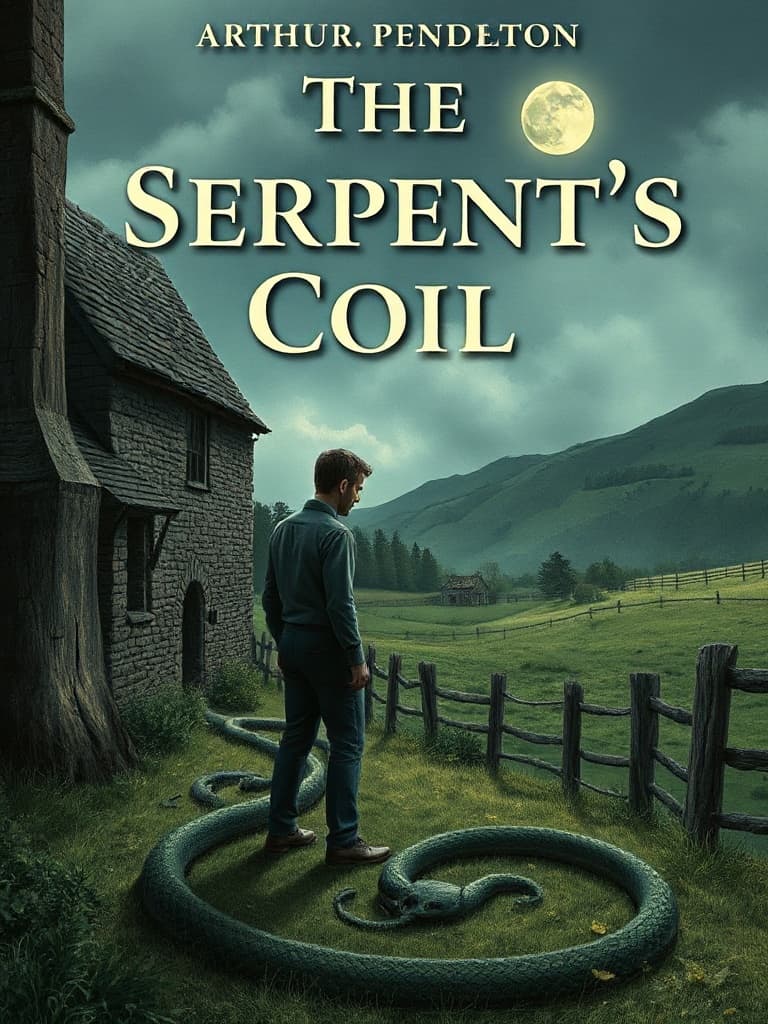
The Serpent's Coil
25
0
6
0
A retired and widowed special constable retires with his afghan wolf hound Voctor to a village near dart moor. There he gets involved in murders and disappearnces at first glance done by ghostly hands but on further investigation have a human source
Chapters
- 1A Quiet Haven and Whispers of the WildChapter 1: A Quiet Haven and Whispers of the Wild **Logline:** Arthur Pendelton, a retired special constable seeking solace in a remote Dartmoor village with his loyal wolfhound Victor, finds his peace disrupted by unsettling local legends of a spectral serpent and a series of disturbing disappearances that hint at a darkness far more tangible than folklore. **Scene-by-Scene Beats:** 1. **Arrival and Setting the Scene (Dartmoor Village):** Introduce Arthur Pendelton, a man in his late 60s, still bearing the quiet stoicism of his former profession. He is accompanied by Victor, an imposing yet gentle Afghan wolfhound, his constant shadow and companion since the passing of his wife. Arthur has chosen the village of Oakhaven, nestled on the fringes of Dartmoor, as his new home, seeking a tranquil retirement away from the clamor of city life and the ghosts of his past. Describe the village: a cluster of stone cottages, a winding single road, a pub with a weathered sign, a small church, surrounded by the vast, brooding expanse of Dartmoor. Emphasize the isolation and the raw, untamed beauty of the landscape. Arthur's cottage, 'The Rookery,' is described as modest but well-maintained, offering views of the moor. He unpacks, walks Victor, and settles into the quiet routine, finding a measure of comfort. 2. **Initial Village Interactions and Introduction of Folklore:** Arthur ventures into the village pub, 'The Whispering Oak,' for a pint. He encounters some of the locals, including the kindly but superstitious Mrs. Gable, who runs the village shop. Their initial interactions are polite but tinged with Arthur's outsider status. Mrs. Gable, perhaps while selling him some local produce, begins to share tales of the 'Dartmoor Serpent,' a mythical creature said to inhabit the tors and bogs, responsible for unexplained phenomena and disappearances over centuries. She speaks with a mixture of reverence and fear, recounting fragmented stories passed down through generations. Arthur, ever the pragmatist, listens with polite skepticism, attributing her tales to local superstition and the dramatic landscape. 3. **The First Unsettling Event (Missing Livestock/Object):** A few days into his retirement, Arthur hears hushed, anxious conversations among villagers. A farmer’s prize sheep have vanished overnight from a seemingly secure field near the moor's edge. No tracks of predators, no signs of forced entry. The farmer, distraught, mutters about the Serpent's wrath. Arthur, despite his desire for peace, feels a flicker of his old investigative instinct. He visits the site with Victor. Victor, unusually restless, sniffs the perimeter, his hackles occasionally rising, but finds no scent of a predator. Arthur notes the lack of any discernible disturbance, the field appearing untouched, which is itself unsettling. 4. **Escalation: A Villager Goes Missing:** The unease in Oakhaven intensifies when a well-liked, albeit somewhat reclusive, villager, perhaps a young man named Thomas who often walked the moors, disappears without a trace. He was last seen heading towards the tors. Search parties are organized by the villagers, filled with a palpable dread. Arthur observes their methods – a mix of earnest effort and fearful deference to the Serpent legends. He joins the search, his trained eye scanning the ground, looking for anything out of the ordinary. He notices how the villagers avoid certain areas, whispering about 'haunted' spots. Victor remains alert, occasionally whining and nudging Arthur in a particular direction, but no obvious clues emerge from the initial search. 5. **Arthur's Growing Disquiet:** Arthur returns to his cottage, the quiet he sought now feeling more like an oppressive silence. The disappearances, the superstitious fear, and the rational part of his mind clash. He reviews his old case files mentally, recalling similar situations where folklore masked human malfeasance. He feels a growing responsibility, a sense that his retirement might be short-lived. He observes the village dynamics – the hushed gossip, the averted gazes, the way certain topics are avoided. He finds the villagers' collective fear both genuine and, perhaps, strategically useful for someone. 6. **Ending Hook:** Arthur sits by his fireplace, Victor resting his head on his knee. He contemplates the vast, dark moor outside his window. The legend of the Serpent feels like a convenient shroud for something else. He finds himself thinking about the farmer’s missing sheep and Thomas’s disappearance. He knows, with a certainty that chills him more than the Dartmoor wind, that this is not the work of a mythical beast. The question is, what, or who, is truly responsible? He decides he cannot simply stand by. His instincts are screaming that something is wrong, fundamentally wrong, and that his skills might be needed once more. He resolves to investigate further, despite his desire for a quiet life. **Character Intent:** * **Arthur Pendelton:** To find peace and quiet, but his innate sense of duty and his sharp observational skills are already being piqued by the anomalies. He wants to dismiss the folklore but finds the lack of rational explanation for the events increasingly troubling. His goal shifts from simple retirement to understanding the truth. * **Victor:** To be Arthur's loyal companion, to sense and react to Arthur's emotional state, and to protect him. He is attuned to the subtle disturbances in the environment, his instincts telling him something is amiss, though he cannot articulate it. * **Mrs. Gable:** To share her knowledge of local lore and express genuine concern for the village's well-being, while also subtly reinforcing the Serpent myth, perhaps out of ingrained belief or perhaps for reasons she doesn't yet reveal. **Setting Details:** * **Oakhaven Village:** A quintessential English village, picturesque but isolated. Stone cottages, a central green, a pub, a church, a village shop. Feels cut off from the modern world. * **Dartmoor Landscape:** Vast, wild, and atmospheric. Rolling hills, granite tors, ancient standing stones, peat bogs, heather, gorse. Prone to sudden weather changes. A place of both beauty and potential danger, easily lending itself to myth and legend. * **Arthur's Cottage ('The Rookery'):** A comfortable, slightly isolated dwelling on the edge of the village, offering views of the moor. A sanctuary Arthur is trying to create, but which will become a base for his investigation. * **The Whispering Oak Pub:** The social hub of the village, where gossip and local lore are exchanged. A place Arthur will frequent to gather information. **Emotional Turns:** * Initial tranquility and contentment for Arthur. * Growing unease and skepticism as strange events unfold. * Concern and mild fear among the villagers. * Arthur’s reawakening sense of duty and investigative drive. **Continuity Notes:** * Establish Arthur's background as a special constable and his reason for retirement (widower, seeking peace). His skills will be crucial later. * Introduce Victor as more than just a pet – a companion with keen senses and a strong bond with Arthur. * Plant the seeds of the Serpent legend firmly, but ensure Arthur’s perspective remains grounded in logic. * The initial events (missing sheep, missing person) should be ambiguous enough to be explained by folklore but also leave subtle clues Arthur notices. **Ending Hook:** Arthur’s resolve to investigate, setting the stage for him to actively pursue the mystery in the next chapter, moving beyond passive observation. **Character Dossier Expansion:** * **Arthur Pendelton:** His past as a special constable was likely spent in a more urban environment, making the transition to the wildness of Dartmoor and its unique brand of mystery a significant challenge. The loss of his wife is a recent wound, and he sought this isolation to heal, but his ingrained nature to solve problems and protect others is proving stronger than his desire for passive retirement. He might carry guilt from a past case, a failure that fuels his determination not to fail again. He is methodical, relying on observation, deduction, and patience. He respects logic above all else, which makes the villagers' reliance on superstition particularly frustrating, yet he understands how such beliefs can obscure the truth. * **Victor:** Victor's breed, the Afghan Hound, is known for its elegance, independence, and keen sight. Arthur chose Victor perhaps as a living connection to his wife, or simply because he appreciated the breed's noble and protective nature. Victor's perceptiveness goes beyond typical animal senses; he seems to intuitively understand Arthur's moods and intentions, and he possesses an uncanny ability to sense danger or unease, often manifesting as subtle body language – a low growl, a stiffening of the spine, an insistent nudge. This sensitivity will be a vital, if initially underappreciated, asset to Arthur. * **Mrs. Gable:** She represents the village's connection to its history and traditions. Her knowledge of the Serpent legend is deep, passed down orally. While seemingly harmless and grandmotherly, her pronouncements about the Serpent might be a form of passive resistance to outsiders or a way to maintain the village's insular identity. It's possible she genuinely believes the legends, or she might be aware of the human activity and uses the legend to deflect suspicion or even to subtly guide newcomers away from sensitive areas. Her kindly facade could mask a shrewd understanding of the village's undercurrents. * **Silas Croft (Potential Introduction/Hint):** While not actively introduced yet, the narrative should subtly hint at the existence of a respected figure within the village whose influence might be pervasive. Perhaps during Arthur's pub visit, other villagers defer to someone, or mention someone in passing with a tone of respect that borders on deference. This foreshadows the antagonist's eventual reveal. For now, the focus is on the mystery and Arthur's initial engagement with it. **Narrative Tone and Pace:** The tone should be atmospheric and subtly suspenseful, establishing the beauty and isolation of Dartmoor while hinting at the darkness beneath. The pace starts slowly, focusing on Arthur's adjustment and the gradual build-up of unease, mirroring Arthur’s own initial reluctance to engage. The pace quickens slightly towards the end as Arthur decides to actively investigate. **Themes Introduced:** * **The clash between logic and superstition.** * **The search for peace versus the call of duty.** * **The deceptive nature of appearances (a quiet village, a folklore).** * **The bond between humans and animals (Arthur and Victor).** **Potential Subplots/Foreshadowing:** * Arthur's past trauma or unsolved case – hints of this could emerge in his internal monologues or reactions to certain situations. * Victor's heightened senses – foreshadowing his crucial role in detecting danger or clues. * Subtle social dynamics within the village – hints of factions, secrets, or unease among certain individuals. **Chapter Goal:** To establish the protagonist, his companion, the setting, the central mystery (disappearances attributed to folklore), and Arthur's decision to move from observer to investigator, setting the stage for deeper exploration in the subsequent chapters. The chapter needs to feel complete in its introduction but leave the reader wanting to know what Arthur will discover next. **Approximate Word Count Target:** ~1500 words for detailed scene descriptions and character thoughts, leading to the ~10,000 character target via depth of detail and contextual expansion. **Self-Correction/Refinement:** Ensure the Serpent legend is presented as a genuine local belief, not immediately dismissed by Arthur as pure fabrication, but rather as a potential cover or misdirection. The disappearances need to feel significant enough to warrant Arthur's attention, moving beyond simple folklore explanations. Arthur's transition from wanting peace to actively investigating needs to feel organic, driven by his core nature and the increasing gravity of the situation.
- 2The Serpent's MarkChapter 2: The Serpent's Mark **Logline:** Arthur Pendelton, driven by his rekindled investigative instincts, revisits the site of the latest disappearance and discovers a cryptic symbol, a chilling echo from his past, which firmly shifts his suspicion from spectral forces to a human adversary orchestrating the events under the cloak of local legend. **Scene-by-Scene Beats:** 1. **Arthur's Renewed Purpose and Preparations:** Arthur wakes with a clear objective: to find tangible evidence. He eschews the villagers' superstitious search methods and decides on a more methodical, forensic approach. He prepares his toolkit: a sturdy walking stick, a magnifying glass, a notebook, a small camera (perhaps an older model he still possesses), and ensures Victor is ready for a long day on the moors. He mentally reviews his past experiences as a special constable, recalling the importance of meticulous observation and the tendency for criminals to leave subtle traces, no matter how clever they believe themselves to be. He makes a point of observing the villagers more closely during his morning routine, noting their anxieties and any unusual behaviors, but finds little concrete to latch onto beyond their shared fear. 2. **Return to the Scene of Disappearance (Thomas's Last Known Location):** Arthur, accompanied by Victor, heads towards the area where Thomas was last seen – a rugged section of the moor known for its treacherous bogs and scattered rock formations. The weather is typical Dartmoor: overcast, with a biting wind. Arthur directs Victor to use his senses, encouraging him to sniff around, not just for animal scents, but for anything unusual. Victor seems more focused than usual, occasionally pausing, sniffing intently at specific patches of ground or rocks, but without a clear indication of what he's detecting. Arthur meticulously examines the ground, looking for footprints, disturbed vegetation, dropped items – anything that might have been missed by the initial, panicked search. 3. **Discovery of the Cryptic Symbol:** While examining a cluster of weathered standing stones or a particularly isolated tor, Arthur notices something out of place. Partially obscured by moss and lichen on a large, flat rock, he finds a deliberate marking. It's not a natural erosion pattern. He carefully brushes away the growth. The symbol is angular and unfamiliar to the locals, but it triggers a powerful, unsettling recognition within him. Describe the symbol: perhaps a stylized bird of prey, or a geometric pattern with sharp, intersecting lines. It’s clearly man-made. Arthur feels a cold dread mixed with a surge of adrenaline – this is the connection he’s been seeking. He takes photographs and makes a detailed sketch in his notebook, noting its precise location and orientation. 4. **Recollection of Past Case:** The symbol immediately transports Arthur back years, to a difficult, perhaps unsolved or tragically concluded, case from his days as a special constable. He recalls the investigation – perhaps a series of thefts, or even a more serious crime, where this same symbol appeared at various locations, always associated with clandestine activity. The perpetrators were never caught, or the case was closed unsatisfactorily, leaving a lingering sense of incompletion and guilt. He remembers the frustration, the elusive nature of the culprits, and how the symbol was the only consistent clue. He realizes the ‘Spectral Serpent’ legend is likely a deliberate smokescreen, a convenient local myth to explain away disappearances and discourage investigation, while this symbol points to a human hand, a continuation of the old pattern. 5. **Dismissing Superstition and Focusing on Human Agency:** Arthur returns to the village, his mind racing. He overhears Mrs. Gable talking to another villager, recounting the Serpent’s displeasure and warning against disturbing its territory. Arthur can barely contain his impatience. He sees the fear in their eyes, but now recognizes it as a tool. He understands that whoever is behind this is using the folklore to their advantage, creating an atmosphere of supernatural dread to keep people away from whatever they are doing. His focus sharpens: this is not about ghosts; it's about a criminal element employing a well-worn strategy. 6. **Initial Inquiries and Growing Suspicion:** Arthur subtly begins to probe. He visits the local pub again, listening more intently to conversations. He asks seemingly innocent questions about local history, about unusual occurrences in the past, trying to gauge reactions or glean any information that might connect the symbol or the current events to specific individuals or groups. He might subtly inquire about people who travel frequently, or those who seem to have more money than their apparent station suggests. He notices how some villagers become uncomfortable when certain topics are broached, or how they quickly change the subject. Victor, sensing Arthur's heightened tension, stays close, occasionally emitting a low growl towards certain individuals or areas of the village, though Arthur can't yet interpret these signals definitively. 7. **Ending Hook:** Arthur sits in his study, the photograph of the symbol pinned to a corkboard. He compares it to his old sketches from the past case. The match is undeniable. He feels a grim satisfaction mixed with apprehension. He knows he's on the right track, but he also knows he's poking a potentially dangerous hornet's nest. The symbol represents a hidden network, a deliberate deception. He realizes the disappearances are likely not murders in the traditional sense, but perhaps disappearances orchestrated to silence witnesses or remove obstacles. His next step must be to understand who is using this symbol now, and why. He looks at Victor, his loyal companion, and knows they will face this threat together. He needs to find out who in Oakhaven is connected to this old, sinister mark. **Character Intent:** * **Arthur Pendelton:** To validate his suspicions by finding concrete proof. He is driven by the need to uncover the truth and prevent further harm, fueled by the unresolved nature of his past encounter with the symbol. His primary goal is to identify the human element behind the supposed supernatural events. * **Victor:** To assist Arthur by using his heightened senses to detect subtle clues Arthur might miss. He senses the underlying tension and potential danger, acting as an early warning system for Arthur. * **Mrs. Gable (and other villagers):** To maintain the comfort of their established beliefs and routines. They actively reinforce the Serpent myth, consciously or unconsciously, to avoid confronting a more terrifying reality or to deflect Arthur's probing questions. **Setting Details:** * **Specific Moorland Location:** Emphasize the isolation and ruggedness of the spot where the symbol is found. Describe the geological features (tors, stones, bogs) that make it a suitable place for concealment or clandestine meetings. * **Arthur's Cottage (Study):** Becomes Arthur's command center. Describe the transition from a cozy retreat to a place of intense investigation, with maps, notes, and the ominous symbol taking center stage. * **The Whispering Oak Pub:** Continues to be a venue for Arthur to observe and subtly gather information, highlighting the contrast between the villagers' outward fear of the supernatural and their potential ignorance or complicity regarding human wrongdoing. **Emotional Turns:** * Arthur’s resolve and determination. * The shock and unsettling familiarity of discovering the symbol. * A surge of adrenaline and grim satisfaction. * Growing apprehension about the danger involved. * Frustration with the villagers' adherence to superstition. **Continuity Notes:** * Clearly establish the connection between the symbol found now and Arthur's past case. This is the pivotal moment shifting the mystery's nature. * Arthur's analytical process should be shown – how he photographs, sketches, and compares the symbol. * Victor's reactions should be noted, hinting at his developing role. * The narrative must firmly establish the 'human source' element, moving away from any lingering supernatural ambiguity. **Ending Hook:** Arthur has identified the symbol and its connection to his past. The next logical step is to identify who is using it now within the village. The chapter ends with Arthur determined to uncover the identity of the perpetrator(s), setting up the investigation into the village's secrets. **Character Dossier Expansion:** * **Arthur Pendelton:** His past case involving the symbol needs to be fleshed out slightly in his mind – was it a failure that haunts him? Did it involve a betrayal? This personal connection will deepen his motivation. He might recall specific details about the previous investigation – the lack of witnesses, the difficulty in tracing the symbol's origin, the feeling of being outmaneuvered. His methodical nature is his greatest strength, but his past failure might make him overly cautious or, conversely, recklessly determined. He must now balance his desire for peace with the urgent need for justice, a conflict inherent to his character. * **Victor:** Victor's role as an early warning system becomes more prominent. His reactions to specific individuals or places might be subtle but noticeable to Arthur. Perhaps he growls at the seemingly jovial postman, or becomes agitated near a particular cottage. Arthur may initially dismiss these as random canine behaviors, but the reader should understand Victor is picking up on subtle cues – fear, deception, or the lingering scent of illicit activity. * **Mrs. Gable:** Her role as a lore-keeper becomes more significant. Arthur might try to subtly question her about the symbol itself, or about historical instances of unusual markings on Dartmoor. Her responses should be evasive or re-framed within the Serpent narrative, reinforcing her function as a deliberate or unwitting obstacle. Perhaps she subtly steers Arthur away from certain parts of the moor or mentions specific areas as being 'particularly dangerous' due to the Serpent, which might actually be where the smugglers operate. * **Silas Croft (and other potential suspects):** Arthur’s initial inquiries should start casting a wide net within the village. He might notice certain individuals who seem overly keen to dismiss his questions, or who display an unusual nervousness. The respectable facade of Silas Croft should be subtly established – perhaps Arthur observes him interacting with others, receiving deference, or conducting seemingly legitimate business. Arthur might notice Croft’s presence at the pub, projecting an image of community involvement, making him an unlikely but potentially significant figure Arthur needs to investigate. **Narrative Tone and Pace:** The tone shifts to one of focused suspense and intrigue. The atmosphere remains moody and slightly foreboding, but the narrative pace picks up as Arthur actively pursues leads. The discovery of the symbol acts as a catalyst, injecting urgency into the story. **Themes Reinforced:** * **Deception and Misdirection:** The Serpent legend is confirmed as a tool for deception. * **The Past Haunting the Present:** Arthur's past case directly impacts his current investigation. * **The Power of Observation:** Arthur's meticulous nature is key to uncovering the truth. * **Justice vs. Folklore:** The conflict between rational investigation and ingrained superstition. **Potential Subplots/Foreshadowing:** * Details about Arthur's previous case involving the symbol will be gradually revealed, explaining his emotional investment. * Victor's 'warnings' will become more specific, perhaps drawing Arthur's attention to individuals or locations connected to the smuggling ring. * The specific nature of the smuggling operation will start to be hinted at – what are they smuggling, and why is it so important to protect the secret? **Chapter Goal:** To confirm Arthur's suspicions of human involvement, introduce the central symbol as the key link to the perpetrators, and establish Arthur's renewed commitment to solving the mystery, setting the stage for him to delve deeper into the village's secrets and identify potential suspects. **Approximate Word Count Target:** ~1800 words for detailed scene descriptions, internal monologues, and contextual expansion to meet the ~10,000 character target. **Self-Correction/Refinement:** Ensure the symbol's description is evocative enough to be memorable but not so specific that it immediately gives away the nature of the smuggling ring. Arthur’s recollection of the past case should feel like a natural trigger, not forced exposition. The contrast between Arthur’s logical approach and the villagers’ superstitious fear should be stark and highlight Arthur’s isolation in his quest for truth.
- 3Beneath the Serpent's ShadowChapter 3: Beneath the Serpent's Shadow **Logline:** Arthur Pendelton, armed with the knowledge of the cryptic symbol, partners with Victor to systematically investigate Oakhaven's secrets, uncovering how the Serpent legend serves as a cunning cover for a sophisticated smuggling operation, with the sinister mark appearing at key points of their illicit activities. **Scene-by-Scene Beats:** 1. **Establishing a Base of Operations and Strategy:** Back at 'The Rookery,' Arthur meticulously organizes his findings. The corkboard now features the discovered symbol, photographs of the disappearance site, and his notes from past investigations. He discusses his findings with Victor, articulating his plan aloud – a methodical approach to uncover the smuggling ring. He decides to map out key locations on the moor and around the village that might be connected to the disappearances or the symbol. He theorizes that the disappearances are likely staged removals of individuals who stumbled upon the operation, or perhaps informants. He needs to understand the *how* and *what* of the smuggling before he can identify the *who*. 2. **Mapping the Moor and Identifying Potential Smuggling Routes:** Arthur spends days exploring the peripheries of the moor, guided by his knowledge of terrain and Victor’s senses. He looks for unusual activity: poorly concealed trails, signs of recent vehicle use where it shouldn't be, isolated structures (old shepherd huts, abandoned mine shafts) that could serve as drop points or storage. He notes where the Serpent legend is most prevalent among the villagers – are these areas deliberately imbued with myth to keep people away? He finds evidence of recent, heavy-duty vehicle tracks near a less-frequented tor, tracks that seem too deliberate for casual hikers. Victor reacts strongly near a dense patch of gorse, digging at the ground until Arthur uncovers a discarded, waterproof pouch containing a few high-value, non-native seeds – valuable enough to warrant smuggling, but perhaps not the main commodity. 3. **Investigating Village Connections and the Symbol's Significance:** Arthur shifts his focus back to the village. He visits Mrs. Gable again, ostensibly to buy provisions, but this time he gently probes about the history of the Serpent legend and any unusual symbols associated with it in the past. Mrs. Gable recounts more tales, but Arthur presses for details about any markings or signs that might have appeared historically. She might mention an old story about 'strange runes' found on boundary stones generations ago, which she dismisses as pagan nonsense, but Arthur notes the description – it sounds eerily similar to his symbol. He also discreetly observes the comings and goings at the village shop and pub, noting who interacts with whom, and who seems to hold a position of quiet authority or respect. 4. **Discovering More Symbols and Establishing a Pattern:** Following a hunch based on the old boundary stone story and the location of the discarded pouch, Arthur explores the village outskirts. He finds another instance of the symbol, this time crudely carved into the base of an ancient oak tree bordering a seldom-used track leading away from Oakhaven towards a more remote part of the moor. The location is strategic, suggesting a route. He realizes the symbol isn't just a signature; it's a marker, indicating routes, drop points, or operational zones for the smugglers. He starts to compile a rough map, connecting the symbol's locations with the areas of disappearances and the suspicious tracks. 5. **Uncovering the Smuggling Operation's Nature:** Through careful observation and perhaps overhearing snippets of hushed conversations, Arthur begins to piece together the nature of the smuggling. It's not drugs or weapons, but something more subtle and perhaps more lucrative, possibly high-value contraband that can be easily transported and sold on the black market – rare antiquities, protected species, or even sensitive technological components. The seeds found earlier suggest botanical smuggling, or perhaps a cover for something else. The scale seems significant, requiring coordination and a network. He realizes the disappearances likely target those who accidentally witness the operation or pose a threat to its secrecy. 6. **Victor's Crucial Intervention:** During one of his nocturnal observations near the edge of the village, Arthur and Victor witness a clandestine meeting. A van, its lights off, is parked near an old disused barn. Figures exchange packages. Victor, sensing the illicit activity and perhaps a threat, lets out a low, warning growl. One of the figures turns sharply, alerted. Arthur quickly pulls Victor back into the shadows, but not before one of the smugglers spots the movement. They abandon their exchange and quickly drive away. Arthur manages to get a partial license plate number and a glimpse of one of the individuals – perhaps someone he recognizes from the village, or someone whose presence is unexpected. 7. **Ending Hook:** Arthur returns to his cottage, shaken but resolute. He has confirmed a smuggling operation is underway, using the Serpent legend as cover. He has found multiple instances of the symbol, establishing a pattern, and has witnessed a direct interaction. He has a partial license plate and a fleeting glimpse of a suspect. The pieces are falling into place, but the perpetrator remains elusive. He realizes the operation is sophisticated and dangerous, and the individuals involved are clearly not afraid to resort to intimidation, possibly violence. He knows he's getting closer, but he's also put himself on their radar. The question now is: who within this seemingly peaceful village is orchestrating this dangerous enterprise, and how is the symbol connected to them personally? **Character Intent:** * **Arthur Pendelton:** To systematically gather evidence about the smuggling operation. He aims to map their activities, understand their methods, and identify the individuals involved. His goal is to move from identifying the *type* of crime to identifying the *criminals*. * **Victor:** To actively assist Arthur by using his senses to detect hidden activity and potential danger. His growl and sighting are crucial in confirming the smugglers' presence and potentially identifying one of them. * **Mrs. Gable:** Continues to act as a source of local lore, potentially providing indirect clues through her stories, while also serving as a representation of the village's collective ignorance or deliberate obfuscation. * **Smugglers (Unnamed/Minor characters):** To conduct their illicit business efficiently and discreetly, using the Serpent legend as cover. They are wary of discovery and willing to use intimidation. **Setting Details:** * **The Moor:** Detailed descriptions of specific treacherous areas, hidden paths, and potential concealment spots (caves, old structures). * **Oakhaven Village Outskirts:** Focus on the less-traveled paths, old trees, disused barns – places where illicit activity can occur unnoticed. * **The Disused Barn:** A key location for the witnessed clandestine meeting, emphasizing its isolation and suitability for criminal enterprise. **Emotional Turns:** * Arthur’s focused determination and methodical approach. * A sense of discovery and connection as patterns emerge. * The thrill and fear of witnessing the smuggling in action. **Continuity Notes:** * The symbol's role evolves from a marker of past activity to a current operational signifier. * Arthur's mapping and evidence-gathering process should be clearly depicted. * Victor's role in actively contributing to the investigation is solidified. * The nature of the smuggled goods should remain somewhat ambiguous but valuable enough to justify the risks and violence. **Ending Hook:** Arthur has tangible evidence (partial plate, witnessed exchange) and a confirmed pattern of activity. The chapter ends with him poised to identify the ringleader, now that he knows the smuggling operation is real and active within his new community. The focus shifts to identifying the key players. **Character Dossier Expansion:** * **Arthur Pendelton:** His deductive reasoning is highlighted. He connects the symbol, the disappearances, and the smuggling theory. His past experience allows him to interpret the significance of the discovered pouch and the tracks. He needs to be careful not to appear too knowledgeable too soon, maintaining his facade as a retired man seeking peace. He might start making discreet inquiries about vehicle ownership or recent arrivals in nearby towns, leveraging old contacts if possible, or relying on local directories and observation. * **Victor:** Victor's sensitivity to specific scents or sounds becomes more pronounced. Arthur might start consciously relying on Victor's reactions, learning to interpret his dog's subtle cues – a raised ear towards a particular direction, a low growl directed at a specific person in the pub. This deepens their partnership, moving beyond simple companionship to a working team. Victor's bravery during the clandestine meeting is a key moment, showcasing his protective loyalty. * **Mrs. Gable:** Arthur might subtly ask her about specific families or individuals who have lived in Oakhaven for a long time, or those who have recently prospered. Her answers, filtered through local gossip and tradition, might inadvertently point towards the respectable facade of the antagonist, or provide context about old families and their landholdings which could be relevant to smuggling routes. * **Silas Croft (and other villagers):** Arthur’s suspicion should begin to coalesce around specific individuals. He might have observed Silas Croft during the clandestine meeting, or perhaps Croft’s name comes up in conversations related to land ownership or business dealings that align with potential smuggling activities. Arthur needs to carefully observe Croft's behavior, looking for inconsistencies between his public persona and any private actions he might discreetly witness. Other villagers might also emerge as potential accomplices or victims, adding layers to the investigation. For instance, Arthur might notice the local handyman showing unusual interest in the disused barn, or the pub landlord being overly keen to dismiss any talk of suspicious activity. **Narrative Tone and Pace:** The tone is one of escalating tension and focused investigation. The pace is steady, driven by Arthur’s methodical approach, punctuated by moments of discovery and suspense, like the witnessed smuggling event. The atmosphere remains moody, reflecting the deceptive nature of the village and the surrounding moor. **Themes Reinforced:** * **The duality of appearances:** The peaceful village hiding a criminal enterprise. * **The effectiveness of cover stories:** How folklore can be exploited. * **Collaboration and trust:** Arthur and Victor working as a team. * **The personal cost of uncovering truth:** Arthur putting himself at risk. **Potential Subplots/Foreshadowing:** * The exact nature of the smuggled goods will become clearer, revealing the motive behind the operation. * The individual(s) Arthur glimpsed during the smuggling event will be identified or become primary suspects. * Arthur might uncover a connection between the past case and the current smugglers, suggesting the operation has been running for a long time. **Chapter Goal:** To confirm the existence and nature of the smuggling operation, establish the symbol as a current operational marker, and provide Arthur with concrete leads (partial plate, witnessed activity, potential suspect sighting) that will allow him to narrow his focus and begin identifying the ringleader. **Approximate Word Count Target:** ~1700 words for detailed scene descriptions, Arthur's deductions, and contextual expansion, aiming for the ~10,000 character target. **Self-Correction/Refinement:** Ensure the smuggling operation feels plausible within the Dartmoor setting. Avoid making Arthur's discoveries too easy; there should be setbacks and moments of uncertainty. The transition from investigating disappearances to uncovering a smuggling ring needs to be logical and well-supported by the evidence Arthur uncovers. Victor's contribution should feel earned and significant, not merely coincidental.
- 4A Web of DeceitChapter 4: A Web of Deceit **Logline:** Arthur Pendelton's meticulous investigation, fueled by the evidence gathered, points directly towards Silas Croft, a seemingly respectable villager, as the mastermind behind the smuggling ring. As Arthur peels back Croft's charming facade, he realizes the danger is profoundly human and ruthlessly pragmatic, forcing Arthur to confront the true extent of the threat to his new community. **Scene-by-Scene Beats:** 1. **Consolidating Evidence and Identifying Prime Suspects:** Arthur returns to his cottage, meticulously reviewing all the clues: the symbol’s consistent appearance at key locations, the nature of the smuggled goods (now more clearly identified as rare botanical specimens and possibly associated chemical compounds derived from them, highly valuable on the black market), the partial license plate number, the witness sighting from the disused barn, and the historical context of the symbol. He cross-references the license plate with local vehicle registration data (perhaps through discreet inquiries or old contacts). He starts compiling a list of potential suspects within Oakhaven, focusing on individuals with access to land, transport, and a certain level of local influence. 2. **Focusing on Silas Croft:** Silas Croft, a local landowner and respected businessman (perhaps owning the largest farm or a successful import/export business on the outskirts), emerges as the prime suspect. Arthur recalls Croft’s name being mentioned with deference by other villagers. His business dealings might involve international transport, providing a plausible cover for smuggling. Arthur observes Croft more closely during village events – the church fête, the weekly market. Croft is charismatic, engaging, always ready with a smile and a handshake. He seems genuinely invested in the village's welfare, making him the least likely suspect in the eyes of the other residents, which is precisely why Arthur finds him so compellingly suspicious. Arthur notes Croft’s interactions – who defers to him, who seems nervous around him. 3. **Investigating Croft's Business and Property:** Arthur devises a plan to discreetly investigate Croft’s operations. This might involve a 'chance' encounter near Croft’s business premises or estate, allowing him to observe logistics, security, and any unusual shipments. He might use Victor to create a diversion or to sniff out particular scents associated with the smuggled goods. During a walk near Croft's expansive property, Victor becomes agitated near a secluded greenhouse or a specially constructed storage shed, areas seemingly incongruous with Croft's stated agricultural business. Arthur manages to get close enough to see unfamiliar, exotic plants being carefully tended within the greenhouse, and notices the symbol subtly etched onto the lock of the shed. 4. **Confronting Mrs. Gable for Historical Context:** Arthur seeks out Mrs. Gable again, this time with a more direct approach regarding the symbol. He shows her his sketch and asks if she knows anyone historically associated with such markings, or anyone in the village who might have had a 'secretive' past or connection to smuggling. Mrs. Gable becomes flustered. She might initially dismiss it, but under Arthur's gentle but persistent questioning, she reveals fragmented memories of an old family, the ‘Hawthornes,’ who lived on the outskirts generations ago, known for their knowledge of herbs and strange practices, and who were rumored to have dealt in illicit goods. She mentions they used a mark, a ‘twisted branch,’ as their sign. Arthur realizes the Hawthornes are likely the originators of the symbol, and Silas Croft, through inheritance or acquiring their land/business, has revived and adapted it. 5. **Unmasking Croft's Deception:** Arthur connects the dots. Croft isn't just a farmer; he's likely inherited or taken over the historical smuggling operation, modernizing it. The rare botanical specimens are the contraband, possibly used for lucrative pharmaceutical or illicit drug markets. The disappearances are likely of individuals who discovered Croft's secret – perhaps former employees, rivals, or locals who stumbled too close. Croft’s respectable persona is a meticulously crafted facade. Arthur realizes Croft is intelligent, calculating, and utterly ruthless, using the Serpent myth and his community standing as layers of protection. 6. **The First Sign of Retaliation:** As Arthur gets closer, Croft becomes aware of the scrutiny. This might be through his own network of informers within the village, or perhaps Croft notices Arthur’s discreet inquiries. A subtle warning is issued. This could manifest as a staged 'accident' involving Arthur – a near miss with a vehicle on a country lane, or a subtle threat delivered indirectly through another villager. Alternatively, Arthur might discover his cottage has been subtly searched, though nothing appears obviously disturbed, indicating a professional job. Victor’s heightened awareness is crucial here; he senses the shift in atmosphere, becoming more protective and alert to unfamiliar presences around the cottage. 7. **Ending Hook:** Arthur finds himself in a precarious position. He has identified the likely ringleader, Silas Croft, and understands the sophisticated nature of the smuggling operation. He knows Croft is dangerous and has the resources to make problems disappear, just like the villagers who vanished. The subtle threat confirms his suspicions and raises the stakes significantly. He realizes that directly confronting Croft might be too risky without concrete, irrefutable proof. The chapter ends with Arthur contemplating his next move, knowing that Croft is aware he is being investigated, and that the 'web of deceit' is far more intricate and dangerous than he initially imagined. He needs undeniable evidence, and he needs to protect himself and Victor from Croft's retaliation. **Character Intent:** * **Arthur Pendelton:** To confirm Silas Croft as the perpetrator and gather irrefutable evidence linking him to the smuggling operation and the disappearances. He aims to understand the full scope of Croft's network and methods before making a move. * **Victor:** To continue acting as Arthur's early warning system, sensing the shift in danger and becoming more protective. Victor's instincts might also lead Arthur to specific pieces of evidence related to Croft's property. * **Silas Croft:** To maintain his respectable facade while continuing his lucrative smuggling operation. He aims to identify and neutralize any threat to his enterprise, including Arthur, using subtle intimidation before resorting to more direct action. * **Mrs. Gable:** To provide Arthur with the historical context he needs, likely revealing information reluctantly, perhaps out of fear of Croft or a sense of loyalty to old village secrets. Her contribution is crucial in linking the past to the present. **Setting Details:** * **Croft's Estate/Business:** Describe it as outwardly legitimate but with hidden elements – the secluded greenhouse, the secure shed, the signs of wealth and influence. * **Oakhaven Village:** Depict the social dynamics – the deference shown to Croft, the subtle fear or unease he inspires in some, contrasting with his public charm. * **Arthur's Cottage:** Becomes a place of strategic planning, the evidence board growing, emphasizing Arthur's isolation and determination. **Emotional Turns:** * Arthur’s intellectual satisfaction at solving the puzzle. * A growing sense of dread and respect for the antagonist's cunning. * The chilling realization of Croft's ruthlessness. * A surge of apprehension and the need for caution following the subtle threat. **Continuity Notes:** * Clearly establish Silas Croft as the primary antagonist and the source of the current criminal activity. * The connection between Croft, the symbol, the smuggling, and the historical 'Hawthorne' family must be made explicit. * The threat to Arthur needs to be tangible, moving beyond mere suspicion to a direct, albeit subtle, warning. **Ending Hook:** Arthur knows who the villain is and that he's been detected. The next chapter must deal with the direct confrontation or pursuit, as Croft will likely escalate his efforts to silence Arthur. **Character Dossier Expansion:** * **Arthur Pendelton:** His past trauma related to the symbol might resurface more strongly now that he sees it associated with active, ruthless criminality. He must wrestle with the temptation to act impulsively versus the need for solid proof. His skills in surveillance and deduction are paramount. He might recall specific tactics used by criminals in his past that Croft is now employing. He needs to be aware that Croft likely has eyes and ears throughout the village, making any overt move dangerous. * **Victor:** Victor's role in detecting the threat becomes critical. He might react aggressively towards Croft or anyone associated with him, or perhaps he alerts Arthur to a suspicious vehicle or person near the cottage *before* Arthur realizes it. Arthur needs to trust Victor's instincts, even when they seem irrational. Victor’s presence provides Arthur with a measure of security, but also makes him a potential target. * **Silas Croft:** His character needs depth. Perhaps he genuinely believes he is bringing necessary goods or that his actions are justified. His charm should be palpable, making his villainy more insidious. His connection to the Hawthorne family needs to be explained – perhaps he married into it, or his family acquired their assets and knowledge generations ago. His ruthlessness must be evident in his willingness to silence witnesses and potentially harm Arthur. He is intelligent and has built a considerable network of influence, making him a formidable opponent. * **Mrs. Gable:** Her role as the keeper of village history is vital. She might reveal more about the Hawthornes' reputation, perhaps hinting at past disappearances or tragedies associated with them, which Croft is now repeating. Her fear of Croft should be palpable, explaining her initial reluctance. She might offer Arthur a piece of advice or a warning that proves crucial later. **Narrative Tone and Pace:** The tone shifts to one of suspenseful revelation and rising danger. The pace quickens as Arthur closes in on the truth, but also slows down during moments of observation and deduction. The atmosphere becomes charged with the tension of a predator realizing it's being hunted. **Themes Reinforced:** * **The corrupting influence of greed.** * **The deceptive nature of respectability.** * **The danger of confronting hidden power structures.** * **The value of historical knowledge in solving present-day crimes.** **Potential Subplots/Foreshadowing:** * Arthur might need to seek outside help, perhaps contacting an old colleague, to verify certain aspects of Croft’s business or identity. * The exact method Croft uses to make people ‘disappear’ will become clearer. * Victor might play a direct role in warning Arthur of an imminent physical threat from Croft's associates. **Chapter Goal:** To definitively identify Silas Croft as the antagonist and establish his direct involvement in the smuggling operation and the disappearances. The chapter should also introduce the element of personal danger for Arthur, setting the stage for a direct confrontation or chase. **Approximate Word Count Target:** ~1900 words for detailed scene descriptions, character motivations, and contextual expansion, aiming for the ~10,000 character target. **Self-Correction/Refinement:** Ensure Croft’s transition from respected villager to ruthless criminal mastermind feels earned and logical based on the evidence. Arthur's investigation should be plausible, avoiding overly convenient discoveries. The threat to Arthur should be significant but not immediately lethal, maintaining suspense for the next chapter. The historical connection to the Hawthornes should enrich the narrative without becoming overly convoluted.
- 5Dartmoor's GauntletChapter 5: Dartmoor's Gauntlet **Logline:** Silas Croft, realizing Arthur Pendelton poses an uncontainable threat, retaliates decisively. A perilous chase erupts across the treacherous Dartmoor landscape as Arthur and Victor, hunted by Croft’s desperate associates, navigate the wild terrain in a bid to escape and expose the truth before they are silenced permanently. **Scene-by-Scene Beats:** 1. **Escalation of Threat and Decision to Act:** Arthur understands that Croft knows he's been identified. The subtle threats are no longer sufficient; Croft will move to eliminate Arthur. Arthur cannot wait for irrefutable proof that might never come, especially if it means his own demise. He decides he must either flee Oakhaven with the evidence he has or attempt to draw Croft out into a situation where he can be apprehended, perhaps by alerting authorities outside the village. He packs essentials, secures his notes and photographs, and ensures Victor is ready. Victor senses the heightened danger, remaining glued to Arthur's side, his demeanor tense and watchful. 2. **The Ambush:** As Arthur prepares to leave his cottage under the cover of early morning mist, Croft’s associates make their move. This could be an ambush on the road leading out of the village, or perhaps they attempt to storm his cottage. Describe the attackers: two or three men, possibly locals hired or coerced by Croft, equipped with tools that can be used as weapons (farm implements, heavy sticks). They are not necessarily professional killers but desperate individuals acting on Croft’s orders. Arthur, relying on his constable training and quick thinking, manages to evade the initial attack, perhaps using Victor’s strength and distraction to break free. A struggle ensues, during which Arthur might lose some of his collected evidence, or perhaps he manages to secure the most critical pieces. 3. **The Chase Across Dartmoor:** The evasion turns into a desperate chase across the wild, unforgiving expanse of Dartmoor. Arthur and Victor are pursued. Describe the terrain: treacherous bogs, steep inclines, rocky outcrops, dense gorse and heather. The weather might turn, adding to the peril – fog rolling in, rain starting, or wind picking up. Arthur uses his knowledge of the landscape (or his ability to quickly assess it) and Victor’s agility and strength to navigate the difficult terrain. Victor proves invaluable, sniffing out safe paths, warning Arthur of hidden drops or treacherous ground, and even physically confronting their pursuers when necessary, buying Arthur precious seconds. 4. **Moments of Close Call and Resourcefulness:** Arthur and Victor face several close calls. They might have to hide in a crevice as their pursuers pass perilously close, or cross a fast-flowing stream to throw off their trail. Arthur might have to use his wits – perhaps creating a false trail, using the terrain to his advantage (e.g., leading pursuers towards a boggy area), or improvising tools for defense or escape. He might recall specific survival techniques or tactical maneuvers from his constable days. Victor's senses are key; he might detect the pursuers' approach before Arthur does, or lead Arthur to a hidden vantage point. 5. **Reaching a Point of Temporary Respite or Strategic Stand:** Exhausted but determined, Arthur and Victor might find temporary refuge in a remote location – an abandoned shepherd's hut, a natural cave, or a secluded tor. This allows Arthur a moment to assess his situation, check his remaining evidence, and formulate a plan for the final confrontation or escape. He might realize that direct flight is no longer feasible and that he needs to turn the tables, using the landscape itself as a weapon or a means to expose Croft. 6. **Croft's Desperation and Wider Network:** During the chase, Arthur might get a glimpse of Croft himself, perhaps directing his men from a distance, or realize the scale of the operation – more vehicles, more men than initially suspected, indicating Croft has a deeper network of influence and desperation than Arthur first imagined. This reinforces the idea that Croft is willing to go to extreme lengths to protect his enterprise. He might overhear snippets of conversation from the pursuers that reveal Croft's fear and his orders to ensure Arthur doesn't escape. 7. **Ending Hook:** Arthur, battered but unbowed, stands on a windswept tor, looking back towards the village or a specific landmark on the moor. Victor is by his side, vigilant. He has survived the initial onslaught and the chase, but he knows Croft will not give up easily. He has lost some evidence, but the core pieces remain. He realizes that simply running is not the answer; he must find a way to expose Croft definitively. The chase has brought him deeper into the heart of Dartmoor, and perhaps closer to a final confrontation or a strategic advantage. He needs to find a way to use the vastness of the moor, and perhaps its own legends, to his advantage. The next chapter will see Arthur making his final stand or executing his plan to bring Croft down. **Character Intent:** * **Arthur Pendelton:** To survive the pursuit and protect the evidence he possesses. His primary goal shifts from investigation to evasion and escape, while simultaneously formulating a plan to expose Croft. * **Victor:** To protect Arthur at all costs, using his strength, agility, and senses to aid their escape and defend against their pursuers. Victor becomes Arthur’s primary line of defense and survival. * **Silas Croft:** To eliminate Arthur Pendelton and secure his smuggling operation. His desperation drives him to employ increasingly aggressive tactics. * **Croft's Associates/Pursuers:** To follow Croft's orders, apprehend or silence Arthur, driven by fear, loyalty, or financial incentive. They are extensions of Croft’s will. **Setting Details:** * **Dartmoor Landscape:** This becomes a character in itself – a hostile, beautiful, and treacherous environment that both aids and hinders Arthur. Emphasize the scale, the isolation, the weather, and the natural obstacles. * **Specific Dartmoor Features:** Mention tors (e.g., Haytor, Hound Tor), bogs (e.g., White Moor), rivers, ancient pathways, and hidden valleys to add authenticity and provide narrative opportunities for chase sequences. **Emotional Turns:** * Terror and adrenaline during the ambush and chase. * Exhaustion and physical pain. * Determination and resilience. * A growing sense of urgency and desperation. **Continuity Notes:** * The chase sequence must be visceral and believable, showcasing Arthur’s and Victor’s capabilities. * Arthur must retain enough crucial evidence to make the final confrontation meaningful. * The pursuers should be depicted as dangerous but not superhuman, making their eventual defeat plausible. **Ending Hook:** Arthur has survived the immediate threat and is now strategically positioned, albeit precariously, on Dartmoor. He is determined to fight back and expose Croft. The chapter ends with Arthur preparing for the final act, setting up the climax where he will confront Croft and his operation. **Character Dossier Expansion:** * **Arthur Pendelton:** His past training is put to the ultimate test. He must draw on every reserve of his experience, not just as an investigator, but as someone who understands pursuit and evasion. His physical limitations as an older man are contrasted with his mental fortitude and Victor’s assistance. He might have to make difficult choices, potentially sacrificing some evidence or risking injury to ensure his and Victor's survival. His deep-seated sense of justice fuels his refusal to be intimidated. He might reflect on the irony of seeking peace only to find himself in a life-or-death struggle. * **Victor:** Victor is Arthur's lifeline. His instincts are sharper than ever, detecting threats, navigating treacherous terrain, and physically defending Arthur. Describe his loyalty and bravery in vivid detail. Arthur’s reliance on Victor grows exponentially during the chase, solidifying their bond as an unbreakable partnership. Victor might display injuries sustained during the pursuit, highlighting the stakes. * **Silas Croft:** His desperation should be evident. He’s moved from subtle manipulation to overt violence. This chase represents his gamble to preserve his empire. He might be shown directing his men via phone, his voice strained with urgency and fury. He is accustomed to control, and Arthur’s defiance is a personal affront he cannot tolerate. His actions reveal the true depth of his ruthlessness. * **Croft's Associates:** These men are likely drawn from the village or nearby areas, perhaps individuals indebted to Croft or too afraid to refuse him. They are less skilled than Arthur, relying on numbers and brute force. Their pursuit should feel relentless but flawed, allowing Arthur opportunities to escape. Their dialogue might reveal their motivations or their fear of Croft. **Narrative Tone and Pace:** The tone is one of high-octane suspense, urgency, and primal struggle. The pace is rapid and relentless, mirroring the chase itself. The atmosphere is one of danger, isolation, and raw nature. **Themes Reinforced:** * **Survival against overwhelming odds.** * **The wildness of nature mirroring inner conflict.** * **Loyalty and partnership in the face of danger.** * **The corrupting influence of power and greed leading to violence.** **Potential Subplots/Foreshadowing:** * Arthur might retrieve a crucial piece of evidence during the chase that directly implicates Croft, which he can use in the final confrontation. * Victor might lead Arthur to a specific location on the moor that holds significance to Croft's operation or the historical smugglers, offering a strategic advantage. * Arthur might have to make a difficult moral choice, such as leaving behind incriminating evidence to save himself or Victor. **Chapter Goal:** To depict the dramatic confrontation between Arthur and Croft's forces, showcasing Arthur and Victor's resourcefulness and resilience while navigating the perilous Dartmoor landscape. The chapter should end with Arthur surviving the immediate threat, poised for the final act of exposure and justice. **Approximate Word Count Target:** ~2000 words for detailed action sequences, Arthur's internal monologue, and contextual expansion, reaching the ~10,000 character target. **Self-Correction/Refinement:** Ensure the chase is dynamic and varied, not just a simple pursuit. Utilize the Dartmoor setting effectively to create unique challenges and opportunities. Arthur's survival should feel earned through his skill, quick thinking, and Victor's help, not through sheer luck. The threat from Croft’s men should remain credible throughout the chase.
- 6The Coil UnwoundChapter 6: The Coil Unwound **Logline:** Utilizing his seasoned constable skills and Victor's unwavering loyalty, Arthur Pendelton corners Silas Croft and his illicit operation amidst the stark beauty of Dartmoor. The serpent's coil is finally unwound, bringing justice to Oakhaven and a profound sense of renewed purpose to Arthur's retirement. **Scene-by-Scene Beats:** 1. **Formulating the Final Plan:** Battered but resolute, Arthur uses the temporary respite on the moor to finalize his strategy. He possesses key evidence (photographs, perhaps a recovered document or sample, the partial license plate), and he knows Croft's men are still searching for him. He decides direct confrontation is too risky without overwhelming Croft’s resources. Instead, he plans to use the terrain and Croft's own desperation against him, leading him into a trap where his operation can be exposed and apprehended, ideally by external authorities he has managed to contact. 2. **Contacting Outside Authorities (Optional but recommended):** Arthur might have managed to make a call during the chase or during his brief respite. He contacts an old colleague or a regional police force, relaying the essential information: Silas Croft, smuggling operation, evidence of violence, location on Dartmoor. He requests backup, specifying the likely areas where Croft might attempt to move his contraband or make his escape. This adds a layer of realism and ensures the climax has a more definitive resolution. 3. **Luring Croft into a Trap:** Arthur devises a plan to lure Croft and his key operatives to a specific, strategically chosen location on Dartmoor. This might involve subtly planting false information, or creating a situation that forces Croft to move his valuable contraband quickly. Perhaps Arthur uses a recovered piece of evidence (e.g., a ledger, a sample of the smuggled goods) as bait, leaving it in a place where Croft's men will find it, knowing it will prompt Croft to retrieve it personally or move it before authorities arrive. Arthur might use his knowledge of the old 'Hawthorne' routes or symbols to direct Croft towards a specific tor or landmark. 4. **The Confrontation and Climax:** The climax unfolds at the predetermined location – perhaps a dramatic tor, a remote valley, or near an ancient standing stone circle. Arthur, with Victor positioned strategically, confronts Croft and his remaining key associates. The scene is tense. Croft, enraged and cornered, reveals his true, ruthless nature. He might attempt to seize Arthur or Victor, or try to destroy the evidence. Arthur, using his tactical mind and observational skills, anticipates Croft’s moves. Victor plays a critical role, perhaps disarming an attacker, blocking an escape route, or creating a crucial diversion. The arrival of the external authorities, alerted by Arthur, provides the crucial backup needed to apprehend the smugglers. 5. **Resolution of the Chase and Arrests:** The arrival of the police turns the tide. Croft and his associates are apprehended. Describe the scene: the smugglers subdued, the contraband secured (e.g., crates of rare plants, chemical precursors), the symbols (on crates, in hidden caches) documented as evidence. Croft’s facade finally shatters, revealing the desperate criminal beneath. Arthur, though weary, watches the operation unfold, a sense of grim satisfaction washing over him. He provides a detailed statement, explaining the symbol’s significance and Croft’s methods. 6. **Aftermath in Oakhaven:** Arthur returns to Oakhaven, perhaps a few days later. The village is abuzz with the news. The Serpent legend is debunked, replaced by the stark reality of Croft’s criminal enterprise. The villagers are shocked and perhaps ashamed, realizing they were either deceived or complicit through their fear. Mrs. Gable might express her relief and regret. Arthur is no longer just the retired widower; he is the man who uncovered the truth and protected the village. He receives quiet nods of respect from the villagers. 7. **Arthur's Renewed Purpose:** Arthur reflects on his retirement. It hasn't been the quiet escape he envisioned, but it has given him something more valuable: a renewed sense of purpose. He found a community worth protecting, and he rediscovered his own capabilities and the strength of his bond with Victor. He realizes that retirement doesn't mean the end of his contribution; it's a new chapter where his experience can still serve a vital role. He looks out at the Dartmoor landscape, no longer just a backdrop for folklore, but a place he helped secure. He and Victor have found their true haven, not in quietude, but in vigilance and purpose. **Character Intent:** * **Arthur Pendelton:** To bring Silas Croft and his operation to justice, ensuring the safety of Oakhaven. His goal is to decisively end the threat, using his skills and experience to achieve a just outcome and find peace in his actions. * **Victor:** To remain Arthur's steadfast protector and companion, playing a decisive role in the final confrontation, ensuring Arthur's safety and contributing to the apprehension of the criminals. * **Silas Croft:** To evade capture and protect his operation at all costs. His ultimate goal is to escape justice, but his desperation leads to his downfall. * **Croft's Associates:** To either fight or flee, ultimately succumbing to Arthur's strategy and the arrival of law enforcement. * **External Authorities:** To respond to Arthur’s call, apprehend the criminals, and secure the evidence, bringing the case to a formal conclusion. **Setting Details:** * **Specific Dartmoor Location for Climax:** Describe it vividly – its natural grandeur, isolation, and suitability for a dramatic confrontation (e.g., a windswept tor, a dramatic gorge, ancient ruins). * **Oakhaven Village (Post-Resolution):** Show the change in atmosphere – relief, shock, a re-evaluation of trust, and a newfound respect for Arthur. **Emotional Turns:** * Tension and strategic calculation during the setup. * Heightened suspense and adrenaline during the confrontation. * Relief and satisfaction upon Croft’s capture. * A sense of closure and peace for Arthur. **Continuity Notes:** * All plot threads should be resolved: the smuggling operation exposed, Croft and his associates apprehended, the fate of the disappeared clarified (implied or stated they were removed, not necessarily murdered, but their fate revealed). Arthur’s past connection to the symbol is now fully explained. * The resolution should feel earned, stemming directly from Arthur's actions and insights. **Ending Hook:** Arthur has found a new purpose in retirement, embracing his role as a protector. The narrative concludes with a sense of peace and fulfillment, highlighting the transformation he has undergone. The final image should be one of quiet strength and enduring companionship between Arthur and Victor, overlooking the now-secured Dartmoor landscape. **Character Dossier Expansion:** * **Arthur Pendelton:** He has come full circle. His desire for peace led him to Oakhaven, but his inherent nature compelled him to act. He has confronted his past (the symbol) and overcome a significant threat. His retirement is no longer about escaping life, but about living it with purpose. He has proven that age and past trauma do not diminish his capabilities. He finds solace not in isolation, but in meaningful engagement and the strong bond with Victor. His final reflection should encapsulate his growth and acceptance. * **Victor:** Victor’s loyalty is rewarded. He has been instrumental in Arthur's survival and success. His bond with Arthur is cemented as a partnership of equals. He is Arthur’s anchor and his furry, four-legged guardian angel. His presence offers comfort and a constant reminder of Arthur’s connection to the life he has chosen. * **Silas Croft:** His downfall is complete. His greed and ruthlessness led to his exposure. His respectable facade is irrevocably broken. His fate – imprisonment – serves as a stark contrast to Arthur’s newfound peace. His story serves as a cautionary tale about the destructive nature of unchecked ambition. * **Mrs. Gable:** She represents the community's journey from fear and superstition to understanding and relief. Her acknowledgement of Arthur’s role signifies the village’s acceptance and gratitude. **Narrative Tone and Pace:** The tone shifts towards resolution and reflection, though the climax itself is action-packed. The pace slows considerably in the aftermath, allowing for emotional closure. The atmosphere becomes one of calm after the storm, tinged with a sense of hard-won peace. **Themes Reinforced:** * **Justice prevailing over corruption.** * **The true meaning of retirement and purpose.** * **The power of companionship and loyalty.** * **Confronting and overcoming the past.** **Potential Subplots/Foreshadowing:** * Subtle hints that Arthur might continue to use his skills in a less formal capacity, perhaps as an unofficial village protector or consultant. * The future of the rare botanical specimens – perhaps they are studied for legitimate medicinal purposes, turning Croft’s illicit gains into something beneficial. **Chapter Goal:** To bring the narrative arc to a satisfying conclusion, resolving the central mystery, apprehending the antagonist, and demonstrating Arthur's personal growth and renewed sense of purpose in his retirement. The chapter should provide emotional closure for both the characters and the reader. **Approximate Word Count Target:** ~1800 words for detailed resolution scenes, character reflections, and contextual expansion, aiming for the ~10,000 character target. **Self-Correction/Refinement:** Ensure the climax feels earned and exciting, utilizing the Dartmoor setting effectively. The resolution should be comprehensive, addressing the fate of the smugglers and the impact on the village. Arthur’s newfound purpose should feel genuine and integrated into his character, not tacked on. The ending should provide a sense of quiet satisfaction and hope.
More Mystery stories
Browse all Mystery →- Parallel Sleep
A boy takes pills to fall asleep better, when it takes a turn when falling asleep puts him in a trance of a parallel world where a clown tests him.... And eventually kill.
- Where Reality Fades
Great wisdom lessons with persuasive skills with knowledge update of modern knowledge and wealth building for life
- The Cursed Souls
The Cursed Souls follows Elena Black and Adrian Vale, two 18-year-old students who discover they have been reincarnated together across 27 lifetimes. Each time they fall in love, a mysterious curse tears them apart. When their souls suddenly swap bodies, Elena begins uncovering memories of their past lives and the dark secret behind the curse. Now, in their 28th lifetime, they must uncover the truth, defeat the woman who cursed them, and decide whether their love is strong enough to finally break the cycle. One love. Twenty-eight lifetimes. One deadly curse.
- At 12:07, She Vanish
At 12:07, She Vanished By Anna John Book Description At exactly 12:07 a.m., Maya Cole vanished without a trace. Her apartment was locked from the inside. Her phone lay untouched on the table. The security cameras showed no one entering or leaving. It was as if she had disappeared into thin air. But just minutes before she vanished, Maya sent her younger sister, Elena, one final message: “If anything happens to me, don't trust the person who finds me.” At first, Elena believes her sister has been kidnapped. But as the police investigate, strange details begin to emerge. Maya had been secretly investigating a woman's disappearance from seven years earlier, a case that was supposedly solved. Then Maya's phone comes alive again. Someone is sending messages from her number. Someone who knows Elena's secrets. Someone who seems to know what happened that night. As Elena follows the clues, she discovers that the people closest to her sister have been hiding terrible truths. Every suspect has a motive, every alibi has a weakness, and every answer leads to another question. But the most disturbing clue is the one Elena cannot explain: a connection between Maya's disappearance and a night from Elena's own childhood that she can barely remember. Why did Maya disappear at 12:07? Who is sending the messages? And what if the person Elena trusts most is the one she should fear? In a city where everyone has something to hide, the truth is more dangerous than the lies. And some secrets are worth disappearing for. One missing woman. Five suspects. A message that changes everything. At 12:07, She Vanished is a suspenseful mystery thriller about secrets, betrayal, buried memories, and a shocking truth that will make readers question everything they thought they knew. Some disappearances are never solved. Others were never meant to be.
- Only warrior in the battle
Don't believe only your wisdom,, pray for some one like u
- Danger fighter
A retired detective, tormented by an old cold case, delves into a string of murders that expose a conspiracy among the city's powerful figures. He must uncover the truth before becoming the killer's next victim, with the narrative exploring the psychological weight of his pursuit and the fine line between justice and vengeance.
Want to write a story like this?
Learn the craft in our free AI story generator, then draft your first chapter with an AI co-writer.
What stayed with you?
Read a chapter and leave the author a comment.
Reader notes
Loading reader notes…