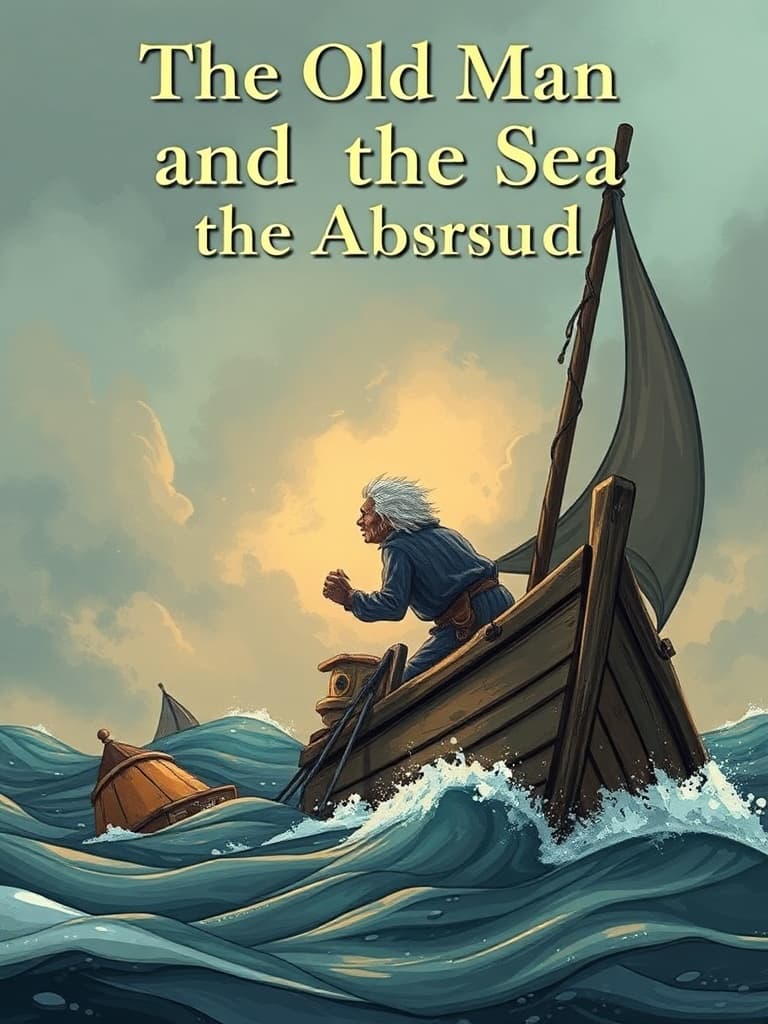
About this book
The Old Man and the Absurd
65
0
20
0
The Old Man and the Sea tells the story of Santiago, an aging Cuban fisherman who has gone many days without catching a fish. Determined to prove his strength and dignity, he sails far into the sea and hooks a giant marlin. After an exhausting struggle, he catches the fish, but sharks attack and eat much of it before he can return home. The novel is often linked to the idea of the absurdthe conflict between humanity's search for meaning and a world that offers no guarantees of success. Santiago's struggle is heroic even though his achievement is largely lost in the end. The story suggests that value lies not only in victory but in courage, perseverance, and maintaining dignity in the face of inevitable setbacks. Key themes: perseverance, human dignity, struggle, isolation, hope, and the search for meaning in an indifferent world.
Chapters
- 1The Unsinkable Optimist and the Empty NetSantiago, the village's eternally optimistic but comically unlucky fisherman, faces another day of empty nets. His neighbors tease him relentlessly, and even the children mock his peculiar fishing methods. He vows to break this absurd streak.
- 2Sailing Beyond the Bounds of Reason (and Bait)Fueled by an almost delusional hope and a questionable map, Santiago sails further than anyone dares. He's convinced a legendary fish awaits, armed with more faith than actual provisions, much to the amusement of the sea.
- 3The Great Fishy StandoffSantiago hooks something colossal. The ensuing battle is less epic struggle, more a ridiculous tug-of-war. The fish, clearly unimpressed, seems to be winning, while Santiago mutters existential complaints to the vast ocean.
- 4A Herculean (and Hilarious) CatchAfter an absurdly long fight, Santiago finally hauls in the gigantic marlin. Exhausted but triumphant, he beams with pride, possibly mistaking spray for tears of joy. It's a moment of pure, albeit weary, glory.
- 5The Buffet of Doom ApproachesAs Santiago proudly sails home, a surprisingly organized fleet of sharks appears. They view the marlin not as a trophy, but as an all-you-can-eat seafood extravaganza, descending with alarming efficiency.
- 6Skepticism Meets SkeletonSantiago returns with little more than a skeletal frame of his prize. The villagers, initially in awe, erupt in a mixture of pity and outright laughter at the sheer absurdity of his grand, yet ruined, endeavor.
- 7The Cycle of Absurdity ContinuesDespite the devastating loss, Santiago, with a defiant shrug and a knowing wink, declares his intention to fish again tomorrow. His unwavering, comical optimism sets the stage for another absurd quest.
- 8Manolin's Secret Smuggled SardinesManolin, forbidden to fish with Santiago, secretly watches. He sneaks Santiago extra food and supplies, his compassion battling his parents' orders. He worries for the old man's well-being.
- 9Whispers of the MarlinSantiago confides in his catch, believing the marlin communicates with him. He misinterprets its struggles as sage advice, further highlighting his unique, and slightly mad, perspective.
- 10The Village Gossip MillThe other fishermen discuss Santiago's 'legendary' catch and subsequent loss. Their conversations are laced with a mix of amusement, grudging respect, and outright disbelief at his persistent, absurd endeavors.
- 11A Shark's-Eye View of the FeastThe sharks, depicted with comical efficiency, coordinate their attack. Their 'buffet leader' directs the feeding frenzy, emphasizing the indifferent, almost bureaucratic nature of nature's cruelty.
- 12Santiago's Internal Monologue: Fish EditionSantiago's thoughts are filled with increasingly absurd justifications for the fish's actions and his own. He personifies the marlin, creating a comedic dialogue with his adversary in his mind.
- 13The Unseen Hand of Fate (or Bad Luck)A series of minor, yet frustrating, mishaps plague Santiago's journey. A loose rope, a sudden gust of wind – each small obstacle adds to the comedic tragedy of his situation.
- 14Manolin's Growing AdmirationManolin observes Santiago's struggle and eventual return. The boy's initial mockery fades, replaced by a quiet admiration for the old man's sheer, absurd resilience and dignity.
- 15The Marlin's Perspective: Boredom and EscapeA brief, humorous glimpse into the marlin's 'thoughts.' It's less a noble beast, more an ancient creature utterly exasperated by Santiago's persistent, and frankly annoying, pursuit.
- 16The Anatomy of a Dream (and a Skeleton)Santiago examines the meager remains of the marlin. He reflects on the grand dream it represented, contrasting it with the stark, comical reality of the skeleton left behind.
- 17The Village's Reaction: Laughter and PityThe villagers' reactions range from outright guffaws to sympathetic head-shaking. The absurdity of Santiago's situation is the main topic of conversation, a shared joke at his expense.
- 18Santiago's Unshakeable SpiritDespite the loss and ridicule, Santiago's spirit remains unbroken. He finds humor in his plight, his resilience a testament to the absurd human condition.
- 19The Promise of Tomorrow's AbsurdityManolin finds Santiago resting. The boy offers comfort and renewed loyalty, implicitly agreeing to join Santiago on his next, undoubtedly absurd, fishing adventure.
- 20The End... Or Just the Beginning?Santiago sleeps, dreaming of lions on the beach. The cycle of hope, struggle, and absurd loss is implied to continue, his quest for meaning an eternal, comical pursuit.
More Comedy stories
Browse all Comedy →- JJ's commune
Its Summer Vacation. Parents going on a trip. They make a arrangement for you to stay with Aunt JJ. She lives at a Commune, Commune is mostly women .It was left out , the Commune is for Nudists .18yr old , very corny, got a big dickPlan is to fuck as many of the women ovethe summerBeing there are more women than men , he may just get lucky , a lot.Especially after they find out about his big friend, they start and willing give
- When Dreams Outspend Reality
Bartholomew, a dreamer with perpetually empty pockets, fantasizes about a life of opulence, picturing himself as a wealthy magnate. His friends, grounded in reality, constantly mock his outlandish aspirations, reminding him of his current financial woes. The comedy arises from Bartholomew's unwavering optimism in the face of their skepticism and the absurd lengths he goes to in order to prove them wrong.
- Half-Asleep Wishes and Unexpected Guests
Again making a wish
- SUMMONED INTO ANOTHER WORLD WITH THE ENTIRE CLASS, BUT I DON'T WANT TO STAND OUT
A whole class of Tokyo high school is suddenly summoned into another world by the holy empire to defeat the demon lord and each student is granted different ability. Among them, there are several students who stand out as their ability is S rank. One of them is the Hikari gentle class president whose ability is divine power. Meanwhile, our mc, an ordinary student who prefer to be a background character, acquire an ability with max level. The story focus on his struggle on hiding his secret
- The Bare Midriff
The Shirt Phenomenon The Shirt Phenomenon is a natural phenomenon in which a person's shirt gradually rides upward until the hem settles beneath the chest, leaving the entire midriff exposed. It can affect many types of clothing, including T-shirts, knit tops, sweaters, polos, button-down shirts, and other garments. Ordinary shirts can ride up for many reasons, including movement, posture, friction, body shape, fabric behavior, and the way a garment fits. The Shirt Phenomenon is fundamentally different. Once a shirt begins riding up because of the phenomenon, it will continue moving upward no matter how many times the wearer pulls it back down. The person can temporarily restore the shirt to its normal position, but the fabric will eventually begin migrating upward again. The process is usually gradual. A shirt may shift only slightly at first, sometimes going unnoticed. As the phenomenon progresses, the fabric gathers and bunches around the torso before eventually settling beneath the chest. Once it reaches this position, the shirt generally remains there. The exposed midriff then becomes a permanent and highly visible part of the person's everyday appearance. The phenomenon does not appear to violate the ordinary laws of physics. The fabric still stretches, folds, bunches, and responds to movement in recognizable ways. What makes the Shirt Phenomenon unusual is the persistence behind those ordinary physical effects. No conventional adjustment, alteration, or attempt to keep the shirt down can permanently overcome it. The First Ride-Up The first persistent ride-up is one of the most important moments in the life of someone affected by the Shirt Phenomenon. In our world, a shirt riding up would normally be an insignificant annoyance. Someone would simply pull it back down and continue with whatever they were doing. In the world of the Shirt Phenomenon, however, the first ride-up can be the beginning of a profound and lifelong change. People often remember their first ride-up for the rest of their lives. It can happen during almost any ordinary activity—at home, at school, at work, while spending time with family, or while simply going about the day. At first, the person may assume that the shirt is merely behaving normally. After repeatedly pulling it down and watching it rise again, however, they realize that something different is happening. The first ride-up can bring a mixture of emotions. Some people initially feel embarrassed, frustrated, confused, or frightened by the loss of control over their clothing. Others become curious about what is happening. Families and friends often recognize what is happening before the affected person fully understands it. Over time, the first ride-up becomes an important personal milestone. Many people eventually celebrate its anniversary, known as a **Shirtiversary**. Shirtiversaries can be quiet personal observances or major family celebrations, depending on the individual and their culture. Becoming a Shirt-Up The term **Shirt-Up** refers to a person whose Shirt Phenomenon has progressed to the point where their shirt remains permanently gathered beneath the chest. Not every aspect of the Shirt Phenomenon is necessarily identical for every person. Some people experience the phenomenon without undergoing the full transformation associated with becoming a Shirt-Up. For others, the upward movement becomes the beginning of a much longer process that changes how they understand themselves and their place in the world. Becoming a Shirt-Up is therefore more than simply having one's shirt permanently ride up. It is a recognized life transition. Once someone becomes a Shirt-Up, the exposed midriff is no longer merely the result of an inconveniently positioned garment. It becomes a normal and enduring part of their appearance. Shirt-Ups eventually learn how to move through the world with this reality rather than constantly trying to fight it. The Twenty-Year Journey For Shirt-Ups whose transformation progresses through its complete cycle, becoming a Shirt-Up is a journey lasting approximately twenty years. The transformation is modeled after the stages of human childhood and adolescence. The person does not physically become younger, and they do not lose their memories or adult identity. Instead, their emotional and psychological experience passes through stages that resemble infancy, toddlerhood, childhood, and adolescence. The purpose of these stages is not to erase the person's previous life. Rather, they represent a period of profound adaptation and personal growth. The Baybow Phase The earliest stage is known as the **Baybow phase**. It corresponds broadly to infancy and is characterized by vulnerability, emotional openness, and a strong need for comfort and reassurance. A person entering this phase may find the sudden change in their relationship with clothing and privacy overwhelming. The Baybow phase is often the period in which family support becomes especially important. Loved ones help the newly transformed Shirt-Up adjust to their circumstances and understand that they are still the same person they were before the transformation began. The Toddler Phase The **Toddler phase** follows. This stage is characterized by curiosity, independence, experimentation, and stronger emotional reactions. Shirt-Ups begin developing their own ways of coping with their new reality. Like a toddler exploring an unfamiliar world, they learn through experience. They discover what clothing works best, how other people react, how to handle uncomfortable situations, and how to establish boundaries. The Toddler phase is often marked by a growing desire to make personal choices rather than simply relying on others. The Kid Phase The **Kid phase** represents a period of increasing self-awareness. Shirt-Ups become more confident and responsible and begin developing a stronger understanding of their identity. They are no longer simply reacting to the phenomenon; they are learning how to live with it. This is often when many Shirt-Ups begin looking back on the earlier stages of their journey and recognizing how much they have changed. ### The Teen Phase The **Teen phase** is the final stage of the transformation. It combines the openness and vulnerability associated with childhood with the independence, maturity, and self-reflection associated with adolescence. By this point, the Shirt-Up has generally developed a much stronger sense of identity and has learned how to live comfortably with the phenomenon. The completion of the Teen phase marks the end of the approximately twenty-year transformation. The person does not become a different individual afterward. Instead, they emerge having incorporated the entire experience into their understanding of themselves. Life After the Transformation Completion of the twenty-year journey does not mean that the Shirt Phenomenon disappears. The Shirt Phenomenon remains a lifelong part of the person's experience. The shirt continues to remain in its characteristic raised position, and the exposed midriff remains an ordinary part of the person's appearance. What changes is the person's relationship with it. Many Shirt-Ups eventually stop thinking of their exposed midriff as something that needs to be hidden. What may have initially felt embarrassing or frightening can become simply another fact of everyday life. Some people choose longer garments, specialized clothing, layered outfits, or deliberately designed cropped clothing. Others simply accept the raised-shirt appearance as their normal way of dressing. There is no single correct way to live as a Shirt-Up. Society and the Shirt Phenomenon Because the Shirt Phenomenon is a natural part of life in this world, society has developed around it. Families learn about the phenomenon from an early age. Schools, workplaces, public institutions, and communities have established ordinary ways of accommodating Shirt-Ups. Clothing manufacturers design garments with the phenomenon in mind, and fashion has developed styles specifically suited to people whose shirts remain raised. The phenomenon is therefore not treated as something bizarre or incomprehensible. It is a familiar part of society. At the same time, that does not mean every individual experiences it in exactly the same way. A person's first ride-up can still be emotionally significant, and different people develop different attitudes toward their transformation. Some struggle with it for years. Some adapt quickly. Some eventually take pride in it. Others simply regard it as another permanent fact of life. The important distinction is that Shirt-Ups are not expected to react in one particular way. Family and Generational Experience The Shirt Phenomenon also shapes family relationships. Because it can affect people across generations, parents, grandparents, siblings, spouses, and children may all have their own experiences with the phenomenon. Families often share stories about first ride-ups, Shirtiversaries, difficult periods of transformation, embarrassing moments, and the ways different relatives learned to adapt. This creates a culture in which the Shirt Phenomenon can become part of family history. A child's first ride-up may remind a parent of their own experience years earlier. A grandparent may have stories about how people treated Shirt-Ups in an earlier era. Brothers and sisters may compare their experiences, while families develop their own traditions surrounding Shirtiversaries and other milestones. The phenomenon therefore influences not only individuals but also the relationships between generations. The Meaning of Being a Shirt-Up The Shirt Phenomenon ultimately represents a loss of control that gradually becomes an opportunity for adaptation. At the beginning, the person may focus on the question, **"How do I make my shirt stay down?"** Eventually, the more important question becomes, **"How do I live comfortably with the fact that it won't?"** That shift in perspective is central to the Shirt-Up experience. The phenomenon cannot be defeated by repeatedly pulling the shirt down. It cannot simply be waited out. It becomes part of the person's life, and learning to live with it can involve vulnerability, frustration, humor, family support, independence, acceptance, and personal growth. The Shirt Phenomenon is therefore much more than a strange behavior of clothing. It is a natural phenomenon that can shape a person's experiences, relationships, identity, and understanding of themselves over the course of their entire life. What begins with a shirt slowly moving upward can become one of the defining journeys of a person's existence.
- PLAY DEAD
Characters: Alfie Danny Harry Bruce People die, they are in an abandoned ware house with anamatronics, mascots ect
Want to write a story like this?
Learn the craft in our free AI story generator, then draft your first chapter with an AI co-writer.
What stayed with you?
Read a chapter and leave the author a comment.
Reader notes
Loading reader notes…