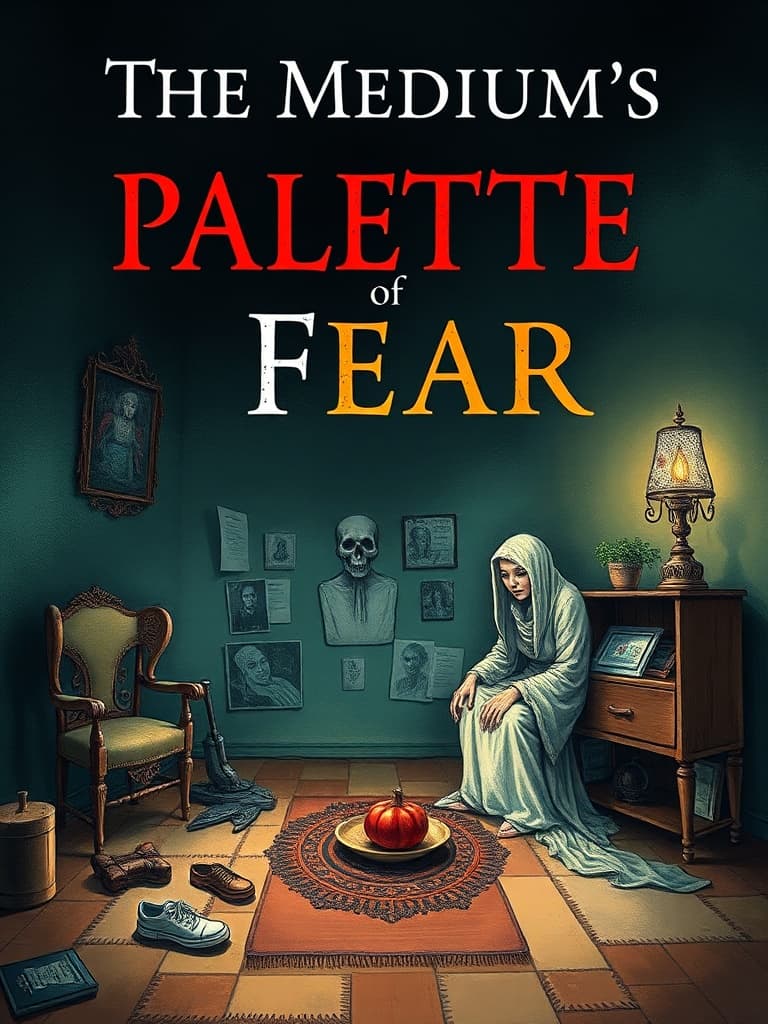
About this book
The Medium's Palette of Fear
15
0
20
0
I am writing this of Myself,by Myself about being able since I was a toddler in Izmir,Turkiye in 1963( when I had My very first experience) tithe present 2026.The only people who believed Me in Turkiye was My Governess Shakira and her Sephardic Jewish and Romani Gypsy Family and Friends and throughout My life until her death in 1974 was My beloved Nana,until the Autumn of 1976 I had teachers who understood what I was going through and they were very protective of Me..in the Autumn of 1976 I was sent away to a Catholic all girls school that was run by the Sisters of Mercy ,( who showed no mercy and loathed people like Me).for the rest of My life until I met My late husband Stanley and My husband of 16 years Rex who are extremely protective of Me and numerous First People who * have met throughout My life and numerous journeys and adventures who believed and believed and believe in Me. In Turkiye I could actually see people in the villages a bazaars who were from over one thousand years ago( especially in Ephesus) I could actually see what the ruins looked like when the were brand new.I could hear the horses coming and the calls of the Sultan is coming and the names of the rules from the Byzantine era and long before that period in time.Everywhwre that I visited ,visit ,have lived or live I can see ,feel,smell and gear the past and present.I can look at someone and see the crimes that they have done it will do ,the good deeds people have done or will do,if there will be children or not,when someone has it will get a horrible illness and when they will die and how. I have seen horrible things from long before Jesus was born and what will happen As a young child I would stare at the closet and could tell what someone was getting for a gift or present. What I can do and see is eternal and infinitum.Knowing and seeing these things makes it hard to experience the day,go to sleep and to meet people and try to have friends let alone in the past have successful friendships and relationships,and employment. What I am telling You is the truth,I don't care if You believe Me or not because I have witnesses who experienced and saw what I went through,I know what I saw and what happened and so has My Creator .
Chapters
- 1The Whispering Toddler of IzmirThis chapter will establish the narrator's earliest memories, focusing on her birth in Izmir, Turkiye, in 1963, and the initial manifestations of her extraordinary abilities. The narrative will delve into the sensory overload of a toddler's world, amplified by nascent psychic perceptions. The description of Izmir will be rich with historical layers, from the bustling modern city to the faint whispers of its ancient past, setting the stage for the narrator's unique connection to time. Scene 1: A baby's crib in a sun-drenched Izmir apartment. The narrator, as an infant, experiences a confusing jumble of sensations – the warmth of the sun, the scent of jasmine, but also fleeting, disembodied images and sounds that have no immediate context. These are not memories, but premonitions and echoes. She might 'see' the color of a gift her mother will receive months later, or 'hear' a snippet of a conversation that hasn't happened yet. The description will emphasize the overwhelming nature of these inputs for an undeveloped mind, leading to an unusual level of infant distress or intense focus. The core intent here is to show the raw, unfiltered genesis of her abilities. Scene 2: The narrator as a toddler, perhaps around age 2-3, interacting with her environment. She might point to an empty corner of the room and describe a person or an event that occurred there decades prior, or react with fear to an unseen 'shadow' that is actually a residual psychic imprint of a past tragedy. Her mother's confusion and growing concern will be depicted. The contrast between the mundane reality of a child's life and the narrator's extraordinary perceptions will be central. The setting of Izmir itself will be a character – a city steeped in history, where the past is almost palpable, providing fertile ground for these early experiences. The descriptions will focus on the sensory details that trigger these visions – the texture of an old wall, the specific slant of light on a mosaic, the scent of the sea. The emotional arc will be one of dawning realization for the narrator's family, moving from dismissal to unease. The chapter will highlight the narrator's inherent innocence and her lack of understanding of what is happening to her. She doesn't know these are 'visions' or 'abilities'; they are simply her reality. The chapter will end with a moment of profound unease for her parents, perhaps after she predicts a minor accident or reveals an intimate detail about a stranger, solidifying the idea that something is fundamentally different about their child. Continuity notes: This chapter must firmly establish the narrator's abilities as present from infancy, and the setting of Izmir as a place where these perceptions are particularly vivid due to its historical depth. The initial support system (or lack thereof) will be hinted at, with the introduction of Shakira and Nana to come in subsequent chapters. The overarching theme is the emergence of the extraordinary within the ordinary. The target length necessitates detailed descriptions of the sensory experience of these early visions, the confusion and emotional impact on the infant/toddler, and the environmental context of Izmir that seems to amplify these perceptions. The narrator's internal monologue, if possible for a toddler, would focus on fragmented impressions and questions. The fear and bewilderment she instills in her immediate family, even if unintentional, will be a key element. The descriptions of Izmir will weave in elements of its layered history, hinting at the ancient ruins and bustling bazaars that will become significant later. The chapter’s hook will be the dawning realization of her family that this is not typical childhood imagination, setting the stage for their subsequent reactions and the search for understanding. The very first experience described will be tied to a specific, mundane object or event, making the supernatural intrusion all the more jarring. The description of the narrator's internal state will be a challenge, translating the overwhelming sensory input into a coherent, albeit fragmented, experience from a toddler's perspective. The inclusion of the year 1963 anchors the narrative firmly in a specific historical and cultural context. The narrator's inherent inability to articulate these experiences fully will be a recurring motif, making her reliance on others for interpretation crucial. The narrative will emphasize the 'seeing' aspect of her abilities – seeing through time, seeing hidden truths, seeing potential futures. The descriptions of her physical reactions to these visions – a startled cry, wide eyes, a sudden stillness – will be vital in conveying their impact. The chapter will conclude with a sense of isolation beginning to form, even within the family unit, as her unique nature becomes increasingly apparent. The descriptions will be vivid, focusing on the juxtaposition of the vibrant, sun-drenched Turkish setting with the chilling, otherworldly experiences of the child. The sheer volume of sensory input from both the present and the past/future will be a key focus, creating a sense of overwhelming 'noise' for the young narrator. The chapter aims to immerse the reader in the narrator's disorienting early reality, establishing the foundation for her lifelong journey.
- 2Shakira's Gentle HandThis chapter focuses on the crucial early support provided by Governess Shakira and her extended family. It will detail how Shakira, recognizing the narrator's unique perceptions as something beyond typical childhood imagination, actively validates and protects her. The narrative will explore the cultural context of Shakira's Sephardic Jewish and Romani Gypsy background, suggesting a greater openness to the mystical and the unseen. Scene 1: Shakira observing the young narrator. The narrator might be babbling about 'people in old clothes' or reacting to an 'invisible' presence. Shakira, instead of dismissing it, responds with gentle curiosity and understanding. She might offer alternative explanations rooted in her cultural beliefs, framing the narrator's experiences not as frightening anomalies, but as connections to a larger spiritual reality. The setting will be the narrator's home in Izmir, emphasizing the warmth and safety Shakira provides, contrasting with the growing unease of other family members. Scene 2: Shakira interacting with her own family and friends. These interactions will showcase a community that embraces diversity and possesses a rich tapestry of traditions, including folklore, storytelling, and perhaps even elements of divination or spiritualism. Shakira will discreetly share her observations about the narrator, finding resonance and support among her loved ones. This community's acceptance will be pivotal, offering the narrator a vital sense of belonging and validation. The descriptions will highlight the vibrant cultural expressions of Shakira's community – music, food, shared stories, religious practices – all contributing to an atmosphere where the narrator's 'differences' are not inherently feared. The emotional arc will be one of growing confidence for the narrator, fueled by Shakira's unwavering belief and the acceptance she receives from this wider circle. The intent is to show that early validation is crucial in shaping how the narrator perceives her own abilities. The chapter will explore specific instances where Shakira interprets or shields the narrator from negative reactions. For example, if the narrator predicts something unsettling, Shakira might intervene to calm the situation or reframe the prediction in a less alarming way. The descriptions will emphasize the sensory details of Shakira's influence – the scent of her cooking, the sound of her voice, the feel of her embrace – all signifying safety and understanding. The chapter will delve into the specific beliefs of the Sephardic and Romani communities that might have informed Shakira's perspective, perhaps referencing ancestral spirits, the 'evil eye,' or intuitive knowledge passed down through generations. This provides a rich cultural backdrop for the narrator's supernatural experiences. The narrator's internal world will be depicted as one where she begins to understand that not everyone reacts with fear, and that her 'seeing' can be a source of wonder rather than just confusion. The chapter will highlight the contrast between the potential for fear and the reality of acceptance offered by Shakira and her community. The chapter will build towards a moment where the narrator feels truly seen and understood, perhaps performing a small act of precognition or empathy that Shakira and her family acknowledge with quiet reverence. Continuity notes: This chapter establishes Shakira as the narrator's first true confidante and protector, laying the groundwork for the importance of chosen family and supportive communities. The cultural elements introduced here will be subtly woven into later parts of the narrative, providing context for the narrator's broader understanding of the world's unseen dimensions. The narrator's reliance on Shakira's interpretation of her visions will be a key theme. The chapter's hook will be the profound sense of safety and belonging the narrator finds within Shakira's circle, a stark contrast to the potential isolation her abilities could bring. The target length will be achieved through detailed descriptions of the cultural milieu of Shakira's community, specific instances of validation, and the emotional impact of this acceptance on the young narrator. The narrative will emphasize the 'how' of Shakira's support – not just believing, but actively nurturing and shielding. The descriptions of the narrator's interactions within this community will portray a sense of shared understanding, even if the precise nature of her abilities remains a mystery to them. The chapter will subtly hint at the limitations of this support as the narrator grows older and encounters a wider world less accepting. The narrator's internal monologue will reflect a growing sense of self-worth, a direct result of being believed. The descriptions will focus on the sensory details of this supportive environment – the warmth of shared meals, the rhythm of communal prayers or songs, the comfort of familiar, accepting faces. The chapter aims to showcase the power of early validation in shaping an individual's identity, especially one with extraordinary gifts. The chapter will conclude with a powerful image of the narrator feeling secure and loved, a vital emotional anchor before she faces greater challenges. The descriptions will paint a vivid picture of Izmir through the lens of Shakira's community, blending the ancient and the modern with a spiritual undertone. The chapter will explore the narrator's developing ability to articulate her experiences, guided by Shakira's patient questioning and interpretation. The narrator's 'palette of fear' is not yet fully formed, but here, the 'palette of hope' begins to take shape, thanks to Shakira. The chapter will end with a clear understanding that Shakira is more than just a governess; she is a guardian of the narrator's burgeoning psychic self.
- 3Echoes in the BazaarThis chapter plunges the reader into the vibrant, chaotic atmosphere of Izmir's bazaars, where the narrator's ability to perceive historical layers becomes intensely pronounced. The sensory overload of the present – the smells of spices, the calls of vendors, the press of crowds – will be interwoven with vivid, superimposed visions of the past. The focus will be on the narrator's visceral experience of seeing people and scenes from over a thousand years ago, blurring the lines between different eras. Scene 1: The narrator, perhaps a young child guided by Shakira or Nana, enters a bustling bazaar. The immediate assault of present-day sights, sounds, and smells will be described in detail. Then, the shift occurs. Amidst the modern stalls, the narrator begins to see figures in ancient attire – Roman soldiers, Byzantine merchants, Ottoman citizens. She might see the very structures of the market as they were centuries ago, pristine and alive. The intent is to portray the overwhelming nature of these historical overlays, where the present is constantly being reinterpreted through the lens of the past. Scene 2: Specific encounters within the bazaar. The narrator might lock eyes with a figure from the past, experiencing a fleeting, intense connection – a shared emotion, a silent communication. She could 'hear' snippets of conversations in ancient languages or witness mini-dramas unfolding before her eyes. The descriptions will be rich with historical detail, drawing on the known history of Izmir (Smyrna) and its various epochs. The narrator might see the spectral presence of a Roman legion marching through the market square, or hear the cries of street vendors from the Byzantine era. The emotional tone will be a mixture of awe, confusion, and a growing sense of the vastness of time. The chapter will explore the narrator's struggle to reconcile these multiple realities. How does she navigate a physical space when she's simultaneously experiencing it in multiple historical contexts? The descriptions will focus on her physical reactions – a sudden stillness, a widening of the eyes, a whispered word that seems out of place. The role of Shakira or Nana will be to anchor her, to gently guide her back to the present, or to interpret what she is seeing in a way that is comprehensible and less frightening. They might point out a modern building and then recount its history, helping the narrator connect the spectral images to tangible facts. The chapter will highlight the narrator's ability to see not just static images, but dynamic, living history. She can 'hear the horses coming and the calls of the Sultan is coming,' experiencing the immediacy of past events. The descriptions will emphasize the contrast between the ancient and the modern, the ephemeral and the tangible. The sheer density of historical layers in a place like Izmir will be a key element, making it a potent catalyst for her abilities. The chapter will explore the narrator's burgeoning understanding that her sight extends far beyond her immediate surroundings and her own lifetime. The target length will be achieved through extensive sensory descriptions of the bazaar (both present and past), detailed historical vignettes superimposed onto the modern setting, and the narrator's internal struggle to process the overwhelming influx of information. The chapter's hook will be a particularly vivid and poignant encounter with a figure from the distant past, leaving the narrator profoundly affected and questioning her own place in the continuum of time. Continuity notes: This chapter reinforces the idea that the narrator's abilities are deeply connected to place, particularly places rich in history. The historical details mentioned should be accurate or plausible for the regions and eras depicted. The interactions with Shakira/Nana serve to ground the narrator and demonstrate the importance of interpretation and support. The 'echoes' are not just visual but auditory and emotional, emphasizing the multi-sensory nature of her perceptions. The descriptions will aim to evoke a sense of temporal dislocation, making the reader feel the narrator's confusion and wonder. The chapter will explore the narrator's developing vocabulary for describing her experiences, perhaps using metaphors drawn from the bazaar itself. The narrator's 'palette of fear' begins to gain new hues here – the fear of being lost in time, the fear of the sheer weight of history. The descriptions will focus on the textures, smells, and sounds that evoke both the bustling present and the spectral past. The chapter will showcase the narrator's nascent ability to 'read' the history of objects and places, not just people. The ending will leave the reader with a sense of the immense, perhaps daunting, scope of history that the narrator can access, setting the stage for her understanding of future events as well. The chapter will emphasize the overwhelming nature of the bazaar as a nexus of human activity across millennia, making it a potent amplifier for her abilities. The descriptions will highlight the specific historical periods relevant to Izmir, such as the Roman, Byzantine, and Ottoman eras, weaving them into the fabric of the modern market. The narrator's internal struggle to differentiate between past and present will be a central theme, leading to moments of disorientation and profound insight. The chapter's hook will be a moment where a figure from the past directly acknowledges the narrator, creating a chilling sense of cross-temporal connection.
- 4Nana's Unwavering LightThis chapter centers on the profound and enduring relationship between the narrator and her beloved Nana. Nana represents a consistent, unwavering source of love, understanding, and belief throughout the narrator's childhood and adolescence, serving as a vital emotional anchor. Her acceptance is unconditional, providing a safe harbor against the confusion and fear that often accompany the narrator's burgeoning abilities. Scene 1: Early childhood memories with Nana. The narrator, as a young child, experiences her first significant psychic events, and Nana is the one who doesn't dismiss them. Perhaps the narrator predicts Nana's arrival, or describes a past event Nana experienced but hadn't shared. Nana's reaction is one of gentle acceptance, perhaps attributing it to a special connection or intuition. The setting will be warm and domestic – Nana's home, filled with familiar comforts, perhaps the scent of traditional cooking or old books. This intimacy will be contrasted with the narrator's other experiences. Scene 2: Adolescence and Nana's continued support. As the narrator's abilities become more pronounced and potentially frightening (seeing future hardships, sensing danger), Nana remains her steadfast confidante. Nana listens patiently, validates her feelings, and offers comfort without judgment. She might share stories or wisdom that help the narrator contextualize her experiences, perhaps drawing from her own life or family lore that hints at similar sensitivities. The descriptions will focus on the emotional depth of their bond – shared secrets, quiet conversations, the reassurance of Nana's presence. Nana's belief is not just passive; it is an active force that empowers the narrator. Scene 3: Nana's influence on the narrator's self-perception. Through Nana's unwavering acceptance, the narrator begins to internalize the idea that her abilities are not inherently bad or a sign of illness. Nana's love helps foster a sense of self-worth, even when the wider world is confusing or hostile. The chapter will explore how Nana's wisdom might have subtly guided the narrator's understanding of her 'palette,' perhaps framing the 'fear' aspect as a necessary sensitivity to the darker aspects of existence, balanced by the potential for good. The descriptions will emphasize Nana's character – her kindness, her resilience, her perhaps unspoken understanding of the spiritual world. Her presence is a source of light and warmth, a stark contrast to the 'cold embrace' mentioned in relation to the later boarding school experience. The emotional arc will be one of deepening trust and emotional security for the narrator, highlighting the profound impact of consistent, loving validation. The chapter will explore specific instances where Nana's insight or comfort was particularly crucial, perhaps during a moment of intense fear or confusion triggered by a particularly disturbing vision. The chapter's hook will be Nana's passing, marking the end of an era of consistent, personal support and leaving the narrator to navigate her abilities with a profound sense of loss, but also with the internalized strength Nana instilled. Continuity notes: Nana's role as a primary source of belief and emotional support is critical. Her death in 1974 marks a significant turning point, emphasizing the fragility of such support systems and the narrator's increasing need to rely on her own inner strength and the belief of others she will encounter later. The descriptions of Nana and her home will evoke a sense of timeless comfort and wisdom. The chapter needs to demonstrate *how* Nana provided support, not just that she did. This could involve specific advice, comforting rituals, or simply her unwavering presence. The narrator's internal monologue will reflect her deep love and reliance on Nana, and later, her grief. The 'palette of fear' is tempered by Nana's love, creating a more balanced perception of her abilities. The target length will be achieved through detailed characterization of Nana, rich descriptions of their shared domestic life, and specific anecdotes illustrating the depth of their bond and Nana's validating influence. The chapter will explore the concept of ancestral wisdom or intuitive knowledge potentially passed down through Nana's lineage, subtly connecting her to the broader theme of inherited sensitivities. The descriptions will focus on the sensory details of Nana's presence – her scent, the texture of her clothing, the sound of her voice – all contributing to the feeling of safety and unconditional love. The narrator's ability to see the past and future will be shown interacting with Nana's grounded wisdom, creating moments where Nana helps her interpret or process these visions. The chapter aims to establish Nana as the emotional bedrock of the narrator's childhood, her memory a source of strength for the future. The chapter will conclude with Nana's final words or a poignant memory, emphasizing the enduring impact of her love and belief, even in her absence. The descriptions will highlight the contrast between Nana's warm acceptance and the narrator's growing awareness of a world that might not understand her. The chapter will delve into the narrator's understanding of Nana's own life experiences, perhaps hinting that Nana herself possessed or understood sensitivities similar to the narrator's, though perhaps on a lesser scale. The narrator's 'palette of fear' is painted with softer, more hopeful strokes during this period, thanks to Nana's light.
- 5The Ruins SpeakThis chapter vividly portrays the narrator's experiences at ancient historical sites, particularly Ephesus, where her ability to perceive the past is amplified by the tangible remnants of bygone civilizations. The narrative will move beyond mere historical observation to a deeply immersive, sensory experience of history unfolding. The descriptions will contrast the present-day ruins with the narrator's visions of their pristine, vibrant past, incorporating sounds, smells, and even the palpable emotions of those who lived there. Scene 1: Arrival at Ephesus. The narrator, perhaps accompanied by Nana or Shakira, approaches the ancient city. The initial impression will be of majestic, yet weathered, ruins. The descriptions will focus on the scale and grandeur of the remaining structures – the Library of Celsus, the Great Theatre, the temples. As she walks among them, the atmospheric and sensory details of the present will begin to intertwine with spectral overlays. Scene 2: Immersive historical visions. The narrator 'sees' Ephesus as it once was – bustling streets filled with people in togas, merchants hawking their wares, the sounds of chariots, the echoes of orators in the theatre. She might witness specific historical events, not as a detached observer, but as if she is partially present. The descriptions will be rich with historical accuracy, depicting daily life, architectural details, and the social fabric of Roman and Greek Ephesus. The narrator might feel the heat of the ancient sun, smell the incense from temples, or hear the roar of crowds. The intent is to convey the feeling of time collapsing, of the past being as real as the present. Scene 3: The narrator's emotional response. This experience is both exhilarating and overwhelming. The sheer volume of sensory input and the intensity of the historical 'echoes' can be disorienting. She might feel a profound connection to the people of the past, experiencing their joys, sorrows, and struggles. The 'palette of fear' gains a new dimension here, reflecting the weight of witnessing so much history, including its violence and suffering. The descriptions will focus on how these visions impact her, perhaps causing her to recoil, gasp, or become unusually still. The role of her companions will be crucial in grounding her, helping her process these overwhelming experiences. They might point out a specific carving and then tell her its story, helping her connect the spectral vision to a tangible artifact. The chapter will explore the narrator's dawning realization that her ability is not limited to predicting the future or sensing contemporary emotions, but extends to fully immersing herself in historical realities. The descriptions will emphasize the sensory details that trigger these visions – the texture of ancient stone, the patterns of light filtering through ruined archways, the specific acoustics of the theatre. The target length will be achieved through detailed descriptions of Ephesus (both ruins and imagined past), vivid vignettes of historical life, and the narrator's internal processing of these intense, multi-layered experiences. The chapter's hook will be a profound, personal connection with a specific figure or event from Ephesus's past, leaving the narrator with a lingering sense of shared humanity across millennia. Continuity notes: This chapter strongly links the narrator's abilities to historical sites, suggesting a resonance between her psychic energy and the lingering imprints of the past. The historical details should be accurate and evocative. The contrast between the preserved ruins and the vibrant, imagined past is key. The narrator's ability to 'hear' the past is as important as seeing it. The descriptions will focus on the transformative power of these historical immersions, showing how they shape the narrator's understanding of time and existence. The narrator's internal monologue will grapple with the concept of eternity and the ephemeral nature of individual lives against the backdrop of enduring civilizations. The chapter will explore the narrator's developing capacity to 'read' the history embedded in objects and locations, not just people. The 'palette of fear' is enriched by the knowledge of historical suffering and the cyclical nature of human experience. The descriptions will focus on the sensory details that evoke both the grandeur and the eventual decay of ancient civilizations. The chapter aims to illustrate the narrator's unique perspective on history, not as a collection of facts, but as a living, breathing entity she can access. The chapter will conclude with the narrator carrying away a piece of Ephesus's past within her, a tangible echo that continues to resonate long after she has left the site. The descriptions will highlight the profound difference between reading history books and experiencing history firsthand through psychic means. The chapter will delve into the narrator's ability to perceive not just grand events, but the intimate, everyday lives of people from antiquity, making the past feel deeply personal. The narrator's 'palette of fear' now includes the fear of history's weight and the repetition of human folly.
- 6Foreshadowing the UnseenThis chapter marks a significant escalation in the narrator's abilities, focusing on her capacity to perceive future events, particularly negative ones such as crimes and illnesses. The narrative will explore the emotional and psychological toll this foresight takes, contrasting it with the innocence of childhood and the budding understanding of her own unique nature. The descriptions will detail specific instances of precognition, emphasizing the clarity and inevitability with which these future events appear to her. Scene 1: Early premonitions of negative events. The narrator, as a child, begins to experience disturbing visions of things that haven't happened yet. This might manifest as a sudden fear of a particular person who will later commit a crime, or a chilling premonition of an illness striking a loved one. The descriptions will focus on the unsettling nature of these visions – perhaps they are fragmented, symbolic, or overwhelmingly vivid, but always carry a sense of impending doom. The setting could be anywhere mundane – her home, a schoolyard, a public place – making the intrusion of the future all the more jarring. Scene 2: The burden of knowledge. The narrator struggles with the ethical and emotional implications of her foresight. Should she try to warn people? Would anyone believe her? The fear of being dismissed or labeled as disturbed adds another layer to her distress. The descriptions will explore her internal conflict – the desire to intervene versus the paralyzing fear of the consequences, both for herself and for the accuracy of her visions. The chapter will highlight specific examples of her foreknowledge, such as seeing a car accident before it happens, or sensing a specific illness developing in someone she knows. The intent is to demonstrate the oppressive weight of this knowledge, making everyday interactions fraught with anxiety. Scene 3: The impact on relationships and self-perception. This ability makes forming genuine connections difficult. How can she be truly present with someone when she sees potential future pain or wrongdoing associated with them? The descriptions will explore her growing isolation and the difficulty in maintaining friendships or even casual acquaintances. The 'palette of fear' is now dominated by the darker hues of future suffering. The chapter will explore the narrator's attempts to articulate these premonitions, perhaps to Nana or Shakira, and their reactions – concern, attempts to rationalize, or quiet acknowledgement that suggests they understand more than they let on. The focus will be on the subjective experience of seeing the future as an immutable, often terrifying, certainty. The descriptions will emphasize the sensory details associated with these premonitions – a cold dread, a metallic taste, a specific color associated with the event. The target length will be achieved through detailed accounts of specific precognitive visions, the narrator's internal struggles with this knowledge, and the emotional impact on her developing psyche. The chapter's hook will be a particularly potent and disturbing premonition that the narrator cannot ignore, forcing her to confront the reality of her abilities and the potential consequences of her foresight. Continuity notes: This chapter marks a shift from primarily seeing the past to actively perceiving the future, introducing a significant ethical and emotional burden. The specific details of the premonitions should be memorable and impactful. The reactions of Nana and Shakira are crucial in showing the narrator that she is not entirely alone in her understanding, even if they can't fully alleviate her burden. The narrator's internal struggle with 'should I or shouldn't I' regarding warnings is a key theme. The descriptions will focus on the contrast between the narrator's innocent exterior and the heavy knowledge she carries within. The narrator's 'palette of fear' expands to include the dread of inevitable future suffering, both personal and witnessed. The chapter will explore the narrator's developing understanding of causality and destiny as perceived through her visions. The descriptions will emphasize the sensory details that differentiate these future visions from past echoes – perhaps a heightened sense of urgency or a more visceral emotional response. The chapter aims to illustrate the profound loneliness that comes with knowing things others cannot, especially when those things involve pain or loss. The chapter will conclude with the narrator grappling with a specific, unavoidable future event that she foresees, setting up a potential conflict or a moment of desperate action. The descriptions will highlight the narrator's increasing awareness of the darker aspects of human nature and destiny, painting a stark picture of her 'palette of fear'. The chapter will delve into the narrator's attempts to find patterns or meaning in the future events she sees, trying to make sense of the chaos and suffering. The narrator's 'palette of fear' is now deeply saturated with the colors of impending danger and sorrow.
- 7A Gift or a Curse?This chapter delves into the narrator's internal struggle with the overwhelming nature of her abilities, exploring the profound difficulty she faces in navigating everyday life, forming relationships, and finding peace. The constant influx of past echoes, future premonitions, and the unfiltered truths of human nature creates a psychic cacophony that makes normalcy seem unattainable. The descriptions will focus on the subjective experience of this burden, highlighting the exhaustion, anxiety, and isolation it engenders. Scene 1: The daily struggle for normalcy. The narrator attempts to engage in ordinary activities – going to school, playing with friends, even simple tasks like grocery shopping – but her abilities constantly intrude. The descriptions will portray the sensory overload: seeing the past layered over the present, hearing snippets of conversations from different eras, sensing the hidden emotions and intentions of those around her. This makes concentration difficult, social interaction exhausting, and simple pleasures elusive. The intent is to convey the profound disconnect between her inner world and the external reality others experience. Scene 2: The impact on relationships and friendships. The narrator finds it incredibly hard to form and maintain meaningful connections. Seeing people's potential for good and bad deeds, their future illnesses, or their hidden secrets creates a barrier. Trust becomes a complex issue when she already 'knows' so much. The descriptions will illustrate failed attempts at friendship – moments where she inadvertently reveals too much, or where the weight of her knowledge makes her withdrawn and distant. The 'palette of fear' here is the fear of intimacy, the fear of connection, the fear of hurting others or being hurt by them due to her unique sight. Scene 3: The struggle for peace and rest. Sleep offers little respite, as her dreams can be as vivid and unsettling as her waking visions. The constant barrage of psychic information makes relaxation and mental quietude a distant dream. The descriptions will portray her exhaustion, her longing for silence, and her attempts to cope – perhaps through seeking solitude or developing mental 'filters,' however imperfect. The chapter will explore the narrator's questioning of her own sanity and the nature of her abilities. Is this a gift, as Nana and Shakira suggest, or a curse that isolates her and prevents her from living a fulfilling life? The descriptions will emphasize the emotional toll – the anxiety, the depression, the profound loneliness. The target length will be achieved through detailed descriptions of the narrator's daily struggles, specific examples of social awkwardness or isolation caused by her abilities, and her internal monologue grappling with the existential weight of her experiences. The chapter's hook will be a moment of profound despair, where the narrator questions whether she can continue to endure the constant onslaught of psychic information and the resulting isolation. Continuity notes: This chapter solidifies the narrator's internal conflict regarding her abilities. It establishes the extreme difficulty she faces in daily life and relationships. The contrast between her inner turmoil and the outward appearance of normalcy will be a key theme. The narrator's reliance on Nana and Shakira for emotional grounding will be highlighted, even as she faces the prospect of their eventual absence. The descriptions will focus on the subjective, overwhelming experience of psychic overload. The narrator's 'palette of fear' is now deeply ingrained, characterized by anxiety, isolation, and a sense of being fundamentally different. The chapter will explore the narrator's developing coping mechanisms, however ineffective they may seem. The descriptions will emphasize the sensory details that contribute to her overwhelm – the cacophony of voices, the disorienting visual overlays, the intense emotional undercurrents she perceives. The chapter aims to generate empathy for the narrator's difficult situation, making her quest for acceptance all the more compelling. The chapter will conclude with a moment of quiet desperation, where the narrator longs for an escape from her own mind, reinforcing the 'curse' aspect of her abilities. The descriptions will highlight the narrator's yearning for a simple, unburdened existence, a stark contrast to the complex reality she inhabits. The chapter will delve into the narrator's attempts to compartmentalize her experiences, to 'turn off' her abilities, which proves to be an impossible task, further fueling her despair. The narrator's 'palette of fear' is now a complex tapestry of dread, loneliness, and the crushing weight of unwanted knowledge.
- 8The Sisters' Cold EmbraceThis chapter details the narrator's traumatic experience at a Catholic all-girls boarding school run by the Sisters of Mercy. It marks a significant turning point where her unique abilities are met not with understanding or protection, but with fear, judgment, and outright hostility. The environment is designed to suppress individuality and enforce rigid conformity, making it particularly challenging for someone with the narrator's sensitivities. Scene 1: Arrival at the convent school. The narrator, perhaps in her early teens, is left at the imposing institution. The descriptions will focus on the stark, austere atmosphere – the cold stone walls, the echoing corridors, the disciplined routines, and the pervasive sense of piety mixed with severity. The contrast with the warmth of her home and Nana's presence will be stark. The initial interactions with the Sisters will be formal and unwelcoming. Scene 2: Encounters with the Sisters of Mercy. These nuns, embodying their order's name ironically, show no mercy. They are depicted as rigid, fearful, and deeply suspicious of anything that deviates from their strict worldview. The narrator's sensitivity, her quietness, or perhaps an accidental display of her abilities (a seemingly intuitive answer, a reaction to an unseen presence) will immediately mark her as 'different' and potentially 'troublesome.' The descriptions will focus on their stern expressions, their judgmental pronouncements, and the palpable aura of disapproval that surrounds them. Scene 3: The school's oppressive environment. The daily routine is demanding, with a focus on prayer, study, and discipline. There is little room for emotional expression or individual exploration. The narrator's attempts to navigate this environment are hampered by her heightened sensitivities, which are further exacerbated by the nuns' negative energy. Her 'palette of fear' expands to include the fear of punishment, the fear of spiritual condemnation, and the fear of being utterly alone in her experience, with no allies in sight. The chapter will explore specific instances of harsh discipline or psychological manipulation employed by the Sisters. They might interpret her visions or intuitions as demonic influence or a sign of sinful pride. The descriptions will emphasize the isolation – the lack of peer support, the constant scrutiny, and the absence of any genuine warmth or understanding. The intent is to portray this institution as a place that actively crushes the spirit, especially one as sensitive as the narrator's. The target length will be achieved through detailed descriptions of the convent school's oppressive atmosphere, specific interactions with the judgmental Sisters, and the narrator's internal experience of fear, isolation, and despair within this environment. The chapter's hook will be a particularly harsh confrontation or punishment meted out by the Sisters, leaving the narrator feeling utterly broken and stripped of her sense of self. Continuity notes: This chapter introduces a significant antagonistic force that directly opposes the narrator's nature. The Sisters of Mercy represent a societal force that fears and condemns what it doesn't understand. The contrast between this environment and the earlier support from Shakira and Nana is crucial. The narrator's resilience will be tested to its limits here. The descriptions will focus on the psychological impact of religious dogma intertwined with fear and judgment. The narrator's 'palette of fear' is now tinged with the cold, unforgiving hues of religious condemnation. The chapter will explore the narrator's attempts to suppress her abilities to avoid detection and punishment, leading to internal conflict and emotional repression. The descriptions will emphasize the sensory details of the convent – the scent of incense and old wax, the sound of chanting and echoing footsteps, the chill in the air – all contributing to a feeling of unease and dread. The chapter aims to highlight the damaging effects of judgment and the lack of empathy, particularly on a vulnerable individual. The chapter will conclude with the narrator feeling deeply scarred by her experience, questioning the very nature of goodness and mercy, and vowing to herself to never again be subjected to such cruelty. The descriptions will highlight the narrator's growing disillusionment and the hardening of her exterior as a defense mechanism. The chapter will delve into the narrator's attempts to find solace in forbidden places or through secret acts of defiance, only to be met with further repression. The narrator's 'palette of fear' is now dominated by the stark, black-and-white judgment of the nuns.
- 9Ostracized and MisunderstoodFollowing the previous chapter, this installment focuses on the deepening isolation and ostracization the narrator experiences within the convent school environment. Her inherent sensitivities and any unwitting displays of her abilities are misinterpreted by the nuns as signs of deviance, demonic influence, or profound mental instability. The chapter will explore the psychological warfare waged against her, the constant scrutiny, and the profound loneliness that results from being fundamentally misunderstood and feared by those in authority. Scene 1: The nuns' perception of the narrator. The Sisters view her as a problem child, perhaps 'possessed' or simply defiant. Any quiet introspection is seen as sullenness, any intuitive insight as trickery, and any reaction to unseen phenomena as hysteria. The descriptions will focus on the nuns' judgmental gaze, their whispered conversations about her, and the subtle (or not-so-subtle) ways they isolate her from her peers. They actively foster an atmosphere where other students are encouraged to fear or avoid her. Scene 2: The narrator's internal world under siege. The constant negativity and judgment from the Sisters take a heavy toll. She becomes more withdrawn, trying to suppress any outward sign of her abilities to avoid further punishment or scrutiny. This internal repression, however, only exacerbates her anxiety and sadness. The descriptions will delve into her feelings of hopelessness, her longing for escape, and her internal battles to maintain her sense of self against the relentless onslaught of negative reinforcement. Her 'palette of fear' is now dominated by the stark, unforgiving colors of condemnation and the chilling dread of spiritual judgment. Scene 3: Peer isolation. The nuns' influence extends to the other students, who are likely taught to view the narrator with suspicion or fear. Any attempts she makes to connect are rebuffed, reinforcing her isolation. She becomes the 'other,' the pariah, whose presence is unsettling. The descriptions will portray her sitting alone during meals, being excluded from games, and enduring the whispers and stares of her classmates. The chapter will explore specific incidents where her abilities are misinterpreted with dire consequences – perhaps a seemingly prophetic statement is twisted into a curse, or a moment of empathy is seen as manipulative. The intent is to show how a nurturing environment can be perverted into one of profound psychological distress when fear and dogma take precedence over compassion. The target length will be achieved through detailed descriptions of the narrator's social isolation, the psychological impact of the nuns' judgment, and specific examples of how her abilities are consistently misunderstood and punished. The chapter's hook will be a moment where the narrator experiences a profound breakdown or a desperate act of defiance born from her unbearable isolation and misunderstanding, leaving her vulnerable and exposed. Continuity notes: This chapter deepens the conflict introduced in the previous one, focusing on the psychological and social consequences of the narrator's ostracization. The portrayal of the nuns' fear and judgment should be consistent with their characterization as antagonistic forces. The narrator's resilience is being severely tested, and the seeds of her later strength are being forged in this crucible of suffering. The descriptions will emphasize the insidious nature of psychological abuse and the devastating impact of being misunderstood. The narrator's 'palette of fear' is now a complex, dark shade of despair, tinged with the cold blue of isolation. The chapter will explore the narrator's attempts to find hidden pockets of solace or understanding, however fleeting, within the oppressive environment. The descriptions will emphasize the sensory details that contribute to her feeling of being trapped – the unchanging grey of the convent walls, the monotonous rhythm of the school day, the oppressive silence during study periods. The chapter aims to illustrate the profound damage that can be inflicted by environments that punish perceived deviance rather than seeking to understand it. The chapter will conclude with the narrator feeling utterly alone and invisible, her spirit battered but not entirely extinguished, hinting at a future where she will reclaim her voice and her truth. The descriptions will highlight the narrator's growing internal fortitude, a quiet strength born from enduring such hardship. The chapter will delve into the narrator's attempts to create an internal sanctuary, a mental space where the nuns' judgments cannot reach her, further developing her inner world as a refuge. The narrator's 'palette of fear' is now a deep, almost suffocating indigo of despair and isolation.
- 10Teachers of CompassionAmidst the oppressive atmosphere of the Sisters of Mercy school, this chapter introduces a glimmer of hope in the form of a few understanding teachers. These individuals, perhaps lay teachers or more compassionate nuns, recognize the narrator's struggles and the underlying reasons for her behavior. They offer her protection, guidance, and a much-needed dose of empathy, acting as crucial allies in an otherwise hostile environment. Scene 1: The first encounter with a compassionate teacher. The narrator might be in trouble, perhaps exhibiting signs of distress or unusual behavior, when a teacher intervenes. This teacher observes the narrator with a perceptive eye, seeing beyond the surface judgment of the Sisters. They might offer a quiet word of encouragement, a sympathetic glance, or a moment of personal attention that signifies they see her pain. The setting could be a classroom, a library, or a quiet corner of the school grounds, providing a temporary sanctuary. Scene 2: Subtle acts of protection and understanding. These teachers, operating within the constraints of the convent's strict rules, find subtle ways to support the narrator. They might shield her from the harshest judgments of the Sisters, offer extra help with her studies to boost her confidence, or simply provide a listening ear during moments of distress. The descriptions will focus on the quiet dignity and courage of these individuals, who risk disapproval themselves by showing kindness to a perceived outcast. Scene 3: Validation of the narrator's experiences (partial). While these teachers may not fully comprehend the supernatural nature of the narrator's abilities, they recognize her sensitivity and her genuine distress. They might validate her feelings, acknowledge that she is going through something difficult, and encourage her to express herself, albeit cautiously. This partial validation is incredibly significant, offering the narrator a respite from the constant feeling of being wrong or evil. It helps her maintain a fragile sense of self-worth. The 'palette of fear' gains a new, lighter shade here – the pale blue of hope, the soft green of nascent understanding. The chapter will explore the narrator's growing trust in these individuals and how their support helps her endure the harshness of the school. The descriptions will emphasize the contrast between the coldness of the Sisters and the warmth offered by these teachers. The target length will be achieved through detailed characterization of these compassionate teachers, specific examples of their supportive actions, and the narrator's emotional response to this newfound, albeit limited, kindness. The chapter's hook will be a moment where one of these teachers offers a piece of advice or insight that resonates deeply with the narrator, helping her to begin processing her abilities in a healthier way, even within the restrictive environment. Continuity notes: This chapter introduces crucial allies who provide a bridge between the narrator's past support systems and future ones. Their presence demonstrates that even in the most hostile environments, empathy can exist. The narrator's ability to connect with kind souls, despite her isolation, is a testament to her spirit. The descriptions will focus on the quiet strength found in empathy and understanding. The narrator's 'palette of fear' is now interspersed with delicate strokes of hope and acceptance, provided by these few compassionate souls. The chapter will explore the narrator's developing ability to discern genuine kindness from superficial pleasantries, a skill honed by her experiences. The descriptions will emphasize the sensory details that signify safety and comfort provided by these teachers – a gentle touch, a reassuring smile, a quiet corner for conversation. The chapter aims to show that even small acts of kindness can have a profound impact on someone who feels completely alone. The chapter will conclude with the narrator feeling a renewed sense of hope, knowing that not everyone will judge her, and that there are people in the world who possess genuine compassion. The descriptions will highlight the narrator's growing understanding that her experiences, while difficult, do not define her as 'bad' in the eyes of all. The chapter will delve into the narrator's tentative attempts to confide in these teachers, perhaps hinting at her abilities in veiled terms, and their gentle, non-judgmental responses. The narrator's 'palette of fear' is beginning to be illuminated by the soft glow of these compassionate interactions.
- 11Stanley's HavenThis chapter marks a significant turning point in the narrator's life as she meets Stanley, her late husband. This relationship represents a profound shift from the isolation and judgment she experienced previously to one of deep love, acceptance, and protection. Stanley's unwavering belief in her, despite the extraordinary nature of her abilities, provides a haven where she can finally begin to feel safe and understood. Scene 1: The initial meeting. The narrator, likely an adult now, encounters Stanley. The circumstances of their meeting will be described, highlighting the initial spark of connection. The descriptions will focus on Stanley's immediate perception of the narrator – not as someone strange or broken, but as someone unique and perhaps vulnerable, whom he feels drawn to protect. His demeanor will be warm, open, and non-judgmental, a stark contrast to the fear and suspicion she has often encountered. Scene 2: Developing intimacy and acceptance. As their relationship deepens, Stanley learns about the narrator's abilities. Instead of recoiling, he embraces this aspect of her. He listens intently to her stories, validates her experiences, and offers unwavering support. The descriptions will showcase their shared life, filled with love, trust, and mutual respect. Stanley becomes her confidante, her anchor, and her fiercest protector. He doesn't necessarily need to understand the 'how' of her abilities, but he accepts the 'what' and loves her unconditionally because of it, not in spite of it. Scene 3: Stanley's protective nature. The narrator's 'palette of fear' begins to transform. While the awareness of potential dangers and past traumas remains, Stanley's presence provides a buffer. He actively shields her from negativity and confronts those who might seek to exploit or harm her. The descriptions will illustrate specific instances where Stanley's protective instincts come into play, reinforcing her sense of security. His love acts as a powerful antidote to the years of isolation and misunderstanding. The chapter will explore the profound emotional healing that occurs within this relationship. For the first time, the narrator experiences love that sees her whole self – including her extraordinary 'palette' – and cherishes it. The target length will be achieved through detailed characterization of Stanley, rich descriptions of their developing relationship, and specific anecdotes illustrating his acceptance and protective nature. The chapter's hook will be a moment of profound peace and belonging the narrator finds with Stanley, a feeling she has likely never experienced before, solidifying his role as her haven. Continuity notes: This chapter introduces a pivotal relationship that validates the narrator's core desire for acceptance and love. Stanley's unwavering belief is a crucial step in her journey towards embracing her abilities. His role as a protector sets a precedent for other supportive figures in her life. The descriptions will focus on the transformative power of unconditional love. The narrator's 'palette of fear' is now softened by the warm, steady hues of Stanley's love and acceptance. The chapter will explore the narrator's growing confidence and self-esteem as a result of Stanley's unwavering support. The descriptions will emphasize the sensory details that signify comfort and safety within their relationship – shared laughter, gentle touches, the feeling of being truly seen. The chapter aims to illustrate that love can transcend the extraordinary and find strength in acceptance. The chapter will conclude with a powerful affirmation of their bond, with the narrator feeling truly home and secure in Stanley's presence. The descriptions will highlight the narrator's relief at finding someone who not only believes her but cherishes her for who she is, abilities and all. The chapter will delve into how Stanley's presence helps the narrator manage the overwhelming aspects of her 'palette,' perhaps by offering a calm counterpoint to the psychic noise she experiences. The narrator's 'palette of fear' is now illuminated by the golden light of love and security.
- 12Journeys with First PeopleThis chapter explores the narrator's encounters with various 'First People' she meets throughout her life and travels. These individuals, often from indigenous or ancient cultural backgrounds, share a similar understanding of the world's unseen dimensions, spiritual connections, and intuitive knowledge. These encounters provide the narrator with further validation, a sense of kinship, and deeper insights into the broader tapestry of human experience beyond conventional understanding. Scene 1: Encounters during travels. The narrator, perhaps during her journeys with Stanley or later, meets individuals who possess a profound connection to the natural world and its spiritual underpinnings. These might be elders from indigenous communities, shamans, or individuals deeply rooted in ancient traditions. The setting will vary, reflecting the diverse locations of her travels – perhaps a remote village, a sacred natural site, or a cultural gathering. Scene 2: Shared understanding and validation. These encounters are characterized by an immediate sense of recognition and mutual understanding. The First People often perceive the narrator's abilities not as strange or frightening, but as a natural extension of her being, perhaps even a recognized spiritual gift within their own traditions. They may share their own experiences with intuition, visions, or connections to ancestral spirits, creating a powerful sense of kinship. Descriptions will focus on the wisdom and perspective these individuals offer, often rooted in a deep respect for the cyclical nature of life, death, and the interconnectedness of all things. Scene 3: Deeper insights into the 'palette'. Through these interactions, the narrator gains a broader perspective on her own 'palette of fear' and wonder. She learns about different cultural frameworks for understanding psychic phenomena, the importance of balance, and the potential for healing and wisdom that her abilities hold. The First People might offer guidance on how to manage her sensitivities, interpret her visions, or connect with the spiritual realm in a more grounded way. The descriptions will emphasize the wisdom passed down through generations, the reverence for nature, and the understanding of life as a sacred journey. The chapter will explore the narrator's realization that her experiences are not unique to her, but part of a larger, ancient human heritage of spiritual sensitivity. The target length will be achieved through vivid descriptions of diverse cultural settings, detailed accounts of conversations and shared experiences with the First People, and the narrator's internal reflections on the insights gained. The chapter's hook will be a particularly profound exchange with an elder or spiritual leader, offering a piece of wisdom that fundamentally shifts the narrator's perspective on her abilities and her place in the world. Continuity notes: This chapter expands the narrator's support network beyond her immediate family and partners, introducing a broader community of like-minded individuals. These encounters reinforce the idea that her abilities are part of a universal human potential. The wisdom shared by the First People will likely influence the narrator's later acceptance of her role and her 'palette'. The descriptions will focus on the spiritual and cultural richness of these encounters. The narrator's 'palette of fear' is now contextualized within a larger, ancient framework of spiritual understanding, making it less isolating. The chapter will explore the narrator's developing ability to communicate and connect across cultural and spiritual divides. The descriptions will emphasize the sensory details that signify the natural and spiritual world embraced by the First People – the scent of earth and herbs, the sounds of nature, the feel of sacred objects. The chapter aims to illustrate the universality of intuition and spiritual connection. The chapter will conclude with the narrator feeling a deeper sense of belonging to a global community that understands and respects her unique gifts. The descriptions will highlight the narrator's growing appreciation for diverse ways of knowing and experiencing the world. The chapter will delve into the narrator's observations of how these First People utilize their intuitive gifts for the well-being of their communities and the natural world, providing a model for her own path. The narrator's 'palette of fear' is now balanced by the vibrant, grounding colors of ancestral wisdom and connection to the earth.
- 13Rex: A Steadfast AnchorThis chapter focuses on the narrator's sixteen-year marriage to Rex, highlighting his unwavering love, steadfast support, and protective nature. Rex serves as a continuation of the acceptance and security she found with Stanley, providing a stable and enduring foundation for her life. His presence reinforces her belief that lasting love and true partnership are possible, even with her extraordinary abilities. Scene 1: The continuation of love and partnership. Following the loss of Stanley, Rex enters the narrator's life, offering a similar depth of understanding and affection. The descriptions will detail how their relationship develops, emphasizing the qualities that make it strong and enduring – mutual respect, shared values, and a deep emotional connection. Rex readily accepts the narrator's unique nature, perhaps having learned from Stanley's example or simply possessing a naturally open and loving heart. Scene 2: Rex's protective role. Like Stanley, Rex becomes a key protector in the narrator's life. He shields her from external negativity, supports her through challenging moments related to her abilities, and stands by her unequivocally. The descriptions will illustrate specific instances where Rex's steadfastness proves invaluable, perhaps during times when the narrator's 'palette of fear' is particularly overwhelming or when she faces skepticism from others. His presence provides a constant source of reassurance and strength. Scene 3: The enduring nature of acceptance. The sixteen years of marriage to Rex underscore the theme of sustained acceptance. This long-term commitment demonstrates that the narrator can build a lasting, fulfilling life with someone who truly believes in her. The descriptions will highlight the quiet comfort and security found in their daily life together, the shared routines, and the deep, unspoken understanding that defines their partnership. Rex's consistent belief helps the narrator maintain her own sense of self-worth and navigate the complexities of her 'palette.' The chapter will explore how Rex's steady presence complements the more mystical or adventurous aspects of the narrator's life, grounding her in the present while still supporting her extraordinary perceptions. The target length will be achieved through detailed characterization of Rex, rich descriptions of their life together, and specific anecdotes illustrating his unwavering support and protective nature. The chapter's hook will be a moment that encapsulates the profound security and peace the narrator finds in her long-term marriage to Rex, solidifying his role as her enduring anchor. Continuity notes: This chapter emphasizes the theme of enduring love and acceptance, showing that the narrator's journey towards finding belief is not a singular event but a continuous process. Rex's role mirrors Stanley's, reinforcing the idea that true partners can accept and cherish her unique nature. The descriptions will focus on the strength found in stable, loving relationships. The narrator's 'palette of fear' is now consistently softened by the warm, steady hues of Rex's enduring love and steadfast companionship. The chapter will explore the narrator's evolving understanding of love and partnership, built on the foundation of trust and acceptance. The descriptions will emphasize the sensory details that signify comfort and stability in their shared life – the warmth of a shared home, the rhythm of familiar routines, the quiet strength of Rex's presence. The chapter aims to illustrate that lasting happiness can be found through genuine connection and unwavering support. The chapter will conclude with a powerful affirmation of their enduring bond, with the narrator feeling deeply grateful for Rex's constant presence and unwavering belief. The descriptions will highlight the narrator's appreciation for the quiet strength and reliability Rex brings to her life, complementing the more intense experiences associated with her 'palette'. The chapter will delve into how Rex's grounded nature helps the narrator manage the more overwhelming aspects of her psychic experiences, providing a stable counterpoint to the ebb and flow of her perceptions. The narrator's 'palette of fear' is now consistently illuminated by the warm, unwavering light of Rex's love.
- 14The Palette of FearThis chapter delves into the core concept of the narrator's 'Medium's Palette of Fear.' It explores the overwhelming, often terrifying, scope of her abilities – the ability to see past atrocities, future suffering, hidden crimes, and the raw, unfiltered truths of human nature. The narrative will grapple with the emotional and psychological weight of this 'palette,' examining the fear, the burden, and the profound sense of responsibility that comes with such sight. Scene 1: Defining the 'Palette.' The narrator articulates the full spectrum of her perceptions. This isn't just about seeing ghosts or predicting lottery numbers; it's about experiencing the full spectrum of human existence – the good, the bad, the beautiful, and the horrific – across time. The descriptions will be visceral, detailing the 'colors' associated with different experiences: the chilling darkness of past violence, the stark dread of future illness, the murky grey of hidden guilt, the blinding white of moments of pure good. Scene 2: The fear component. The chapter focuses on the 'fear' aspect. Why is it a 'palette of fear'? It's the fear of what she sees, the fear of the suffering she witnesses, the fear of the potential for evil, and the fear of being overwhelmed by it all. Descriptions will detail moments where the sheer weight of this knowledge has led to anxiety, despair, and a desire to shut it all out. The intent is to convey the profound emotional cost of her abilities. Scene 3: The burden of knowledge and responsibility. The narrator grapples with the ethical dilemmas posed by her sight. Seeing crimes before they happen, sensing impending tragedy – these create a heavy burden. Does she have a moral obligation to intervene? What are the consequences of inaction versus action? The descriptions will explore her internal debates and the profound loneliness that comes with carrying such knowledge. The 'palette' is not just a description of what she sees, but a reflection of the emotional state it induces. The chapter will explore the narrator's attempts to find meaning or purpose within this overwhelming 'palette,' seeking to understand if there is any light amidst the darkness. The target length will be achieved through evocative descriptions of the 'palette,' detailed explorations of the fear and burden associated with her abilities, and the narrator's internal reflections on the meaning of her sight. The chapter's hook will be a moment where the narrator confronts the most terrifying aspect of her 'palette,' a vision so profound it shakes her to her core and forces her to question everything. Continuity notes: This chapter serves as a thematic anchor, defining the central metaphor of the 'Palette of Fear.' It encapsulates the narrator's lifelong struggle and the complex nature of her abilities. The descriptions will be highly metaphorical and sensory. The narrator's acceptance of this 'palette' is a crucial step towards embracing her identity. The descriptions will focus on the emotional intensity and psychological depth of her experiences. The narrator's 'palette of fear' is now fully realized and explored, revealing its multifaceted and often terrifying nature. The chapter will explore the narrator's evolving relationship with fear itself, recognizing it as an inherent part of her unique perception. The descriptions will emphasize the sensory details that evoke the emotional weight of her visions – the chilling touch of dread, the suffocating presence of despair, the blinding intensity of witnessing pure evil. The chapter aims to illustrate that the 'fear' in her palette is not just personal terror, but a profound empathy for the suffering inherent in existence. The chapter will conclude with the narrator acknowledging the inseparable nature of fear and wonder within her palette, accepting both as integral to her being. The descriptions will highlight the narrator's growing understanding that her 'palette' is not a curse to be overcome, but a unique lens through which she experiences reality. The chapter will delve into the narrator's attempts to find pockets of beauty and hope within the darkness of her palette, recognizing that even fear can coexist with profound moments of grace. The narrator's 'palette of fear' is now a complex, deeply personal landscape, acknowledged and, to some extent, understood.
- 15Crimes Seen, Crimes ForetoldThis chapter specifically addresses the narrator's ability to perceive criminal acts, both those committed in the past and those yet to occur. It delves into the moral quandaries and emotional toll associated with this particular aspect of her foresight. The descriptions will focus on the unsettling clarity with which she witnesses these transgressions and the internal conflict they generate. Scene 1: Witnessing past crimes. The narrator might revisit a location and 'see' a crime that happened there long ago – a murder, a theft, an act of betrayal. These visions are not abstract; they are visceral, replaying the events with disturbing detail. The descriptions will focus on the sensory impressions – the sounds of struggle, the fear of the victim, the cold calculation of the perpetrator. This ability connects her to the darker currents of history embedded in places and objects. Scene 2: Foreseeing future crimes. The narrator experiences premonitions of crimes yet to be committed. This might involve seeing a specific individual planning an act of violence, sensing the location of a future crime, or witnessing the immediate aftermath of an offense. The descriptions will emphasize the chilling inevitability of these visions and the narrator's struggle with the knowledge. The 'palette of fear' here is a deep, unsettling shade of criminal intent and suffering. Scene 3: The ethical dilemma. The core of this chapter lies in the narrator's internal conflict: should she intervene? If she warns authorities, how can she explain her knowledge without being dismissed or institutionalized? If she remains silent, does she bear a moral responsibility for the ensuing harm? The descriptions will explore her anxieties, her attempts to rationalize inaction, and the profound guilt that can arise from either choice. The chapter will feature specific, impactful examples of crimes she has foreseen or witnessed through time, highlighting the diverse nature of human transgression. The target length will be achieved through detailed descriptions of these criminal visions (past and future), exploration of the narrator's ethical dilemmas, and the emotional impact of this knowledge. The chapter's hook will be a particularly significant or disturbing crime she foresees, one that challenges her resolve and forces her to confront the limits of her ability and her courage. Continuity notes: This chapter focuses on a specific, often disturbing, aspect of the narrator's abilities. The examples provided should be compelling and illustrate the moral weight of her foresight. The reactions of those around her (or her fear of their reactions) are crucial in explaining her hesitation to act. The descriptions will focus on the psychological impact of witnessing and foreseeing human cruelty. The narrator's 'palette of fear' is now heavily saturated with the dark, disturbing hues of violence and malevolence. The chapter will explore the narrator's attempts to find patterns or mitigating factors in the crimes she perceives, trying to understand the motivations behind them. The descriptions will emphasize the sensory details that signify danger and malice – the glint of a weapon, the coldness in a perpetrator's eyes, the suffocating atmosphere of a crime scene. The chapter aims to illustrate the heavy burden of knowledge regarding human fallibility and the potential for darkness. The chapter will conclude with the narrator grappling with a foreseen crime that she feels compelled to prevent, setting up a potential personal risk or a significant moral test. The descriptions will highlight the narrator's growing understanding of the complex interplay between free will and destiny when it comes to criminal acts. The chapter will delve into the narrator's internal struggle to distinguish between inevitable events and those that might be altered, particularly concerning acts of violence. The narrator's 'palette of fear' now includes the sharp, jagged edges of impending danger and the chilling realization of human capacity for evil.
- 16The Eternal TapestryThis chapter shifts focus to the narrator's philosophical and existential reflections on the nature of her abilities. Having experienced the past, present, and future, and witnessed the full spectrum of human deeds, she begins to contemplate the interconnectedness of all things and the infinite nature of existence. The 'palette' is now viewed not just as a source of fear, but as a window into a vast, eternal tapestry of life. Scene 1: The interconnectedness of time. The narrator reflects on how past events influence the present and shape the future, and how her own life is woven into this grand continuum. Her ability to see across time allows her to perceive these connections in a way others cannot. Descriptions will use metaphors of threads, rivers, or interconnected webs to illustrate this concept. Scene 2: The infinitude of perception. The narrator contemplates the boundless nature of her sight – it is 'eternal and infinitum.' This realization brings a sense of awe alongside the lingering fear. She understands that her perceptions are not limited by linear time or physical space. Descriptions will explore the sheer scale of this infinite awareness, the simultaneous experience of countless moments and lives. Scene 3: Finding meaning in the Eternal. Despite the fear and burden, the narrator begins to find a sense of purpose or wonder in her eternal perspective. She sees the beauty in the cyclical nature of life, the resilience of the human spirit, and the underlying order (or perhaps beautiful chaos) of the universe. The 'palette' is now seen as a representation of this vast, intricate design, with its dark shades balanced by brilliant, eternal light. The chapter will explore the narrator's acceptance of her unique perspective, moving beyond the struggle against it towards an understanding of its place in the cosmic order. The target length will be achieved through philosophical reflections, metaphorical descriptions of interconnectedness, and the narrator's evolving understanding of her place in the universe. The chapter's hook will be a moment of profound peace or cosmic connection, where the narrator feels a deep sense of belonging to the eternal tapestry, transcending individual fear. Continuity notes: This chapter represents a significant shift in the narrator's perspective, moving from a place of struggle to one of contemplation and acceptance. The philosophical underpinnings of her abilities are explored here. The descriptions will be rich with metaphor and evocative imagery. The narrator's 'palette of fear' is now understood as an integral part of a much larger, more magnificent 'palette' of existence. The chapter will explore the narrator's evolving understanding of destiny versus free will, viewed through the lens of eternal time. The descriptions will emphasize the sensory details that evoke a sense of vastness and interconnectedness – the feeling of being part of something immense, the quiet hum of the universe, the shimmering light of countless moments existing simultaneously. The chapter aims to illustrate that even within fear, there can be profound beauty and understanding. The chapter will conclude with the narrator embracing her eternal perspective, finding solace and wonder in the infinite nature of reality. The descriptions will highlight the narrator's growing appreciation for the grand, cosmic scale of existence, seeing her own life as a single, yet significant, thread within it. The chapter will delve into the narrator's contemplation of the ultimate purpose or meaning behind such a boundless capacity for perception, pondering the role of consciousness within the eternal tapestry. The narrator's 'palette of fear' is now understood as a necessary component of a vast, awe-inspiring masterpiece of existence.
- 17Seeking ValidationThis chapter focuses on the narrator's lifelong quest for understanding and acceptance. Having endured years of isolation, fear, and doubt, she carries a deep-seated need for others to believe her story and validate her experiences. This desire fuels her resolve to share her truth, even when faced with skepticism or disbelief. Scene 1: The internal yearning. The narrator reflects on the profound loneliness of her journey and the persistent ache for someone, anyone, to truly acknowledge the reality of her perceptions. Descriptions will delve into her internal monologue, expressing the exhaustion of constantly defending or explaining herself, and the quiet hope that fuels her continued search for validation. Scene 2: Past attempts and disappointments. The chapter will recount instances where the narrator has tried to share her experiences, only to be met with disbelief, dismissal, or even ridicule. These encounters, though painful, have shaped her understanding of who might be receptive to her truth and who will remain closed off. The contrast between the few who believed (Shakira, Nana, Stanley, Rex, First People) and the many who didn't will be highlighted. Scene 3: The decision to share. Driven by the need for validation and a growing sense of urgency to tell her story before it's too late, the narrator resolves to commit her experiences to writing or to a more public forum. This decision is not made lightly; it is born from a deep conviction in the truth of her perceptions and a hope that by sharing, she might find further affirmation and perhaps even help others who feel similarly isolated. The 'palette of fear' here is tinged with the anxiety of potential rejection, but also the brighter hues of hope for connection and understanding. The target length will be achieved through detailed exploration of the narrator's emotional need for validation, specific examples of past encounters, and the internal process leading to her decision to share her story. The chapter's hook will be the moment the narrator makes the firm decision to document her life, a commitment born from a deep-seated need to be believed. Continuity notes: This chapter establishes the driving motivation behind the narrator's decision to tell her story. The importance of validation is paramount. The contrast between believers and non-believers is key to understanding her journey. The descriptions will focus on the emotional weight of seeking acceptance. The narrator's 'palette of fear' now includes the vulnerability of exposing her deepest self, hoping for understanding rather than judgment. The chapter will explore the narrator's evolving understanding of what 'validation' truly means – is it external belief, or internal self-acceptance? The descriptions will emphasize the sensory details that signify her longing for connection – the warmth of a shared glance, the comfort of an understanding silence, the echo of a validating word. The chapter aims to illustrate the profound human need to be seen and heard for who one truly is. The chapter will conclude with the narrator embarking on the task of writing or sharing her story, a brave act fueled by hope and the desire to finally be believed. The descriptions will highlight the narrator's growing confidence in her own truth, even if the world is slow to accept it. The chapter will delve into the narrator's reflections on the nature of belief itself, questioning why some are open to the extraordinary while others remain entrenched in the mundane. The narrator's 'palette of fear' is now tempered by the determined resolve to seek and, perhaps, find the validation she so deeply desires.
- 18Witnesses to the UnseenThis chapter focuses on the individuals who have shared and validated the narrator's extraordinary experiences throughout her life. These 'witnesses' are not merely passive observers; they are active participants and believers who provide crucial support and affirmation. The narrative will highlight the significance of these relationships and how their collective belief bolsters the narrator's own conviction. Scene 1: Recalling key figures. The narrator revisits the individuals who believed her from the beginning: Shakira and her community, her Nana, understanding teachers, Stanley, Rex, and the various First People she encountered. Descriptions will focus on specific memories and interactions that exemplify their belief and support. This serves as a powerful reminder that she has never been entirely alone in her experiences. Scene 2: The collective power of belief. The chapter explores the cumulative effect of these witnesses. Their shared belief creates a strong foundation for the narrator's own self-acceptance. It demonstrates that her perceptions are not figments of her imagination but are recognized realities by those who truly understand or are open to her nature. The descriptions will emphasize the strength derived from this collective affirmation, creating a buffer against doubt and skepticism from the wider world. Scene 3: A testament to truth. The narrator presents these witnesses as evidence of her truth. Their shared experiences and unwavering faith serve as a testament to the reality of her 'palette of fear' and wonder. This section reinforces the narrator's determination to tell her story, knowing that she has corroborating voices, even if they are not always present or able to speak publicly. The 'palette of fear' here is colored by the gratitude and strength she draws from the unwavering belief of these individuals. The target length will be achieved through detailed recollections of key witnesses, descriptions of their supportive actions, and the narrator's reflection on the impact of their belief. The chapter's hook will be a powerful affirmation of the narrator's truth, rooted in the collective memory and belief of those who have walked alongside her. Continuity notes: This chapter solidifies the narrator's claim to truth by highlighting her witnesses. It reinforces the theme that belief and acceptance are crucial for navigating extraordinary experiences. The descriptions will focus on the power of shared experience and mutual support. The narrator's 'palette of fear' is now illuminated by the collective light of those who believe her, making it feel less daunting. The chapter will explore the narrator's evolving understanding of 'witness' – not just seeing, but believing and affirming. The descriptions will emphasize the sensory details that signify the presence and impact of these witnesses – a comforting hand, a knowing glance, the echo of shared laughter. The chapter aims to illustrate that even in the face of widespread doubt, the affirmation of a few trusted souls can be profoundly empowering. The chapter will conclude with the narrator feeling a deep sense of gratitude and conviction, strengthened by the knowledge that her story is supported by the experiences of others. The descriptions will highlight the narrator's appreciation for the diverse individuals who have believed her, recognizing that belief can come from many walks of life and spiritual traditions. The chapter will delve into the narrator's reflections on how the collective belief of her witnesses has helped her to integrate her abilities into her identity, rather than viewing them solely as a source of fear. The narrator's 'palette of fear' is now understood as a shared reality, acknowledged and validated by a community of believers.
- 19Embracing the BurdenThis chapter marks a pivotal moment of acceptance and self-embracement for the narrator. After years of struggling with her abilities, viewing them as a curse, she begins to see them not as a burden to be endured, but as an intrinsic, integral part of her being. This shift in perspective allows her to move from a place of fear and resistance to one of understanding and integration. Scene 1: The realization of integration. The narrator comes to understand that her 'palette of fear' and wonder is not something separate from her, but is inextricably woven into the fabric of her existence. It is not a curse to be shed, but a unique lens through which she experiences reality. Descriptions will focus on this dawning realization – a moment of clarity where the resistance falls away. Scene 2: Reframing the 'burden.' The concept of 'burden' is re-examined. While the weight of her knowledge and perceptions is undeniable, it is also the source of her unique insights, her deep empathy, and her profound connection to the vastness of existence. The descriptions will explore how the 'fear' component, while still present, is now balanced by a sense of awe, purpose, and even gratitude for the breadth of her experience. Scene 3: Moving towards self-acceptance. This chapter is about the narrator actively choosing to accept herself, abilities and all. This doesn't mean the challenges disappear, but her relationship with them transforms. She stops fighting against her nature and begins to work with it, finding ways to navigate the complexities with greater peace and resilience. The 'palette of fear' is now viewed as a complex, beautiful, and essential part of her identity. The target length will be achieved through introspective reflections, metaphorical descriptions of self-integration, and the narrator's evolving emotional landscape. The chapter's hook will be a powerful moment of self-affirmation, where the narrator declares her acceptance of her unique nature, embracing both the fear and the wonder it entails. Continuity notes: This chapter represents a significant psychological and emotional maturation for the narrator. It is the culmination of her journey towards self-acceptance. The descriptions will focus on the internal shift from resistance to embrace. The narrator's 'palette of fear' is now understood not as a source of dread, but as a rich and complex aspect of her identity, accepted and integrated. The chapter will explore the narrator's developing sense of peace and inner harmony as she stops fighting her own nature. The descriptions will emphasize the sensory details that signify this internal shift – a lightness of being, a clarity of mind, a sense of wholeness. The chapter aims to illustrate that true strength lies not in overcoming one's nature, but in understanding and embracing it. The chapter will conclude with the narrator standing more confidently in her own truth, ready to face the world with a newfound sense of integration and peace. The descriptions will highlight the narrator's growing appreciation for the depth and complexity that her abilities bring to her life, even with the inherent challenges. The chapter will delve into the narrator's reflections on how this acceptance allows her to engage with the world from a place of authenticity, rather than constant defense or suppression. The narrator's 'palette of fear' is now recognized as a vibrant, essential part of her complete artistic vision of existence.
- 20The Medium's TestamentThis final chapter serves as the narrator's ultimate resolution and testament. Having embraced her abilities and found validation through witnesses and self-acceptance, she resolves to share her story with the world. This act is one of courage, trust, and a profound belief in the truth of her experiences, trusting in her Creator and the journey she has undertaken. Scene 1: The impetus to tell. The narrator explains *why* she is telling her story now. It might be a sense of legacy, a desire to connect with others who might share similar experiences, or simply a need to bear witness to the extraordinary reality she has lived. Descriptions will focus on the internal drive and purpose behind this final act of sharing. Scene 2: Trust in truth and Creator. The narrator places her faith in the truth of her own perceptions and in the divine orchestrator of her life. She acknowledges that belief from others is secondary to her own conviction and the knowledge that her Creator understands her journey. Descriptions will reflect a sense of peace and certainty, even in the face of potential continued skepticism. Scene 3: A legacy of resilience. The chapter concludes by framing the narrator's life story as a testament to resilience, acceptance, and the extraordinary possibilities of human experience. She offers her narrative not as a definitive account, but as an honest reflection of a life lived with an extraordinary 'palette.' The 'palette of fear' is now understood as a part of a larger, divinely guided masterpiece, her life's testament. The target length will be achieved through a concluding narrative voice that is both reflective and resolute, summarizing the journey and its ultimate meaning. The chapter's hook will be the narrator's final declaration of her truth, a powerful and resonant statement that leaves the reader with a profound sense of her journey's significance. Continuity notes: This chapter provides closure to the narrator's journey, emphasizing her final acceptance and her decision to share her story. It reinforces the themes of truth, belief, and resilience. The descriptions will be imbued with a sense of finality and profound understanding. The narrator's 'palette of fear' is now presented as an integral element of her life's work, a testament to her unique perspective and enduring spirit. The chapter will explore the narrator's hopes for her story – what impact she wishes it to have, and what message she wants to impart. The descriptions will emphasize the sensory details that signify peace and completion – a quiet resolution, a sense of purpose fulfilled, the lingering echo of truth. The chapter aims to leave the reader with a lasting impression of the narrator's strength, courage, and the profound beauty that can be found even within the 'palette of fear.' The chapter will conclude with the narrator offering her life story as a gift, a testament to the extraordinary tapestry of existence, trusting that truth, in its own time, will find its resonance. The descriptions will highlight the narrator's profound connection to her Creator and her belief in the ultimate justice and understanding that transcends human perception. The chapter will delve into the narrator's final reflections on the nature of her 'palette,' viewing it not as a burden or a curse, but as the divine artistry of her soul, a testament to a life lived in full, vibrant, and often fearful, color. The narrator's 'palette of fear' is now understood as the indelible signature of her unique soul, a testament to a life lived with extraordinary vision and profound courage.
More Other stories
Browse all Other →- Vladislaus and Katja: An Unfinished Portrait
The Vampyre King Vladislaus and His Queen Katja have carried for over 600 years the profound loss of all of their small children who perished from the black death and the Ottoman Army.. nothing can consul them only their great love for one another keeps them sane. King Vladislaus seeks vengeance but Katha tries Her best to keep Her King calm but will She succeed???
- The Complete History of Poenari Castle ( Before and after Vlad)
I, Amy Kathryn Allen, an going to tell You the complete history of Poenari Castle stone by stone,blood,sweat and tears..not much happeniess,so many fears...
- Cache Valley Hearth: Pioneer Recipes from Utah's Fertile Land
Let's Cook like the Pioneers of Old Cactus Valley Utah....Good morning, Amy! What a wonderful addition this would make to your manuscript collection. Pioneer and settler cooking is one of the most honest, resourceful culinary traditions in American history — food born of necessity, ingenuity, and sheer grit.🪵 Pioneer & Settler Recipes of the American West🌾 About Pioneer CookingSettlers traveling the Oregon, California, and Santa Fe Trails — and those who homesteaded the Great Plains and Rocky Mountain West — cooked under extraordinary constraints. They had no refrigeration, limited fuel, and carried only what a wagon could hold. Their pantry staples were cornmeal, dried beans, salt pork, lard, dried fruit, coffee, sugar, vinegar, and flour. They foraged, hunted, and traded with Native peoples along the way. Every recipe below is historically grounded in what real pioneers actually made.🔥 Trail & Camp CookingHardtack (Trail Bread / Pilot Bread)The most essential food on any wagon train — dense, nearly indestructible, and sustaining.Ingredients:•2 cups all-purpose flour•1 tsp salt•½ cup water (approximately)Instructions:1.Mix flour and salt together in a bowl.2.Add water gradually, mixing until a stiff, dry dough forms — it should not be sticky.3.Roll out to about ½ inch thickness on a floured surface.4.Cut into 3×3 inch squares.5.Using a nail, skewer, or fork, punch a grid of holes across each square — 4 rows of 4 holes. This prevents puffing and helps it dry evenly.6.Bake in a Dutch oven or cast iron skillet over a low fire, or in a modern oven at 375°F (190°C) for 30 minutes per side, until completely dry and hard.7.Cool completely before storing. Properly dried hardtack keeps for months.Pioneer Notes: Pioneers softened hardtack by soaking it in coffee, water, or bean broth. It was also crumbled into stews and soups as a thickener.Johnnycakes (Journey Cakes / Corn Dodgers)A cornmeal flatbread cooked directly on a griddle or flat stone — one of the oldest American trail foods.Ingredients:•1 cup stone-ground cornmeal (white or yellow)•½ tsp salt•1 tsp sugar (optional — many pioneers omitted this)•¾ cup boiling water•2 tbsp lard or bacon drippings, plus more for the panInstructions:1.Combine cornmeal, salt, and sugar in a bowl.2.Pour boiling water over the cornmeal and stir well. Let stand 5 minutes.3.Stir in the lard. The batter should be thick and hold its shape.4.Heat a cast iron skillet or griddle over medium heat. Grease lightly with lard.5.Drop spoonfuls of batter onto the griddle and flatten slightly to about ½ inch thick.6.Cook 4–5 minutes per side until golden brown and crisp on the outside.7.Serve hot with molasses, honey, or alongside beans and salt pork.Pioneer Notes: On the trail, these were sometimes baked on a flat rock beside the fire or wrapped around a green stick and held over the coals.Chuck Wagon BeansThe backbone of the cowboy and settler diet — slow-cooked, smoky, and deeply satisfying.Ingredients:•2 cups dried pinto beans (or navy beans)•½ lb salt pork or thick-cut bacon, cut into chunks•1 medium onion, roughly chopped•2 tbsp molasses•1 tbsp brown sugar•1 tsp dry mustard•1 tsp salt•½ tsp black pepper•Water to coverInstructions:1.Soak beans overnight in cold water. Drain and rinse.2.Place beans in a large Dutch oven or heavy pot. Cover with fresh water by 2 inches.3.Add salt pork and onion.4.Bring to a boil, then reduce to a low simmer. Cook 1 hour.5.Add molasses, brown sugar, mustard, salt, and pepper. Stir well.6.Continue simmering, partially covered, for another 2–3 hours until beans are completely tender and the broth has thickened. Add water as needed to keep beans submerged.7.Taste and adjust salt before serving.Pioneer Notes: On the trail, this pot was buried in a fire pit with coals above and below — a primitive slow cooker that could cook all day while the wagon moved.Salt Pork and Cornmeal MushA humble, filling staple eaten morning and night across the frontier.Ingredients:•1 cup stone-ground cornmeal•4 cups water•1 tsp salt•¼ lb salt pork, sliced thin•Molasses or maple syrup for servingInstructions:1.Bring water and salt to a boil in a heavy pot.2.Slowly pour in cornmeal while stirring constantly to prevent lumps.3.Reduce heat to very low. Cook, stirring frequently, for 20–25 minutes until thick and pulling away from the sides of the pot.4.Meanwhile, fry salt pork slices in a cast iron skillet until crisp and golden.5.Serve mush in bowls topped with salt pork and drizzled with molasses.Pioneer Notes: Leftover mush was poured into a pan, allowed to set overnight, then sliced and fried in lard the next morning — a dish called fried mush that was a beloved breakfast across the frontier.🍲 Homestead CookingPrairie Chicken StewSettlers hunted prairie chickens, grouse, and wild turkey throughout the Great Plains and Rocky Mountain West. This is a classic one-pot stew.Ingredients:•1 whole chicken, cut into pieces (or 2–3 lbs bone-in chicken pieces)•3 medium potatoes, peeled and cubed•2 carrots, sliced•1 large onion, chopped•2 stalks celery, sliced (if available)•2 tbsp lard or bacon drippings•1 tsp salt•½ tsp black pepper•1 tsp dried thyme or sage•4 cups water or broth•2 tbsp flour mixed with ¼ cup cold water (for thickening)Instructions:1.Heat lard in a large Dutch oven over medium-high heat.2.Brown chicken pieces on all sides. Remove and set aside.3.Add onion and celery to the pot. Cook until softened, about 5 minutes.4.Return chicken to the pot. Add potatoes, carrots, salt, pepper, and herbs.5.Pour in water or broth to cover.6.Bring to a boil, then reduce to a simmer. Cook 45 minutes to 1 hour until chicken is falling off the bone.7.Stir in the flour-water mixture and simmer another 10 minutes until the broth thickens.8.Taste and adjust seasoning. Serve with johnnycakes or cornbread.Sourdough BiscuitsPioneers maintained sourdough starters for months on the trail — a living culture of wild yeast that required no commercial leavening.For the Sourdough Starter (begun 3–5 days ahead):•1 cup flour•1 cup warm water•Mix together in a crock or jar. Leave uncovered in a warm place. Feed daily with equal parts flour and water until bubbly and active.For the Biscuits:•1 cup active sourdough starter•1½ cups flour•½ tsp salt•½ tsp baking soda•2 tbsp lard or butterInstructions:1.Mix flour, salt, and baking soda together.2.Cut in lard until mixture resembles coarse crumbs.3.Stir in sourdough starter until a soft dough forms. Do not overwork.4.Turn out onto a floured surface. Pat to ¾ inch thickness.5.Cut into rounds with a tin cup or biscuit cutter.6.Place in a greased Dutch oven or cast iron skillet.7.Bake covered over medium coals (or in a modern oven at 425°F / 220°C) for 15–20 minutes until golden.Dried Apple Stack CakeOne of the most beloved pioneer desserts — layers of thin gingerbread cake filled with spiced dried apple filling. Settlers brought dried apples in barrels across the plains.For the Cake Layers:•3 cups flour•½ cup sugar•½ cup lard or butter•½ cup molasses•1 egg•½ cup buttermilk (or soured milk)•1 tsp baking soda•1 tsp ginger•½ tsp cinnamon•½ tsp saltFor the Dried Apple Filling:•2 cups dried apples•2 cups water•½ cup brown sugar•1 tsp cinnamon•½ tsp allspice•¼ tsp clovesInstructions — Filling:1.Simmer dried apples in water until completely soft, about 30 minutes.2.Mash or chop finely. Stir in brown sugar and spices.3.Cook another 10 minutes until thick. Cool completely.Instructions — Cake:1.Cream lard and sugar. Beat in egg and molasses.2.Mix dry ingredients separately. Alternate adding dry ingredients and buttermilk to the wet mixture.3.Divide dough into 6 equal portions. Roll each into a thin round to fit a 9-inch skillet.4.Bake each layer in a greased cast iron skillet at 350°F (175°C) for 8–10 minutes until just set.5.Stack layers with apple filling spread between each one.6.Wrap the finished cake and let it rest overnight — the layers absorb the filling and the cake becomes moist and deeply flavored.Vinegar PieWhen lemons were unavailable — which was almost always on the frontier — settlers made a tart, custard-style pie using apple cider vinegar.Ingredients:•1 unbaked pie crust (see below)•3 eggs•1 cup sugar•2 tbsp apple cider vinegar•2 tbsp flour•1 tbsp butter, melted•1 cup water•½ tsp vanilla (if available)•Pinch of nutmegFor the Pioneer Pie Crust:•1½ cups flour•½ tsp salt•½ cup lard•3–4 tbsp cold waterMix flour and salt. Cut in lard until crumbly. Add cold water one tablespoon at
- Mehmet II : The Conquerer who remade the World
In this novel I,Amy Kathryn Allen,will em ark on a historical journey that tells Us the true history of Mehmet II,Vlad the Impaler,Radu the Handsome and the Rise of Constantinople and the Ottoman Empire
- The Art of Our Enemy
So a boy and girl are enemies but then the moment arrives when they became lovers for not remembering they were enemies in they childhood
- My Voice, My World: Poetry Unbound. In Multiple Languages For You
Create your own art.Wild SymphonyIn forests deep where shadows play, The timber wolves begin their song, While black bears lumber through the day And mountain lions prowl along.Red foxes dart through underbrush, Their copper coats like autumn flame, As raccoons wash in waters hushed And deer step light without a name.The great horned owl calls through the night, While possums waddle, slow and round, And bobcats stalk with silent might Across the moss-covered ground.On plains that stretch beyond the eye, Where golden grasses bend and sway, The bison thunder, heads held high, And pronghorn leap throughout the day.Coyotes sing their wild refrain To stars that pierce the endless sky, While prairie dogs across the plain Stand sentinel as hawks fly by.The elk bugle their ancient call, Wild horses run with manes unfurled, And jackrabbits, both short and tall, Dance free across this untamed world.From forest floor to prairie wide, These creatures claim their sacred space, In wilderness they run and hide— Wild spirits time cannot erase.
Want to write a story like this?
Learn the craft in our free AI story generator, then draft your first chapter with an AI co-writer.
What stayed with you?
Read a chapter and leave the author a comment.
Reader notes
Loading reader notes…