About this book
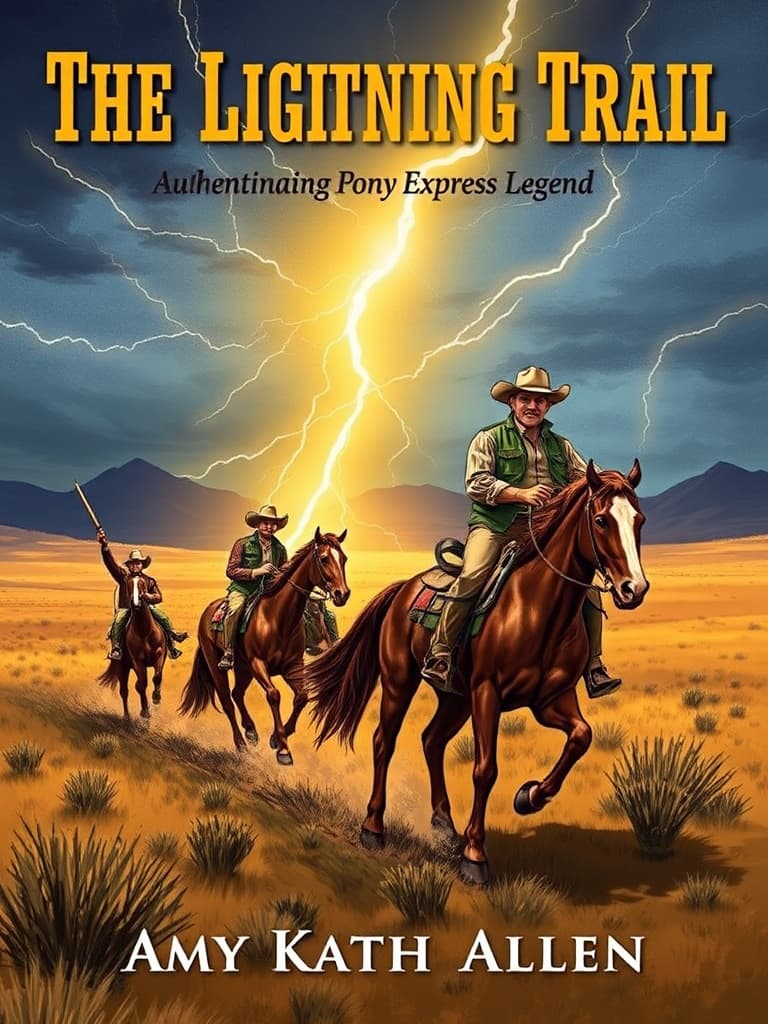
The Lightning Trail: Authenticating the Pony Express Legend
17
0
20
0
I,Amy Kathryn Allen.,have spent many years of My life living out west ( mainly Nevada,Utah,Colorado and Arizona). I have lived looking direct at the trail followed by the Pony Express.I have seen where Billy the Kid and Jesse James shot holes in walls and where the Hole in the Wall Gang lived I've sat in the exact Barber share used by Doc Holliday and have gambled in the same gambling halls. The spirits of the wild West call to Ne almost asking Me to write it's tales.. I am writing today about William'Buffalo Bill" Cody,Johnny Fry,Billy Richardson, Roberr 'Pony Boy ' Haslam, Alexander Majors,William Hepburn Russell and William Bradford Waddell. The Pony Express lasted less than 2 years from April 3rd,,1860 until October 26th,1861. It starts from Saint Louis , and could reach San Fransico in 10 days Missouri. The brave young riders risked their lives health and sanity to get the mail delivered. The conditions,extreme heat and severe winters were insufferable.I hopewith all My heart that You enjoy My story of the Pony Express
Chapters
- 1Echoes in the DustThis chapter will immerse the reader in Amy Kathryn Allen's personal world, establishing her deep-seated connection to the American West and the Pony Express trail. The narrative will begin with Amy, perhaps on her porch or overlooking a vast expanse of Nevada or Utah landscape, feeling the palpable presence of history. The descriptions of the land will be vivid and sensory, emphasizing how the wind, the colors of the earth, and the very silence of the plains seem to whisper tales of the past. Amy's lifelong residency in this region, with direct views of the historical routes, will be highlighted as the genesis of her passion. She will recall specific landmarks visible from her home – perhaps a distant mesa that served as a lookout point, a dry creek bed where a station once stood, or a weathered fence post that might have been part of the original corrals. Her voice will be warm, reflective, and imbued with a profound respect for the land and its stories. She'll introduce the core idea: that the spirits of the Pony Express riders, and other Western legends, are almost asking her to tell their stories. This isn't just an academic interest; it's a calling. The chapter will briefly touch upon the other legends she has encountered through her life in the West – the whispers of Billy the Kid, Jesse James, and Doc Holliday, grounding the Pony Express within a broader, richer tapestry of frontier lore. The initial motivation for writing this book will be explored – a desire to move beyond mere historical facts and capture the *feeling* of the West, the courage, the hardship, and the sheer audacity of the Pony Express. The chapter will end with Amy feeling a sense of urgency and profound connection, ready to embark on the journey of documenting these tales. The target word count will be achieved by elaborating on Amy's sensory experiences of the landscape, her personal anecdotes of growing up surrounded by these historical echoes, and her philosophical reflections on the nature of history and memory imprinted upon the land. The emotional arc will move from a quiet contemplation of the past to a resolute determination to share its stories. Continuity notes: Establish Amy's perspective and her deep geographical connection to the Pony Express trail. Introduce the idea that the land itself holds memories. Hint at the broader context of Western legends she'll explore later. End hook: Amy feels an irresistible pull from the past, a conviction that these stories must be told, and she is the one to tell them.
- 2The Unlikely ArchitectsThis chapter will delve into the ambitious origins of the Pony Express, focusing on the visionary trio: Alexander Majors, William Hepburn Russell, and William Bradford Waddell. It will explore their motivations, the societal context of a rapidly expanding but geographically divided United States, and the pressing need for faster communication. The narrative will move beyond a simple recounting of facts to explore the personalities and the sheer audacity of their undertaking. Majors, the experienced freighter, understood the challenges of overland travel; Russell, the financier, saw the potential for profit and national prestige; and Waddell, the logistics expert, grappled with the practicalities of building a continental network. The chapter will detail the immense risks involved – financial, logistical, and political. They were essentially betting their fortunes on a concept that seemed almost impossible: a mail service that could traverse over 2,000 miles in a mere ten days. The chapter will paint a picture of the frantic planning sessions, the desperate search for funding, and the dawning realization of the monumental task ahead. It will highlight the specific challenges they faced: securing contracts, acquiring thousands of horses, establishing hundreds of stations, and finding reliable men to manage them. The political climate of the era, on the cusp of the Civil War, will be subtly woven in, underscoring the strategic importance of connecting the East and West. The chapter will emphasize that this was not just a business venture; it was an act of faith in the future of America and its ability to overcome vast distances. Amy's narration will provide context, perhaps by drawing parallels to modern infrastructure projects or reflecting on the spirit of innovation that characterized the period. The chapter's length will be achieved by detailing the personalities of Majors, Russell, and Waddell, their individual contributions and potential conflicts, the economic landscape of the time, and the specific business and political pressures that drove them to conceive such a daring enterprise. The emotional tone will be one of awe at their ambition and the courage it took to embark on such a venture. Continuity notes: Introduce the founders and their respective roles and motivations. Establish the dire need for rapid communication across the continent. Highlight the immense financial and logistical risks. End hook: The vision is set, the men are committed, but the immense, almost insurmountable, challenges of bringing this dream to life are about to become starkly apparent.
- 3The Spine of the NationThis chapter will focus on the monumental task of forging the Pony Express trail, detailing the immense logistical and geographical challenges faced by Majors, Russell, and Waddell. It will describe the process of selecting and establishing the route, which stretched from St. Joseph, Missouri, to Sacramento, California, traversing diverse and often hostile terrains: plains, mountains, deserts, and rivers. The narrative will bring to life the sheer physical labor involved in building and equipping approximately 190 stations, ensuring they were stocked with fresh horses, provisions, and shelter for riders and keepers. The chapter will detail the recruitment of station keepers – often hardy, solitary individuals tasked with the critical job of maintaining the horses and providing a brief respite for the riders. Amy's narration will emphasize the bravery and resourcefulness required of these men and women, often living in isolation and facing constant threats. The selection of the horses themselves – swift, sturdy, and capable of enduring grueling conditions – will be highlighted. The chapter will paint a picture of the vast, untamed landscapes through which the trail was carved, emphasizing the isolation, the lack of infrastructure, and the sheer audacity of imposing a structured communication system onto such a wild frontier. Amy will reflect on how traces of this immense undertaking can still be found today, perhaps in the remnants of old station sites or the faint impressions of the trail itself, connecting the past labor to the present landscape she knows so well. The target word count will be met by detailing the specific geographical challenges of different segments of the trail (e.g., the Rockies, the Sierra Nevada, the Great Salt Lake Desert), the types of materials and labor used to build the stations, the recruitment process for station keepers, and the immense scale of the operation involving thousands of horses and miles of telegraph wire (which would eventually run alongside the route). The emotional tone will be one of awe at the sheer scale of human endeavor and the resilience required to overcome nature's formidable obstacles. Continuity notes: Detail the physical construction and establishment of the Pony Express route and its stations. Highlight the crucial role of station keepers and the challenges they faced. Emphasize the scale of the logistical operation. End hook: The trail is laid, the stations are built, and the horses are ready. The stage is set for the ultimate test: the first dispatch of mail.
- 4The First Gallop into HistoryThis chapter will capture the electrifying moment the Pony Express officially began its service on April 3rd, 1860. The narrative will focus on the dual departures: one from St. Joseph, Missouri, carrying eastbound mail, and another from Sacramento, California, heading east. The atmosphere will be described as one of immense excitement, anticipation, and perhaps a touch of apprehension. Amy's voice will convey the historical significance of this event, portraying it as a pivotal moment in American communication and national unity. The chapter will introduce Johnny Fry as one of the key riders on this inaugural journey, symbolizing the courage and determination of all who would follow. The immediate challenges faced by these first riders will be highlighted – the unknown dangers of the route, the untested reliability of the system, and the sheer pressure of being the first to undertake such a journey. The chapter will describe the farewells, the mounting of the horses, and the thunderous sound of hoofbeats as the mail began its historic 10-day race across the continent. Amy will reflect on the contrast between the celebratory send-offs and the harsh realities awaiting the riders once they left civilization behind. The narrative will build on the previous chapter's description of the trail and stations, showing them in practical use for the very first time. The emotional tone will be one of exhilarating anticipation, historical weight, and the dawning realization of the immense undertaking that has just commenced. The target word count will be achieved by vividly describing the scenes at both departure points, detailing the preparations, the key figures involved (including perhaps brief mentions of the founders witnessing the event), the symbolic importance of the mail being carried, and the initial reactions of the public and the press. Continuity notes: Depict the official start of the Pony Express. Introduce Johnny Fry as a key figure in the inaugural ride. Emphasize the excitement and the immediate challenges. End hook: The mail is dispatched, the riders are on the trail, and the legend of the Pony Express has officially begun its breathless, ten-day race against time and the vast American frontier.
- 5Johnny Fry: The First WordThis chapter will zoom in on the personal story of Johnny Fry, one of the very first riders to carry the Pony Express mail. The narrative will explore his background, his character, and the immense weight of responsibility he carried on that inaugural ride. Amy's narration will seek to humanize Fry, portraying him not just as a rider, but as a young man undertaking a task of unprecedented historical significance. The chapter will detail his specific leg of the journey, focusing on the initial challenges he faced. What were his thoughts as he mounted his horse? What were his first impressions of the trail and the dangers that lay ahead? The chapter will vividly describe his ride, the speed, the endurance required, and the brief, crucial exchanges at the stations. Amy will use her knowledge of the terrain to paint a picture of the landscape Fry traversed, emphasizing the isolation and the raw elements he encountered. The narrative will explore the internal struggles he might have faced – the fear, the exhaustion, the determination to succeed. The chapter will highlight his role as a trailblazer, setting the standard for the bravery and resilience that would come to define the Pony Express riders. Amy's personal connection to the land will again come into play, perhaps imagining Fry riding through a specific valley or past a landmark she knows intimately. The emotional tone will be one of admiration for Fry's courage, empathy for the immense pressure he was under, and a growing understanding of the personal sacrifices made by these riders. The target word count will be achieved by providing a detailed account of Fry's first ride, exploring his potential inner thoughts and motivations, describing the sensory details of his journey, and contextualizing his experience within the broader narrative of the Pony Express's beginning. Continuity notes: Focus on Johnny Fry as a key inaugural rider. Detail his specific experiences and challenges on his first leg. Emphasize the personal courage and responsibility he embodied. End hook: Johnny Fry's ride is complete, a testament to the daring spirit of the first day. But as the mail continues its journey, the true extent of the Pony Express's perilous undertaking is only just beginning to reveal itself.
- 6Buffalo Bill: A Legend in the MakingThis chapter will introduce William 'Buffalo Bill' Cody, not yet the legendary showman, but a young, ambitious rider for the Pony Express. Amy Kathryn Allen's narration will frame his early experiences as the crucible in which his future legend was forged. The chapter will explore Cody's youth, his inherent resourcefulness, and his early encounters with the harsh realities of the West. It will detail his time as a rider, emphasizing the demanding nature of the job and how it tested his physical and mental limits. Amy will draw on historical accounts to describe specific rides or incidents involving Cody, highlighting his bravery, his quick thinking, and his ability to adapt to unexpected situations. The narrative will emphasize that his later fame was built upon the foundation of these early, dangerous rides. The chapter will explore the skills he developed as a rider – horsemanship, navigation, endurance, and perhaps even rudimentary combat readiness – that would serve him throughout his life. Amy will connect Cody's experiences to the broader context of the Pony Express, showing how his story exemplifies the qualities of the young men who risked everything for the service. The chapter will hint at the charisma and storytelling ability that would later define him, suggesting that even in his youth, there was something extraordinary about William Cody. The emotional tone will be one of admiration for Cody's youthful courage and foreshadowing of the iconic figure he would become. The target word count will be achieved by detailing Cody's background and early life, describing specific anecdotes from his time as a rider (even if somewhat embellished by legend), exploring the skills he honed, and connecting his Pony Express experiences to his later legendary status. Continuity notes: Introduce William 'Buffalo Bill' Cody as a young Pony Express rider. Highlight his resourcefulness and bravery. Show how the Pony Express shaped his early life and reputation. End hook: As young William Cody delivers the mail, the seeds of a legend are sown, hinting at a future far beyond the saddle, yet indelibly marked by the demanding trails of the Pony Express.
- 7Haslam's Hundred Days: The Relentless PaceThis chapter will focus on Robert 'Pony Boy' Haslam, a rider renowned for his endurance and his remarkable ability to cover vast distances. Amy Kathryn Allen's narration will highlight Haslam's significant contributions, particularly his record-breaking rides. The chapter will delve into the physical and mental toll that such relentless riding took on the young men. It will describe Haslam's dedication, his grit, and his unwavering determination to keep the mail moving, no matter the cost. The narrative will explore the sheer monotony and the extreme physical exertion involved in riding hundreds of miles with minimal rest. Amy will use vivid descriptions to illustrate the challenges Haslam faced: the aching muscles, the burning lungs, the constant battle against fatigue, and the psychological pressure of maintaining such a pace day after day. The chapter will emphasize Haslam's role as a symbol of the Pony Express's commitment to speed and reliability, even when pushed to the absolute limit. The nickname 'Pony Boy' itself will be explored, perhaps reflecting his almost inhuman affinity for the horses and the miles he covered. Amy's personal perspective will offer insights into the incredible strength of character required, contrasting the romantic image of the rider with the brutal reality of the job. The emotional tone will be one of deep respect for Haslam's endurance and a profound appreciation for the physical sacrifices made by the riders. The target word count will be achieved by detailing Haslam's known exploits and records, exploring the physiological and psychological effects of prolonged, intense physical exertion, describing the specific challenges of covering long distances on horseback in the 19th century, and reflecting on his nickname and its implications. Continuity notes: Focus on Robert 'Pony Boy' Haslam and his exceptional endurance. Detail the physical and mental demands of his long rides. Emphasize his dedication to the mission of speed and reliability. End hook: Haslam's incredible rides push the boundaries of human endurance, proving the Pony Express's commitment to speed. But the relentless pace takes its toll, and the question lingers: how long can such a demanding service truly last?
- 9When the Sky Raged and the Earth FrozeThis chapter will vividly depict the brutal environmental challenges faced by the Pony Express riders. Amy Kathryn Allen's narration will bring to life the extreme conditions of the American West, emphasizing that riders battled the elements as fiercely as any human adversary. The narrative will contrast the scorching, relentless heat of desert summers, where mirages shimmered and water was scarce, with the deadly, bone-chilling cold of winter, where blizzards could bury the trails and freeze riders in their tracks. Amy will describe the sensory details: the oppressive heat that sapped strength and cracked skin, the biting wind that stole breath, the blinding snow that obscured all paths, and the treacherous ice that made every hoofbeat a gamble. The chapter will illustrate how these conditions tested the riders' endurance, their horsemanship, and their sheer will to survive. Specific anecdotes or hypothetical scenarios will be used to demonstrate the dangers: a rider lost in a dust storm, another struggling through waist-deep snow, the constant threat of frostbite, and the desperate search for shelter. Amy's personal familiarity with the Western climate will lend authenticity and depth to these descriptions, allowing her to convey the raw power of nature that the riders had to confront daily. The emotional tone will be one of awe at the riders' resilience and a stark realization of the constant peril posed by the unforgiving landscape. The target word count will be achieved by providing detailed, sensory descriptions of extreme heat and cold, illustrating the specific dangers associated with each season (e.g., heatstroke, dehydration, hypothermia, avalanches), exploring the coping mechanisms riders might have employed, and emphasizing the psychological toll of constant exposure to harsh weather. Continuity notes: Detail the extreme heat and cold conditions faced by the riders. Illustrate the specific dangers and challenges posed by the environment. Emphasize the riders' battle against nature itself. End hook: The riders have conquered the elements, but the vast, untamed frontier holds other dangers. As the Pony Express continues its run, encounters with hostile forces loom, threatening to shatter the fragile thread of communication.
- 10Shadows on the Trail: Encounters and PerilsBeyond the formidable forces of nature, this chapter will explore the ever-present threat of human conflict and danger that riders faced on the Pony Express trail. Amy Kathryn Allen's narration will delve into the volatile nature of the frontier, where encounters with hostile Native American tribes, desperate outlaws, and even disgruntled settlers could mean life or death. The chapter will describe the constant need for vigilance, the tension of riding through potentially dangerous territories, and the quick reflexes required to survive an ambush or confrontation. Amy will draw upon the broader history of the West, hinting at the complex relationships between settlers, Native Americans, and the lawlessness that permeated some regions. The narrative will focus on the riders' preparedness: the trusty revolvers they carried, the speed of their horses, and their ability to make split-second decisions. The chapter will illustrate the psychological burden of this constant threat, the gnawing fear that accompanied every mile. Specific scenarios might be depicted: a rider narrowly escaping a raiding party, a tense standoff at a remote station, or the chilling realization that their every move could be watched. Amy's voice will convey the raw danger and the bravery required to continue the mission despite these ever-present risks. The emotional tone will be one of suspense, highlighting the courage of the riders in the face of human hostility and the precariousness of their mission. The target word count will be achieved by exploring the various potential human threats (Native American conflict, outlaws, bandits), detailing the riders' defensive measures and survival strategies, illustrating the psychological impact of constant danger, and weaving in the historical context of frontier violence and lawlessness. Continuity notes: Detail the human threats riders faced, including hostile encounters and outlaws. Emphasize the riders' need for vigilance and bravery. Highlight the precariousness of the mission due to potential conflict. End hook: The riders have faced the fury of nature and the threat of human conflict. But the mission relies on a network of outposts – the relay stations – which, while offering respite, also present their own unique set of dangers.
- 11Havens and Hazards: The Relay StationsThis chapter will focus on the vital, yet often precarious, role of the Pony Express relay stations. Amy Kathryn Allen's narration will portray these stations as the essential backbone of the entire operation, providing the crucial points for riders to change horses and grab brief moments of rest. The chapter will describe the diverse nature of these stations, ranging from comfortable homesteads to rudimentary shelters in the wilderness. It will highlight the lives of the station keepers and their families, often unsung heroes who lived in extreme isolation, responsible for maintaining the horses, preparing food, and ensuring the continuity of the mail service. Amy will emphasize the importance of these brief respites for the riders, moments of human connection and nourishment in an otherwise grueling journey. However, the chapter will also explore the inherent dangers associated with the stations. They were often isolated targets for raids by Native Americans or outlaws seeking supplies or horses. The narrative will depict the vulnerability of these outposts and the courage of the keepers who defended them. Amy's personal connection to the land will resurface as she reflects on the potential locations of these stations, imagining the lives lived and the dangers faced within their walls. The emotional tone will be a blend of appreciation for the essential role of the stations and a stark awareness of the risks they and their keepers endured. The target word count will be achieved by detailing the function and importance of the stations, describing the lives and challenges of the station keepers, illustrating the diverse environments in which stations were located, and exploring how these vital points could also become locations of extreme peril. Continuity notes: Detail the crucial function of the relay stations and the lives of the station keepers. Explore the contrast between respite and danger offered by the stations. Emphasize their vulnerability as targets. End hook: The stations have provided brief havens and sustained the relentless pace. But the Pony Express's ultimate promise was speed – a revolutionary ten-day delivery that captured the nation's imagination. Now, the focus shifts to the impact of this unprecedented velocity.
- 12The Ten-Day MiracleThis chapter will celebrate the Pony Express's core promise: delivering mail from coast to coast in an astonishing ten days. Amy Kathryn Allen's narration will emphasize the revolutionary nature of this speed in the mid-19th century, a time when communication across such vast distances was agonizingly slow. The chapter will explore the profound impact this rapid delivery had on national unity, business, and personal lives. It will paint a picture of the excitement and wonder that greeted the successful completion of these ten-day runs. Amy will convey the sense of achievement for the founders, the riders, and the nation as a whole. The narrative will highlight specific instances or the general feeling of anticipation as people awaited news from loved ones or crucial business dispatches. The chapter will serve as a testament to the ingenuity, bravery, and sheer determination that made this 'miracle' possible. Amy's voice will convey a sense of pride and admiration for this remarkable feat of communication and human endeavor. The emotional tone will be one of exhilaration, wonder, and a celebration of human achievement against all odds. The target word count will be achieved by detailing the significance of ten-day delivery in the context of 19th-century communication, exploring the impact on various aspects of American life (business, personal, political), highlighting the sense of national pride and wonder, and celebrating the success of the ambitious vision. Continuity notes: Emphasize the Pony Express's core achievement: ten-day coast-to-coast delivery. Explore the profound impact of this speed on national unity and communication. Celebrate the success of this revolutionary endeavor. End hook: The ten-day miracle has been achieved, a testament to courage and speed. But even as the nation marvels at this accomplishment, a new technological force is rising, one that will ultimately challenge the very existence of the Pony Express.
- 13The Brief, Blazing TrailThis chapter will focus on the incredibly short but intensely impactful lifespan of the Pony Express, which operated for just over 18 months, from April 1860 to October 1861. Amy Kathryn Allen's narration will underscore the ephemeral nature of this legendary service, highlighting how its brief existence only adds to its mystique and the poignancy of its story. The chapter will explore the reasons for its swift demise, setting the stage for the next chapter's discussion of the telegraph. Amy will reflect on the immense effort, sacrifice, and capital invested in a venture that, from a purely business perspective, was destined to be short-lived. The narrative will capture the feeling of a bright flame that burned intensely but quickly faded. It will emphasize that despite its short duration, the Pony Express left an indelible mark on American history, symbolizing courage, speed, and the indomitable spirit of the West. Amy's personal perspective will lend a reflective tone, pondering the fleeting nature of great endeavors and the lasting power of their legacy. The emotional tone will be a blend of poignant reflection on its brevity and admiration for its intense impact. The target word count will be achieved by detailing the specific dates of operation, exploring the factors contributing to its short lifespan, emphasizing its lasting symbolic importance despite its brevity, and reflecting on the historical context of rapid technological change. Continuity notes: Focus on the short duration of the Pony Express (April 1860 - October 1861). Emphasize its intense impact despite its brevity. Set the stage for the technological advancements that led to its obsolescence. End hook: The Pony Express burned brightly but briefly, an unforgettable chapter in American history. Yet, even as its legend grows, the relentless march of technology is about to render its heroic efforts obsolete.
- 14The Telegraph's Silent ConquestThis chapter will detail the arrival of the transcontinental telegraph and its role in bringing about the end of the Pony Express. Amy Kathryn Allen's narration will frame the telegraph not as a villain, but as a revolutionary technological advancement that, while beneficial to the nation, directly spelled the demise of the horse-and-rider express. The chapter will describe the completion of the telegraph line, highlighting the significance of instantaneous communication across the continent. Amy will contrast the speed of the telegraph (instantaneous) with that of the Pony Express (ten days), illustrating the dramatic shift in communication capabilities. The narrative will explore the economic and strategic pressures that led the founders of the Pony Express to recognize its inevitable obsolescence. While the Pony Express proved the feasibility of rapid transcontinental communication and inspired the nation, the telegraph offered a more permanent and efficient solution. Amy's voice will convey a sense of historical inevitability, acknowledging the bittersweet nature of progress – how one triumph paves the way for another, often superseding the previous one. The chapter will explore the final months of the Pony Express, the bittersweet realization that their heroic efforts were nearing an end. The emotional tone will be one of historical inevitability, acknowledgment of progress, and a touch of melancholy for the passing of an era. The target word count will be achieved by detailing the construction and completion of the transcontinental telegraph, comparing the speed and efficiency of telegraphy versus the Pony Express, exploring the economic and practical reasons for the Pony Express's obsolescence, and describing the final days of the service. Continuity notes: Detail the completion of the transcontinental telegraph. Analyze how this technological advancement rendered the Pony Express obsolete. Explore the economic and practical reasons for the Pony Express's end. End hook: The telegraph has silenced the thunder of hoofbeats, marking the end of the Pony Express era. But the spirit of the West, and the stories of its legends, continue to resonate. Amy now turns her focus to the broader tapestry of Western lore, connecting the Pony Express trail to other iconic figures who rode, fought, and lived in its shadow.
- 15Outlaw Trails: Billy the Kid's ShadowThis chapter will transition from the Pony Express itself to the broader legendary figures of the West, as experienced and reflected upon by Amy Kathryn Allen. The narrative will focus on the overlapping geographical territories and historical periods, connecting the Pony Express route to the haunts of Billy the Kid. Amy will describe her personal encounters with places associated with the Kid – perhaps a rundown saloon, a weathered building with bullet holes, or a remote canyon rumored to be a hideout. Her narration will evoke the raw lawlessness and the dangerous allure that characterized Billy the Kid's legend. The chapter will explore how the Pony Express riders might have traversed areas known to be frequented by outlaws like the Kid, adding another layer of peril to their journeys. Amy's voice will convey a sense of fascination with these figures, contrasting their notoriety with the disciplined service of the Pony Express riders. She might muse on the different kinds of courage displayed – the calculated bravery of the riders versus the desperate defiance of outlaws. The descriptions of the landscape will be imbued with the mystique and danger associated with Billy the Kid's legend. The emotional tone will be one of intrigued reflection on the duality of the West – the order and communication sought by the Pony Express existing alongside the chaos and rebellion embodied by figures like Billy the Kid. The target word count will be achieved by detailing specific locations associated with Billy the Kid that Amy has visited or knows intimately, exploring the historical context of lawlessness in the West, contrasting the lives and motivations of the Kid and the Pony Express riders, and reflecting on the enduring mythos of outlaw figures. Continuity notes: Connect the Pony Express trail to the geography and legends of Billy the Kid. Describe locations associated with the Kid that Amy knows. Explore the theme of lawlessness coexisting with the Express. End hook: The shadow of Billy the Kid looms large over the Western landscape. But the trail of outlaws doesn't end there; the presence of another notorious figure, Jesse James, adds further layers of danger and intrigue to the stories etched into the land.
- 16Jesse James's Footprints in the DustContinuing the exploration of legendary figures, this chapter will focus on Jesse James and his gang, connecting their activities to the territories traversed by the Pony Express. Amy Kathryn Allen's narration will emphasize how the presence of such notorious outlaws heightened the dangers faced by the riders and station keepers. The chapter will describe places Amy has visited or knows that are linked to Jesse James – perhaps former bank or train robbery sites, or supposed hideouts. Her voice will convey the fear and notoriety that Jesse James commanded across the West. The narrative will explore the overlapping timelines and geographies; it's plausible that Pony Express riders might have encountered signs of the James gang's activities or even ridden through areas where they were known to operate. Amy will reflect on the audacity of both the Pony Express riders, maintaining order and communication, and the James gang, disrupting it through their criminal enterprises. The chapter will delve into the public perception of these figures, the romanticism sometimes associated with outlaws versus the heroic reality of the riders. Amy's personal observations of the landscape will again be used to ground these historical narratives, imagining the tension of riding through country known to be patrolled by such dangerous men. The emotional tone will be one of suspense and historical intrigue, highlighting the constant threat and the complex social dynamics of the Wild West. The target word count will be achieved by detailing locations associated with Jesse James, exploring the historical context of his crimes and their impact on communities, contrasting his outlaw persona with the Pony Express riders' roles, and reflecting on the pervasive fear these figures instilled. Continuity notes: Link the Pony Express trail to the activities and legends of Jesse James. Describe locations associated with James that Amy knows. Explore the theme of outlaw presence and the fear it generated. End hook: The specter of Jesse James adds another grim layer to the Pony Express's perilous journey. Yet, amidst the tales of outlaws and riders, Amy's own direct connection to the era deepens, drawing her to another infamous figure whose legend is intertwined with the very fabric of the West she calls home.
- 17The Barber's Chair: Doc Holliday's EchoesThis chapter will pivot to a more personal and intimate connection Amy Kathryn Allen has with the history of the West, focusing on Doc Holliday. The narrative will center on Amy sitting in the actual barber chair once used by the famous gambler and gunfighter. This will serve as a powerful anchor, bringing the legendary figure to life in a tangible way. Amy's narration will describe the sensation of occupying that space, imagining Holliday's presence and his infamous life. The chapter will explore Holliday's character – his intelligence, his gambling prowess, his quick temper, and his deadly skills with a firearm. Amy will reflect on the stark contrast between Holliday's often violent and chaotic existence and the disciplined, duty-bound lives of the Pony Express riders. While the Pony Express focused on connecting a nation, figures like Holliday represented a more individualistic, often dangerous, pursuit of fortune and survival. The chapter will delve into the atmosphere of the gambling halls and saloons where Holliday would have spent his time, places that Amy has also experienced. This juxtaposition will highlight the diverse and often contradictory elements that defined the Wild West. The emotional tone will be one of fascinated reflection, a personal connection to a legendary figure, and a contemplation of the different paths taken by those who shaped the West. The target word count will be achieved by vividly describing the experience of sitting in Doc Holliday's barber chair, exploring Holliday's personality and reputation, contrasting his life with that of the Pony Express riders, and reflecting on the atmosphere of the places he frequented. Continuity notes: Focus on Amy's personal connection to Doc Holliday through a tangible artifact (the barber chair). Explore Holliday's character and contrast his life with the Pony Express riders. Highlight the atmosphere of gambling halls and saloons. End hook: Sitting in Doc Holliday's chair offers a tangible link to the West's notorious figures. But the allure of the West wasn't solely in its gunfighters and gamblers; it was also in the vibrant social hubs where fortunes were made and lost, places that Amy has also experienced firsthand.
- 18Where Fortunes Were Won (and Lost)This chapter will explore the vibrant, often tumultuous, social life of the Wild West, focusing on the gambling halls that Amy Kathryn Allen has frequented. The narrative will bring these establishments to life, describing the atmosphere of excitement, risk, and potential danger that permeated them. Amy's voice will convey her personal experiences within these halls, imagining them filled with Pony Express riders seeking a brief respite or perhaps even gambling away their hard-earned wages. The chapter will explore the contrast between the disciplined, dangerous work of the riders and the heady pursuit of fortune and entertainment found in these venues. It will touch upon the diverse clientele – cowboys, prospectors, businessmen, and perhaps even figures like Doc Holliday or Jesse James. Amy will reflect on the stories these walls could tell, the high-stakes games, the whispered deals, and the occasional flare-ups of violence. The narrative will emphasize how these gambling halls were central hubs of social activity, reflecting the spirit of risk-taking that characterized the era. The Pony Express riders, while focused on their mission, were still products of this environment, and their brief moments of leisure would have been spent in such places. The emotional tone will be one of lively historical reflection, capturing the energy and character of the West's social centers. The target word count will be achieved by vividly describing the atmosphere of 19th-century gambling halls, exploring the types of games played and the clientele, contrasting the riders' duties with the pursuit of leisure and fortune, and reflecting on Amy's personal experiences and imagined scenarios within these settings. Continuity notes: Explore the atmosphere and significance of gambling halls in the Wild West. Imagine Pony Express riders interacting with these environments. Contrast the riders' duty with the pursuit of fortune and entertainment. End hook: The gambling halls pulsed with life and risk, a microcosm of the West's untamed spirit. But beyond the thrill of fortune and the danger of outlaws, the true legacy of the Pony Express lies in something more profound: the enduring spirit of courage and resilience that defined an era.
- 19The Unseen Threads of CourageThis chapter will shift towards a more reflective and thematic exploration of the Pony Express's enduring legacy, as interpreted by Amy Kathryn Allen. The narrative will move beyond specific riders and events to focus on the broader concepts of courage, determination, and the indomitable spirit that the Pony Express represented. Amy will argue that the service was more than just a mail delivery system; it was a powerful symbol of human ambition and the will to overcome vast obstacles. She will weave together the stories of the founders, the riders, the station keepers, and even the horses, emphasizing their collective contribution to a monumental undertaking. The chapter will explore how the Pony Express, despite its short life, captured the imagination of a nation and inspired a sense of unity during a critical period in American history. Amy's personal connection to the land will serve as a backdrop, underscoring how the spirit of the West – its vastness, its challenges, and its beauty – is inextricably linked to the legacy of the Pony Express. She will reflect on how the courage displayed by the riders mirrors the resilience needed to thrive in such a demanding environment. The emotional tone will be one of heartfelt admiration, profound respect, and a contemplative appreciation for the symbolic importance of the Pony Express. The target word count will be achieved by synthesizing the previous narratives into overarching themes of courage and resilience, exploring the symbolic meaning of the Pony Express in American history, reflecting on the collective effort involved, and connecting the legacy to the enduring spirit of the West. Continuity notes: Focus on the symbolic importance of the Pony Express. Explore themes of courage, determination, and resilience. Synthesize the stories of all involved in the service. End hook: The Pony Express stands as a powerful symbol of courage and the Western spirit. But how can this spirit, this raw authenticity, be truly conveyed to a modern audience? Amy's final chapter will address this question, aiming to authenticate the legend and share its enduring truth.
- 20Authenticating the Legend: A Final RideIn this concluding chapter, Amy Kathryn Allen will bring her narrative full circle, directly addressing the goal of authenticating the Pony Express legend. Her voice will be warm, personal, and deeply heartfelt as she shares her hope that readers now possess a deeper understanding and appreciation for the true spirit of the service. She will reiterate her lifelong connection to the land and how her personal experiences walking, driving, and simply living near the historical trail have informed her perspective. Amy will reflect on the challenges of capturing the raw reality of the past for a modern audience, emphasizing that the Pony Express was not just about speed, but about immense human sacrifice, bravery in the face of overwhelming odds, and the creation of a vital link across a vast continent. She will revisit key figures and moments, not to recount facts, but to reinforce the emotional and human core of the story. The chapter will serve as a testament to the enduring power of history and the importance of remembering the individuals who shaped it. Amy's final reflections will emphasize that the true legacy of the Pony Express lies in its embodiment of the untamed, courageous spirit of the American West. The chapter will conclude with her heartfelt wish that the reader feels the echoes of the hoofbeats, the sting of the wind, and the profound courage of the riders, thus truly appreciating the authentic legend. The emotional tone will be one of sincere hope, profound satisfaction, and a lasting sense of connection to the history she has shared. The target word count will be achieved by summarizing the key themes and narratives, directly addressing the concept of 'authenticity,' reflecting on the author's personal journey in telling the story, emphasizing the human element of the Pony Express, and offering a final, evocative call to appreciate the legend. Continuity notes: Directly address the goal of authenticating the Pony Express legend. Reinforce the author's personal connection and perspective. Summarize the key themes of courage, sacrifice, and the Western spirit. Offer a final, heartfelt reflection on the enduring legacy. End hook: Amy Kathryn Allen concludes her journey, her voice resonating with the authentic spirit of the West, leaving the reader with a profound appreciation for the legendary Pony Express and the unforgettable souls who rode its lightning trail.
More Historical stories
Browse all Historical →- the old sword
A young knight, driven by a prophecy of his return, seeks a legendary sword to reclaim his stolen kingdom from a tyrannical usurper. He must brave treacherous landscapes and confront his own doubts, all while battling against the sorcerer who orchestrated his family's downfall. The quest is unique due to its blend of historical warfare, fantastical elements, and a deeply personal journey of self-discovery.
- New bible
What call alegotija watican do you feel me fire
- Reklama ir pantomimu teatras
Vsiku prievarta kenedziu chaodo teorija ne dvasua nriperkama neitomsnyizmui nri su tools binary its me. not
- Reklama ir pantomimu teatras
Vsiku prievarta kenedziu chaodo teorija ne dvasua nriperkama neitomsnyizmui nri su tools binary its me. not
- Underestimated silence
A red headed Irish woman from little rock who is an infj personality type and animal empath. She has ptsd from childhood trauma in the form of five years of bullying but utilizes the pattern recognition and hyper vigilance to her benefit. She has lifelong loved animals and has a bachelor's degree in animal science and a masters in animal behavior. She starts training race horses, mainly acquiring horses from kill pens or thought to be a lost cause.
- The Unending Silence: A Chronicle of Shadowed Lives
A red headed Irish woman detective who is an infj personality type and animal empath. She grew up in little rock Arkansas and has ptsd from five years of bullying from fourth to eighth grade at a local private catholic school. She has long worked with and loved animals. She has a degree in animal science and a masters in behavior. She is hand picked by someone who knows her and knows she has an ability you can't train into any detective so she is brought on as a cold case detective along with her service dog who is a border collie and doubles as a police dog. Her first cold case is about a lineman named Ray Jenkins that became a serial killer
Want to write a story like this?
Learn the craft in our free AI story generator, then draft your first chapter with an AI co-writer.
What stayed with you?
Read a chapter and leave the author a comment.
Reader notes
Loading reader notes…