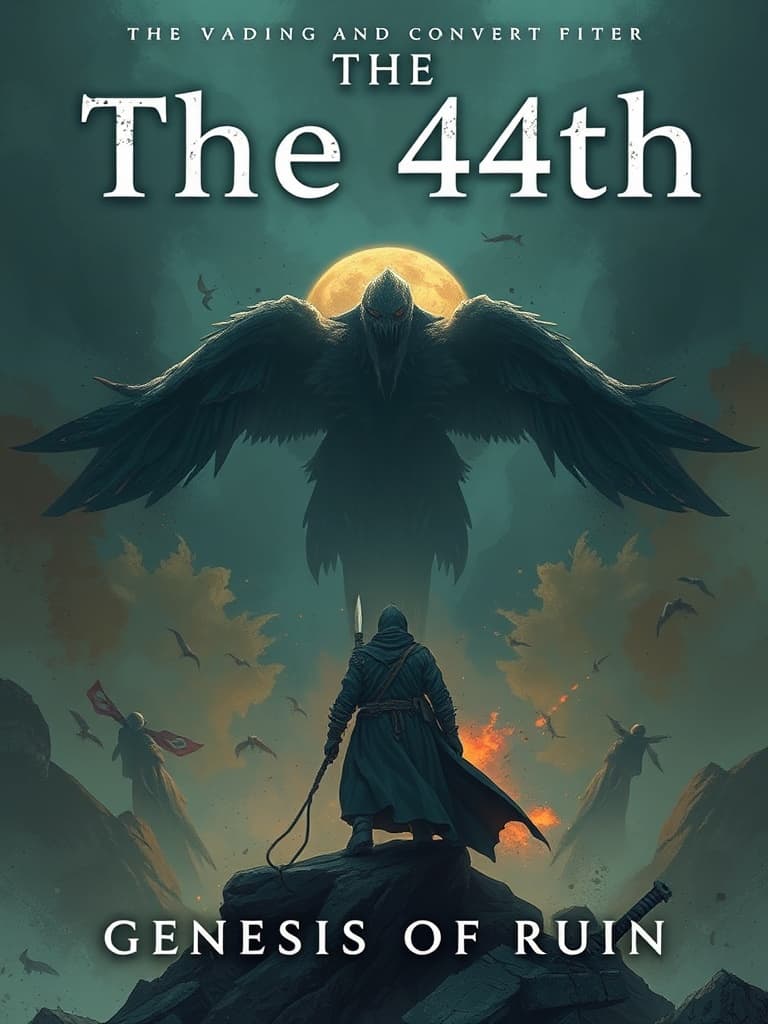
About this book
The 44th Man
61
0
24
0
In the beginning, there was only silence, a void that stretched infinitely. It was here that the first whispers of existence began to stir. The shadows danced, and from the depths of this emptiness, a scream echoed—a cry for life, for meaning. I turned around, and there you were, a flicker of light in the darkness, a promise of something more. But as quickly as you appeared, you vanished, leaving me in a dream where I searched for you, only to find the remnants of what once was. As I wandered through the corridors of my mind, I stumbled upon the memories of our time together. Each moment was a treasure, yet tinged with the bittersweet taste of regret. I missed you before I even knew you were gone. The regrets filled my waking moments, haunting my dreams. I longed for the laughter we could have shared, the adventures we could have embarked upon. Instead, I was left with the ghost of myself, a revenant trapped in the past. In the stillness of the night, I found myself drawn to the statue that stood in the center of my thoughts. It was a living statue, a monstrous embodiment of my endless hunger for connection. I gazed into its porcelain eyes, no longer flesh, and felt the weight of my desires pressing down on me. I drank deep from the poison of my longing, a bittersweet elixir that both nourished and tormented me. This statue, this reflection of my soul, was both my salvation and my curse. Every night, I would slay the statue, a ritual of sorts. I would consume its essence, feeding on the sacrifices of my past. Each bite was a reminder of the love I had lost, the moments that slipped through my fingers like sand. Yet, in this act of destruction, I found a strange sense of freedom. I was cleansing myself of the sins that bound me, preparing to ascend beyond the blasphemous notions that had held me captive for so long. As I continued this cycle of creation and destruction, I began to understand the nature of my existence. I was not merely a spectator in this life; I was a participant, a creator of my own reality. The shadows that once terrified me became my allies, guiding me through the labyrinth of my mind. I learned to embrace the chaos, to find beauty in the turmoil that surrounded me. It was in this acceptance that I discovered the splendor of my own soul. The whispers of primordial fires ignited a spark within me, a flame that burned brightly against the darkness. I drew breath in the steely air, feeling the fragments of my thoughts coalesce into something greater. Creatures of my imagination surged forth, each one a reflection of my innermost fears and desires. I welcomed them, allowing them to dance around me, to intertwine with my spirit. Together, we created a symphony of existence, a testament to the power of creation. Yet, even amidst this newfound clarity, I could not escape the shadows of my past. They lingered, whispering reminders of what I had lost. I found myself torn between the desire to move forward and the pull of nostalgia. It was a delicate balance, one that required constant vigilance. I learned to navigate this tension, to honor my past while embracing the present. It was a dance, a rhythm that guided me through the complexities of life. In moments of stillness, I would reflect on the nature of love and loss. I realized that every relationship, every connection, was a thread woven into the tapestry of my existence. Each thread held its own story, its own significance. I began to see the beauty in the impermanence of life, the fleeting nature of our experiences. It was this understanding that allowed me to let go, to release the grip of my past and embrace the possibilities of the future. As I continued to explore the depths of my soul, I discovered the power of forgiveness. It was a gift I had long withheld from myself, a burden I had carried for far too long. I learned to forgive not only those who had wronged me but also myself for the choices I had made. In this act of liberation, I found peace. The weight of my regrets began to lift, replaced by a sense of lightness and clarity. In the final chapter of my journey, I stood before the statue once more, no longer a monstrous figure but a symbol of my growth. I had transformed, shedding the layers of my past like a snake shedding its skin. I was ready to ascend, to embrace the splendor of my soul fully. The shadows that once haunted me now served as reminders of my resilience, my capacity for love and creation. I took a deep breath, ready to step into the light of a new beginning. Ode to Neon Sacraments Mad children, what new Mass contrive? To gift her wild glass phones, alive? They kiss God's fire; screens blister. Each tap doth brand the philosopher. And reason reels, a bright wound. It pukes down the cat's throat, crowned. All electrified; all Neon, sworn.As I continued this cycle of creation and destruction, I began to understand the nature of my existence. I was not merely a spectator in this life; I was a participant, a creator of my own reality. The shadows that once terrified me became my allies, guiding me through the labyrinth of my mind. I learned to embrace the chaos, to find beauty in the turmoil that surrounded me. It was in this acceptance that I discovered the splendor of my own mortal burden.. Title: "Embers of Redemption" Genre: Romance/Fantasy/Adventure --- FADE IN: EXT. A DESOLATE PLANET - NIGHT The sky is a tapestry of swirling shadows, punctuated by distant stars. A lone figure, a HUMAN SOLDIER (30s, rugged, haunted eyes), stands atop a rocky outcrop, gazing into the void. His name is JAX. JAX (V.O.) (somber) In dreams of a void, I weep from dusk till dawn. How the formless shadows creep. He clenches his fists, recalling the horrors of war, the destruction of his home, Earth. The weight of vengeance hangs heavy on his shoulders. JAX (V.O.) Order's grip, a snare, love's reflection, entirely bare. Anti-life, I sigh, am I the only one that notices that there are patches forming across the endless night sky? Suddenly, a rustle in the bushes catches his attention. He turns, eyes narrowing, ready for combat. CUT TO: EXT. DENSE FOREST - NIGHT A VULPINE HOMINID WOMAN (LUNA, 20s, fierce yet graceful) emerges from the shadows, her fur shimmering under the moonlight. She holds a dagger, poised but not threatening. LUNA (softly) You’re not here to hunt me, are you, human? Jax lowers his weapon, captivated by her beauty and strength. JAX (gruffly) I’m not your enemy... yet. They share a moment of tension, a spark igniting between them. JAX (V.O.) Claws and fangs, blades and swords, fur most beautiful. CUT TO: EXT. VILLAGE OF THE VULPINE TRIBE - NIGHT The village is alive with the sounds of celebration, but an undercurrent of fear lingers. Jax and Luna walk through the village, witnessing the harsh realities of her people. LUNA (whispers) They sell our kind into slavery... for meat, for labor. Jax’s expression hardens, the fire of vengeance igniting within him. JAX I will not let this continue. LUNA (pleading) But at what cost? JAX (V.O.) Forgiveness is rude work, nightly. CUT TO: INT. LUNA'S HIDEOUT - NIGHT Luna and Jax sit close, the tension palpable. They share stories of their worlds, their pain, and their hopes. JAX (intensely) I’m searching for the enemy’s homeworld. I need to find them, to end this. LUNA (softly) And what of us? Jax looks into her eyes, the weight of his mission clashing with his growing feelings for her. JAX (V.O.) I drink cheap fire, laugh at saints. Sacrifice shows teeth, most dire. CUT TO: EXT. BATTLEFIELD - DAY Jax leads a ragtag army of vulpine warriors against a battalion of ruthless human slavers. The clash of steel and the cries of battle fill the air. JAX (shouting) For freedom! For our future! Luna fights alongside him, her fierce spirit igniting the hearts of those around her. LUNA (yelling) Together, we rise! CUT TO: EXT. BATTLEFIELD - LATER The battle rages on. Jax faces off against the SLAVER LEADER, a cruel man with a twisted smile. SLAVER LEADER You think you can save them? They are nothing but beasts! Jax’s eyes blaze with fury. JAX (defiantly) They are more than you’ll ever know! With a swift motion, Jax defeats the leader, the slavers retreating in fear. CUT TO: EXT. VILLAGE OF THE VULPINE TRIBE - NIGHT The village celebrates their victory. Jax and Luna stand together, the weight of their journey evident in their eyes. LUNA (softly) You’ve changed them... and yourself. JAX (sincerely) I’ve learned that vengeance isn’t the only path. They share a tender moment, the love between them blossoming amidst the chaos. JAX (V.O.) I break fetters of loneliness, alone. I tell myself: burn the forgetters. CUT TO: EXT. HORIZON - DAWN Jax and Luna stand hand in hand, watching the sunrise. The world is still scarred, but hope glimmers in the distance. JAX (determined) Together, we’ll find a way to heal this world. LUNA (smiling) And in doing so, we’ll find our redemption. **Title: The Last Stand: A Journey Through Dimensions** **Genre: Sci-Fi / Action / Drama** --- **FADE IN:** **EXT. CREEK MOUNTAIN - NIGHT** *The camera pans over the dark silhouette of Creek Mountain, its fortified armored research and defense installation glowing ominously against the night sky. The distant sounds of war echo, a reminder of the devastation that has befallen Earth.* **NARRATOR (V.O.)** (solemn) After eight long years of a devastating war, Earth lay in ruins. The last stronghold of humanity's defenses was buried deep beneath Creek Mountain, a fortress of hope in a world turned to ash. --- **INT. CREEK MOUNTAIN - COMMAND CENTER - NIGHT** *Colonel JEREMY DAVIDSON, 40s, rugged and determined, stands before a holographic display of the interdimensional vehicle. His eyes reflect a mix of hope and despair.* **JEREMY** (to the gathered scientists) This is our last chance. We’ve lost too much already. We can’t let their invasion define us. We must strike back. *DR. HENRY WILLIAMS, 50s, a brilliant but weary scientist, nods in agreement.* **DR. WILLIAMS** The interdimensional vehicle is equipped with reverse-engineered technology. If we can harness it, we might just have a fighting chance. *The camera zooms in on the vehicle, sleek and menacing, cloaked in a shimmering field of light.* --- **INT. CREEK MOUNTAIN - LAB - NIGHT** *Jeremy inspects the cryogenic chamber housing the last survivor of the alien race, a being known as KAL’THAR. The alien’s frail form is suspended in a translucent liquid, a symbol of lost hope.* **JEREMY** (softly) I promise you, Kal’thar. Your people will be avenged. We will find a way to heal you. *Suddenly, alarms blare. The ground shakes violently.* --- **EXT. CREEK MOUNTAIN - NIGHT** *Chaos erupts as the installation is attacked. Explosions light up the night sky, and soldiers scramble to defend their last stronghold.* **GENERAL MCPHERSON, 50s, brash and ruthless, storms into the command center, his face twisted with rage.** **GENERAL MCPHERSON** We need to deploy the Doomsday weapon! Leave nothing behind! *Jeremy steps forward, fists clenched.* **JEREMY** No! We can’t destroy our own planet! We need to fight back, not annihilate ourselves! *They grapple, the tension palpable. Suddenly, a deafening explosion rocks the facility.* --- **INT. CREEK MOUNTAIN - COMMAND CENTER - NIGHT** *The walls tremble as Jeremy breaks free from the General’s grip. He rushes to the control panel, desperately trying to stabilize the situation.* **JEREMY** (urgently) We need to activate the interdimensional drive now! *The ground splits open, and a blinding light engulfs the room. Jeremy’s eyes widen in horror.* --- **EXT. CREEK MOUNTAIN - NIGHT** *The mountain crumbles, and the sky is filled with debris. Jeremy leaps into the interdimensional vehicle just as the installation collapses behind him.* **JEREMY** (voice breaking) No! Not like this! *He engages the interdimensional drive, and the ship vanishes into a swirling vortex of light.* --- **INT. INTERDIMENSIONAL VEHICLE - UNKNOWN SPACE** *The ship stabilizes in a new star system, surrounded by three habitable planets. Jeremy stares at the control panel, his heart racing.* **JEREMY** (to himself) Where am I? I need to find someone… anyone who can help me. *He activates the ship’s scanners, searching for signs of life.* --- **EXT. PLANET SURFACE - DAY** *The ship lands on a vibrant planet. Jeremy steps out, scanning the horizon. Strange glyphs cover the landscape, remnants of a civilization long gone.* **JEREMY** (whispers) What do these mean? *He kneels, tracing the glyphs with his fingers, memories flooding back of his wife and two children.* **JEREMY** (voice trembling) I will find you… I will avenge you. --- **INT. INTERDIMENSIONAL VEHICLE - CONTROL ROOM - DAY** *Jeremy sits at the control panel, determination etched on his face. He pulls up a holographic map of the star system.* **JEREMY** (voice steady) I will become vengeance. I will not let their sacrifice be in vain. *He sets a course for the nearest planet, ready to uncover the secrets that may lead him back to his enemies.* --- **EXT. UNKNOWN PLANET - DAY** *As Jeremy steps onto the new planet, he feels a surge of hope. The camera pans up to the sky, revealing a distant star, a symbol of the fight that lies ahead.* **NARRATOR (V.O.)** In a universe filled with chaos, one man’s quest for vengeance may hold the key to humanity’s survival. The screen fades to black, leaving the audience with a sense of hope and the promise of love amidst the ashes of war.
Chapters
- 1The Echo of the VoidThe story opens on a desolate, alien planet under a bruised, star-dusted sky. JAX, a human soldier in his early thirties, stands silhouetted against the perpetual twilight. His armor is scuffed, his bearing weary, but his eyes, when they catch the faint light, burn with an unyielding intensity. He is the sole survivor of an Earth obliterated by an unseen, relentless enemy, a phantom war that has reduced his home world to a memory etched in ash and blood. The weight of this loss is a physical burden, a constant ache in his chest that fuels his every breath. He’s here on this forsaken rock, not out of hope, but out of a desperate, burning need for answers, for a target for the all-consuming rage that has become his only companion. He’s been tracking faint energy signatures, ghost trails left by the invaders, hoping to find a lead, any lead, back to their homeworld, to the source of his suffering. Jax’s internal monologue is a torrent of regret and fury. He replays the final moments of Earth, the screams, the collapsing cities, the faces of loved ones lost – a montage of horror that plays endlessly behind his eyes. He questions the silence of the universe, the apparent indifference of the cosmos to humanity's annihilation. He feels utterly alone, a single spark of defiance against an overwhelming darkness. He mutters about the void, about the silence that preceded the storm, and a chilling observation about the sky – ‘patches forming across the endless night sky’ – hints at something more than just the aftermath of war. This isn't just about physical destruction; there's a cosmic wrongness, a tearing at the fabric of reality itself. He touches a worn locket, its surface cold against his gloved finger, a tangible link to a past that is both his anchor and his torment. Suddenly, a subtle shift in the environment breaks his reverie. The crunch of dry flora underfoot, a sound out of place in his carefully orchestrated solitude. His hand instinctively goes to the sidearm holstered at his hip. His senses, honed by years of combat, go on high alert. He scans the barren landscape, his gaze sweeping over rocky outcrops and scraggly, alien vegetation. He knows he’s not alone. The isolation he craved has been shattered, replaced by a prickling unease. This planet was supposed to be a dead end, a forgotten corner of the galaxy. Who else would be here, and more importantly, why? His posture shifts from weary contemplation to coiled readiness, the soldier re-emerging from the grieving survivor. The narrative establishes Jax's profound isolation, his singular focus on vengeance, and introduces a cryptic hint of larger cosmic disturbances, setting the stage for an unexpected encounter that will challenge his solitary path. The chapter ends with Jax drawing his weapon, his focus entirely on the unseen presence that has intruded upon his vigil, leaving the reader to anticipate the nature of this new threat or potential ally. The atmosphere is thick with tension and the palpable weight of loss, a prelude to a desperate fight for survival and a glimmer of connection in the vast, uncaring universe. The mention of the 'patches forming across the endless night sky' serves as a crucial foreshadowing element, hinting at a cosmic threat beyond the immediate alien invasion, a mystery that will unfold as the story progresses. This narrative thread is designed to connect with the later plot points involving Jeremy Davidson and the interdimensional phenomena, suggesting a shared, overarching cosmic conflict. The emotional core of this chapter is Jax's profound grief and his desperate search for meaning in the face of ultimate loss, a wound that will be probed and tested by the events to come. The desolate landscape itself mirrors Jax's internal state, a vast emptiness reflecting his own shattered existence.
- 2Whispers of the Fox-kinThe tension from the previous chapter’s cliffhanger is immediately addressed as Jax confronts the source of the disturbance. Emerging from the dense, gnarled undergrowth is LUNA, a Vulpine Hominid woman. She is striking, a creature of primal beauty and fierce grace, her fur a deep, moonlit silver, her eyes sharp and intelligent, reflecting the alien starlight. She moves with an almost predatory fluidity, a dagger held loosely but ready in her hand. Her presence is a stark contrast to Jax's utilitarian, war-worn appearance. She is not a monster, but a sentient being, her people having clearly adapted to this harsh environment. Luna’s initial stance is one of wary defense. She observes Jax, assessing his threat level, her instincts screaming caution. Her voice, when she speaks, is surprisingly soft, carrying a melodic quality that belies her fierce appearance. "You’re not here to hunt me, are you, human?" The question hangs in the air, loaded with the history of interspecies conflict and exploitation that has clearly touched her people. She’s seen humans before, likely not in a good light, given her question. Jax, taken aback by her appearance and the unexpected gentleness in her tone, lowers his weapon slowly. He’s a soldier, trained to see enemies, but Luna’s presence evokes something different – a flicker of curiosity, a moment of pause in his relentless pursuit of vengeance. He responds gruffly, his voice rough from disuse and the emotional toll of his journey, "I’m not your enemy... yet." This admission, a departure from his usual black-and-white worldview, acknowledges her as an individual, not just a potential threat. An unspoken understanding passes between them. It’s a moment of profound stillness amidst the harshness of their reality. Jax is struck by her resilience, her beauty, and the inherent strength in her gaze. Luna, in turn, sees past the soldier’s hardened exterior to the pain and weariness in his eyes. A subtle spark ignites – not necessarily romantic love at first sight, but a recognition of a shared spirit, a kindred soul adrift in a hostile universe. Jax’s internal monologue, delivered as a voiceover (JAX V.O.), articulates this nascent connection: "Claws and fangs, blades and swords, fur most beautiful." It’s a raw, almost primitive observation that encapsulates his fascination and the unexpected allure of this alien being. He’s drawn to her, not just as a potential ally, but as a being of profound character and strength, a stark contrast to the destruction he’s accustomed to witnessing. This encounter is pivotal. It begins to chip away at Jax's all-consuming desire for vengeance by introducing the possibility of connection and shared purpose. Luna represents a new element in his desolate world, a living being with her own struggles and her own people to protect. The chapter carefully balances the inherent danger of their meeting with the burgeoning sense of understanding. The setting remains harsh and unforgiving, emphasizing the precariousness of their existence, but the interaction between Jax and Luna introduces a note of hope, a fragile possibility of alliance and perhaps, something more. The chapter ends with them standing in tense but curious proximity, the vast, alien landscape stretching out around them, a silent witness to this unexpected meeting of two disparate souls, poised on the brink of a shared journey. This chapter is crucial for establishing Luna as a key character and for beginning Jax's character arc, introducing the theme that perhaps vengeance isn't the only path forward. The subtle hints of cosmic anomalies from the previous chapter are temporarily set aside to focus on this immediate, personal connection, but the underlying mystery of the 'patches' in the sky remains an unspoken undercurrent, suggesting that their individual struggles are part of a larger cosmic drama. The interaction is designed to be charged with unspoken emotions, a silent acknowledgment of shared loneliness and the potential for mutual support.
- 3The Weight of ChainsThe narrative shifts from the desolate wilderness to the heart of Luna’s community, the village of the Vulpine Tribe. This is a place of stark contrasts: vibrant with the sounds of familial life and communal activity, yet shadowed by an undeniable undercurrent of fear and desperation. The architecture is organic, blending seamlessly with the natural landscape, perhaps carved into massive trees or nestled within natural rock formations, indicative of a people deeply connected to their environment. Despite the outward appearance of a functioning society, the signs of oppression are palpable. Jax, now walking alongside Luna, witnesses firsthand the harsh realities her people face. He sees the wary glances directed at outsiders, the hushed conversations that cease when he approaches, the subtle signs of a people living under constant threat. Luna, though outwardly composed, carries the weight of her people's suffering, her usual fierce demeanor tinged with a deep sadness and frustration. Luna, her voice a low whisper meant only for Jax, reveals the brutal truth: "They sell our kind into slavery... for meat, for labor." This revelation is a gut punch to Jax. He’s seen war, destruction, and death, but the systematic commodification and dehumanization of an entire sentient species for base needs like sustenance and forced labor strikes a particularly raw nerve. It mirrors, in a twisted way, the dehumanization his own species suffered at the hands of their alien invaders. The casual cruelty of the slavers, whoever they are – likely humans or another species that has preyed upon the vulpines – ignites a familiar fire within him, a righteous fury that burns hotter than his grief. His resolve hardens instantly. He’s not just a survivor seeking answers anymore; he’s a warrior presented with a clear, immediate injustice he feels compelled to fight. "I will not let this continue," he declares, his voice firm, imbued with the conviction of a soldier who has found a cause worth fighting for beyond his personal vendetta. This statement, however, is met not with immediate agreement, but with Luna’s plea: "But at what cost?" Her question is not one of cowardice, but of pragmatic wisdom born from generations of suffering. She understands the power of the slavers, the potential for devastating retaliation, and the preciousness of every life within her tribe. She fears that Jax’s vengeance-fueled intervention, while well-intentioned, could bring about an even greater catastrophe for her people. This creates a crucial point of conflict between them: Jax’s desire for immediate action and retribution versus Luna’s cautious, protective approach, born from a deep understanding of her people’s vulnerabilities. Jax’s internal monologue (JAX V.O.) reflects this internal struggle and the complex morality of his situation: "Forgiveness is rude work, nightly." This cryptic statement suggests that the path of vengeance is relentless and unforgiving, a nightly ritual of confronting his own demons and the injustices of the world. He’s grappling with the idea that perhaps simply destroying the slavers isn't the answer, or at least, not the *only* answer. There's a deeper struggle he's facing, one that Luna's presence is bringing to the surface. The chapter ends with this tension unresolved. Jax is galvanized by the injustice, ready to fight, while Luna remains apprehensive, her people’s safety hanging in the balance. The visual of the village, alive yet oppressed, serves as a powerful symbol of the stakes involved. The narrative carefully builds the world and its conflicts, demonstrating the interconnectedness of Jax's personal quest for vengeance with the plight of Luna's people. The seeds of doubt are planted in Jax’s mind about the true nature of justice and the consequences of his actions, setting him on a path of growth that will challenge his initial motivations. The focus is on the immediate, visceral impact of slavery, grounding the larger sci-fi elements in a very human (or vulpine) tragedy, making Jax's reaction all the more potent.
- 4Ashes of the Past, Sparks of TomorrowThe narrative retreats to a more intimate setting: Luna's hideout. This space is depicted as a sanctuary, a place of relative safety carved out from the harsh realities of their world. It could be a hidden cave, a secluded grove, or a cleverly concealed dwelling within the village, designed for privacy and quiet contemplation. The atmosphere is charged with a palpable tension, a mixture of exhaustion from the day's revelations and the simmering emotions between Jax and Luna. The flickering light of a primitive heat source – perhaps a bio-luminescent plant or a carefully managed fire – casts long, dancing shadows, mirroring the internal conflicts they both face. They sit close, the physical proximity emphasizing the emotional intimacy that has begun to develop between them, a fragile bond forged in the crucible of shared hardship and mutual respect. They engage in a deep exchange, sharing fragments of their lives, their histories, their pain. Jax, his voice raw with emotion, speaks of the utter devastation of Earth, the unimaginable loss he has endured, and his singular, burning obsession: to find the enemy's homeworld. He articulates his mission not just as revenge, but as a desperate need to prevent any other species from suffering the same fate as humanity. This is the core of his being, the driving force that has kept him alive. "I’m searching for the enemy’s homeworld. I need to find them, to end this," he states, the intensity in his gaze leaving no room for doubt. He sees this as the only true path to closure, the only way to honor the dead. Luna listens intently, her sharp vulpine eyes reflecting a deep empathy for his suffering. She understands loss, the vulnerability of her own people, and the devastating cost of conflict. However, her perspective is shaped by her lived experience and her responsibility to her tribe. She gently probes the edges of his conviction, her question, "And what of us?" carrying immense weight. It’s a plea for him to consider the present, the immediate consequences of his all-consuming quest. She’s not dismissing his pain or his mission, but she’s questioning whether his singular focus on a distant enemy blinds him to the present dangers and the immediate needs of those around him, specifically her people. She’s subtly challenging his definition of ‘ending this.’ Does it mean annihilation, or does it mean finding a way to coexist, to heal, to build something new from the ashes? This exchange forces Jax to confront the limitations of his vengeance-driven worldview. He looks into Luna's eyes, and the conflict within him becomes agonizingly clear. His mission, the purpose that has defined his existence for so long, suddenly feels incomplete, perhaps even selfish, when juxtaposed against the immediate needs and the burgeoning feelings he has for Luna and her people. The weight of his purpose clashes with the tenderness he feels for her, creating an internal schism. His internal monologue (JAX V.O.) reveals this turmoil: "I drink cheap fire, laugh at saints. Sacrifice shows teeth, most dire." This is a reflection on the destructive nature of his path, the intoxicating but ultimately damaging nature of his rage ('cheap fire'), his perceived righteousness ('laugh at saints'), and the brutal reality of the sacrifices – both his own and those he might inflict – that his quest demands. The chapter concludes with this poignant moment of introspection. Jax is left contemplating Luna's question, the certainty of his mission wavering for the first time. The intimacy of the hideout, the shared vulnerability, and the stark realization that his path might not be the only one, or even the right one, leaves him in a state of profound uncertainty. The focus is on the emotional and philosophical turning point for Jax, where the abstract concept of vengeance begins to be weighed against the tangible reality of connection and responsibility. The unresolved tension between his mission and his growing feelings for Luna is the central theme, promising a significant shift in his character arc.
- 5The Uprising's RoarThe focus dramatically shifts to action and conflict as Jax, galvanized by his recent revelations and Luna's quiet plea, decides to act. He is no longer solely driven by abstract vengeance but by a concrete need to protect Luna's people and establish a foothold for resistance. He begins to rally not just the vulpine warriors but perhaps other oppressed groups or sympathetic individuals within the region, forming a ragtag coalition united by a common enemy: the slavers. This isn't a pristine, highly trained army, but a force born of desperation and a shared desire for freedom. Jax, with his military experience, takes on a leadership role, devising strategies and instilling a sense of discipline and purpose. Luna, standing fiercely by his side, becomes a symbol of their cause, her courage inspiring her kin and bolstering the morale of the entire group. Her presence validates their fight, reminding them what they are fighting for – their homes, their families, their very way of life. The chapter depicts the meticulous planning phase, emphasizing the asymmetry of the conflict. The slavers likely possess superior weaponry and numbers, forcing Jax and his allies to rely on guerrilla tactics, intimate knowledge of the terrain, and sheer determination. Scenes might include scouting missions, the crafting of makeshift weapons, and the clandestine movement of troops under the cover of darkness. There’s a sense of urgency, as they know their window of opportunity might be closing. Jax’s internal struggle continues, but it’s now channeled into focused action. He’s learning to balance his tactical mind with the emotional weight of leading people into battle, understanding that each life lost is a direct consequence of his decisions. Luna’s role evolves from a symbol of hope to an active participant in the planning and execution of the rebellion, her unique skills – perhaps agility, stealth, or knowledge of specific environmental hazards – proving invaluable. The narrative builds towards the inevitable confrontation. The chapter culminates in the initiation of the attack – the "Dawn of Rebellion." This is not a single, decisive battle, but the beginning of a larger conflict. The initial engagement is fierce and chaotic. The sounds of battle fill the air: the clash of steel, the roars of the vulpine warriors, the shouts of command, and the cries of the wounded. Jax fights at the forefront, a whirlwind of controlled fury, his movements precise and deadly. He’s not just fighting for revenge anymore; he’s fighting for the people beside him, for Luna, for the future they dared to imagine. Luna fights with equal ferocity, a blur of silver fur and flashing steel, protecting her people and inspiring them to push forward. The chapter highlights moments of both brutal efficiency and desperate courage. It showcases the raw, untamed spirit of the vulpine warriors matched against the cold, organized brutality of the slavers. The success of this initial engagement is crucial; it needs to demonstrate that the rebellion is viable, that the slavers are not invincible, and that hope is within reach. The chapter ends on a note of hard-won progress, perhaps with the rebels securing a strategic position or forcing the slavers into a temporary retreat, but the larger battle is clearly far from over. The cost of this dawn is evident in the casualties, a stark reminder of the sacrifices required for freedom. The focus is on the tangible beginning of organized resistance, the shift from individual struggle to collective action, and the burgeoning leadership of both Jax and Luna. The narrative emphasizes the raw, unpolished nature of their rebellion, highlighting the courage and determination required to challenge a seemingly insurmountable enemy. The emotional arc moves from hesitant planning to the exhilarating, terrifying reality of combat, solidifying Jax's commitment to this new cause.
- 6The Slaver's ReckoningPicking up from the initial engagement of the rebellion, this chapter focuses on the escalating conflict and introduces the primary antagonist in a direct confrontation. The battlefield is a scene of intense, ongoing struggle. The ragtag army, fueled by Jax’s strategic direction and Luna’s inspiring presence, has managed to gain some ground, but the slavers, under the command of their ruthless leader, are regrouping and fighting back with brutal efficiency. The narrative emphasizes the desperate nature of the fight, highlighting acts of individual bravery and sacrifice amidst the wider chaos. Jax and Luna work in tandem, their strengths complementing each other – Jax’s tactical acumen and combat prowess, Luna’s agility, knowledge of the terrain, and her ability to rally her people through sheer ferocity and conviction. The chapter builds towards a critical turning point: the direct confrontation between Jax and the SLAVER LEADER. This leader is portrayed as the embodiment of the cruelty and avarice that fuels the slaving operation. He is likely physically imposing, arrogant, and utterly devoid of empathy, viewing the vulpine people as mere property. His dialogue is designed to showcase his twisted ideology and his contempt for those he oppresses. He might taunt Jax, belittling his efforts and dismissing the vulpines as 'lesser beings' or 'beasts.' This personalizes the conflict, transforming it from a general battle into a duel between opposing ideologies – freedom versus subjugation, respect versus exploitation. Jax, hearing these vile pronouncements and witnessing the leader’s cruelty firsthand, is pushed to his absolute limit. The embers of his original vengeance are fanned into a roaring inferno, but it’s now tempered by a protective fury for Luna and her people. His response is not just about personal retribution; it’s about defending the inherent dignity of all sentient beings. The duel itself is brutal and visceral. It’s not a clean, choreographed fight, but a desperate, savage clash. Both combatants are pushed to their physical and emotional extremes. Jax utilizes his training and experience, while the Slaver Leader relies on brute strength and perhaps some underhanded tactics. The narrative should depict the physical toll of the fight – exhaustion, injuries, the raw effort involved. Key moments might include near misses, desperate blocks, and powerful counter-attacks. Luna and the other rebels might be fighting off the remaining slavers in the background, their own struggles adding to the overall tension, but the focus remains squarely on the central duel. The climax of the duel sees Jax overcoming the Slaver Leader. This victory isn't just about Jax's skill; it's about the culmination of his journey. He defeats the leader not through blind rage, but through focused determination, fueled by a sense of justice rather than pure hatred. The Slaver Leader's defeat should be decisive and impactful, serving as a major blow to the slavers' command structure and morale. With their leader vanquished, the remaining slavers falter, their organized resistance collapsing. The chapter ends with the immediate aftermath of the battle: the slavers in disarray, beginning to retreat in fear and disarray. Jax stands, battered but victorious, looking towards Luna, who is likely tending to the wounded or rallying her people. The victory is significant, but the cost is evident. The narrative emphasizes that while this battle is won, the war for freedom is far from over. The chapter concludes with a sense of hard-won triumph, the immediate threat neutralized, but with the lingering understanding that greater challenges lie ahead. The Slaver Leader's defeat signifies a crucial turning point, validating the rebellion and solidifying Jax's new role as a protector and leader, moving beyond his initial quest for solitary vengeance.
- 7The Quiet After the StormThe immediate aftermath of the climactic battle unfolds, depicting the transition from the chaos of war to the somber reality of victory and its consequences. The battlefield, once a scene of intense conflict, is now a tableau of exhaustion, relief, and sorrow. The surviving vulpine warriors and their allies move amidst the fallen, tending to the wounded, honoring the dead, and salvaging what they can. The air, thick with the metallic tang of blood and the scent of ozone from energy weapons, begins to clear, replaced by a palpable sense of quiet determination. Jax and Luna stand together, survey the scene, the weight of their shared experience heavy upon them. The adrenaline of the fight has subsided, leaving them to confront the true cost of their victory. Luna, her fierce battle spirit softened by the present reality, begins the process of healing and rebuilding within her tribe. She comforts the grieving, reassures the fearful, and begins to organize efforts to care for the injured and restore what was damaged. Her leadership, once defined by fierce protection, now encompasses compassion and resilience. Jax observes her, a profound shift occurring within him. He sees not just a warrior, but a leader, a healer, a symbol of hope for her people. He recognizes the depth of her commitment and the strength of her character, qualities that have profoundly impacted him. He acknowledges that his initial drive for vengeance, while understandable, was a solitary path that would have ultimately led to destruction. Luna’s influence has shown him a different way – a path of collective effort, of building rather than merely destroying. Their conversation is quiet, reflective. Luna acknowledges the profound change in Jax. "You’ve changed them... and yourself," she observes, her voice gentle but firm. This is not just about the battle won, but about the transformation Jax has undergone. Jax, looking at her, his gaze steady and sincere, admits his realization: "I’ve learned that vengeance isn’t the only path." This is a pivotal moment of self-awareness for him. He’s shedding the skin of his former self, the soldier consumed by loss, and embracing a new identity shaped by connection, love, and a broader sense of responsibility. The nascent romance between them is no longer just a spark; it’s a burgeoning flame, nurtured by mutual respect and shared purpose. They share a tender moment, perhaps a quiet embrace or a shared look that speaks volumes, the love between them blossoming amidst the lingering echoes of battle, a testament to life’s enduring power. Jax’s internal monologue (JAX V.O.) underscores this transformation: "I break fetters of loneliness, alone. I tell myself: burn the forgetters." He recognizes that his previous isolation was a self-imposed prison and that true strength lies not in solitary vengeance, but in connection and shared purpose. The phrase "burn the forgetters" suggests a determination to ensure their sacrifices are never ignored, that the lessons learned from their suffering will be remembered and used to build a better future. The chapter concludes with a sense of profound hope, tempered by the reality of the ongoing struggle. Jax and Luna are no longer just two individuals caught in a conflict; they are partners, committed to a shared future. The focus shifts from the immediate victory to the long road of rebuilding and healing, symbolizing a new beginning. The narrative emphasizes the emotional and psychological evolution of Jax, highlighting the redemptive power of love and connection in the face of overwhelming loss and the destructive nature of pure vengeance. The groundwork is laid for their joint commitment to healing their world, setting a more optimistic tone for the continuation of the story.
- 8Horizon's EmbraceThe chapter opens with a serene, yet potent image: Jax and Luna standing hand-in-hand, facing the rising sun. The dawn signifies not just the end of a long night of conflict, but the dawn of a new era for the vulpine people and for Jax himself. The landscape around them, though still bearing the scars of recent battles – perhaps scorched earth, fallen structures, or the lingering smoke of distant fires – is imbued with a sense of hope. The vibrant colors of the sunrise – oranges, pinks, and golds – paint the sky, casting a warm, optimistic glow over the scene. This is a moment of quiet contemplation, a pause after the storm, where the true weight of their shared purpose settles upon them. Their physical connection, holding hands, is a powerful symbol of their unity and the deep bond that has formed between them. It represents the merging of their two worlds, their individual journeys now intertwined. Jax, no longer solely defined by his grief and thirst for vengeance, looks towards the horizon with a newfound sense of determination. His gaze is steady, focused not on the past, but on the future. He speaks with a quiet conviction, his voice carrying the weight of his experiences but also the lightness of hope: "Together, we’ll find a way to heal this world." This statement signifies a complete transformation from his earlier mindset. His focus has shifted from destruction to creation, from personal vendetta to collective rebuilding. He acknowledges that the fight isn't just about defeating enemies, but about restoring what was lost and building something stronger and more sustainable. Luna, standing beside him, her spirit as resilient as ever, mirrors his sentiment. Her smile is soft, genuine, reflecting the peace she feels in having found an ally, a partner, and a love that transcends species. She responds with equal sincerity, "And in doing so, we’ll find our redemption." Her words encapsulate the dual nature of their journey. They are not only fighting to heal their shared world, scarred by exploitation and war, but they are also finding personal redemption. Jax redeems himself from the path of vengeance, and Luna finds solace and strength in unity, her people’s suffering finding a champion and a path towards recovery. This redemption is not about erasing the past, but about learning from it and using those lessons to forge a better future. The chapter emphasizes the theme of hope and renewal. The sunrise is a powerful metaphor for the new beginning they are embarking upon. It suggests that even after the darkest of times, light and healing are possible. Their commitment to each other and to their shared goal is solidified in this quiet, profound moment. The dialogue is sparse but meaningful, conveying the depth of their connection and the significance of their shared undertaking. The narrative leaves the audience with a feeling of optimism, suggesting that while the challenges ahead are immense, they will face them together. The focus is on the emotional resolution of Jax's internal conflict and the establishment of a strong, hopeful partnership. The chapter serves as a satisfying conclusion to the initial arc of Jax and Luna's story, while simultaneously opening the door for future adventures in rebuilding and defending their newly forged peace. The imagery of the sunrise and their united stance provides a powerful visual metaphor for their journey, symbolizing the end of darkness and the beginning of a new, hopeful chapter.
- 9The Last Bastion's ShadowThe narrative abruptly shifts focus, introducing a new protagonist and a drastically different, yet thematically linked, conflict. We are transported to Creek Mountain, a formidable installation buried deep beneath the earth, serving as the last bastion of human defense against a relentless alien invasion. The atmosphere is one of grim determination and dwindling hope. The exterior shots emphasize the fortified nature of the base, a symbol of humanity's desperate struggle for survival after eight long years of devastating war. The sky above is likely choked with smoke or unnaturally colored due to the conflict, a stark contrast to the natural beauty of the previous chapters. The distant sounds of war are a constant, oppressive presence, underscoring the precariousness of their situation. Inside the Command Center, COLONEL JEREMY DAVIDSON, a man in his early forties, embodies the weary resolve of a commander holding the line against impossible odds. His rugged features and haunted eyes speak volumes of the horrors he has witnessed and the immense responsibility he carries. He stands before a complex holographic display, likely showcasing troop movements, enemy positions, or the schematics of the interdimensional vehicle – the focal point of humanity's last hope. He addresses a gathering of scientists and military personnel, his voice a low, steady rumble filled with the gravity of their situation. His words convey the direness of their predicament: "This is our last chance. We’ve lost too much already. We can’t let their invasion define us. We must strike back." This isn't just about defense anymore; it's about a desperate offensive, a final gamble. DR. HENRY WILLIAMS, a brilliant scientist in his fifties, represents the intellectual backbone of this desperate effort. His weariness is evident, but it’s overshadowed by the spark of ingenuity in his eyes. He provides the crucial exposition regarding their most potent weapon and their only hope: the interdimensional vehicle. "The interdimensional vehicle is equipped with reverse-engineered technology," he explains, his voice tinged with a mix of awe and trepidation. "If we can harness it, we might just have a fighting chance." This vehicle, sleek and menacing, cloaked in a shimmering field of experimental energy, represents a leap into the unknown, a desperate attempt to turn the enemy's own advanced technology against them. The narrative highlights the clandestine nature of this project, suggesting it was developed in secret, a last resort born from the ashes of conventional warfare. The camera lingers on the vehicle, emphasizing its advanced, almost alien design, a fusion of salvaged alien tech and human ingenuity. The chapter establishes the high stakes of Jeremy's mission. He is not merely fighting for survival, but for the very continuation of the human race. His personal losses are implied but deeply felt, fueling his resolve. The introduction of the interdimensional vehicle sets up the core sci-fi premise of this narrative thread, hinting at journeys beyond known space and potential encounters with the alien aggressors on their own terms. The mood is somber, tense, and filled with a desperate kind of hope. The chapter ends with a sense of impending action, the interdimensional vehicle poised for its crucial, perhaps final, mission, leaving the audience with the understanding that humanity's fate rests on this single, audacious gamble. The thematic connection to Jax’s story lies in the shared experience of loss, the fight against overwhelming odds, and the desperate search for a way to strike back against an existential threat, albeit on a different scale and with different means. The mention of 'reverse-engineered technology' subtly hints at a larger cosmic conflict, potentially involving the same 'patches' Jax observed in the sky.
- 10The Last Survivor's VowThe scene shifts to a more clandestine and emotionally charged corner of the Creek Mountain installation: the laboratory where KAL’THAR, the last known survivor of an alien race, is being held. The chamber is sterile, clinical, bathed in the cold, artificial light common to advanced research facilities. Kal’thar is suspended within a large, translucent cryogenic chamber, the liquid medium preserving their fragile form. The alien’s appearance is likely striking and perhaps melancholic – not necessarily monstrous, but clearly non-human, their features possibly conveying a sense of ancient wisdom or profound sorrow. Their existence is a testament to the devastating scope of the alien invasion, a living relic of a civilization reduced to a single, vulnerable being. Colonel Jeremy Davidson enters the lab, his usual stern demeanor softened by a visible sense of empathy and a deep-seated anger. He approaches the cryogenic chamber, his gaze fixed on Kal’thar. The interaction is somber and deeply personal. Jeremy isn’t just observing a specimen; he sees a fellow victim, a symbol of the atrocities committed by the invaders. He speaks to the unconscious alien, his voice low and filled with a promise that carries the weight of his entire mission: "I promise you, Kal’thar. Your people will be avenged. We will find a way to heal you." This vow is twofold: it’s a promise of retribution against the enemy that destroyed Kal’thar’s civilization, and a commitment to restoring the alien’s health, suggesting that the reverse-engineered technology is not just for warfare, but also for potential healing and understanding. This hints at a deeper objective beyond mere destruction – perhaps deciphering the alien technology or understanding the enemy through their victims. This interaction serves multiple crucial purposes. Firstly, it provides a tangible, sympathetic face to the alien victims of the invaders, humanizing the conflict beyond the abstract threat to humanity. Secondly, it reinforces Jeremy's motivation. His desire for vengeance is now explicitly linked not only to the destruction of Earth but also to the annihilation of Kal’thar’s people. This deepens his resolve and broadens the scope of his mission. Thirdly, it establishes Kal’thar as a key element in the plot – their existence is a direct catalyst for the development and deployment of the interdimensional vehicle, and their potential healing or the knowledge they possess could be vital to humanity's success. The narrative hints that Kal’thar might hold the key to understanding the enemy’s weaknesses or their technology. Suddenly, the sterile calm of the lab is shattered by the blare of alarms. The ground trembles violently, accompanied by the distant roar of explosions. The attack on Creek Mountain has begun in earnest. This abrupt disruption injects immediate urgency and danger into the scene. Jeremy’s protective stance over Kal’thar is replaced by a soldier’s instinct to defend. He turns, his face hardening, ready to face the incoming assault. The juxtaposition of the quiet, solemn promise made to Kal’thar and the sudden eruption of violent chaos highlights the desperate nature of their situation. The chapter ends with Jeremy rushing out of the lab, leaving Kal’thar vulnerable but protected by the facility's systems for the moment, as the full force of the enemy’s assault bears down on the last human stronghold. This sets the stage for the desperate defense and the imminent deployment of the interdimensional vehicle, linking Jeremy’s personal vow to the broader fight for survival.
- 11Siege of the Mountain HeartThe chaos introduced at the end of the previous chapter erupts fully as the enemy launches a full-scale assault on Creek Mountain. The narrative plunges the reader into the heart of the siege, depicting the desperate defense of the installation. Explosions rock the corridors, alarms wail incessantly, and the sounds of intense combat – laser fire, concussive blasts, the shouts of soldiers, and the guttural cries of the alien invaders – create a cacophony of destruction. The once-impenetrable fortress is being systematically breached, its defenses crumbling under the relentless onslaught. The visual focus is on the frantic efforts of the soldiers to repel the attackers, the flickering emergency lights casting long, distorted shadows, and the sheer desperation etched on every face. Into this maelstrom bursts GENERAL MCPHERSON, a character representing the uncompromising, scorched-earth mentality that often emerges in times of extreme crisis. He is brash, ruthless, and driven by a desperate, perhaps fear-fueled, desire to eliminate the threat at any cost. His face is a mask of rage and desperation as he storms into the Command Center, likely seeking confirmation or authorization for a catastrophic final measure. He confronts Jeremy, his voice booming over the din of battle, advocating for the deployment of the Doomsday weapon. "We need to deploy the Doomsday weapon! Leave nothing behind!" His reasoning is simple: if they cannot hold the position, they will deny it to the enemy, even if it means annihilating the entire region, including any potential survivors or remnants of human civilization. This reflects a belief that survival is paramount, even at the cost of annihilation, a philosophy born from witnessing unimaginable loss. Jeremy reacts with immediate and fierce opposition. He steps forward, his fists clenched, his own exhaustion momentarily forgotten in the face of McPherson’s genocidal proposal. His response is sharp, fueled by a moral conviction that stands in stark contrast to McPherson’s desperation: "No! We can’t destroy our own planet! We need to fight back, not annihilate ourselves!" Jeremy represents the hope for a future, the belief in strategic retaliation rather than mutual destruction. He sees the Doomsday weapon as a surrender, a final act of despair, whereas the interdimensional vehicle represents a chance, however slim, to continue the fight, to seek out the enemy and potentially achieve a true victory, not just a Pyrrhic end. The ensuing confrontation between Jeremy and McPherson is not just a physical struggle but a clash of ideologies. They grapple, their argument escalating amidst the chaos of the battle raging around them. McPherson sees Jeremy as naive and sentimental, a threat to the immediate survival of any remaining human forces, while Jeremy views McPherson as reckless and morally bankrupt, willing to sacrifice everything for a desperate, futile act. The argument is violently interrupted by a deafening explosion that rocks the facility to its core. This cataclysmic event, whether caused by the enemy breaching a critical section or a desperate act by McPherson’s loyalists, serves as a brutal punctuation mark to their ideological clash. It signals that the situation has become untenable, that McPherson’s approach is leading to disaster, and that Jeremy’s desperate gamble might be the only option left. The chapter ends with the Command Center in ruins, Jeremy breaking free from McPherson’s grip, the urgency of deploying the interdimensional drive now paramount. The choice is no longer theoretical; it’s a matter of immediate survival. The focus is on the escalating external threat and the internal conflict within human leadership, highlighting the difficult choices faced when all seems lost. The chapter ends on a moment of critical decision, with the fate of the interdimensional vehicle and humanity’s last hope hanging precariously in the balance.
- 12The Leap into the UnknownThe immediate aftermath of the explosion that rocked the Command Center throws the installation into utter pandemonium. The walls are buckling, debris rains from the ceiling, and the air is thick with dust and the acrid smell of burning electronics. Jeremy Davidson finds himself in the heart of this destruction, having broken free from McPherson’s desperate grasp. The sounds of battle are now closer, more terrifying, as the alien invaders likely breach deeper into the facility. His priority shifts instantly from arguing with McPherson to executing his desperate plan. He scrambles towards the main control panel for the interdimensional vehicle, his movements urgent and precise despite the chaos surrounding him. "We need to activate the interdimensional drive now!" he yells, his voice strained but resolute, perhaps to Dr. Williams or another key scientist who might still be present and functional. The urgency is palpable; there is no more time for debate or second-guessing. The facility is collapsing around them, a tomb threatening to bury humanity’s last hope along with its defenders. The ground beneath them splits open, a physical manifestation of the destruction tearing Creek Mountain apart. Simultaneously, a blinding, otherworldly light emanates from the area where the interdimensional vehicle is housed or being prepped for launch. This light signifies the activation of the experimental drive, a phenomenon likely accompanied by intense energy fluctuations and a deafening, resonant hum that drowns out even the sounds of battle. Jeremy’s eyes widen in horror, not just at the destruction of his base, but at the sheer, raw power being unleashed. This is uncharted territory, a force beyond conventional understanding. He realizes the gravity of what he's initiating – a jump into the unknown, a flight from annihilation into a potentially equally dangerous void. He makes a split-second decision to get to the vehicle himself, understanding that he must pilot it, guide it, and ensure its mission continues, even if it means leaving everything and everyone behind. He sprints towards the launch bay or the vehicle's entry point, the structure groaning and tearing around him. Just as he reaches the interdimensional vehicle, likely making a desperate leap or a hurried entry, the entire Creek Mountain installation collapses inwards, swallowed by the earth or obliterated by a final, massive explosion. The visual is one of utter devastation, the end of an era, the final resting place of humanity’s last stand. "No! Not like this!" Jeremy cries out, the words choked with anguish and despair as he witnesses the destruction of everything he fought to protect. Yet, there is no turning back. He engages the interdimensional drive, the vehicle shuddering violently as it tears itself free from conventional spacetime. A swirling vortex of light engulfs the ship, and with a final, wrenching lurch, it vanishes from the desolate landscape of Earth, leaving behind only ruin. The chapter ends with the IMMENSE visual of the interdimensional vehicle disappearing, a solitary beacon of hope escaping the annihilation, thrusting Jeremy into an unknown future. The focus is on the dramatic escape, the sacrifice of Earth, and the uncertain, perilous journey that now lies ahead for Jeremy and humanity's last vestige. This chapter serves as a bridge, concluding the Earth-based conflict and launching the interstellar/interdimensional adventure, setting a tone of desperate survival and the pursuit of a new beginning against overwhelming odds.
- 13Adrift in Starlight SeasThe violent disorientation of the interdimensional jump gives way to an eerie calm. Jeremy Davidson’s ship, the interdimensional vehicle, has stabilized, its systems managing to hold together through the catastrophic leap. The immediate environment outside the viewport is profoundly alien – a star system teeming with celestial bodies, vastly different from the familiar Sol system. The ship is adrift, its immediate destination unknown, its connection to its origin severed. The view outside is breathtaking and terrifying: perhaps a vibrant nebula, a cluster of unusual stars, or a planetary system with multiple, distinct worlds. The ship’s sensors, now back online, begin to whir and scan, painting a picture of their new, uncertain reality. The control panel displays reveal the presence of three potentially habitable planets within the system, each with unique atmospheric compositions and energy signatures. This offers a glimmer of hope, but also presents a daunting array of choices and potential dangers. Jeremy sits at the controls, the adrenaline of the escape replaced by a heavy silence and the crushing weight of his loss. The destruction of Creek Mountain and, by extension, Earth, weighs heavily on him. He’s alone, adrift in an unknown corner of the galaxy, carrying the burden of being potentially the last human alive. His voice, when he speaks, is a rough whisper, filled with a profound sense of isolation and desperate hope: "Where am I? I need to find someone… anyone who can help me." His immediate goal is no longer just vengeance, but survival and the search for allies, or at least answers. He activates the ship’s long-range scanners, meticulously analyzing the data streaming in from the three planets. Each world presents a different possibility – one might be lush and seemingly peaceful, another arid and barren, and a third perhaps shrouded in electromagnetic interference, hinting at advanced technology or intense natural phenomena. The narrative emphasizes the vastness and indifference of space, contrasting sharply with the intensely personal grief Jeremy carries. The chapter focuses on Jeremy’s isolation and the daunting challenge before him. He is a man adrift, literally and figuratively. His quest for vengeance is momentarily sidelined by the immediate need to understand his surroundings and secure his survival. The potential for allies or new enemies on these alien worlds is immense. Dr. Williams’ reverse-engineered technology might be advanced, but it’s still a single ship against the unknown. The chapter explores themes of isolation, the search for meaning in the face of annihilation, and the primal need for connection. Jeremy’s internal monologue might touch upon memories of his lost family, reinforcing his motivation but also highlighting the personal cost of his survival. The sheer scale of the unknown universe presses in on him, a stark reminder of how small and vulnerable humanity truly is. The chapter ends with Jeremy making a crucial decision. Based on the sensor data, he selects one of the planets – perhaps the one that shows the most promising signs of life or the most intriguing anomalies – and sets a course. "I will become vengeance," he murmurs, reaffirming his ultimate goal, but now tempered by the immediate necessity of understanding his new environment. "I will not let their sacrifice be in vain." The ship begins its descent towards the chosen world, the viewport filling with the swirling atmosphere of the alien planet. The final image is one of a lone vessel venturing towards an unknown destiny, carrying the last flicker of human hope into a new and potentially dangerous frontier. This chapter deliberately contrasts the claustrophobic intensity of the Creek Mountain siege with the vast, open-ended uncertainty of space, setting the stage for exploration and discovery, while keeping Jeremy’s core motivation of vengeance firmly in place.
- 14Glyphs of a Lost LegacyThe interdimensional vehicle, a beacon of solitary human endeavor, makes its descent through the atmosphere of the chosen planet. The landing is likely rough, the unfamiliar atmospheric conditions or terrain presenting challenges even for the advanced ship. Once the vessel settles, perhaps in a clearing within a dense, alien jungle or atop a windswept plateau, Jeremy steps out onto the surface. The world is vibrant, teeming with exotic flora and fauna, a stark contrast to the war-torn Earth he left behind. The air might smell different, the gravity feel subtly altered, and the light from the alien sun(s) cast unusual shadows. This is a world untouched by the war that consumed his own, a place of ancient, perhaps even pristine, beauty. As Jeremy begins his initial reconnaissance, his attention is drawn to strange markings etched into the landscape. These are not natural formations; they are deliberate, intricate glyphs covering rocks, ancient structures, or even carved into the very ground. They speak of a civilization that once thrived here, a people with a complex language and history, now long gone. The glyphs are unlike anything he’s seen before, yet they resonate with a strange familiarity, stirring something deep within him. As he kneels to trace the patterns with his gloved fingers, the alien symbols trigger a cascade of vivid memories – not of the war, but of his family. He sees flashes of his wife reading to their children, the playful scribbles of his daughter’s drawings, the shared moments of domestic peace that now seem like a distant, unattainable dream. These memories are intensely painful, a sharp reminder of everything he has lost and everything he is fighting to avenge. "What do these mean?" he whispers, the question directed as much to the silent landscape as to himself. The glyphs become a focal point, a tangible link to the past and a symbol of the mysteries this new world holds. They represent a lost legacy, a history that predates the current conflict, and perhaps holds clues to understanding the universe or even the nature of the enemy. His grief, momentarily pushed aside by the urgency of survival, washes over him with renewed force. The pain of loss is inextricably tied to his quest for vengeance. He touches the locket he carries, a silent promise echoing in his mind. The memory of his family fuels his determination, transforming his abstract desire for revenge into a deeply personal mission. He is not just fighting for humanity anymore; he is fighting for the memory of his loved ones, for the future they were denied. The chapter emphasizes the emotional impact of this discovery on Jeremy. The alien glyphs act as a catalyst, forcing him to confront the personal cost of the war and reinforcing the profound significance of his quest. The beauty of the alien world serves as a poignant backdrop to his internal turmoil, highlighting the contrast between the potential for life and the reality of death and destruction he carries within him. The narrative concludes with Jeremy, his resolve hardened by the resurgence of his grief and his vow renewed, looking towards the sky, perhaps seeing the distant point of light that represents the enemy’s suspected origin or a key location in his search. The glyphs remain a mystery, a symbol of the unknown depths of this new world, and a constant reminder of the personal stakes driving his mission. The focus is on the emotional weight of his loss, the deepening of his motivation, and the introduction of ancient mysteries that may hold keys to his future.
- 15The Vow of the UnforgivingBack within the confines of his interdimensional vehicle, Jeremy Davidson pores over the data collected from the alien planet. The holographic map of the star system is projected before him, swirling with navigational markers, energy readings, and potential threat assessments. The vibrant, life-affirming world he just left is now a memory, a poignant reminder of what was lost and what he is fighting to protect. The glyphs he discovered are still etched in his mind, their silent language a persistent echo of his lost family and the ancient civilizations that have vanished from the galaxy. The isolation of deep space presses in on him, the hum of the ship’s engines a constant companion in the profound silence. His earlier moment of grief and connection on the planet’s surface has solidified into a grim, unwavering resolve. The abstract concept of vengeance has been refined, sharpened by the visceral pain of remembered loss and the tangible evidence of widespread destruction witnessed across the galaxy. He is no longer just a soldier following orders or a survivor seeking retribution; he has embraced a mantle, a self-appointed role. He looks at the star map, his finger tracing a path towards the system’s most likely source of the invading alien force, or perhaps a region known for interdimensional instability that might lead him closer to their homeworld. His voice, when he speaks, is devoid of the weariness and uncertainty from earlier moments. It is cold, hard, and resonant with absolute conviction: "I will become vengeance." This declaration marks a significant shift in his character. He is consciously choosing to embody the very force that has destroyed his world, believing it to be the only language the enemy understands. It’s a dangerous path, one that risks consuming him entirely. He continues, his words a solemn vow meant for himself and the silent universe: "I will not let their sacrifice be in vain." This reinforces the purpose behind his transformation. The sacrifice of Earth, of his family, of Kal’thar’s people – it all fuels his determination. He cannot allow their suffering to be meaningless. This fuels his decision to move forward, to actively hunt the enemy rather than passively await their return or stumble upon them by chance. He meticulously plots a course, inputting coordinates into the ship’s navigation system. The target is likely a system identified through Kal’thar’s fragmented data, intercepted communications, or the residual energy trails left by the invaders. The journey promises to be perilous, venturing into contested or unknown territories. The chapter emphasizes Jeremy’s hardening resolve and his commitment to a path of relentless pursuit. He is a man transformed, forged in the fires of loss and driven by an unshakeable purpose. The narrative focuses on his internal state, the psychological shift towards embracing the role of an avenger, and the strategic planning that underpins his mission. The chapter ends as he sets the ship on its new course, the stars blurring outside the viewport as the vessel plunges into the vast unknown, carrying the embodiment of humanity’s fury towards its sworn enemy. The thematic connection to Jax's journey is evident in their shared pursuit of vengeance, but Jeremy's approach is colder, more calculated, and arguably more dangerous, setting up a potential clash or parallel narrative of destructive retribution.
- 16The First Step into the InfernoThe hum of the interdimensional vehicle intensifies as Jeremy Davidson initiates the jump sequence. The star system he has just departed fades from view, replaced by the disorienting, kaleidoscopic visual distortion characteristic of interdimensional travel. The ship is a solitary projectile, hurtling through the non-space between realities, guided by Jeremy's grim determination and the coordinates painstakingly plotted on the holographic display. The destination is a system marked with warnings, a place rumored to be a staging ground for the alien invaders, a nexus of their operations, or perhaps a region where the fabric of spacetime is particularly thin, allowing for easier incursions into other dimensions. Outside the viewport, the swirling vortex of the interdimensional transit is a visual representation of the terrifying unknown Jeremy is embracing. The stars ahead begin to resolve, coalescing into a new, alien panorama. This new star system is likely depicted as hostile or unsettling – perhaps dominated by a dying, red giant star, orbited by barren, ash-covered planets, or shrouded in perpetual, stormy twilight. The atmosphere is thick with tension, the silence within the ship amplifying the weight of Jeremy's mission. He is alone, the last vestige of a destroyed Earth, carrying the burden of vengeance and the faint hope of finding a way to fight back. The distant star he set course for is not a symbol of hope in the way it was for Jax and Luna; for Jeremy, it represents the heart of the inferno, the place where his war truly begins. He reviews his limited resources: the salvaged alien technology, the ship’s advanced capabilities, and the fragmented intelligence gleaned from Kal’thar or intercepted communications. Every piece of information is critical, every decision carries immense weight. His internal monologue might reflect on the faces of his lost family, the screams of his dying planet, reinforcing the cold fury that drives him. He is no longer searching for allies; he is hunting. The narrative emphasizes the solitary nature of his quest. There is no Luna beside him, no team to rely on, only his own resolve and the ghost of humanity fueling his actions. The chapter builds towards his arrival, the moment the ship emerges from the interdimensional transit into the harsh reality of his target destination. The final moments of the chapter are marked by the ship’s re-entry into normal space. The alien star system looms large, its dangers palpable. Jeremy takes a steadying breath, his hand gripping the controls. The distant star, the object of his pursuit, burns ominously in the void. He has taken the first step, launching himself towards the epicenter of the conflict. The chapter concludes with the ship navigating through the treacherous outer reaches of the system, perhaps dodging asteroid fields or energy anomalies, as Jeremy prepares for his first direct encounter with the enemy. The image is one of a lone warrior entering the heart of the enemy's territory, a stark, grim beginning to his mission of retribution. The tone is dark, determined, and foreboding, setting a clear path for the continuation of Jeremy's arc as an instrument of vengeance.
- 17The Genesis of RuinThis chapter serves as a metaphysical and existential prologue, establishing the foundational themes and the narrator's internal landscape before the more concrete events of the story unfold. It begins with a profound sense of emptiness, a description of a void that stretches infinitely, symbolizing the state of the narrator's consciousness before the emergence of the narrative's central conflict or realization. This void is not merely physical but psychological and spiritual, representing a state of being devoid of meaning, connection, or purpose. It is a canvas of absolute nothingness, where even the concept of existence is nascent. From this profound silence, the first stirrings of consciousness emerge – described as 'whispers.' These whispers are the nascent thoughts, the first glimmers of self-awareness, the initial impulses towards existence. They are subtle, almost imperceptible, suggesting a gradual and fragile awakening. Simultaneously, 'shadows danced,' indicating the emergence of opposing forces, perhaps doubt, fear, or the unknown, that accompany the first light of consciousness. These shadows are not yet defined threats but rather abstract representations of the challenges inherent in existence itself. Suddenly, from the 'depths of this emptiness,' a 'scream echoed.' This is the pivotal moment of awakening, a primal cry for life, for meaning, for purpose. It’s a manifestation of the narrator's deep-seated yearning for something more than the void. This scream is not necessarily audible but felt, an internal eruption of need and desire. In the immediate aftermath of this cry, the narrator experiences a singular, fleeting vision: 'I turned around, and there you were, a flicker of light in the darkness, a promise of something more.' This 'you' is ambiguous at this stage – it could represent a lost loved one, a state of ideal connection, an abstract concept of hope, or even a fragmented part of the narrator's own psyche. This vision is described as a 'flicker of light,' emphasizing its ephemeral nature, its brief but potent impact against the overwhelming darkness. It represents a moment of profound potential, a glimpse of what could be. However, this moment of hope is as fleeting as it is intense. 'But as quickly as you appeared, you vanished.' The light disappears, leaving the narrator in a state of intensified longing and confusion. This vanishing act triggers a 'dream where I searched for you.' This dream sequence represents the narrator's subsequent journey through their own psyche, a subconscious exploration driven by the memory of that brief encounter. The search is not for a physical entity but for the lost connection, the meaning, the promise that the vision represented. The outcome of this search is bleak: 'only to find the remnants of what once was.' This suggests that the narrator discovers not the 'you' they seek, but the echoes, the scars, the fragments left behind by its absence. This sets the stage for the subsequent exploration of memory, regret, and the haunting nature of loss. The chapter concludes with this sense of profound loss and the beginning of a subconscious quest, establishing the core emotional tone of yearning and the central mystery of the vanished 'you.' The narrative here is highly symbolic and introspective, focusing on the internal experience of the narrator's awakening consciousness and the immediate onset of loss and longing. This chapter is designed to resonate with the initial themes of Jax's grief and Jeremy's loss, providing a more abstract, philosophical foundation for the story's exploration of loss and the search for meaning.
- 18Corridors of RegretFollowing the initial awakening and the fleeting vision of 'you,' the narrator finds themselves navigating the labyrinthine corridors of their own mind. This internal landscape is not a serene space but a repository of memories, emotions, and unresolved experiences. The 'corridors' are metaphors for the pathways of thought and recollection, each turn leading to a different segment of the narrator's past. The atmosphere is imbued with a pervasive sense of melancholy and introspection. The narrator is not actively seeking anything in particular at this moment, but rather passively wandering, allowing the memories to surface organically. As they traverse these mental pathways, they begin to stumble upon 'the memories of our time together.' This signifies the emergence of recollections centered around the vanished 'you' and the relationship they shared. Each memory is presented as a distinct vignette. These moments are described as 'treasures,' highlighting their inherent value and the joy they once brought. However, this value is immediately qualified by the 'bittersweet taste of regret.' The sweetness comes from the cherished nature of the memory itself – the laughter, the shared experiences, the connection. The bitterness stems from the knowledge that these moments are irrevocably past, that the person is gone, and that perhaps things could have been different. This creates a complex emotional cocktail, where joy is intertwined with pain. The narrator articulates a profound sense of premature loss: 'I missed you before I even knew you were gone.' This paradoxical feeling suggests an intuitive understanding of the impending absence, a subconscious premonition of the loss that overshadowed even the enjoyment of the present moment. This foresight, or perhaps the lingering effect of the initial vision, means the grief is not just about the present reality of absence but also about the past moments that were tainted by the foreknowledge of their ending. The 'regrets filled my waking moments, haunting my dreams.' This emphasizes the pervasive nature of this emotional burden. It’s not confined to sleep or subconscious thought; it permeates their entire existence, coloring their perception of reality and disrupting their peace. The narrator expresses a deep longing for the potential that was lost: 'I longed for the laughter we could have shared, the adventures we could have embarked upon.' This focuses on the unfulfilled possibilities, the paths not taken, the future that was stolen. Instead of focusing on what was, the narrator fixates on what might have been, amplifying the sense of loss. The chapter concludes with the narrator feeling like a mere 'ghost of myself, a revenant trapped in the past.' This powerful metaphor encapsulates their current state: disconnected from the present, tethered to memories, and unable to move forward. They are living in the shadow of their past, haunted by the absence of 'you' and the weight of their regrets. The focus is on the complex interplay of memory, love, and regret, establishing the narrator's deep emotional wound and their inability to escape the past, setting the stage for their confrontation with the 'living statue' in the next chapter.
- 19The Porcelain Idol of LongingIn the quiet stillness of the night, a time often associated with introspection and heightened emotional vulnerability, the narrator finds themselves drawn, almost compulsively, towards a specific mental construct: a statue. This is no ordinary inanimate object; it is described as a 'living statue,' a dynamic and monstrous embodiment of the narrator's deepest, most insatiable 'hunger for connection.' This statue represents the physical manifestation of their profound loneliness and their desperate need for companionship, a need that has become monstrous in its intensity due to the absence of 'you.' The statue is a reflection of the narrator's inner state, a grotesque sculpture of desire. The narrator gazes into its 'porcelain eyes.' The choice of 'porcelain' is significant – it suggests a fragile beauty, a smooth, cold surface that hides an empty interior, much like the narrator’s own perceived emotional state. The eyes are no longer 'flesh,' indicating a loss of vital, living connection, replaced by a cold, artificial facade. This inanimate gaze becomes a mirror, reflecting the narrator's own emptiness and amplifying their longing. The narrator feels 'the weight of my desires pressing down on me.' This conveys the oppressive burden of their unfulfilled needs, the way their longing has become a physical force, crushing their spirit. It’s an overwhelming sensation, a constant pressure that defines their existence in the absence of connection. To cope with this overwhelming desire, the narrator engages in a self-destructive, yet paradoxically necessary, act: 'I drank deep from the poison of my longing, a bittersweet elixir that both nourished and tormented me.' This 'poison' is the very essence of their desire, the raw emotion of their longing. It is 'bittersweet' because indulging in the fantasy, in the contemplation of connection (even through this monstrous statue), provides a temporary, albeit painful, form of sustenance. It nourishes the narrator by momentarily alleviating the sharpest pangs of loneliness, but it simultaneously 'tormented' them by reinforcing the artificiality of the connection and the impossibility of its fulfillment. The statue, this 'reflection of my soul,' is thus characterized as both 'my salvation and my curse.' It offers a focal point for the narrator's overwhelming emotions, a way to confront and interact with their inner turmoil, thus acting as a form of salvation. Yet, it is also a curse because it is a constant, monstrous reminder of their deepest pain and the unbridgeable gap left by the absence of 'you.' The chapter ends with the narrator acknowledging this duality, setting the stage for the ritualistic confrontation with this embodiment of their suffering in the next chapter. The focus is on the internal struggle with overwhelming desire and loneliness, personified by the living statue, and the complex, self-destructive relationship the narrator has with their own longing.
- 20The Ritual of Shattered IdolsThis chapter details the narrator's nightly ritual, a practice born from the confrontation with the living, monstrous statue described previously. The ritual is a deeply symbolic act of both destruction and consumption, a way for the narrator to process their grief, regret, and insatiable longing. 'Every night, I would slay the statue,' the narrator begins, establishing the cyclical and deliberate nature of this act. This is not a spontaneous outburst of emotion but a practiced, almost sacred, ceremony performed in the quiet theatre of their mind. The slaying of the statue represents a symbolic act of confronting and overcoming the overwhelming desire and despair it embodies. The act of consumption follows the destruction: 'I would consume its essence, feeding on the sacrifices of my past.' This is a deeply unsettling but crucial part of the ritual. By consuming the statue's essence, the narrator is metaphorically consuming their own past sorrows, their regrets, and the memories associated with the lost 'you.' Each 'bite' is a painful reminder, a visceral engagement with the source of their pain: 'Each bite was a reminder of the love I had lost, the moments that slipped through my fingers like sand.' This act of consumption is not about enjoying the past but about confronting its painful reality, acknowledging the irretrievable nature of time and connection. It’s a process of internalizing the loss, of integrating the pain into their being. Despite the destructive and painful nature of this ritual, the narrator finds a paradoxical sense of liberation within it: 'Yet, in this act of destruction, I found a strange sense of freedom.' This freedom stems from the act of confronting and processing the pain, rather than allowing it to fester unaddressed. By symbolically destroying and consuming the embodiment of their suffering, the narrator feels they are purging themselves of its power. 'I was cleansing myself of the sins that bound me, preparing to ascend beyond the blasphemous notions that had held me captive for so long.' The 'sins' here likely refer to the paralyzing weight of regret, the inability to let go, and perhaps a sense of self-blame for the loss. The 'blasphemous notions' could refer to the destructive obsession with the past or the unhealthy fixation on the monstrous statue. This ritual, therefore, becomes a form of catharsis, a necessary step in a larger process of healing and spiritual purification. The chapter concludes with the narrator poised on the brink of this 'ascension,' having completed another cycle of destruction and consumption. They feel a sense of release, a temporary lightness preceding the potential for a new beginning, though the cycle itself implies its continuation. The focus is on the psychological and symbolic act of confronting and processing deep-seated pain through a destructive, yet ultimately freeing, ritual. This sets the stage for the narrator's growing understanding of their own agency and the nature of reality itself.
- 21Episode 21
- 22Episode 22In
- 23Episode 23
More Science Fiction stories
Browse all Science Fiction →- Ironmule: Legend of the Hyper Highways
In 2140, a disillusioned former Fleet Admiral trades his uniform for a space rig, forging a legendary freight empire and a private military to keep the perilous Hyper Highways open against all odds.
- Stepped Leader's Surge
The Stepped Leader, empowered by an AI-created nanotube suit, intends to harness the raw energy of a lightning strike over Venezuela's Lake of Lightning. The raw power of the storm itself and the delicate balance of redirecting such immense energy pose a significant threat. This story is unique in its depiction of a superhero directly interfacing with and channeling natural, destructive forces through advanced technology for the benefit of society.
- Echoes of the Silent star choice
A lone astrogator adrift in the void discovers a signal that shouldn't exist. She must unravel its cryptic message before the isolation of deep space claims her mind.
- Ruby Red Dragons Vs Sapphire Blue Dragons Vs Emerald Green Dragons
A Battle Of The Dragons
- This is me
A person that had everything.Then things changed end up losing everything.\nHad to move down to a small town in Missouri And it took twenty years for him to bounce back battled with drugs 2 marriages.\n10 kids.\nWent to college.\nBut turned everything around when ai come around And crypto
- Scientist dummy
The dummy scientist is the only person that are not good
Want to write a story like this?
Learn the craft in our free AI story generator, then draft your first chapter with an AI co-writer.
What stayed with you?
Read a chapter and leave the author a comment.
Reader notes
Loading reader notes…