Story overview
Sous le Soleil d'Awa : La Force des Ancêtres
10
0
12
published
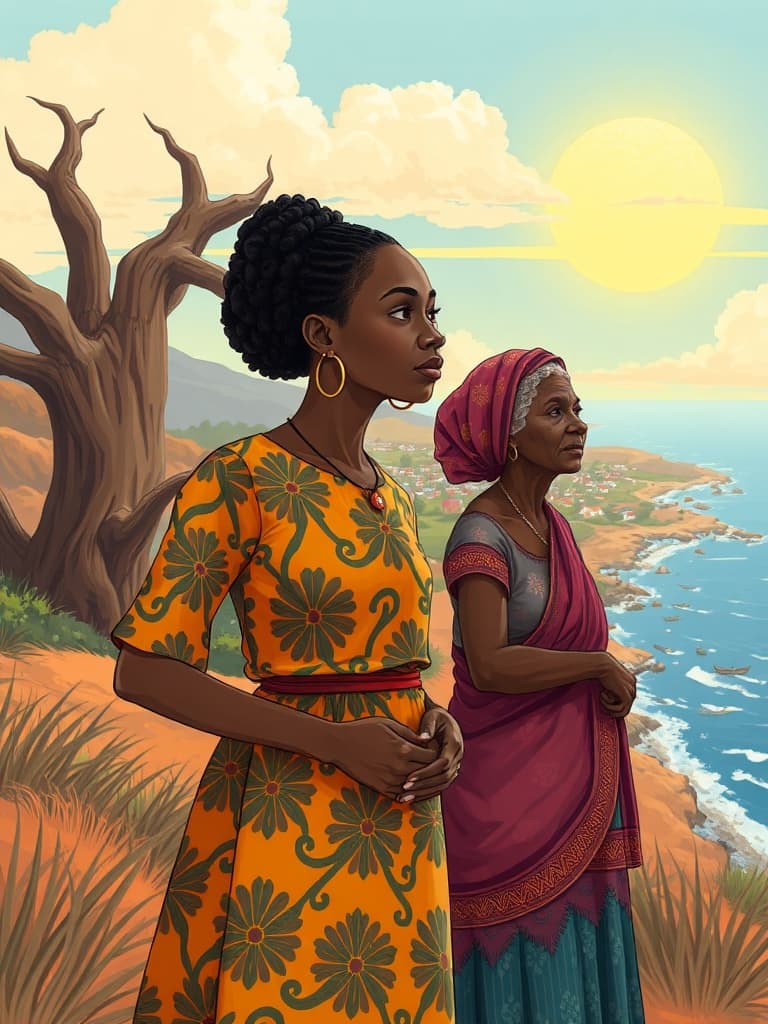
Sous le soleil d’Awa : la force des ancêtres Au cœur d’un village côtier d’Afrique de l’Ouest baigné par un soleil éternel, Awa est bien plus qu’un lieu : c’est une terre où les ancêtres murmurent encore à travers le vent, les baobabs et les vagues. Lorsque des menaces modernes — spéculations foncières, oubli des traditions et conflits familiaux — viennent ébranler l’équilibre du village, Fatou, une jeune femme partie étudier en ville, est rappelée par un rêve ancestral. Guidée par les rites anciens et la sagesse d’une grand-mère gardienne des mémoires, elle va devoir réveiller la force des ancêtres pour protéger son peuple et redécouvrir qui elle est vraiment. Entre mystères spirituels, transmission intergénérationnelle et combat pour l’identité, ce roman raconte le retour aux sources, la puissance invisible des lignées et la résilience d’une communauté qui refuse de se laisser effacer. Une histoire lumineuse, profonde et enracinée, où le passé n’est jamais mort… il attend juste qu’on l’écoute.
Table of contents
- 1Le Murmure du Vent d'AwaFatou, en ville, est hantée par un rêve récurrent. Le village côtier d'Awa, son havre d'enfance, semble l'appeler. Les images ancestrales et une mélodie oubliée la tiraillent, annonçant un retour imminent face à des menaces grandissantes.
- 2Le Retour de la Fille ProdigueFatou regagne Awa, trouvant le village empreint d'une tension palpable. Les traditions s'effritent, les terres sont convoitées. Sa grand-mère, gardienne des mémoires, l'accueille avec une sagesse teintée d'inquiétude, percevant le destin de Fatou.
- 3Les Racines OubliéesGuidée par sa grand-mère, Fatou s'initie aux rites ancestraux. Elle découvre les histoires de ses aïeux, la force des lignées et le langage secret de la nature. Les vieilles légendes prennent vie, résonnant en elle.
- 4L'Écho des AncêtresAu cœur d'une cérémonie, Fatou ressent une connexion profonde avec ses ancêtres. Une énergie nouvelle l'envahit, révélant une force intérieure insoupçonnée. Elle comprend que le passé n'est pas mort, mais vivant en elle.
- 5Le Spectre de la SpéculationMoussa, homme d'affaires influent, expose son projet de développement qui menace les terres ancestrales. Les villageois sont divisés, certains séduits par la modernité, d'autres effrayés par la perte de leur identité.
- 6Le Conseil des AnciensFatou, armée de sa nouvelle compréhension, prend la parole devant le conseil. Elle défend les traditions et l'esprit d'Awa, utilisant la sagesse transmise pour contrer les arguments de Moussa et rallier les cœurs.
- 7La Danse de la MémoirePour réveiller la force collective, Fatou organise une fête traditionnelle. La musique, la danse et les chants font revivre l'âme du village. Les anciens partagent leurs souvenirs, renforçant le lien communautaire.
- 8Les Larmes du BaobabUn conflit éclate, menaçant de diviser le village. Fatou intervient, rappelant l'importance de l'unité et du respect mutuel. Elle utilise des métaphores ancestrales pour apaiser les tensions et guérir les blessures.
- 9Le Pacte des GénérationsFatou et sa grand-mère œuvrent ensemble pour sceller un pacte entre les générations. Les jeunes s'engagent à respecter les traditions, tandis que les aînés promettent d'intégrer le progrès avec discernement.
- 10La Force InvisibleMoussa tente une dernière manœuvre pour imposer son projet. Mais la communauté unie, guidée par la force des ancêtres que Fatou a réveillée, oppose une résistance déterminée et pacifique, protégeant son héritage.
- 11Le Soleil RetrouvéLes menaces sont repoussées. Awa respire à nouveau, son équilibre restauré. Fatou, transformée, incarne la sagesse des ancêtres, symbole vivant de la résilience et de l'identité retrouvée de son peuple.
- 12Awa, Terre d'ÉternitéLe village d'Awa prospère, alliant traditions et modernité. Fatou, devenue gardienne des mémoires, veille sur son peuple, assurant que le murmure des ancêtres continue de guider et de protéger leur terre bénie.
More Historical stories
Browse all Historical →- Guerre d'espionnage penden laguerre d'Algérie 54 62
Guerre d'espionnage et votre epionage. Secret guerre
- LA LUMIÈRE DU CŒUR
Rappels
La Lumière du Cœur est un ouvrage de rappel spirituel destiné à apaiser l’âme et à rapprocher le croyant de son Seigneur. À travers des versets du Coran, des invocations authentiques et des conseils simples, ce livre invite à renouer avec l’essentiel : la foi, la patience, le repentir et la confiance en Allah. Dans un monde marqué par les épreuves, les doutes et les distractions, il rappelle que la véritable sérénité ne se trouve que dans le souvenir d’Allah. Chaque chapitre aborde une dimension essentielle de la vie spirituelle : la miséricorde divine, la prière, le dhikr, la gratitude, le repentir et la constance dans l’épreuve. Accessible et profond à la fois, cet ouvrage se veut un compagnon du quotidien, un rappel doux mais puissant pour les cœurs en quête de lumière et de stabilité intérieure. Un appel à revenir vers Allah, à ne jamais désespérer de Sa miséricorde, et à avancer avec confiance vers une vie empreinte de foi et de paix intérieure.
- MON HISTOIRE AVEC DIEU
Un chemin de foi, d'espérance et d'amour 💝✝️
- Sistemas
Sistemas de átomos, células e vidas, faunas e floras no planeta Terra! Sistemas cibernéticos com processamentos qunticos e cruzadores do universos com aero modelos acima da velocidade da luz!! Sistemas de ia completos com processamentos qunticos... Sistemas Delta Larruse completos... Dedicatória ao criador Álvaro Daniel Ferreira dos Santos!!
- The Gypsies and Witches of Romania and Hungary (A Rich Cultural History)
The Witches and Gypsies of Romania and Hungary: A Cultural Tapestry of Magic and TraditionAncient Roots and Historical ContextThe mystical traditions of Romania and Hungary are deeply intertwined with centuries of folklore, persecution, and cultural preservation. Both regions have served as crossroads between Eastern and Western Europe, creating unique blends of magical practices that draw from Slavic, Germanic, and Ottoman influences.In Romania, particularly in Transylvania, witchcraft traditions date back to pre-Christian Dacian practices. The mountainous terrain and isolated villages provided perfect sanctuaries for preserving ancient knowledge through generations of wise women and cunning folk. Hungarian magical traditions similarly evolved from Magyar shamanism, blending with later Christian mysticism and folk healing practices.Romanian Witchcraft TraditionsThe Strigoi and Supernatural BeliefsRomanian witchcraft is inseparable from beliefs in the strigoi - restless spirits of the dead who return to influence the living. Traditional Romanian witches, known as vrăjitoare, served as intermediaries between the world of the living and the supernatural realm. They practiced protective magic, healing rituals, and divination to shield communities from malevolent spirits.Ritual Practices and ToolsRomanian witches traditionally worked with:•Herbal remedies using plants like leacuri (healing herbs) gathered during specific moon phases•Candle magic with beeswax candles blessed in Orthodox churches•Water scrying using sacred springs and wells•Protective charms crafted from red thread, garlic, and ironThe Role of Orthodox ChristianityUnlike Western European witchcraft, Romanian magical practices often incorporated Orthodox Christian elements. Many vrăjitoare saw themselves as working within, rather than against, Christian cosmology, using prayers, holy water, and saint invocations alongside traditional spells.Hungarian Cunning Folk and HealersThe Tudós TraditionHungarian wise women and men, called tudós (knowledgeable ones), practiced a sophisticated system of folk magic that emphasized healing and protection. These practitioners were respected community members who combined herbal medicine with ritual magic.Shamanic InfluencesHungarian magical traditions retain strong connections to pre-Christian Magyar shamanism, including:•Táltos - shamanic figures who could journey between worlds•Animal spirit work particularly with horses, which held sacred significance•Drumming and trance states for divination and healing•Sacred groves and natural power spots for ritual workRomani (Gypsy) Magical TraditionsCultural Sensitivity and TerminologyThe term "Gypsy" is considered outdated and often offensive; "Romani" or "Roma" are the preferred terms for this diverse ethnic group. Romani people have faced centuries of persecution and marginalization, making their magical traditions both resilient and carefully guarded.Romani Divination ArtsRomani communities in both Romania and Hungary developed sophisticated divination systems:•Cartomancy using specialized card decks and reading techniques•Palmistry (chiromancy) with detailed hand analysis methods•Crystal gazing and scrying practices•Tea leaf reading and other forms of tasseographyHealing and Protective MagicRomani magical practices emphasize:•Herbal healing using traditional plant knowledge passed down through families•Protective amulets and talismans for warding off the evil eye•Cleansing rituals using smoke, water, and salt•Blessing ceremonies for important life transitionsPersecution and SurvivalHistorical OppressionBoth witches and Romani people faced severe persecution throughout European history. The witch trials of the 16th and 17th centuries devastated traditional healing communities, while Romani people endured slavery, forced assimilation, and genocide.Communist Era SuppressionDuring the communist period in both Romania and Hungary, traditional magical practices were officially suppressed as "superstition." However, these traditions survived in rural communities and family lineages, often practiced in secret.Modern Revival and PreservationContemporary PracticeToday, there's renewed interest in traditional Romanian and Hungarian magical practices. Modern practitioners work to:•Document traditional knowledge before it's lost•Revive respectful practice of ancestral traditions•Educate about the historical and cultural significance of these practices•Combat stereotypes and misconceptionsCultural Tourism and CommercializationThe popularity of Transylvanian vampire tourism and "Gypsy fortune telling" has created both opportunities and challenges. While increased interest can help preserve traditions, commercialization often leads to stereotyping and cultural appropriation.Sacred Landscapes and Power PlacesRomanian Sacred Sites•The Carpathian Mountains - considered repositories of ancient magical knowledge•Bran Castle region - associated with both historical and legendary magical practices•Maramureș - known for preserving traditional folk magic and wooden church traditions•Sacred springs and wells throughout rural RomaniaHungarian Magical Geography•Lake Balaton - ancient sacred lake with healing properties•Buda Hills - traditional gathering places for magical practitioners•The Great Plain (Alföld) - shamanic landscapes of the Magyar ancestors•Thermal springs used for healing and purification ritualsHerbs and Natural MagicBoth Romanian and Hungarian traditions emphasize working with local plants and natural materials:Common Magical Plants•Mugwort (Artemisia vulgaris) - for protection and divination•Elder (Sambucus nigra) - sacred tree for healing and spirit work•Garlic (Allium sativum) - powerful protective herb against evil•Wormwood (Artemisia absinthium) - for cleansing and banishing•St. John's Wort (Hypericum perforatum) - for protection and healingFestivals and Seasonal CelebrationsTraditional Celebrations•Sânzienele (Romanian Midsummer) - herb gathering and love magic•Dragobete (Romanian Valentine's Day) - love and fertility rituals•Busójárás (Hungarian carnival) - mask wearing to banish winter spirits•Szent Iván éjszakája (Hungarian St. John's Night) - fire festivals and herb magicLegacy and InfluenceThe magical traditions of Romania and Hungary have influenced:•Modern witchcraft movements worldwide•Academic folklore studies and anthropological research•Literature and popular culture representations of European witchcraft•Contemporary healing practices and herbalismThese rich traditions represent thousands of years of accumulated wisdom about healing, protection, and working with natural and supernatural forces. While respecting their cultural origins and the communities that preserved them, we can appreciate their contributions to our understanding of European magical heritage.The witches and Romani people of Romania and Hungary maintained their traditions through centuries of persecution, creating resilient systems of knowledge that continue to inspire and inform magical practice today. Their legacy reminds us that magic has always been about community healing, protection of the vulnerable, and maintaining connection with the natural world. Proudly written in English ,Romanian and Hungarian
- Le Fil d'Argent du Destin
Control ta raison sinon ceux qui ont tord vont la fermer tout personne a la capacité de coche ça partis négatif
Want to write a story like this?
Learn the craft in our free AI story generator, then draft your first chapter with an AI co-writer.