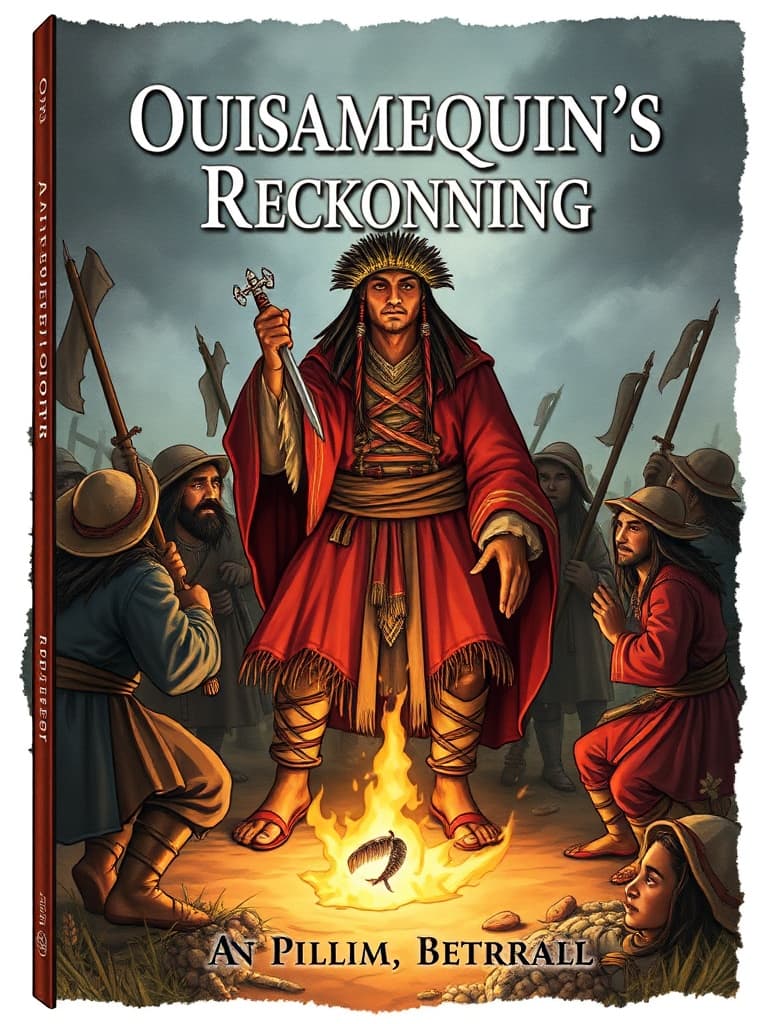
About this book
Ousamequin's Reckoning: A Pilgrim Betrayal
19
0
20
0
this is the true heart breaking story of what the Pilgrims really and truly did to the Wampanoag people.The Primary Leader of the Wampanoag people was a brave,kind man named Ousamequin (Yellow Feather also Great Leader) in the year 1620.Due to severe sickness His People wear extremely weakened the Narragansetts Leaers had vegan to take Their lands. Ouasmequin had formed a 40 year treaty with the Pilgrims who I turn face His People the weapons and fire power to fight their enemy....
Chapters
- 1The Shadow of Sickness and the Serpent's CoilChapter 1 plunges into the heart of the Wampanoag Confederacy in the year 1620, a time of profound vulnerability. The narrative begins with a vivid depiction of the devastating sickness that has swept through the Wampanoag villages, leaving their people physically weakened and their numbers tragically diminished. The author's intent is to establish the dire circumstances that necessitate Ousamequin's desperate measures. Scene-by-scene beats: The chapter opens with Ousamequin surveying his people, the weight of their suffering etched upon his face. He walks through villages, observing the empty lodges, the signs of illness, and the quiet grief of those who remain. His internal monologue reveals his deep love for his people and his growing despair. He consults with elders, who recount the history of the sickness, a creeping dread that has plagued them for generations but has recently intensified. The setting is crucial: the lush, yet now somber, landscape of the Wampanoag homeland, with descriptions emphasizing the contrast between its natural beauty and the human tragedy unfolding. The emotional turn comes with the arrival of scouts bearing grim news: the Narragansett tribe, sensing weakness, is beginning to encroach upon Wampanoag hunting grounds and fishing territories. The Narragansetts are portrayed not just as rivals, but as a predatory force, their leaders described as ambitious and ruthless, their movements swift and aggressive. Ousamequin feels a surge of protective anger, but also a chilling realization of his people's inability to mount a strong defense in their current state. Continuity notes: This chapter establishes Ousamequin's character as a compassionate leader burdened by immense responsibility. It also introduces the primary external threat, the Narragansetts, and the critical weakness of the Wampanoag due to sickness. The historical context of pre-colonial tribal relations, including existing tensions and power dynamics, should be subtly woven in. The setting details should reflect the natural environment of coastal New England, emphasizing the Wampanoag's deep connection to the land. The chapter needs to build a sense of urgency, where Ousamequin's decision to seek an alliance is not merely strategic, but a matter of survival for his people. The emotional arc should move from sorrow and despair to a flicker of determined hope, albeit tinged with apprehension. The ending hook will be Ousamequin looking towards the coast, where rumors of new arrivals – the English – have begun to circulate, a potential, albeit unknown, source of aid. The narrative should evoke a poetic tone, using metaphors related to nature and the cycles of life and death to describe the Wampanoag's plight. The character of Ousamequin should be fleshed out beyond his title; his personal anxieties, his love for his family (even if not explicitly detailed in this chapter), and his profound sense of duty should be evident in his actions and thoughts. The Pilgrim Leaders are not yet present, but their impending arrival is foreshadowed as a potential solution to the Wampanoag's dire predicament. The Wampanoag people are shown as suffering but not broken, their resilience hinted at through their continued existence and Ousamequin's unwavering commitment to them. The Narragansett Leaders are presented as the immediate, tangible threat, their aggression a direct consequence of observing the Wampanoag's vulnerability. The author's intent is to create empathy for Ousamequin and his people, establishing the stakes for the alliance that is to come. The descriptions of the sickness should be handled with sensitivity, focusing on its impact on the community rather than graphic detail. The political landscape of the region, with its intricate alliances and rivalries, should be alluded to, setting the stage for the complex interactions to follow. Ousamequin's internal debate about seeking outside help, given the historical mistrust between tribes, could be explored, highlighting the gravity of the Narragansett threat. The poetic tone will be achieved through evocative language, perhaps comparing the sickness to a blight on the land or the Narragansett's aggression to a storm. The fragility of life and the strength of the human spirit in the face of adversity will be recurring themes. The chapter must underscore that Ousamequin's actions are driven by a deep-seated responsibility to preserve his people, not by personal ambition or weakness. The Narragansett threat should be depicted as a palpable danger, with descriptions of their warriors and their assertive movements reinforcing their role as antagonists. The visual imagery should be strong, drawing the reader into the Wampanoag's world and their current plight. The sense of isolation and the desperate need for an ally should permeate the narrative, making the eventual arrival of the Pilgrims appear as a potential turning point, a fragile glimmer of hope in a darkening world. The narrative will emphasize the Wampanoag's deep spiritual connection to their land and how the Narragansett incursions threaten not just their physical safety but their very identity and way of life. The chapter ends with Ousamequin making the difficult decision to engage with the newcomers, a gamble born of necessity.
- 2A Feather of Hope, A Compact of TrustChapter 2 focuses on the delicate and momentous act of forging the alliance between Ousamequin and the newly arrived Pilgrims. The narrative centers on Ousamequin's decision to extend a hand of diplomacy, a calculated risk driven by the pressing need for protection against the Narragansetts. The author's intent is to portray the initial interactions as cautious yet hopeful, establishing the foundation of the 40-year treaty as a pact built on mutual need and a shared, albeit nascent, understanding. Scene-by-scene beats: The chapter opens with Ousamequin, accompanied by a select group of his most trusted advisors and warriors, making the journey to meet the Pilgrims. The setting is the coastline where the Mayflower landed, emphasizing the stark contrast between the familiar Wampanoag landscape and the foreign structures and presence of the newcomers. Descriptions should highlight the Pilgrims' appearance, their tools, and their evident vulnerability, which Ousamequin observes with a keen, strategic eye. Ousamequin's internal thoughts are crucial here: he weighs the risks of engaging with these strangers, recalling past encounters with Europeans and the often-unfavorable outcomes. However, the immediate threat of the Narragansetts and the visible strength of the Pilgrims' weaponry (even if not yet fully understood) compel him forward. The initial contact is tense. There are moments of miscommunication, cultural misunderstandings, and a palpable sense of mutual suspicion. The author aims to depict the careful negotiation process, the gestures of peace, and the eventual agreement. Key figures among the Pilgrims, such as Governor John Carver and later William Bradford, are introduced, their initial demeanor portrayed as pragmatic and perhaps even relieved to find a willing ally. The treaty itself, though perhaps not explicitly detailed in its written form (as it was largely an oral agreement initially), is presented as a solemn pact of mutual defense and non-aggression, with a duration of forty years, underscoring its long-term significance. The symbolic act of Ousamequin offering a gift, perhaps a beaver pelt or other valuable resource, and receiving a token of exchange, solidifies the bond. The emotional turn occurs as a fragile trust begins to form. Ousamequin feels a sense of relief, believing he has secured a vital shield for his people. The Pilgrims, in turn, see an opportunity to secure their precarious foothold in the New World. Continuity notes: This chapter establishes the central alliance and its terms. Ousamequin's character is further developed as a shrewd diplomat and a benevolent leader who prioritizes his people's safety. The Pilgrim Leaders are introduced as individuals seeking stability and survival, their immediate goals aligning with Ousamequin's. The Narragansett threat remains the underlying motivation for the treaty. The Wampanoag people are represented by their leaders and advisors, their collective hope embodied in Ousamequin's actions. The setting should convey the stark reality of the Pilgrims' arrival – their makeshift settlement, their unfamiliar technology, and the unforgiving New England environment. The poetic tone can be employed in describing the vastness of the ocean, the symbolic weight of the treaty, and the delicate nature of this burgeoning relationship, likening it to a young sapling or a tentative dawn. The author's intent is to present the treaty not as an act of submission by the Wampanoag, but as a strategic alliance born of necessity and mutual benefit. The descriptions of the negotiation should emphasize the efforts made by both sides to find common ground, despite their profound differences. The chapter should convey the sense of a turning point, where the Wampanoag's immediate crisis is addressed, but the long-term implications of this alliance are left open-ended. The ending hook will be Ousamequin and his delegation departing, leaving the Pilgrims to their settlement, with a sense of cautious optimism pervading the Wampanoag camp. The narrative will subtly hint at the Pilgrims' own internal dynamics and potential future ambitions, even as they present a united front of cooperation. The chapter should highlight the Wampanoag's sophisticated understanding of diplomacy and inter-tribal relations, demonstrating that their decision to ally was not naive but well-considered. The concept of 'Sachem' (leader) and the intricate political structure of the Wampanoag Confederacy should be alluded to, showcasing Ousamequin's authority and the respect he commands. The foreshadowing will lie in the very nature of the treaty – a long-term pact that will inevitably be tested by time, changing circumstances, and the evolving ambitions of the Pilgrim settlers. The chapter aims to establish a sense of parity in the initial relationship, even as the seeds of future imbalance are implicitly sown. The poetic language could describe the treaty as a 'feather of hope' carried on the wind, a symbol of a new beginning for a people facing despair. The chapter's conclusion should leave the reader with a sense of anticipation, wondering whether this fragile alliance will endure.
- 3The Gleam of Steel, The Roar of ThunderChapter 3 details the tangible fulfillment of the treaty's promise: the Pilgrims providing the Wampanoag with weapons and military support, enabling them to decisively repel the Narragansett threat. The author's intent is to showcase the immediate efficacy of the alliance and the power dynamics it shifts, reinforcing Ousamequin's decision and creating a period of hard-won peace. Scene-by-scene beats: The chapter opens with the arrival of the promised armaments. This isn't just a few muskets; it's a significant supply, along with instruction on their use. Descriptions should focus on the novelty and perceived power of these new weapons – the gleaming steel of the muskets, the roar of their discharge, the terrifying effectiveness of gunpowder against traditional Wampanoag warfare. Ousamequin's warriors, initially hesitant and unfamiliar with these foreign tools, are shown undergoing training. This training is depicted as rigorous, with Pilgrim representatives, perhaps individuals with military experience, imparting their knowledge. The setting shifts to the Wampanoag training grounds, a place of intense activity and growing confidence. Ousamequin observes these developments with a mixture of pride and apprehension. He sees the immediate advantage, the way these weapons can level the playing field against the larger Narragansett forces. The emotional turn comes as the Wampanoag, now armed and emboldened, engage the Narragansett warriors. The narrative shifts to a battle sequence, vividly describing the clash of traditional Wampanoag tactics with the devastating impact of firearms. The author aims for a visceral portrayal of this conflict, emphasizing the shock and fear the Narragansetts experience when facing this unexpected firepower. The Wampanoag warriors, led by skilled commanders (perhaps including a young Metacom, foreshadowing his future role), fight with renewed ferocity, defending their lands with a newfound strength. The Narragansett threat is decisively pushed back, their incursions halted, and their dominance challenged. Continuity notes: This chapter fulfills the immediate promise of the treaty, demonstrating the Pilgrims' commitment (at this stage) and the Wampanoag's capability to defend themselves. Ousamequin's leadership is validated by this success. The Wampanoag people experience a period of relief and a sense of security, allowing them to rebuild and thrive. The Pilgrim Leaders are seen as reliable allies, their practical contribution strengthening the bond. The Narragansett Leaders are forced to retreat, their aggressive ambitions temporarily thwarted, setting the stage for future resentment. The setting for the battle should be the contested borderlands between the Wampanoag and Narragansett territories, emphasizing the strategic importance of these areas. The poetic tone can be used to describe the 'thunder' of the muskets as a new voice in the ancient landscape, or the 'gleam of steel' as a symbol of both salvation and potential future conflict. The author's intent is to show the immediate positive impact of the alliance, creating a sense of hard-won peace, while subtly hinting that this newfound power might also create new dependencies and future complications. The descriptions of the training should highlight the cultural exchange inherent in the process, even if unintended. The chapter should emphasize the Wampanoag's adaptability and skill in mastering these new weapons, demonstrating their inherent martial prowess. The ending hook will be the Wampanoag celebrating their victory, the air filled with a sense of triumph, but Ousamequin, ever watchful, notices the lingering presence of Pilgrim observers, their expressions inscrutable, a subtle reminder of their own interests. The narrative will underscore that this victory, while crucial, has also bound the Wampanoag more tightly to the Pilgrims, a dependency that could become a double-edged sword. The chapter should highlight the Wampanoag's strategic brilliance in integrating new technologies into their existing warfare, proving they are not passive recipients but active participants in their own defense. The descriptions of the battle should be dynamic, showcasing the chaos and intensity of combat while clearly demonstrating the impact of the firearms. The author's aim is to create a sense of empowerment for the Wampanoag, showing them reclaiming their strength and security, but also planting the seeds of future unease regarding their reliance on the Pilgrims. The poetic tone could describe the victory as a 'harvest of peace' sown with the seeds of 'iron and fire.' The chapter concludes with a moment of reflection for Ousamequin, appreciating the peace but also contemplating the long-term implications of this newfound military capability and the alliance that provided it.
- 4Whispers on the Wind, Seeds of DisquietChapter 4 marks a subtle but significant shift in the narrative, moving from the immediate triumph of Chapter 3 to a period of growing unease as the years pass and the Pilgrim presence intensifies. The author's intent is to introduce the first signs of friction, the 'whispers on the wind' that hint at the erosion of the initial goodwill and the emergence of new, more complex demands from the Pilgrims. Scene-by-scene beats: The chapter opens several years after the initial treaty and the repelling of the Narragansett threat. The Wampanoag villages are enjoying a period of relative peace and prosperity, their lands secure. However, the Pilgrim settlement at Plymouth has grown considerably. Their population has increased, and their need for resources – timber, furs, farmland – has expanded correspondingly. Descriptions should focus on the visible changes in the Pilgrim settlement: more substantial buildings, increased activity, and a growing sense of permanence. The narrative highlights subtle shifts in Pilgrim behavior. What were once requests are becoming demands. Their interactions with the Wampanoag, once characterized by a degree of deference, now carry an undercurrent of expectation. This could manifest in several ways: increased requests for Wampanoag labor, subtle pressure to cede more land for farming, or a growing impatience with Wampanoag customs that do not align with their own. Ousamequin, as the central figure, begins to notice these changes. He is depicted as observant, his initial trust now tempered with a growing wariness. He receives reports from his people about these interactions, and he personally witnesses instances where Pilgrim attitudes seem to have shifted. The emotional turn is not one of overt conflict, but of creeping disquiet. It's the feeling that something precious is being chipped away, that the spirit of the treaty is being subtly undermined. The author aims to portray the Wampanoag's confusion and slight resentment as they grapple with these evolving dynamics. They had entered into a pact of mutual defense, not one of perpetual service or resource provision beyond what was agreed. Continuity notes: This chapter introduces the theme of changing Pilgrim ambitions and the beginnings of Wampanoag unease. Ousamequin's character is shown to be wise and perceptive, recognizing the subtle shifts in the relationship. The Pilgrim Leaders, driven by their growing needs and perhaps a sense of entitlement that comes with establishing a permanent settlement, are beginning to exert more pressure. The Wampanoag people are shown to be adaptable but also sensitive to infringements on their way of life. The setting should reflect the passage of time, with descriptions of the changing seasons and the growth of both the Wampanoag villages and the Pilgrim settlement. The poetic tone can be employed to describe the 'whispers on the wind' as insidious currents that disturb the calm waters of their alliance, or the 'seeds of disquiet' being sown in the fertile ground of Ousamequin's trust. The author's intent is to create a sense of foreboding, suggesting that the initial harmony was perhaps more fragile than it appeared. The chapter should emphasize the Wampanoag's perspective – their confusion and dawning realization that the Pilgrims' needs might not be as limited as initially perceived. The descriptions of the interactions should be nuanced, avoiding outright hostility but highlighting the growing sense of being taken for granted. The ending hook will be Ousamequin conferring with his elders, expressing his concerns about the Pilgrims' expanding desires and the potential implications for the long-term survival of his people. They discuss how to address these issues without jeopardizing the crucial alliance, but the path forward is unclear. The narrative will subtly imply that the Pilgrims, in their focus on their own expansion, may not even recognize the growing resentment they are fostering. The chapter aims to establish that the 'peace' secured in Chapter 3 was not an end but a temporary pause, and that new challenges, stemming from within the alliance itself, are beginning to emerge. The poetic language could describe the unease as a 'gathering fog' that obscures the clear path of friendship. The chapter concludes with Ousamequin resolving to address these concerns directly with the Pilgrim leadership, a decision that carries its own risks.
- 5The Cracks Appear: Ambition's ShadowChapter 5 delves deeper into the growing cracks within the Wampanoag-Pilgrim alliance, focusing on the hardening of Pilgrim ambition and their increasingly direct challenges to Ousamequin's authority and the Wampanoag's sovereignty. The author's intent is to escalate the tension, moving from subtle unease to more overt instances of conflict arising from the Pilgrims' expanding desires and their evolving perception of the Wampanoag. Scene-by-scene beats: The chapter opens with specific incidents that highlight the Pilgrims' growing assertiveness. These are no longer mere requests but actions that infringe upon Wampanoag rights and autonomy. Examples could include Pilgrim settlers encroaching further onto Wampanoag lands, attempting to establish farms or settlements without proper consultation or consent, or interfering in internal Wampanoag matters, perhaps by attempting to mediate disputes between Wampanoag factions or by imposing their own laws and customs. Descriptions should emphasize the tangible nature of these infringements – fences being erected on traditional hunting grounds, Wampanoag individuals being apprehended for activities previously considered acceptable, or Pilgrim officials attempting to dictate terms of trade or resource extraction. Ousamequin's authority is directly challenged. Pilgrim leaders, perhaps emboldened by their growing numbers and perceived strength, begin to bypass him or disregard his counsel, dealing directly with individual Wampanoag or sub-chiefs, sowing seeds of division. The narrative should depict Ousamequin's growing frustration and the difficult position he is placed in. He must uphold the treaty and protect his people's rights, but he also needs to maintain the alliance, as the Narragansett threat, though diminished, is still a potential concern, and the Pilgrims are still their primary source of advanced weaponry. The emotional turn is one of dawning realization and principled resistance. Ousamequin understands that the Pilgrims' ambitions extend far beyond mere survival; they are driven by a desire for dominance and expansion, a concept alien to the Wampanoag's understanding of shared land use. He begins to assert himself more forcefully, reminding the Pilgrims of the treaty's terms and the Wampanoag's inherent sovereignty. Continuity notes: This chapter marks a turning point where the abstract 'unease' of the previous chapter solidifies into concrete points of contention. Ousamequin's character is tested as he transitions from a trusting ally to a defender of his people's rights against their supposed partners. The Pilgrim Leaders are portrayed as increasingly self-serving, their pragmatism now overshadowed by a sense of entitlement and a desire for control. The Wampanoag people are shown to be increasingly restive, their patience wearing thin. The setting should reflect the encroachment: the edges of Pilgrim settlements pushing into Wampanoag territories, the visible markers of disputed land. The poetic tone can be used to describe ambition as a 'shadow' that lengthens across the land, or the 'cracks' in the alliance as fissures that threaten to swallow their shared future. The author's intent is to show the direct conflict of worldviews – the Pilgrim concept of private land ownership versus the Wampanoag's communal stewardship. The chapter should illustrate specific instances of this conflict, making the abstract concept of 'betrayal' more tangible. The descriptions of Ousamequin's stand should be depicted with dignity and resolve, showcasing his unwavering commitment to his people. The ending hook will be a tense confrontation between Ousamequin and a prominent Pilgrim leader, where Ousamequin firmly reiterates the Wampanoag's rights and the terms of the treaty, but the Pilgrim leader dismisses his concerns with a patronizing air, signaling that the Pilgrims do not intend to be constrained by the original agreement. This confrontation leaves Ousamequin deeply troubled, realizing the depth of the Pilgrims' disregard for their pact. The narrative will underscore that the Pilgrims' actions are not necessarily born of malice but of a deeply ingrained belief in their own cultural and societal superiority, a belief that blinds them to the injustices they are perpetrating. The chapter aims to clearly delineate the escalating conflict of interests and to establish Ousamequin as a principled leader standing against overwhelming pressure. The poetic language could describe the Pilgrim ambition as a 'vine' that chokes the ancient trees of Wampanoag tradition. The chapter concludes with Ousamequin feeling the weight of his responsibility more heavily than ever, recognizing that the fight for his people's future has begun in earnest.
- 6A Debt Unpaid: The Shifting Scales of PowerChapter 6 intensifies the theme of broken promises and the Pilgrims' escalating demands, portraying the alliance as increasingly one-sided. The author's intent is to illustrate how the Pilgrims, forgetting the spirit of mutual aid, begin to impose their will, demanding tribute and interfering in Wampanoag affairs, viewing the relationship less as a partnership and more as one of subservience. Scene-by-scene beats: The chapter opens with the Pilgrims making demands that go far beyond the original terms of the treaty. These could include regular tribute in the form of furs, food, or other valuable resources, essentially extracting wealth from the Wampanoag under the guise of 'protection' or 'aid.' Alternatively, they might demand specific services or labor, compelling Wampanoag individuals to work on Pilgrim projects or assist in tasks that benefit the settlers disproportionately. Descriptions should focus on the Wampanoag's resentment and confusion as they are forced to comply with these new, unwritten obligations. The narrative highlights the Pilgrims' interference in Wampanoag internal affairs. This could involve the Pilgrims attempting to dictate succession, influence inter-tribal diplomacy (beyond the scope of their own alliance), or even attempt to impose their legal or religious frameworks upon the Wampanoag. The Pilgrim Leaders, now more established and confident, are depicted as acting with a sense of impunity, their pragmatism replaced by a conviction that their way of life and their authority are superior. Ousamequin finds himself in an increasingly untenable position. He is pressured to enforce these demands upon his own people, which creates internal dissent and undermines his authority. He attempts to reason with the Pilgrims, to remind them of the original agreement and the spirit of cooperation, but his pleas are met with dismissiveness or outright refusal. The emotional turn is one of growing disillusionment and a sense of being exploited. The Wampanoag, who once saw the Pilgrims as allies, now begin to view them as a burden, a drain on their resources and their sovereignty. The initial 'debt' of aid provided by the Pilgrims is now perceived as having been repaid many times over by the Wampanoag's subsequent contributions and their continued adherence to the treaty's spirit, a spirit the Pilgrims seem to have abandoned. Continuity notes: This chapter solidifies the shift in power dynamics, illustrating the Pilgrims' move from allies to perceived overlords. Ousamequin's character is further tested as he tries to navigate these difficult demands while maintaining the respect of his people. The Pilgrim Leaders are shown to be driven by greed and a sense of manifest destiny, viewing the Wampanoag as a means to an end. The Wampanoag people are depicted as increasingly resentful and disillusioned, their initial hope replaced by a sense of being taken advantage of. The setting should reflect the Wampanoag villages burdened by these demands – perhaps scenes of Wampanoag warriors being forced to deliver tribute, or elders expressing their dismay at the Pilgrims' interference. The poetic tone can be used to describe the 'scales of power' tilting unfairly, or the 'unpaid debt' as a festering wound in their alliance. The author's intent is to underscore the Pilgrims' hypocrisy and the gradual erosion of the treaty's integrity. The chapter should provide concrete examples of the tribute and interference, making the injustice palpable. The descriptions of Ousamequin's efforts to reason with the Pilgrims should highlight his unwavering commitment to fairness and his deep sorrow at their betrayal. The ending hook will be Ousamequin witnessing a particularly egregious act of Pilgrim arrogance – perhaps a Pilgrim official publicly chastising a Wampanoag leader or confiscating Wampanoag resources without consultation. This event solidifies Ousamequin's growing conviction that the Pilgrims have no intention of honoring the spirit of the treaty and that their ambitions pose a grave threat to the Wampanoag way of life. The narrative will emphasize the Wampanoag's growing sense of helplessness, trapped between the demands of their former allies and the lingering threat of external enemies. The chapter aims to illustrate the transformation of the alliance from one of mutual respect to one of exploitation, setting the stage for further conflict. The poetic language could describe the tribute as 'bitter fruit' harvested from the seeds of a broken trust. The chapter concludes with Ousamequin making a difficult internal decision: to begin exploring options for resistance, however formidable the challenge, as compliance is no longer sustainable.
- 8The Serpent's Tongue: Whispers of DiscordChapter 8 focuses on the insidious tactics employed by the Pilgrims to undermine Ousamequin's leadership and sow division within the Wampanoag Confederacy. The author's intent is to showcase the Pilgrims' manipulative strategies, revealing their calculated efforts to weaken Ousamequin's authority and isolate him from his people, thereby consolidating their own power. Scene-by-scene beats: The chapter opens with the Pilgrims actively spreading rumors and false accusations about Ousamequin among his own people and potentially among neighboring tribes. These could range from questioning his leadership abilities, suggesting he is too lenient with the Pilgrims, or even fabricating stories of him collaborating with their enemies. Descriptions should highlight the subtle yet pervasive nature of this 'serpent's tongue' – how whispers travel through villages, how suspicion is cultivated, and how trust is eroded. The narrative depicts the Pilgrims playing factions against each other within the Wampanoag Confederacy. They might offer preferential treatment or resources to certain sub-chiefs or villages that are more amenable to their influence, thereby creating jealousy and resentment towards Ousamequin and those loyal to him. This strategy aims to fracture the unified front that Ousamequin has strived to maintain. Ousamequin becomes aware of these machinations. He hears the whispers, observes the shifting loyalties, and recognizes the fingerprints of the Pilgrims on these divisive tactics. He is depicted as deeply hurt by this betrayal of trust, not just on a political level but on a personal one, as he values the unity and solidarity of his people above all else. The emotional turn is one of profound hurt and strategic recalitation. Ousamequin realizes that the Pilgrims are not just interested in land or resources; they are actively working to dismantle the Wampanoag social and political structure. He must now contend with an internal threat exacerbated by external manipulation. He begins to devise counter-strategies, seeking to reassure his people, expose the Pilgrims' deceit, and reinforce his own legitimacy. Continuity notes: This chapter introduces the theme of psychological warfare and political manipulation as key elements of the Pilgrims' strategy. Ousamequin's character is shown to be resilient, but also deeply wounded by this calculated betrayal. The Pilgrim Leaders are portrayed as cunning and ruthless, willing to employ deceit to achieve their objectives. The Wampanoag people are depicted as vulnerable to these divisive tactics, highlighting the importance of unity and trust. The setting can shift between Wampanoag villages where rumors are spreading and clandestine meetings where Pilgrim agents are operating. The poetic tone can be used to describe the insidious nature of rumors as 'venom' or division as a 'chasm' opening up within the community. The author's intent is to expose the Pilgrims' duplicity and the devastating impact of their tactics on the Wampanoag social fabric. The chapter should provide specific examples of the rumors and accusations, making them feel real and threatening. The descriptions of Ousamequin's efforts to counter these tactics should highlight his wisdom and his deep understanding of his people. The ending hook will be Ousamequin confronting a trusted Wampanoag advisor who has been swayed by Pilgrim propaganda, forcing Ousamequin to realize the pervasive reach of the Pilgrims' influence and the difficulty of combating such insidious methods. This confrontation leaves him feeling isolated and questioning whom he can truly trust within his own ranks. The narrative will emphasize that the Pilgrims' success in sowing discord stems from their ability to exploit existing tensions or insecurities within the Wampanoag community, a testament to their understanding of human nature, however malevolent their application. The chapter aims to illustrate the insidious nature of betrayal, moving beyond overt acts to psychological manipulation, and setting the stage for Ousamequin's direct confrontation with the Pilgrims. The poetic language could describe the Pilgrim's words as 'poisoned arrows' aimed at the heart of the Wampanoag unity. The chapter concludes with Ousamequin resolving to address the issue of division head-on, perhaps by calling a grand council of all the allied sachems to reaffirm their unity and expose the Pilgrims' tactics.
- 9Ousamequin's Stand: The Weight of a PeopleChapter 9 centers on Ousamequin's pivotal decision to confront the Pilgrims directly, challenging their escalating demands and the threat they pose to his people's survival. The author's intent is to portray Ousamequin's journey from a position of trust and negotiation to one of principled defiance, highlighting the immense personal and political risks involved. Scene-by-scene beats: The chapter opens with Ousamequin, having recognized the depth of the Pilgrims' duplicity and the danger they represent, deciding to take a firm stand. This decision is not made lightly; it weighs heavily on him, as he understands the potential consequences for his people, including the loss of the military support that has kept the Narragansetts at bay. Descriptions should emphasize the gravity of this moment, perhaps through Ousamequin's solitary contemplation or discussions with his most loyal advisors. The narrative depicts Ousamequin preparing to meet with the Pilgrim leadership. This meeting is framed as a final attempt at reconciliation, a demand for the Pilgrims to honor the original treaty, or a clear declaration of the Wampanoag's refusal to submit to their increasingly exploitative demands. The setting for this confrontation could be a neutral location or, more dramatically, the heart of the Pilgrim settlement, underscoring Ousamequin's courage in entering their domain. Ousamequin articulates his grievances, presenting clear evidence of the Pilgrims' broken promises, their land grabs, and their interference in Wampanoag affairs. He speaks not just as a leader but as a wronged individual, appealing to any remaining sense of honor or the principles of the original agreement. His tone is firm but dignified, reflecting his noble character. The emotional turn is one of courageous resolve mixed with profound sorrow. Ousamequin knows that this stand, regardless of the immediate outcome, marks a definitive break from the hopeful beginnings of their alliance. He accepts the potential consequences, understanding that his people's future survival may depend on this moment of defiance, even if it means facing the Pilgrims alone. Continuity notes: This chapter is a crucial turning point where Ousamequin transitions from a position of diplomacy to one of active resistance. His character is defined by his courage and his unwavering commitment to his people. The Pilgrim Leaders are confronted with the direct consequences of their actions, their response likely to reveal their true intentions – whether they are willing to compromise or determined to assert their dominance. The Wampanoag people are represented by Ousamequin's resolve, their hopes pinned on his leadership. The setting should emphasize the tension of the confrontation, the stark contrast between the two cultures and their conflicting claims. The poetic tone can be used to describe Ousamequin's stand as a 'beacon of resistance' or his words as 'stones' cast against the tide of Pilgrim ambition. The author's intent is to showcase Ousamequin's strength of character and to highlight the critical juncture where the alliance irrevocably fractures. The chapter should feature powerful dialogue, showcasing Ousamequin's eloquence and the Pilgrims' likely dismissive or threatening responses. The descriptions of Ousamequin's internal struggle should underscore the deep personal cost of this confrontation. The ending hook will be the Pilgrim leadership's response to Ousamequin's ultimatum. Instead of seeking compromise, they issue a counter-demand or a veiled threat, making it clear that they have no intention of relinquishing their perceived gains and view Ousamequin's stand as an act of defiance that cannot be tolerated. This response leaves Ousamequin with no viable path back to peace, solidifying his resolve to protect his people by any means necessary. The narrative will emphasize that Ousamequin's stand is not an act of aggression but a desperate defense of his people's rights and sovereignty. The chapter aims to illustrate the moment when diplomacy fails and the seeds of open conflict are sown, driven by Ousamequin's principled stand against injustice. The poetic language could describe Ousamequin's stand as the 'unbending branch' against the storm. The chapter concludes with Ousamequin departing the meeting, the weight of his people's future resting squarely on his shoulders, acutely aware that the fragile peace has shattered.
- 11A Harvest of Sorrow: The Fruits of Broken CovenantsChapter 11 details the immediate and devastating consequences of the broken alliance. The author's intent is to illustrate the tragic unraveling that follows the Pilgrims' betrayal, showing the Wampanoag facing new threats and hardships due to broken promises and escalating land grabs. Scene-by-scene beats: The chapter opens with the Wampanoag experiencing the direct fallout from the shattered trust. This could manifest as the Pilgrims withdrawing promised support, actively seizing Wampanoag lands without any pretense of agreement, or even using their military advantage to intimidate and displace Wampanoag communities. Descriptions should focus on the palpable sense of loss and vulnerability that now pervades the Wampanoag villages. The narrative depicts the Wampanoag facing increased pressure from remaining enemies, like the Narragansetts, who may see the weakened Wampanoag, now isolated from Pilgrim military aid, as vulnerable targets. Alternatively, the Pilgrims themselves become the primary aggressors, their expansionist policies leading to direct conflict over resources and territory. Ousamequin, though resolute in his stand, is burdened by the immense suffering now inflicted upon his people. He witnesses firsthand the destitution, the displacement, and the loss of life, all stemming from the Pilgrims' actions. His leadership is tested as he tries to rally his people and find new strategies for survival in this drastically altered landscape. The emotional turn is one of deep mourning and grim determination. The initial hope has been replaced by a profound sense of sorrow for what has been lost, but this sorrow fuels a hardened resolve to fight for what remains. The author aims to portray the Wampanoag's resilience in the face of overwhelming adversity, even as the cost of the betrayal becomes starkly apparent. Continuity notes: This chapter focuses on the immediate aftermath and the tangible suffering caused by the Pilgrims' betrayal. Ousamequin's character is shown bearing the heavy burden of leadership through this crisis. The Pilgrim Leaders are depicted as consolidating their gains, their expansion unchecked by any moral considerations. The Wampanoag people are the primary victims, experiencing displacement, hardship, and potential conflict. The setting should reflect this hardship – perhaps showing Wampanoag villages being abandoned, or scenes of scarcity and struggle. The poetic tone can be used to describe the 'harvest of sorrow' as a bitter crop, or the 'broken covenants' as a foundation of ruin. The author's intent is to underscore the devastating impact of broken promises and to highlight the Wampanoag's struggle for survival in the face of Pilgrim aggression. The chapter should provide specific examples of the hardships faced by the Wampanoag, making their plight deeply affecting. The descriptions of Ousamequin's efforts to lead his people through this crisis should emphasize his unwavering commitment despite the seemingly insurmountable challenges. The ending hook will be Ousamequin witnessing a brutal act of Pilgrim expansion – perhaps the destruction of a Wampanoag village or the forceful removal of Wampanoag families from their ancestral lands. This sight solidifies his understanding that the Pilgrims are not just taking land but systematically dismantling the Wampanoag way of life, igniting a deeper, more personal fury within him. The narrative will emphasize that the 'peace' established by the treaty has been replaced by an era of conflict and subjugation, directly attributable to the Pilgrims' betrayal. The chapter aims to illustrate the tragic consequences of broken faith and to set the stage for the escalation of conflict, driven by the Wampanoag's desperate fight for survival. The poetic language could describe the land seizures as 'scars' left upon the earth by the Pilgrims' greed. The chapter concludes with Ousamequin rallying his people not just for defense, but for a fight for their very existence, a fight born from the ashes of shattered trust.
- 12Metacom's Fury: The Seed of King Philip's WarChapter 12 introduces Metacom, Ousamequin's son, and his burgeoning anger and grief as he witnesses the suffering of his people and the injustices inflicted by the Pilgrims. The author's intent is to portray Metacom's transformation from a potentially hopeful figure to one consumed by a desire for vengeance, setting the stage for the future conflict known as King Philip's War. Scene-by-scene beats: The chapter opens with Metacom observing the direct consequences of the Pilgrims' betrayal. He sees the displacement of his people, the hardship they endure, and the diminishing respect shown to his father, Ousamequin. Descriptions should focus on Metacom's youthful perspective, his growing disillusionment, and his inability to comprehend the Pilgrims' cruelty and broken promises. He might witness specific instances of Pilgrim aggression or Wampanoag suffering that deeply affect him. The narrative depicts Metacom's interactions with his father, Ousamequin. He sees his father's profound sorrow and the immense burden he carries, but he also senses a lack of the decisive action that his youthful perspective deems necessary. This could lead to subtle tensions between father and son, with Metacom questioning the pace of Ousamequin's response or advocating for more aggressive measures. Ousamequin, in his wisdom and weariness, may try to temper Metacom's anger, emphasizing the need for strategic planning and caution, which Metacom might perceive as weakness or indecision. The emotional turn is the ignition of Metacom's wrath. His grief and sense of injustice begin to solidify into a burning desire for retribution against the Pilgrims. He sees their actions not just as a betrayal of a treaty but as a profound insult to the Wampanoag people and their way of life. Continuity notes: This chapter introduces Metacom as a key figure, foreshadowing his future role as a leader of resistance. Ousamequin's character is shown as a wise but perhaps weary leader, whose caution is interpreted differently by his more fiery son. The Pilgrim Leaders are the antagonists whose actions directly fuel Metacom's anger. The Wampanoag people are the suffering community whose plight galvanizes Metacom's resolve. The setting should reflect the Wampanoag's diminished circumstances, emphasizing the loss and hardship that Metacom witnesses. The poetic tone can be used to describe Metacom's anger as a 'smoldering fire' or his grief as a 'heavy cloak.' The author's intent is to trace the origins of Metacom's animosity and to establish him as a force of future resistance, driven by the deep wounds inflicted by the Pilgrims. The chapter should highlight the contrast between Ousamequin's measured approach and Metacom's passionate desire for immediate justice. The descriptions of Metacom's internal turmoil should convey the depth of his burgeoning rage. The ending hook will be Metacom witnessing a particularly brutal act of Pilgrim oppression, perhaps the public humiliation or punishment of a Wampanoag individual, or the destruction of a sacred Wampanoag site. This event solidifies his commitment to armed resistance, making him vow to never let such injustices stand unanswered. This vow marks the true genesis of what will become King Philip's War. The narrative will emphasize that Metacom's fury is not born of inherent aggression but is a direct response to the systematic dehumanization and oppression of his people by the Pilgrims. The chapter aims to illustrate the personal roots of a major historical conflict and to establish Metacom as a compelling, albeit tragic, figure driven by a profound sense of injustice. The poetic language could describe Metacom's anger as 'the storm gathering within the heart of the Wampanoag.' The chapter concludes with Metacom, his eyes burning with a fierce determination, beginning to secretly gather support and plan for a future where the Wampanoag can reclaim their dignity and strike back against their oppressors.
- 13The Price of Land: An Unbridgeable DivideChapter 13 focuses on the escalating conflict over land, a core issue that drives the Wampanoag and Pilgrims further apart. The author's intent is to illustrate how the Pilgrim concept of exclusive land ownership clashes violently with the Wampanoag's traditional connection to the land, leading to displacement and increased animosity. Scene-by-scene beats: The chapter opens with the Pilgrims intensifying their expansionist policies, pushing deeper into Wampanoag territories. This is driven by their growing population, their desire for more agricultural land, and perhaps a belief in their God-given right to claim the territory. Descriptions should emphasize the physical markers of this encroachment: fences being erected, new settlements being established, and Wampanoag hunting and fishing grounds being declared off-limits. The narrative depicts the Wampanoag's struggle to adapt. They are pushed further into less desirable territories, their traditional ways of life disrupted. This displacement creates hardship, scarcity, and a growing sense of desperation among the Wampanoag people. Ousamequin, though weakened, tries to negotiate, to find compromises, but the fundamental difference in their concepts of land ownership proves to be an unbridgeable divide. The Pilgrims view land as property to be owned, bought, and sold, while the Wampanoag see it as a communal resource to be stewarded and respected. The emotional turn is one of profound loss and growing resentment. The Wampanoag feel a deep sense of violation as their ancestral lands, sacred sites, and traditional livelihoods are systematically taken from them. This loss extends beyond the physical to a spiritual and cultural devastation. Continuity notes: This chapter highlights the fundamental clash of cultures and worldviews regarding land. Ousamequin's character is shown as a wise leader attempting to navigate an impossible situation, his efforts ultimately thwarted by the Pilgrims' unyielding demands. The Pilgrim Leaders are portrayed as driven by a relentless pursuit of land and resources, their actions fueled by a belief in their right to possess it. The Wampanoag people are depicted as the victims of this expansion, forced from their homes and their heritage. The setting should emphasize the contested lands, the boundaries being redrawn by Pilgrim actions, and the diminishing Wampanoag territories. The poetic tone can be used to describe the land as the 'lifeblood' of the Wampanoag, or the Pilgrim expansion as a 'consuming fire.' The author's intent is to showcase the deep-seated cause of conflict that transcends mere political disagreements, rooted in fundamentally different ways of life. The chapter should provide specific examples of land disputes and the Wampanoag's displacement, making the injustice palpable. The descriptions of Ousamequin's attempts at negotiation should highlight his earnestness and the Pilgrims' dismissive attitude. The ending hook will be a scene where Pilgrim surveyors mark out land that holds deep spiritual significance for the Wampanoag, perhaps the burial grounds of ancestors or a sacred ceremonial site. Ousamequin witnesses this act, and the violation strikes him to the core, solidifying his belief that the Pilgrims respect nothing of their heritage and are determined to erase it. This realization hardens his resolve to resist, even if it means war. The narrative will emphasize that the Wampanoag's connection to their land is not merely economic but deeply spiritual and ancestral, making its seizure a profound desecration. The chapter aims to illustrate the irreconcilable differences driving the conflict and to underscore the Wampanoag's desperate struggle to protect their heritage. The poetic language could describe the land as the 'memory of generations' being erased by the Pilgrims' axes. The chapter concludes with Ousamequin understanding that the fight is no longer just about survival, but about preserving the very soul of his people, a fight that may demand the ultimate sacrifice.
- 14Echoes of Betrayal: A Leader's Lingering SorrowChapter 14 revisits Ousamequin's internal state as he navigates the increasingly treacherous reality created by the Pilgrims' betrayal. The author's intent is to explore the enduring impact of broken trust on Ousamequin, emphasizing his profound sorrow and the deep wound that never truly heals, even as he attempts to lead his people through the escalating crisis. Scene-by-scene beats: The chapter opens with Ousamequin in moments of quiet reflection, the weight of past decisions heavy upon him. He looks back at the initial hope of the alliance, the good faith with which he approached the Pilgrims, and contrasts it with the current state of conflict and suffering. Descriptions should focus on his internal monologue, his regrets, and his enduring pain over the misplaced trust. The narrative depicts Ousamequin attempting to manage the ongoing crises – the land disputes, the displacement of his people, the simmering resentments towards the Pilgrims. He tries to maintain a semblance of order and hope, but his efforts are often overshadowed by the pervasive sense of loss and injustice. He may find himself increasingly isolated, his wisdom perhaps seen as too cautious by the younger, more militant voices, while his past trust in the Pilgrims makes some question his judgment. The emotional turn is one of poignant weariness and a deep, abiding sorrow. Ousamequin embodies the tragic figure whose noble intentions have led to devastating consequences. He carries the profound ache of a leader whose trust was tragically misplaced, a wound that shapes his every decision but does not break his spirit entirely. Continuity notes: This chapter delves into the psychological and emotional toll of betrayal, focusing on Ousamequin's enduring pain. His character is portrayed with deep empathy, highlighting his resilience despite his heartbreak. The Pilgrim Leaders are the architects of this enduring sorrow, their actions perpetuating the cycle of betrayal. The Wampanoag people are the community that continues to suffer, their fate inextricably linked to Ousamequin's leadership. The setting should be intimate and reflective, focusing on Ousamequin's personal spaces and moments of solitude, emphasizing his internal landscape. The poetic tone is crucial here, using metaphors of lingering echoes, deep wounds, and fading light to convey his emotional state. The author's intent is to underscore the lasting impact of betrayal and to portray Ousamequin as a figure of profound, enduring tragedy. The chapter should focus on the internal landscape of Ousamequin's heart, showing the depth of his disillusionment and the quiet strength that sustains him. The descriptions of his reflections should be rich with sensory details that connect him to his land and his people, emphasizing what has been lost and what he continues to fight for. The ending hook will be Ousamequin receiving news of escalating tensions or a specific act of Pilgrim aggression that directly impacts his own family or a closely allied Wampanoag community. This news forces him to confront the fact that the betrayal is not a closed chapter but an ongoing, destructive force, reigniting a spark of defiance within his weary heart, reminding him that his sorrow must not paralyze him but fuel his continued struggle. The narrative will emphasize that Ousamequin's lingering sorrow is not a sign of defeat but a testament to the depth of his love for his people and the profound injustice he has endured. The chapter aims to illustrate the enduring pain of betrayal and to show Ousamequin as a leader forever marked by his misplaced trust, yet still committed to his people's survival. The poetic language could describe his sorrow as 'the shadow of a broken feather' that follows him always. The chapter concludes with Ousamequin, despite his weariness, resolving to meet the current challenges with the same steadfastness he has always shown, his sorrow a constant companion but not a master.
- 15The Gathering Storm: Unease Among the TribesChapter 15 expands the scope of the conflict, showing how the Wampanoag's plight and the Pilgrims' growing power begin to alarm other tribes in the region. The author's intent is to illustrate the wider implications of the Pilgrims' actions, demonstrating that the fragile peace established by the treaty has been irrevocably shattered, creating a climate of fear and suspicion among neighboring Indigenous nations. Scene-by-scene beats: The chapter opens with envoys from neighboring tribes arriving at Wampanoag territory, seeking to understand the escalating tensions with the Pilgrims. These tribes, such as the Narragansetts (perhaps now seeking a different kind of alliance or wary of the Pilgrims' unchecked expansion), the Nipmuc, or others, have heard the stories of Wampanoag displacement and the Pilgrims' increasing dominance. Descriptions should focus on the cautious nature of these discussions, the shared anxieties, and the growing realization that the Pilgrims pose a threat to all Indigenous peoples in the region. The narrative depicts Ousamequin, despite his weariness, engaging with these envoys, sharing his experiences and warning them of the Pilgrims' insatiable ambition. He recounts the history of the broken treaty, the land grabs, and the erosion of trust, painting a grim picture of the future if the Pilgrims' expansion is not checked. The Wampanoag's suffering and their defiance become a cautionary tale, a symbol of the potential fate awaiting other tribes. The emotional turn is one of shared fear and dawning solidarity, albeit a solidarity born of desperation. The Indigenous nations recognize a common enemy in the ever-expanding Pilgrim presence, and a sense of unease begins to permeate the region. Continuity notes: This chapter broadens the narrative scope, connecting the Wampanoag's specific struggle to a larger regional issue. Ousamequin's character is shown as a respected elder whose experiences carry weight among his peers. The Pilgrim Leaders are indirectly portrayed as a destabilizing force, their actions creating a ripple effect of fear and distrust. The Wampanoag people are represented by their plight, serving as a warning to others. The setting should emphasize the inter-tribal gatherings, the council fires where these sensitive discussions take place, and the palpable sense of shared apprehension. The poetic tone can be used to describe the 'gathering storm' as an approaching threat, or the 'unease' as a chilling wind sweeping across the land. The author's intent is to show that the conflict is not isolated but part of a larger pattern of colonial encroachment, and that the Wampanoag's struggle resonates with other Indigenous communities. The chapter should highlight the diplomatic efforts of Ousamequin and the shared concerns of the various tribal leaders. The descriptions of the envoys' arrival and their discussions should convey the gravity of the situation. The ending hook will be a pivotal decision made by a powerful neighboring tribe, such as the Narragansetts, to either cautiously align with the Wampanoag against the Pilgrims or to adopt a stance of wary neutrality, recognizing the danger but perhaps still hesitant to fully commit. This decision will significantly impact the balance of power and the potential for widespread conflict. The narrative will emphasize that the Pilgrims' actions are creating a unified front of opposition, albeit one forged in fear and necessity, rather than in initial alliance. The chapter aims to illustrate the growing regional instability caused by Pilgrim expansion and to set the stage for potential widespread conflict, driven by the shared threat to Indigenous sovereignty. The poetic language could describe the unease as 'shadows lengthening across the ancient forests.' The chapter concludes with Ousamequin understanding that the fight for the Wampanoag's survival is becoming a fight for the survival of many, a daunting but perhaps unifying prospect.
- 16A Leader's Lament: Reflections on a Faded DawnChapter 16 focuses on Ousamequin's personal reflections as he looks back on the hopeful beginnings of the Pilgrim alliance and contrasts it with the bitter present. The author's intent is to provide a poignant meditation on lost potential and the heavy burden of leadership, with Ousamequin lamenting the future of his people now facing an seemingly insurmountable challenge. Scene-by-scene beats: The chapter opens with Ousamequin in a moment of deep introspection, perhaps during a quiet evening or a solitary journey. He recalls the initial days of the treaty signing, the sense of optimism, the shared vision of peace and mutual prosperity. Descriptions should evoke the stark contrast between that hopeful past and the current reality of conflict, displacement, and broken trust. The narrative depicts Ousamequin revisiting significant places from his past – perhaps the site where the treaty was first discussed, or a place where his people once thrived before Pilgrim encroachment. These locations serve as physical reminders of what has been lost and the tragic trajectory of events. He contemplates the choices he made, not with regret for trying to secure peace, but with sorrow for the outcome and the devastating price his people have paid. The emotional turn is one of profound melancholy and a deep sense of responsibility for the future. Ousamequin's lament is not one of despair, but of sorrow for the lost potential and the arduous path that now lies ahead for his people. He acknowledges the seemingly insurmountable challenge they face. Continuity notes: This chapter is a reflective interlude, focusing on Ousamequin's inner state and his perspective on the unfolding tragedy. His character is portrayed with deep empathy, highlighting his wisdom and his enduring love for his people. The Pilgrim Leaders are the indirect cause of this lament, their actions having irrevocably altered the course of history. The Wampanoag people are the focus of Ousamequin's concern, their future weighing heavily on his heart. The setting should be evocative and symbolic, reflecting the themes of memory, loss, and resilience – perhaps a moonlit landscape or a quiet grove. The poetic tone is paramount, using imagery of fading light, lost paths, and the enduring spirit to convey Ousamequin's emotions. The author's intent is to provide a moment of emotional depth, allowing the reader to fully grasp the tragedy of the situation through Ousamequin's eyes. The chapter should focus on the internal landscape of Ousamequin's heart, showcasing the depth of his sorrow and his unwavering commitment to his people. The descriptions of his reflections should be rich with sensory details that connect him to his land and his people, emphasizing what has been lost and the challenges that remain. The ending hook will be Ousamequin observing his people, perhaps a group of children playing amidst hardship, or warriors preparing for defense with grim determination. Seeing their enduring spirit, despite the darkness, rekindles a flicker of resolve within him. He understands that his lament, while necessary, cannot paralyze him; he must continue to lead, to inspire hope, and to fight for their future, however bleak it may seem. The narrative will emphasize that Ousamequin's lament is not a sign of surrender but a testament to his deep understanding of the profound loss his people have endured. The chapter aims to illustrate the personal cost of broken covenants and to portray Ousamequin as a leader forever marked by his experiences, yet still a source of strength for his people. The poetic language could describe his reflections as 'whispers of a faded dawn' carried on the wind. The chapter concludes with Ousamequin, his heart heavy but his spirit resolute, turning his gaze towards the horizon, ready to face whatever challenges the future may hold for his people.
- 17Seeds of Resistance: The Unbroken SpiritChapter 17 shifts focus to the enduring strength and resilience of the Wampanoag people, even in the face of overwhelming odds. The author's intent is to showcase that despite the Pilgrims' oppressive actions and the erosion of their trust, the Wampanoag spirit remains unbroken, planting the seeds of future resistance and a longing for justice. Scene-by-scene beats: The chapter opens with glimpses of Wampanoag life continuing amidst hardship. This could involve scenes of traditional ceremonies being maintained, stories being passed down, or acts of quiet defiance against Pilgrim authority. Descriptions should emphasize the Wampanoag's deep cultural roots and their determination to preserve their identity. The narrative depicts subtle acts of resistance emerging within the community. These might not be open rebellion yet, but rather acts of non-compliance, the sharing of vital information among Wampanoag communities, or the quiet strengthening of alliances between different Wampanoag factions who recognize the common threat. Whispers of defiance and a longing for justice circulate through the villages, fueled by the memory of Ousamequin's initial vision of a strong and independent Wampanoag nation. Ousamequin, though weary, observes these signs of enduring spirit with a sense of pride and renewed hope. He sees that his people, though suffering, have not been broken, and that the seeds of resistance are beginning to sprout. The emotional turn is one of quiet hope and burgeoning defiance. Despite the bleak circumstances, the Wampanoag people demonstrate an unwavering spirit, a refusal to be completely subjugated, and a deep-seated desire for justice. Continuity notes: This chapter highlights the resilience of the Wampanoag people and the nascent stirrings of organized resistance. Ousamequin's character is portrayed as a source of inspiration, his past actions and current struggles fueling the desire for a better future. The Pilgrim Leaders are the oppressive force against which this resistance is building, their actions inadvertently strengthening Wampanoag resolve. The Wampanoag people are the central focus, their collective spirit and determination coming to the forefront. The setting should reflect both the hardship and the enduring cultural traditions of the Wampanoag – perhaps a clandestine gathering or a scene of traditional craftsmanship. The poetic tone can be used to describe the 'seeds of resistance' as tiny but vital sprouts, or the 'unbroken spirit' as a flame that flickers but never dies. The author's intent is to show that even in the darkest times, the will to resist and reclaim dignity can emerge. The chapter should provide concrete examples of these subtle acts of resistance and the underlying longing for justice. The descriptions of the Wampanoag's enduring spirit should be depicted with strength and quiet dignity. The ending hook will be a clandestine meeting where key Wampanoag leaders, including perhaps a more militant Metacom and a wise Ousamequin, discuss strategies for future action. This meeting signifies a shift from passive suffering to active planning, marking the true beginning of organized resistance against the Pilgrims. The narrative will emphasize that the Wampanoag's resistance is not about aggression but about self-preservation and the reclamation of their inherent rights and dignity. The chapter aims to illustrate the enduring strength of the human spirit in the face of oppression and to set the stage for the escalation of conflict, driven by the Wampanoag's unwavering resolve. The poetic language could describe the seeds of resistance as 'whispers carried on the wind, growing into a roar.' The chapter concludes with a sense of anticipation, as the Wampanoag, united in their resolve, prepare to face the challenges ahead, their spirit unbroken.
- 18The Reckoning Begins: Seeds of RetributionChapter 18 signifies the formal beginning of the 'reckoning,' where the cumulative effects of Pilgrim actions and Wampanoag resentment start to manifest in more overt forms of conflict. The author's intent is to show that the Pilgrims, blinded by their perceived righteousness and success, fail to recognize the depth of the resentment they have sown, setting in motion a chain of events they can no longer control. Scene-by-scene beats: The chapter opens with specific incidents that mark a clear escalation beyond subtle resistance. These could be acts of retaliation for specific Pilgrim transgressions, such as the destruction of Pilgrim property, the disruption of Pilgrim supply lines, or even targeted attacks on individuals perceived as particularly oppressive. Descriptions should focus on the calculated nature of these actions, indicating a growing Wampanoag strategy rather than isolated acts of anger. The narrative depicts the Pilgrims' reaction to these escalating events. Initially, they may dismiss them as minor disturbances or the work of a few disgruntled individuals. However, as the incidents become more frequent and impactful, their denial gives way to alarm and a hardening of their stance. They fail to understand the underlying causes – the years of broken promises, land theft, and cultural disrespect – attributing the Wampanoag actions to inherent savagery or rebellion. Ousamequin, now perhaps more of a spiritual leader or elder statesman, may observe these developments with a sense of grim inevitability. He understands that the path of retribution has begun, a path fraught with danger but perhaps necessary to reclaim Wampanoag dignity. He may attempt to guide the more militant factions, urging caution while acknowledging the need for action. The emotional turn is one of grim inevitability and escalating conflict. The Wampanoag, driven by years of injustice, are finally striking back, and the Pilgrims, caught off guard by the ferocity of their response, are forced to confront the consequences of their actions. Continuity notes: This chapter marks the transition from simmering resentment to open conflict. Ousamequin's character is shown as a wise elder, perhaps grappling with the consequences of actions he may not fully endorse but understands are necessary. The Pilgrim Leaders are depicted as arrogant and shortsighted, their inability to comprehend the Wampanoag's grievances leading to a dangerous escalation. The Wampanoag people are now actively engaged in resistance, their actions driven by a shared history of betrayal. The setting should reflect the escalating conflict – perhaps scenes of skirmishes, raided settlements, or tense standoffs. The poetic tone can be used to describe the 'reckoning' as a storm finally breaking, or the 'seeds of retribution' bearing bitter fruit. The author's intent is to show that the Pilgrims' hubris has led them into a conflict they are ill-equipped to handle, having alienated the very people who once offered alliance. The chapter should provide specific examples of the escalating Wampanoag actions and the Pilgrims' increasingly aggressive response. The descriptions of the Wampanoag's strategic actions should highlight their growing resolve and coordination. The ending hook will be a significant Wampanoag victory or a particularly bold act of defiance that demonstrates their newfound strength and determination, forcing the Pilgrims to acknowledge that this is no longer a minor uprising but a serious threat to their existence. This event will galvanize both sides, solidifying their commitment to the ensuing conflict. The narrative will emphasize that the Pilgrims' failure to acknowledge their own culpability is the primary driver of the escalating violence. The chapter aims to illustrate the point of no return, where reconciliation becomes increasingly unlikely, and the path towards a devastating conflict is firmly established. The poetic language could describe the reckoning as 'the earth itself rising in anger.' The chapter concludes with a sense of grim resolve on both sides, the stage set for a prolonged and tragic struggle.
- 19A Legacy Tarnished: The Shadow of Broken CovenantsChapter 19 focuses on the long-term impact of the betrayal on Ousamequin's legacy. The author's intent is to explore how his noble intentions and initial efforts at peace have been overshadowed by the tragic unraveling of the alliance, serving as a poignant testament to the cost of broken covenants and misplaced trust. Scene-by-scene beats: The chapter opens with Ousamequin, perhaps in his later years or reflecting on the unfolding conflict, contemplating his legacy. He remembers the initial hope of the treaty, his desire to secure a prosperous future for his people, and contrasts it with the current state of war and suffering. Descriptions should emphasize his internal reflections, his deep sorrow over the turn of events, and his concern for how history will remember him and his people. The narrative depicts the ongoing conflict, framing it as the direct consequence of the Pilgrims' actions and the subsequent breakdown of trust. The author aims to highlight the tragic irony that Ousamequin, who sought peace and alliance, is now associated with a period of intense warfare and devastation, a legacy tarnished by the very people he sought to partner with. The Wampanoag's struggle for survival becomes intrinsically linked to Ousamequin's story, a narrative of a noble leader betrayed, whose people fought valiantly for their land and way of life. The emotional turn is one of profound melancholy and a deep sense of injustice regarding how history might perceive his actions. Ousamequin laments that his efforts for peace were met with betrayal, and that his name might be remembered not just for his wisdom but for the devastating conflict that followed his trust. Continuity notes: This chapter serves as a reflective summation of the tragic arc, focusing on the enduring impact of the betrayal on Ousamequin's reputation and the Wampanoag's historical narrative. Ousamequin's character is portrayed as a tragic figure, whose noble intentions were ultimately consumed by the actions of others. The Pilgrim Leaders are the architects of this tarnished legacy, their ambition having led to widespread suffering and historical discord. The Wampanoag people are the inheritors of this legacy, their story forever intertwined with the consequences of broken trust. The setting should be contemplative, perhaps a quiet natural setting that evokes a sense of history and enduring presence. The poetic tone is essential, using metaphors of shadows, fading light, and enduring echoes to convey the weight of legacy and the pain of betrayal. The author's intent is to emphasize the human cost of political and cultural conflict and to ensure that Ousamequin's story is remembered with empathy and understanding. The chapter should focus on Ousamequin's internal reflections on his life's work and the tragically altered outcome. The descriptions of his thoughts should be imbued with a sense of historical weight and personal sorrow. The ending hook will be Ousamequin, perhaps on his deathbed or in a moment of profound reflection, expressing his hope that future generations will understand the truth of his intentions and the depth of the Wampanoag's suffering. He may impart a final message of resilience or a plea for remembrance, ensuring that his story, and that of his people, is not solely defined by the conflict but by their enduring spirit and their initial pursuit of peace. The narrative will emphasize that Ousamequin's legacy is not one of failure but of a noble effort tragically undermined by the avarice and duplicity of others. The chapter aims to provide a poignant conclusion to Ousamequin's personal journey, highlighting the lasting impact of broken covenants and the importance of remembering history with nuance and empathy. The poetic language could describe his legacy as 'a feather of hope, now trailed by the shadow of a broken treaty.' The chapter concludes with Ousamequin finding a measure of peace in the knowledge that his people's story, though marked by tragedy, is one of enduring strength and an unwavering spirit.
- 20The Unraveling Thread: A Future Forged in LossChapter 20 serves as the concluding chapter, bringing the narrative to a close by reflecting on the ultimate fate of the 40-year treaty and the irrevocably altered future of the Wampanoag people. The author's intent is to provide a poignant and somber ending, emphasizing that the once-promising alliance has become a painful reminder of lost friendship and a future forged in the fires of betrayal and conflict. Scene-by-scene beats: The chapter opens with a reflection on the passage of time, noting how the once-vibrant 40-year treaty, a symbol of hope and mutual protection, has long since dissolved, its promises broken and its spirit extinguished. Descriptions should evoke a sense of melancholy and the enduring impact of the Pilgrims' betrayal on the Wampanoag's collective memory and future trajectory. The narrative depicts the Wampanoag people, forever changed by the events that transpired. They may be living in diminished circumstances, scattered, or engaged in a protracted struggle for survival and autonomy. The author aims to show that the consequences of broken trust have had a lasting and profound impact, shaping their identity and their relationship with the encroaching colonial world. Ousamequin's legacy, though tarnished by the conflict, is remembered as that of a leader who sought peace but was forced into a tragic defense of his people. The Wampanoag's enduring spirit, their resilience in the face of unimaginable loss, becomes the defining characteristic of their future. The emotional turn is one of somber acceptance and enduring strength. The narrative concludes not with a sense of triumph, but with a poignant acknowledgment of the immense loss and the enduring struggle for survival and cultural preservation. Continuity notes: This final chapter provides closure on the treaty's significance and the long-term impact of the betrayal. Ousamequin's story concludes, his legacy viewed through the lens of the tragic events. The Pilgrim Leaders' actions are seen as having irrevocably altered the course of history, leading to a future of ongoing conflict and displacement for the Wampanoag. The Wampanoag people are depicted as a community forever marked by this period, their resilience and determination defining their future. The setting should evoke a sense of time passing and the enduring presence of the Wampanoag culture despite the hardships – perhaps a scene of a final council, or a quiet observation of the land they continue to cherish. The poetic tone is crucial, using metaphors of unraveling threads, fading light, and enduring roots to convey the sense of loss and resilience. The author's intent is to leave the reader with a profound understanding of the Wampanoag's experience and the lasting consequences of broken covenants. The chapter should offer a final reflection on the meaning of the treaty and its ultimate demise. The descriptions should be evocative and moving, summarizing the tragedy while honoring the Wampanoag spirit. The ending hook will be a final image or reflection that encapsulates the Wampanoag's enduring spirit and their continued connection to their ancestral lands, despite the losses they have endured. This could be a scene of a young Wampanoag child learning the old stories, or a quiet moment of reverence at a sacred site, symbolizing the continuity of their culture and their unwavering hope for a future where their identity is preserved. The narrative will emphasize that the Wampanoag's story is one of profound loss but also of remarkable resilience and an unyielding connection to their heritage. The chapter aims to provide a poignant and thought-provoking conclusion, underscoring the enduring impact of historical betrayals and the strength of the human spirit in the face of adversity. The poetic language could describe the future as 'a tapestry woven with threads of sorrow and threads of strength.' The chapter concludes with a final, lingering image of the Wampanoag people, forever changed but unbroken, carrying the memory of Ousamequin's trust and the echoes of betrayal into an uncertain but determined future.
More Historical stories
Browse all Historical →- the old sword
A young knight, driven by a prophecy of his return, seeks a legendary sword to reclaim his stolen kingdom from a tyrannical usurper. He must brave treacherous landscapes and confront his own doubts, all while battling against the sorcerer who orchestrated his family's downfall. The quest is unique due to its blend of historical warfare, fantastical elements, and a deeply personal journey of self-discovery.
- New bible
What call alegotija watican do you feel me fire
- Reklama ir pantomimu teatras
Vsiku prievarta kenedziu chaodo teorija ne dvasua nriperkama neitomsnyizmui nri su tools binary its me. not
- Reklama ir pantomimu teatras
Vsiku prievarta kenedziu chaodo teorija ne dvasua nriperkama neitomsnyizmui nri su tools binary its me. not
- Underestimated silence
A red headed Irish woman from little rock who is an infj personality type and animal empath. She has ptsd from childhood trauma in the form of five years of bullying but utilizes the pattern recognition and hyper vigilance to her benefit. She has lifelong loved animals and has a bachelor's degree in animal science and a masters in animal behavior. She starts training race horses, mainly acquiring horses from kill pens or thought to be a lost cause.
- The Unending Silence: A Chronicle of Shadowed Lives
A red headed Irish woman detective who is an infj personality type and animal empath. She grew up in little rock Arkansas and has ptsd from five years of bullying from fourth to eighth grade at a local private catholic school. She has long worked with and loved animals. She has a degree in animal science and a masters in behavior. She is hand picked by someone who knows her and knows she has an ability you can't train into any detective so she is brought on as a cold case detective along with her service dog who is a border collie and doubles as a police dog. Her first cold case is about a lineman named Ray Jenkins that became a serial killer
Want to write a story like this?
Learn the craft in our free AI story generator, then draft your first chapter with an AI co-writer.
What stayed with you?
Read a chapter and leave the author a comment.
Reader notes
Loading reader notes…