Back to exploreStart my first chapter
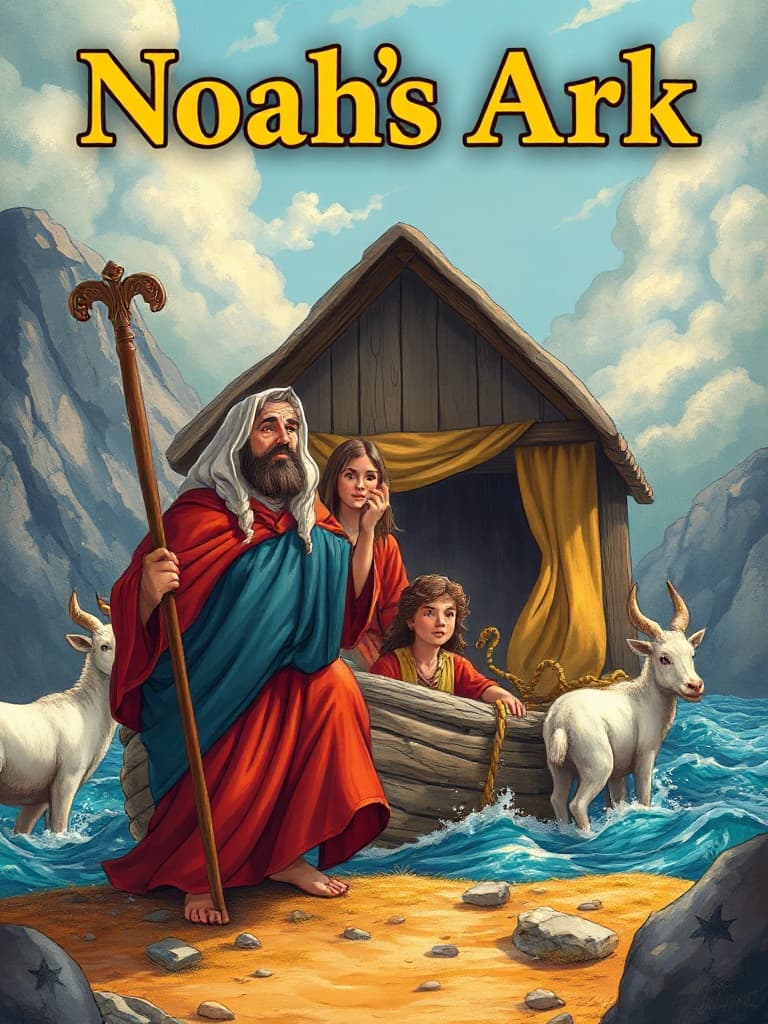
Story overview
Noah's Ark
Religion
Reads
1
Likes
0
Parts
20
Status
published
The story of Noah and his family and him getting drunk after they got off the ark.
Table of contents
- 1The Whispers of the Divine BlueprintThe narrative opens with me, Noah, experiencing a profound, overwhelming divine encounter. God's voice, not just heard but felt in the very marrow of my bones, commands me to undertake a task of cosmic significance: the construction of an ark, a vessel of salvation. The world as we know it is to be purged by a flood of unprecedented scale, a deluge that will extinguish all life save for what I can preserve. The divine mandate is explicit: I must gather my immediate family—my wife Naamah, and our three sons, Shem, Ham, and Japheth—and select pairs of every living creature, male and female, to ensure the continuation of species. The sheer magnitude of this command is staggering. The ark must be of immense size, with specific dimensions and materials dictated by God, a testament to divine engineering. My immediate internal reaction is a whirlwind of awe, fear, and a daunting sense of responsibility. The world outside my immediate family is corrupt, steeped in wickedness, and this judgment is long overdue, yet the weight of being God's instrument is almost unbearable. The description of the impending flood is visceral: the sky opening, the earth cracking, waters rising with unstoppable force. God assures me of His presence and guidance throughout the construction and the ordeal, but the practicalities are immense. Where will I find the materials? How will I persuade my family, let alone the animals? And what of the people around me? They will surely see this as the raving of a madman. This chapter will establish my deep faith, my initial shock, and the overwhelming nature of God's command. It will detail the divine instructions for the ark, emphasizing its purpose as a sanctuary against destruction. The scene will be set in my familiar surroundings, which will soon become the site of this monumental construction, contrasting the mundane present with the cataclysmic future revealed to me. I will wrestle with the implications, the isolation, and the sheer impossibility of the task from a human perspective, yet my unwavering faith will be the bedrock upon which I begin to build. The chapter will end with my resolve hardening, a silent promise to God that I will obey, despite the daunting challenges and the likely ridicule that awaits. The sheer scale of the ark, described with divine precision – its length, width, height, the three decks, the watertight pitch – will be a focal point, underscoring the miraculous nature of the undertaking. The divine communication will be depicted as all-encompassing, a spiritual download that leaves no room for doubt, yet simultaneously instills a profound humility and a recognition of my own inadequacy. The emotional arc will move from stunned disbelief to fearful acceptance, culminating in a determined commitment to God's will. The narrative will be steeped in the atmospheric tension of a world unknowingly teetering on the brink of annihilation, juxtaposed with my solitary awareness and the genesis of a plan that will defy all natural laws and human understanding. The divine instruction will be presented not as a suggestion, but as an absolute decree, demanding absolute obedience. The foreshadowing of the world's disbelief will be subtly woven in, highlighting the immense social and psychological hurdle I must overcome even before laying the first timber. The chapter aims to immerse the reader in the divine revelation, making the miraculous command the central, unforgettable event that sets the entire saga in motion. The internal monologue will be filled with questions about the practicalities – how to acquire wood, tools, and the sheer labor required – but always returning to the absolute certainty of God's word. The divine promise of protection for my family and the chosen creatures will be a beacon of hope amidst the overwhelming dread. The final scene will depict me, Noah, standing amidst my familiar lands, gazing at the horizon with a newfound, albeit terrifying, purpose, the blueprint of the ark etched not just in my mind, but in my very soul. The sheer alienness of the command, the utter disruption it signifies to my life and the world, will be palpable. This initial encounter is the singularity from which all subsequent events will radiate, establishing the stakes, the protagonist's unique position, and the divine imperative that drives the entire narrative forward. The overwhelming sensory details of the divine presence—the light, the sound, the feeling of immense power—will be crucial in conveying the authenticity and gravity of the command. The chapter will be a testament to faith in the face of the impossible, a solitary man burdened with a world-saving mission dictated by the Almighty. The meticulous detail of the ark's construction, as revealed by God, will serve as a powerful symbol of divine order amidst impending chaos. The narrative will emphasize the moral corruption of the pre-flood world, justifying the divine judgment and underscoring the need for a new beginning, with Noah and his family as the chosen progenitors. The emotional weight of being the sole bearer of this apocalyptic knowledge will be a significant driving force, highlighting Noah's isolation and his reliance on divine strength. The specific mention of 'two of every kind' will be crucial, setting the stage for the animal gathering and the logistics of the ark. The chapter will conclude with Noah preparing to share this monumental, world-altering news with his family, a task fraught with its own unique challenges and potential for disbelief. The sheer scale of the undertaking will be contrasted with Noah’s humble origins, emphasizing that this is a task bestowed by God, not one achieved through human might alone. The divine promise of salvation will be the central theme, a sliver of light in the face of total annihilation. The chapter will be a deep dive into Noah's psyche as he grapples with the divine decree, showcasing his immediate commitment despite the overwhelming odds. The narrative will establish the 'why' behind the flood, painting a vivid picture of the world's wickedness, thus validating the divine judgment. The ark itself will be presented as more than just a boat; it will be a symbol of God's covenant and His mercy in the face of His wrath. The divine instructions for the ark's construction will be detailed, highlighting their specificity and divine origin, reinforcing the miraculous nature of the endeavor. The chapter will end with Noah accepting his role, ready to face the daunting task ahead, setting the stage for the arduous journey of construction and gathering.
- 2The Unheeded Warnings of a MadmanThe construction of the ark commences, a colossal undertaking that immediately draws the attention of my neighbors. My every action, from felling trees to shaping timbers, becomes a spectacle. The whispers begin subtly, then grow into open mockery. They call me 'Noah the Madman,' 'Noah the Builder of Folly.' Their disbelief is a palpable force, a constant barrage against my resolve. I see the scorn in their eyes, hear the derisive laughter echoing across the fields. They question my sanity, my motives, my very understanding of the world. 'Where is this flood you speak of, Noah?' they taunt. 'Have you seen the heavens weep before?' Their skepticism is rooted in their own corrupted worldview; they are so engrossed in their sins and worldly pursuits that they cannot conceive of divine judgment or a world-altering event. They mock my faith, my obedience to a God they have long since ignored or forgotten. This chapter will detail the daily grind of construction, the sheer physical labor involved, and the emotional toll of constant ridicule. I will describe specific instances of mockery, perhaps a group of villagers confronting me, challenging my actions, or children throwing stones. My internal struggle will be central: how to maintain my faith and focus amidst such overwhelming negativity. My family's reaction will be explored; while Naamah and my sons Shem and Japheth stand by me, Ham, perhaps influenced by the outside world, might show signs of unease or even embarrassment. The chapter will emphasize the stark contrast between my divine calling and the mundane, skeptical reality of the world around me. I will use the construction process itself—the hewing of wood, the hammering of nails, the rising structure—as a visual metaphor for my unwavering faith and determination. The physical challenges of building such a massive vessel, like lifting immense beams and working with primitive tools, will be detailed to highlight the arduous nature of the task, making the divine guidance even more crucial. The dialogue with the villagers will be sharp and dismissive, reflecting their entrenched disbelief and sense of superiority. My responses will be few, often quiet pronouncements of faith or simple acknowledgments of God's command, further fueling their derision. The emotional arc will focus on Noah's resilience, his ability to internalize the scorn and use it as fuel for his faith, rather than letting it break him. The chapter will also touch upon the spiritual warfare aspect, portraying the villagers' disbelief as a manifestation of the evil God intends to cleanse. The foreshadowing of the ark’s eventual success and the world's ultimate doom will be implicit in Noah's steadfastness. The chapter will conclude with a scene where the ark, though incomplete, stands as a defiant monument against the tide of skepticism, a silent testament to Noah's unwavering belief, even as the mocking voices fade into the background, replaced by the sound of his hammer and the quiet certainty of his divine mission. The sheer scale of the ark will be a constant visual reminder of the task’s magnitude, serving as a magnet for both curiosity and scorn. The chapter will explore the social isolation Noah experiences, his separation from the community due to his unique knowledge and task. The narrative will convey the sense of a race against time, not just in construction but in maintaining faith against the relentless pressure of disbelief. The emotional toll of being ostracized will be palpable, yet Noah’s inner strength, fueled by his relationship with God, will be the core of his perseverance. The specific details of the ark’s construction—the types of wood, the methods used, the sheer manpower required (even if it's primarily Noah’s)—will add a layer of gritty realism to the divine mandate. The chapter will highlight the generational aspect of corruption, implying that the wickedness Noah was warned about is deeply ingrained in the society. The chapter will end on a note of quiet defiance, Noah continuing his work, his faith unyielding, a solitary figure against a world determined to ignore the impending doom. The narrative will emphasize the personal sacrifice involved, the loss of social standing and peace for obedience to God. The whispers and taunts will be depicted not just as words, but as a psychological battleground where Noah’s faith is constantly tested. The chapter will illustrate how the mundane act of building becomes a radical act of faith in a world that has lost its way. The physical exertion of building the ark will be mirrored by the spiritual exertion required to withstand the constant barrage of disbelief. The contrast between Noah’s meticulous adherence to God’s plan for the ark and the chaotic, self-destructive lives of his neighbors will be a key theme. The chapter will culminate in a moment of profound isolation for Noah, standing by his half-built ark, the sounds of mockery fading as he focuses on the divine purpose, reinforcing his commitment despite the overwhelming opposition. The sheer audacity of the project, its unnatural scale and purpose, will be the primary driver of the community's disbelief, making Noah an object of ridicule rather than concern. The chapter will also subtly explore the fear that might lie beneath the villagers' mockery; perhaps a subconscious dread of the unknown, a defense mechanism against the possibility that Noah might be right.
- 3The Gathering of the Living ArkAs the ark nears completion, a new phase of divine orchestration begins: the arrival of the animals. This is not a haphazard occurrence, but a divinely guided migration. Pairs of every creature, from the mightiest beasts to the smallest insects, begin to converge upon the construction site. The air fills with a symphony of sounds—roars, chirps, bleats, hisses—a testament to the diversity of life God created. There's an uncanny sense of purpose in their movement; they seem to understand, on an instinctual level, the imminent danger and the ark's role as their refuge. This chapter will detail the awe-inspiring spectacle of the animal gathering. I will describe the logistics of managing these diverse creatures, ensuring pairs of each species arrive safely and are guided towards the ark's designated spaces. The process is miraculous; despite their natural instincts for prey and predator, the animals exhibit a strange docility and orderliness in God’s presence. Shem, with his dutiful nature, Ham, perhaps showing a grudging competence, and Japheth, with his gentle spirit, all play roles in herding and directing the animals. Naamah, ever the matriarch, oversees the provisions and the organization within the ark's burgeoning interior. The atmosphere shifts from the harshness of construction and mockery to one of profound reverence and anticipation. The animals’ arrival is a confirmation of God’s word, a tangible sign that the flood is indeed coming and that the ark is meant to be a sanctuary. I will describe the unique challenges posed by different animals—the immense strength required for elephants, the delicate handling needed for birds, the containment of venomous creatures. The divine guidance extends to their behavior within the ark; they are not to harm each other, but to coexist peacefully until the waters recede. This chapter will focus on the miraculous nature of this gathering, emphasizing that it is God’s power, not human effort, that brings the animals. It’s a visual representation of God’s comprehensive plan for salvation, encompassing all of His creation. The internal emotional state for Noah will be a mix of profound gratitude for this confirmation, continued awe at God’s power, and a growing sense of urgency as the ark fills. The chapter will highlight the inherent order within the chaos of nature when guided by divine will. The narrative will emphasize the stark contrast between the ordered, harmonious gathering of animals and the continued moral chaos of the human world outside. Specific scenes could include the arrival of majestic lions, the frantic scurrying of mice, the majestic flight of eagles circling overhead before descending. The chapter will also explore the growing bond between Noah’s family and the animals, a sense of shared destiny developing within the confines of the ark. The sheer diversity of species will be a key element, showcasing the breadth of God’s creation that Noah is tasked with preserving. The chapter will delve into the practicalities of housing such a vast menagerie – the food, water, and waste management challenges that God has provided solutions for through divine instruction. The emotional undercurrent will be one of increasing solemnity and anticipation, as the ark becomes a living, breathing microcosm of the world, poised on the brink of its destruction and rebirth. The foreshadowing of the ark as a symbol of God’s covenant with all living things will be subtly introduced. The chapter will end with the ark nearly full, the ramp about to be raised, the sounds of the animals a deafening chorus of life awaiting its fate, a powerful image of hope and impending doom. The divine orchestration of the animal gathering will be presented as a miracle in itself, defying natural laws of migration and animal behavior. The chapter will underscore Noah’s role not just as a builder, but as a steward of creation, entrusted with the immense responsibility of safeguarding life. The narrative will highlight the unique relationship Noah and his family develop with the animals, fostering a sense of responsibility and care that transcends mere duty. The chapter will also subtly explore the inherent goodness of creation, which is corrupted by human sin but is ultimately preserved and renewed by God. The arrival of the animals will be depicted as a testament to God's love for all His creatures, not just humanity. The sense of wonder and sacredness surrounding the animal gathering will be paramount, elevating the ark from a mere vessel to a holy sanctuary. The chapter will conclude with Noah observing the full ark, a living testament to God's promise, ready for the final command to enter and seal the doors, marking the imminent end of the old world. The divine intervention in guiding the animals will be stressed, emphasizing that this was not a matter of Noah’s skill or charisma, but of God’s direct action. The chapter will paint a vivid picture of the ark’s interior, transforming from a construction site into a bustling, living refuge, filled with the sounds, smells, and movements of countless species. The emotional climax will be the realization that the task is nearing completion, bringing with it both relief and a profound sense of dread for what is to come. The chapter will subtly hint at the future challenges of repopulating the Earth, as Noah observes the pairs of animals, each carrying the potential for a new world. The chapter will end with the ramp being drawn up, signifying the finality of the decision and the irreversible step towards the flood, a moment of profound transition. The overwhelming diversity of life gathered will serve as a powerful visual representation of God’s boundless creativity and the magnitude of what is at stake. The chapter will emphasize Noah’s role as the chosen shepherd, guiding and protecting this precious cargo under divine instruction. The internal monologue will reflect Noah's gratitude and awe, acknowledging that this impossible feat is entirely God’s work. The chapter will conclude with the ark sealed, a self-contained world awaiting the deluge, highlighting the isolation and the immense responsibility Noah now bears. The divine guidance of the animals will be portrayed as a testament to God’s intricate planning and His desire to preserve His creation. The chapter will vividly describe the sensory experience within the ark as the animals arrive, creating a rich tapestry of life contained within the wooden walls. The emotional weight of this moment will be immense, a mixture of hope for the future and sorrow for the world that is about to be lost. The chapter will end with Noah and his family inside the ark, the ramp sealed, facing the unknown, the sounds of the storm beginning to gather outside.
- 4The Closing of the Gates of SanctuaryThe final timbers are secured, the ramp stands ready. The ark is complete, a monumental testament to faith and divine engineering. The air is thick with anticipation, a palpable tension that hums with the collective life contained within the vessel and the impending doom from the heavens. My family—Naamah, Shem, Ham, and Japheth—stand with me at the threshold, their faces a mixture of trepidation and resolute faith. The animals are all aboard, their lowing, chirping, and roaring a constant reminder of the life we are tasked to save. God’s voice, gentle yet firm, commands me: 'Enter thou and all thy house into the ark; for thee have I seen righteous before me in this generation.' This is the moment of truth, the culmination of years of toil and unwavering belief. As we step across the threshold, the weight of our mission settles upon us. The ramp is drawn up, sealing us inside. The sounds from the outside world, the taunts and the disbelief, are suddenly muted, replaced by the enclosed symphony of life within. The atmosphere inside the ark is a strange blend of sanctuary and confinement. The air is heavy, the enclosed space filled with the breath and presence of hundreds of species. There is a profound sense of shared destiny, a unity forged by the impending cataclysm. This chapter will focus on the solemnity of this moment. The emotions will be complex: relief at completing the physical task, fear of the unknown ordeal ahead, sorrow for the world we are leaving behind, and a deep-seated trust in God’s plan. I will describe the final moments before the ramp is raised, the last glimpse of the world that is soon to be submerged. The internal dialogue will revolve around the immensity of our task and the absolute reliance on God for survival. The chapter will emphasize the spiritual significance of entering the ark; it is not merely boarding a ship, but entering a covenant with God, a transition from the old world to the new. The contrast between the safety within and the judgment without will be stark. The chapter will depict the family’s interactions, their quiet reassurances to each other, their shared glances that speak volumes of unspoken fears and hopes. The sounds of the animals will be a constant, living presence, a reminder of the precious cargo we carry. The chapter will build towards the finality of the ramp being secured, the definitive severance from the outside world. The emotional climax will be the realization that there is no turning back, that our fate is now entirely in God's hands. The foreshadowing of the ark’s resilience against the coming storms will be implicit in its solid construction and divine purpose. The chapter will conclude with the family gathered together, perhaps in prayer or quiet contemplation, as the first drops of rain begin to fall, a subtle yet ominous prelude to the deluge. The sounds of the animals will be a constant backdrop, a reminder of the fragile ecosystem contained within. The chapter will emphasize the isolation that now defines their existence, separated from all humanity and the familiar world. The sense of being chosen, while a great honor, also carries the burden of immense responsibility and loneliness. The narrative will highlight the strength of Naamah and the sons, their unwavering support for Noah, solidifying the family unit as the core of humanity’s future. The closing of the ark’s gates will be depicted as a moment of profound transition, marking the end of an era and the beginning of an unprecedented trial. The chapter will end with the ark sealed, a self-contained world awaiting the divine judgment, the sounds of the approaching storm growing louder. The final image will be of the family huddling together, finding solace in each other and their shared faith as the world outside begins to crumble. The meticulous details of the ark's construction will serve as a visual anchor, reminding the reader of the physical reality of their sanctuary. The chapter will focus on the emotional weight of this sealing, the finality of their separation from the world they knew. The foreshadowing of the ark’s role as a vessel of both judgment and salvation will be central. The chapter will conclude with the overwhelming sound of the first raindrops, signaling the commencement of God’s judgment and the beginning of their harrowing journey.
- 5The Sky Unleashes Its FuryThe gentle patter of raindrops quickly escalates into a torrential downpour, unlike anything ever witnessed. The sky, once a familiar expanse, becomes a churning cauldron of dark clouds and violent winds. The ark, our sanctuary, begins to sway and groan under the onslaught. The sound of the rain is deafening, a continuous roar that drowns out all other noise. It hammers against the wooden hull with relentless force, each impact a reminder of the immense power unleashed upon the earth. The ground beneath the ark, if we could still perceive it, is transforming into a raging torrent. Waters surge upwards, not merely from the rain, but from the very depths of the earth, as God's decree causes the 'fountains of the great deep' to burst forth. This chapter will vividly describe the onset and escalation of the flood. The sensory experience will be paramount: the deafening sound of the rain, the violent pitching and rolling of the ark, the chilling darkness punctuated by flashes of lightning, the primal fear that grips the hearts of my family. We are sealed inside, completely reliant on the ark's integrity and God's promise. The initial moments will be characterized by a desperate clinging to faith, as the sheer force of nature threatens to overwhelm us. I will describe the reactions of my family: Naamah's quiet strength, Shem's steady presence, Ham's visible fear, and Japheth's wide-eyed wonder mixed with terror. The animals, too, will react, their sounds shifting from a murmur to a cacophony of distress and fear, though contained by divine will. The chapter will focus on the terrifying power of the flood, emphasizing that this is a divine judgment, an act of cleansing the earth of its wickedness. The ark becomes a fragile bubble of life amidst a world consumed by water. The narrative will emphasize the isolation and helplessness we feel, utterly dependent on the strength of the vessel and the faithfulness of God. The descriptions will be visceral, painting a picture of a world dissolving into chaos. The chapter will build tension as the waters rise higher and higher, the ark being lifted from its foundations and tossed about like a mere toy. The duration of this initial, violent phase of the storm will be conveyed, highlighting the unrelenting nature of God's wrath. The foreshadowing of the ark’s eventual survival will be implicit in its sturdy construction and the divine purpose it serves. The chapter will conclude with the ark fully afloat, adrift on an increasingly vast and terrifying ocean, the highest peaks of the mountains now submerged, signifying that the true deluge has begun. The sounds of the storm will be overwhelming, a constant reminder of the destructive power being unleashed. The chapter will focus on the psychological impact of being trapped within this maelstrom, the constant fear of the unknown and the sheer force of the elements. The narrative will emphasize Noah's role as the patriarch, attempting to maintain calm and reassure his family, even as his own faith is tested by the unprecedented ferocity of the storm. The chapter will depict the ark not as a comfortable refuge, but as a battleground against the elements, where survival is a moment-by-moment struggle. The divine promise of preservation will be the only anchor in this sea of chaos. The chapter will end with the family clinging to each other, the ark groaning under the immense pressure, as the world outside is systematically erased. The sheer scale of the destruction will be conveyed through Noah's horrified observations, even from within the ark. The chapter will emphasize the divine nature of the flood, portraying it as a deliberate act of cleansing, a necessary prelude to a new beginning. The sounds and sensations of the storm will be the dominant elements, creating an immersive and terrifying experience for the reader. The chapter will conclude with the ark fully submerged in the raging waters, tossed about violently, signifying the start of the forty-day deluge. The narrative will focus on the primal fear and awe inspired by the unleashed power of God. The chapter will highlight the fragility of life and the immense power of divine judgment. The sounds of the storm will be relentless, creating a sense of claustrophobia and constant peril within the ark. The chapter will end with the ark being lifted and carried by the monstrous waves, signifying the complete engulfment of the earth. The sheer destructive force of the flood will be the central theme, emphasizing the totality of God's judgment. The chapter will conclude with the ark adrift, suspended between a drowned world and an uncertain future, the storm raging unabated.
- 6Adrift on the Primordial OceanFor forty days and forty nights, the deluge raged relentlessly. The ark, once firmly grounded, is now completely adrift, tossed about on an endless, turbulent ocean that has swallowed the entire world. The sounds of the storm are a constant, deafening roar, punctuated by the terrifying groans of the ark's timbers under immense strain. Lightning illuminates the churning, dark waters, revealing a landscape utterly transformed – a watery grave where mountains once stood. Fear is a constant companion, a chilling presence that seeps into every moment. Yet, amidst the terror, a fragile seed of faith persists. We cling to God's promise of preservation, to the knowledge that this ark is His design, His sanctuary. This chapter will detail the harrowing experience of being adrift on the post-deluge world. The physical sensations will be extreme: the constant motion of the ark, the pervasive dampness, the smell of confined animals and sea spray, the darkness that seems to press in from all sides. The emotional toll on my family and me will be central. We endure periods of intense fear, punctuated by moments of quiet prayer and desperate hope. Ham's fear might manifest as anger or despair, while Shem and Japheth offer support and calm. Naamah remains a pillar of strength, her presence a quiet reassurance. The animals, too, are restless, their cries a constant reminder of the life we carry. I will describe the monotony and the terror of this existence – the endless rocking, the uncertainty of when, or if, the storm will ever cease. The ark becomes our entire universe, a wooden womb holding the remnants of creation. The chapter will emphasize the isolation; we are utterly alone, separated from all humanity, with only God as our witness and protector. The narrative will focus on the psychological impact of this prolonged ordeal, the erosion of time, the blurring of days and nights. The sheer scale of the drowned world outside, glimpsed through the small openings, will be a source of awe and horror. The chapter will build a sense of endurance, of faith being tested to its absolute limits. The foreshadowing of the ark’s eventual landing and the receding waters will be a distant hope, a light at the end of an impossibly long tunnel. The chapter will conclude with a moment of profound exhaustion and quiet desperation, as the storm shows no sign of abating, leaving us suspended in this terrifying, watery void, our faith the only thing keeping us from succumbing to despair. The relentless nature of the storm will be conveyed through vivid descriptions of waves crashing over the deck and the ark shuddering under their assault. The internal struggles of each family member will be explored, highlighting how they cope with the immense pressure and fear. The chapter will emphasize Noah's responsibility to lead his family spiritually, offering words of comfort and reinforcing their reliance on God. The sounds within the ark will be a constant reminder of the life they are preserving, from the soft cooing of doves to the deep rumbling of larger beasts. The chapter will highlight the stark contrast between the divine judgment being enacted outside and the sanctuary of life being protected within. The narrative will focus on the erosion of normal concepts of time and space, as the ark becomes their entire world, adrift in an endless sea. The chapter will end with a brief lull in the storm, offering a fleeting moment of respite, only to be followed by renewed fury, emphasizing the unpredictable and overwhelming nature of the deluge. The sheer power of the flood will be depicted through descriptions of the ark being tossed like a mere speck, highlighting humanity's insignificance against divine might. The chapter will focus on the internal fortitude required to survive such an ordeal, emphasizing the strength of Noah’s faith. The sounds of the animals will be a constant, low hum of life, a testament to the survival they represent. The chapter will conclude with the ark continuing its aimless journey, the storms still raging, the hope of solid ground a distant dream. The narrative will emphasize the profound isolation of the family, cut off from the rest of humanity and the familiar world. The chapter will end with a glimpse of the relentless storm, the ark continuing its journey, emphasizing the prolonged nature of their ordeal and the immense test of their faith.
- 7The Slow Retreat of JudgmentThe relentless drumming of the rain finally begins to soften. The violent pitching and rolling of the ark gradually subsides, replaced by a more steady, persistent motion. The deafening roar of the storm gives way to the sound of water lapping against the hull and the occasional distant rumble. Forty days and nights of tempest have passed, and now, a new phase of our ordeal begins: the waters are receding. Yet, this is not a moment of immediate relief. The ark continues to drift, seemingly aimlessly, on a vast, featureless ocean. The air remains heavy with moisture, and the world outside is still completely submerged. Hope flickers, fragile and tentative, as we sense the shift in the heavens, but the reality of our confinement persists. This chapter will focus on the gradual cessation of the flood and the slow, agonizing process of the waters' retreat. The passage of time will be conveyed through the changing sounds and the subtle shifts in the ark's movement. Weeks will pass as the ark drifts, a solitary vessel on a drowned planet. The internal dynamics of the family will be explored as they grapple with this new phase: the hopeful anticipation mixed with the lingering fear and uncertainty. We begin to ration our supplies more carefully, aware that the journey is far from over. I will describe the small acts of faith and normalcy we try to maintain within the ark: prayers, family discussions, tending to the animals as best we can. The psychological impact of this prolonged isolation and the uncertainty of when we will reach land will be a key focus. The narrative will emphasize the patience required during this phase, the slow unfolding of God’s plan. The foreshadowing of the ark’s eventual landing will be present in the subtle signs of the waters’ retreat, like the diminishing intensity of the waves and the less violent motion of the vessel. The chapter will build towards a moment of renewed hope, perhaps a subtle change in the quality of the light or a different sound from the water. The chapter will conclude with a sense of cautious optimism, as we sense that the end of our watery confinement might finally be in sight, though the exact location and timing remain unknown. The gradual nature of the receding waters will be emphasized, highlighting the immense scale of the flood and the time required for the earth to recover. The chapter will focus on the internal emotional landscape of the family, navigating the transition from the terror of the storm to the quiet anxiety of waiting. The narrative will depict Noah’s continued role as a spiritual leader, offering encouragement and maintaining faith amidst the uncertainty. The sounds of the receding waters will be described as a subtle but profound shift, a promise of the world’s eventual renewal. The chapter will end with a sense of anticipation, as the ark continues its journey, the possibility of land on the horizon, though still unseen. The prolonged waiting period will be central, emphasizing the test of patience and endurance. The chapter will focus on the subtle changes in the environment, the gradual quieting of the storm, and the shift in the ark’s movement. The narrative will highlight the family’s growing hope, tempered by the memory of the flood's fury. The chapter will conclude with the ark drifting, the waters still high, but the sense of imminent landing growing stronger. The gradual subsiding of the flood will be portrayed as a testament to God’s mercy and His faithfulness to His promise. The chapter will focus on the quiet moments of reflection and prayer within the ark as the family contemplates the future. The narrative will emphasize the slow, deliberate pace of nature’s recovery, mirroring the slow unfolding of God’s plan. The chapter will conclude with a subtle sign of hope, a change in the atmospheric conditions, suggesting that the end of their ordeal is near. The diminishing force of the waves and the more stable motion of the ark will be key indicators of the waters’ retreat. The chapter will focus on the family’s collective anticipation and their renewed sense of purpose. The narrative will emphasize the profound silence that follows the storm, broken only by the sounds of water and the animals. The chapter will conclude with the ark continuing its journey, the possibility of land now a tangible hope.
- 8Rest Upon the Sacred PeaksA sudden, jarring lurch. The constant, monotonous motion of the ark ceases abruptly. We are no longer adrift; we have found land. The impact sends a tremor through the vessel, and a collective gasp of relief and awe rises from my family. The ark has come to rest upon the imposing slopes of the mountains of Ararat. The silence that follows the sudden stillness is profound, broken only by the subdued sounds of the animals within and the wind whistling softly around the hull. For the first time since the deluge began, there is a sense of stability, of having reached a haven. Yet, we remain sealed inside, awaiting God’s explicit command to emerge. This chapter will detail the moment the ark lands and the subsequent waiting period. The physical sensation of the ark settling will be described, the palpable relief that washes over the family. The significance of landing on Ararat, a mountain range symbolizing divine presence and the beginning of new life, will be highlighted. The internal emotional state will be one of overwhelming gratitude mixed with a lingering sense of caution. We have survived, but the world outside is still unknown and potentially dangerous. The tension of waiting will be central – the days spent within the ark, wondering when God will deem it time to step out. I will describe the family’s growing impatience, their eagerness to see the new world, tempered by their obedience to divine timing. The foreshadowing of the ark’s role as a symbol of new beginnings and God’s covenant will be present in the majestic setting of Ararat. The chapter will build towards the moment of divine instruction to send out the birds, marking the next step in confirming the safety of the land. The chapter will conclude with a sense of profound peace and anticipation, the ark resting securely on the mountain, a silent testament to survival and the promise of renewal. The stability of the ark after weeks of drifting will be a powerful sensory detail. The chapter will focus on the family’s collective relief and their shared sense of accomplishment, albeit one entirely attributed to God’s grace. The narrative will emphasize Noah’s role as the patriarch, receiving the divine instructions and guiding his family through this critical waiting period. The imagery of the ark resting on the majestic peaks of Ararat will be a powerful symbol of hope and a new beginning. The chapter will end with the family looking out from the ark’s limited vantage points, eager for the first signs of dry land, the promise of stepping out into a cleansed world growing ever stronger. The sense of finality in their arrival at Ararat will be palpable, marking the end of their perilous journey across the waters. The chapter will focus on the quiet reverence and awe that pervades the ark as they await further divine instruction. The narrative will highlight the significance of Ararat as a sacred site, a place where God’s presence is felt strongly. The chapter will conclude with Noah receiving the divine command to prepare for the release of the scouts, signaling the imminent end of their confinement. The impact of landing will be described as a profound physical and emotional anchor after prolonged instability. The chapter will focus on the shared experience of survival and the quiet gratitude that fills the ark. The narrative will emphasize the importance of divine timing and obedience in this crucial waiting phase. The chapter will conclude with the ark firmly settled, a beacon of life on the desolate mountain, awaiting its next divine directive. The stillness after the storm will be profound, emphasizing the contrast with their previous ordeal. The chapter will focus on the family’s collective sense of awe and relief. The narrative will highlight the symbolic importance of Ararat as a place of divine intervention and new beginnings. The chapter will conclude with the ark resting, a symbol of God's faithfulness, as Noah prepares to send out the first scouts.
- 9The Dove's Olive Branch of HopeThe ark rests upon the mountains of Ararat, a silent testament to survival. The urge to step out, to feel the solid ground beneath our feet, is almost unbearable. But obedience dictates patience. God instructs me to send out birds, to gauge the condition of the world. First, a raven is released. It flies back and forth, a restless messenger, but finds no dry land, returning to the ark, perhaps seeking the familiar safety of our haven. Then, I send forth a dove, a creature known for its gentle nature and homing instincts. The dove departs, and the anxiety within the ark intensifies. Hours stretch into what feels like an eternity. Finally, as hope begins to wane, the dove reappears, silhouetted against the grey sky. In its beak, it carries a freshly plucked olive leaf. This is it – the sign! The olive leaf, a symbol of peace and new life, signifies that the waters have receded enough for vegetation to grow. A wave of profound relief washes over us. This chapter will detail the release of the birds and the momentous discovery of the olive leaf. The suspense will be palpable as the raven flies and returns, followed by the anxious wait for the dove. The description of the dove’s return, its weary flight and the precious cargo in its beak, will be the emotional climax. I will describe the joyous reaction of my family, the tears of relief, the prayers of thanksgiving. The symbolic significance of the olive leaf will be explored, representing not just dry land, but the promise of a new beginning, peace after the storm, and God’s renewed covenant with creation. The chapter will emphasize the importance of these small signs from God, confirming His faithfulness and guiding us through the final stages of our ordeal. The foreshadowing of the ark’s eventual opening and the repopulation of the earth will be strongly implied by this discovery. The chapter will conclude with a renewed sense of urgency and anticipation, knowing that dry land is near, and soon we will be able to step out into the cleansed world. The symbolism of the olive leaf will be central, representing peace, life, and God's covenant. The chapter will focus on the emotional release and overwhelming gratitude experienced by Noah's family upon seeing the sign. The narrative will highlight the significance of the dove as a messenger of hope, a stark contrast to the raven's more ambiguous return. The chapter will end with the ark poised on the brink of a new era, the evidence of dry land tangible and promising. The release of the dove will be depicted as a moment of profound hope and faith, a test of Noah’s continued obedience. The chapter will focus on the symbolic weight of the olive leaf, signifying peace and the renewal of life. The narrative will emphasize the collective sigh of relief and the burgeoning excitement within the ark. The chapter will conclude with the family eagerly awaiting the next divine instruction, now assured that dry land is within reach. The return of the dove with the olive leaf will be the pivotal moment, signaling the end of the flood's reign. The chapter will focus on the emotional outpouring of joy and thanksgiving from Noah's family. The narrative will highlight the promise of peace and new beginnings that the olive leaf represents. The chapter will conclude with the ark resting, the promise of stepping out into a new world finally within grasp. The significance of the olive leaf will be explored as a divine confirmation of God's mercy and faithfulness. The chapter will focus on the collective anticipation and the sense of profound relief that permeates the ark. The narrative will emphasize the symbolic importance of this moment as a harbinger of peace and renewal. The chapter will conclude with the ark awaiting the final command, the evidence of dry land a tangible hope.
- 10Stepping Onto a Washed-Clean EarthThe moment has arrived. After months of confinement, of enduring the deluge and the subsequent waiting, God speaks again: 'Go forth of the ark, thou, and thy wife, with thy sons, and with thy sons' wives with thee.' The divine command is clear. The ramp, that sturdy wooden gateway that has been our sole connection to the outside world, is lowered. A collective breath is held as the ramp touches the damp, newly formed earth. The air that rushes in is fresh, clean, carrying the scent of wet soil and new growth – a fragrance unlike anything I remember. I, Noah, take the first step, my feet sinking slightly into the soft ground. It is solid. It is real. Behind me, my family follows, their faces etched with awe, relief, and a profound, silent gratitude. The animals, too, begin to emerge, a cascade of life flowing from the ark onto the cleansed earth. This chapter will detail the momentous act of disembarking from the ark. The sensory experience will be paramount: the feel of solid ground, the scent of the fresh air, the sight of a world reborn. The emotional weight of this moment will be immense – the culmination of years of hardship, the beginning of a new era for humanity and all of creation. I will describe the initial exploration of our surroundings, the sense of wonder as we witness the post-flood landscape. The narrative will emphasize the profound sense of renewal and the overwhelming feeling of God’s faithfulness. The chapter will explore the family’s quiet reverence for this moment, recognizing it as a sacred act of re-creation. The foreshadowing of the challenges of rebuilding and repopulating the earth will be present, but overshadowed by the immediate joy and relief. The chapter will conclude with the ark standing silent on the land, a monument to survival, as Noah and his family take their first steps into a world washed clean, ready to begin anew. The act of stepping onto dry land will be depicted as a profoundly spiritual experience. The chapter will focus on the sensory details of the new world – the smell of the earth, the quality of the light, the sounds of nature beginning to stir. The narrative will highlight the immense relief and gratitude felt by Noah and his family. The chapter will end with the ark as a symbol of their past ordeal and a promise for the future, as they venture forth into a pristine world. The lowering of the ramp will be a highly symbolic moment, signifying the end of their confinement and the beginning of their new life. The chapter will focus on the collective awe and wonder as they behold the cleansed earth. The narrative will emphasize the quiet solemnity of this moment, a sacred recommencement of life. The chapter will conclude with Noah and his family taking their first steps into this reborn world, the ark behind them, a silent sentinel. The feeling of solid ground beneath their feet will be a powerful sensory detail, contrasting with weeks of instability. The chapter will focus on the profound sense of relief and the overwhelming feeling of God’s grace. The narrative will emphasize the responsibility that now falls upon them to rebuild and repopulate the earth. The chapter will conclude with the family beginning to explore their new surroundings, a sense of hope and purpose guiding them. The sight of a world cleansed and renewed will be the central visual element. The chapter will focus on the emotional catharsis of finally being free from the ark. The narrative will emphasize the quiet prayers of thanksgiving and the shared glances of understanding between family members. The chapter will conclude with the family beginning their new life, the ark a silent witness to their journey.
- 11Planting the First Seeds of TomorrowWith the ark settled on the mountains of Ararat, our immediate survival secured, the monumental task of rebuilding humanity begins. The first priority is establishing a sustainable existence on this cleansed earth. We clear a space near the ark, our temporary dwelling, and begin to till the soil. The earth, though bearing the scars of the flood, is fertile, enriched by the divine waters. We gather what remnants of seeds and provisions we could preserve, and with prayers for guidance, we plant the first seeds of a new beginning. The animals, too, are beginning to disperse, guided by their instincts and perhaps by a subtle divine nudge, to establish their own territories and begin the process of repopulation. This chapter will detail the initial efforts to cultivate the land and establish a new home. The focus will be on the practicalities of survival: clearing land, planting crops, ensuring a water source, and constructing more permanent shelters. The narrative will emphasize the fragility of this new beginning, the immense challenges ahead, but also the burgeoning sense of hope and purpose. I will describe the simple joys of working the soil, the satisfaction of seeing the first sprouts emerge, a tangible sign of life’s resilience. The family works together, each member contributing their skills and efforts. Naamah manages the household and oversees the nurturing of young plants, while my sons assist with the heavier labor and exploration. The chapter will highlight the return to basic human activities, the grounding effect of working with the earth after the abstract terror of the flood. The foreshadowing of future endeavors, including the planting of a vineyard, will be subtly introduced as we survey the land and identify potential resources. The chapter will conclude with the first signs of a successful harvest, a tangible reward for our labor and a confirmation of God’s provision, reinforcing our hope for the future. The act of cultivation will be depicted as a sacred duty, a partnership with God in restoring life to the earth. The chapter will focus on the sensory details of working the land – the feel of the soil, the warmth of the sun, the smell of growing things. The narrative will emphasize the family’s unity and shared purpose in rebuilding. The chapter will end with the first sprouts emerging, a powerful symbol of life’s resilience and God’s faithfulness. The establishment of a new home will be central, highlighting the transition from the ark to a more permanent settlement. The chapter will focus on the practical challenges and triumphs of early agriculture. The narrative will emphasize the simple, yet profound, satisfaction derived from cultivating the earth. The chapter will conclude with a sense of burgeoning hope and the promise of future abundance. The act of planting will be portrayed as an act of faith in the future and in God’s continued providence. The chapter will focus on the collaborative efforts of Noah’s family in establishing their new life. The narrative will emphasize the connection between human effort and divine blessing in ensuring sustenance. The chapter will conclude with the first signs of growth, a testament to life’s enduring power. The chapter will focus on the establishment of routine and purpose in the aftermath of the flood. The narrative will emphasize the importance of community and family bonds in rebuilding. The chapter will conclude with Noah surveying the fertile land, contemplating the future and the potential for growth.
- 12The Genesis of the VineyardAs our settlement takes root and the first harvests begin to yield sustenance, a desire stirs within me. It is a yearning for something more than mere survival, perhaps a taste of the familiar pleasures of the pre-flood world, or a way to mark the passage of time and celebrate the bounty of this reborn earth. I survey the land surrounding our dwelling and identify a suitable plot, bathed in sunlight and protected from harsh winds. Here, I decide, I will plant a vineyard. The process is familiar, a practice I engaged in before the great flood, and undertaking it again feels like reclaiming a piece of lost normalcy, a connection to the life that was. I clear the land, prepare the soil with meticulous care, and plant the cuttings, envisioning the future fruit they will bear. This chapter will focus on the decision to plant the vineyard and the process of its establishment. It will explore my motivations: the desire for sustenance, for a sense of continuity, and perhaps for a way to mark the cycles of life in this new world. The physical act of planting the vines will be described in detail, emphasizing the care and hope invested in this endeavor. The chapter will highlight the contrast between the immense, world-altering event of the flood and the simple, grounding act of tending to the earth. The family’s involvement, or lack thereof, will be explored – perhaps my sons are occupied with other essential tasks, or perhaps they view this endeavor with a mixture of curiosity and mild indifference, given their youth or limited memory of the pre-flood world. The foreshadowing of the wine’s eventual role and its consequences will be subtly woven in, perhaps through a brief reflection on the potency of the grape or the ancient traditions associated with its cultivation. The chapter will conclude with the newly planted vines, a delicate symbol of future abundance and pleasure, representing a step towards normalcy and a more settled existence. The decision to plant a vineyard will be presented as a deliberate choice to embrace life and its simple pleasures, not just focus on survival. The chapter will focus on the sensory details of preparing the soil and planting the vines, emphasizing the connection to the earth. The narrative will highlight Noah’s personal motivations, a blend of tradition, hope, and perhaps a subconscious seeking of solace. The chapter will end with the young vines taking root, a symbol of future growth and the renewal of life's simple joys. The act of cultivating a vineyard will be portrayed as a significant step towards rebuilding a semblance of the old world, albeit with a new understanding of life's fragility. The chapter will focus on the meticulous care involved in planting and tending the vines. The narrative will emphasize the contrast between the grand scale of the flood and the intimate act of nurturing a vineyard. The chapter will conclude with the promise of future harvest, a tangible symbol of God’s continued blessing. The chapter will focus on Noah’s personal quest for continuity and perhaps a touch of familiar comfort in the new world. The narrative will emphasize the cyclical nature of life and the enduring power of nature. The chapter will conclude with the newly planted vineyard, a symbol of hope and future prosperity. The act of planting the vineyard will be depicted as a deliberate choice to embrace the future and its potential for joy. The chapter will focus on the physical labor and the hopeful anticipation associated with cultivating the vines. The narrative will emphasize the blend of survival instinct and the desire for a richer life. The chapter will conclude with the vineyard established, a quiet promise of future bounty.
- 13The Intoxicating HarvestTime has passed since the planting. The vines, nurtured by the sun and the rich soil, have flourished, yielding a harvest of unprecedented abundance. The grapes hang heavy on the vines, plump and bursting with sweet juice, a testament to the fertility of this reborn earth and the blessings bestowed upon us. Driven by a desire to experience the fruits of my labor and perhaps to reconnect with a familiar comfort from the lost world, I decide to process the grapes into wine. The ancient methods are still within my memory, and I oversee the crushing and fermentation with practiced hands. The resulting wine is potent, deep in color, and rich in aroma – a powerful draught that promises solace and perhaps a brief escape from the weight of our responsibilities. After a particularly strenuous day of labor, I partake generously. The wine’s warmth spreads through me, loosening the tensions of years of survival and rebuilding. Seeking rest, I retire to my tent, but the potent alcohol overtakes me. I fall into a deep, vulnerable sleep, stripped of my usual composure and dignity. This chapter will detail the successful harvest and the creation of the wine. The description of the grapes and the winemaking process will be vivid, emphasizing the richness and potency of the vintage. The focus will shift to my personal indulgence, the decision to drink deeply and the immediate effects of the alcohol. The narrative will explore the complex emotions that might lead to such indulgence – relief, a sense of accomplishment, perhaps a subconscious desire to forget the past or numb the present. The scene of falling into a deep, unprotected sleep will be depicted with a sense of vulnerability and loss of control. The chapter will emphasize the human element, the fallibility that even the most faithful can experience. The foreshadowing of Ham’s discovery and the subsequent shame will be central to the chapter’s conclusion, setting the stage for the dramatic events to come. The chapter will end with me, Noah, in a state of deep, unconscious slumber, completely exposed and unaware of the impending discovery. The abundance of the harvest will be presented as a blessing, but also as the catalyst for a moment of human weakness. The chapter will focus on the sensory experience of tasting the wine and the gradual descent into intoxication. The narrative will explore the complex interplay of relief, accomplishment, and perhaps a yearning for simpler times that leads to Noah's indulgence. The chapter will end with Noah succumbing to a deep, vulnerable sleep, unaware of the consequences. The creation of wine will be depicted as a symbol of life's continuity and its potential for both joy and peril. The chapter will focus on the potent nature of the wine and Noah's generous consumption. The narrative will emphasize the human fallibility that follows even the most divinely guided lives. The chapter will conclude with Noah in a state of deep intoxication, stripped of his usual dignity. The successful harvest and the resulting wine will be presented as a symbol of God's provision and the fruits of labor. The chapter will focus on Noah's decision to indulge, driven by a complex mix of emotions. The narrative will emphasize the vulnerability that comes with intoxication, foreshadowing the shame to follow. The chapter will end with Noah asleep, exposed and unaware. The potent nature of the wine will be a key element, highlighting its ability to overcome even the most steadfast individual. The chapter will focus on the personal relief and perhaps the subconscious desire for escapism that leads to Noah's indulgence. The narrative will emphasize the loss of control and the resulting vulnerability. The chapter will conclude with Noah deeply asleep, the consequences of his actions yet to unfold. The winemaking process will be described with a sense of ancient tradition and natural abundance. The chapter will focus on Noah's generous consumption and the immediate effects of the alcohol. The narrative will emphasize the human failing that occurs in a moment of perceived peace and security. The chapter will end with Noah in a state of profound, vulnerable sleep.
- 14Ham's Unveiling of VulnerabilityThe morning after my indulgence is a haze of grogginess and disorientation. The potent wine has left me heavy, my mind sluggish, my body unwilling to respond. As consciousness slowly returns, a dawning horror begins to set in. I realize my state of undress, my complete lack of composure, my utter vulnerability. And then, I hear it – the unmistakable sound of mocking laughter. My son, Ham, has found me. He stands there, witnessing my deepest human failing, my shame laid bare for him to see. Instead of compassion or concern, his reaction is one of cruel amusement. He doesn't rush to cover me or seek help; he revels in my exposure. This chapter will detail Ham's discovery of my drunken, naked state. The focus will be on his immediate reaction – the shock, followed by derision and mockery. His laughter will echo, amplifying my shame and humiliation. I will describe my internal struggle to comprehend his lack of respect, his failure to show filial piety, especially after all we have endured. The contrast between my expected shame and his cruel amusement will be stark. The narrative will emphasize the deep hurt and disappointment I feel towards my son. Ham's actions will be portrayed as a deliberate act of disrespect, perhaps fueled by a deeper resentment or a rebellious spirit that has been simmering beneath the surface. The chapter will explore the immediate aftermath of his discovery, his initial impulse to mock and expose rather than to help. The foreshadowing of the curse and the consequences of this act will be central, as this moment marks a turning point in our family’s history and my relationship with Ham. The chapter will end with Ham’s mocking laughter still ringing in my ears, the weight of my shame intensified by the realization of my son’s disrespect, leaving me exposed and mortified. The discovery will be depicted as a moment of profound shock and vulnerability for Noah. The chapter will focus on Ham’s reaction – the cruel amusement and lack of respect shown towards his father. The narrative will emphasize Noah’s deep sense of shame and disappointment. The chapter will end with Noah exposed and mortified, the sound of Ham’s laughter echoing. The mocking laughter will be a central auditory element, amplifying Noah's humiliation. The chapter will focus on Ham's failure to show filial piety, highlighting his disrespect. The narrative will explore the deep hurt and disappointment Noah experiences. The chapter will conclude with Noah’s shame intensifying as he realizes his son’s callousness. The discovery will be portrayed as a moment that shatters the perceived harmony of their new beginning. The chapter will focus on Ham’s immediate impulse to mock rather than to help, revealing a darker side to his character. The narrative will emphasize the profound sense of betrayal Noah feels. The chapter will end with Noah utterly exposed, his dignity shattered by his son’s cruel amusement. The contrast between the sacredness of their new life and this profane moment will be stark. The chapter will focus on Ham’s cruel amusement at his father’s vulnerability, revealing a character flaw that will have significant consequences. The narrative will emphasize Noah’s deep sense of shame and the emotional pain inflicted by his son. The chapter will conclude with Noah’s profound mortification, the mocking laughter a searing reminder of his humiliation.
- 15The Spreading Shame of a Father's FrailtyMy shame, freshly discovered and raw, is not to be contained. Ham, instead of respecting the privacy of my vulnerability or seeking to rectify the situation with compassion, chooses to broadcast my failing. He doesn't just laugh; he spreads the news. He hurries away, eager to share his discovery, to amplify my humiliation by involving his brothers, Shem and Japheth. His words, no doubt tinged with the same mockery and disrespect he displayed towards me, travel quickly. He paints a picture of his father, the patriarch, the man who led them through the flood, reduced to a state of drunken nakedness. This chapter will detail Ham’s actions in spreading the news of my disgrace. The focus will be on his haste and eagerness to share this shameful secret, turning my private moment of vulnerability into public spectacle within the family. I will describe the impact of this betrayal – not only am I shamed by my own actions, but now my son has compounded it by betraying my trust and dignity. The narrative will explore Ham's motivations: perhaps a desire for attention, a need to assert dominance, or a genuine lack of understanding of the gravity of filial respect. Shem and Japheth’s reaction upon hearing the news will be hinted at, setting the stage for their subsequent actions. The chapter will emphasize the ripple effect of Ham’s disrespect, how one person’s failing can impact the entire family dynamic. The foreshadowing of the consequences for Ham and his lineage will be strong, as this act of disrespect is a direct violation of divine principles. The chapter will end with Shem and Japheth receiving the news of my disgrace, their own reactions uncertain, leaving the reader to anticipate their response to this unfolding family crisis. The spreading of the news will be depicted as an act of betrayal and a further violation of Noah's dignity. The chapter will focus on Ham's eagerness to share his father's shame, highlighting his lack of respect and empathy. The narrative will explore the impact of this betrayal on Noah and the family dynamic. The chapter will conclude with Shem and Japheth receiving the news, their own reactions yet unknown. The act of spreading the news will be portrayed as a deliberate attempt to humiliate Noah further. The chapter will focus on Ham's motivation, perhaps a desire to assert himself or a deep-seated rebellion. The narrative will emphasize the ripple effect of his actions, impacting the entire family. The chapter will end with the news reaching Shem and Japheth, creating anticipation for their response. The betrayal of confidence will be a central theme, as Ham turns a private moment into gossip. The chapter will focus on the speed and eagerness with which Ham shares the shameful secret. The narrative will explore the consequences of such disrespect within the family structure. The chapter will conclude with the news reaching Shem and Japheth, leaving the reader to wonder how they will react. The act of gossiping about a father's vulnerability will be depicted as a profound moral failing. The chapter will focus on Ham's role as the instigator of further shame for Noah. The narrative will emphasize the potential for discord sown by his actions. The chapter will end with the news reaching the other brothers, setting the stage for a pivotal family confrontation. The spreading of the news will be portrayed as a deliberate amplification of Noah's humiliation. The chapter will focus on Ham's willingness to exploit his father's weakness for his own purposes. The narrative will emphasize the consequences of such disrespect on family bonds. The chapter will conclude with Shem and Japheth learning of their father's state, their reactions to be revealed.
- 16Shem and Japheth's Cover of HonorThe news of my disgrace reaches my other sons, Shem and Japheth. Unlike their brother Ham, who reveled in my exposure, their immediate reaction is one of profound respect and concern. They do not rush to see, nor do they mock. Instead, they act with swift reverence. Understanding the gravity of filial duty and the importance of honoring their father, even in his moment of utmost vulnerability, they procure a garment. With careful coordination, they approach my tent, walking backward, ensuring they do not lay eyes upon my nakedness. Their movements are deliberate, their intent pure: to cover me, to shield me from further shame, and to restore a measure of dignity without witnessing the source of my disgrace. This chapter will detail the respectful actions of Shem and Japheth. The contrast between their behavior and Ham's will be stark and deliberate. Their actions will be described with emphasis on their reverence, their obedience to the principle of honoring their father, and their quiet dignity. I, still in a state of deep intoxication or groggy awareness, will perceive their actions indirectly, perhaps through the sensation of a covering being placed upon me, or through the hushed sounds of their presence. The narrative will highlight their wisdom and their understanding of divine principles regarding family honor. The foreshadowing of the blessings they will receive for this act of reverence will be potent. The chapter will focus on the quiet strength and moral compass of Shem and Japheth, portraying them as pillars of respect and integrity. The chapter will conclude with them having covered me, their task of honor complete, leaving me unaware of their intervention but setting the stage for my eventual awakening and discovery of their kindness. Their actions will be a beacon of hope amidst the shame brought on by Ham's disrespect. The act of covering their father will be depicted as a profound demonstration of respect and filial piety. The chapter will focus on Shem and Japheth's swift and honorable response to the news of Noah's shame. The narrative will emphasize their reverence and their deliberate avoidance of witnessing their father's vulnerability. The chapter will conclude with them having restored Noah's dignity, acting with grace and obedience. The deliberate backward walk will be a key detail, symbolizing their respect and avoidance of shame. The chapter will focus on Shem and Japheth's moral integrity and their adherence to divine principles. The narrative will highlight their contrasting behavior to Ham's, underscoring the importance of honor. The chapter will end with Noah covered, unaware of his sons' intervention, but set on a path towards understanding their virtue. The act of shielding their father from further humiliation will be portrayed as a selfless act of love and duty. The chapter will focus on the quiet strength and wisdom of Shem and Japheth. The narrative will emphasize their role as preservers of honor and tradition. The chapter will conclude with their mission of respect accomplished, setting a positive tone for Noah's eventual awakening. The reverence shown by Shem and Japheth will be a stark contrast to Ham's mockery. The chapter will focus on their coordinated effort to restore Noah's dignity without shame. The narrative will emphasize their adherence to divine commands regarding honoring parents. The chapter will end with Noah covered, unknowingly blessed by his sons' virtuous actions. The deliberate act of covering will symbolize the restoration of honor and respect. The chapter will focus on the silent strength and unwavering loyalty of Shem and Japheth. The narrative will emphasize their moral uprightness in the face of their brother's transgression. The chapter will conclude with their act of kindness complete, a testament to their noble character.
- 17Awakening to a Father's ReckoningThe wine's haze begins to lift, slowly, agonizingly. The fog in my mind recedes, replaced by the sharp, painful clarity of my situation. I am lying exposed, vulnerable, and the memory of my drunken state floods back with crushing weight. But amidst the returning shame, something else registers: a sense of being covered, of a respectful intervention. As my senses sharpen, I learn the truth. Ham, my own son, found me in my lowest moment and responded with mockery. But Shem and Japheth, my other sons, upon hearing the news, acted with immediate honor and reverence. They covered me without looking, shielding me from further degradation. This knowledge brings a complex mix of emotions: the deep shame of my own failing, the searing pain of Ham's disrespect, and an overwhelming surge of gratitude and pride for the virtuous actions of Shem and Japheth. This chapter will detail my awakening and the dawning realization of what transpired. The internal struggle between shame, anger, and gratitude will be central. I will process the sequence of events: my indulgence, Ham's discovery and mockery, and Shem and Japheth's honorable intervention. The narrative will emphasize the profound impact of my sons' contrasting reactions. Ham's disrespect will feel like a deep wound, while Shem and Japheth's actions will be a source of immense relief and pride. The chapter will explore my feelings of inadequacy as a father, having failed to instill the same values in all my sons. The foreshadowing of the pronouncements I must make will be strong, as this moment of realization compels me to address the transgressions and virtues displayed. The chapter will conclude with me, Noah, clothed and regaining my composure, but with a heavy heart, grappling with the stark evidence of my family's divided moral compass and preparing to pronounce judgment and blessing. The awakening will be depicted as a painful return to reality, filled with shame and confusion. The chapter will focus on Noah's dawning awareness of his sons' contrasting reactions to his vulnerability. The narrative will emphasize the profound impact of both Ham's disrespect and Shem and Japheth's honor. The chapter will end with Noah clothed, his heart heavy, preparing to address the situation. The realization of Ham's mockery will be a source of deep pain, while Shem and Japheth's actions will inspire gratitude. The chapter will focus on the complex emotional landscape Noah navigates upon awakening. The narrative will highlight the stark contrast between his sons' behaviors, revealing their character. The chapter will conclude with Noah grappling with his family's moral divisions, ready to pronounce judgment. The shame of his own failing will be compounded by the betrayal of his son. The chapter will focus on the profound sense of disappointment in Ham, contrasted with the pride in Shem and Japheth. The narrative will emphasize Noah's role as patriarch and his responsibility to uphold justice. The chapter will end with Noah preparing to speak, his words carrying the weight of consequence. The awakening will be a moment of reckoning, both for Noah and his family. The chapter will focus on the emotional turmoil of realizing the extent of his sons' differing characters. The narrative will emphasize the weight of responsibility that Noah carries as he prepares to deliver judgment. The chapter will conclude with Noah regaining his composure, but deeply affected by the events. The dawning realization of his sons' actions will be the central focus. The chapter will explore the complex interplay of shame, anger, and gratitude within Noah. The narrative will emphasize the critical juncture the family has reached, necessitating a pronouncement of judgment and blessing.
- 18The Weight of Words: Blessing and CurseWith my mind cleared and my emotions swirling, I rise. The shame of my own failing, the sting of Ham’s disrespect, and the profound gratitude for Shem and Japheth’s honor weigh heavily upon me. It is time to speak. My voice, though tinged with sorrow and the lingering effects of the wine, carries the authority of a patriarch and the conviction of divine justice. First, I turn to Shem and Japheth. For their reverence, their wisdom in covering me without looking, and their unwavering respect for their father, I pronounce blessings upon them. Their lineage will be honored, their paths guided by righteousness. Then, my gaze shifts, heavy with disappointment and a divine imperative, to Ham. His transgression, his mockery of my vulnerability, his disregard for filial duty, cannot go unaddressed. While I cannot curse him directly, my words fall upon his son, Canaan. A curse is pronounced upon Canaan, signifying that Ham's lineage will be marked by servitude and dishonor, a consequence of his father's impious act. This chapter will detail the pronouncements of blessing and curse. The narrative will focus on the gravity of my words, emphasizing that they are not merely personal sentiments but divinely influenced judgments. The blessings upon Shem and Japheth will be described as affirmations of their virtue and promises of future prosperity. The curse upon Canaan will be delivered with sorrow but also with an unwavering sense of divine justice, highlighting the interconnectedness of generations and the consequences of sin. The emotional impact of delivering these pronouncements will be explored, the conflict between my love for my sons and the necessity of upholding divine law. The foreshadowing of future historical events, where the descendants of Shem and Japheth often prosper while those of Ham face hardship, will be implicit. The chapter will conclude with the pronouncements delivered, the fate of my sons and their descendants irrevocably set, leaving a somber atmosphere of justice served but with a heavy heart. The pronouncements will be depicted as divinely inspired, carrying immense weight and consequence. The chapter will focus on Noah's solemn delivery of blessings upon Shem and Japheth, acknowledging their honor. The narrative will then shift to the pronouncement of a curse upon Canaan, reflecting Ham's transgression. The chapter will end with the irreversible decrees spoken, sealing the destinies of his sons' lineages. The contrast between the blessings and the curse will be stark, highlighting the consequences of virtue and vice. The chapter will focus on Noah's internal conflict, balancing paternal love with divine justice. The narrative will emphasize the far-reaching implications of his words for future generations. The chapter will conclude with the pronouncements delivered, a somber atmosphere pervading the family. The delivery of blessings will be portrayed as a recognition of righteousness and respect. The chapter will focus on the solemnity and divine authority behind Noah's words. The narrative will emphasize the curse upon Canaan as a direct consequence of Ham's disrespect. The chapter will end with the destinies of his sons' lines irrevocably shaped by his pronouncements. The pronouncements will be depicted as a pivotal moment, shaping the future of humanity. The chapter will focus on Noah's role as the instrument of divine justice, bestowing blessings and curses. The narrative will emphasize the gravity of his words and their lasting impact. The chapter will conclude with the pronouncements made, a sense of solemn finality settling upon the family.
- 19The Shadow of LegacyThe words have been spoken. The blessings upon Shem and Japheth, acknowledging their honor and virtue, and the curse upon Canaan, a consequence of Ham's disrespect, hang in the air, heavy with finality. This is not merely a matter of personal judgment; it is the establishment of a lineage, the setting of paths for generations to come. Ham's transgression, his failure to honor his father and perhaps his God, casts a long, dark shadow over his descendants. They are marked, destined for a future of servitude and hardship, a stark reminder of the consequences of impiety. In contrast, the obedience and reverence of Shem and Japheth offer a path forward, a legacy of honor and blessing. Their futures are bright, their lines destined for prominence and divine favor. This chapter will explore the profound impact of the pronouncements on the family dynamic and the future of humanity. The narrative will delve into the emotional weight of this decree – the sorrow for Ham and Canaan, the quiet pride in Shem and Japheth, and the burden of knowing that these words have irrevocably shaped destinies. I will reflect on my role as the conduit of these pronouncements, the heavy responsibility of wielding such power, even when guided by divine will. The chapter will examine the implications for Ham, who must now live with the knowledge that his actions have condemned his son and his descendants. It will also explore the potential for Shem and Japheth to rise to the occasion, to embrace the blessings bestowed upon them. The foreshadowing of the historical narratives that will unfold, reflecting these divine pronouncements, will be central. The chapter will conclude with a sense of somber resolution, the future of humanity now charting a course influenced by this pivotal moment of judgment and blessing, leaving a lingering sense of both justice and sorrow. The spoken words will be depicted as having immediate and lasting consequences. The chapter will focus on the weight of legacy and how one person’s actions can impact generations. The narrative will explore the sorrow associated with the curse upon Canaan and the hope inspired by the blessings upon Shem and Japheth. The chapter will end with the understanding that the future of humanity has been profoundly shaped by these pronouncements. The impact of the curse on Ham's lineage will be explored, highlighting the consequences of disrespect. The chapter will focus on the contrast between the destinies of Ham's descendants and those of Shem and Japheth. The narrative will emphasize Noah's role as the instrument of divine justice, setting the course for future generations. The chapter will conclude with a somber reflection on the irreversible nature of these pronouncements. The blessings upon Shem and Japheth will be portrayed as a testament to their virtue and reverence. The chapter will focus on the profound sense of responsibility that Noah carries as he observes the unfolding consequences of his words. The narrative will emphasize the lasting impact of these pronouncements on the fabric of human history. The chapter will end with a sense of solemnity and the acceptance of divine decree. The shadow cast by Ham's transgression will be a central theme, illustrating the far-reaching effects of disrespect. The chapter will focus on the establishment of distinct paths for the descendants of Noah’s sons. The narrative will emphasize the delicate balance between justice and mercy in divine judgment. The chapter will conclude with the understanding that these pronouncements are not merely words, but foundational decrees for humanity's future. The legacy of honor and servitude will be established. The chapter will focus on the emotional weight of shaping future generations through pronouncements of blessing and curse. The narrative will emphasize the somber acceptance of divine will and its complex implications. The chapter will conclude with the understanding that the future of humanity is now irrevocably influenced by this moment.
- 20A Father's Burden on a Renewed EarthThe pronouncements have been made, the destinies of my sons and their lineages set. The ark, once our refuge, now stands as a silent monument to the past, a reminder of the world that was and the judgment that cleansed it. I look upon my family – Naamah, my steadfast wife; Shem and Japheth, my honorable sons; Ham, whose transgression weighs heavily upon my heart; and the burgeoning generations, like Canaan, who will bear the consequences of their fathers' actions. The flood is behind us, a terrifying memory etched into our souls. Yet, this new vulnerability, this human failing I experienced – the drunkenness, the shame, the subsequent necessity of judgment – weighs upon me more than the memory of the deluge. It is a stark reminder of my own fallibility, of the constant struggle between the spirit and the flesh, even for one chosen by God. This chapter will focus on my personal reflections and the ongoing burden of my role. I grapple with the duality of my existence: the chosen patriarch, the instrument of divine will, and the flawed, vulnerable human being. The weight of responsibility for my family and for the future of humanity is immense. I contemplate the challenges ahead: repopulating the earth, guiding my descendants, and living a life that honors the grace I have been shown. The memory of my shame serves as a constant, humbling reminder of my own need for redemption and God’s unending mercy. The chapter will explore the complex emotional landscape of fatherhood, leadership, and faith in the face of human imperfection. The journey of rebuilding is not just physical; it is deeply spiritual and emotional. The foreshadowing of the continued challenges and triumphs of humanity, shaped by the legacies established, will be present. The chapter will conclude with me, Noah, standing on the renewed earth, looking towards the horizon, accepting the burden of my legacy and the ongoing journey of faith, a father forever marked by both divine purpose and human frailty. The renewed earth will serve as a backdrop for Noah's introspection. The chapter will focus on Noah's internal struggle with his own fallibility and the weight of his responsibilities as a patriarch. The narrative will emphasize the complex emotions surrounding his sons' differing legacies. The chapter will end with Noah accepting his burden, a symbol of both human imperfection and enduring faith. The ark's presence will be a constant reminder of the past and the divine intervention. The chapter will focus on Noah's reflections on his own human failings and the necessity of God's grace. The narrative will highlight the ongoing challenges of rebuilding and leading humanity. The chapter will conclude with Noah embracing his role, marked by both divine purpose and personal vulnerability. The complex emotions of fatherhood and leadership will be central. The chapter will focus on the lingering shame of his drunken episode and its impact on his self-perception. The narrative will emphasize the enduring struggle between the spiritual and the carnal. The chapter will end with Noah looking towards the future, accepting the ongoing journey of faith and responsibility. The contrast between the monumental task of rebuilding humanity and the intimate struggle with personal shame will be a key theme. The chapter will focus on Noah's acceptance of his role as both a chosen leader and a fallible human. The narrative will emphasize the enduring power of God's mercy and the importance of humility. The chapter will conclude with Noah standing firm, ready to face the future, forever marked by his experience. The legacy of his sons will serve as a constant reminder of the choices made and their consequences. The chapter will focus on Noah's internal contemplation of his own imperfections and the divine forgiveness he has received. The narrative will emphasize the ongoing nature of faith and the challenges of leading a nascent humanity. The chapter will conclude with Noah embracing the totality of his experience, both the divine mandate and the human failing.
Want to write a story like this?
Learn the craft in our free AI story generator, then draft your first chapter with an AI co-writer.