About this book
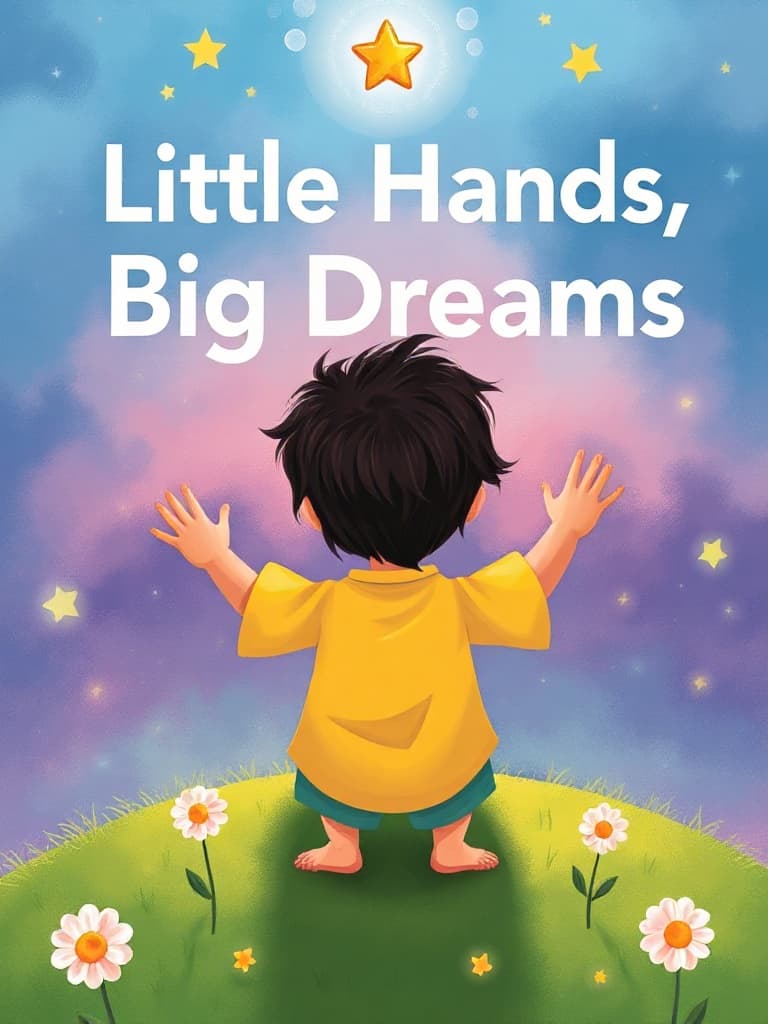
Little Hands, Big Dreams
32
0
84
0
I am writing this book of Childrens Poetry in Memory of My only Son who is now in heaven... May these poems bring all children smokes,happiness and sweet dreams
Chapters
- 1A Sky Full of WishesChapter 1: A Sky Full of Wishes Scene 1: Opening Vista - **Setting:** A vast, clear blue sky, perhaps on a perfect summer day. The sun is bright but not harsh. A gentle breeze rustles through unseen leaves. The overall atmosphere is one of boundless possibility and quiet wonder. - **Beats:** The poem opens with imagery of an impossibly vast sky, stretching out in all directions. It immediately establishes a sense of scale and the limitless potential of a child's imagination. The focus is on the feeling of looking up and seeing infinite space, a canvas for dreams. The sun is depicted as a benevolent eye, watching over the world, and its warmth is felt as a gentle caress. Subtle touches of nature – a distant bird's call, the rustle of leaves – ground the scene in the present, but the dominant feeling is one of looking beyond, towards the horizon. - **Character Intent (Child Reader):** To feel a sense of awe and wonder at the world around them, to recognize the vastness of possibilities that lie before them, and to feel an immediate connection to the joyous spirit of the collection. - **Emotional Arc:** From quiet observation to a burgeoning sense of wonder and anticipation. A feeling of gentle delight and the dawning realization that the world is full of magic. - **Continuity:** This poem serves as the gentle overture, introducing the core themes of imagination, wonder, and the presence of a benevolent guiding force (foreshadowing The Guiding Star). It establishes the poetic voice and tone of the collection. - **Ending Hook:** The poem concludes with a feeling of an untold story, a whisper of adventures waiting to be imagined, leaving the reader eager to explore what lies beyond the visible sky. The final lines might suggest that the sky is not just a physical space, but a metaphor for the mind's own boundless capacity. Scene 2: Whispers of Possibility - **Setting:** The perspective shifts slightly, zooming in on details that spark imagination. Perhaps a single, perfect white cloud drifting by, or a dandelion seed ready to take flight. - **Beats:** The poem moves from the grand scale of the sky to focusing on smaller, yet equally wondrous, elements. The clouds are not just formations but potential shapes – a dragon, a castle, a friendly face. The dandelion seeds are described as tiny wishes waiting for a breath of wind to carry them on their journey. This section emphasizes that magic isn't just in the grand spectacle but in the details that a keen, imaginative eye can find. The breeze, a subtle precursor to The Whispering Wind, is introduced as a carrier of secrets and gentle nudges towards dreaming. - **Character Intent (Child Reader):** To see the extraordinary in the ordinary, to understand that imagination can transform simple things into magical experiences, and to feel empowered to create their own narratives. - **Emotional Arc:** From awe to playful engagement with ideas. A sense of delightful possibility and a growing feeling of agency in their imaginative world. - **Continuity:** Reinforces the theme of imagination and introduces the concept of wishes and dreams being carried on the wind, a thematic link to later poems and The Whispering Wind character. It also subtly introduces the idea of individual potential and the journey of dreams. - **Ending Hook:** The poem might end with a direct invitation to the reader, asking them what they see in the sky, what wishes they hold in their heart, prompting active participation and setting the stage for the poems that follow to explore these very themes. The final lines could be a gentle question, like 'What dreams are waiting for your breath to send them flying?' Scene 3: The Heart's Horizon - **Setting:** The focus turns inward, connecting the external wonder of the sky to the internal landscape of a child's heart and mind. - **Beats:** This part of the poem bridges the external world of the sky with the internal world of the child. It suggests that the vastness of the sky is mirrored by the vastness of a child's feelings, hopes, and dreams. The poem speaks of the heart as a place where wishes are born, where dreams take root. The idea of 'wishes' is explored not just as fleeting desires but as seeds of future possibilities. The poem subtly acknowledges that within this vastness, there is a unique, individual spark – a hint at the theme of 'My Own Special Sparkle' and the Guiding Star's internal nature. - **Character Intent (Child Reader):** To feel that their inner world is as important and as vast as the external world, to understand that their dreams and wishes are valid and powerful, and to feel a sense of personal value. - **Emotional Arc:** From external wonder to internal connection and self-recognition. A feeling of warmth, validation, and the quiet stirring of personal aspirations. - **Continuity:** This scene directly links the external imagery of the sky to the internal world of the child, setting up the personal journey of dreams and self-discovery that will unfold throughout the collection. It introduces the concept of the heart holding desires, a foundational idea for many later poems. - **Ending Hook:** The poem concludes with a sense of quiet promise, a feeling that the sky above and the heart within are connected, and that every wish, no matter how small, holds the potential for something beautiful to grow. The final lines might echo the title, emphasizing the sky as a metaphor for the boundless wishes held within the heart. 'And in your heart, a sky so wide, where countless wishes softly hide.' Overall Chapter Goal: To establish the collection's tone of gentle wonder and imaginative exploration, introduce the theme of boundless possibilities, and create an immediate emotional connection with the child reader by validating their inner world and their capacity for dreams. This poem is the gentle opening chord, setting the stage for the symphony of emotions and ideas to follow. The author's intent is to evoke the joy and limitless potential that her son embodied, creating a space where his spirit can continue to inspire.
- 2Sunshine SmilesChapter 2: Sunshine Smiles Scene 1: The Golden Hour - **Setting:** A bright, sun-drenched meadow or garden. The light is warm and golden, casting long shadows. Flowers are in full bloom, bees are buzzing contentedly. The air feels alive with gentle energy. - **Beats:** The poem opens by immersing the reader in the vibrant, joyful essence of a perfect sunny day. The focus is on the sensory experience: the warmth of the sun on skin, the bright colors of flowers, the cheerful sound of bees. The sunlight itself is personified as a source of happiness, 'painting' the world with its golden hues. The imagery is deliberately cheerful and uncomplicated, evoking the pure, unadulterated joy that characterizes early childhood. This scene aims to capture the feeling of being utterly present and content in a moment of simple beauty. - **Character Intent (Child Reader):** To feel an immediate sense of happiness and warmth, to recall or imagine the simple pleasures of a sunny day, and to connect with the feeling of carefree joy. - **Emotional Arc:** Pure, unadulterated happiness, warmth, contentment, and a sense of vibrant life. - **Continuity:** This poem builds upon the initial sense of wonder from 'A Sky Full of Wishes' by grounding it in tangible, joyful experiences. It directly reflects the 'bright spirit' mentioned in the book's description and serves as a vibrant contrast to any potential underlying melancholy, emphasizing the triumph of joy. - **Ending Hook:** The poem might end with a lingering image of sunlight, perhaps a final ray catching a dewdrop or a child's upturned face, leaving the reader with a feeling of sustained brightness and a sense that this joy is a constant, underlying presence. 'A smile as bright as summer's kiss, pure sunshine happiness, like this.' Scene 2: Laughter Bubbles - **Setting:** A playground, a backyard, or any space where children are actively playing. The sounds are dominated by giggles, shouts of delight, and the general happy commotion of play. - **Beats:** The poem shifts focus to the sounds and actions of joy. Laughter is depicted as bubbling up effortlessly, infectious and light. Children are shown running, jumping, chasing each other, their movements full of energy and glee. The poem might describe specific games or simple activities – rolling down a hill, playing tag, sharing a secret joke. The emphasis is on the spontaneity and exuberance of childhood play. The descriptions are lively and energetic, mirroring the quick, dynamic movements of children at play. - **Character Intent (Child Reader):** To feel the infectiousness of laughter, to be reminded of the sheer fun of playing with friends, and to feel energized by the depiction of active joy. - **Emotional Arc:** Exuberance, infectious joy, playful energy, and a sense of shared delight. - **Continuity:** This scene further elaborates on the 'bright spirit' by showing it in action. It connects the abstract feeling of happiness to concrete expressions of joy, reinforcing the theme of simple pleasures. The energy here contrasts with the quiet contemplation of potential future poems, highlighting the full spectrum of childhood experience. - **Ending Hook:** The poem could conclude with the sound of laughter fading slightly, perhaps as children pause for a breath, but the echo of their joy remains, promising more fun to come. 'The echoes linger, sweet and clear, a happy sound for all to hear.' Scene 3: The Reflection of Light - **Setting:** A quiet moment amidst the play, perhaps a child pausing to look at their reflection in a puddle, or a close-up on a child's beaming face. - **Beats:** This part of the poem brings the abstract concept of 'sunshine smiles' to a more personal, individual level. It focuses on the *feeling* behind the smile – the inner radiance that shines outward. The poem might use metaphors comparing the child's smile to the sun itself, or to a light that brightens the world around them. It subtly introduces the idea that this inner light is a precious gift, reflecting the author's son's own luminous spirit. The tone becomes slightly more tender and reflective, acknowledging the beauty and preciousness of this pure happiness. It’s a moment of quiet appreciation for the child’s innate goodness and joy. - **Character Intent (Child Reader):** To recognize their own capacity for joy and to feel that their happiness is something beautiful and valuable, worthy of being celebrated. To feel seen and cherished. - **Emotional Arc:** Tender appreciation, recognition of inner beauty, warmth, and a sense of being cherished. - **Continuity:** This scene directly addresses the 'reflection of a beloved spirit' mentioned in the book's description. It personalizes the theme of joy, making it about the individual child's radiance, and foreshadows the idea of carrying light forward, connecting to the final poem. It also subtly hints at the author's personal connection to this theme, the memory of her son. - **Ending Hook:** The poem concludes with a gentle affirmation of this inner light, perhaps suggesting that even when the sun sets, the memory of its warmth and the child's smile remain. 'And in your smile, a sunbeam bright, a little piece of pure delight.' This leaves the reader feeling uplifted and secure in their own joyful essence. Overall Chapter Goal: To capture the essence of pure, unadulterated childhood happiness through vivid sensory imagery and descriptions of joyful activities. This poem aims to evoke feelings of warmth, delight, and the infectious nature of laughter, serving as a vibrant celebration of life and the 'bright spirit' that inspired the collection. It establishes the book's capacity for joy and its tender appreciation for the simple, radiant moments of childhood.
- 3The Garden of GigglesChapter 3: The Garden of Giggles Scene 1: A World of Green Wonders - **Setting:** A vibrant, slightly wild garden teeming with life. Sunlight filters through leaves, dappled patterns dance on the ground. The air is filled with the scent of blossoms and damp earth. Focus on flowers, buzzing insects, and the textures of leaves and petals. - **Beats:** The poem begins by drawing the child reader into a sensory exploration of a garden. It's not a perfectly manicured space, but one alive with natural charm. The focus is on the visual beauty – the riot of colors in the flowers, the intricate patterns on leaves, the way sunlight plays through the greenery. The sounds of the garden – the gentle hum of bees, the rustle of leaves, perhaps a distant bird song – are introduced, creating an immersive soundscape. The poem emphasizes the 'child's eye' perspective, finding wonder in details that adults might overlook: the velvety texture of a petal, the surprising strength of a climbing vine. - **Character Intent (Child Reader):** To experience the beauty and wonder of nature through a child's uninhibited curiosity, to appreciate the small details, and to feel a sense of calm and delight in the natural world. - **Emotional Arc:** Gentle curiosity, sensory delight, peaceful observation, and a growing appreciation for the natural world's intricate beauty. - **Continuity:** This poem expands the scope of wonder from the sky ('A Sky Full of Wishes') and pure joy ('Sunshine Smiles') to the natural world. It introduces the theme of growth and life, which will be further explored in 'Little Seeds, Big Futures'. The presence of bees and flowers hints at the interconnectedness of nature, a subtle foreshadowing of larger themes. - **Ending Hook:** The poem might end with a lingering image of a particularly captivating flower or insect, leaving the reader with a sense of quiet magic found in the garden. 'A tiny world, a secret place, where nature smiles with gentle grace.' Scene 2: The Busy Bees and Blooming Buds - **Setting:** Closer focus on the interactions within the garden. Bees diligently working on flowers, buds slowly unfurling, perhaps a ladybug making its way across a leaf. - **Beats:** This section delves into the activity and life within the garden. The bees are portrayed as industrious but not intimidating, their buzzing a natural soundtrack. The flowers are described in various stages of bloom, from tightly closed buds to fully opened blossoms, symbolizing the process of growth and unfolding. The poem might personify the flowers slightly, imagining them stretching towards the sun. The 'giggles' of the title can be interpreted metaphorically here – the joyful sounds and movements of life in the garden, the little bursts of activity that bring a smile. It’s the subtle 'laughter' of nature itself. - **Character Intent (Child Reader):** To understand the concept of growth and development, to appreciate the interconnectedness of living things, and to find joy in the quiet industry of nature. - **Emotional Arc:** Appreciation for natural processes, a sense of gentle activity, understanding of growth, and quiet amusement at nature's 'playfulness'. - **Continuity:** This scene directly addresses the theme of 'growth and the gentle unfolding of life'. It provides concrete examples of this unfolding, preparing the reader for the more explicit metaphors of growth in later poems. The 'giggles' are explicitly linked to the sounds and sights of life, making the title resonant. - **Ending Hook:** The poem could end with a bud just beginning to open, promising future beauty and reinforcing the ongoing cycle of life. 'A secret waits within the fold, a story waiting to unfold.' Scene 3: Earth's Quiet Hum - **Setting:** A moment of deeper connection with the earth itself. Perhaps the child is sitting amongst the flowers, feeling the warmth of the soil, or observing the roots of a plant. - **Beats:** The poem shifts to a more grounded, elemental feeling. It speaks of the earth beneath the flowers, the source of their life and nourishment. The 'quiet hum' of the title refers to this deep, resonant energy of the earth – a subtle, constant presence. The poem might touch upon the idea of roots anchoring the plants, symbolizing stability and belonging. It’s about the foundational goodness and life-giving power of the natural world. This section offers a sense of peace and belonging, a feeling of being connected to something ancient and enduring. - **Character Intent (Child Reader):** To feel a sense of connection to the earth, to understand the importance of foundations and nurturing, and to experience a deep sense of peace and belonging. - **Emotional Arc:** Groundedness, peace, a sense of belonging, and a deep, quiet appreciation for the life-giving earth. - **Continuity:** This scene introduces the idea of nurturing and foundations, which will resonate with themes of parental care and the growth of potential. It provides a sense of stability and deep connection, contrasting with the boundless sky of the first poem and the active play of the second, showing the multifaceted nature of childhood experience. It also subtly echoes the idea of love lingering, like the earth's enduring presence. - **Ending Hook:** The poem concludes with a feeling of contentment and rootedness, perhaps the child resting their head against the earth, feeling its steady pulse. 'Held by the earth, so strong and deep, while nature's gentle secrets sleep.' This leaves the reader feeling secure and connected. Overall Chapter Goal: To celebrate the simple beauty and life found in nature through a child's curious and joyful perspective. The poem aims to evoke sensory details, the process of growth, and a deep sense of connection to the earth, reinforcing the themes of life, growth, and the quiet wonders that fill a child's world. It adds an element of grounded peace to the collection's initial exuberance.
- 4Tiny Hands, Helping HeartsChapter 4: Tiny Hands, Helping Hearts Scene 1: A Shared Toy - **Setting:** A playroom or a park sandbox. Bright, primary colors dominate the scene. Toys are scattered around. The atmosphere is one of potential interaction and shared activity. - **Beats:** The poem opens with a scenario of shared play, focusing on the small, significant actions that occur between children. It might depict two children wanting to play with the same toy, or one child offering a toy to another. The 'tiny hands' are emphasized, highlighting the small gestures that carry big meaning. The focus is on the initial hesitation, the thought process of offering or sharing, and the resulting positive interaction. The poem explores the nascent understanding of empathy through a concrete, relatable situation. - **Character Intent (Child Reader):** To recognize the value of sharing and to understand the positive feelings that come from it, both when sharing and when being offered something. - **Emotional Arc:** Initial potential for conflict or shyness, followed by the warmth of generosity, the joy of shared experience, and a sense of connection. - **Continuity:** This poem introduces the theme of friendship and kindness, building on the general sense of joy and wonder. It shifts the focus from individual experience to relational experience, highlighting the importance of social bonds. This is a crucial step in the collection's progression, moving towards a broader understanding of love and connection. - **Ending Hook:** The poem could end with the two children playing happily together with the shared toy, their laughter mingling, emphasizing the success of their small act of kindness. 'A smile returned, a game begun, through tiny hands, kindness is spun.' Scene 2: A Comforting Arm - **Setting:** A situation where one child is upset or hurt – perhaps a scraped knee on the playground, or a moment of sadness. - **Beats:** The poem shifts to a scenario requiring comfort and empathy. One child notices another's distress. The 'helping heart' comes into play as the child offers a comforting gesture – a pat on the back, a shared tissue, a gentle word, or simply sitting nearby in solidarity. The focus is on the non-verbal communication of care and the relief experienced by the child being comforted. The poem highlights the power of simple, genuine acts of kindness to soothe and reassure. It explores the idea that understanding someone's pain and offering solace is a profound act. - **Character Intent (Child Reader):** To understand that it's okay to feel sad or hurt, and to see the value in offering comfort to others. To feel the warmth of empathy and the security of knowing someone cares. - **Emotional Arc:** Initial sadness or distress, followed by the dawning realization of support, relief, and the comfort of shared feeling. - **Continuity:** This scene deepens the theme of empathy and kindness. It moves beyond simple sharing to active comforting, demonstrating a more profound level of connection. This foreshadows the idea of love transcending separation, as acts of care create strong bonds that can endure. It also subtly introduces the idea that even difficult emotions can be met with kindness. - **Ending Hook:** The poem might end with the upset child feeling a little better, perhaps even managing a small smile, thanks to the friend's kindness. 'A tear wiped dry, a worry eased, by helping hearts, the pain appeased.' Scene 3: The Friendship Bloom - **Setting:** A general sense of ongoing friendship, perhaps children walking hand-in-hand, or sharing a secret whispered between them. - **Beats:** This final section of the poem consolidates the themes of sharing and kindness into the broader concept of friendship. It celebrates the bonds that children form, describing friendship as a growing plant or a warm, glowing light. The 'tiny hands' are now linked together, and the 'helping hearts' beat in rhythm. The poem emphasizes the mutual support, shared laughter, and understanding that define true friendship. It highlights how these small acts of kindness collectively build strong, lasting connections. The poem equates these connections with warmth and light, reinforcing the positive emotional impact of friendship. - **Character Intent (Child Reader):** To cherish their own friendships, to understand the qualities of a good friend, and to feel the value and joy that friendships bring into their lives. - **Emotional Arc:** Warmth, security, joy in companionship, and a deep appreciation for the beauty and strength of friendship. - **Continuity:** This scene brings the chapter to a satisfying close, summarizing the importance of kindness and empathy in building meaningful relationships. It reinforces the idea of love in its various forms – the love of friendship – and sets a positive, relational tone for the collection. It implicitly connects to the author's own experience of love and loss, framing friendship as a vital source of support and happiness. - **Ending Hook:** The poem concludes by emphasizing the lasting impact of these friendships, suggesting they are like treasures or lights that brighten life. 'Friendship's a gift, both true and deep, the promises that kind hearts keep.' This leaves the reader with a feeling of warmth and the enduring value of connection. Overall Chapter Goal: To celebrate the themes of friendship, kindness, and empathy through relatable childhood scenarios. The poem aims to highlight how small acts of sharing and comforting, performed by 'tiny hands' with 'helping hearts,' build strong and meaningful bonds between children, fostering a sense of connection and mutual care.
- 5Whispers on the BreezeChapter 5: Whispers on the Breeze Scene 1: The Gentle Arrival - **Setting:** A slightly melancholic, yet beautiful, natural setting. Perhaps late afternoon light filtering through trees, or a quiet lakeside. The air feels soft and almost palpable. - **Beats:** The poem introduces The Whispering Wind not as a force of nature, but as a gentle entity carrying something intangible. The 'breeze' is depicted as soft, almost hesitant, arriving with a subtle presence. It doesn't announce itself loudly but makes its presence known through subtle shifts in the air, the rustling of leaves, the movement of grass. The focus is on the *feeling* of the breeze – cool, soft, carrying faint scents. This establishes its gentle nature and its role as a messenger. The tone is one of quiet anticipation and a hint of something delicate and ephemeral. - **Character Intent (Child Reader):** To feel a sense of gentle mystery and to become aware of the subtle presence of nature's messengers. To feel a sense of calm and quiet attention. - **Emotional Arc:** Quiet anticipation, gentle curiosity, a touch of wistfulness, and a sense of peaceful awareness. - **Continuity:** This poem introduces The Whispering Wind character, establishing its gentle, elusive nature. It begins to weave the theme of memory and lingering presence into the collection, moving beyond pure joy to a more nuanced emotional landscape. This foreshadows the character's role in carrying echoes of the past and the author's personal remembrance. - **Ending Hook:** The poem might end with the breeze sighing softly through the leaves, leaving a question hanging in the air about what it carries. 'A sigh, a rustle, soft and low, where has the gentle whisper'd blow?' Scene 2: Echoes of Laughter and Play - **Setting:** The Whispering Wind moves through places associated with childhood joy – an empty playground at dusk, a quiet park, a window overlooking a street where children once played. - **Beats:** The Whispering Wind's primary function is revealed: to carry echoes of past joys. As it moves, it picks up faint traces of laughter, snippets of songs, the memory of running feet. These are not distinct sounds but rather impressions, feelings – the *essence* of past happiness. The poem describes how the wind can stir these memories in the listener, bringing a fleeting sense of warmth and nostalgia. The 'giggles' from 'The Garden of Giggles' might be subtly evoked here, as well as the 'sunshine smiles' from the previous chapter. The focus is on the bittersweet nature of memory – the joy of remembering, tinged with the awareness that the moment has passed. - **Character Intent (Child Reader):** To feel a connection to past happy moments, both their own and perhaps a general sense of childhood joy. To experience the gentle emotion of nostalgia and the warmth of remembered happiness. - **Emotional Arc:** Nostalgia, gentle wistfulness, warmth of remembrance, a touch of bittersweet longing. - **Continuity:** This is a pivotal scene where the Whispering Wind's role as a 'messenger of memories' is solidified. It directly links the present experience of the poem to the past joys celebrated earlier. This reinforces the book's theme of cherished memories and subtly introduces the author's own longing, framing the collection as a repository of love and remembrance. - **Ending Hook:** The poem might end with the wind carrying away these echoes, leaving a lingering feeling of warmth but also a sense of quietude. 'The echoes fade, a gentle trace, of happy times in this quiet space.' Scene 3: Nature's Soft Language - **Setting:** The Whispering Wind interacts with elements of nature – flowers, trees, water – imbuing them with its gentle messages. - **Beats:** The poem explores the deeper connection between The Whispering Wind and the natural world. It suggests that the wind doesn't just carry human echoes but also the 'language' of nature itself – the secrets of the flowers, the stories of the trees, the murmurs of the water. This imparts a sense of depth and interconnectedness to the natural world. The wind acts as a conduit, translating these subtle messages into feelings that children can understand – peace, wonder, a sense of belonging. The poem emphasizes the quiet wisdom and beauty inherent in nature, accessed through this gentle messenger. - **Character Intent (Child Reader):** To feel a deeper connection to the natural world and to appreciate its subtle beauty and wisdom. To understand that nature has its own way of communicating peace and wonder. - **Emotional Arc:** Calm, wonder, a sense of peace, and a feeling of being connected to something larger and timeless. - **Continuity:** This scene broadens the scope of the Whispering Wind's influence beyond human memory to encompass the natural world. It reinforces the theme of nature's beauty and adds a layer of gentle mysticism. This connects to 'The Garden of Giggles' and sets the stage for the Guiding Star's luminous presence, suggesting different facets of a benevolent, watchful presence. - **Ending Hook:** The poem concludes with the wind continuing its journey, carrying its messages onward, leaving the reader with a sense of peace and the lingering awareness of nature's quiet voice. 'The wind moves on, a gentle friend, its whispered secrets without end.' Overall Chapter Goal: To introduce The Whispering Wind as a gentle, ephemeral character that carries echoes of cherished memories and the subtle language of nature. The poem aims to evoke feelings of nostalgia, peace, and a deep connection to the past and the natural world, adding a layer of tender remembrance and gentle mystery to the collection.
- 6The Moonbeam's SecretChapter 6: The Moonbeam's Secret Scene 1: The Day Fades to Night - **Setting:** The transition from late evening to night. The sky darkens, stars begin to appear. A sense of quiet descends upon the world. Perhaps a child is getting ready for bed, looking out their window. - **Beats:** The poem opens by observing the natural shift from day to night. The vibrant energy of daytime gives way to a calm, hushed atmosphere. The focus is on the visual cues: the deepening colors of the sky, the first shy stars emerging, the moon beginning its ascent. The sounds of the day fade, replaced by the quiet rustles and chirps of the night. This scene establishes the setting and mood for a bedtime poem, creating a sense of peace and gentle transition. - **Character Intent (Child Reader):** To feel the natural winding down of the day, to anticipate the comfort and quiet of bedtime, and to feel a sense of peaceful transition. - **Emotional Arc:** Calm, quiet anticipation, a gentle winding down, peaceful transition from activity to rest. - **Continuity:** This poem shifts the focus to nighttime, offering a different perspective on wonder and comfort than the daytime poems. It sets the stage for themes of dreams, protection, and quiet reflection. It directly addresses the audience's need for comfort as they prepare for sleep, connecting to the book's overall goal of bringing 'sweet dreams'. - **Ending Hook:** The poem might end with the moon appearing fully in the sky, casting its first soft light, hinting at the secrets it holds. 'The sun has slept, the world grows deep, while silver moonbeams softly creep.' Scene 2: Guardians of the Night - **Setting:** The night sky, focusing on the moon and stars. The moon is depicted as a gentle, watchful presence, and the stars as twinkling companions. - **Beats:** The poem personifies the moon and stars as benevolent guardians of the night. The moon is often described as a 'shepherdess' or a 'gentle eye,' watching over the sleeping world. The stars are depicted as countless, twinkling lights, perhaps like scattered diamonds or friendly winks. Their role is to provide comfort, reassurance, and a sense of beauty even in the darkness. The poem emphasizes their constancy and their silent vigil, assuring the child that they are not alone even when it's dark. - **Character Intent (Child Reader):** To feel safe and protected during the night, to find beauty in the nighttime sky, and to feel a sense of wonder about the celestial bodies. - **Emotional Arc:** Security, wonder, gentle reassurance, and a sense of peaceful companionship. - **Continuity:** This scene introduces the symbolic role of the moon and stars as protectors. It directly relates to the 'Guiding Star' concept later in the collection, suggesting a cosmic order of light and guidance. It provides comfort and helps to alleviate any potential fear of the dark, aligning with the book's aim to bring 'happiness'. - **Ending Hook:** The poem might end with the moonbeam reaching down, touching something on Earth – a child's window, a flower – signifying its gentle connection. 'A moonbeam falls, a silver thread, upon your sleepy, dreaming head.' Scene 3: The Dream Weaver's Invitation - **Setting:** The child's bedroom, now bathed in soft moonlight. The focus is on the threshold between wakefulness and sleep. - **Beats:** This section of the poem acts as a lullaby, guiding the child towards sleep and dreams. The moonbeams are described as carrying 'secrets' – perhaps the secrets of dreams, or the quiet magic of the night. The poem speaks of the mind beginning to wander, of thoughts softening and drifting. It might hint at the arrival of The Dream Weaver, suggesting that the night is a time for imagination to flourish in a different way. The tone is soothing, rhythmic, and deeply comforting, designed to lull the reader into a state of peaceful rest. It emphasizes the beauty and potential of the dream world. - **Character Intent (Child Reader):** To feel soothed and comforted, to transition peacefully into sleep, and to anticipate the wonder and adventure of dreams. - **Emotional Arc:** Deep relaxation, peace, gentle drifting towards sleep, and hopeful anticipation of dreams. - **Continuity:** This scene directly links the nighttime setting and the celestial guardians to the concept of dreams, preparing for the introduction of The Dream Weaver character. It reinforces the book's promise of 'sweet dreams' and highlights the transition into the imaginative realm that will be explored further. The 'secret' of the moonbeam can be seen as a metaphor for the hidden potential within each child's dreams. - **Ending Hook:** The poem concludes with the child drifting off to sleep, embraced by the moonlight and the promise of dreams. 'So close your eyes, let slumber creep, the moonbeam's secret, yours to keep.' This offers a peaceful resolution to the day and a gentle entry into the world of dreams. Overall Chapter Goal: To provide a comforting and magical bedtime experience for the child reader. The poem aims to transition from the day's activities to the quiet peace of night, personifying the moon and stars as gentle guardians and using moonbeams as a metaphor for the gentle invitation into the world of dreams, fulfilling the promise of 'sweet dreams'.
- 7Cloud Castle DreamsChapter 7: Cloud Castle Dreams Scene 1: Sculpting the Sky Canvas - **Setting:** A bright, airy space, perhaps a child lying on their back in a field or looking out a window on a cloudy day. The focus is on the shifting shapes of clouds against a blue or white sky. - **Beats:** The poem begins by observing the clouds and the immediate spark of imagination they ignite. Clouds are not just water vapor; they are fluid sculptures, constantly changing. The poem describes the process of 'seeing' shapes within them – animals, faces, fantastical creatures, and, crucially, castles. The act of imagination is presented as active and playful, a child's mind transforming the passive sky into a dynamic landscape of possibility. The poem emphasizes the transient nature of these shapes, making the act of creation even more precious. - **Character Intent (Child Reader):** To engage their imagination by actively seeking and creating forms within the clouds, to feel the joy of spontaneous creativity, and to see the sky as a canvas for their own thoughts. - **Emotional Arc:** Playful observation, burgeoning creativity, delight in transformation, and a sense of wonder at the mind's ability to create. - **Continuity:** This poem directly builds on the theme of boundless imagination introduced in 'A Sky Full of Wishes.' It provides a concrete, visual example of how imagination works, focusing specifically on the creation of fantastical realms. This sets the stage for exploring further imaginative journeys and the concept of dreams as constructed realities. - **Ending Hook:** The poem might end with a particularly grand cloud-castle taking shape, leaving the reader suspended in mid-creation, eager to explore its ramparts. 'A tower here, a wall so grand, built by a wish, by dream-spun hand.' Scene 2: Journeys Beyond the Ordinary - **Setting:** The imagined world within the cloud castle. This space is ethereal, light, and filled with wonder. It's a realm unbound by earthly rules. - **Beats:** The poem takes the reader *inside* the cloud castle. This is where the fantastical adventures begin. The poem describes the experience of being in this dreamlike space – perhaps floating instead of walking, encountering whimsical inhabitants, or embarking on quests. The emphasis is on freedom and the absence of limitations. Things that are impossible in the real world are commonplace here. The poem uses vivid, imaginative language to describe this otherworldly realm, focusing on sensory details that evoke a sense of magic and otherworldliness – shimmering light, soft sounds, unexpected textures. - **Character Intent (Child Reader):** To immerse themselves in a world of pure fantasy, to experience the thrill of adventure without constraints, and to realize the boundless potential of their own imagination. - **Emotional Arc:** Excitement, exhilaration, a sense of freedom, wonder, and pure escapism. - **Continuity:** This section delves deeply into the 'realm of imagination' mentioned in the book's storyline draft. It provides a rich, detailed landscape for imaginative exploration, directly linking the abstract concept of imagination to a tangible (though imagined) place. This reinforces the idea that dreams are worlds waiting to be discovered. - **Ending Hook:** The poem could end with the beginning of a new adventure within the cloud castle, perhaps encountering a mysterious character or discovering a hidden passage. 'What wonders wait beyond the gate? A dragon's roar? A fairy's fate?' Scene 3: The Heart's True Architecture - **Setting:** A reflective moment, perhaps as the imagined journey within the cloud castle begins to wind down, or as the child contemplates the nature of these dreams. - **Beats:** This part of the poem reflects on the *source* and *meaning* of these cloud castle dreams. It suggests that while the clouds are transient, the creativity and joy they inspire come from within the child's own heart and mind. The poem might explore the idea that these imaginative journeys are not just frivolous escapes but are essential for growth, for learning, and for expressing one's inner self. The 'castles' are metaphors for the dreams and aspirations that children build for their future. The poem links the ephemeral nature of clouds to the enduring power of imagination and the inner spirit. - **Character Intent (Child Reader):** To understand that their imagination is a powerful and valuable part of who they are, to feel that their dreams are meaningful, and to recognize the connection between their inner world and their potential future. - **Emotional Arc:** Reflection, self-awareness, appreciation for inner creativity, and a dawning understanding of the significance of dreams. - **Continuity:** This scene brings the focus back from the external imagined world to the internal source of creativity. It connects the abstract idea of imagination to the child's core self, reinforcing the theme of unique qualities and potential. This bridges the gap between pure fantasy and the more aspirational themes of later poems, like 'The Dream Weaver's Thread'. - **Ending Hook:** The poem concludes by affirming the enduring nature of the imaginative spirit, even as the clouds may shift or dissipate. 'Though clouds may drift and shapes may flee, the dream lives on, inside of thee.' This leaves the reader with a sense of empowerment and the lasting value of their own creativity. Overall Chapter Goal: To celebrate the power and freedom of childhood imagination by depicting the creation and exploration of fantastical cloud castles. The poem aims to evoke a sense of wonder, adventure, and limitless possibility, while also reflecting on the internal source of this creativity and its significance for the child's inner world and future aspirations.
- 8The Toy Box TalesChapter 8: The Toy Box Tales Scene 1: The Midnight Awakening - **Setting:** A child's bedroom at night, bathed in moonlight or the faint glow of a nightlight. The room is filled with toys, seemingly inanimate, but now stirring with a secret life. - **Beats:** The poem opens with the moment the child falls asleep and the toys come alive. This transition is marked by a hush, a subtle shift in the atmosphere. The toys, previously still, begin to move, whisper, and interact. The focus is on the initial awakening – a stuffed bear stretching, a wooden soldier marching, a doll blinking its eyes. The scene establishes the secret world that exists when humans are unaware, a realm of enchantment hidden in plain sight. The poem uses gentle, playful language to describe their movements, emphasizing their joyful liberation from stillness. - **Character Intent (Child Reader):** To feel a sense of wonder and delight at the secret lives of their toys, to imagine their own toys coming to life, and to feel a connection to the inanimate objects that share their world. - **Emotional Arc:** Gentle wonder, playful curiosity, excitement about a secret world, and a sense of enchantment. - **Continuity:** This poem taps into the theme of imagination by giving a voice to inanimate objects, a classic trope in children's literature. It builds on the idea of hidden worlds and secret lives, similar to the cloud castles but grounded in the tangible world of toys. It reinforces the idea that magic can be found in everyday surroundings. - **Ending Hook:** The poem might end with the toys beginning their nightly adventures, perhaps gathering for a meeting or setting out on a quest. 'The room is theirs, the night is deep, while little humans softly sleep.' Scene 2: A Stuffed Bear's Ballad - **Setting:** Within the toy world, perhaps a tea party, a parade, or a concert organized by the toys. - **Beats:** The poem focuses on the individual personalities and interactions of the toys. Each toy has a distinct voice and role. The stuffed bear might be the gentle leader or storyteller, the soldier a brave protector, the doll a graceful dancer, the toy car a speedy adventurer. The poem describes their activities – sharing stories, playing games, helping each other. It highlights the companionship and community that exists among the toys. The 'tales' of the title are revealed through their dialogues, actions, and the adventures they embark upon. The poem emphasizes the unique characteristics and contributions of each toy. - **Character Intent (Child Reader):** To recognize the unique character of each toy, to appreciate the concept of teamwork and friendship among the toys, and to enjoy the unfolding narratives of their secret lives. - **Emotional Arc:** Playfulness, camaraderie, gentle adventure, and the satisfaction of seeing characters interact and develop. - **Continuity:** This section fleshes out the 'secret lives' of the toys, giving them agency and personality. It reinforces the theme of companionship and the importance of cherished possessions. The distinct characters foreshadow the idea of celebrating individuality later in the collection ('My Own Special Sparkle'). - **Ending Hook:** The poem could feature a specific adventure or a song sung by the toys, leaving the reader charmed by their camaraderie. 'The teddy bear sings, soft and low, of adventures only toys can know.' Scene 3: Beloved Companionship - **Setting:** A quiet moment at the end of the toys' night, perhaps as dawn approaches and they prepare to return to their places. - **Beats:** As the night winds down, the poem reflects on the deeper meaning of these toys. They are not just objects but companions, confidantes, and silent witnesses to a child's life. The poem speaks of the love and care that children bestow upon their toys, and how, in return, the toys offer comfort, security, and a reflection of the child's own imagination. The 'tales' they tell are, in a way, reflections of the child's own experiences and dreams. This section adds a layer of tenderness, acknowledging the emotional bond between a child and their treasured possessions. It subtly links the toys' secret lives to the child's own inner world. - **Character Intent (Child Reader):** To feel a deeper appreciation for their own toys, to understand the emotional significance of these companions, and to recognize how toys can be a source of comfort and imaginative play. - **Emotional Arc:** Tenderness, appreciation, warmth, and a sense of cherished connection. - **Continuity:** This scene brings the chapter to a reflective close, emphasizing the theme of companionship and the emotional value of toys. It subtly connects the toys' imaginative lives to the child's own emotional world, reinforcing the idea that love and connection can be found in many forms. It also foreshadows the idea of enduring love and memory, as toys often hold significant sentimental value. - **Ending Hook:** The poem concludes with the toys returning to their still positions, the magic fading as the first light of dawn appears, leaving behind only the quiet presence of beloved companions. 'Back to their spots, they softly creep, while morning light begins to peep. The secret kept, until the night, when dreams return with pure delight.' Overall Chapter Goal: To celebrate the magical world of toys and the imaginative lives they lead when children sleep. The poem aims to evoke wonder, playfulness, and a sense of companionship, highlighting the unique personalities of different toys and the deep emotional bonds they share with their child owners, reinforcing the theme of imagination and cherished possessions.
- 9A Star's Gentle GlowChapter 9: A Star's Gentle Glow Scene 1: The Night Sky Revisited - **Setting:** The night sky, similar to Chapter 6, but with a more focused, intense feeling. The moon may be present, but the stars are the primary focus, particularly one prominent, steady star. - **Beats:** This poem revisits the nighttime sky, but this time with a specific focus on a single star. It's not just any star; it's presented as a special beacon, a point of constancy in the vast darkness. The poem describes its light not as distant and cold, but as warm, gentle, and unwavering. It's a light that seems to hold a special significance, perhaps appearing brighter or more persistent than the others. The imagery emphasizes steadiness and reliability, contrasting with the fleeting nature of shooting stars or the changing phases of the moon. - **Character Intent (Child Reader):** To feel a sense of awe and wonder at the night sky, specifically drawn to the steady presence of a particular star, and to associate this star with feelings of hope and constancy. - **Emotional Arc:** Awe, wonder, a sense of peaceful constancy, burgeoning hope, and gentle fascination. - **Continuity:** This poem introduces the concept of the Guiding Star character, establishing its luminous and constant nature. It builds upon the nighttime themes from 'The Moonbeam's Secret' but introduces a more focused, personal symbol of light and guidance. This directly connects to the author's son, whose spirit is represented by this beacon. - **Ending Hook:** The poem might end with the star seeming to twinkle directly at the reader, or its light falling upon a specific object, making its presence feel personal and intentional. 'One star shines bright, a steady gleam, a guiding light, a waking dream.' Scene 2: The Beacon of Hope - **Setting:** The star's light is depicted as reaching down, touching the earth, perhaps illuminating a path or a lost traveler (symbolically). - **Beats:** The poem emphasizes the star's role as a beacon of hope. Its light is not just beautiful; it serves a purpose. It guides, reassures, and offers comfort, especially during times of darkness or uncertainty. The poem might use metaphors of a ship navigating by the stars, or a traveler finding their way. This light represents resilience and the promise that even in the darkest moments, there is always a source of brightness to rely on. The star's glow is described as gentle, not overpowering, suggesting a comforting presence rather than a demanding one. - **Character Intent (Child Reader):** To feel reassured and hopeful, especially when facing difficulties or feeling uncertain. To understand that there is always a source of light and guidance available, even if unseen. - **Emotional Arc:** Reassurance, hopefulness, a sense of security, and gentle optimism. - **Continuity:** This scene solidifies the Guiding Star's symbolic purpose. It directly addresses the 'beacon of hope' aspect mentioned in the book's storyline draft. The star's light becomes a metaphor for inner strength and the enduring power of love, foreshadowing its connection to the author's son's spirit. - **Ending Hook:** The poem could describe the star's light cutting through fog or darkness, symbolizing its power to illuminate and guide. 'When shadows fall and fears arise, look up to where the bright star lies.' Scene 3: The Inner Radiance - **Setting:** A shift from the external star to the internal. The poem suggests that the star's light is not just in the sky but also within the child. - **Beats:** This is the pivotal moment where the external symbol connects to the internal experience. The poem reveals that the Guiding Star's radiance is not solely celestial but is a reflection of the love and inner light that exists within each child. It suggests that the star is a reminder of this inherent brightness, a way to help children recognize and embrace their own unique qualities and potential. The 'secret' of the star is that its light is mirrored within them. This fosters a sense of self-worth and encourages children to believe in their own intrinsic value and capacity for goodness. - **Character Intent (Child Reader):** To feel a sense of self-worth and intrinsic value, to recognize their own inner light, and to feel empowered to shine brightly in their own way. - **Emotional Arc:** Self-recognition, empowerment, warmth, and a deep sense of inner peace and value. - **Continuity:** This scene directly links the Guiding Star character to the Child Reader, fulfilling the 'reflection of love that shines from within' secret. It bridges the symbolic representation with the personal experience of the child, preparing the reader for poems that focus on individuality and inner strength. This is a crucial step in transforming grief into inspiration. - **Ending Hook:** The poem concludes with a gentle affirmation that the star's glow is a constant companion, both in the sky and in the heart. 'So shine your light, both clear and true, the brightest star resides in you.' Overall Chapter Goal: To introduce the Guiding Star as a symbol of hope, constancy, and inner light. The poem aims to evoke feelings of awe, reassurance, and empowerment, encouraging the child reader to recognize their own inherent brightness and potential, linking the celestial beacon to the individual spirit.
- 10The Color of CourageChapter 10: The Color of Courage Scene 1: Facing the Shadow - **Setting:** A place that evokes a sense of slight uncertainty or challenge. This could be a dimly lit corner, a path leading into woods, or even the feeling of facing a difficult task like a test or a performance. - **Beats:** The poem begins by acknowledging that fear and uncertainty are natural parts of life. It describes the feeling of encountering something daunting – a shadow that seems large, a task that feels impossible, a situation that makes the heart beat faster. The focus is on the physical and emotional sensations of fear: a tremble, a quickened breath, a moment of hesitation. The poem validates these feelings, assuring the reader that it's okay to feel scared. The 'color' of courage is not yet visible, only the presence of its opposite. - **Character Intent (Child Reader):** To recognize and acknowledge their own feelings of fear or apprehension without shame, to understand that these feelings are normal, and to feel validated in their experience. - **Emotional Arc:** Trepidation, apprehension, vulnerability, and the initial recognition of a challenge. - **Continuity:** This poem shifts the focus towards inner strength and resilience, a new theme introduced after poems about joy, nature, and friendship. It directly addresses the 'bravery and resilience' aspect mentioned in the book's storyline draft. It sets the stage for exploring how one finds and cultivates courage. - **Ending Hook:** The poem might end with the child standing at the edge of the challenge, taking a deep breath, the fear palpable but not yet overwhelming. 'A shadow looms, a moment's pause, before you heed life's braver cause.' Scene 2: The Inner Spark Ignites - **Setting:** The internal landscape of the child's mind and heart, where a shift begins to occur. This is a metaphorical space, perhaps visualized as a small, persistent flame or a growing warmth. - **Beats:** This is where the process of finding courage begins. The poem describes an internal shift – a realization, a memory, a whispered encouragement (perhaps from the Guiding Star or Whispering Wind). A small spark of bravery ignites within. This spark is not about the absence of fear, but about the decision to act *despite* the fear. The poem might use metaphors of a tiny seed pushing through soil, or a candle flame flickering to life. The 'color' of courage starts to emerge, perhaps as a warm, steady hue like deep red or a vibrant gold, contrasting with the grayness of fear. - **Character Intent (Child Reader):** To understand that courage isn't the absence of fear but the choice to face it, to feel a sense of inner strength beginning to awaken, and to connect with the idea of a personal, internal source of bravery. - **Emotional Arc:** A flicker of determination, growing resolve, the awakening of inner strength, and a shift from apprehension to tentative confidence. - **Continuity:** This scene directly addresses the source of courage within. It links to the idea of the 'spark' within each child mentioned in the book's description and foreshadows the theme of individuality and unique qualities. The internal nature of this courage reinforces the idea that strength comes from within. - **Ending Hook:** The poem might end with the spark growing brighter, casting a small circle of light into the shadow, signifying the beginning of overcoming the fear. 'A tiny flame begins to glow, a seed of courage, starting slow.' Scene 3: Standing Tall - **Setting:** The child is now actively facing the challenge, perhaps taking a step forward, speaking their mind, or completing the task. - **Beats:** The poem culminates in the act of bravery. The child, fueled by their inner spark, faces the challenge head-on. This doesn't mean the fear disappears entirely, but it no longer paralyzes them. The poem describes the feeling of accomplishment, the sense of empowerment that comes from confronting and moving through fear. The 'color of courage' is now fully realized – a vibrant, strong hue that emanates from the child. The poem reassures the reader that they possess this strength and that each act of bravery makes them stronger. It emphasizes that facing fears is a sign of growth and maturity. - **Character Intent (Child Reader):** To feel empowered and inspired to face their own fears, to recognize their own capacity for bravery, and to understand that overcoming challenges leads to personal growth. - **Emotional Arc:** Empowerment, quiet confidence, resilience, a sense of accomplishment, and growing self-belief. - **Continuity:** This scene brings the poem's message to its powerful conclusion, fulfilling the promise of encouraging bravery and resilience. It reinforces the idea that children are never truly alone in their struggles, echoing the comforting presence of the Guiding Star and Whispering Wind. This poem serves as an anthem of inner strength, preparing children to embrace their future challenges with greater confidence. - **Ending Hook:** The poem concludes with the child standing tall, bathed in the light of their own courage, ready for whatever comes next. 'The fear may whisper, soft and low, but courage helps your spirit grow!' Overall Chapter Goal: To encourage bravery and resilience in children by acknowledging the reality of fear and celebrating the inner strength that allows one to face challenges. The poem aims to evoke feelings of empowerment and self-belief, assuring children that they possess the capacity for courage within themselves, transforming apprehension into a source of strength.
- 11Puddle Jumper's JoyChapter 11: Puddle Jumper's Joy Scene 1: The Rainy Day Blues - **Setting:** A grey, rainy day. Raindrops patter against windows. The outside world looks damp and perhaps a little gloomy. A child might be looking out the window, feeling a bit bored or restless. - **Beats:** The poem begins by acknowledging the common perception of rainy days as being dull or disappointing. The imagery focuses on the grey skies, the persistent rain, and the feeling of being confined indoors. The child's initial mood might be one of mild dissatisfaction or boredom, a sense of the day being 'wasted' because it's not sunny. The poem captures this familiar feeling, setting up a contrast for the joy that is about to be discovered. - **Character Intent (Child Reader):** To relate to the common feeling of a rainy day potentially being a bit of a letdown, to acknowledge the initial mood that might accompany such weather. - **Emotional Arc:** Mild disappointment, boredom, a touch of restlessness, a sense of confinement. - **Continuity:** This poem offers a different perspective on weather and environment compared to the sunny days of 'Sunshine Smiles' or the vibrant garden of 'The Garden of Giggles'. It introduces the idea of finding joy in circumstances that might initially seem less than ideal, a theme of adaptability and perspective. - **Ending Hook:** The poem might end with the child sighing, looking longingly at the rain, perhaps wondering if there's anything fun to do. 'The sky is grey, the world is wet, a dreary day, you can just bet.' Scene 2: The Call of the Puddles - **Setting:** The rain continues, but now the focus shifts outdoors. Puddles have formed on sidewalks, in grassy areas, reflecting the sky. - **Beats:** Suddenly, the perspective changes. The rain is no longer a deterrent but an invitation. The poem describes the irresistible allure of puddles – their shimmering surfaces, the satisfying splash they make. The child's boredom transforms into excitement. The poem emphasizes the simple, uninhibited pleasure of splashing, jumping, and exploring these temporary water worlds. Boots are donned, perhaps a raincoat. The sounds of splashing and laughter replace the patter of rain. The focus is on sensory details: the feel of water spraying, the sound of the splash, the sight of ripples spreading. - **Character Intent (Child Reader):** To feel the excitement and infectious joy of embracing a rainy day, to be inspired to find fun in unexpected places, and to experience the thrill of uninhibited play. - **Emotional Arc:** Transition from boredom to excitement, pure unadulterated joy, exhilaration, and a sense of playful freedom. - **Continuity:** This scene directly embodies the spirit of 'embracing every moment, no matter the weather.' It showcases a child's ability to find delight in the mundane or even challenging circumstances, highlighting their resilience and capacity for joy. It connects to the theme of simple pleasures found in nature. - **Ending Hook:** The poem could end with a particularly spectacular splash, sending water flying high, capturing the peak moment of joyful abandon. 'A mighty splash, a joyful leap, secrets the rainy puddles keep!' Scene 3: Reflections and Rainbows - **Setting:** The puddles themselves, reflecting the sky, or perhaps the first signs of the rain clearing and a rainbow appearing. - **Beats:** This section adds a layer of beauty and deeper meaning to the puddle-jumping experience. The puddles are described as mirrors, reflecting the sky, the trees, and the child's own happy face. This reflection can symbolize self-discovery and seeing oneself in a new, joyful light. As the rain begins to subside, the possibility of a rainbow emerges, symbolizing hope and the beauty that follows even the greyest skies. The poem connects the simple act of playing in puddles to a broader appreciation for nature's cycles and the beauty that can be found after a storm. It emphasizes that even a 'washout' can lead to something beautiful. - **Character Intent (Child Reader):** To appreciate the beauty of reflections, to feel a sense of hope and optimism associated with the clearing of the rain and the potential for a rainbow, and to understand that joy can be found in unexpected transformations. - **Emotional Arc:** Wonder at reflections, optimism, hope, appreciation for natural beauty, and a sense of peaceful contentment after the playful exuberance. - **Continuity:** This scene ties the physical act of playing in puddles to symbolic meanings of reflection and hope (linking to 'The Rainbow Bridge' later). It reinforces the idea that joy and beauty can emerge from seemingly unpromising situations, adding depth to the theme of embracing life's moments. It subtly connects the transient nature of a puddle to the enduring beauty of nature. - **Ending Hook:** The poem concludes with the child standing, perhaps a little damp but beaming, looking at the puddles or the emerging rainbow, filled with the quiet satisfaction of a well-spent, joyful rainy day. 'With muddy boots and happy sighs, the puddle jumper’s spirit flies!' Overall Chapter Goal: To celebrate the joy and uninhibited fun that can be found on a rainy day, specifically through the act of playing in puddles. The poem aims to shift perspective from viewing rain as dreary to embracing it as an opportunity for playful exploration and discovery, highlighting the themes of simple pleasures, adaptability, and finding beauty in unexpected circumstances.
- 12The Dream Weaver's ThreadChapter 12: The Dream Weaver's Thread Scene 1: Seeds of Aspiration - **Setting:** A quiet, contemplative space, perhaps a child looking at the stars, or imagining their future. The atmosphere is one of possibility and gentle hope. - **Beats:** The poem begins by focusing on the nascent stages of dreams and aspirations. It uses the metaphor of tiny seeds, representing ideas, hopes, and desires that begin to form in a child's mind. These aren't fully formed dreams yet, but the potential for them. The poem speaks of these seeds being planted by curiosity, wonder, and imagination. It emphasizes that every child holds within them the potential for great things, even if they don't yet know what those things are. The focus is on the quiet, internal process of these aspirations beginning to take root. - **Character Intent (Child Reader):** To recognize that their own thoughts, hopes, and curiosities are the beginnings of future dreams, to feel a sense of potential and possibility within themselves. - **Emotional Arc:** Quiet contemplation, dawning awareness of potential, gentle hope, and a sense of inner possibility. - **Continuity:** This poem introduces The Dream Weaver character and the central theme of aspirations and future possibilities. It builds upon the imaginative elements of previous poems ('A Sky Full of Wishes', 'Cloud Castle Dreams') by grounding them in the idea of future goals. The metaphor of seeds connects directly to 'Little Seeds, Big Futures'. - **Ending Hook:** The poem might end with a single seed taking root, a tiny sprout just beginning to push towards the light, symbolizing the start of a dream's journey. 'A tiny seed, a hopeful start, planted deep within the heart.' Scene 2: The Weaver's Gentle Hand - **Setting:** The Dream Weaver is introduced, perhaps visualized as a figure working with threads of light, color, or stardust. They are surrounded by the 'seeds' of dreams. - **Beats:** The Dream Weaver enters, depicted as a creative, nurturing presence. Their role is to help cultivate these seeds into tangible dreams. The poem describes the Dream Weaver using 'threads' – perhaps threads of inspiration, perseverance, imagination, or even love – to weave these nascent aspirations into more defined forms. The Dream Weaver is patient and encouraging, working with each child's unique potential. The threads are vibrant and full of energy, symbolizing the magic and effort involved in bringing dreams to life. The Dream Weaver doesn't impose dreams but helps children discover and shape their own. - **Character Intent (Child Reader):** To understand that dreams require nurturing and effort, to feel encouraged by the presence of a supportive force that helps shape aspirations, and to see the beauty in the process of creation. - **Emotional Arc:** Encouragement, inspiration, a sense of gentle guidance, and appreciation for the creative process. - **Continuity:** This scene solidifies the Dream Weaver's role as a facilitator. It emphasizes the active nature of dreaming – it's not just passive wishing but involves creation and effort, symbolized by the weaving. This connects to the 'magic of setting goals' and the 'potential held within each child's unique journey'. - **Ending Hook:** The poem could end with the Dream Weaver holding up a partially woven dream, shimmering with potential, ready for the child to continue its creation. 'With threads of hope and starlight spun, a future dream has just begun.' Scene 3: Weaving Your Own Path - **Setting:** The child is now actively participating in the dream-weaving process, perhaps choosing threads, adding their own ideas, or taking the first steps towards a goal. - **Beats:** The focus shifts to the child reader's agency. The Dream Weaver's role is supportive, but the ultimate creation rests with the child. The poem encourages children to actively engage with their dreams, to choose their own paths, and to weave their unique stories. It emphasizes that every child's journey is different and valuable. The 'thread' becomes a metaphor for their individual life path, choices, and efforts. The poem inspires confidence, urging children to embrace their unique talents and to pursue their aspirations with passion and perseverance. It highlights that the potential seen by the Dream Weaver is realized through the child's own actions. - **Character Intent (Child Reader):** To feel empowered to pursue their own dreams, to understand the importance of their unique path, and to embrace the journey of self-discovery and achievement with confidence. - **Emotional Arc:** Empowerment, self-determination, confidence, inspiration, and a sense of purpose. - **Continuity:** This scene directly addresses the 'unique journey' and 'potential held within each child'. It links the abstract concept of dreams to the concrete actions and choices of the child's life. This poem serves as a powerful call to action, encouraging children to become the architects of their own futures, carrying forward the legacy of love and light. - **Ending Hook:** The poem concludes with the child stepping onto their chosen path, a shimmering thread of possibility leading before them, ready to weave their own magnificent story. 'So take the thread, and start to weave, the wondrous dreams that you believe!' Overall Chapter Goal: To introduce the concept of aspirations and future possibilities, personified by The Dream Weaver, and to inspire children to engage actively in shaping their own dreams and futures. The poem aims to evoke feelings of potential, encouragement, and empowerment, highlighting that dreams are woven through effort, imagination, and the pursuit of one's unique path.
- 13Echoes of LaughterChapter 13: Echoes of Laughter Scene 1: A Moment Frozen in Time - **Setting:** A place that evokes fond memories – perhaps a familiar park bench, a favorite room, or looking at an old photograph. The atmosphere is warm, tinged with nostalgia. - **Beats:** The poem begins by focusing on a specific, cherished memory. It might be a moment of shared laughter, a funny incident, or a particularly joyful experience. The poem vividly recalls the details of that moment – the sights, sounds, and feelings associated with it. The emphasis is on the clarity and brightness of the memory, as if it were happening right now. The laughter is depicted as pure and unrestrained, a symbol of happiness captured in time. This scene aims to evoke a strong sense of connection to joyful past experiences. - **Character Intent (Child Reader):** To recall their own happy memories, to feel the warmth and joy of those moments, and to appreciate the lasting impact of positive experiences. - **Emotional Arc:** Fond remembrance, warmth, nostalgia, joy, and a sense of cherished happiness. - **Continuity:** This poem directly addresses the theme of 'cherished moments and the joy they bring.' It builds on the celebration of happiness from earlier poems but frames it within the context of memory. This is a crucial step in acknowledging the bittersweet nature of cherished moments – they are precious because they happened, even if they are in the past. - **Ending Hook:** The poem might end with the echo of that laughter fading slightly, leaving a lingering smile on the listener's face. 'A moment caught, a sunbeam bright, forever held in memory's light.' Scene 2: The Resonance of Joy - **Setting:** The transition from the specific memory to its lasting effect on the present. The 'echo' is explored – how the feeling of that past joy continues to resonate. - **Beats:** The poem explores the idea that while the moment itself may have passed, the happiness it brought continues to resonate within the heart. The 'echoes of laughter' are not just sounds but feelings – a sense of warmth, comfort, and well-being that the memory provides. The poem uses metaphors to describe this resonance, perhaps likening it to ripples on water, or a melody that continues to play softly. It emphasizes that these happy memories are not lost but become a part of who we are, shaping our present feelings and outlook. The joy is not diminished by time; it transforms. - **Character Intent (Child Reader):** To understand that happy memories have a lasting positive impact, to feel the comfort and warmth that recalled joy can bring, and to appreciate that these moments contribute to their overall sense of happiness. - **Emotional Arc:** Lasting warmth, comfort, a sense of enduring happiness, and a feeling of being enriched by past experiences. - **Continuity:** This scene delves into the 'sweet melody in the heart' aspect mentioned in the book's storyline draft. It explains how joy, even from past events, continues to influence and enrich the present, reinforcing the enduring power of positive emotions and memories. - **Ending Hook:** The poem could end with the feeling of the echo settling into the heart, becoming a gentle, constant source of comfort. 'Though time may fly and seasons turn, the lessons of pure joy we learn.' Scene 3: Carrying the Melody Forward - **Setting:** A forward-looking perspective, where the cherished memories are seen as a source of inspiration for the present and future. - **Beats:** This final section of the poem encourages the child to carry the melody of these happy memories forward. The echoes of laughter are not just to be revisited but to be used as inspiration. They can fuel present joy, encourage kindness towards others, and serve as a reminder of the good things in life. The poem suggests that by cherishing these memories, children can cultivate a positive outlook and continue to create new moments of happiness. It connects the past joy to the present and future, emphasizing the continuous flow of positive experience. The memory of laughter becomes a gentle guide. - **Character Intent (Child Reader):** To feel inspired by their happy memories, to understand how to draw strength and positivity from the past, and to be motivated to create new joyful experiences for themselves and others. - **Emotional Arc:** Inspiration, optimism, motivation, and a sense of continuity and purpose. - **Continuity:** This scene brings the poem to a hopeful and forward-looking conclusion. It connects the theme of cherished memories to the broader arc of the book – transforming past experiences into present joy and future inspiration. It subtly echoes the idea of carrying forward love and light, preparing the reader for the final poems in the collection. - **Ending Hook:** The poem concludes with the child carrying the melody within them, a source of ongoing happiness and a reminder of life's simple wonders. 'So let the laughter softly ring, a joyful song your heart will sing.' Overall Chapter Goal: To explore the beauty and lasting impact of cherished happy moments and joyful memories. The poem aims to evoke feelings of warmth, nostalgia, and enduring happiness, emphasizing how the echoes of past laughter continue to resonate within us, providing comfort and inspiration for the present and future.
- 14The Hug of the WindChapter 14: The Hug of the Wind Scene 1: A Gentle Presence Returns - **Setting:** A familiar, comforting natural setting – perhaps the same meadow from Chapter 2, or a quiet corner of the garden from Chapter 3. The light is soft, perhaps late afternoon or early morning. - **Beats:** The Whispering Wind returns, but this time its presence is more pronounced, more intentional. It's not just passing through; it feels like a deliberate approach. The poem describes the wind's gentle touch – a soft caress on the cheek, a rustle of hair, a feeling of being enveloped. This touch is described as comforting, like a gentle embrace. The focus is on the sensory experience of the wind's presence, emphasizing its softness and warmth, differentiating it from a harsh or cold wind. - **Character Intent (Child Reader):** To feel a sense of comfort and reassurance from the gentle presence of the wind, to experience a feeling of being held and understood by nature. - **Emotional Arc:** Comfort, reassurance, a sense of gentle embrace, peacefulness, and a feeling of being cared for. - **Continuity:** This poem brings back The Whispering Wind character, showing its evolution from a messenger of memories to a source of direct comfort. It builds upon the earlier introduction of the character by deepening its role and its connection to the reader's emotional state. This signifies a progression in the book's emotional arc, moving towards reassurance and solace. - **Ending Hook:** The poem might end with the feeling of the wind lingering, a gentle warmth left behind after the breeze has passed, like the fading warmth of a hug. 'A soft embrace, a tender sigh, the wind's kind hug goes drifting by.' Scene 2: Whispers of Reassurance - **Setting:** The wind seems to carry specific, comforting messages, perhaps perceived as soft sounds or feelings in the air. - **Beats:** The poem elaborates on the nature of the Whispering Wind's comfort. It doesn't speak in words, but its presence conveys reassurance. The 'whispers' are interpreted as messages of 'you are loved,' 'you are not alone,' 'everything will be alright.' These messages are conveyed through the gentle movement of the air, the rustling of leaves, the soft sighing sound. The poem aims to translate these natural 'whispers' into feelings of security and peace for the child reader. It suggests a connection to something larger and more benevolent that watches over them. - **Character Intent (Child Reader):** To feel reassured and safe, to understand that even in moments of quiet or solitude, there is a comforting presence, and to feel a sense of deep peace. - **Emotional Arc:** Deep reassurance, security, peace, a sense of belonging, and gentle solace. - **Continuity:** This scene directly addresses the 'gentle reassurances' aspect of the Whispering Wind's role. It solidifies its function as a comforter, providing emotional support through its subtle presence. This reinforces the book's overall goal of bringing comfort and happiness, particularly resonating with the author's personal journey of transforming grief. - **Ending Hook:** The poem could end with the child feeling a profound sense of peace, as if the wind has settled their worries. 'The worries fade, the fears take flight, embraced within the wind's soft light.' Scene 3: A Connection Beyond Sight - **Setting:** The poem broadens the scope, suggesting the wind connects the child to a larger, unseen world – perhaps to loved ones who are absent, or to the enduring spirit of nature. - **Beats:** This section elevates the Whispering Wind's role to that of a connector. It suggests that the wind bridges the gap between the seen and the unseen, carrying feelings and connections across distances. It can be interpreted as a subtle link to those who are no longer physically present, carrying their love and warmth. It also reinforces the idea of being part of a larger natural world, a sense of interconnectedness that transcends individual experience. The wind becomes a symbol of enduring connection and love that is not limited by physical presence. - **Character Intent (Child Reader):** To feel a sense of connection to something larger than themselves, to feel comforted by the idea that love and connection endure even across absence, and to appreciate the subtle ways the world communicates care. - **Emotional Arc:** Connection, enduring love, a sense of belonging to something greater, and peaceful acceptance. - **Continuity:** This scene links the Whispering Wind's comforting presence to the theme of love transcending earthly separation, foreshadowing 'The Rainbow Bridge.' It subtly weaves in the author's personal experience of love and remembrance, framing the wind as a gentle carrier of that enduring affection. It offers solace and a sense of continued presence. - **Ending Hook:** The poem concludes with the wind continuing its journey, carrying its message of connection and love, leaving the child with a lasting sense of peace and belonging. 'The wind may roam, but love stays near, a gentle whisper, always here.' Overall Chapter Goal: To portray The Whispering Wind as a source of direct comfort and reassurance, offering a gentle embrace and conveying messages of love and connection. The poem aims to evoke feelings of peace, security, and belonging, reinforcing the idea that love and support endure beyond physical presence, providing solace and strengthening the emotional core of the collection.
- 15Little Seeds, Big FuturesChapter 15: Little Seeds, Big Futures Scene 1: The Tiny Seed's Potential - **Setting:** A patch of fertile earth, perhaps in a garden or a small pot. Sunlight warms the soil. A single, small seed is placed in the ground. - **Beats:** The poem begins by focusing on the incredible potential held within a tiny seed. It emphasizes its smallness in contrast to the magnificent tree it can become. The act of planting the seed is depicted as an act of faith and hope. The poem uses descriptive language to highlight the seed's unassuming appearance, yet hints at the powerful life force contained within. This initial stage is about the quiet beginning, the hidden promise of growth. - **Character Intent (Child Reader):** To recognize the inherent potential within small beginnings, to understand that great things can grow from humble origins, and to feel a sense of wonder at the process of growth. - **Emotional Arc:** Wonder, quiet hope, anticipation, and a sense of the miraculous in the small. - **Continuity:** This poem directly uses the metaphor of seeds and growth, linking back to the 'seeds of aspiration' in 'The Dream Weaver's Thread' and foreshadowing 'The Heart's Garden.' It establishes a central metaphor for the collection: that children, like seeds, hold immense potential for growth and development. - **Ending Hook:** The poem might end with the seed nestled in the earth, waiting for the right conditions to begin its journey. 'A tiny promise, buried deep, while future forests softly sleep.' Scene 2: Nurturing Growth - **Setting:** The garden or pot where the seed has been planted. Rain falls, sun shines, perhaps a child is shown watering the plant or protecting it. - **Beats:** This section focuses on the process of nurturing. The poem describes the essential elements needed for growth: water, sunlight, good soil, and time. It emphasizes that growth is not instantaneous but a gradual process that requires patience and care. The role of external factors (nature) and internal factors (the seed's own life force) are highlighted. If a child is depicted, their actions (watering, weeding) symbolize the active role they play in fostering growth, both in plants and in themselves. The poem stresses the importance of consistent care and attention. - **Character Intent (Child Reader):** To understand the importance of patience, care, and consistent effort in achieving growth and fulfilling potential, to see themselves as active participants in their own development. - **Emotional Arc:** Patience, gentle persistence, hopefulness, and a growing sense of nurturing responsibility. - **Continuity:** This scene directly addresses the 'patience, nurturing' aspect of the storyline draft. It reinforces the idea that growth requires time and consistent effort, a valuable lesson for children embarking on their own journeys. It connects the external growth of a plant to the internal growth of a child's skills and character. - **Ending Hook:** The poem could end with the first signs of a sprout emerging from the soil, a visible indication that the nurturing is working. 'A tender shoot, a hopeful sign, that future growth will be divine.' Scene 3: The Mighty Tree - **Setting:** The scene transitions to show the fully grown tree, strong and tall, providing shade or fruit. It stands as a testament to the seed's potential and the nurturing it received. - **Beats:** The poem culminates in the vision of the fully realized potential – the mighty tree. It stands tall, strong, and perhaps bears fruit or offers shelter, symbolizing the positive impact and achievements that can stem from early potential coupled with dedicated growth. The poem celebrates the transformation, highlighting the culmination of the seed's journey. It emphasizes that this growth is a natural, beautiful outcome of inherent potential being allowed to flourish. The tree represents not just achievement but also resilience and the continuation of life (through seeds it might produce). - **Character Intent (Child Reader):** To be inspired by the realization of potential, to feel motivated to nurture their own growth and pursue their goals, and to understand that their future holds immense possibility. - **Emotional Arc:** Inspiration, fulfillment, a sense of accomplishment (vicarious), and profound hope for the future. - **Continuity:** This scene brings the metaphor to its powerful conclusion, fulfilling the 'mighty trees represent a child's potential' promise. It serves as a strong affirmation of the book's core message: that every child has the capacity for great things. This connects directly to the poem 'My Own Special Sparkle' and the overall theme of embracing one's unique qualities and future possibilities. - **Ending Hook:** The poem concludes with the image of the strong, life-giving tree, a symbol of enduring success and the cyclical nature of growth. 'From tiny seed to branches high, a future reaching for the sky!' Overall Chapter Goal: To use the metaphor of a seed growing into a mighty tree to represent a child's potential and the importance of nurturing growth. The poem aims to inspire patience, effort, and hope, encouraging children to believe in their own capacity for development and achievement, reinforcing the idea that great futures grow from humble, nurtured beginnings.
- 16The Rainbow BridgeChapter 16: The Rainbow Bridge Scene 1: A Sky of Many Colors - **Setting:** The aftermath of a rain shower. The sky is clearing, with lingering clouds and perhaps the sun breaking through. The atmosphere is hopeful and serene. - **Beats:** The poem begins by painting a picture of a sky filled with the promise of a rainbow. It describes the interplay of light and water – the remnants of the rain giving way to the returning sun. The focus is on the visual beauty of this transitional moment, the way colors begin to emerge in the sky. This scene sets a gentle, hopeful tone, preparing the reader for the central theme of connection and transcendence. - **Character Intent (Child Reader):** To feel a sense of hope and wonder at the beauty of nature after a storm, to anticipate the appearance of a rainbow, and to feel a sense of peace. - **Emotional Arc:** Hopefulness, gentle wonder, serenity, and peaceful anticipation. - **Continuity:** This poem introduces the central metaphor of 'The Rainbow Bridge,' directly addressing the theme of hope and connection, particularly in the context of separation. It builds upon the imagery of weather and sky from previous poems, giving it a new, symbolic meaning. This prepares the reader for a more profound exploration of love's enduring nature. - **Ending Hook:** The poem might end with the first hint of color appearing in the sky, a faint arc promising more to come. 'The clouds still weep, but sunbeams peek, a colored promise, soft and meek.' Scene 2: A Path of Light - **Setting:** The full rainbow arches across the sky, vibrant and luminous. It is depicted not just as an optical phenomenon but as a pathway or a connection. - **Beats:** The rainbow is fully revealed, described in its full spectrum of colors. The poem personifies the rainbow as a 'bridge' – a connection between two points. This bridge is not made of solid matter but of light, color, and love. It symbolizes a pathway that transcends physical distance, linking those who are separated. The poem emphasizes the beauty and magic of this bridge, suggesting it is a place where hearts can meet, even if bodies cannot. The focus is on the ethereal, spiritual nature of this connection, offering comfort for those experiencing loss or separation. - **Character Intent (Child Reader):** To feel comforted by the idea of a connection that transcends physical absence, to associate the rainbow with enduring love and hope, and to find solace in the beauty of this symbolic bridge. - **Emotional Arc:** Comfort, solace, hope, gentle reassurance, and a sense of spiritual connection. - **Continuity:** This scene directly addresses the 'love transcends physical presence' and 'bridge of light and enduring affection' aspects of the storyline draft. It provides a beautiful, tangible (though symbolic) representation of how love can bridge any gap, offering a gentle perspective on separation and loss. - **Ending Hook:** The poem could end with the feeling of a gentle warmth emanating from the rainbow, as if love itself is flowing across it. 'A bridge of hues, a vibrant arc, connecting light within the dark.' Scene 3: Love's Enduring Glow - **Setting:** A reflective moment, focusing on the heart and the enduring nature of love, symbolized by the lingering colors of the rainbow or the warmth it represents. - **Beats:** This final section of the poem brings the message home, emphasizing that the 'rainbow bridge' is ultimately a manifestation of enduring love. It suggests that the love shared between individuals creates this connection, a bond that remains strong even when physical proximity is not possible. The colors of the rainbow become symbols of different aspects of love – joy, peace, understanding, affection. The poem reassures the child that the love they feel and the love directed towards them are constant, like the enduring glow of the rainbow's colors. It offers a perspective that transforms the sadness of separation into the comfort of eternal connection. - **Character Intent (Child Reader):** To feel reassured that love is a powerful, enduring force that connects people, to find comfort in the idea that loved ones are always connected in spirit, and to embrace the beauty and strength of love. - **Emotional Arc:** Enduring love, comfort, peace, reassurance, and a profound sense of connection. - **Continuity:** This scene provides a deeply emotional and hopeful conclusion to the poem's theme. It directly connects the symbolic rainbow bridge to the enduring power of love, offering solace and inspiration. This reinforces the book's overarching theme of love's transformative power, turning grief into a source of shared joy and connection, and subtly honoring the author's son. - **Ending Hook:** The poem concludes with the lingering warmth and color of the rainbow serving as a constant reminder of the unbreakable bond of love. 'Though miles may part, or skies may weep, the love we share, the heart will keep.' Overall Chapter Goal: To explore the theme of love and connection transcending physical separation using the metaphor of a rainbow bridge. The poem aims to offer comfort, hope, and reassurance, especially to children experiencing loss or distance from loved ones, emphasizing the enduring nature of love and the spiritual bonds that connect hearts.
- 17My Own Special SparkleChapter 17: My Own Special Sparkle Scene 1: Recognizing the Gleam - **Setting:** A mirror, or perhaps looking at one's reflection in water or a shiny surface. The focus is on the individual child's features and presence. - **Beats:** The poem begins by encouraging the child reader to look closely at themselves, not just their physical appearance, but the unique essence that makes them who they are. It uses imagery of light and sparkle to represent individuality and intrinsic value. The poem suggests that each child possesses a unique 'sparkle' – a special quality, talent, or personality trait that sets them apart. This sparkle is not something to be hidden but something to be celebrated. The tone is gentle and affirming, encouraging self-observation without judgment. - **Character Intent (Child Reader):** To begin to appreciate their own uniqueness, to see themselves as special and valuable, and to feel a sense of positive self-regard. - **Emotional Arc:** Gentle self-awareness, dawning appreciation, quiet wonder at one's own uniqueness, and a sense of gentle affirmation. - **Continuity:** This poem directly addresses the theme of celebrating individuality and unique qualities, as mentioned in the book's storyline draft. It builds upon the idea of inner light introduced with the Guiding Star, personalizing it to the child reader. This marks a shift towards empowerment and self-acceptance. - **Ending Hook:** The poem might end with the child recognizing a flicker of that unique sparkle in their own eyes or smile. 'In your own eyes, a light does gleam, a special sparkle, like a dream.' Scene 2: Gifts and Talents Unveiled - **Setting:** Various scenarios showcasing different talents – a child drawing, singing, building, helping, imagining, playing a sport. - **Beats:** The poem explores the various ways a child's unique sparkle can manifest. It lists or describes different talents and abilities – creativity, kindness, intelligence, athleticism, empathy, humor. The focus is on the diversity of these gifts and the idea that every child has something special they bring to the world. The poem emphasizes that 'special' doesn't mean being the best at everything, but rather having a unique way of being and doing. It encourages children to identify and value their own particular strengths, whatever they may be. - **Character Intent (Child Reader):** To identify and value their own unique talents and abilities, to understand that diversity in skills and personalities is a positive thing, and to feel proud of what makes them different. - **Emotional Arc:** Recognition of talents, pride, self-acceptance, and a growing sense of confidence in one's abilities. - **Continuity:** This section provides concrete examples of individuality, making the concept relatable and accessible. It reinforces the idea that everyone has something valuable to offer, connecting to the broader themes of love and contribution. It subtly prepares the ground for embracing future challenges and pursuing personal dreams. - **Ending Hook:** The poem could end with a child joyfully engaging in their unique talent, their 'sparkle' shining brightly through their actions. 'Perhaps you sing, or paint, or run, your special magic has begun!' Scene 3: Embracing Your True Self - **Setting:** A place of acceptance and belonging, where the child feels safe to be exactly who they are. - **Beats:** The poem culminates in a powerful message of self-acceptance. It encourages children not to try to be someone they are not, but to embrace their true selves, with all their quirks and qualities. The 'sparkle' is presented as an integral part of their identity, something essential and beautiful. The poem reassures children that they are perfect just as they are, and that their uniqueness is their strength. This message of self-love and acceptance is crucial for building confidence and resilience. It fosters an environment where children feel empowered to be authentic. - **Character Intent (Child Reader):** To fully embrace their authentic selves, to understand that their uniqueness is their greatest asset, and to feel confident and loved for who they truly are. - **Emotional Arc:** Self-acceptance, confidence, empowerment, unconditional self-love, and a profound sense of belonging. - **Continuity:** This scene brings the poem's message to its impactful conclusion, directly addressing the theme of self-acceptance and the radiant light each child possesses. It serves as a powerful affirmation, encouraging children to nurture their inner light and share it with the world, aligning perfectly with the book's overall arc of transforming grief into inspiration and shared joy. - **Ending Hook:** The poem concludes with a radiant image of the child shining brightly, fully embracing their unique self. 'So let your special sparkle shine, your light, your truth, forever thine!' Overall Chapter Goal: To celebrate childhood individuality and encourage self-acceptance by highlighting the unique 'sparkle' within each child. The poem aims to evoke feelings of self-worth, pride, and empowerment, urging children to embrace their own talents, qualities, and true selves, recognizing that their uniqueness is their greatest strength.
- 18Starlight WishesChapter 18: Starlight Wishes Scene 1: The Wish Upon a Star - **Setting:** Nighttime, clear sky with many stars. A child is looking up, perhaps making a wish. - **Beats:** The poem opens by invoking the classic imagery of wishing upon a star. It taps into a widely recognized symbol of hope and desire. The stars are depicted as distant, twinkling lights, each potentially holding a silent wish. The poem describes the act of making a wish – the quiet hope, the focused intention, the gentle belief that something magical might happen. It emphasizes the personal and intimate nature of these wishes, often held deep within the heart. - **Character Intent (Child Reader):** To connect with the familiar and magical ritual of wishing upon a star, to feel a sense of hope and wonder associated with their own hidden desires, and to understand that wishes represent aspirations. - **Emotional Arc:** Wonder, quiet hope, anticipation, a sense of gentle magic, and wistful longing. - **Continuity:** This poem revisits the theme of wishes and dreams, building upon the foundation laid in 'A Sky Full of Wishes' and 'The Dream Weaver's Thread.' It specifically links these aspirations to the celestial realm, adding a layer of cosmic significance and timeless magic. - **Ending Hook:** The poem might end with the child's wish being sent out into the vastness of space, a silent plea to the twinkling stars. 'A whispered hope, a silent plea, tossed to the stars for all to see.' Scene 2: Dreams That Take Flight - **Setting:** The imagined journey of a wish or dream as it travels through the night sky, perhaps encountering other celestial bodies. - **Beats:** The poem follows the wish as it travels, transforming from a silent hope into a more tangible dream. It might be depicted as a shooting star, a trail of stardust, or a gentle current carried by the night breeze. The journey is presented as a metaphor for the process of pursuing a dream – it requires movement, energy, and a journey through the unknown. The poem emphasizes that dreams, once formed, begin to take on a life of their own, embarking on their own path towards realization. The vastness of the sky symbolizes the boundless possibilities for these dreams. - **Character Intent (Child Reader):** To visualize their dreams as active entities, to understand that dreams require movement and journey, and to feel inspired by the boundless potential of the universe for their aspirations. - **Emotional Arc:** Movement, aspiration, wonder at possibilities, a sense of journey, and growing excitement about the future. - **Continuity:** This scene elaborates on the journey of dreams, linking the initial wish to the ongoing process of aspiration. It reinforces the theme of potential and the active pursuit of goals, connecting the celestial imagery to the child's personal journey. It subtly echoes the idea of carrying forward light and inspiration. - **Ending Hook:** The poem could end with the wish reaching its destination, or becoming part of the constellations, signifying its lasting presence or transformation. 'A tiny spark, now taking flight, a starry beacon in the night.' Scene 3: The Heart's True Constellation - **Setting:** Bringing the focus back to the child's heart, suggesting that the most important wishes and dreams originate from within. - **Beats:** The poem concludes by grounding the celestial wishes back to the individual child's heart. It suggests that while wishing upon stars is magical, the most powerful dreams are those that come from a deep inner desire and a strong sense of self. The 'starlight wishes' are a reflection of the aspirations already held within. The poem encourages children to listen to their hearts, to nurture their deepest desires, and to believe in their own capacity to make those dreams come true. The stars serve as a beautiful reminder, but the true power lies within the child. This reinforces the theme of inner strength and the importance of pursuing dreams that are authentic to oneself. - **Character Intent (Child Reader):** To understand that their inner desires are the most important source of their dreams, to feel empowered to pursue what their heart truly longs for, and to believe in their own ability to manifest their dreams. - **Emotional Arc:** Empowerment, self-belief, authenticity, purpose, and a deep sense of inner knowing. - **Continuity:** This scene brings the poem's message to a powerful, self-affirming conclusion. It links the external magic of starlight to the internal power of the heart, reinforcing the idea that dreams are both inspired and realized from within. This connects directly to the themes of individuality and the journey of self-discovery, completing the arc of dreams and aspirations within the collection. - **Ending Hook:** The poem concludes with the child looking at the stars, but now with a deeper understanding of the dreams held within their own heart, ready to pursue them. 'The stars may guide, their light may gleam, but yours is the power, to live your dream!' Overall Chapter Goal: To explore the magical connection between wishes, dreams, and the night sky, emphasizing that aspirations originate from the heart and are empowered by belief and inner strength. The poem aims to inspire wonder and encourage children to pursue their deepest desires, recognizing that the true magic of starlight wishes lies in the potential they awaken within themselves.
- 19The Heart's GardenChapter 19: The Heart's Garden Scene 1: Planting Seeds of Kindness - **Setting:** An inner landscape, visualized as a garden waiting to be cultivated. The initial state might be bare or needing attention. - **Beats:** The poem introduces the metaphor of the heart as a garden. It begins by focusing on the act of planting – not literal seeds, but seeds of positive qualities like kindness, compassion, and empathy. These are the foundational elements that will allow the garden of the heart to flourish. The poem emphasizes that these qualities need to be intentionally sown and nurtured. The focus is on the deliberate choice to cultivate goodness within oneself, setting the stage for a beautiful inner world. - **Character Intent (Child Reader):** To understand that their inner feelings and intentions are like seeds that can be consciously planted and grown, to recognize the importance of kindness and compassion as foundational elements of a good heart. - **Emotional Arc:** Intentionality, hopefulness, gentle nurturing, and the beginning of conscious self-cultivation. - **Continuity:** This poem uses the garden metaphor consistently, linking back to 'The Garden of Giggles' and 'Little Seeds, Big Futures,' but now applying it to the internal emotional landscape. It directly addresses the theme of nurturing kindness, joy, and memories, framing them as essential elements for a beautiful inner life. - **Ending Hook:** The poem might end with the first tiny sprouts of kindness appearing in the heart's garden, a sign of positive growth beginning. 'A tiny sprout of kindness grows, where gentle understanding flows.' Scene 2: Tending to Joy and Memories - **Setting:** The heart's garden, now showing signs of growth. Flowers of joy are blooming, and perhaps well-tended paths represent cherished memories. - **Beats:** This section focuses on cultivating other essential elements within the heart's garden: joy and memories. Joy is depicted as bright, vibrant flowers that need sunlight (positivity) and water (appreciation). Cherished memories are visualized as well-maintained paths or perhaps fragrant herbs that add depth and beauty to the garden. The poem emphasizes that both present happiness and the remembrance of past joys are vital for a healthy, fulfilling inner life. It highlights the active role of tending to these aspects – remembering fondly, celebrating happy moments, and cultivating present joy. - **Character Intent (Child Reader):** To understand the importance of actively cultivating joy in their lives and cherishing happy memories, to see these elements as essential components of their inner well-being. - **Emotional Arc:** Appreciation for joy, warmth of remembrance, contentment, and a sense of inner richness. - **Continuity:** This scene deepens the garden metaphor by incorporating joy and memories. It connects the abstract concepts of happiness and remembrance to tangible, nurturing actions, reinforcing the idea that a beautiful inner life is cultivated through conscious effort. This prepares the reader for the final poem's call to action. - **Ending Hook:** The poem could end with the garden blooming vibrantly, filled with the colors of joy and the fragrance of happy memories. 'Where laughter blooms and memories gleam, a garden bright, a waking dream.' Scene 3: The Lasting Landscape - **Setting:** The heart's garden, now established and beautiful, representing a stable and enduring inner self. - **Beats:** The poem concludes by emphasizing the lasting nature of this inner garden. Unlike physical gardens that may fade, the heart's garden, once cultivated with love, kindness, and cherished memories, becomes a permanent source of beauty, peace, and strength. It represents the enduring legacy of love and positive experiences. The poem suggests that this inner landscape is a sanctuary, a place of constant comfort and resilience. It reinforces the idea that nurturing one's inner world is a lifelong, rewarding endeavor, creating a beautiful foundation for all of life's experiences. - **Character Intent (Child Reader):** To understand the enduring value of cultivating their inner world, to feel a sense of peace and security knowing they possess this beautiful inner sanctuary, and to appreciate the lifelong benefits of nurturing positive emotions and memories. - **Emotional Arc:** Peace, security, enduring beauty, resilience, and a sense of profound inner wealth. - **Continuity:** This scene brings the poem's message to its ultimate conclusion, emphasizing the lasting impact of nurturing one's inner life. It connects directly to the idea of love's enduring power and the transformation of grief into a source of inspiration and shared joy, providing a sense of deep, lasting fulfillment that resonates with the book's overarching message. - **Ending Hook:** The poem concludes with the image of the heart's garden as a constant, beautiful sanctuary, always present and always nurturing. 'This garden bright, within your soul, makes your true spirit strong and whole.' Overall Chapter Goal: To use the metaphor of a garden to represent the inner emotional landscape of a child's heart, emphasizing the importance of cultivating kindness, joy, and cherished memories. The poem aims to evoke feelings of peace, security, and enduring beauty, encouraging children to actively nurture their inner world as a source of lasting strength and happiness.
- 20Carry the LightChapter 20: Carry the Light Scene 1: Reflecting on the Journey - **Setting:** A quiet, reflective space, perhaps looking back over the path taken through the poems. The atmosphere is one of gentle completion and thoughtful summation. - **Beats:** The poem begins by acknowledging the journey the child reader has taken through the collection. It gently revisits the themes explored – the wonder, the joy, the imagination, the courage, the dreams, the love, and the connections. The imagery might evoke echoes of previous poems – a hint of starlight, a whisper of wind, the bloom of a heart's garden. The tone is one of gentle reminiscence, appreciating the experiences and emotions shared. This sets a reflective mood, preparing the reader for the final message. - **Character Intent (Child Reader):** To feel a sense of accomplishment and reflection after completing the collection, to recall the key themes and feelings experienced, and to feel a sense of closure and appreciation. - **Emotional Arc:** Gentle reflection, appreciation, a sense of fulfillment, and quiet contemplation. - **Continuity:** This poem serves as the concluding reflection, summarizing the overarching themes and emotional arc of the entire collection. It directly addresses the 'lessons and love from the collection' mentioned in the book's storyline draft, acting as a synthesis of all that has come before. - **Ending Hook:** The poem might end with a gentle nod to the past, a quiet acknowledgment of the journey's beginning. 'Through skies of wonder, paths we've trod, guided by love, and blessed by God.' (Or a secular equivalent if preferred). Scene 2: The Inner Spark Ignites Anew - **Setting:** The focus shifts to the child reader, emphasizing their own inner light and potential, now strengthened by the collection's messages. - **Beats:** The poem now turns its attention directly to the child reader, empowering them with the knowledge and feelings they have gained. It reiterates the idea of their 'own special sparkle' and the 'guiding star' within. The 'light' mentioned in the title is presented as something inherent to the child – their spirit, their love, their potential. This light is not meant to be hidden but to be shared. The poem encourages the child to recognize this inner luminescence and to embrace it fully, as a source of strength and inspiration for themselves and others. - **Character Intent (Child Reader):** To feel empowered and inspired by their own inner light, to recognize their capacity to shine brightly and positively impact the world, and to embrace their unique gifts and potential. - **Emotional Arc:** Empowerment, inspiration, self-belief, and a radiant sense of inner purpose. - **Continuity:** This scene directly addresses the 'embrace their own dreams and unique qualities, carrying forward the legacy of love and light' aspect of the storyline. It reinforces the message of individuality and inner strength, making the abstract concept of 'carrying the light' personal and actionable. - **Ending Hook:** The poem could end with the child's inner light beginning to glow noticeably, a visible manifestation of their awakened potential. 'Within your heart, a flame burns bright, a beacon shining, pure and light.' Scene 3: Sharing the Radiance - **Setting:** The child is now interacting with the world, spreading their light through acts of kindness, creativity, and love. - **Beats:** The final message is one of outward expression. 'Carry the light' means to share that inner radiance with the world. The poem encourages children to spread joy, kindness, and love through their actions, words, and very presence. It suggests that by shining their own light, they can illuminate the world around them, inspire others, and contribute to making the world a better place. This is the culmination of the book's arc – transforming personal experience and love into a source of inspiration and shared joy for all children. It honors the author's son by extending his legacy of light and love through the readers. - **Character Intent (Child Reader):** To feel motivated to share their positive qualities and inner light with others, to understand the impact they can have on the world, and to embrace the role of being a source of joy and inspiration. - **Emotional Arc:** Generosity, inspiration, impact, shared joy, and a profound sense of purpose and connection. - **Continuity:** This scene brings the book to its ultimate conclusion, fulfilling the promise of encouraging children to 'shine their own light and share joy.' It encapsulates the book's overarching message of love's enduring power and its ability to transform grief into a positive, inspiring force that benefits all children. It leaves the reader with a lasting sense of hope and purpose. - **Ending Hook:** The poem concludes with a powerful, uplifting image of the child radiating light, becoming a beacon for others, and the enduring legacy of love continuing to shine. 'So go and shine, let your light stream, and fill the world with love's bright dream!' Overall Chapter Goal: To conclude the collection with a powerful message of empowerment and inspiration, encouraging children to embrace their inner light and share it with the world. The poem aims to synthesize the collection's themes, leaving the reader with a sense of purpose, hope, and the understanding that they can carry forward the legacy of love and joy, making a positive impact on the world around them.
- 21Episode 21The land of Lollipops and rainbows
- 22Episode 22Tadpoles wiggle around Your toes,Butterflies tickle Your little ones...
- 23Episode 23Rainbow s,puddles and splashy feet..
- 24Episode 24Good things come in tiny packages...
- 25Episode 25A January child is full of...
- 26Episode 26A February Child is full of ..
- 27Episode 27A March Child is full of ...
- 28Episode 28An April Child is full of...
- 29Episode 29A May Child is...
- 30Episode 30A June Child is...
- 31Episode 31A July Child is..
- 32Episode 32An August Child is...
- 33Episode 33A September Child is...
- 34Episode 34An October Child is...
- 35Episode 35A November Child is...
- 36Episode 36A December Child is...
- 37Episode 37A Winter Child is...
- 38Episode 38A Spring Child is...
- 39Episode 39A Summer Child is...
- 40Episode 40A Autumn Child is...
- 41Episode 41A Child of the Moon is...
- 42Episode 42A Child of the Lakes and Rivers is...
- 43Episode 43An Ocean Child is...
- 44Episode 44A Child of the Mountain is...
- 45Episode 45A Child of the Woods and Forests is...
- 46Episode 46A Child of the Desert is ..
- 47Episode 47A Child of the Air is...
- 48Episode 48A Child of the Rainbow is...
- 49Episode 49A Child of the Soul is...
- 50Episode 50A Child who Loves All Animals and the Creators Gifts to Mankind is...
- 51Episode 51A Child who is Respectful of and Listens to Their Elders is...
- 52Episode 52I'm not different.. I'm recycled ..
- 53Episode 53A Child is a sparkling gem...
- 54Episode 54It's ok to use My imagination...
- 55Episode 55It's wonderful to dream...
- 56Episode 56I Love Winter...
- 57Episode 57I Love Spring...
- 58Episode 58I love Summer...
- 59Episode 59I love Autumn...
- 60Episode 60I love leaves that go crunch,crunch ,crunch. To eat a Turkey I go munch,munch munch...
- 61Episode 61I am an Indigenous Child,Welcome to My land..feel the coolness of the water and the warmness of if the sand. please listen to the we inds and the words that they do blow. Sometimes gentle. Sometimes not. but these are things for You to know..listen to the drums and chants My Elders sing..listen please listen for they mean everything... the words
- 62Episode 623 Silly Little Puppies
- 63Episode 63A Kitten named Sugar ,A Kitten named Spice. Sometimes naughty..sometimes nice...
- 64Episode 64Three Mischievous Horsies...
- 65Episode 65Three naughty calves. Always into trouble.....
- 66Episode 66I want to be a Fireman...
- 67Episode 67I want to be a Super Hero...
- 68Episode 68I want to be a Cowboy riding in the rodeo ..
- 69Episode 69Here fishy fishy come and play with Me..I have My bamboo pole . I'm as happy as can be...
- 70Episode 70Oh no I have to take My bath what will become of Me...
- 71Episode 71It's Saturday,It's Saturday..it's cartoon time You see..
- 72Episode 72I don't want to take a nap ..
- 73Episode 73The dreaded Dentist and Hus drilly chair...
- 74Episode 74Doctor,Doctor go away. I don't feel sick ..I want to play...
- 75Episode 75The sun is up. The air is cool.why Oh why do Zi have to go to school...
- 76Episode 76I love Spookyween with all of it's tricks and treat. Great Pumpkins so huge ..please don't be a Stroke please fill My bag for Me...
- 77Episode 77It's Turkey Day,It's Turkey Day..
- 78Episode 78The Sacred Harvest Feast ..
- 79Episode 79It's A joyous time... Christmas Time ,
- 80Episode It's Easter ,Oh Easter is here
- 81Episode 81Fire Works go boom,boom,boom. I want to hide inside My room...
- 82Episode 82Will anybody buy My worm..
- 83Episode 83Get Grampa .. What do You mean You got Nyy nose...
- 84Episode 84I hope that You ve enjoyed My poems.. soon I'll write more for You..Big good little lives and stay so sweet and do try to help keep Your room neat...
More Other stories
Browse all Other →- The Art of Our Enemy
So a boy and girl are enemies but then the moment arrives when they became lovers for not remembering they were enemies in they childhood
- My Voice, My World: Poetry Unbound. In Multiple Languages For You
Create your own art.Wild SymphonyIn forests deep where shadows play, The timber wolves begin their song, While black bears lumber through the day And mountain lions prowl along.Red foxes dart through underbrush, Their copper coats like autumn flame, As raccoons wash in waters hushed And deer step light without a name.The great horned owl calls through the night, While possums waddle, slow and round, And bobcats stalk with silent might Across the moss-covered ground.On plains that stretch beyond the eye, Where golden grasses bend and sway, The bison thunder, heads held high, And pronghorn leap throughout the day.Coyotes sing their wild refrain To stars that pierce the endless sky, While prairie dogs across the plain Stand sentinel as hawks fly by.The elk bugle their ancient call, Wild horses run with manes unfurled, And jackrabbits, both short and tall, Dance free across this untamed world.From forest floor to prairie wide, These creatures claim their sacred space, In wilderness they run and hide— Wild spirits time cannot erase.
- Lines of Lore: Whales, Nets, and Lobster Pots
This is a comprehensive history of what I've been told and what I've learned over My 66 years.Afrer Turkiye I grew up in New England and Canada...I lived in coastal fishing villages...
- A Vampire's Muse: Unveiling the Art of Forever
My love for My Vampyre was eternal. It traversed centuries from lands far away. No matter where I was in time he always found Me..
- Amy Kathryn Anna's Treasure Trove of Tasty Morsels ( A Cook Book)
I ( Amy Kathryn Allen) have compiled a delicious treasure trove of recipes from all over Europe and want to share them with You)
- Amy Kathryn Anna's Compodium of Seasonal Herbal Enchantments
My Druidess name is Dragon Skye Lady Faire,This is My Seasonal Grimoire which I am sharing with You which contains Incantations, Potions and Prayers for and if Protection..a complete book of medicinal,cooking and incantational herbs and spices plus season ritual recipes that have been passed down to Me through the ages...yes You read that correctly... Please Be extremely careful when using a y type of Magique..it really does work..Do as Ye will and harm Ye None...
Want to write a story like this?
Learn the craft in our free AI story generator, then draft your first chapter with an AI co-writer.
What stayed with you?
Read a chapter and leave the author a comment.
Reader notes
Loading reader notes…