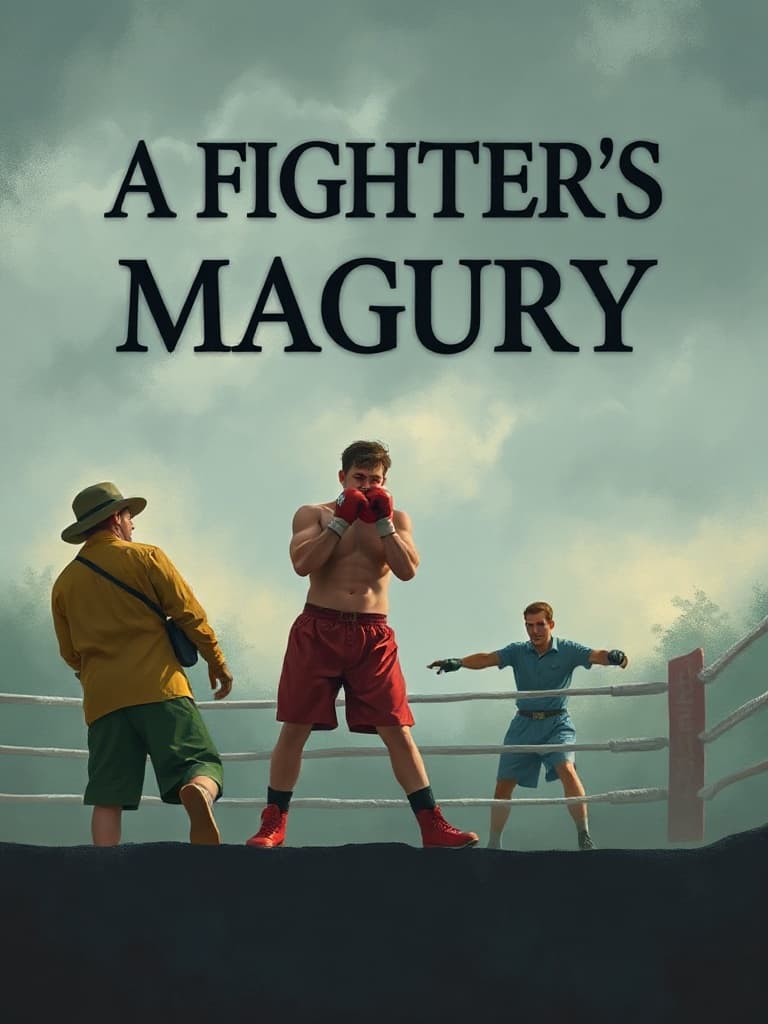
About this book
A fighters story
90
0
11
0
Story of my grandfather Patrick Maguire with the struggle of life in 1920s Britain
Chapters
- 1The Brickworks • North Lanarkshire — 1924 Chapter 1: The ChallengeThe air inside the kiln was thick with the suffocating stench of burning coal and wet clay. Every breath tasted like ash. Patrick Maguire wiped the sweat from his brow with the back of a scarred forearm, leaving a streak of black soot across his forehead. He swung another heavy, unfired clay brick onto the drying rack. His muscles burned, but it was nothing compared to the mud of the Somme, or the tension he’d left behind in the smoking ruins of Cork. Here, at least, the sky wasn’t falling. "Hey, Mick!" a voice boomed from the shadows of the yard. Patrick didn't look up. He knew the voice. It belonged to Jock, a towering furnace man with fists the size of mallets and a permanent chip on his shoulder regarding the influx of Irishmen taking jobs in the valley. "I'm talking to you, Paddy," Jock sneered, stepping into the red glow of the kiln, flanked by two grinning labourers. "You dropped something. Your manners, maybe? Or did you leave 'em in the south with the rest of your rebel friends?" The yard went quiet. The rhythmic clinking of shovels stopped. The local workers gathered in the doorway, eager for sport at the expense of the quiet new man. Patrick set his brick down slowly, deliberately. He closed his eyes for a fraction of a second. In the dark of his mind, he didn't see the brickworks. He saw the canvas ring behind the lines in France. He heard the roar of the regiment. He felt the phantom weight of leather gloves. He turned around, his face a mask of calm. "The name," Patrick said, his southern Irish drawl cutting through the thick Scottish air like a knife, "is Maguire. And I suggest you get back to your coal shovel before you hurt yourself." Jock laughed, a booming, ugly sound, and stepped forward, chest puffed out and looking for blood in front of the whole shift. "And what's a little brick-packer like you gonna do—" Patrick didn't lift his hands. He just looked Jock dead in the eye, unflinching. "Nothing. Here. I’ve got a wife and a growing brood to feed, and the manager sacks anyone caught brawling on the clock. If you want to see what an Irishman is made of — and what I can do — meet me in the fallow field behind the clay pits at six o'clock. Bring who you like." The furnace man spat a gob of black phlegm onto the dirt floor. "Six o'clock, Paddy. Don't you dare run home to your mammy." Patrick turned his back on him, picked up his next brick, and went back to work. But inside, his mind was already racing. He knew right then, as the clay dust coated his throat, that he wasn't going to be a brick maker for long. He was going to build champions.
- 2Chapter 2: The Revised FightWhen the whistle blew at five, Patrick didn't rush. He washed the gray dust from his face until his skin shone pink, laced his heavy boots tight, and walked out toward the field. The Scottish evening air bit sharp at his cheeks, and the long grass was slick with heavy dew. He wasn't surprised by what was waiting. Jock was there, of course—but he wasn't alone. Flanking him were two heavy-set loaders from the rail line, men who spent their days hefting iron ingots that would crush a normal man. Three against one. A classic trap. "Changed your mind, Maguire?" Jock sneered, cracking his knuckles loud enough to hear across the field. "Never." Patrick took off his flat cap, folded it with military precision, and set it gently on the dry stone wall. He had no gloves, no padding, no weapons. Just his bare hands and the footwork he’d perfected to stay alive in the trenches. The three men moved in, spreading out to flank him. They thought this would be a casual thrashing. They didn't understand the science of the ring—but Patrick knew that on wet grass, science could fail you. Jock rushed first, swinging a wild, telegraphed right hand that could have felled a bull. Patrick went to slip inside the blow, but his boot skidded on the damp clover. Damn it. Instead of a clean dodge, Jock’s massive forearm clipped the side of Patrick’s head. The world tilted, a high-pitched ring exploding in Patrick's left ear. He stumbled back, his teeth rattling, tasting copper immediately as his inner cheek caught his molars. "Got 'im!" one of the loaders barked. Jock pressed his advantage, lunging forward blindly. But Patrick's instincts took over. Ignoring the throb in his head, he let his shoulder roll naturally, tucked his chin, and drove a short, explosive uppercut straight into the giant’s ribs. There was a sickening, hollow thud, followed by the sharp crack of cartilage. Jock’s breath left him in a violent wheeze. His eyes rolled back, and he crumpled into the wet grass like a felled oak, clutching his side. One down. But there was no time to celebrate. The second loader was already on him, tackling Patrick around the waist. The sheer momentum drove them both into the dirt. The fall knocked the wind clean out of Patrick’s lungs. He rolled desperately as a heavy boot narrowly missed his skull, tearing a chunk of sod out of the earth. Patrick scrambled to his knees, his hands caked in mud, and drove his forehead straight up into the loader's oncoming face—a brutal, short-range headbutt. The man screamed, clutching his shattered nose as blood leaked through his fingers. Patrick surged to his feet, hip-pivoting sharply to drive a vicious left hook into the man's liver. The loader folded beside his mate, retching into the grass. Two down. Patrick spun to face the third man, his chest heaving, steam rising from his wool shirt into the cold air. His left ear was purple and swelling, and his knuckles were scraped raw and bleeding from the impact against bone. He wasn't a superhero; he was a man who knew how to survive. The last loader looked at his groaning friends, then back at Patrick—who stood balanced, mud-splattered, eyes completely cold. The loader hesitated. He threw a desperate, defensive jab. Patrick parried it effortlessly, stepped neatly across his guard, and drove a sharp, straight right punch straight into the man's jaw. The wet, sickening crunch echoed in the quiet field. The third man hit the earth, out cold before he touched the grass. The whole fight had lasted less than two minutes, but Patrick felt every second of it. He stood in the center of the bruised grass, his breath coming in ragged, white plumes. He didn't gloat. He didn't kick them while they were down. Instead, he rubbed the back of his hand across his bloodied mouth, walked over to the first loader, and hauled him upright by his collar. The man flinched, expecting another blow. "You’ve got strength," Patrick said, looking from one battered face to the next, his voice steady despite the throbbing in his skull. "But you throw punches like a herd of cattle. You rely on size and rage, not sense. If you’re going to fight, you might as well learn how to do it right. Fighting isn't about who hits hardest — it’s about who stays standing when the ground slips under your feet." The men stared at him in utter disbelief. "Tomorrow, after the whistle," Patrick said, picking up his cap and brushing the wet mud from its brim before placing it squarely on his head. "Right here. I’ll teach you how to protect yourselves. And bring anyone else from the works who wants to learn." As he walked away toward the small cottage where Josie waited with their supper, he didn't look back. Behind him, in the bruised grass of a Scottish field, the very first foundations of the Maguire Boxing Club had been laid. He reached home before the fire died down. Josie took one look at the split, bleeding knuckles, the swelling rising dark and purple along the side of his head, and the mud caked into the creases of his skin. She said nothing — in Chryston, a man brought home a wage or he brought home trouble; Patrick had brought the wage, so the rest could wait. But as she cleaned the cuts, bathed his bruised ear, and wrapped his hands that night, neither of them knew that this was only the beginning
- 3Chapter 3: Walls, a Roof, and Left Shoes The first real frost bit hard by mid-November. The long grass of the training field turned crisp and white underfoot, and the men’s breath hung thick in the air like smoke as they moved through their drills. Still they came — every Tuesday, Thursday, Saturday — stamping their feet against the biting cold, rubbing numb hands together, turning up their collars against the sharp Lanarkshire wind. Patrick walked the line, correcting stances, his breath pluming white in the air. But he wasn't alone anymore. Not really. “Keep those hands up, Jock! You great eejit, you’re wide open for a left hook!” Patrick’s face split into a rare, genuine grin before he even turned around. He knew that voice. Loud, sharp, and full of fire. Here came Davie. With his flat bunnet pulled low over a thatch of wild strawberry-blonde hair, Davie weaved through the group of labourers like a spark through dry grass. He was small — barely five-foot-five — but he carried himself like a giant. A Banbridge man from the north of Ireland, a miner who spent his days underground in the dark pits, and his evenings right here at Patrick’s side. They were the unlikeliest pair in the whole valley. Patrick — the quiet, disciplined ex-soldier from the South, labelled a rebel. Davie — the fiery, loud Ulsterman, proud as any orange lily, with a temper that could flare up faster than a pit explosion. They insulted each other morning, noon and night, usually at the top of their lungs over a pint of heavy. But there wasn't a living soul Patrick trusted more. Davie wasn't just his friend. He was his shadow, his conscience, and his biggest fan, all wrapped in a rough wool coat. And Jock? The big furnace man just grinned and tightened his guard. If Davie told him he was open, he was open. There was no ego between them — they all knew who ran this family now. Davie planted himself right in front of Jock, eyes blazing. “You think the other bloke’s going to stop and ask your name before he knocks you out? Keep ’em UP!” Patrick watched them, shaking his head fondly, but the cold was biting deeper. He noticed a young miner standing shivering so hard his gloves were rattling against his chest. “Enough,” Patrick called out, wiping a rim of frost from his own brow. “This is no life for training. We need walls around us, and a roof over our heads.” “Aye, and a fire big enough to melt iron,” Davie grunted, chewing furiously on the stem of his unlit pipe. “Before we end up as statues of ice. Come on then, Paddy. Let’s go see that misery Campbell up at the Welfare. Two of us will be harder to ignore.” The next morning, Patrick put on his best shirt — washed and starched stiff by Josie — and set off up the road. Davie walked right beside him, hands stuffed deep in his pockets, bunnet pulled low, looking like he was ready to argue the hind legs off a donkey. Inside the Miners’ Welfare Institute, they found Mr. Campbell behind his desk, the stern secretary who knew every face and every wage in the valley. Patrick touched the brim of his cap respectfully. “Mr. Campbell. Patrick Maguire — from the brickworks. And this is Davie.” Campbell looked up, his sharp eyes darting between them: the tall, calm brickie with the soldier’s posture… and the small, ferocious redhead practically vibrating with energy at his side. “I know exactly who you are both,” Campbell said dryly. “The quiet man who puts giants on their backs… and the Banbridge firebrand who cheers him on. Word travels fast in this village.” “Then you know why we’re here, sir,” Patrick said, his voice low and steady. “We’ve near twenty men training out in the freezing mud. It keeps them fit, keeps them out of trouble, and teaches them how to carry themselves like men, not animals. I’m asking — might we use the back hall? We don’t need much. Just the floor, and a lightbulb.” Campbell leaned back, steepling his fingers, his face sceptical. “Boxing is rough, wild stuff, Maguire. I’ll not have furniture broken or blood on my floorboards. This is a respectable place.” Patrick opened his mouth to answer, but Davie stepped forward before the words could leave his throat. His strawberry hair seemed to bristle under his cap. He was half Campbell’s size, but he stood toe-to-toe with him like he was six foot tall. “Respectable?!” Davie burst out, his accent thick and sharp. “Mr. Campbell, those lads carry the whole weight of this valley on their backs! They dig your coal, they fire your bricks, they lay your tracks until their lungs are black and their bones ache! Patrick here isn't teaching them how to brawl in the gutters! He’s teaching them to stand straight, keep their tempers, and look after their own! If you want this village to stay decent… give them a ROOF!” The room went dead quiet. Patrick bit his lip to stop himself smiling — that was his Davie alright. Campbell stared at the pair of them — the calm soldier and his fiery little general. Slowly, the hard lines around his mouth softened. A thin, reluctant smile broke through. He reached into his drawer and pulled out a heavy iron key, worn smooth at the edges from years of use. “The back hall,” he said firmly. “Tuesdays, Thursdays, Saturdays. You light the fire, you sweep the floor, and every last one of you is out by ten o'clock sharp. And if there is one single fight outside of your training… you’re out on your ear. Understood?” “Perfectly,” Patrick said, taking the weight of the key into his palm. “Crystal,” Davie nodded, looking far too pleased with himself. That Saturday evening, the club moved indoors at last. The hall was long and drafty, with splintered floorboards and high windows thick with decades of soot. At one end stood a rusted cast-iron stove that coughed more smoke than heat. There were no ropes, no posts, no bags or pads. Patrick found a stick of chalk, and he and Davie marked a rough square right in the centre of the wood. That was their ring. But to the lads, it was a palace. When the session finally finished and the exhausted men trundled out into the dark Chryston streets, laughing and shoving each other in good humour, only the two Irishmen remained. The fire was dying down in the stove, casting long, dancing shadows across the empty chalk lines. Davie reached into the deep pockets of his heavy coat and pulled out a rough sack, dumping it on the bench. Out rolled a pile of firm, fresh potatoes and one massive, perfect turnip. “For Josie,” Davie muttered, finally striking a match to light his pipe. “Garden’s done proud this month. She can make a stew that’ll feed an army.” Patrick chuckled, taking the vegetables. “You’ve a green thumb for an old Orange bastard, Davie.” “Better than your thick skull, you Rebel scunner,” Davie shot back instantly, a grin splitting his freckled face. He puffed happily, eyes twinkling in the firelight. “Mind you… her cooking had better make up for that disaster we pulled last week.” Patrick groaned loudly, leaning his head back against the wall. “Don’t remind me.” A few nights before, the two of them had crept down to the railway line, watching the freight wagons rumble in from Garnkirk. Times were hard, and hunger was a good motivator. They’d spotted a crate strapped tight, heavy and solid, and their hearts had leapt. Boots! Leather boots! Brand new! They’d broken the lock, hauled the crate across the muddy fields sweating and cursing, thinking they’d won the lottery. Davie had practically kicked his own door down on Bothlyn Road. “MEG! MEG!” he’d roared to his wife at midnight. “Wake up and look what the Lord sent us! We’re set for life, woman!” They’d dragged the box to the kitchen table, candles lit, neighbours probably thinking they were murdering someone with the noise. They pried the lid open… and started pulling them out. “Dozens of them,” Patrick said now, shaking his head in disbelief. “Stacks of fine, shiny leather shoes.” Davie choked on his pipe smoke, wheezing with laughter. “ALL OF THEM! EVERY SINGLE BLOODY ONE OF THEM… FOR THE LEFT FOOT!” He howled, clutching his sides, tears streaming down his face. “A whole crate of LEFT SHOES! What kind of eejit factory packs only the left ones?! Who does that?!” “The kind that knows fools like us are waiting in the bushes,” Patrick laughed — a deep, rolling sound that echoed in the empty hall. “Almost as bad as the whiskey cases we hid up the Garnkirk bog line. I swear to you, Davie… that peat swallowed them whole. Sunk right out of sight before we could come back for ’em.” “Aye,” Davie wiped his eyes, still snickering. “Or some lucky sod is drinking our fine malt right now, wondering what saint sent it.” The laughter faded into a warm, comfortable silence. Patrick looked around the hall — their hall. Hard men living hard lives, surviving on grit, stolen vegetables, failed capers, and the bond between two men who should have hated each other to death. “We’ll start the lads on footwork next week,” Patrick said quietly, looking at his friend. “Real footwork, mind. Not the left-footed kind.” Davie stood up, pulling his bunnet down tight against the cold night air. “Right you are, Paddy. I’ll see you at the whistle tomorrow.” As the door clicked shut behind his best friend, Patrick ran his thumb over the iron key in his pocket. He had his hall. He had his boys. And most importantly… he had Davie. With a mate like that in your corner, you didn't just build a boxing club. You built something that would never, ever fall down.
- 4Chapter 4: The Bow Wow and the Letter Home
- 5Chapter 5: The Flies and the Fife Mountain
- 6Chapter 6: The Pull, the Ring, and the Box of Oats
- 7Chapter 7: The White Lady’s Toll
- 8CHAPTER 8 The Crucible of 1926
- 9CHAPTER 9 The Gaffer and the Big Balloons
- 10Episode 10CHAPTER 10 The American First-Footer The midnight bells of Hogmanay had barely finished ringing, their echoes fading slowly over the frosted slate roofs of Pentland Road, when a sharp, heavy knock rattled the front door. Inside the Maguire kitchen, the warmth clung thick and sweet. Josie’s steak pie filled the air with rich, meaty steam, while the clootie dumpling still gave off its soft, spiced scent. Patrick and Davie sat hunched by the dying embers, their caps pulled low against the draft creeping under the door. Two drams of whisky rested between them—small, bright comforts to see out the hard trials of 1928 and meet whatever 1929 might bring. Patrick frowned, his calloused thumb tracing the rim of his glass. At this hour, a first-footer was expected: Jock from down the road, or one of the lads from the pit, carrying a lump of coal and a thirst for a New Year drink. But this knock was different—urgent, ragged, heavy with the weariness of someone who had walked or run through miles of cold and dark. “Aye, I’ll get it,” Davie muttered, shifting his feet, but Patrick was already rising. His broad frame, hardened by years of bending in the black, damp tunnels of The Geich, cast a long shadow across the scullery as he stepped into the freezing hallway and lifted the latch. A gust of Lanarkshire drizzle swept in, sharp enough to sting the cheeks. But Patrick froze where he stood. Under the flickering gas lamp, shivering so hard his shoulders shook, stood a man wrapped in a thick, salt-stained coat—one made for warmer winds, not this biting Scottish frost. It was his younger brother, Michael. Three years of hard labor across the Atlantic had etched deep lines into his face, and his eyes held the hollow, bone-deep tiredness of a storm-tossed crossing and a long, soot-choked train ride from the coast. He had never set foot here before; Lanarkshire was not home to him, only the place his brother’s letters had named. For a long moment, the only sound was rain hissing on the cobblestones. Then Patrick reached out, his big arms wrapping tight around his brother, pulling him in from the cold and into the soft golden light of the kitchen. The cottage woke to a quiet, fierce flurry. Josie hurried in from the bedroom, one hand flying to her rounding belly in shock, while Davie stood frozen, his glass halfway to his mouth. Before long, the noise did what the midnight bells could not—it drew the little ones from their beds. Two-year-old Michael, a bundle of mischief crowned with unruly curls, stumbled into the room rubbing his eyes, squinting at the stranger as if wondering what had disturbed his sleep. Patrick knelt, then lifted the boy easily onto his shoulder, his voice thick with something halfway between laughter and tears. “Michael, son… look here. This is your Uncle Michael. The man you carry your name for.” The visitor reached out, his fingers trembling just a little, and brushed the boy’s soft sleeve. In that small, warm kitchen, all the miles and years between them seemed to melt—past and future meeting under one roof. By Thursday night, that quiet, tender mood had vanished completely, swallowed whole by the roar of the Muirhead gym. It was winter fight night, and word had spread through every street and pit village. The hall was packed tight, shoulder to shoulder with miners from The Geich and laborers from the surrounding parishes. The air hung thick and warm—sharp with wintergreen liniment, the tang of leather gloves, and the heavy, familiar reek of pipe tobacco. At the back, bookies shouted their odds over the din, their voices bouncing off the sweating corrugated iron roof. Davie was everywhere at once, his gray stopwatch clicking rapidly in his palm as the opening bouts began. It was honest, unpolished fighting: a young brickworks lad took a beating but walked tall, his chin held high, followed by a heavyweight clash between two rival colliers that had the crowd stamping their boots until the floorboards shook. Through it all, Uncle Michael stood in the corner, holding the zinc bucket and damp sponge, his face flushed with the heat and noise of a world he’d thought he’d left behind forever. Then came the main event. “Keep that guard up, Jancy!” Patrick’s voice boomed, cutting through the roar like a foghorn. Young Jancy was locked in a tight, grueling battle with a clever, relentless fighter from Coatbridge. By the fourth round, Jancy’s left eye was swelling shut, his breath coming in ragged, gasping bursts. Patrick leaned over the ropes, his big hands gripping the lad’s shoulders, his face inches from his. “You don’t let him take this space, lad,” he said, low and steady as iron. “You’ve got the brickworks in your knuckles and the pit in your lungs. Dig deep—fight for every inch.” When the final bell sounded and the referee raised Jancy’s hand in a hard-won, bloody victory, the gym erupted. Men threw their caps into the air and stamped their feet until the rafters rattled. Patrick stood in the middle of it all, the undisputed Gaffer of the room, his chest swelling with pride. Late that night, the adrenaline finally cooled. Patrick, Davie, and Michael walked slowly back up the hill toward Pentland Road, their ears still ringing, the sharp, earthy scent of the fight clinging to their wool coats. Back inside the cottage, Josie and Meg had finally settled the household. The noise and chaos of the gym felt a world away, replaced by soft, heavy silence. Tucked fast asleep in the big bed were Simon and little Michael, curled close as two spoons. Even in sleep, five-year-old Simon had one protective arm draped firmly over his brother’s chest. In the corner by the hearth, wee Nicky and their cousin Jan lay snoring softly in wicker baskets, their tiny chests rising and falling in perfect rhythm. Four children, safe and warm against the Lanarkshire frost outside. Michael stopped in his tracks. He looked first at the boys in the bed, then down at the sleeping infants, and the sight struck him like a blow. He turned to Patrick, his voice dropping to a rough, quiet whisper. “You put on a fine night, Paddy—and that Jancy’s got real grit,” he said, nodding toward the dark window. “But look—there’s your true victory. Those two lads, thick as thieves. Just like you and me once were, before the ocean rolled between us.” Patrick said nothing, but laid a heavy, steady hand on his brother’s shoulder. All the years of separation, all the words left unsaid, hung in the quiet air between them. The rest of the week slipped by like smoke. Before the new year had even found its rhythm, the hard reality of the Atlantic claimed its due. The morning of departure came bitter and gray. A thick Lanarkshire fog rolled in from the fields, swallowing the edges of the town as they stood on the platform at Garnkirk station. There were no grand speeches, no loud farewells—only the tight, crushing hug of two brothers who both knew, without ever speaking it aloud, that this was likely the end. For men of their station, steamships did not offer easy return tickets. This goodbye was for good. Simon stood on the frosted planks, his too-large St. Joseph’s blazer pulled tight around his wrists against the chill. He held little Michael’s sticky hand in his, gripping it hard, while wee Nicky leaned unsteadily against his boot. He watched his father—the strong, steady Gaffer who had commanded a whole room of shouting men the night before—shrink just a little, his shoulders tight and heavy, as the train let out a long whistle. Slowly it pulled away into the mist, carrying Uncle Michael until even the tail lights faded into the gray toward Glasgow. As they turned to walk back up the hill, Simon glanced down. Two-year-old Michael was already forgetting the moment, kicking at a frozen clod of mud in the path, his curls bouncing with every step. He had no idea what the distance across the ocean meant. Simon didn’t fully understand it either—but he understood the look on his father’s face. He squeezed his brother’s hand a little tighter against the cold. He didn’t know what hard years lay ahead, but he knew one thing for certain: the world might try to pull them apart, but he would never let go.
- 11Episode 11CHAPTER 11 A Pack of Lions The freezing Lanarkshire winter of 1929 didn’t loosen its grip easily, but by the time the last stubborn frost melted from the ditches along Pentland Road, a new warmth had settled deep inside the Maguire cottage. In the small, busy kitchen, the wicker cradle by the hearth was filled once more. Josie had given birth to their fourth son: Lawrence — or wee Larry, as Davie had immediately christened him the moment he first laid eyes on the tiny bundle. Now there were four boys under one roof. To six-year-old Simon, three-year-old Michael, and sturdy wee Nicky, the new arrival was a constant wonder. Simon would stand on tiptoe, leaning over the cradle with a serious, watchful frown, already taking his role as big brother to heart. Little Michael — still a proper rascal with that same halo of wild curls — would try to poke the baby’s tiny toes or tickle his feet, only to be shooed away each time with a firm swat of Josie’s tea towel. Even Nicky would pause whatever adventure occupied him to peer into the cradle, fists loosely curled, as though checking that his newest brother was safe. After long shifts underground at The Geich, Patrick would sink into his chair by the fire and cradle wee Larry against his broad, coal-dusted chest. Looking down at the sleeping child, he felt a quiet, fierce triumph. The Atlantic might have stretched a permanent gulf between him and his brother Michael, thousands of miles away in America, but here under this roof, the Maguire roots were growing deeper with every passing year. Yet the world outside was changing. For generations, the roads had belonged to the horses: heavy Clydesdales hauled coal, timber, and brick through the villages of Lanarkshire, their iron shoes ringing steadily against stone and cobbles. Now, as 1929 rolled toward 1930, a new sound began creeping into everyday life. Motor cars. Delivery lorries. Petrol engines coughing awake before dawn. The familiar smell of horse sweat and damp leather was increasingly mixed with the sharp tang of fuel. The new decade was arriving, whether folk welcomed it or not. Still, some things were built to last. By autumn, the bright red walls of the new St. Joseph’s School stood complete above Muirhead. Patrick slowed whenever he passed them. Though he no longer worked at the brickworks, he knew many of those bricks had passed through his hands before the kilns fell silent. Every wall seemed to hold a small piece of his own labour. One crisp September morning, Simon stood scrubbed and shining in the scullery, tugging proudly at the sleeves of his blazer, which still hung a little too long at his wrists. Josie had long since paid off the tallyman’s debt, and Simon wore his uniform like a young king. Patrick walked him all the way to the school gates. When Simon finally let go of his father’s hand and strode through the entrance without looking back, Patrick stood for a moment staring up at the building. The pit might put food on the table, but this school represented something else: a future, where his sons might have choices he never had. Yet the darkness beneath the ground never slept. It came during the bitter winter of 1930. Patrick and Davie were working deep inside The Geich when a sharp crack split the tunnel. The sound was instantly followed by a low, rolling roar. Dust exploded through the roadway — a section of roof had collapsed. Somewhere farther along, trapped gas ignited in a brief flash. Within seconds, the pit alarms were screaming, the warning echoing through every passage underground and bursting from the pithead into the cold air above. On Pentland Road, women froze where they stood. Josie’s blood ran cold the instant she heard the hooter; Meg was already pulling on her shawl. Together they hurried down the hill toward the pit, joining dozens of wives, mothers, and daughters gathered silently at the gates beneath a curtain of freezing drizzle. Nobody spoke much — nobody needed to. Everyone understood what the alarm could mean. For two agonising hours, the village waited. Then the cage emerged. Black-faced miners stumbled into daylight, coughing, blinking, alive. Patrick and Davie were among them: covered in soot and dust, exhausted but unhurt. The trapped men had dug themselves through and helped their mates escape. Not a single life was lost that day. That evening, while scrubbing coal dust from beneath his fingernails, Patrick stared silently into the sink. The Geich grew deeper every year — hotter, tighter, more dangerous. This time they had all come home. Next time, perhaps not. The thought lingered long after the water ran black. For a miner’s worries, though, there was always one remedy: the gym. A few weeks later, the old hall rang with life. Skipping ropes snapped through the air. Gloves hammered against leather pads. The heavy bag swung back and forth beneath the rafters. Jancy worked through another gruelling session while Davie clicked away with his stopwatch. Near the ring wandered Nicky, now nearing his third birthday. Solidly built and steady on his feet, he already carried something of Patrick’s strength despite his tiny size. Patrick paused beside the heavy bag and glanced down. Nicky had stopped in the middle of the floor. A sharp crack rang out as Jancy landed a punch, and the little boy immediately reacted: knees bent, weight settled, one foot slid forward, both fists rose instinctively — elbows tucked, chin down. A perfect orthodox boxing stance. The room fell quiet. Davie lowered his stopwatch. “Paddy,” he said softly, “would ye look at that.” Another punch slammed into the pads. Without hesitation, Nicky shifted his feet, pivoted smoothly, and switched stance entirely — orthodox, then southpaw, balanced as any grown fighter. Davie stared. “Christ alive… he’s a switch-hitter.” Patrick laughed. “You can hardly talk yet, son.” He crouched down in front of the boy. “Who taught ye that, eh?” Nicky puffed out his chest, his tiny fists still raised. After a long, serious pause he declared: “Me smash ’em.” The gym erupted with laughter. Patrick scooped him up and swung him onto his shoulder. “Aye,” he said. “Something tells me you just might.” That evening, peace settled softly over Pentland Road. Patrick stood in the doorway, his pipe glowing orange against the fading twilight. Down the path came Simon from school, his blazer sleeves still rolled back, one hand holding Michael’s tightly. The younger boy chattered away about some adventure only he fully understood. Trotting beside them came Nicky, determined not to be left behind. On the doorstep, Josie stood rocking wee Larry in her arms. Patrick caught her eye, and both smiled. For a moment neither spoke. The years had not been easy: they had crossed an ocean, known hunger, debt, and fear. Yet here they stood — together. Patrick drew slowly on his pipe and watched the smoke drift upward into the darkening sky. He thought of Ireland, of the brother he might never see again, of the mines beneath his feet, and of the uncertain years ahead. The 1930s were coming fast; the pits were growing deadlier, and the world beyond Scotland seemed restless and uneasy. Changes were gathering like distant storm clouds over the horizon. But when he looked at his sons, he felt something stronger than fear. Simon, Michael, Nicky, Larry — four boys laughing on a garden path, carrying the strength of everyone who had come before them. They were small now, but Patrick knew what was growing: not simply a family, but a legacy. A pack of lions. And though none of them could yet know it, the years ahead would test every lesson Patrick and Josie had fought to teach them. The world was changing, hard times were coming, and the story of the Maguires was only beginning.
More Historical stories
Browse all Historical →- the old sword
A young knight, driven by a prophecy of his return, seeks a legendary sword to reclaim his stolen kingdom from a tyrannical usurper. He must brave treacherous landscapes and confront his own doubts, all while battling against the sorcerer who orchestrated his family's downfall. The quest is unique due to its blend of historical warfare, fantastical elements, and a deeply personal journey of self-discovery.
- New bible
What call alegotija watican do you feel me fire
- Reklama ir pantomimu teatras
Vsiku prievarta kenedziu chaodo teorija ne dvasua nriperkama neitomsnyizmui nri su tools binary its me. not
- Reklama ir pantomimu teatras
Vsiku prievarta kenedziu chaodo teorija ne dvasua nriperkama neitomsnyizmui nri su tools binary its me. not
- Underestimated silence
A red headed Irish woman from little rock who is an infj personality type and animal empath. She has ptsd from childhood trauma in the form of five years of bullying but utilizes the pattern recognition and hyper vigilance to her benefit. She has lifelong loved animals and has a bachelor's degree in animal science and a masters in animal behavior. She starts training race horses, mainly acquiring horses from kill pens or thought to be a lost cause.
- The Unending Silence: A Chronicle of Shadowed Lives
A red headed Irish woman detective who is an infj personality type and animal empath. She grew up in little rock Arkansas and has ptsd from five years of bullying from fourth to eighth grade at a local private catholic school. She has long worked with and loved animals. She has a degree in animal science and a masters in behavior. She is hand picked by someone who knows her and knows she has an ability you can't train into any detective so she is brought on as a cold case detective along with her service dog who is a border collie and doubles as a police dog. Her first cold case is about a lineman named Ray Jenkins that became a serial killer
Want to write a story like this?
Learn the craft in our free AI story generator, then draft your first chapter with an AI co-writer.
What stayed with you?
Read a chapter and leave the author a comment.
Reader notes
Loading reader notes…