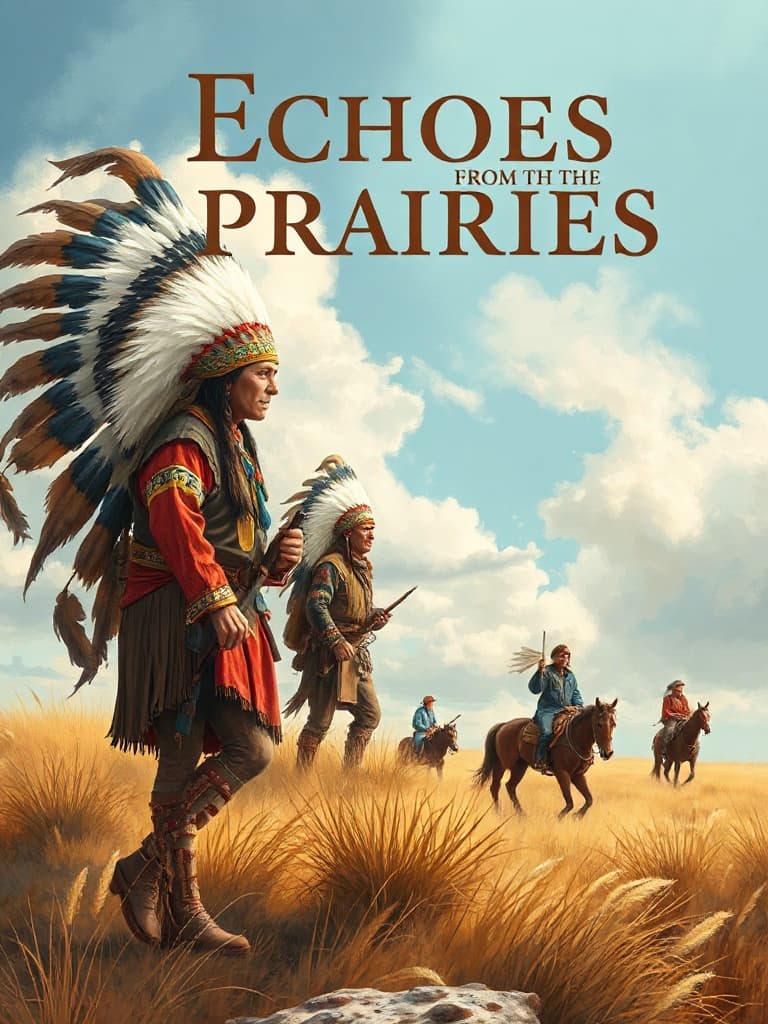
About this book
Echoes from the Prairies: The True Tribal Nations and Their Chiefs
44
0
104
0
This is the true history of the Prairie Tribal Nations and their Powerful Leaders..Every Person in this book was real. Every word They spoke ,every vision They had was from Their hearts,souls and spirits. This book is based on actual fact.
Chapters
- 1The Endless Sky, The Whispering GrassThis inaugural chapter immerses the reader in the awe-inspiring immensity of the Great Plains, painting a vivid sensory portrait of this vast, untamed wilderness. The narrative will begin with panoramic descriptions of the landscape: the seemingly endless horizons, the undulating seas of prairie grass rippling in the wind, the dramatic skies that shift from brilliant azure to tempestuous grey. We will detail the rich biodiversity – the thunderous herds of bison, the swift grace of the pronghorn antelope, the soaring eagles, and the smaller creatures that formed the intricate web of life. The chapter will then delve into the profound spiritual connection the Indigenous peoples, the true nations of these lands, held with this environment. It will introduce the concept of the land as a living entity, a sacred space imbued with spirits and ancestral power. The narrative will establish the deep respect and reciprocal relationship between the people and the natural world, highlighting how their cultures, cosmologies, and daily lives were intrinsically interwoven with the rhythms of the prairie. This section will introduce the idea of 'true tribal nations' as distinct peoples with rich histories, complex social structures, and profound spiritual beliefs, setting them apart from the simplistic portrayals often found in external narratives. The early inhabitants will be depicted not as static figures, but as dynamic societies deeply attuned to their surroundings. The chapter will conclude by emphasizing the inherent power and beauty of this land, posing it as the cradle of civilizations that would soon face unprecedented challenges. The tone will be one of reverence and wonder, establishing the stage for the epic stories of leadership and resilience that are to follow. Key elements to include: detailed descriptions of prairie ecosystems, the significance of the bison in Indigenous culture, the concept of the land as sacred, the diversity of early inhabitants, and the establishing of a tone of profound respect for the natural world and its original stewards. The intent is to create a foundational understanding of the environment and the deep spiritual and cultural bonds the Indigenous peoples shared with it, establishing a baseline against which the subsequent disruptions can be measured. The chapter aims to evoke a sense of place so powerful that the reader can almost feel the wind and hear the rustle of the grass, understanding that this was not merely land, but a sacred home. The final hook will be a subtle intimation of the vastness and the ancientness of these lands, hinting that within this seemingly empty expanse, powerful stories and destinies were unfolding, soon to be irrevocably altered.
- 2Black Elk's Sacred DreamThis chapter introduces Chief Black Elk, an Oglala Lakota holy man, focusing on his profound spiritual depth and his pivotal role as a visionary leader. The narrative will begin by establishing the context of the Oglala Lakota people, their way of life, and their deep spiritual traditions. We will then introduce Black Elk not just as a chief, but as a seer, a conduit for the sacred. The chapter will delve into his early life and the profound spiritual experience, the 'Great Vision,' that shaped his destiny. This will be depicted through evocative imagery and symbolic language, reflecting the nature of his visions. The content of the vision – the sacred hoop, the six grandfathers, the healing of his people, the flowering tree – will be described in detail, emphasizing its transformative power and the immense responsibility it placed upon him. The narrative will explore the challenges Black Elk faced in understanding and enacting his visions, the skepticism he sometimes encountered, and his unwavering commitment to their guidance. His deep connection to the natural world, particularly to the sacredness of the buffalo and the land, will be highlighted as a source of his strength and wisdom. The chapter will portray his role as a spiritual anchor for his people, particularly as the shadows of external threats began to lengthen. His intelligence, his courage in battle, and his unwavering dedication to preserving the sacred ways of his people will be showcased. The intent is to establish Black Elk as a central figure whose spiritual insights and unwavering faith will be crucial in navigating the tumultuous times ahead. The chapter will depict the internal struggles he faced in reconciling his visions with the harsh realities of his people's existence, the burden of leadership, and the personal cost of his spiritual calling. Continuity note: Ensure that Black Elk's connection to the Lakota way of life is deeply entrenched, grounding his spiritual experiences in the tangible world of his people. The chapter will end with Black Elk, perhaps at a sacred gathering or in solitary contemplation, feeling the weight of his visions and sensing the approaching storm, foreshadowing the immense trials that lay ahead for him and his people. The hook will be Black Elk's quiet resolve, his eyes fixed on a distant horizon, burdened by knowledge of both great sorrow and eventual healing, a testament to the enduring spirit he embodies.
- 3The Bull of the Hunkpapa: Sitting Bull's ResolveThis chapter introduces Tatanka-Iyotake, known to the world as Sitting Bull, the revered Hunkpapa Lakota chief. The narrative will portray him as a charismatic leader, a strategic genius, and an unwavering defender of tribal sovereignty. We will explore his early life, his rise to prominence, and the events that forged his legendary status. The chapter will delve into his deep-seated distrust of the U.S. government, stemming from a history of broken treaties and injustices against his people. This distrust will be depicted not as mere stubbornness, but as a profound understanding of the existential threat posed by westward expansion. Sitting Bull's commitment to unity among the Plains tribes will be a central theme. His efforts to foster alliances, to bring together disparate groups under a common banner of resistance, will be highlighted. We will explore his leadership style – his calm demeanor, his strategic brilliance in council, and his unwavering resolve that inspired fierce loyalty. His spiritual connection, though perhaps expressed differently than Black Elk's, will also be touched upon, emphasizing his role as a protector and a spiritual leader in his own right, a man who sought guidance from the Great Spirit in his decisions. The chapter will showcase his vision for his people: a future free from external control, where they could continue to live according to their traditions on their ancestral lands. His resistance to assimilation and his refusal to be confined to reservations will be presented as acts of profound courage and principle. The intent is to establish Sitting Bull as a formidable leader whose influence extended far beyond his own band, a figure who embodied the spirit of defiance and self-determination. The narrative will explore the internal dynamics of tribal leadership, the challenges of consensus-building, and the sacrifices required to stand against a seemingly insurmountable power. Continuity note: Connect Sitting Bull's unwavering stance to the historical context of treaty violations and the increasing pressure on Lakota lands. The chapter will culminate with Sitting Bull, perhaps addressing his people or in quiet council with other leaders, his gaze steady, his words carrying the weight of conviction, as he articulates his unyielding commitment to protecting their way of life, a commitment that will define his legacy and his ultimate fate. The hook will be the image of Sitting Bull, a solitary figure against the vast prairie, embodying an indomitable spirit that refuses to yield, a symbol of resistance against the encroaching tide.
- 4The Chief Who Spoke for Peace: Joseph of the Nez PerceThis chapter introduces Chief Joseph (Hinmatóowyalahtq̓it) of the Nez Perce tribe, focusing on his profound eloquence, his deep love for his homeland, and his unwavering commitment to peace. The narrative will begin by setting the scene in the beautiful Wallowa Valley, the ancestral home of Joseph's band, emphasizing its significance to his people and his personal connection to it. We will explore his background, his inheritance of leadership from his father, and the principles that guided his rule – justice, compassion, and a desire for peaceful coexistence. The chapter will highlight Chief Joseph's renowned oratory skills, showcasing his ability to articulate the grievances and aspirations of his people with clarity and grace. His attempts to negotiate with the U.S. government for the preservation of their lands will be a central theme. We will depict his interactions with government officials and settlers, portraying his efforts to find a diplomatic solution to the escalating conflict. The narrative will also touch upon the internal divisions within the Nez Perce tribe, with some factions advocating for resistance, contrasting with Joseph's preference for peace. His deep spiritual beliefs, intertwined with his love for the land, will be explored, emphasizing how his connection to his homeland was not merely territorial but deeply spiritual. The intent is to establish Chief Joseph as a principled leader whose gentle nature and profound sense of justice made him a compelling advocate for his people, even as he faced insurmountable pressures. The chapter will explore the moral dilemmas he faced, the agonizing choices between armed conflict and displacement, and the heartbreak of seeing his people suffer. Continuity note: Ensure that Chief Joseph's peace-loving nature is consistently portrayed, even as the narrative builds towards the inevitable conflict that will force his hand. The chapter will end with Chief Joseph, perhaps in a council meeting or during a negotiation, his voice resonating with conviction as he pleads for understanding and justice, his words echoing the deep pain of his people's impending displacement. The hook will be the image of Chief Joseph, a figure of quiet dignity and sorrow, his eyes reflecting the beauty of his lost homeland, a poignant symbol of a leader who sought peace in a world that offered only war.
- 5Buffalo Woman: The Hearth and the HerdThis chapter introduces Buffalo Woman, a wise and resilient matriarch from the Cheyenne people, focusing on her role as a keeper of traditions, her spiritual connection to the sacred buffalo, and her nurturing influence within her community. The narrative will begin by establishing the cultural significance of the buffalo to the Plains tribes, depicting it not merely as a source of sustenance but as a sacred being, embodying life, strength, and spiritual power. We will then introduce Buffalo Woman, portraying her as an elder figure whose wisdom and experience are deeply respected. Her connection to the buffalo will be explored through traditional stories, ceremonies, and her understanding of the interconnectedness of all life. The chapter will highlight her role in preserving cultural heritage, passing down knowledge of ancient ways, spiritual healing practices, and the oral histories of her people to younger generations. Her nurturing spirit will be depicted through her interactions with her family and community, providing comfort, guidance, and a sense of continuity amidst growing uncertainty. The narrative will explore the challenges she faces as the traditional ways are threatened by external forces, emphasizing her quiet strength and her determination to maintain the spiritual and cultural integrity of her people. Her wisdom will be presented as a vital counterpoint to the more martial or political leadership of the chiefs, offering a grounding influence and a reminder of the enduring spiritual heart of their culture. The intent is to establish Buffalo Woman as a symbol of resilience and continuity, a figure whose connection to the sacred traditions and the life-giving spirit of the buffalo offers a source of strength and hope. Continuity note: Ensure Buffalo Woman's connection to the buffalo is depicted as both practical (sustenance) and deeply spiritual, reflecting its central role in Cheyenne cosmology. The chapter will culminate with Buffalo Woman, perhaps performing a ceremony, sharing stories with children, or offering counsel to a troubled warrior, her presence radiating a quiet but powerful strength, a living embodiment of the enduring spirit of her people. The hook will be the image of Buffalo Woman, her hands weathered but gentle, her eyes holding the wisdom of generations, a living testament to the enduring power of tradition and the sacred connection to the natural world, even as the winds of change gather strength.
- 6The Uninvited Guests: Settlers on the HorizonThis chapter marks a significant shift in the narrative, introducing the growing encroachment of settlers onto the traditional lands of the Prairie Tribal Nations. The tone will transition from one of reverence for the land to one of mounting concern and unease. The narrative will begin by describing the initial signs of this intrusion: distant wagon trains, lone prospectors, the first permanent structures appearing on the horizon. The chapter will explore the initial encounters between Native peoples and settlers, depicting a complex mix of curiosity, caution, and burgeoning conflict. It will highlight the stark contrast in cultures, worldviews, and approaches to the land – the settlers' desire for ownership and exploitation versus the Indigenous peoples' concept of stewardship and deep spiritual connection. The narrative will subtly illustrate the increasing pressure on tribal resources: the disruption of buffalo migration routes, the dwindling game, the encroachment on sacred sites. The chapter will focus on the subtle but pervasive nature of this threat, emphasizing how it began to disrupt the traditional ways of life, creating friction within and between tribes. The intent is to illustrate the gradual erosion of Indigenous sovereignty and the dawning realization among the chiefs and their people that their ancestral lands were under serious threat. The narrative will explore the initial reactions of the chiefs, their attempts to understand the intentions of the newcomers, and the growing sense of alarm. Continuity note: This chapter serves as the catalyst for many of the conflicts to come, establishing the external pressure that will drive the subsequent actions of the leaders. The chapter will end with a scene depicting a growing unease, perhaps a council of elders discussing the strange new peoples, or a warrior observing a distant settlement with a worried frown, the vast prairie no longer feeling entirely their own. The hook will be the unsettling image of a lone settler's cabin on the prairie, a small, foreign intrusion that seems to mock the vastness of the land, a harbinger of the profound changes that are irrevocably altering the landscape and the lives of its original inhabitants.
- 7Ink and Promises: The Treachery of TreatiesThis chapter delves into the complex and often deceptive world of U.S. government policies and treaties as they pertain to the Prairie Tribal Nations. The narrative will explore the initial attempts by the U.S. government to establish 'peace' through formal agreements, often driven by the insatiable desire for land and resources. We will examine the fundamental misunderstandings and power imbalances inherent in these negotiations. The chapter will highlight the chiefs' struggles to comprehend the foreign concepts of land ownership and discrete territorial boundaries, their understanding rooted in shared stewardship and spiritual connection. The narrative will expose the deliberate manipulation, coercion, and outright betrayal that characterized many of these treaties. Broken promises, misinterpretations of translated documents, and the forced relocation of tribes will be depicted as recurring themes. The chapter will focus on the chiefs' growing disillusionment and distrust as they witness the erosion of their sovereignty and the systematic dismantling of their traditional way of life, despite signing these agreements. The intent is to illustrate the profound impact of these policies on tribal autonomy and the seeds of conflict they sowed. The narrative will explore the chiefs' attempts to navigate this treacherous landscape, their efforts to uphold their end of the bargains while facing constant violations from the other side. Continuity note: This chapter provides crucial historical context for the subsequent resistance and mistrust shown by the chiefs towards the U.S. government. The chapter will end with a scene depicting the aftermath of a treaty signing, perhaps a chief gazing at the document with a mixture of hope and deep suspicion, or a community facing displacement despite assurances of protection, the weight of broken promises settling heavily upon them. The hook will be the stark image of a treaty document, its ink stark against the parchment, representing a promise of peace that has become a symbol of subjugation and betrayal, a testament to the power of words to both bind and break.
- 8The Council Fires: Forging Unity in the Face of the StormThis chapter focuses on the crucial efforts of the Prairie Tribal Nations' leaders to forge alliances and unite against the escalating external threats. The narrative will depict scenes of chiefs like Black Elk, Sitting Bull, and others convening at traditional council fires, their gatherings imbued with a sense of urgency and shared purpose. The challenges of uniting diverse tribes, each with its own customs, concerns, and historical rivalries, will be explored in depth. The chapter will highlight the persuasive arguments, the strategic discussions, and the moments of shared vision that characterized these meetings. We will see leaders like Sitting Bull championing the idea of collective resistance, while others might express caution or advocate for different approaches. Black Elk's spiritual insights might offer guidance or a unifying vision. The narrative will explore the hopes and fears that fueled these gatherings – the hope for survival, the fear of annihilation. The intent is to showcase the leaders' courage and determination to overcome internal divisions for the sake of collective survival. The chapter will explore the complex diplomacy involved, the appeals to shared heritage, and the recognition of a common enemy. Continuity note: This chapter builds upon the growing threat established in earlier chapters and sets the stage for unified action, such as the Battle of the Little Bighorn. The chapter will culminate with a powerful moment of consensus, perhaps a shared oath, a symbolic gesture of unity, or a unified declaration of their intent to defend their lands and their way of life, even in the face of overwhelming odds. The hook will be the image of the council fire, its flames casting flickering shadows on the determined faces of the chiefs, symbolizing a beacon of hope and a unified resolve against the encroaching darkness, a testament to the enduring strength found in unity.
- 9The Great Vision's RevelationThis chapter delves deeper into the profound spiritual visions of Black Elk, exploring their content, their impact, and their role in guiding his people. The narrative will focus on the intricate details of his visions, translating their symbolic language into accessible narratives for the reader. We will explore the spiritual journeys he undertook, the encounters with sacred beings, and the profound messages he received about the fate of his people and the land. The chapter will emphasize how these visions offered not only forewarnings of hardship and suffering but also glimpses of hope, resilience, and eventual spiritual renewal. The narrative will illustrate how Black Elk grappled with the immense responsibility of interpreting and sharing these visions, facing skepticism from some and finding unwavering faith in others. His efforts to translate these spiritual insights into actionable guidance for his people, particularly for the other chiefs and warriors, will be a central theme. The chapter will explore the spiritual strength derived from these visions, providing solace and a sense of purpose amidst growing despair. The intent is to showcase the power of spiritual belief as a source of strength and guidance in times of extreme adversity. Continuity note: This chapter deepens the understanding of Black Elk's character and his unique role as a spiritual leader, providing a foundation for his actions in subsequent chapters. The chapter will end with Black Elk, perhaps in a trance-like state or sharing the essence of his vision with a trusted friend or fellow chief, his eyes reflecting a profound understanding of both the sorrow and the enduring hope that lie ahead for his people. The hook will be the image of a single, vibrant flower blooming in a desolate landscape, a powerful metaphor for the hope and spiritual resurgence promised within Black Elk's visions, a testament to the enduring life force that persists even in the face of overwhelming hardship.
- 10The Flight of the Nez Perce: A Nation on the MoveThis chapter chronicles the epic and harrowing exodus of the Nez Perce people, led by Chief Joseph, as they fled their ancestral lands to escape forced relocation. The narrative will begin with the initial escalation of conflict that forced Joseph's hand, moving from his preferred path of peace to the necessity of survival. The chapter will detail the arduous journey of thousands of men, women, and children, crossing vast distances under harsh conditions, pursued relentlessly by the U.S. Army. We will portray the strategic brilliance of the Nez Perce warriors in their numerous skirmishes and battles, showcasing their courage and determination to protect their families. The narrative will highlight Chief Joseph's leadership during this flight – his unwavering commitment to his people's safety, his appeals for peace even as they fought for their lives, and his profound sorrow at the suffering inflicted upon his followers. The chapter will explore the emotional toll of this journey: the loss of loved ones, the constant fear, the dwindling resources, and the dashed hopes of finding refuge. The intent is to showcase the incredible resilience, endurance, and warrior spirit of the Nez Perce people, transforming their flight into a legendary saga of survival. Continuity note: This chapter directly follows the increasing pressures on Chief Joseph and sets the stage for the eventual surrender. The chapter will end with the Nez Perce, weary but unbowed, having achieved remarkable feats of evasion and survival, yet facing an uncertain future, their journey far from over. The hook will be the image of the Nez Perce, a long, determined line of people and horses winding through a rugged landscape, silhouetted against a vast, indifferent sky, their movement a powerful testament to the enduring human spirit in its desperate flight for freedom and survival.
- 11The Sun Rises on the Little BighornThis chapter recounts the pivotal Battle of the Little Bighorn, a moment of stunning triumph for the allied Plains tribes against the invading U.S. Army. The narrative will begin by setting the scene: the gathering of warriors from various tribes, the strategic planning, and the palpable tension as Lieutenant Colonel George Custer's Seventh Cavalry advances. We will portray the battle from multiple perspectives, emphasizing the coordinated efforts of the allied forces, led by figures like Sitting Bull and Crazy Horse, and the bravery of the warriors. The chapter will vividly describe the ferocity of the fighting, the tactical maneuvers, and the overwhelming defeat of Custer's command. The intent is to showcase the power of unity and the formidable warrior spirit of the Plains tribes when they stood together. The victory will be depicted as a testament to their courage, their knowledge of the terrain, and their strategic prowess, a moment of profound affirmation of their strength and determination to defend their lands. However, the narrative will also subtly foreshadow the immense repercussions of this decisive victory, hinting at the increased military response and the heightened determination of the U.S. government to crush Native resistance. Continuity note: This chapter is a direct result of the alliances forged in Chapter 8 and the growing threat established earlier. The chapter will end with the battlefield after the fighting has ceased, a scene of both triumph and somber reflection, the silence after the storm broken only by the cries of the wounded and the triumphant calls of the victorious warriors. The hook will be the image of a lone eagle soaring above the Little Bighorn valley, a silent witness to the unfolding drama, symbolizing both the fierce freedom of the Plains and the profound, yet fleeting, victory that has just been achieved, a moment etched forever in the annals of history.
- 12The Price of Victory, The Ache of LossThis chapter explores the complex and devastating aftermath of the Battle of the Little Bighorn, examining the profound costs of this significant victory for the allied Plains tribes. The narrative will shift from the exhilaration of triumph to the grim reality of the consequences. We will depict the increased military response from the U.S. government, the relentless pursuit of the tribes, and the mounting pressure to break their unity and force them onto reservations. The chapter will focus on the heavy toll this sustained conflict took on the people: dwindling resources, constant displacement, the loss of warriors, and the growing despair. The narrative will explore the internal struggles of the chiefs and leaders as they grappled with the weight of their victory and the escalating suffering it brought. Sitting Bull's unwavering resolve might be tested, and Black Elk's spiritual guidance may become even more crucial in navigating this period of intense hardship. The intent is to illustrate that victory on the battlefield did not equate to lasting freedom, and that the fight for survival had entered a new, more desperate phase. The chapter will explore the emotional and psychological impact of continuous warfare and displacement on the tribes, highlighting their resilience in the face of overwhelming adversity. Continuity note: This chapter serves as a direct follow-up to the Battle of the Little Bighorn, illustrating the repercussions of that event and setting the stage for further conflict and hardship. The chapter will end with a scene of quiet devastation, perhaps a camp preparing to move again, the faces of the people etched with weariness and sorrow, the immediate joy of victory overshadowed by the prolonged and brutal cost of their defiance. The hook will be the image of a single, tattered buffalo hide, once a symbol of life and prosperity, now representing the dwindling resources and the harsh realities faced by the tribes in the wake of their hard-won victory, a poignant reminder of the true price of freedom.
- 13Buffalo Woman's Ancient WisdomThis chapter focuses on the vital role of Buffalo Woman and her deep traditional knowledge during a period of increasing scarcity and hardship for her people. As the conflicts escalate and resources dwindle, the narrative will highlight Buffalo Woman's importance as a keeper of ancient wisdom and a source of spiritual and practical guidance. We will explore her understanding of traditional healing practices, her knowledge of edible and medicinal plants, and her ability to find sustenance even in seemingly barren landscapes. Her connection to the sacred buffalo will be re-emphasized, perhaps through ceremonies or stories that invoke its life-giving spirit, offering solace and a reminder of their cultural identity. The chapter will depict her interactions with her community, providing comfort to the suffering, offering counsel to warriors, and nurturing the younger generations who are growing up in a world of constant upheaval. The narrative will illustrate how her quiet strength and her unwavering faith in the old ways provide a crucial anchor for her people, reminding them of their resilience and their spiritual connection to the land, even as their physical circumstances deteriorate. The intent is to showcase the enduring power of traditional knowledge and spiritual belief as a source of strength and continuity in times of extreme adversity. Continuity note: This chapter highlights the importance of female elders and traditional knowledge, offering a different perspective on leadership and resilience beyond the battlefield. The chapter will end with Buffalo Woman, perhaps tending to the sick, sharing ancient stories around a meager fire, or instructing a young person in the ways of the herbs, her presence a calming force amidst the surrounding chaos and uncertainty. The hook will be the image of Buffalo Woman's hands, weathered and wise, carefully preparing a healing poultice from prairie plants, symbolizing the enduring power of nature and tradition to sustain life even in the most challenging of circumstances, a quiet act of defiance against despair.
- 14The Surrender at Bear Paw: 'I Will Fight No More Forever'This chapter focuses on the tragic and poignant surrender of Chief Joseph and the remaining Nez Perce at Bear Paw, Montana, marking the end of their long and arduous flight. The narrative will begin by describing the final, desperate days of the exodus, the exhaustion of the people, and the relentless pursuit by the U.S. Army. We will depict the strategic brilliance of Joseph's people even in their weakened state, their attempts to evade their pursuers and find safety. The chapter will build to the climactic confrontation at Bear Paw, where the Nez Perce are surrounded and cut off from any hope of escape. The narrative will focus on Chief Joseph's agonizing decision to surrender, emphasizing the immense personal cost and the heartbreak of seeing his people suffer. His famous words, 'I will fight no more forever,' will be presented not as a sign of defeat, but as a profound expression of weariness, a plea for an end to the bloodshed, and a deep sorrow for the loss of his homeland and his people's freedom. The intent is to capture the profound tragedy of this moment, highlighting Joseph's principled stand and the devastating consequences of the government's policies. Continuity note: This chapter directly follows the Nez Perce Exodus and brings the armed resistance of Chief Joseph's band to a close, setting the stage for their forced relocation and continued struggle for justice. The chapter will end with Chief Joseph, his voice heavy with emotion, uttering his iconic words, a surrender that resonates with the profound dignity and sorrow of a people dispossessed. The hook will be the image of Chief Joseph, standing stoically before his captors, his gaze fixed on the horizon, his surrender a powerful, heartbreaking testament to a leader's ultimate sacrifice for the survival of his people, the echo of his final words hanging in the desolate air.
- 15Black Elk's Path of Shadow and LightThis chapter follows Black Elk as he navigates the profound grief and disillusionment following the crushing defeats and the loss of his people's traditional way of life. The narrative will delve into his personal spiritual journey of reflection and introspection. We will explore his deep sorrow over the suffering he has witnessed, the unfulfilled aspects of his Great Vision, and the challenges of maintaining faith in the face of such devastation. The chapter will depict his continued efforts to find meaning and guidance, perhaps through solitary contemplation, seeking answers in nature, or engaging with other spiritual leaders. The narrative will explore the internal struggle between despair and the enduring hope for spiritual resurgence that was foretold in his visions. It will highlight his evolving understanding of his role and the legacy he hopes to leave behind, focusing on the preservation of sacred knowledge and the spiritual continuity of his people. The intent is to portray Black Elk's resilience and his unwavering commitment to his spiritual path, even when confronted with the darkest of realities. Continuity note: This chapter directly addresses the impact of events like the Battle of the Little Bighorn and the increasing pressures on the tribes, focusing on Black Elk's internal response and spiritual evolution. The chapter will end with Black Elk, perhaps standing alone on a windswept ridge, gazing out at the transformed landscape, his expression a mixture of profound sadness and a quiet, unwavering determination to carry forward the sacred traditions. The hook will be the image of Black Elk, his silhouette stark against a darkening sky, carrying the weight of his visions and his people's suffering, yet his eyes still reflecting a flicker of the spiritual light that promises eventual healing and renewal, a testament to the enduring power of the spirit.
- 16Sitting Bull: The Lion in WinterThis chapter chronicles the final years of Sitting Bull's life, focusing on his continued resistance, his time as a captive, and his ultimate sacrifice. The narrative will pick up after the Battle of the Little Bighorn, depicting Sitting Bull's unwavering defiance and his efforts to evade capture and maintain the independence of his people. We will explore his time spent in Canada, seeking refuge, and the difficult circumstances that eventually led to his return to the United States and his confinement on reservations. The chapter will highlight his continued influence and the inspiration he provided to his people, even under duress. His interactions with government agents and his refusal to compromise his principles will be central themes. The narrative will build towards the tragic events leading to his death, depicting the fear and paranoia of the authorities who saw him as a continuing threat, and the actions taken by Native police under government orders. The intent is to portray Sitting Bull's final stand not just as a personal tragedy, but as a symbolic end to an era of open, organized resistance by the Plains tribes. His unwavering spirit and his ultimate martyrdom will be depicted as a powerful testament to his lifelong commitment to freedom and sovereignty. Continuity note: This chapter directly follows the aftermath of the Little Bighorn and the increasing pressure on the tribes, detailing the fate of one of their most iconic leaders. The chapter will end with the tragic moment of Sitting Bull's death, a scene of profound loss and injustice that sends shockwaves through the Native communities. The hook will be the image of Sitting Bull, moments before his death, his eyes blazing with defiance and conviction, a powerful embodiment of the unyielding spirit that refused to be broken, a final, defiant roar against the encroaching darkness.
- 17The Ghost Dance: A Flicker of Sacred FireThis chapter explores the emergence and widespread impact of the Ghost Dance movement among the Plains tribes. The narrative will begin by introducing the prophecy of the Paiute prophet Wovoka and the spiritual message of renewal, peace, and the return of the buffalo and the old ways. The chapter will depict how this message resonated deeply with the Plains tribes, who were suffering from displacement, cultural suppression, and despair. We will illustrate the spontaneous spread of the Ghost Dance, its rituals, ceremonies, and the sense of hope and spiritual resurgence it offered. The narrative will highlight how this movement, despite its peaceful intentions, was viewed with suspicion and fear by the U.S. authorities and settlers, who saw it as a sign of impending rebellion. The intent is to showcase the profound spiritual yearning of the Native peoples for healing and restoration, and how the Ghost Dance provided a brief but powerful moment of unity and collective hope across diverse tribes. Continuity note: This chapter follows the period of intense hardship and the deaths of key leaders, showing a new wave of spiritual and cultural expression as a response to that despair. The chapter will end with a scene of a Ghost Dance ceremony, its participants moving in a trance-like state, their faces alight with fervent hope, a collective prayer for a better future, a sacred fire burning brightly against the encroaching shadows. The hook will be the image of the dancers, their movements unified and their eyes fixed on the heavens, a powerful, ephemeral symbol of a desperate hope for renewal, a sacred fire that, while destined to be tragically extinguished, burned with an unyielding intensity.
- 18Wounded Knee: The Silence After the CryThis chapter recounts the horrific massacre at Wounded Knee, South Dakota, a brutal and tragic event that effectively crushed the Ghost Dance movement and marked a devastating end to widespread organized Native American resistance on the Plains. The narrative will begin by setting the scene: the heightened tension and fear surrounding the Ghost Dance, the government's decision to intervene, and the deployment of U.S. troops. We will depict the events leading up to the massacre, focusing on the misinterpretations, the paranoia, and the tragic escalation of violence against a largely unarmed and defenseless group of Lakota people, including men, women, and children. The chapter will vividly describe the brutal nature of the attack, the indiscriminate firing of weapons, and the horrific aftermath. The intent is to convey the immense tragedy and the profound loss inflicted upon the Lakota people and the Native American cause as a whole. Wounded Knee will be presented as a symbol of the violent suppression of Native spiritual and cultural expression and the ultimate failure of the U.S. government to honor its promises or respect Indigenous lives. Continuity note: This chapter is the tragic culmination of the Ghost Dance movement and the increasing government suppression, serving as a stark and brutal turning point in the history of the Plains tribes. The chapter will end with the desolate, frozen landscape of Wounded Knee after the massacre, a scene of profound silence and sorrow, the echoes of the cries of the victims hanging heavy in the frigid air. The hook will be the image of a single, snow-covered grave marker at Wounded Knee, a stark and silent testament to the lives lost and the dreams shattered, a chilling reminder of the brutal cost of oppression and the profound silence that followed the last desperate cry for freedom.
- 19The Threads of Tradition: Elders as KeepersThis chapter shifts focus to the enduring efforts of elders, particularly figures like Buffalo Woman, to preserve and transmit the sacred traditions and cultural heritage of the Prairie Tribal Nations in the face of overwhelming loss and assimilation. The narrative will emphasize the critical role of oral history, storytelling, ceremonies, and spiritual knowledge in maintaining cultural identity when traditional ways of life have been irrevocably altered. We will depict scenes of elders patiently teaching younger generations, sharing ancient myths, legends, and the wisdom passed down through countless generations. The chapter will highlight the resilience of their culture, emphasizing that even without land or political autonomy, the spiritual and cultural heart of the people could endure. The narrative will explore the challenges faced by the elders in a rapidly changing world, the struggle to keep traditions alive against the pressures of forced assimilation and the erosion of language and customs. The intent is to showcase the vital importance of cultural continuity and the dedication of elders in safeguarding the legacy of their people for future generations. Continuity note: This chapter provides a hopeful counterpoint to the tragedies of the previous chapters, focusing on the strength found in cultural preservation rather than direct conflict. The chapter will end with an elder, perhaps Buffalo Woman, sharing a story with a group of eager children around a fire, their faces illuminated by the flames and the wisdom of the past, a testament to the enduring power of tradition. The hook will be the image of an elder's hands, gently guiding a child's hand to draw a sacred symbol in the dirt, a simple yet profound act of cultural transmission, symbolizing the unbroken chain of knowledge and the enduring spirit of the people being passed from one generation to the next.
- 20Echoes on the Wind: The Unbroken SpiritThis concluding chapter reflects on the enduring legacy of the Prairie Tribal Nations and their chiefs, emphasizing their resilience, their profound connection to the land, and the lasting impact of their leadership. The narrative will weave together the threads of the preceding chapters, highlighting the strength, wisdom, and sacrifices of leaders like Black Elk, Sitting Bull, and Chief Joseph, as well as the quiet strength of figures like Buffalo Woman. The chapter will explore how their stories, though often marked by tragedy and loss, continue to inspire and resonate. It will emphasize the deep spiritual connection to the land that remains a core aspect of Indigenous identity, even in the face of displacement. The narrative will touch upon the ongoing struggles for justice and self-determination, acknowledging that the fight for their rights and the preservation of their cultures continues. The intent is to leave the reader with a profound appreciation for the enduring spirit of these nations, their rich history, and their indelible mark on the American landscape and consciousness. The chapter will celebrate the resilience of the human spirit and the power of cultural heritage to transcend adversity. Continuity note: This chapter serves as a summation of the book's themes, bringing closure by reflecting on the long-term impact and legacy of the individuals and events described. The chapter will end with a powerful, evocative image that encapsulates the enduring spirit of the Prairie Tribal Nations, perhaps a modern-day gathering where traditions are being honored, or a vast, open prairie landscape that still holds the echoes of its original inhabitants. The hook will be the image of the wind sweeping across the prairie, carrying with it the whispers of ancient stories, the echoes of courageous leaders, and the unyielding spirit of the true tribal nations, a timeless testament to their indelible legacy that continues to shape the land and inspire generations.
- 21Episode 21Chief Red Cloud
- 22Episode 22
- 23Episode 23
- 24Episode 24Chief Black Kettle
- 25Episode 25
- 26Episode 26
- 27Episode 27
- 28Episode 28Chief Crazy Horse
- 29Episode 29
- 30Episode 30
- 31Episode 31Chief Broken Nose
- 32Episode 32
- 33Episode 33Chief Young Bull Bear
- 34Episode 34
- 35Episode 35The Battle of RoseBud
- 36Episode 36
- 37Episode 37
- 38Episode 38Tribal Wars
- 39Episode 39
- 40Episode 40
- 41Episode 41
- 42Episode 42The (Indian) Wars
- 43Episode 43
- 44Episode 44
- 45Episode 45
- 46Episode 46
- 47Episode 47What The Tribal Nations have taught US
- 48Episode 48
- 49Episode 49
- 50Episode 50The Sand Creek Massacre
- 51Episode 51
- 52Episode 52
- 53Episode 53Life on a reservation
- 54Episode 54
- 55Episode 55
- 56Episode 56Why Tribes turned against Their Chiefs
- 57Episode 57
- 58Episode 58
- 59Episode 59The Missionaries and how the Tribal Nations reacted
- 60Episode 60
- 61Episode 61
- 62Episode 62The Dawes Roll
- 63Episode 63
- 64Episode 64
- 65Episode 65
- 66Episode 66The Bureau of Indian Affairs
- 67Episode 67
- 68Episode 68
- 69Episode 69
- 70Episode 70What led to the Trail of Tears
- 71Episode 71
- 72Episode 72
- 73Episode 73White Men pretending to be American Indians to put the blame of what the white men did on the Native Americans such an act of cow ardess and betrayal towards the American Indian
- 74Episode 74
- 75Episode 75
- 76Episode 76It was the white man who broke the treaties out of greed and spite
- 77Episode 77
- 78Episode 78
- 79Episode 79Small pox infected blankets.. an act of prejudice and hate
- 80Episode 80
- 81Episode 81
- 82Episode 82The Sun Dance
- 83Episode 83
- 84Episode 84
- 85Episode 85The slaughter of the bison so that the Tribes had no food or clothing
- 86Episode 86
- 87Episode 87
- 88Episode 88The massacred of elders children women and the sick by the white man
- 89Episode 89
- 90Episode 90The Poetry of the Prairie and Plains Tribal Nations
- 91Episode 91
- 92Episode 92
- 93Episode 93
- 94Episode 94
- 95Episode 95
- 96Episode 96
- 97Episode 97
- 98Episode 98
- 99Episode 99
- 100Episode 100
- 101Episode 101A prayer for Our Ancestors
- 102Episode 102
- 103Episode 103Wakan Tanin nici un
- 104Episode 104I dedicate all of My books about Native Americans and the First Nation Peoples of Canada to My Ancestors and Elders..May Great Spirit keep Them safe p and rotected at the Council Fires and Hunting Grounds
More Non-fiction stories
Browse all Non-fiction →- Bible learning
This book offers a practical, accessible guide to understanding the Bible, moving beyond rote memorization to foster genuine spiritual growth. It addresses the common challenges of biblical interpretation and application by providing clear explanations and relatable examples. Unlike other study Bibles or commentaries, this work focuses on equipping the reader with the tools for lifelong personal study and reflection.
- PART 1&2 From Conception to Consciousness
Seeing my Mother and hearing her voice for the first time
- Beyond Steel: The Dawn of Super-Span Bridges
This book explores the radical potential of a novel coaxial, Titanium Carbide-armoured Carbon Nanotube-Fullerene Hyper-Lattice cable to revolutionize suspension bridge design. Current engineering limitations, dictated by the weight of conventional steel cables, prevent bridges from spanning vast distances. The proposed hyper-lattice cable, significantly lighter and stronger than steel, would enable the construction of "Super-Span Suspension Bridges" capable of crossing previously impossible oceanic expanses.
- Tiled Pores, Tidal Hopes: The Fullerene Desalination Revolution
Scientists aim to create a highly efficient desalination system using a novel fullerene tetramer building block that forms precisely sized sub-nanometer pores when arranged into a 2D sheet. Current filtration methods are energy-intensive and less precise, hindering widespread access to clean water. This new approach promises a revolutionary leap in molecular sieving for desalination due to the unique, regular pore structure of the tiled fullerene squares.
- The Buckyball Tank: Revolutionizing Armored Warfare
Scaling this hierarchical buckyball-nanotube metamaterial up to build a main battle tank would completely revolutionize armored warfare physics. A standard modern battle tank, like the M1A2 Abrams, is a logistical nightmare. It weighs a massive 65 to 70 metric tons, requiring an incredibly thirsty gas turbine engine to move, and it cannot cross weaker bridges or be easily airlifted. Replacing its heavy steel and depleted-uranium composite armor with a Titanium-Carbide (TiC) coated buckyball-CNT framework would change everything: 1. The Shocking Weight Reduction Because this carbon lattice contains up to 80% hollow space while maintaining sp² covalent bonds, the density drops from steel's 7.85 g/cm³ to roughly 0.55 g/cm³. * The Result: The total structural mass of the tank would plummet from 70 tons down to roughly 6 to 8 metric tons. * Tactical Mobility: At this weight, the tank is no longer bound to railways or massive cargo ships. A single military transport plane could carry six tanks at once instead of just one. 2. A "Superelastic" Hull That Bends But Won't Break Instead of attempting to stop an incoming anti-tank missile through brute thickness, the metamaterial tank uses elastic energy absorption: * When an explosive warhead strikes the side, the 3D hexagonal network compresses locally. * The C₆₀ nodes flatten momentarily, and the carbon nanotube pillars undergo widespread, coordinated elastic buckling to absorb and dissipate the entire kinetic shockwave across the vehicle's frame. * Within microseconds of the explosion, the hull snaps cleanly back into its original shape, completely unharmed. 3. Infinite Range and Amphibious Capabilities Because the tank is so incredibly light, the physics of how it moves completely change: * Water Floating: Since the bulk density of the tank (0.55 g/cm³) is much lower than the density of water (1.0 g/cm³), the tank would naturally float. It could drive straight off a transport ship into the ocean and propel itself to shore without any modifications. * Engine Optimization: Instead of a massive, roaring engine, it could run on a tiny, quiet electric powertrain. The drastically lower weight means it can accelerate like a supercar, cross muddy terrain without sinking, and consume a fraction of the fuel. The Defensive Outer Shell To prevent the carbon nanotubes from burning or degrading in combat, the entire vehicle would be treated with a 100-micrometer thick Titanium-Carbide (TiC) armor coating. This hard ceramic shell would provide a Mohs hardness of 9+ to deflect heavy machine-gun fire and act as a thermal insulator against high-temperature plasma, anti-tank explosives, or laser targeting systems. Would you like to explore: * How the design of the tank's tracks would change now that it weighs less than a pickup truck? * What kind of futuristic weapon systems (like railguns) could be mounted on it thanks to the extra weight capacity? By dropping the tank’s weight from a massive 70 tons to a mere 6 to 8 metric tons, the standard engineering rules for military vehicles are completely rewritten. Dropping below the weight of a commercial pickup truck changes how the vehicle interfaces with the ground and unlocks incredible energy potential for heavy weaponry.
- The Fullerene Filter: A New Dawn in Water Purification
This essay explores the transformative potential of a novel nanofiltration membrane built from cyclic fullerene tetramers, capable of creating precisely sized sub-nanometer pores for advanced molecular sieving. The challenge lies in effectively designing and implementing a water treatment system utilizing this unique technology. The innovation offers an unprecedented level of control in water purification through its regular array of identical molecular sieves.
Want to write a story like this?
Learn the craft in our free AI story generator, then draft your first chapter with an AI co-writer.
What stayed with you?
Read a chapter and leave the author a comment.
Reader notes
Loading reader notes…