About this book
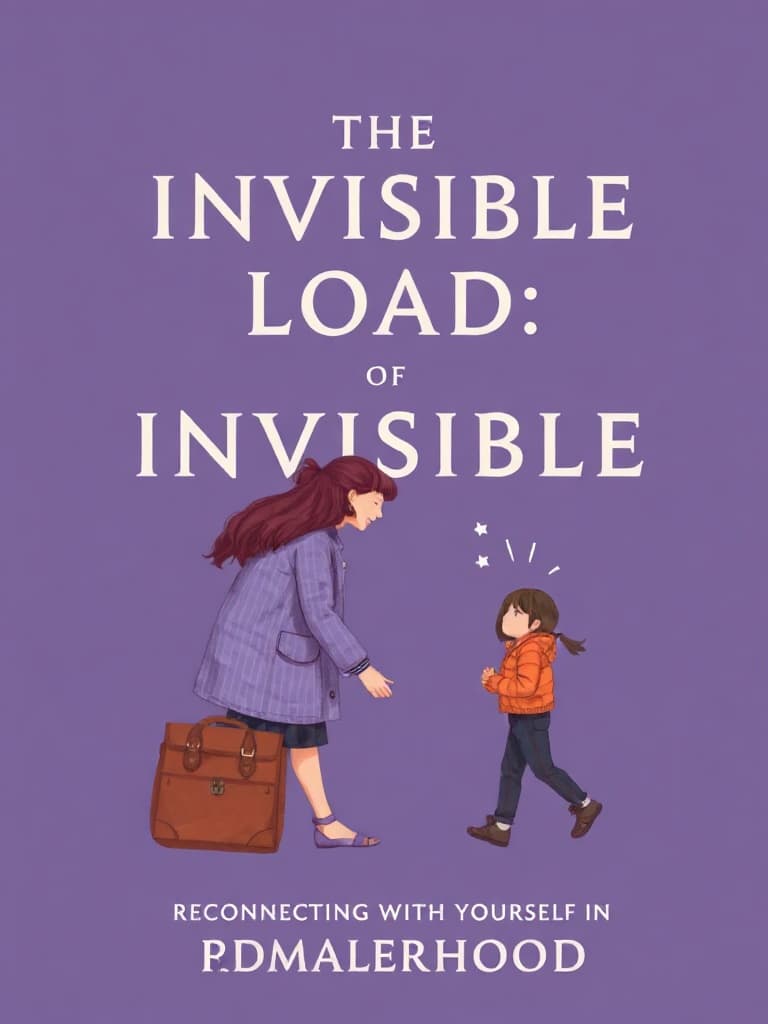
The Invisible Load: Reconnecting With Yourself in Motherhood
30
0
6
0
The Invisible Load: Reconnecting With Yourself in Motherhood A Guide for Mothers Navigating Loneliness, Identity, and Connection Copyright Copyright © 2026 All rights reserved. This book is intended for educational and informational purposes only and is not a substitute for professional medical, mental health, or parenting advice. Dedication To every mother who has felt lonely in a crowded room. To every mother carrying responsibilities that few people see. To every mother who has wondered where the woman she used to be has gone. This book is for you. Table of Contents Introduction: The Loneliness No One Talks About Understanding the Invisible Load Why Motherhood Can Feel Isolating The Identity Shift of Becoming a Mother The Friendship Changes Nobody Warns You About The Pressure to Be Everything Rebuilding Connection With Yourself Creating a Support System Nurturing Adult Relationships Finding Community Prioritizing Emotional Well-Being Thriving, Not Just Surviving Introduction: The Loneliness No One Talks About Many mothers expect parenting to be challenging. They expect sleepless nights. They expect responsibility. What many do not expect is loneliness. Motherhood often places women at the center of a family while simultaneously leaving them feeling disconnected from themselves and others. A mother may spend all day caring for children and still feel isolated. She may be constantly surrounded by people and yet long for meaningful adult conversation. This experience is far more common than many realize. Chapter 1: Understanding the Invisible Load The invisible load refers to the mental and emotional work involved in managing family life. This includes: Remembering appointments Planning meals Managing school schedules Organizing household tasks Anticipating family needs Providing emotional support Much of this work happens unnoticed. Because it is invisible, it is often underestimated. Yet it consumes significant emotional energy. Recognizing the invisible load is the first step toward managing it more effectively. Chapter 2: Why Motherhood Can Feel Isolating Several factors contribute to loneliness in motherhood. Reduced Adult Interaction Many mothers spend large portions of the day focused on children. Adult conversations become less frequent. Changes in Routine Social activities that once felt normal may become difficult to maintain. Exhaustion When energy is limited, connection often becomes a lower priority. Feeling Misunderstood Many mothers feel pressure to appear capable, even when struggling. This can create emotional distance from others. Chapter 3: The Identity Shift of Becoming a Mother Motherhood changes many aspects of life. Alongside joy and purpose, it can also create questions about identity. Questions such as: Who am I beyond parenting? What happened to my personal goals? What interests do I still have? These questions are normal. Motherhood adds to identity. It should not completely replace it. Maintaining a sense of self is essential for long-term well-being. Chapter 4: The Friendship Changes Nobody Warns You About Friendships often change after becoming a parent. Reasons include: Different schedules Geographic moves Different life stages Reduced availability Some friendships grow stronger. Others naturally drift apart. This process can be painful. However, it also creates opportunities to build relationships with people who understand your current stage of life. Chapter 5: The Pressure to Be Everything Modern mothers often receive conflicting messages. They are expected to: Be present parents Maintain careers Manage households Stay healthy Maintain relationships Pursue personal goals No one can excel at everything simultaneously. Perfection is not required. Progress and balance are more realistic goals. Learning to release unrealistic expectations creates space for emotional recovery. Chapter 6: Rebuilding Connection With Yourself Many mothers focus so heavily on others that they lose connection with themselves. Reconnection begins with simple questions: What do I enjoy? What gives me energy? What activities make me feel like myself? Small Ways to Reconnect Reading Creative hobbies Walking Journaling Learning a new skill Even 15 minutes a day can help strengthen personal identity. Chapter 7: Creating a Support System Support is not a luxury. It is a necessity. A strong support system may include: Partners Family members Friends Parenting groups Community organizations Building Support Identify trusted people. Communicate specific needs. Accept help when offered. Ask for assistance without guilt. Support allows mothers to care for themselves while continuing to care for others. Chapter 8: Nurturing Adult Relationships Adult relationships require attention. This includes: Friendships Partnerships Extended family connections Practical Ideas Schedule regular catch-ups. Send brief messages throughout the week. Plan simple activities rather than elaborate events. Prioritize quality over quantity. Meaningful relationships are built through consistency. Chapter 9: Finding Community Community reduces isolation by creating belonging. Possible communities include: Parent groups Volunteer organizations Fitness classes Faith groups Hobby clubs Local events The goal is not to attend everything. The goal is to participate somewhere. Connection often develops naturally through repeated involvement. Chapter 10: Prioritizing Emotional Well-Being Emotional well-being supports every aspect of life. Helpful habits include: Rest Adequate rest improves resilience. Physical Activity Movement supports mood and energy. Healthy Boundaries Not every request requires a yes. Self-Compassion Treat yourself with the same kindness you would offer a friend. Chapter 11: Thriving Through Different Stages of Motherhood Motherhood changes continuously. Each stage presents new challenges and opportunities. New Mothers Often need reassurance, support, and rest. School-Age Parenting Often requires balancing family and personal goals. Parenting Teenagers Often involves adapting to increased independence. Adult Children May create opportunities to rediscover personal interests and ambitions. Every stage offers opportunities for growth and connection. Chapter 12: Thriving, Not Just Surviving Many mothers spend years focused on getting through each day. Survival is important. But thriving matters too. Thriving includes: Meaningful relationships Personal fulfillment Emotional well-being Purpose beyond responsibilities Thriving does not require perfection. It requires intention. Small choices made consistently create lasting change. Practical Workbook Section Daily Check-In Today I feel: Energized Tired Connected Lonely Hopeful Overwhelmed Circle all that apply. Weekly Reflection What brought me joy this week? Who did I connect with? What support do I need? Support Network Map Write the names of people you can contact for: Emotional Support Practical Help Friendship Encouragement Self-Care Planning Page One thing I will do for myself this week: When will I do it? How will it help me? Final Reflection Motherhood is one of life's most meaningful roles. But it is only one part of who you are. You are also: A person with dreams A person with needs A person worthy of support A person deserving of connection The path toward greater connection begins with small steps. A conversation. A request for help. A moment of self-care. A new friendship. A reminder that your well-being matters too. You do not have to carry everything alone.
Chapters
- 1The Whispers of LonelinessElara feels adrift, surrounded by family but deeply alone. She grapples with a profound shift in identity, questioning who she is beyond motherhood and recognizing the vast, unseen 'invisible load' she carries daily.
- 2The Weight of Unseen To-DosThe 'invisible load' is explored: the mental and emotional labor of managing family life. Elara realizes this unseen work consumes her energy, leading to isolation and the feeling of being misunderstood by those closest to her.
- 3Echoes of a Former SelfMotherhood alters Elara's friendships and sense of self. She confronts the pressure to be everything, the difficulty of maintaining adult connections, and the quiet fear that her own identity is fading away.
- 4Seeds of ReconnectionA turning point arrives as Elara acknowledges her struggle is common. She resolves to actively seek connection, starting with small acts of self-care and rediscovering forgotten interests, laying the groundwork for change.
- 5Building Bridges of SupportElara begins to intentionally build a support system. She learns to communicate her needs, accept help, and nurture adult relationships, finding solidarity and understanding in new and existing connections.
- 6Thriving, Not Just SurvivingElara finds a new equilibrium, moving from mere survival to thriving. With a stronger sense of self and a supportive community, she embraces motherhood as one part of her rich, evolving identity.
More Fairy Tale stories
Browse all Fairy Tale →- A Tiny Witch's Terrible Temper
The witch didn't get her way she tru terrible temper
- The 7 princes of creation book 1 Adam Cronwell awakening
Adam is one of the 7 princes of creation that lives in two worlds that are connected a world called the wizard world full of all kinds of magic and creatures run by the creator of all he calls grandmother she guides him with his guardian angel the archangel Gabriel Adam is from one of the 7 great families of the wizard world the first and ancient family lead by eve this eve is born from the wizard world unlike the mortal world eve and Adam never had a tree of knowledge of good and evil and has god aka grandmother as a guide Adam powers are he's half werewolf and half wizard one of the 7 princes that were the first to come into being as souls from the creator aka grandmother when the 7 princes comes together they have the same powers as grandmother they are not allowed to be near each other till grandmother calls them to see if the mortal world will be ready for Jesus to come back Adam is the first time born in a body in both the wizard world and in the mortal world were he has a different body then he does in the wizard world while in adams true form from the wizard world is platinum blond hair 6 pack abs and 6th while in the mortal world he is born into a poor family black hair and a bit overweight and is bisexual in both world wizard world allows the lgbt community because it's not a sin in the wizard world time can be slow or faster then the mortal word thanks to grandmother and all the magic in that world which is also a place we're wizards are also warriors and protectors
- The married won't
A scorned enchantress, seeking revenge on the king who spurned her, curses his kingdom to eternal winter, but a brave baker's apprentice, armed with only her grandmother's forgotten recipes, must thaw the hearts of the people and the land to break the spell. The enchantress's magic is fueled by despair and isolation, making the baker's hope and community the only true weapons against her. This story reimagines a classic fairy tale curse by centering the solution not on a prince, but on the power of shared warmth and the simple magic of food.
- Down the Looking Glass
A story of a girl her name was tee who thought she found a home with this man in a small town only this wasn't your everyday story she became pregnant to a villain and found herself fighting in world full of darkness lady elephant legs a cruel evil grandmother was going to take her little bundle of joy away and would try everything possible. This girl moved to another town only to feel isolated and alone, she didn't know the twisted things she would have to come up against and found herself in some dark twisted places where reality seemed so far away
- البيت المنسي: رحلة عبر الزمن
٥اصدقاء يستكشفون بيت مهجور احمد ،سالم، مؤمن ،انس، سعيد وينتكلون الي بوبات عبر الذمن
- The Unwilling Alpha
Kai a young warrior wolf only recently turned into his werewolf under the most recent strawberry moon. A member of the Korbin pack from the northeast migrated from Quebec only 200 years ago.They were the 2nd youngest of the wolfpacks existing in North America and yet they were 2nd in line to the throne. This was a new era of history being woven into the future with a new Ai system and a new wway being made never before embarked upon Kai was the strongest werewolf surpassing every record recorded so far by leaps and bounds his lineage was certainly about 80% a factor in this but there was always something more fated like there was something ancient he was about to invoke something about the reverence he instantly provoked out of all. His character was tried and true it's no wonder his wolf's name was GABRIEL he is in the first year of the way of Games where the strongest of the 7 wolf packs would be selected as nd put through test after test first physically they would be tested to the core then their character would be put through test after test any wavering they would be driven into madness only to either fail and be sent to the cadicoves never to be seen or heard from again then their skills and gifts would be crafted for then to use in the final leg where they would be tested to the core and the successor would be victorious and rein over the 7 kingddoms
Want to write a story like this?
Learn the craft in our free AI story generator, then draft your first chapter with an AI co-writer.
What stayed with you?
Read a chapter and leave the author a comment.
Reader notes
Loading reader notes…