About this book
Whispers of the Unseen Architect
31
0
6
0
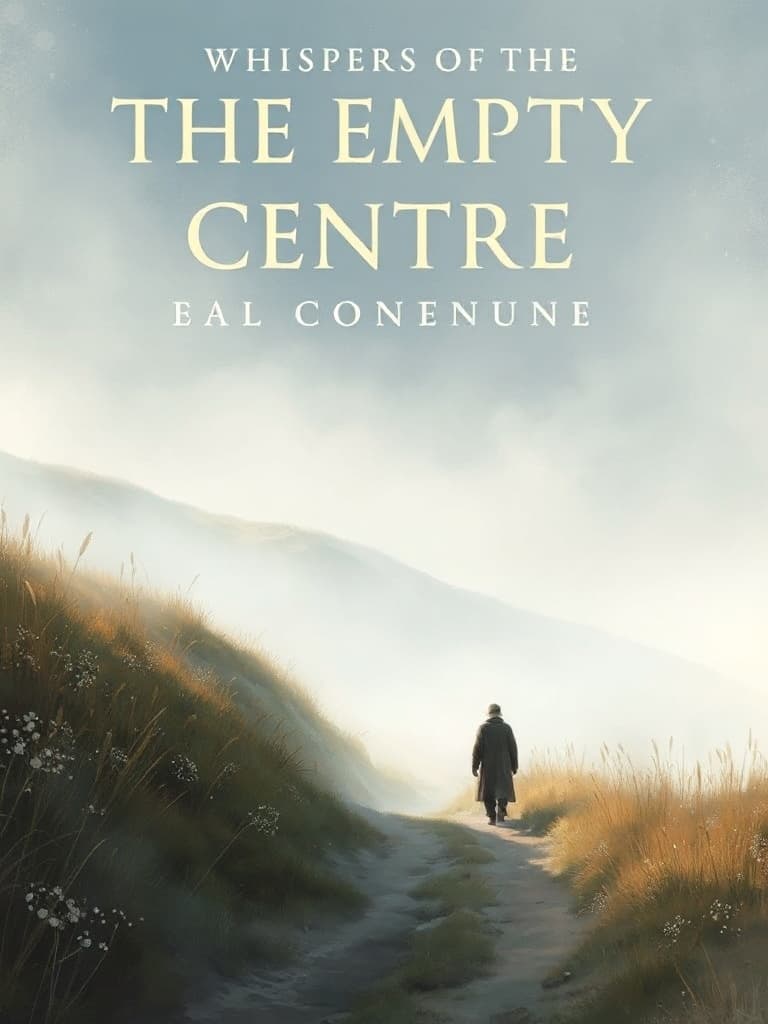
THE EMPTY CENTRE A Socratic Dialogue Between Bleddyn ap Pwyll and Confucius A misty morning. Somewhere beyond history. A narrow path winds through pale hills veiled in silver fog. Dew hangs upon the grasses like scattered pearls. The world seems unfinished, as though Heaven has only just begun painting it. Along the path walks an old man in simple robes carrying a staff of polished wood. From the opposite direction comes Bleddyn ap Pwyll. The two meet where the path bends around a solitary pine tree. For a moment neither speaks. The mist drifts quietly between them. CONFUCIUS: Good morning, traveller. BLEDDYN: Is it? CONFUCIUS: You seem uncertain. BLEDDYN: I have discovered that certainty is usually the first sign that someone has not thought long enough. CONFUCIUS: Then perhaps we shall enjoy each other's company. Bleddyn glances at the old sage. BLEDDYN: Tell me, Master Kong, what is zero? CONFUCIUS: A number. BLEDDYN: That answer would disappoint both mathematicians and poets. CONFUCIUS: Then ask the question again. BLEDDYN: What is zero? CONFUCIUS: Nothing. BLEDDYN: And yet we write it down. CONFUCIUS: We do. BLEDDYN: We count with it. CONFUCIUS: We do. BLEDDYN: We build civilizations upon it. CONFUCIUS: We do. BLEDDYN: Then how can nothing accomplish so much? Confucius smiles faintly. CONFUCIUS: Tell me, Bleddyn. What makes a cup useful? BLEDDYN: The space inside it. CONFUCIUS: And what is that space made of? BLEDDYN: Nothing. CONFUCIUS: Yet without that nothing, the cup could hold nothing. Bleddyn laughs. BLEDDYN: You have stolen a trick from Laozi. CONFUCIUS: Wisdom does not belong to the man who first speaks it. They continue walking. The path narrows. The mist thickens. BLEDDYN: Then perhaps nothing is more useful than something. CONFUCIUS: No. BLEDDYN: Why not? CONFUCIUS: Because a cup requires both clay and emptiness. BLEDDYN: Ah. CONFUCIUS: A world made only of emptiness is useless. A world made only of substance is equally useless. BLEDDYN: So reality exists in partnership with absence. CONFUCIUS: As music exists in partnership with silence. They walk for a while. Somewhere unseen a bird calls. BLEDDYN: Humans seem uncomfortable with nothing. CONFUCIUS: Indeed. BLEDDYN: They fill every silence. CONFUCIUS: Yes. BLEDDYN: Every room. CONFUCIUS: Yes. BLEDDYN: Every calendar. CONFUCIUS: Yes. BLEDDYN: Every conversation. CONFUCIUS: Especially conversations. Bleddyn chuckles. BLEDDYN: Why? CONFUCIUS: Because silence reveals things. BLEDDYN: Such as? CONFUCIUS: Fear. BLEDDYN: And if one continues listening? CONFUCIUS: Vanity. BLEDDYN: And after that? CONFUCIUS: Loneliness. BLEDDYN: And after that? Confucius gazes into the fog. CONFUCIUS: Truth. The mist seems to deepen around them. BLEDDYN: You believe truth lives inside emptiness? CONFUCIUS: Where else would it hide? BLEDDYN: Libraries contain truth. CONFUCIUS: Only symbols. BLEDDYN: Books contain wisdom. CONFUCIUS: Only ink. BLEDDYN: Teachers contain knowledge. CONFUCIUS: Only words. BLEDDYN: Then where does truth reside? CONFUCIUS: In the space left behind after words have finished. For a moment neither speaks. The silence itself feels like part of the dialogue. BLEDDYN: I have often wondered whether humanity's greatest achievement was discovering fire. CONFUCIUS: Was it? BLEDDYN: Perhaps language. CONFUCIUS: Perhaps. BLEDDYN: Perhaps agriculture. CONFUCIUS: Perhaps. BLEDDYN: Yet here we are discussing a symbol for nothing. CONFUCIUS: And which achievement made all the others measurable? Bleddyn stops walking. BLEDDYN: Zero. CONFUCIUS: Yes. BLEDDYN: How strange. CONFUCIUS: The deepest truths usually are. They arrive at a wooden bridge spanning a narrow stream. Water slides beneath them without hurry. BLEDDYN: There is something troubling about zero. CONFUCIUS: What troubles you? BLEDDYN: It reminds us that we arrived from nothing and return to nothing. Confucius considers this. CONFUCIUS: Do we? BLEDDYN: You disagree? CONFUCIUS: I merely ask whether the stream ceases to exist when it leaves your sight. BLEDDYN: No. CONFUCIUS: Then perhaps you know less about nothing than you imagine. BLEDDYN: And perhaps you know less about death. CONFUCIUS: Certainly. BLEDDYN: Certainly? CONFUCIUS: How could an honest man claim certainty about what lies beyond life? Bleddyn smiles. BLEDDYN: At last, an answer worthy of a philosopher. CONFUCIUS: No. BLEDDYN: No? CONFUCIUS: An answer worthy of an honest man. The old sage places a hand upon the bridge rail. CONFUCIUS: Tell me, Bleddyn. What lies at the centre of a wheel? BLEDDYN: The hub. CONFUCIUS: And at the centre of the hub? BLEDDYN: An empty hole. CONFUCIUS: And without it? BLEDDYN: The wheel cannot turn. CONFUCIUS: Then what moves the cart? Bleddyn stares. CONFUCIUS: Wood? CONFUCIUS shakes his head. CONFUCIUS: Iron? Again he shakes his head. CONFUCIUS: No. He taps the empty centre. CONFUCIUS: The cart moves because of the place where nothing is. The stream murmurs beneath them. The fog begins to thin. The first rays of sunlight break through. BLEDDYN: So civilization rests upon absences. CONFUCIUS: Many things do. BLEDDYN: A doorway. CONFUCIUS: An absence in a wall. BLEDDYN: A window. CONFUCIUS: An absence in a house. BLEDDYN: A doughnut. CONFUCIUS: An absence in a pastry. BLEDDYN: A government. CONFUCIUS: Often an absence in a parliament. For the first time the old master laughs aloud. The hills echo softly. BLEDDYN: Then perhaps zero is not the symbol of nothing. CONFUCIUS: Go on. BLEDDYN: Perhaps it is the symbol of possibility. CONFUCIUS: Explain. BLEDDYN: The empty cup can be filled. The empty page can be written upon. The empty road can be travelled. The empty mind can learn. Confucius nods. CONFUCIUS: And the empty heart? Bleddyn is silent. The question hangs in the cool morning air. Finally he answers. BLEDDYN: The empty heart can love. Confucius smiles. The sun breaks fully through the mist. The path ahead becomes visible. CONFUCIUS: Then you understand. BLEDDYN: Understand what? CONFUCIUS: Nothing. The old sage continues walking. Bleddyn watches him disappear into the brightening fog. After a while he laughs to himself. And follows. For there was still a long road ahead, and at the centre of every journey, as at the centre of every wheel, waited a small and useful emptiness.
Chapters
- 1The Mist-Veiled EncounterOn a timeless, misty morning, Bleddyn ap Pwyll meets the sage Confucius on a narrow path. Their dialogue begins with Bleddyn's skepticism about certainty and his first probing question: "What is zero?"
- 2The Paradox of NothingConfucius likens zero to a cup's emptiness, vital for its function. Bleddyn grapples with how 'nothing' can be so useful, leading to Confucius's assertion that reality requires both substance and absence, like music and silence.
- 3The Fear of SilenceThe dialogue turns to humanity's aversion to silence and emptiness. Confucius suggests that silence reveals fear, vanity, loneliness, and ultimately, truth, which he claims hides in the spaces left by words.
- 4Zero: The Measure of All ThingsBleddyn reflects on humanity's greatest achievements, but Confucius points to zero as the tool that made them measurable. They reach a bridge, where Bleddyn expresses unease about arriving from and returning to nothing.
- 5The Hub of the WheelConfucius uses the analogy of a wheel's hub, emphasizing the empty center. He argues the cart moves not by its substance but by this 'nothingness,' suggesting civilization itself rests on absences like doorways and windows.
- 6The Promise of EmptinessConfucius laughs as they list more absences. Bleddyn realizes zero symbolizes possibility—an empty cup can be filled, an empty mind can learn. He concludes the empty heart can love, and follows Confucius into the sunlit path.
Want to write a story like this?
Learn the craft in our free AI story generator, then draft your first chapter with an AI co-writer.
What stayed with you?
Read a chapter and leave the author a comment.
Reader notes
Loading reader notes…