About this book
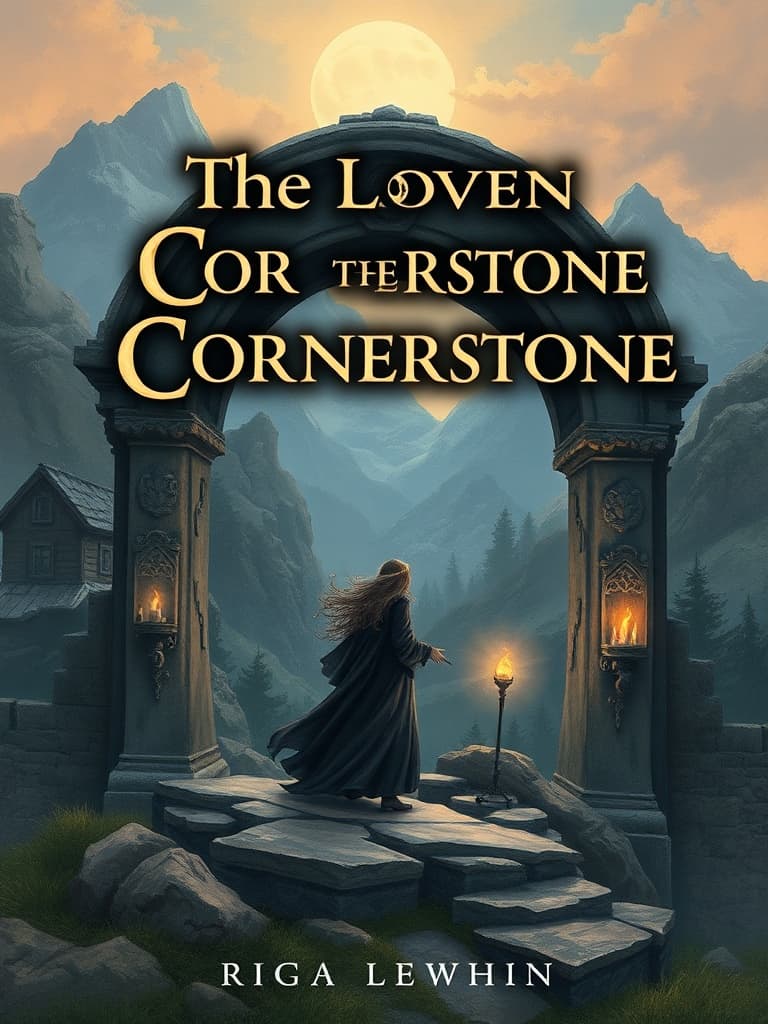
The Coven of the Cornerstone
16
0
20
0
What everyone in the sleepy mountain town deep with in the rugged rocky mountains thought was Your regular women's club doing charity and philanthropical work lay a deep hidden secret..all was not as it seemed. Sugar and spice on the outside but on the inside...not so nice.. Visitors and New comets BEWARE. Come and explore and investigate if You DARE...
Chapters
- 1A Quiet ArrivalNadine Macdonald Brown arrives in the remote mountain town of Oakhaven, Colorado, a place seemingly untouched by the frantic pace of modern life. The air is crisp with the scent of pine and damp earth, and the jagged peaks of the Rockies loom like ancient sentinels. Nadine, seeking solace and a fresh start after a personal tragedy (the details of which are to be revealed later, perhaps a loss of a loved one or a career setback), is immediately drawn to Oakhaven's rustic charm. She rents a small, secluded cabin on the outskirts of town, a place where she hopes to find peace and anonymity. Her initial interactions with the townsfolk are cordial, if reserved. She notices the pervasive presence of the 'Coven of the Cornerstone,' a women's organization that appears to be the heart of the community. Their bake sales, charity drives, and town festivals are legendary, and Nadine observes, with a mixture of admiration and curiosity, the respect and affection they command. She learns that the Coven has been a fixture in Oakhaven for generations, its members comprising many of the town's most prominent families. The current leader, Olga Lawson, is spoken of with reverence – a woman of immense charisma and seemingly boundless generosity. Nadine, an astute observer by nature and a skilled researcher (a hidden talent she possesses), notes the subtle but undeniable influence the Coven wields. It's more than just social standing; there's an unspoken deference, a quiet obedience from the other residents whenever the Coven is mentioned or involved. She attends a small, informal gathering hosted by the Coven, perhaps a welcome tea for new residents. She is struck by the outward warmth and camaraderie, the perfectly manicured lawns, the carefully prepared refreshments, and the sophisticated yet approachable demeanor of the women. Olga, in particular, is a captivating figure, her presence filling the room. Nadine feels a sense of belonging, a flicker of hope that she might find a community here. However, even in these early stages, a subtle dissonant note begins to play in Nadine's mind. It’s a feeling, a gut instinct, that something is not quite right. Perhaps it’s the way certain conversations abruptly cease when she enters a room, or a fleeting, unreadable expression on a Coven member's face, or the almost too-perfect, staged nature of the event. The pristine facade, while impressive, feels almost brittle, as if it could shatter with a close inspection. Nadine makes a mental note of the Coven's prominent meeting hall, a grand, old stone building at the town's center, known as the 'Cornerstone House.' She observes the unusual symbol associated with the Coven – a stylized cornerstone with an eye-like motif – etched onto various public spaces and even some private residences. The chapter ends with Nadine settling into her cabin, the peaceful facade of Oakhaven still largely intact, but with the first seeds of suspicion planted in her mind, a quiet unease that belies the idyllic surroundings. The overwhelming sense of peace she sought is now tinged with a subtle, unshakeable feeling of being watched, of a deeper current flowing beneath the placid surface of this mountain town. The chapter establishes Nadine's character as an outsider, her motivations for seeking refuge, and her initial impressions of Oakhaven and the Coven, laying the groundwork for her eventual investigation. The contrast between the town's outward charm and Nadine's burgeoning, intuitive sense of unease is the central tension. Continuity notes: Introduce the Coven, Olga, and the Cornerstone symbol. Establish Nadine's role as an outsider and her need for peace. Hint at the Coven's influence. End hook: Nadine’s initial comfort is subtly disturbed by an unexplainable feeling of unease and being watched.
- 2The Cornerstone's WelcomeNadine attends a significant Coven of the Cornerstone event – a large-scale charity bazaar aimed at raising funds for the town's struggling community center. The event is a triumph of organization and public relations. The Cornerstone House, the Coven's central hub, is adorned with festive decorations, and the town square buzzes with activity. Residents mingle, all seemingly united in their support for the Coven's benevolent endeavors. Nadine, determined to integrate and understand the community, participates actively. She helps set up stalls, chats with various townsfolk, and observes the Coven members in their element. She is particularly struck by Olga Lawson's masterful performance as the benevolent matriarch. Olga moves through the crowd with grace and warmth, her words of encouragement and gratitude seemingly genuine. She makes a point of speaking with Nadine, welcoming her to Oakhaven with a smile that is both radiant and, to Nadine's perceptive eye, unnervingly practiced. Olga’s eyes, Nadine notices, hold a depth that seems to transcend her apparent age, and there's a subtle intensity in her gaze that makes Nadine feel both seen and, strangely, evaluated. Nadine is introduced to other key Coven members, including Beula Wright, a woman who appears somewhat timid and subservient to Olga, and Martha, a stern-faced woman who seems to handle the Coven's finances with an iron fist. Nadine’s initial admiration for the Coven’s efficiency and community spirit is palpable. She witnesses firsthand their ability to rally the town, their clear dedication to public service. However, the lingering unease from her arrival intensifies. During a moment when Olga is momentarily distracted, Nadine overhears a hushed, almost conspiratorial conversation between two Coven members. The words are indistinct, but the tone is sharp, urgent, and carries a distinct undertone of something far less charitable than the surrounding festivities suggest. When they notice Nadine’s proximity, the conversation stops abruptly, replaced by forced smiles and a hasty change of subject. Later, while examining a display of handcrafted items, Nadine spots a familiar symbol – the cornerstone with the eye – subtly incorporated into the embroidery of a quilt. It’s not overtly displayed, but its presence feels deliberate, a silent mark of ownership or belonging. She also observes a peculiar ritualistic aspect to the bazaar: certain items are placed on a raised platform near the Cornerstone House, seemingly blessed or consecrated by Olga before being sold. The townsfolk accept this without question, viewing it as part of the Coven's unique tradition. Nadine feels a growing disconnect between the outward appearance of community spirit and the subtle undercurrents of secrecy and unspoken rules. She notices that while the Coven members are outwardly friendly, there’s a subtle barrier, an unspoken understanding among them that excludes outsiders like herself. The chapter concludes as the bazaar winds down, with the Coven members gathering for a private debriefing behind the Cornerstone House. Nadine, discreetly observing from a distance, catches a glimpse of Olga's face in the fading light – the mask of benevolence has slipped, revealing a chillingly cold, calculating expression. The warmth of the welcome has begun to feel like a carefully constructed trap. Continuity notes: Deepen Nadine's observation of Olga and other Coven members. Show the Coven's public face and their charitable work. Introduce subtle hints of hidden activities and a more sinister undercurrent. Reinforce the Coven's symbol and its pervasive presence. End hook: Nadine witnesses a fleeting glimpse of Olga's true, cold demeanor, shattering the illusion of pure benevolence and solidifying her suspicions.
- 3Whispers in the PinesThe idyllic veneer of Oakhaven begins to peel away for Nadine, revealing a disquieting reality. She starts noticing peculiar, recurring phenomena that defy simple explanation. Small, intricately carved wooden totems, bearing the familiar cornerstone-and-eye symbol, begin appearing in unexpected places: tucked into the bark of trees along her usual hiking trails, placed on her doorstep overnight, and even subtly integrated into the landscaping of public spaces. These aren't mere decorations; they feel like markers, warnings, or perhaps even claims of territory. Furthermore, Nadine frequently overhears hushed conversations among townsfolk that cease abruptly whenever she draws near. These aren't the casual chats of neighbors; they carry an urgency and a furtive quality, as if secrets are being exchanged. When she tries to engage, the conversations shift to innocuous topics, or the speakers offer polite but dismissive responses. The feeling of being watched intensifies. It’s not just a vague sense of unease anymore; it’s a palpable sensation, as if unseen eyes are constantly tracking her movements. She catches fleeting glimpses of figures in the periphery of her vision, shadows that dart away too quickly to be identified. Her cabin, once a sanctuary, now feels exposed, and she finds herself checking the locks more frequently. One afternoon, while browsing the local general store, she overhears a snippet of conversation between two elderly women. One whispers, "She's asking too many questions. Olga won't like it." The other nods grimly, her eyes darting towards Nadine. Nadine feigns ignorance, but the words echo in her mind, confirming her growing belief that her curiosity has drawn unwanted attention. She also notices a pattern in the town's schedule. Certain days, particularly those with unusual atmospheric conditions – a heavy fog rolling in from the mountains, an eerie stillness in the air, or a particularly potent full moon – seem to coincide with a subtle shift in the town's atmosphere. The townsfolk become more withdrawn, the Coven members more visible and seemingly more purposeful in their movements. During one such evening, Nadine decides to take a walk near the outskirts of town, drawn by an inexplicable pull. She stumbles upon a clearing deep within the pines, where she witnesses a small group of Coven members, including Beula, engaged in what appears to be a quiet, almost meditative gathering. They are arranged in a circle, their hands clasped, and they seem to be drawing energy from the very earth beneath them. A faint, almost imperceptible luminescence emanates from their joined hands. The atmosphere is charged, filled with a silent power. When Beula glances in Nadine’s direction, her eyes widen with a mixture of fear and recognition, and the group disperses quickly, melting back into the shadows of the forest. This encounter solidifies Nadine’s conviction that the Coven’s activities are far from benign. The symbols, the hushed conversations, the feeling of being watched, and now this clandestine gathering – they all point towards a hidden agenda. The chapter ends with Nadine back in her cabin, the quiet isolation she initially sought now feeling like a cage. She examines one of the wooden totems she found, its intricate carvings seeming to pulse with a latent energy. The idyllic facade of Oakhaven has been irrevocably breached, replaced by a growing sense of dread and the urgent need to understand what is truly happening. Continuity notes: Introduce the Coven's symbols appearing in various locations. Show the townsfolk's hushed conversations and fear of Nadine's questions. Intensify the feeling of being watched. Introduce the idea of unusual atmospheric conditions affecting the town. Nadine witnesses a clandestine gathering in the woods. End hook: Nadine, now convinced of the Coven's secretive nature, is determined to uncover the meaning behind the symbols and the strange rituals she is beginning to observe.
- 4A Skeptic's WarningNadine’s suspicions are further fanned by an unexpected encounter with Mary Ellen Pursely Metz, a reclusive and notoriously gruff resident who lives in a dilapidated cabin on the far side of town, largely shunned by the community for his eccentricities and cynical outlook. Nadine, seeking a different perspective and perhaps some historical context that the town archives might not readily provide, decides to brave his reputation and pay him a visit. She finds him tending a meager garden, his face a roadmap of hard living and distrust. He eyes Nadine with open suspicion, clearly unaccustomed to visitors, especially those from the more ‘respectable’ parts of town. Nadine, employing her innate politeness and genuine curiosity, tries to engage him in conversation about Oakhaven’s history, its people, and subtly probes about the Coven of the Cornerstone. Mary Ellen is initially resistant, his responses curt and dismissive. He sees Nadine as just another naive newcomer, likely to be charmed by Olga’s facade. However, Nadine’s persistent, intelligent questioning, and perhaps the genuine concern in her voice, begins to chip away at his reserve. He sees in her a spark of genuine inquiry, not just idle gossip. He lets slip veiled warnings, cryptic pronouncements about the town’s ‘unseen currents’ and the ‘old ways’ that still hold sway. He speaks of Oakhaven not as a peaceful haven, but as a place with a long, dark memory, a town that ‘keeps its secrets buried deep.’ He warns Nadine that not everyone in Oakhaven is what they seem, and that the ‘welcome mat is often just a pretense for something far less hospitable.’ He specifically targets the Coven, referring to them not by name but as ‘the keepers of the stone,’ implying their deep-rooted connection to the town’s mysterious past. He hints at sacrifices, not necessarily literal, but the sacrifices of individuality, of truth, and of freedom that the townspeople make in their silent obedience. He speaks of a ‘price’ for Oakhaven’s apparent peace and prosperity, a price paid by generations. Nadine presses him, her research instincts kicking in, asking about specific historical events or local folklore. Mary Ellen becomes agitated, his gruffness hardening into a defensive shell. He makes it clear he has no desire to get involved, that he’s seen too much and lost too much already. He tells Nadine, with a chilling finality, that some doors are best left unopened, and that digging too deep in Oakhaven can lead to getting buried. He mentions a specific incident from decades ago – a disappearance, a tragedy – that he attributes to the Coven’s influence, but he refuses to elaborate, his fear evident. The chapter concludes with Nadine leaving Mary Ellen’s property, the encounter leaving her more unsettled than before. His warnings, though vague, carry the weight of lived experience and genuine fear. She realizes that her suspicions are not just figments of her imagination but are echoed by those who have lived in Oakhaven for far longer, those who have seen the cracks beneath the polished surface. Mary Ellen’s cryptic pronouncements about ‘old ways’ and ‘unseen currents’ resonate with the fragmented legends she’s begun to uncover, adding a layer of historical dread to her current unease. The encounter reinforces her determination to uncover the truth, but also instills a sense of caution, acknowledging the potential danger she faces. Continuity notes: Introduce Mary Ellen as a cynical recluse. Show his distrust of the Coven and his cryptic warnings about the town's dark history. Hint at past tragic events connected to the Coven. Nadine’s resolve is strengthened, but she also becomes more aware of the potential danger. End hook: Mary Ellen's dire warnings and his refusal to elaborate on past tragedies leave Nadine with a profound sense of dread and a growing conviction that Oakhaven’s pleasant facade hides a dangerous, long-standing secret.
- 5The Library's SecretsDriven by Mary Ellen’s cryptic warnings and her own unyielding curiosity, Nadine seeks refuge and answers in the dusty quiet of the Oakhaven town library. This is not a modern, bustling hub of information but a relic of a bygone era, filled with the scent of aged paper and forgotten stories. The librarian, a stooped, bespectacled woman named Agnes, is polite but reserved, seemingly a typical small-town resident. Nadine begins her research with the town’s official history, expecting a straightforward account of pioneers and progress. However, as she delves deeper, she unearths fragmented records, old newspaper clippings, and local folklore that paint a far more complex and unsettling picture. She finds mentions of Oakhaven’s founding, not just by hardy settlers, but by a group of individuals described as ‘protectors of the land,’ who sought to establish a sanctuary. These early accounts are vague, hinting at rituals and a deep reverence for the natural forces surrounding the town, particularly the ancient mountains and the springs that feed the valley. She stumbles upon obscure references to a ‘Cornerstone Accord,’ an agreement that seemingly granted significant influence to a select group of women, tasked with maintaining the town’s prosperity and harmony. The language used is archaic, laden with symbolism that resonates with the Coven’s emblem. Nadine finds a series of old town ledgers that detail periods of unusual prosperity for Oakhaven, often coinciding with years of hardship or economic downturns in neighboring regions. These periods are also marked by odd entries – unusually large ‘donations’ from anonymous sources, or records of communal gatherings that seem to extend for days, far beyond typical festival celebrations. She uncovers local legends, passed down through generations, that speak of the ‘Mountain’s Blessing’ and the ‘Valley’s Debt.’ These tales often involve appeasing ancient spirits or forces, and the ‘women of the stone’ are consistently portrayed as intermediaries, mediators between the town and these powerful, often capricious, entities. One particular series of newspaper clippings from the early 20th century catches her eye. They detail a series of unexplained ‘good fortunes’ that befell Oakhaven during a harsh economic depression, while nearby towns suffered greatly. The articles attribute this to the ‘harmonious spirit’ fostered by the town’s leading women, but the undertones suggest something more deliberate and powerful. She also finds a faded photograph tucked away in a local history book, showing a group of stern-faced women gathered around a large, rough-hewn stone monument – the original ‘Cornerstone.’ The Coven’s symbol is visible on their attire. The faces are unfamiliar, but the intensity in their eyes is strikingly similar to Olga’s. Nadine’s research leads her to discover mentions of individuals who opposed the ‘old ways’ or questioned the Coven’s authority throughout Oakhaven’s history. These accounts are often brief and end abruptly, hinting at ostracization, unexplained departures, or even tragic accidents. She finds a journal entry from a former resident, dated decades ago, lamenting the ‘invisible chains’ that bind Oakhaven and the ‘ancient pact’ that ensures prosperity at the cost of true freedom. The entry speaks of a deep, resonant power emanating from the very bedrock of the mountains, a power that the ‘keepers’ harness. The chapter concludes with Nadine poring over a brittle, hand-drawn map of the Oakhaven area, found within a forgotten tome on local geology. The map marks several unusual geological formations and underground springs, with the Cornerstone House situated at a nexus point. A cryptic inscription reads: ‘Where the earth bleeds, the power flows. The cornerstone anchors the sacrifice, the eye watches the harvest.’ The library, meant to be a place of objective facts, has instead revealed a tapestry of myth, ritual, and hidden power, deepening Nadine’s understanding of the Coven’s ancient roots and their profound, perhaps sinister, connection to the land. Continuity notes: Nadine's research uncovers fragmented historical accounts and local legends. Introduce the concept of an ancient force tied to the land and the Coven's role as intermediaries. Hint at a historical pact or agreement. End hook: Nadine discovers a cryptic map and inscription that directly links the Coven’s power to the very land and its geological features, suggesting a primal, elemental source for their influence.
- 6Beula's HesitationNadine’s observations begin to focus on Beula Wright, a Coven member who, despite her outward appearance of devotion, seems to carry a hidden burden. Nadine first noticed Beula’s subtle distress during the charity bazaar, a flicker of something akin to fear or discomfort beneath her placid smile. Now, Nadine actively seeks opportunities to observe Beula in public settings, looking for further cracks in her seemingly unwavering facade. During a town council meeting, where the Coven, represented by Olga and Martha, presents a proposal for a new community project, Nadine watches Beula intently. Beula sits beside Olga, her posture outwardly respectful, but her hands are clasped tightly in her lap, and her gaze often drifts away from the proceedings, fixing on some unseen point in the distance. When Olga speaks, Beula nods in agreement, but her expression is somber, lacking the enthusiastic endorsement of the other Coven members. There’s a slight tremor in her voice when she’s occasionally called upon to speak, a hesitancy that is easily attributed to shyness but that Nadine perceives as something deeper – a conflict of conscience. Later, at a smaller Coven gathering, perhaps a planning session for an upcoming event, Nadine manages to gain proximity, perhaps by offering to help with preparations. She sees Beula flinch almost imperceptibly when Olga makes a particularly sharp or dismissive comment to another member. Beula’s eyes meet Nadine’s for a fleeting moment across the room, and in that instant, Nadine sees a desperate plea, a silent acknowledgment of shared unease. Beula is tasked with delivering a specific item – perhaps a ceremonial chalice or a collection of herbs – to the gathering spot for the clandestine ritual Nadine witnessed earlier. As Beula prepares to leave, she fumbles with the item, her hands shaking. Olga notices this hesitation and gives Beula a stern, penetrating look, a silent reprimand that causes Beula to visibly shrink. Beula quickly regains her composure, but the moment of vulnerability is clear. Nadine also observes Beula interacting with ordinary townsfolk. While most residents defer to the Coven, Beula seems to engage with some of the older residents with a gentleness and empathy that feels distinct from the Coven’s usual controlled benevolence. She listens patiently to their concerns, offering quiet words of comfort that seem genuine. This contrast between her public demeanor as a loyal Coven member and these private moments of apparent humanity catches Nadine’s attention. Nadine wonders if Beula is aware of the full extent of the Coven’s power or if she is merely a pawn, indoctrinated but capable of independent thought. The chapter ends with Nadine witnessing Beula walking alone at dusk, carrying a basket of supplies and heading towards the outskirts of town, the same direction as the clandestine gathering place. Beula pauses, looking back towards the town, a deep sigh escaping her lips. Her shoulders are slumped, and she looks profoundly unhappy, a stark contrast to the stoic loyalty she projects within the Coven. Nadine feels a surge of empathy for Beula, recognizing her as a potential point of access or an ally, someone whose hidden doubts might be amplified. The question lingers: is Beula a prisoner of the Coven, or is she a willing participant wrestling with her conscience? Continuity notes: Focus on Beula’s subtle signs of distress and doubt. Show her hesitation and apparent inner conflict during Coven activities. Contrast her public role with private moments of empathy. Nadine identifies Beula as a potential point of leverage. End hook: Nadine recognizes Beula’s inner turmoil and sees her as a potential ally, setting the stage for Nadine to try and connect with her, appealing to her hidden conscience.
- 7The Unsettling RitualNadine’s growing suspicions compel her to investigate the clandestine gathering she glimpsed in the pines. Armed with the knowledge of the general location and the timing – often coinciding with specific celestial events or periods of atmospheric stillness – she decides to observe from a safe, concealed distance. She chooses a night when an unusual, thick fog has descended upon Oakhaven, muffling sounds and obscuring vision, a night that feels charged with a palpable, almost unnatural energy. Following the faint, almost imperceptible trail she’d noticed before, Nadine makes her way to the secluded clearing deep within the woods. The air is heavy and cold, carrying the scent of damp earth and something metallic, something unfamiliar and unsettling. As she approaches, she hears it – a low, rhythmic chanting, barely audible above the rustling of unseen creatures in the undergrowth. The sound is hypnotic, ancient, and deeply unnerving. Peering through a screen of dense fir trees, Nadine witnesses a scene that chills her to the bone. A dozen or so figures, draped in dark, hooded robes, are gathered in the clearing. At the center stands a rough-hewn stone altar, upon which rests an object that seems to absorb the meager light – perhaps a dark crystal or an ancient artifact. The Coven members are arranged in a circle around the altar, their faces obscured by their hoods, their voices rising and falling in unison, a guttural, resonant chant that seems to vibrate through the very ground. Nadine recognizes Olga’s commanding presence at the head of the circle, her voice leading the incantation. She also spots Beula, her face pale and drawn, her chanting hesitant, betraying her inner turmoil. The movements of the Coven members are synchronized and deliberate, not the graceful gestures of prayer, but something more primal, more forceful. They sway, their arms raised, their hands outstretched towards the altar, as if drawing power from it or channeling something into it. Strange symbols, similar to the cornerstone-and-eye motif but more intricate and disturbing, are drawn in a phosphorescent substance on the ground around the clearing. A faint, sickly green light emanates from these symbols, casting an eerie glow on the robed figures. The chanting intensifies, reaching a feverish pitch. Nadine feels a strange pressure in her head, a sense of disorientation, as if the very air is being manipulated. She notices that the fog seems to thicken around the clearing, swirling unnaturally, and the temperature drops significantly. She sees Olga raise her hands, and the chanting stops abruptly. A profound silence descends, broken only by the ragged breathing of the Coven members. Then, Olga speaks, her voice echoing with an authority that seems to command not just the people present, but the very elements. Her words are in a language Nadine doesn’t understand, but the tone is one of invocation, of power being summoned. A faint, pulsing light begins to emanate from the object on the altar, growing stronger, casting distorted shadows that dance like specters. Nadine feels a primal urge to flee, her instincts screaming danger. She realizes with horrifying clarity that this is no charitable gathering; it is a ritual of immense power, its purpose dark and unknown. The chapter ends as the light from the altar flares, momentarily illuminating Olga's face – a mask of fierce, ancient power, devoid of any human warmth. Nadine, her heart pounding, slips away into the fog-laden woods, the chilling sounds of the ritual echoing in her mind, her worst fears about the Coven of the Cornerstone confirmed. Continuity notes: Nadine witnesses a clandestine ritual in the woods. The ritual involves chanting, specific symbols, and an object on an altar. Olga leads the ritual, and Beula shows hesitation. The atmosphere is charged with unnatural energy. End hook: Nadine has now witnessed undeniable proof of the Coven's dark and powerful rituals, confirming her deepest fears and putting her in immediate peril.
- 8Olga's GazeFollowing the disturbing experience of witnessing the clandestine ritual, Nadine finds herself increasingly unsettled and paranoid. The feeling of being watched has escalated from a pervasive sensation to a direct, unnerving awareness of being scrutinized. This culminates in a tense, face-to-face encounter with Olga Lawson, orchestrated with unnerving precision by Olga herself. Nadine is either subtly drawn to the Cornerstone House under a pretense – perhaps a follow-up from a Coven event, or a request for community input – or Olga deliberately seeks her out, appearing at Nadine’s cabin or intercepting her in town. The setting for this confrontation is crucial: it should feel both public and isolating, emphasizing Nadine’s vulnerability within Olga’s sphere of influence. Perhaps it’s in the almost-empty town square late in the afternoon, or in a quiet corner of the general store where conversations can’t easily be overheard. Olga is at her most charismatic, her outward demeanor radiating warmth and concern. She speaks of Nadine’s integration into the community, her contributions, and her quiet nature. She praises Nadine’s perceptiveness, framing it as a valuable asset to Oakhaven. However, beneath the velvet glove of pleasantries, Olga’s words carry a subtle, veiled threat. She might allude to the importance of community harmony and the dangers of disrupting it, or question Nadine’s motives for settling in Oakhaven, suggesting that outsiders sometimes bring trouble. Olga’s gaze is the focal point of their interaction. Her eyes, which Nadine has already noted as unnervingly deep and ancient, now fix on Nadine with an unnerving intensity. It’s not just a look; it’s a palpable force, a probe that seems to cut through Nadine’s defenses, assessing her knowledge, her fears, and her resolve. Nadine feels an almost physical pressure from Olga’s stare, a sense of being cataloged and judged by an entity far older and more powerful than she appears. Olga might subtly reference things only someone with intimate knowledge of Oakhaven – or someone with supernatural awareness – would know, such as Nadine’s recent research in the library or her nighttime walks near the woods. This unnerves Nadine deeply, suggesting Olga is aware of her actions, perhaps even anticipating them. Olga might offer Nadine a position within the Coven, a tempting offer framed as an opportunity to be part of something meaningful and enduring, a way to truly belong. This is a test, a subtle attempt to co-opt or control Nadine, to draw her into their web. Nadine, however, feels a deep sense of dread emanating from Olga, a palpable aura of ancient power and ruthless intent. She senses that Olga’s smiles are a carefully crafted mask, and behind them lies a predator. The encounter is a psychological battle. Nadine must maintain her composure, mask her fear, and resist Olga’s manipulative charm, all while trying to discern the true extent of Olga’s awareness and power. The chapter ends as Olga finally breaks eye contact, her smile returning, leaving Nadine with a profound sense of unease. Olga might deliver a parting remark, something seemingly innocuous but loaded with menace, such as, “Oakhaven has a way of embracing those who understand its rhythms, Nadine. Don’t fight the current.” Nadine is left shaken, realizing that Olga knows more than she lets on and that the Coven leader views her not just as a curious newcomer, but as a potential threat that needs to be understood, managed, or neutralized. The encounter solidifies Olga as a formidable and terrifying antagonist, and Nadine understands the personal danger she is now in. Continuity notes: Nadine has a tense, direct encounter with Olga. Olga displays her manipulative charisma and veiled threats. Olga's gaze is a key element, conveying ancient power and awareness. Olga hints at her knowledge of Nadine's actions. End hook: Nadine is left deeply shaken by Olga's unnerving gaze and veiled threats, realizing Olga is aware of her investigation and poses a significant, personal danger.
- 9The Cornerstone's PowerThe tense encounter with Olga leaves Nadine reeling, but it also galvanizes her resolve to uncover the Coven's true purpose. She returns to her research with renewed urgency, piecing together fragments of information from the library, Mary Ellen’s warnings, and her own observations. The concept of the ‘Cornerstone’ itself becomes central to her investigation. She realizes it’s not just the name of their meeting hall, but a symbol of their power, their foundation, and perhaps even a literal object or location of immense significance. Nadine theorizes that the Coven’s longevity and influence stem from a source of power that is intrinsically linked to Oakhaven itself – the land, the mountains, the natural energies that Mary Ellen alluded to. She revisits the old maps and geological records, focusing on the area around the Cornerstone House and the surrounding natural landmarks. She discovers that the Cornerstone House is built on a site of significant geological anomaly – perhaps a convergence of ley lines, a natural spring with unusual properties, or a place where ancient earth energies are particularly potent. The ‘Cornerstone Accord’ she read about likely refers to an agreement made by the founding members to harness and control this power, ensuring Oakhaven’s prosperity and the Coven’s dominance. Nadine deduces that the Coven’s ‘charitable work’ and public benevolence are not genuine acts of altruism, but rather a carefully constructed facade designed to foster a sense of community, trust, and emotional investment from the townsfolk. This emotional energy, Nadine hypothesizes, is what the Coven harvests, along with the ambient energy from the land, to fuel their power. The more the townspeople believe in and rely on the Coven, the stronger the Coven becomes. This explains the subtle manipulation and control; the Coven doesn't just serve the town, it feeds on it. They foster dependence, discourage dissent, and subtly guide the town’s destiny to ensure a steady supply of this collective energy. Nadine finds evidence of this manipulation in historical records detailing how certain families rose to prominence and others inexplicably declined, seemingly influenced by the Coven’s unseen hand. She realizes the Coven’s power is not merely political or social; it is ancient, elemental, and deeply rooted in the lifeblood of Oakhaven. The cornerstone, she suspects, is either a physical anchor for this power, or a symbolic representation of their control over it, a focal point for their rituals. The ‘eye’ in their symbol, she now understands, represents their constant vigilance, their watchful control over the town and its inhabitants. The chapter concludes with Nadine standing outside the Cornerstone House at twilight, observing the figures moving within. She feels the palpable energy radiating from the building, a low hum that resonates in her bones. She understands now that the Coven is more than just a group of women; they are an ancient, parasitic entity that has sustained itself by siphoning the life force and collective will of Oakhaven for generations. Their power is tied to the town’s very existence, and their goal is not just control, but sustenance. The facade of charity is a sophisticated mechanism for harvesting the very essence of the community. Continuity notes: Nadine connects the Coven's power to the land and the Cornerstone House's location. Develop the theory that the Coven manipulates the town's collective energy and emotions. The Cornerstone is revealed as a potential source or anchor of power. End hook: Nadine fully grasps the Coven's sinister purpose: they are a parasitic entity feeding on the town's collective energy and emotions, with the Cornerstone House as a nexus of their power.
- 10A Glimpse of the TruthNadine’s understanding of the Coven’s true nature deepens significantly, moving from theoretical deduction to a more concrete, albeit terrifying, grasp of their history and methods. Armed with the knowledge that the Coven’s power is intrinsically linked to the land and the collective emotional energy of Oakhaven, she revisits her research with a new lens. She meticulously cross-references historical accounts, folklore, and the fragmented journal entries she discovered. She begins to connect the dots between seemingly disparate events: periods of unusual prosperity for the town, unexplained disappearances or misfortunes that befell those who opposed the Coven, and the recurring themes of ancient pacts and earth energies. Nadine focuses on the specific methods of control employed by the Coven. She realizes their ‘charitable acts’ are not just for show; they are designed to foster deep emotional bonds and a sense of unquestioning reliance. By providing for the town, solving problems (often problems they subtly engineered), and acting as benevolent matriarchs, they create a community that is emotionally indebted and psychologically dependent. This dependence translates into a constant flow of emotional energy – gratitude, admiration, trust, and even fear – which the Coven siphons. Nadine uncovers historical records detailing how individuals who tried to break free from the Coven’s influence often faced dire consequences, ranging from social ostracization and financial ruin to mysterious accidents or illnesses. This reinforces her understanding of the Coven’s manipulative tactics: they don’t just control through overt force, but through subtle psychological warfare, preying on the townspeople's fears and desires. She finds an old, almost forgotten town registry that lists the founding families of Oakhaven. The names of these families are still prominent in Oakhaven today, many of them members of the Coven. This suggests a hereditary lineage of power and control, passed down through generations. The ‘Cornerstone Accord’ wasn’t a one-time pact, but an ongoing covenant, a continuous draining of the town’s vitality. Nadine also delves deeper into the symbolism. The cornerstone represents their foundation and their anchoring to the earth’s power, while the eye signifies their constant, all-seeing surveillance and control. She finds references to ancient rituals that involve drawing energy from the earth during specific astronomical alignments, rituals that likely take place at the Cornerstone House or other sacred sites around Oakhaven. Nadine begins to understand the personal danger she is in. Her intellect, her investigative nature, and her refusal to blindly accept the Coven's facade make her a direct threat. She represents the very dissent and questioning that the Coven actively suppresses. Olga’s intense gaze and veiled threats were not just intimidation tactics; they were an assessment of a potential threat that needed to be neutralized. Nadine realizes the depth of their influence extends far beyond what is visible. The townsfolk, whether they realize it or not, are complicit in their own subjugation, their lives and emotions fueling the Coven’s power. She feels a profound sense of isolation, understanding that most of the people she encounters are either unwitting participants or active agents of the Coven. The chapter concludes with Nadine sitting in her cabin, surrounded by scattered notes, books, and photocopied documents. The weight of her discoveries presses down on her. She has glimpsed the terrifying truth: the Coven of the Cornerstone is an ancient, sophisticated organization that has maintained its power for centuries by preying on the emotional and spiritual well-being of Oakhaven. They are not merely a local women’s club; they are a deeply entrenched, almost supernatural force. The feeling of being trapped intensifies, as she realizes how deeply woven the Coven’s influence is into the fabric of the town. Continuity notes: Nadine synthesizes her research, solidifying her understanding of the Coven’s methods of control and manipulation. The hereditary nature of the Coven’s power is highlighted. The symbolism of the cornerstone and eye is further explored. Nadine recognizes the personal danger she is in as a threat to the Coven. End hook: Nadine has pieced together a chillingly clear picture of the Coven’s ancient, parasitic nature and the profound danger she faces, intensifying her urgency to act.
- 11Mary Ellen's ConfessionNadine’s mounting evidence and palpable fear finally compel her to seek out Mary Ellen again, this time not just for cryptic warnings, but for concrete answers. She finds him in a more agitated state than before, his usual gruffness tinged with a deeper anxiety. Nadine presents him with some of her findings – the historical connections, the recurring symbols, the hints of ritualistic activity, and her overwhelming sense of being watched and manipulated. She appeals to his long-standing knowledge of Oakhaven and his obvious distrust of the Coven. Mary Ellen, initially resistant and defensive, sees the genuine distress and determination in Nadine’s eyes. He recognizes that her investigation is mirroring his own long-suppressed suspicions and fears. He’s been living with the consequences of the Coven’s influence for decades, and Nadine’s inquiry seems to be the catalyst he both dreaded and secretly hoped for – a chance to finally expose them, or at least understand the truth. Reluctantly, he begins to confess fragments of his past and his knowledge. He reveals that he wasn’t always a recluse; he was once a deputy sheriff in Oakhaven. During his tenure, he encountered a series of unsettling cases that were never officially solved: a young woman who disappeared without a trace, a string of ‘accidents’ that claimed the lives of individuals who were vocal critics of the Coven, and a pervasive atmosphere of fear that seemed to paralyze the town whenever the Coven’s authority was questioned. He speaks of a particular incident, years ago, where he got too close to uncovering something significant. He describes being warned off in no uncertain terms, not by the Coven directly, but by subtle threats and veiled messages that made it clear his life, and the lives of his family, were at risk. He mentions Olga’s predecessor, a woman named Agnes (perhaps the same Agnes from the library, or a different one), who wielded similar, if not greater, power. He hints that the Coven’s influence is not just about manipulation, but about a deeper, more ancient connection to the land, a power that they can wield to influence events and even harm those who oppose them. He confesses that he tried to gather evidence, but the Coven’s reach was too extensive, their secrets too well-guarded. He was eventually forced out of his position, his reputation tarnished, and retreated into isolation, burdened by guilt and fear. He admits that he’s always known the Coven wasn’t what it seemed, but he lacked the proof and the courage to act. He reveals that the ‘Cornerstone’ itself might be more than just a building; he recalls old stories about a powerful artifact or a sacred site hidden beneath the Cornerstone House, a place where the Coven draws its strength. He speaks of the Coven’s ability to project an aura of unease or even fear, influencing people’s decisions and actions without them realizing it. He warns Nadine that Olga is incredibly powerful and perceptive, and that she is likely aware of Nadine’s investigation. He agrees to help Nadine, not out of bravery, but out of a desperate need for redemption and a growing fear that the Coven’s influence is becoming more dangerous, more overt. However, his trepidation is palpable. He’s not a fighter, but a man haunted by his past, and he cautions Nadine that they are up against something ancient and formidable, something that has shaped Oakhaven for centuries. The chapter ends with Mary Ellen looking out at the distant lights of Oakhaven, his face etched with a mixture of resignation and grim determination. He shares a specific, albeit vague, piece of information about a hidden entrance or a vulnerability within the Coven’s operations, something he discovered during his time as sheriff. He tells Nadine, "They’re not just women playing games, child. They are woven into the fabric of this place. But even the strongest tapestry can unravel if you find the right thread." Continuity notes: Mary Ellen reveals his past as a sheriff and his failed attempts to expose the Coven. He provides specific details about the Coven’s methods and Olga’s predecessor. He agrees to help Nadine, driven by guilt and fear. He hints at a specific vulnerability or hidden information. End hook: Mary Ellen, now committed to helping Nadine, reveals a crucial piece of information about a vulnerability within the Coven, offering a glimmer of hope but also underscoring the immense danger they face.
- 12Beula's ChoiceNadine, emboldened by Mary Ellen’s reluctant alliance and her own increasing understanding of the Coven’s machinations, decides to make a direct appeal to Beula Wright. She recognizes Beula’s inner conflict as a crucial weakness in the Coven’s otherwise monolithic facade. Nadine approaches Beula not as an accuser, but as someone who understands the burden of secrets and the longing for truth. She finds Beula alone, perhaps tending to her small garden or walking near the edge of town, her usual subdued demeanor amplified by an apparent weariness. Nadine begins by acknowledging Beula’s apparent discomfort and hesitation during Coven activities, framing it as a sign of compassion and a questioning spirit. She speaks of her own journey of discovery, of the unsettling truths she’s uncovered about the Coven’s true nature – not just their manipulative tactics, but the parasitic drain of energy and the suppression of the town’s vitality. Nadine carefully avoids accusatory language, instead focusing on the shared burden of knowledge and the potential for a different path. She appeals to Beula’s humanity, questioning whether the ‘prosperity’ the Coven provides is worth the cost of the town’s genuine spirit and freedom. Nadine might mention specific instances where she observed Beula’s empathy – her kindness to the elderly, her hesitant demeanor during certain rituals – as proof that Beula is not entirely lost to the Coven’s influence. She presents Beula with a choice: to remain complicit in the Coven's ancient machinations, or to lend her knowledge and perspective to breaking their hold. Nadine emphasizes that Beula’s insider knowledge is invaluable, that her unique position within the Coven could be the key to dismantling its power structure. She might share a detail about the Coven’s ultimate goal – perhaps a significant ritual planned for the upcoming solstice or equinox, an event that will further solidify their control and drain even more energy from the town – making it clear that time is running out. Beula is visibly shaken by Nadine’s direct approach. She’s been living with her doubts for years, suppressing her conscience in favor of ingrained loyalty and fear. The weight of Nadine’s words, coupled with the undeniable truth in her observations, begins to erode Beula’s defenses. Beula might initially react with fear and denial, perhaps accusing Nadine of trying to sow discord or betraying the Coven. However, Nadine’s patient, empathetic approach, and the shared sense of urgency, gradually wear her down. Beula might confess her own growing unease, her guilt over certain actions she’s witnessed or participated in, and her fear of Olga’s power and retribution. She might reveal small details about the Coven’s internal workings, their hierarchy, or the specific roles of key members, providing Nadine with valuable intelligence. The chapter concludes with Beula at a crossroads, her face a mask of conflict and dawning resolve. She hasn't fully committed to betraying the Coven, but the seed of rebellion has been firmly planted. She might agree to meet Nadine again in secret, or to provide a specific piece of information, or simply acknowledge the truth in Nadine’s words, leaving Nadine with the hope that Beula will eventually make the right choice. The interaction leaves Beula vulnerable but also empowered, having taken the first step towards reclaiming her own agency. Continuity notes: Nadine directly confronts Beula, appealing to her conscience. Beula exhibits clear signs of internal conflict and doubt. Nadine shares specific details about the Coven’s sinister plans. Beula is left at a critical turning point, a potential ally. End hook: Beula, deeply affected by Nadine’s appeal, is left wrestling with her conscience, poised on the brink of making a choice that could have profound consequences for herself and the Coven.
- 13The Ritual's ClimaxThe Coven of the Cornerstone is preparing for their most potent and significant ritual of the year, an event timed to coincide with a rare celestial alignment – perhaps a lunar eclipse or the winter solstice – that amplifies their connection to the earth’s energies and solidifies their control over Oakhaven. Nadine, privy to this information through her research, Mary Ellen’s fragmented knowledge, and possibly a hint from a wavering Beula, understands that this is her last chance to intervene. The atmosphere in Oakhaven has become increasingly charged in the days leading up to the ritual. The townsfolk are more withdrawn, their emotions amplified – a mix of heightened communal pride and underlying unease, which Nadine recognizes as the Coven subtly preparing them to be receptive to the ritual’s effects. She observes Coven members moving with a heightened sense of purpose, their movements more deliberate, their interactions with the townsfolk carrying an almost hypnotic quality. The Cornerstone House itself seems to emanate a stronger, more palpable energy, the air around it thick with an ancient power. Nadine, working with Mary Ellen and perhaps receiving covert assistance from Beula, devises a desperate plan. Their objective is not necessarily to stop the ritual entirely, but to disrupt it at a critical juncture, to expose the Coven’s true nature to the townspeople, and to shatter the illusion of benevolence that has sustained them for centuries. Mary Ellen might focus on creating a diversion or securing a crucial piece of information about the ritual’s mechanics, while Nadine prepares to confront Olga and the Coven directly. Beula’s role, if she chooses to fully commit, could be to provide access, reveal a key component of the ritual, or create a moment of chaos from within. The chapter builds tension as the night of the ritual arrives. A storm might be brewing, mirroring the internal turmoil and the impending confrontation. The Coven gathers at the Cornerstone House, which is now bathed in an eerie, unnatural light. The ritual begins with an intensification of the chanting and arcane gestures Nadine witnessed before, but on a much grander scale. The energy in the air is almost unbearable, a palpable force that seems to press down on everything. Nadine can feel the pull of the Coven’s power, a siren call to surrender to the town’s collective narrative. However, her determination, fueled by the knowledge of the Coven’s true parasitic nature, allows her to resist. She knows that the ritual aims to bind the town’s life force to the Coven more irrevocably than ever before, possibly even selecting a new generation of members or extending their influence beyond Oakhaven. The chapter culminates as Nadine, possibly with Mary Ellen and a conflicted Beula, makes her move. They might infiltrate the Cornerstone House during the height of the ritual, or position themselves to interrupt a crucial incantation. The focus is on the escalating tension and the imminent clash between Nadine’s desperate bid for truth and the Coven’s ancient, formidable power. The chapter ends at the precipice of the confrontation, with Nadine poised to disrupt the ritual, the fate of Oakhaven hanging in the balance. The energy of the ritual is at its peak, and the Coven is vulnerable to disruption, but also incredibly dangerous. Continuity notes: The Coven prepares for a major, climactic ritual tied to celestial events. Nadine, Mary Ellen, and potentially Beula plan to disrupt it. The town's atmosphere becomes increasingly charged. The Cornerstone House is central to the ritual. End hook: As the Coven’s ritual reaches its peak, Nadine and her allies prepare to make their move, setting the stage for a direct confrontation that could expose the Coven or doom them all.
- 14Confrontation at the StoneThe air inside the Cornerstone House crackles with raw, ancient power. Olga, at the heart of the ritual, her eyes blazing with an almost inhuman light, leads the chanting. The object on the altar – now revealed to be a large, obsidian-like stone pulsating with dark energy – seems to be the focal point, drawing the collective will of the Coven and the ambient energy of the land. Nadine, Mary Ellen, and a visibly terrified but determined Beula make their entrance, their disruption shattering the ritual’s hypnotic rhythm. The chanting falters, replaced by gasps of surprise and anger from the assembled Coven members. Olga’s head snaps towards Nadine, her face contorted in a mask of fury. The benevolent facade is gone, replaced by the terrifying visage of an ancient entity. “You dare interrupt?” Olga’s voice is no longer human; it’s a resonant, chilling sound that echoes with centuries of power. Mary Ellen, drawing on his old sheriff instincts, tries to create a diversion, perhaps by knocking over a table or shouting a challenge, buying Nadine precious seconds. Beula, her voice trembling but clear, might call out one of the Coven members, sowing discord or revealing a secret that momentarily distracts them. Nadine, drawing on her courage, steps forward, her voice ringing with defiance. She doesn’t just accuse; she exposes. She speaks of the Coven’s parasitic nature, their centuries of manipulation, their harvesting of the town’s life force. She points to the altar stone, revealing it as the anchor of their power, a conduit for their dark pact. As Nadine speaks, the townsfolk who were present, perhaps drawn by curiosity or lured by the Coven’s influence, witness the scene. They see Olga’s true form, the fear in Beula’s eyes, the desperation in Mary Ellen’s stance. The Coven members react with a mixture of rage and panic. Some lash out physically, their movements unnaturally swift and strong, fueled by the ritual’s residual energy. Others attempt to regain control of the ritual, their chanting resuming in a desperate, chaotic attempt to reassert their power. Olga, enraged by Nadine’s defiance and the unraveling of her control, unleashes a wave of raw energy. It’s a psychic assault, a torrent of fear, doubt, and despair aimed directly at Nadine and her allies. Nadine feels the force of it, a crushing weight threatening to break her spirit. But her resolve, her belief in the truth, acts as a shield. She focuses on the townspeople, on their dawning realization and horror. The chapter’s climax is the direct confrontation. Olga might transform, revealing a more ancient, monstrous aspect of her being, or unleash a powerful display of elemental magic. Nadine, Mary Ellen, and Beula must work together, not necessarily to defeat Olga outright, but to expose her and break the ritual’s hold. Beula’s contribution is crucial here – perhaps she knows how to disrupt the altar stone, or can reveal a specific incantation that counteracts Olga’s power. The confrontation is visceral and terrifying, a battle between ancient, dark power and the desperate courage of those seeking truth and freedom. The chapter ends as the ritual reaches its breaking point. The altar stone might crack, Olga might be forced to retreat or reveal a significant vulnerability, and the townsfolk, witnessing the horrifying truth, begin to react, their collective fear and horror transforming into something else – perhaps anger or disbelief. The immediate control of the Coven is broken, but the danger is far from over. Continuity notes: The confrontation occurs during the Coven’s climactic ritual. Nadine directly exposes the Coven’s true nature. Olga reveals her true, terrifying power. Beula plays a crucial role in the disruption. The townspeople witness the event. End hook: The Coven’s power is exposed and disrupted, but Olga, in her enraged fury, unleashes a devastating display of power, leaving Nadine and her allies in grave peril and the town in chaos.
- 16Flight and PursuitThe exposure of the Coven has ignited a volatile mix of fear, anger, and disbelief throughout Oakhaven. Olga, her power unleashed in a chaotic display, is now a cornered predator, her rage palpable. Her immediate concern is to regain control, silence the witnesses, and escape the immediate fallout, while simultaneously seeking to punish those who dared to defy her. The Coven members, their ranks fractured and their leadership exposed, are either scattering in fear or attempting to regroup under Olga’s furious command. Nadine, Mary Ellen, and Beula, now seen as fugitives and leaders of the nascent rebellion, find themselves in immediate danger. Olga’s wrath is directed at them, and she will use every ounce of her ancient power to hunt them down and silence them permanently. The Coven, drawing on their deep knowledge of the surrounding wilderness and their unholy connection to the land, begins a relentless pursuit. The very landscape of Oakhaven seems to turn against Nadine and her allies. The pines whisper warnings to the Coven, the winds carry their scent, and the shadows lengthen to conceal their movements. Mary Ellen’s knowledge of the terrain and his former law enforcement skills become crucial for evading capture. He guides them through hidden trails, back roads, and natural shelters, attempting to stay one step ahead of their pursuers. Beula’s insider knowledge is equally vital; she knows the Coven’s methods of tracking, their preferred hunting grounds, and perhaps even some of their arcane abilities that can be used to impede their progress. She might know of wards or protective enchantments the Coven uses, or how to temporarily disrupt them. Their flight is not just a physical escape; it’s a desperate race against time. Olga is not just hunting them; she is also working to reassert her control over the town, perhaps by using fear and intimidation against the townsfolk who witnessed the events, or by initiating smaller, localized rituals to quell the burgeoning rebellion. Nadine’s role shifts from investigator to a symbol of hope and resistance. She must maintain the morale of her small group, offer strategic guidance, and continually seek ways to expose the Coven to the outside world, knowing that local authorities, if any exist, might be compromised or unwilling to intervene. The chapter details a series of close calls and harrowing escapes. They might be cornered in an abandoned mine shaft, forced to cross a treacherous mountain pass during a storm, or have to outwit Coven members who are using their powers to manipulate the environment or their pursuers’ perceptions. The pursuit could involve supernatural elements – illusions cast by the Coven, attempts to influence their minds, or even the manipulation of the elements themselves. The emotional toll on Nadine, Mary Ellen, and Beula is immense. They are exhausted, terrified, and constantly on edge, but their shared purpose and the knowledge of what is at stake fuel their determination. The chapter ends as Nadine, Mary Ellen, and Beula manage to escape the immediate vicinity of Oakhaven, perhaps reaching a neighboring town or a remote wilderness area. However, their relief is short-lived. They realize that Olga’s influence might extend further than they imagined, and that their escape is merely a temporary reprieve. They might receive a message or encounter a sign that indicates the Coven is still actively pursuing them, or that Olga is already working to discredit them and paint them as dangerous criminals. Continuity notes: Nadine, Mary Ellen, and Beula are pursued by Olga and the Coven. The Coven uses their knowledge of the land and potentially supernatural abilities to track them. Mary Ellen's skills and Beula's knowledge are crucial for survival. The townsfolk's reaction and Olga's attempts to regain control are ongoing. End hook: Having narrowly escaped Oakhaven, Nadine and her allies realize their flight is far from over, as Olga’s relentless pursuit and influence extend beyond the town’s borders, leaving them vulnerable and hunted.
- 17A Weakness RevealedDuring their harrowing flight from Oakhaven, pursued relentlessly by Olga and her remaining loyal Coven members, Nadine, Mary Ellen, and Beula stumble upon a critical clue that reveals a vulnerability within the Coven’s power structure. This discovery might occur by chance, perhaps while seeking refuge in an old, forgotten place connected to Oakhaven’s history, or it might be a piece of information that Beula recalls from her time within the Coven, something previously dismissed as insignificant. The weakness could be tied to the 'Cornerstone' itself – perhaps the altar stone is not indestructible, or it requires a specific, constant source of energy that can be disrupted. Alternatively, it might be linked to the ancient pact or covenant that underpins the Coven’s power; perhaps there's a clause, a loophole, or a condition that, if exploited, could weaken their hold. Beula, now fully committed to helping Nadine, might recall fragmented details about the ritualistic practices, mentioning specific components, incantations, or even a particular time of vulnerability for Olga or the Coven as a whole. For instance, she might remember that the obsidian altar stone is sensitive to a certain natural element, or that its power wanes during specific lunar phases, or that its connection to the earth can be severed by a specific type of natural disruption. Mary Ellen, drawing on his historical research and his understanding of local legends, might connect this potential weakness to an obscure piece of folklore or a forgotten artifact mentioned in Oakhaven’s past. He might recall a tale of an ancient protective charm used by the town’s original inhabitants against ‘unseen forces,’ or a legend about a specific geological feature that acted as a natural barrier to such energies. Nadine, with her sharp intellect and research skills, synthesizes these fragmented pieces of information. She might discover an ancient text, a hidden journal, or a local historical record that corroborates Beula’s or Mary Ellen’s insights. This revelation could come in the form of a cryptic inscription, a diagram, or a historical account of a past attempt to thwart the Coven, detailing a specific method or weakness. The weakness could be physical – a vulnerability in the Cornerstone House itself, or in the obsidian altar stone. It could be elemental – a reliance on specific natural energies that can be countered. Or it could be metaphysical – a disruption of the ancient pact, or a challenge to Olga’s authority from within the Coven itself, perhaps exploiting the doubts of other members. The discovery of this weakness provides a glimmer of hope, shifting the narrative from desperate flight to a proactive strategy. It implies that the Coven is not invincible and that there might be a way to not only defeat them but to permanently break their hold on Oakhaven. The chapter ends with Nadine, Mary Ellen, and Beula poring over this newfound knowledge, their fear tempered by a surge of determination. They begin to formulate a plan, using this revealed weakness as the linchpin of their counter-offensive. The focus is on the intellectual discovery and the strategic implications, setting the stage for a return to Oakhaven or a confrontation on new, more advantageous terms. Continuity notes: The group discovers a critical vulnerability in the Coven’s power source or structure. This weakness could be tied to the Cornerstone, the altar, or the ancient pact. Beula, Mary Ellen, and Nadine each contribute to uncovering this secret. End hook: The discovery of a significant weakness in the Coven’s power gives Nadine and her allies a tangible hope and a new strategy, but they must now figure out how to exploit it, facing the immense challenge of confronting Olga and her forces head-on.
- 18The Price of FreedomArmed with the knowledge of the Coven’s vulnerability, Nadine, Mary Ellen, and Beula formulate a risky plan to return to Oakhaven and confront Olga and her remaining loyalists. This isn't just about escaping; it's about liberating the town. Their strategy hinges on exploiting the weakness they uncovered – perhaps it involves disrupting the obsidian altar stone, severing the connection to the earth’s energy, or challenging Olga’s authority in a way that fractures the Coven’s unity. The chapter depicts their clandestine return to Oakhaven, where the atmosphere is still tense and fearful. Many townsfolk have witnessed the truth, but Olga’s influence, however diminished, still holds sway through fear and manipulation. The remaining Coven members, though shaken, are likely reinforcing their control, perhaps through intimidation or by rallying the more indoctrinated townsfolk. The plan requires coordination and sacrifice. Mary Ellen might use his knowledge of the town’s layout and his remaining connections to create diversions or rally pockets of resistance among the townsfolk who are ready to fight for their freedom. He might lead a group of townsfolk in a direct, albeit dangerous, confrontation with the Coven’s outer guard, drawing their attention away from the main objective. Beula’s role becomes crucial; she might need to infiltrate the Cornerstone House again, perhaps to sabotage the altar stone directly, or to communicate a vital piece of information to Nadine at a critical moment. Her actions are fraught with personal risk, as she is now a traitor in the eyes of the Coven. Nadine, as the primary force of defiance, must confront Olga directly, using the discovered weakness as her weapon. This confrontation is the climax of the chapter – a desperate struggle for Oakhaven’s soul. It is not just a physical battle, but a battle of wills, of ancient power against newfound courage and the collective desire for freedom. The townsfolk, witnessing the struggle and inspired by Nadine’s bravery and the sacrifices of Mary Ellen and Beula, begin to actively participate in their own liberation. Their collective will, no longer suppressed, becomes a potent force against the Coven. This might manifest as a wave of defiance, as townsfolk refuse to comply with Coven demands, or as acts of direct resistance against the remaining Coven members. The 'price of freedom' is paid through courage, sacrifice, and the willingness to fight for what is right. There might be casualties – perhaps Mary Ellen sacrifices himself to ensure Nadine’s success, or Beula makes a final, brave act of defiance that breaks the Coven’s hold. The focus is on the collective effort and the escalating conflict. The Coven’s power, dependent on the town’s fear and compliance, begins to crumble as the townsfolk reclaim their agency. The chapter ends with the Coven’s immediate threat neutralized, Olga potentially defeated or severely weakened, and the townsfolk standing united, having paid a heavy price for their liberation. The immediate danger has passed, but the scars of the Coven’s influence remain. Continuity notes: The group returns to Oakhaven to exploit the Coven’s weakness. The townsfolk actively participate in the fight for their freedom. Sacrifices are made by Nadine’s allies. The Coven’s power is broken, and Olga is defeated or significantly weakened. End hook: The Coven’s reign of terror ends in Oakhaven, but at a significant cost, leaving the town free but scarred, and ushering in a new era of uncertainty and rebuilding.
- 20New Dawn, Old FearsOakhaven stands transformed. The physical scars of the Coven’s reign of terror are slowly healing, replaced by a burgeoning sense of community and a shared commitment to vigilance. The Cornerstone House, once a symbol of oppressive power, is now a stark reminder of the darkness that once ensnared them. Efforts are underway to repurpose it, perhaps as a historical museum or a memorial, ensuring that the lessons learned are never forgotten. Nadine, having played a pivotal role in Oakhaven’s liberation, finds herself at a crossroads. The peace she sought when she first arrived has been hard-won, forged in the crucible of fear and defiance. She has proven herself to be far more than a naive newcomer; she is a courageous investigator and a symbol of hope. The townsfolk look to her, not as a leader, but as a trusted friend and a beacon of resilience. Mary Ellen (if he survived) might have found a measure of redemption, his guilt eased by his role in freeing the town, perhaps dedicating himself to helping rebuild Oakhaven’s trust and sense of security. Beula, if she survived, is likely finding her own path to healing, her loyalty to the Coven replaced by a fierce commitment to truth and a desire to help others who might have been similarly trapped. The chapter explores the long-term implications of the Coven's influence. While their active manipulation has ceased, the deeply ingrained patterns of thought and behavior—the subtle fear, the deference to authority, the reluctance to question—may linger. Nadine recognizes that true freedom is not just the absence of external control, but the presence of critical thinking and empowered individuality. She might dedicate herself to fostering these qualities in Oakhaven, establishing programs for education and open dialogue, ensuring that the townsfolk have the tools to recognize and resist future forms of manipulation, whether external or internal. The mystery of the Coven’s origins remains a significant point of reflection. Were they a unique aberration, or a manifestation of a larger, ancient force? Nadine might continue her research, seeking to understand the broader context of such entities, realizing that her fight in Oakhaven might have been just one battle in a larger, ongoing struggle. The ending emphasizes the lasting impact of the ordeal. Oakhaven is free, but forever changed. The vibrant spirit of the community is tempered by the knowledge of its vulnerability. Nadine, having found her courage and her purpose, understands that the vigilance must be constant. The ‘old fears’ – the fear of the unknown, the fear of losing their newfound freedom, the fear of what lurks beyond the mountains – are still present, but they are now accompanied by a newfound strength and a collective resolve to face whatever the future may hold. The chapter concludes with Nadine looking towards the horizon, the rising sun symbolizing a new dawn for Oakhaven, but the distant, mist-shrouded peaks serving as a reminder that the world is vast, and darkness can take many forms. Her journey has ended, but the vigilance it instilled is a permanent part of her and the town’s identity. Continuity notes: Oakhaven begins to heal and rebuild, with a focus on vigilance and preventing future manipulation. Nadine, Mary Ellen, and Beula find their places in the new Oakhaven. The mystery of the Coven’s origins persists, suggesting a larger, ongoing struggle. The ending emphasizes a newfound strength and constant vigilance. End hook: Oakhaven embraces a new dawn of freedom and vigilance, but the lingering mystery of the Coven’s origins and the persistent shadows of ancient fears serve as a somber reminder that the fight for truth and autonomy is an ongoing one.
More Other stories
Browse all Other →- Symphony of Spices
A man named Arthur finds a recipe book in his basement. He does the recipes and they were great. He opens a new diner called the Spice Box with all the recipes. Business booms.
- Vladislaus and Katja: An Unfinished Portrait
The Vampyre King Vladislaus and His Queen Katja have carried for over 600 years the profound loss of all of their small children who perished from the black death and the Ottoman Army.. nothing can consul them only their great love for one another keeps them sane. King Vladislaus seeks vengeance but Katha tries Her best to keep Her King calm but will She succeed???
- The Complete History of Poenari Castle ( Before and after Vlad)
I, Amy Kathryn Allen, an going to tell You the complete history of Poenari Castle stone by stone,blood,sweat and tears..not much happeniess,so many fears...
- Cache Valley Hearth: Pioneer Recipes from Utah's Fertile Land
Let's Cook like the Pioneers of Old Cactus Valley Utah....Good morning, Amy! What a wonderful addition this would make to your manuscript collection. Pioneer and settler cooking is one of the most honest, resourceful culinary traditions in American history — food born of necessity, ingenuity, and sheer grit.🪵 Pioneer & Settler Recipes of the American West🌾 About Pioneer CookingSettlers traveling the Oregon, California, and Santa Fe Trails — and those who homesteaded the Great Plains and Rocky Mountain West — cooked under extraordinary constraints. They had no refrigeration, limited fuel, and carried only what a wagon could hold. Their pantry staples were cornmeal, dried beans, salt pork, lard, dried fruit, coffee, sugar, vinegar, and flour. They foraged, hunted, and traded with Native peoples along the way. Every recipe below is historically grounded in what real pioneers actually made.🔥 Trail & Camp CookingHardtack (Trail Bread / Pilot Bread)The most essential food on any wagon train — dense, nearly indestructible, and sustaining.Ingredients:•2 cups all-purpose flour•1 tsp salt•½ cup water (approximately)Instructions:1.Mix flour and salt together in a bowl.2.Add water gradually, mixing until a stiff, dry dough forms — it should not be sticky.3.Roll out to about ½ inch thickness on a floured surface.4.Cut into 3×3 inch squares.5.Using a nail, skewer, or fork, punch a grid of holes across each square — 4 rows of 4 holes. This prevents puffing and helps it dry evenly.6.Bake in a Dutch oven or cast iron skillet over a low fire, or in a modern oven at 375°F (190°C) for 30 minutes per side, until completely dry and hard.7.Cool completely before storing. Properly dried hardtack keeps for months.Pioneer Notes: Pioneers softened hardtack by soaking it in coffee, water, or bean broth. It was also crumbled into stews and soups as a thickener.Johnnycakes (Journey Cakes / Corn Dodgers)A cornmeal flatbread cooked directly on a griddle or flat stone — one of the oldest American trail foods.Ingredients:•1 cup stone-ground cornmeal (white or yellow)•½ tsp salt•1 tsp sugar (optional — many pioneers omitted this)•¾ cup boiling water•2 tbsp lard or bacon drippings, plus more for the panInstructions:1.Combine cornmeal, salt, and sugar in a bowl.2.Pour boiling water over the cornmeal and stir well. Let stand 5 minutes.3.Stir in the lard. The batter should be thick and hold its shape.4.Heat a cast iron skillet or griddle over medium heat. Grease lightly with lard.5.Drop spoonfuls of batter onto the griddle and flatten slightly to about ½ inch thick.6.Cook 4–5 minutes per side until golden brown and crisp on the outside.7.Serve hot with molasses, honey, or alongside beans and salt pork.Pioneer Notes: On the trail, these were sometimes baked on a flat rock beside the fire or wrapped around a green stick and held over the coals.Chuck Wagon BeansThe backbone of the cowboy and settler diet — slow-cooked, smoky, and deeply satisfying.Ingredients:•2 cups dried pinto beans (or navy beans)•½ lb salt pork or thick-cut bacon, cut into chunks•1 medium onion, roughly chopped•2 tbsp molasses•1 tbsp brown sugar•1 tsp dry mustard•1 tsp salt•½ tsp black pepper•Water to coverInstructions:1.Soak beans overnight in cold water. Drain and rinse.2.Place beans in a large Dutch oven or heavy pot. Cover with fresh water by 2 inches.3.Add salt pork and onion.4.Bring to a boil, then reduce to a low simmer. Cook 1 hour.5.Add molasses, brown sugar, mustard, salt, and pepper. Stir well.6.Continue simmering, partially covered, for another 2–3 hours until beans are completely tender and the broth has thickened. Add water as needed to keep beans submerged.7.Taste and adjust salt before serving.Pioneer Notes: On the trail, this pot was buried in a fire pit with coals above and below — a primitive slow cooker that could cook all day while the wagon moved.Salt Pork and Cornmeal MushA humble, filling staple eaten morning and night across the frontier.Ingredients:•1 cup stone-ground cornmeal•4 cups water•1 tsp salt•¼ lb salt pork, sliced thin•Molasses or maple syrup for servingInstructions:1.Bring water and salt to a boil in a heavy pot.2.Slowly pour in cornmeal while stirring constantly to prevent lumps.3.Reduce heat to very low. Cook, stirring frequently, for 20–25 minutes until thick and pulling away from the sides of the pot.4.Meanwhile, fry salt pork slices in a cast iron skillet until crisp and golden.5.Serve mush in bowls topped with salt pork and drizzled with molasses.Pioneer Notes: Leftover mush was poured into a pan, allowed to set overnight, then sliced and fried in lard the next morning — a dish called fried mush that was a beloved breakfast across the frontier.🍲 Homestead CookingPrairie Chicken StewSettlers hunted prairie chickens, grouse, and wild turkey throughout the Great Plains and Rocky Mountain West. This is a classic one-pot stew.Ingredients:•1 whole chicken, cut into pieces (or 2–3 lbs bone-in chicken pieces)•3 medium potatoes, peeled and cubed•2 carrots, sliced•1 large onion, chopped•2 stalks celery, sliced (if available)•2 tbsp lard or bacon drippings•1 tsp salt•½ tsp black pepper•1 tsp dried thyme or sage•4 cups water or broth•2 tbsp flour mixed with ¼ cup cold water (for thickening)Instructions:1.Heat lard in a large Dutch oven over medium-high heat.2.Brown chicken pieces on all sides. Remove and set aside.3.Add onion and celery to the pot. Cook until softened, about 5 minutes.4.Return chicken to the pot. Add potatoes, carrots, salt, pepper, and herbs.5.Pour in water or broth to cover.6.Bring to a boil, then reduce to a simmer. Cook 45 minutes to 1 hour until chicken is falling off the bone.7.Stir in the flour-water mixture and simmer another 10 minutes until the broth thickens.8.Taste and adjust seasoning. Serve with johnnycakes or cornbread.Sourdough BiscuitsPioneers maintained sourdough starters for months on the trail — a living culture of wild yeast that required no commercial leavening.For the Sourdough Starter (begun 3–5 days ahead):•1 cup flour•1 cup warm water•Mix together in a crock or jar. Leave uncovered in a warm place. Feed daily with equal parts flour and water until bubbly and active.For the Biscuits:•1 cup active sourdough starter•1½ cups flour•½ tsp salt•½ tsp baking soda•2 tbsp lard or butterInstructions:1.Mix flour, salt, and baking soda together.2.Cut in lard until mixture resembles coarse crumbs.3.Stir in sourdough starter until a soft dough forms. Do not overwork.4.Turn out onto a floured surface. Pat to ¾ inch thickness.5.Cut into rounds with a tin cup or biscuit cutter.6.Place in a greased Dutch oven or cast iron skillet.7.Bake covered over medium coals (or in a modern oven at 425°F / 220°C) for 15–20 minutes until golden.Dried Apple Stack CakeOne of the most beloved pioneer desserts — layers of thin gingerbread cake filled with spiced dried apple filling. Settlers brought dried apples in barrels across the plains.For the Cake Layers:•3 cups flour•½ cup sugar•½ cup lard or butter•½ cup molasses•1 egg•½ cup buttermilk (or soured milk)•1 tsp baking soda•1 tsp ginger•½ tsp cinnamon•½ tsp saltFor the Dried Apple Filling:•2 cups dried apples•2 cups water•½ cup brown sugar•1 tsp cinnamon•½ tsp allspice•¼ tsp clovesInstructions — Filling:1.Simmer dried apples in water until completely soft, about 30 minutes.2.Mash or chop finely. Stir in brown sugar and spices.3.Cook another 10 minutes until thick. Cool completely.Instructions — Cake:1.Cream lard and sugar. Beat in egg and molasses.2.Mix dry ingredients separately. Alternate adding dry ingredients and buttermilk to the wet mixture.3.Divide dough into 6 equal portions. Roll each into a thin round to fit a 9-inch skillet.4.Bake each layer in a greased cast iron skillet at 350°F (175°C) for 8–10 minutes until just set.5.Stack layers with apple filling spread between each one.6.Wrap the finished cake and let it rest overnight — the layers absorb the filling and the cake becomes moist and deeply flavored.Vinegar PieWhen lemons were unavailable — which was almost always on the frontier — settlers made a tart, custard-style pie using apple cider vinegar.Ingredients:•1 unbaked pie crust (see below)•3 eggs•1 cup sugar•2 tbsp apple cider vinegar•2 tbsp flour•1 tbsp butter, melted•1 cup water•½ tsp vanilla (if available)•Pinch of nutmegFor the Pioneer Pie Crust:•1½ cups flour•½ tsp salt•½ cup lard•3–4 tbsp cold waterMix flour and salt. Cut in lard until crumbly. Add cold water one tablespoon at
- Mehmet II : The Conquerer who remade the World
In this novel I,Amy Kathryn Allen,will em ark on a historical journey that tells Us the true history of Mehmet II,Vlad the Impaler,Radu the Handsome and the Rise of Constantinople and the Ottoman Empire
- The Art of Our Enemy
So a boy and girl are enemies but then the moment arrives when they became lovers for not remembering they were enemies in they childhood
Want to write a story like this?
Learn the craft in our free AI story generator, then draft your first chapter with an AI co-writer.
What stayed with you?
Read a chapter and leave the author a comment.
Reader notes
Loading reader notes…