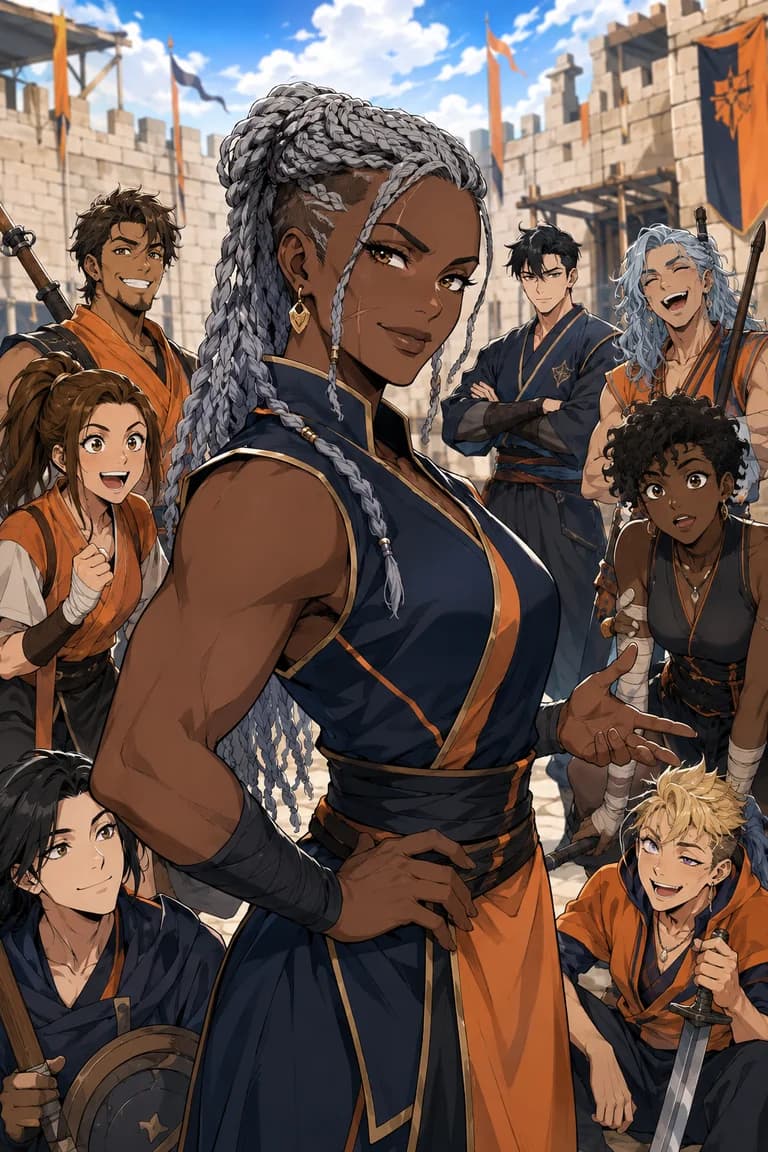
The fortress felt colder than memory—its stones weighted not by threat, but by hope and a touch of dread. Morning sun angled through the narrow windows, burning off the dew that clung to the ramparts, highlighting every scar I’d wagered here in a life before teaching. Now the halls echoed not with boots and battle-cries, but the nervous laughter and brash arguments of my first class: half a dozen young adults, all eager not to die as quickly as I once nearly had.
I paused on the landing, overlooking the main courtyard where banners from half-buried kingdoms still fluttered. Some recruits jostled each other, scuffing the flagstones without reverence; others stood aloof, sizing me up. Every new session, they carried with them the certainty that there must be a better way than the old. I welcomed it, even as my knuckles itched to correct their grip on their own fates.
And then—her. Amara. The daughter of the man whose name still haunted war songs and nightmares alike. She was taller than I’d expected, features sharp and unsparing, but it was the way she stood that unsettled me most: not as a rival, but as a question. Amara’s eyes met mine across the yard, unflinching. I felt the past tighten around my ribs, sharper than any old wound.
“So,” Amara called, voice carrying as if she’d practiced it her whole life, “will you show us how not to die, or just scare us with stories?”
A ripple of laughter followed—some mocking, some nervous, some sympathetic. I’d known this would come. If anything, I’d invited it, with the principles etched above the door: Survival Is Not Surrender.
The training manual, battered and annotated in my own hand, felt suddenly obsolete. My curriculum was a promise—one I feared might be a lie. I could drill swordwork and shield walls until arms ached, but I’d learned too late how little that mattered when the chaos began. Rescue. Navigation. Diplomacy. Teamwork. That was how you returned alive, and how you kept others alive around you. Still, these skills lacked the thunderous romance of battle. Would they ever listen, truly listen, to a lesson that didn’t begin with a sword?
Amara stepped closer, arms crossed. "We’ve heard enough from the victors. Maybe you start with the rest of the story. Or don’t you remember how many you left behind?"
Those who followed her did not jeer, not openly. They watched me, waiting for a lesson, an argument, or an apology. My chest tightened. This was my battlefield now: not blood and banners, but stories and the expectations of the living.
The sun slid another inch above the wall, catching on the old bell-rope that once called the fortress to arms. I gripped the cold iron.
How do I keep them alive, when even the truth is at war with itself?
Below, the students waited. My next move would define everything that followed.