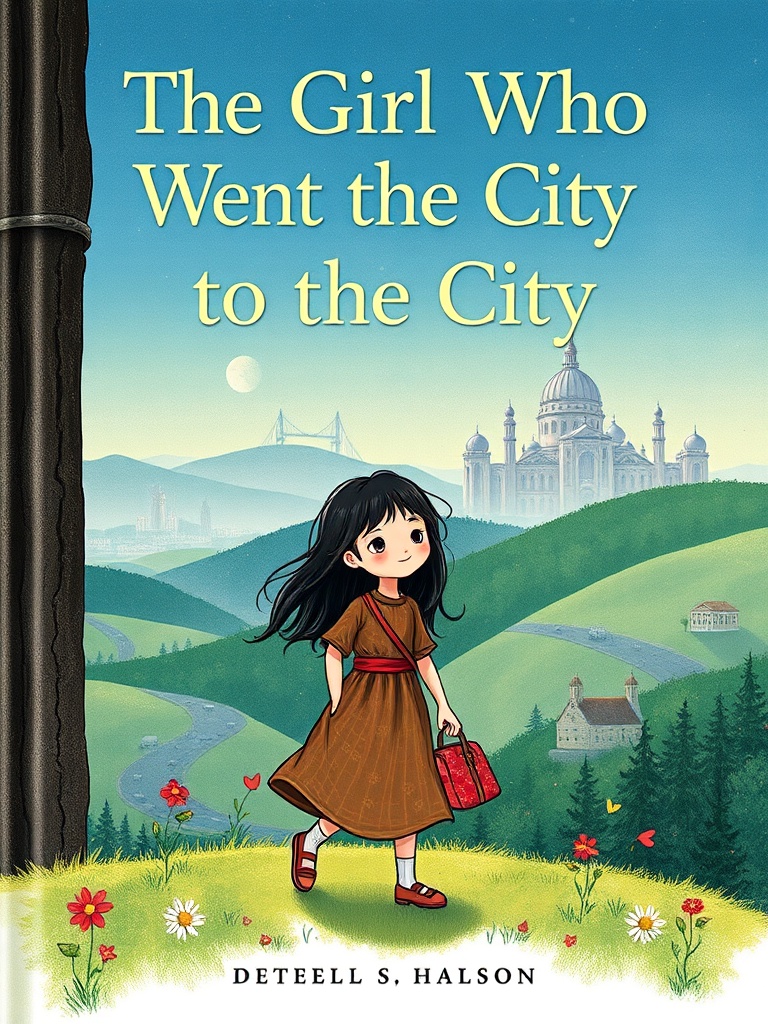
The road from the village turned rutted and hard after the last thatched roofs faded from view. Ama pressed onward, her shoes thin and worn, her heart clambering between hope and fear. The birdsong grew fainter as she left the shelter of the fields behind, replaced by the distant calls of traders and the dull, ceaseless hum of the city that, at last, began to rise before her.
The city walls loomed, sun-bleached and chipped, watching over a chaos of life that spilled in every direction. Vendors shouted their wares, their voices sharp and bright in the morning air. Carts laden with sacks and baskets rattled over uneven stones. The aroma of fresh bread and roasting meats mingled with harsher scents—smoke, sweat, and a tang of uncertainty. Ama hesitated at the gates, clutching her small bag and the pouch of coins tight to her chest. For a moment, the crowd seemed to whirl around her, a river she must step into or be left behind.
She took a breath, squared her shoulders, and entered. Her clothes marked her as an outsider—her skirt dyed with the simple village indigo, her blouse patched by careful hands. Yet she kept her head high, determined not to shrink from the eyes that followed her, some curious, some wary.
She wandered the narrow streets, searching for signs of work. A laundress called out near a well, but her arms already ached with the memory of countless washings at home. Two boys darted past, their laughter edged with mischief, nearly knocking her into a basket of apples. She stammered apologies, cheeks flushed, and moved on.
Beneath an awning draped with faded red cloth, an older woman baked flatbread on a hot stone. Ama’s stomach tightened with hunger, and she paused, drawn by the warm scent. The woman noticed her and nodded, her eyes sharp but not unkind.
“New to the city?” the woman asked, flipping a round of bread with practiced ease.
Ama nodded. “I am looking for work. Any work.” Her words sounded small here, almost swallowed by the noise of the street.
The woman studied her. "There’s always need for hard hands, but the city is not as forgiving as the hills. Why did you come?"
Ama swallowed. "To help my family. To earn what I can."
A flicker of understanding passed over the woman’s face. She tore a piece of warm bread and handed it to Ama. "Eat first. Then listen. There are places that take advantage of a desperate girl. Keep your wits about you. If you want honest work, try the bakery on the next street. Old Mr. Bahari’s place. He needs someone to sweep and carry."
Ama’s gratitude was quiet but deep. She thanked the woman, savoring the soft bread as she continued down the narrow lane. The city pressed close, every corner alive with opportunity and risk—each moment demanding a new courage.
She found the bakery easily enough. Its windows were smudged with flour, the air inside thick with the comforting scent of baking loaves. Through the open door, Ama saw a tall, thin man behind the counter, his hair dusted white, hands moving steadily as he shaped dough.
As she stepped inside, a bell chimed overhead. The man glanced up, his gaze landing on the stranger in village clothes. Silence stretched, weighted and expectant, as if the warm air itself was holding its breath, waiting to see if this girl belonged.