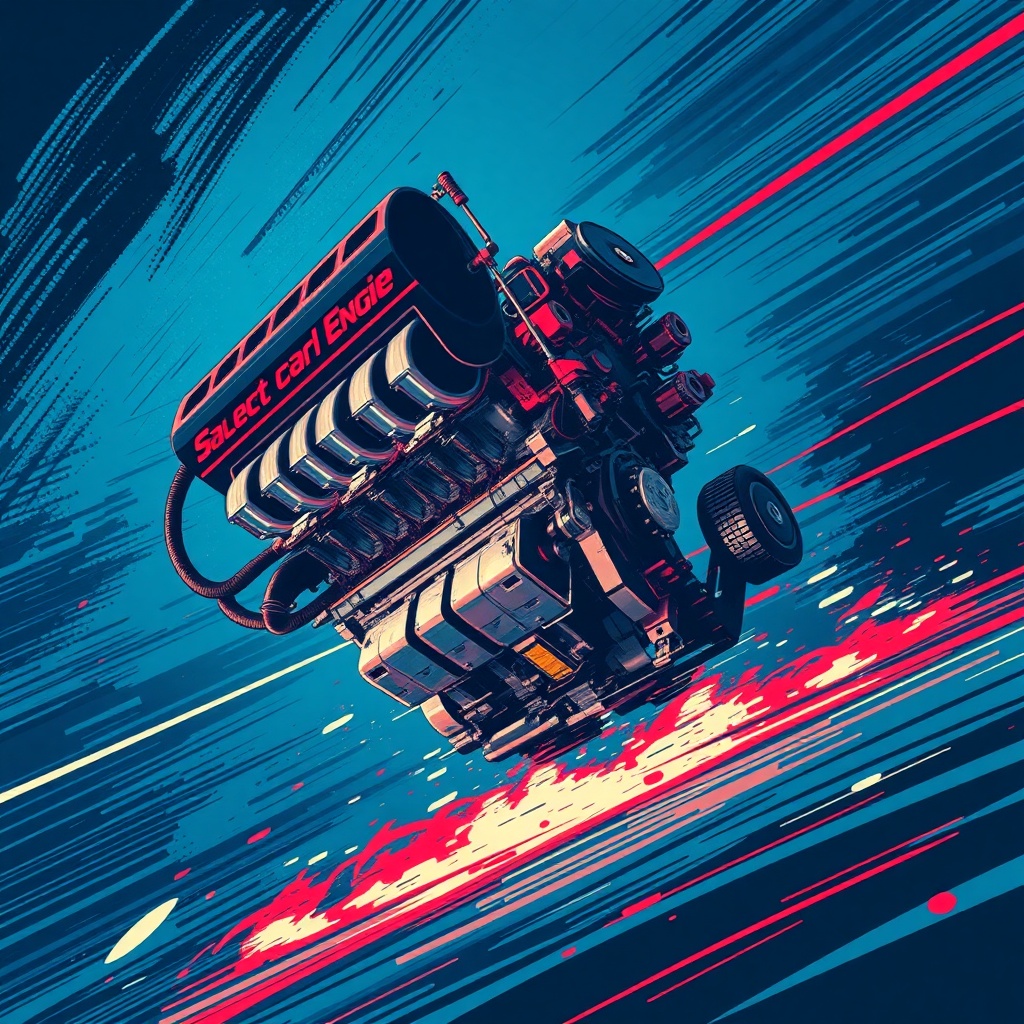
In the humming quiet of the laboratory, the engine block stands like a challenge on the workbench, its cylinder head removed and the familiar forest of poppet valves conspicuously absent. Instead, a machined plate of intricate channels glistens under the fluorescent lights. These are not the moving parts of old, but the winding, static passages of a new ambition: Tesla valves—engineered with no moving components at all, relying solely on geometry and fluid dynamics to control the direction of flow.
Hands—steady, a touch grease-stained—slide along the manifold, tracing the serpentine paths. Each curve, each narrowing throat, is the result of months of design and simulation, a thousand nights spent feeding models to computational fluid dynamics software. The aim is clear: to let mixture in, to keep exhaust out, and to do so with no spring, no poppet head, only the silent, invisible authority of physics enforced by clever fabrication.
The concept feels almost audacious. Nikola Tesla’s original valve, a century-old curiosity, was never meant for the violence of combustion chambers. Yet here it is, reimagined for the relentless rhythm of modern pistons. If it works, everything changes—maintenance slashed, efficiency boosted, the engine’s soul remade.
The test rig is ready. Sensors snake from every corner: pressure transducers, thermocouples, microphones for knock detection. The new manifold, with its shining channels, is torqued down, gaskets pressed tight, everything triple-checked. Only the glossy, jet-black intake pipe remains to be clamped in place. The room is thick with anticipation, equal parts hope and the fear of a catastrophic miscalculation.
A colleague, Mira, stands by the console, eyes flickering with nervous excitement. "Are you really ready for this?" she asks, voice low and urgent. Her gaze lingers not on the prototype, but on the one who built it.
One more check: fuel lines, spark, data acquisition system all green. Heart racing, breath drawn sharp, it is time to see whether a century of tradition can be upended in a single, shattering moment—or if the Tesla valve, for all its promise, is a beautiful, impossible dream.
With a deep breath, the ignition key is turned. The starter motor whirs, spinning the crankshaft. For a heartbeat, nothing. Then the pressure gauge jumps. The fuel injectors click. There is a cough, a judder—
—and, impossibly, the engine catches. It stumbles, settles, idles. Not smoothly, but alive. On the first-ever breath drawn through solid-state Tesla valves, the engine is running. The readings flicker wildly on the monitors, and Mira lets out a strangled laugh, half-disbelief and half-triumph.
But the idle is rougher than expected. Backpressure builds in the intake channels, the pressure sensor spiking. The exhaust note warbles, uneven. The temperature gauge climbs rapidly, higher than models predicted. Something is not right. The channels—are they choking, or has the fluid dynamic promise failed under real combustion?
A faint metallic clatter rings out, and a tendril of blue smoke curls from the joint between the new manifold and the block. Instinct demands action, but which risk is the right one to take at this crucial, uncertain crossroad?