About this book
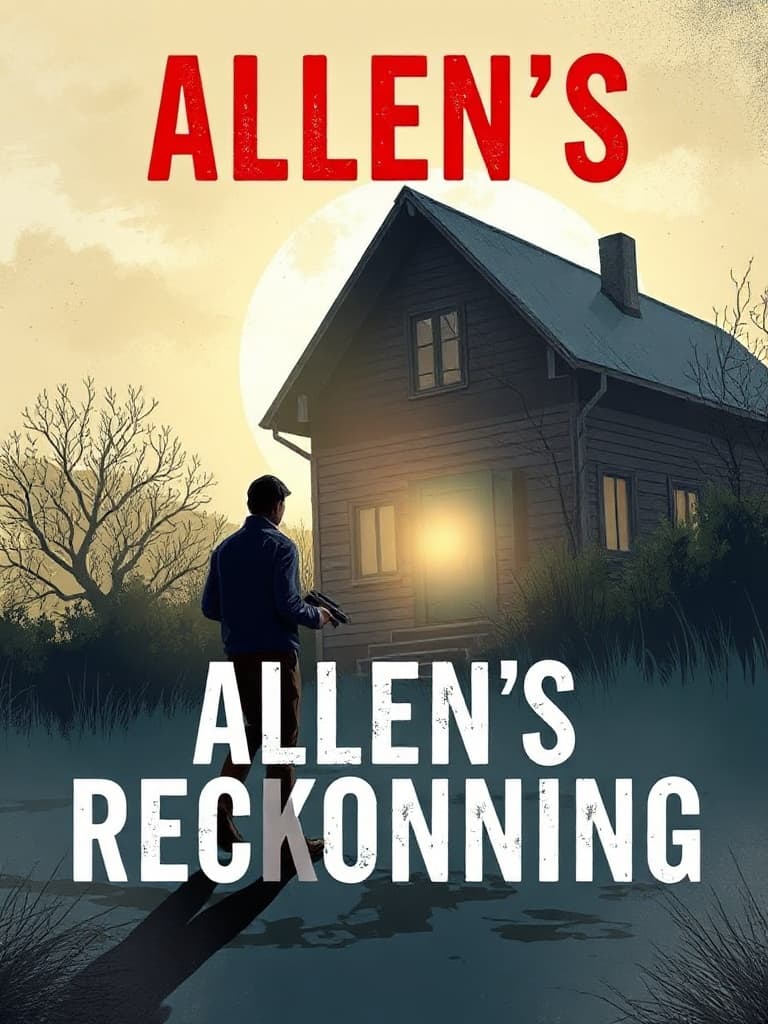
Allen's Reckoning
42
0
15
0
Allen want to take George out to get what he wants but George didn't have what Allen wanted that why he take George wife Kia and his son Rick instead
Chapters
- 1The Unraveling DebtChapter 1 opens with Allen cornering George in a dimly lit, secluded alleyway behind a bustling marketplace. The air is thick with the smell of rotting produce and desperation. George, visibly flustered and attempting to appear nonchalant, is being pressed by Allen, whose voice is a low growl laced with simmering rage. Allen's eyes, sharp and predatory, scan George's face, searching for any sign of deception or evasion. George insists he has no knowledge of the debt Allen is referencing, or at least, not in the way Allen describes. He tries to reason with Allen, offering platitudes and deflections, but Allen is not interested in excuses. Allen's narrative is one of betrayal, a deep-seated grievance that has festered for years. He recounts fragmented memories of a shared past, a deal gone sour, a significant sum of money that George supposedly owes him, money that Allen claims was his lifeline and that George squandered or stole. George, caught off guard and genuinely confused by the intensity and specificity of Allen's accusations, struggles to maintain his composure. He tries to recall any such transaction, any debt that could possibly warrant this level of animosity, but his memory offers no clear answers, or perhaps, it offers answers he is unwilling to acknowledge. The tension escalates as Allen becomes more physically imposing, leaning closer to George, his words punctuated by the clench of his fists. He makes it clear that he won't leave empty-handed. The description of Allen's physical presence should be detailed: the sweat on his brow, the frayed edges of his worn jacket, the desperate glint in his eyes that speaks of a man pushed to the brink. George's internal monologue should reveal his growing unease, not just at Allen's threat, but at the unsettling vagueness of the accusation. Is he forgetting something? Is Allen delusional? Or is there a darker truth George is deliberately ignoring? The setting itself should reflect the mood: graffiti-scarred walls, overflowing dumpsters, the distant sounds of life that seem a world away from this tense, isolated encounter. George's attempts to placate Allen fail. Allen dismisses George's pleas of ignorance as deliberate manipulation. He reveals a specific deadline, a ticking clock for George to produce what is owed, or face consequences far more severe than George can imagine. The chapter ends with Allen issuing a final, chilling warning, leaving George alone in the alley, the weight of the unknown threat pressing down on him. George is left shaken, not just by the confrontation, but by the unsettling feeling that this is far from over, and that Allen's desperation is a dangerous, unpredictable force. The lingering question for George is not just what this debt entails, but how deep this man's obsession runs, and what he is truly capable of. The scene should be rich with sensory details: the grimy texture of the brick walls, the sharp, metallic tang of fear in the air, the echoing emptiness of the alley after Allen's departure. George’s internal struggle should be palpable, a conflict between his desire to dismiss Allen as a madman and the gnawing dread that Allen’s words might hold a kernel of truth, a truth George has buried deep within himself. The chapter's purpose is to establish Allen's motive, however twisted, and George's initial disorientation and vulnerability, setting the stage for the escalation of Allen's plan. The scene needs to feel raw and immediate, highlighting the personal nature of Allen's grievance and George's unpreparedness for such a confrontation. The dialogue should be sharp and pointed, revealing Allen's obsessive focus and George's desperate attempts to deflect and disengage. The alleyway setting should be more than just a backdrop; it should be a character in itself, a place of shadows and hidden dangers, mirroring the murky depths of the situation George finds himself in. The emotional arc for George in this chapter is from mild annoyance and confusion to genuine fear and a sense of impending doom. Allen's arc is from simmering resentment to outright threat, his desperation becoming a tangible force.
- 2The Heart's AbductionChapter 2 plunges into the chilling aftermath of Allen's failed attempt to extract his perceived debt from George. The simmering frustration from their previous encounter has curdled into a cold, calculated fury within Allen. His initial plan has failed, leaving him exposed and desperate, and his mind, twisted by obsession and a sense of profound injustice, latches onto a new, far more sinister strategy: leverage. He decides to strike at the heart of George's life, targeting what he knows George holds most dear – his family. The narrative shifts to George's home, a place of warmth and domestic tranquility, which is brutally shattered. The scene should be depicted with stark contrast to the previous alleyway confrontation. Perhaps it's a quiet evening, with George, Kia, and Rick engaged in peaceful, everyday activities. George might be helping Rick with homework, or sharing a quiet moment with Kia. The sudden, violent intrusion of Allen and his associates (if he has any, or perhaps he acts alone, amplifying his lone desperation) should be jarring and terrifying. The abduction of Kia and Rick needs to be depicted with visceral impact, emphasizing their terror and helplessness. Kia, a loving mother and wife, is ripped away from her family, her primary concern immediately shifting to her young son, Rick, who is bewildered and terrified. Rick’s innocent cries and confusion should be a key emotional element, magnifying the horror of the situation. George, arriving home shortly after the abduction to find a scene of disarray – a broken window, overturned furniture, a dropped toy – should experience a wave of gut-wrenching panic and self-recrimination. The smell of fear, the lingering scent of an intruder, the chilling silence where laughter should be – these sensory details should paint a picture of violation. George's realization that his inability to satisfy Allen has directly led to this horrific outcome should be a crushing blow. The guilt should be palpable, a physical weight settling upon him. He might replay the alley confrontation in his mind, understanding the true, terrifying implication of Allen's threats. The chapter should detail the immediate aftermath of the abduction: George’s frantic, disoriented attempts to make sense of the situation, his desperate calls to authorities (which might be met with bureaucratic indifference or perceived futility given the lack of immediate leads), and his dawning, horrifying understanding of what Allen is capable of. The focus is on the emotional devastation wrought upon George and the immediate, desperate need to act. The description of Allen's perspective during the abduction should be brief but impactful, showing his cold resolve, his justification for this heinous act as the only way to force George's hand. He views Kia and Rick not as people, but as pawns, as currency. The emotional core of this chapter is George's profound shock, terror, and the crushing weight of guilt, coupled with the primal, urgent drive to rescue his family. The narrative should build a sense of overwhelming dread and a stark shift in the stakes of the story. The contrast between the idyllic domestic scene and the brutal violence of the abduction should be stark, emphasizing the violation of innocence and security. The chapter must end with George, alone and devastated, resolving to do whatever it takes to get his family back, the fear now a potent fuel for his determination. The description of Kia's forced compliance and her immediate focus on shielding Rick should be a poignant moment, showcasing her maternal strength even in the face of extreme terror. The chapter's purpose is to escalate the conflict dramatically, transforming Allen from a desperate individual into a formidable, ruthless antagonist, and throwing George into a desperate, high-stakes rescue mission driven by love and overwhelming guilt. The narrative should feel urgent and terrifying, leaving the reader with a profound sense of unease and anticipation for George's next move.
- 3The Labyrinth of DespairChapter 3 plunges George into the heart of his desperate search, a frantic and perilous odyssey fueled by panic, guilt, and a burgeoning, raw courage. The initial shock of Kia and Rick's abduction has given way to a consuming need for action. George is no longer the man cornered in an alley; he is a man unleashed, driven by the primal instinct of a protector. The chapter needs to vividly portray George's descent into the dangerous territories Allen might frequent or use as a hideout. These locations should be depicted with a palpable sense of menace: derelict industrial zones, forgotten corners of the city, or even the fringes of desolate countryside, places where the law casts a long shadow and desperation breeds its own brand of brutality. George's search is not methodical; it's a frenzied, almost instinctual hunt. He follows faint leads, revisits the scene of the abduction, interrogates anyone who might have seen something, and delves into the grimy underbelly of society that he might have previously avoided. His interactions should be fraught with tension. He might encounter unsavory characters, petty criminals, or individuals who operate outside the bounds of legality, people who might have information but demand a steep price, either in money or in favors that George is increasingly willing to pay. The descriptions of these encounters should highlight George's desperation and his willingness to compromise his own principles. He might have to resort to threats, bribes, or even mild violence himself, demonstrating his transformation under duress. The physical and emotional toll on George should be evident: sleepless nights, unkempt appearance, a growing weariness that is constantly overridden by adrenaline and sheer will. The narrative should weave in flashbacks or internal monologues where George grapples with his guilt. He replays the moments leading up to the abduction, agonizing over what he could have done differently, what he missed, what he failed to protect. This guilt is not just a burden; it’s a driving force, pushing him to take risks he would never have considered before. The chapter should also introduce elements of danger beyond just human adversaries. George might face physical hazards in the environments he explores – unstable structures, treacherous terrain, or even the lurking threat of violence from those who see him as an easy target. The narrative needs to build a sense of escalating peril, where each step George takes, while bringing him closer to his goal, also plunges him deeper into a web of danger that he is ill-equipped to navigate. The descriptions of the settings should be stark and evocative, emphasizing their decay, their isolation, and the sense of hidden threats. The sounds, smells, and textures of these environments should be present, immersing the reader in George’s grim reality. The chapter’s purpose is to establish the high stakes of George's quest, showcase his burgeoning determination and resourcefulness, and introduce the perilous landscape he must traverse. It should demonstrate that his search is not merely a matter of finding a location, but of navigating a treacherous social and physical terrain. The chapter should end on a note of precarious progress: George has perhaps gained a small, cryptic clue, or narrowly escaped a dangerous encounter, but the path ahead remains fraught with uncertainty and escalating danger. He might, for instance, find a discarded item belonging to Kia or Rick, a heartbreaking but galvanizing piece of evidence, or he might be forced to make a difficult alliance with someone equally desperate. The focus remains on George's relentless pursuit and the increasing dangers he faces, solidifying his role as a protagonist willing to confront darkness for the sake of his family.
- 4The Gilded CageChapter 4 shifts focus to Kia and Rick, held captive by Allen. Despite the terrifying circumstances, the chapter aims to showcase Kia's remarkable inner strength and resourcefulness. The setting of their captivity should be described in detail, not necessarily a dank dungeon, but perhaps a place that offers a stark contrast to their normal life, implying a degree of calculated control by Allen. It could be an isolated, nondescript house, a remote cabin, or even a seemingly normal apartment that has been repurposed. The atmosphere should be one of unease and confinement, permeated by the constant threat of Allen's presence or the knowledge of his control. Kia's initial reaction is, understandably, overwhelming fear for herself and, more importantly, for Rick. The description should capture her visceral terror – the racing heart, the shallow breaths, the cold dread. However, her maternal instincts quickly take over, becoming her primary driving force. She must present a brave face for Rick, shielding him from the full extent of their predicament and the true danger they are in. This involves comforting him, reassuring him, and trying to maintain a semblance of normalcy within the confines of their captivity. Rick's reactions – his confusion, his fear, his innocent questions – should be depicted realistically, and Kia's responses to him should highlight her resilience. She might invent stories, play games, or engage him in simple activities to distract him and keep his spirits up. While focused on protecting Rick, Kia is not passive. She is a keen observer of her surroundings. The chapter should detail her subtle attempts to gather information: observing the layout of the place, noting any routines of their captor(s), identifying potential weaknesses in their security, or listening for any clues about their location or Allen's motives. These observations are made with a quiet determination, a hidden spark of hope for escape. Her fear is a constant undercurrent, but it doesn't paralyze her; instead, it sharpens her senses. The narrative should explore her internal struggle: the battle between despair and hope, the fight to maintain her composure, and the burning desire to be reunited with George. She might recall memories of George and Rick, drawing strength from her love for them. The chapter should also subtly hint at Allen's interactions with them, if any. These interactions should be chilling, demonstrating his cold calculation and his view of them as mere bargaining chips. He might try to manipulate Kia, or make veiled threats, but her focus remains on Rick and on finding an opportunity. The chapter's purpose is to establish Kia's character as more than just a victim. It showcases her inner fortitude, her unwavering maternal love, and her latent resourcefulness. It builds suspense by showing her observing and planning, even amidst her fear. The chapter should end with a small, significant observation or a nascent plan forming in Kia's mind – perhaps she notices a loose floorboard, overhears a fragment of conversation, or spots a potential tool for escape – something that offers a glimmer of hope and sets the stage for future escape attempts. This observation should be subtle, something Allen might overlook due to his arrogance or focus on George. The descriptions of their confinement should emphasize the psychological toll, the feeling of being trapped, and the constant low hum of anxiety, contrasted with Kia's determined efforts to create pockets of safety and hope for Rick.
- 5The Oracle in the ShadowsChapter 5 introduces a pivotal new element into George's desperate search: a mysterious informant. This character, shrouded in enigma, emerges from the periphery of George's chaotic investigation, offering a lifeline that is both tantalizing and deeply suspect. The informant's contact with George should be unexpected and clandestine. It could occur through a cryptic phone call, an anonymous note left in a precarious location, or a brief, shadowy encounter in a place George frequents during his search. The informant's voice or presence should be distinct – perhaps raspy, distorted, or unnervingly calm – immediately signaling their unusual nature. The information they provide is not a clear-cut address, but a cryptic clue, a riddle, or a series of veiled directions that require interpretation. This clue should be specific enough to point George in a general direction or towards a particular path, but vague enough to maintain the informant's mystique and ensure George must actively work to decipher it. The informant's motives are deliberately obscured. They offer assistance without demanding immediate payment or revealing their identity, creating an aura of intrigue and suspicion. George's reaction to this contact should be a mixture of hope and profound distrust. He is desperate, so he is inclined to seize any potential lead, but his newfound wariness, born from Allen's ruthlessness, makes him cautious. He questions who this person is, why they are helping him, and what they stand to gain. The informant might allude to a shared enemy in Allen, or a personal vendetta against him, but their true agenda remains hidden. The dialogue between George and the informant should be sparse and laden with subtext, filled with double meanings and unanswered questions. The informant might reveal a piece of knowledge about Allen or the situation that George himself didn't possess, further solidifying their credibility while simultaneously deepening the mystery. The setting for this encounter should reflect the clandestine nature of the exchange – a secluded park bench at dusk, a deserted underpass, or a dimly lit café where the informant can remain anonymous. The descriptive elements should focus on the atmosphere of secrecy and the palpable tension of the interaction. The chapter's purpose is to propel George's investigation forward by providing a new, albeit ambiguous, direction. It introduces a catalyst that will guide him towards the climax, while also planting seeds of doubt about the informant's true role and trustworthiness. The chapter should end with George, armed with this cryptic clue, feeling a renewed sense of purpose but also a heightened sense of unease. He is one step closer, but he is now entangled in a game played by unseen hands, and the identity and intentions of his benefactor remain a dangerous unknown. The clue itself could be an object, a phrase, or a symbol that George must now decipher, leading him into a more dangerous phase of his journey. The narrative should emphasize George's internal conflict: the desperate hope warring with the instinctual distrust, making him question if this help is a blessing or a trap.
- 6The Serpent's CoilsChapter 6 sees George actively pursuing the cryptic clues provided by the mysterious informant. This chapter is about the journey, the treacherous path George must navigate, and the escalating danger that accompanies each step. The informant's directions, initially vague, now lead George into increasingly perilous and unfamiliar territories, places where Allen's influence or the general lawlessness might hold sway. These locations should be described with a strong emphasis on their hostile or decaying nature: abandoned industrial complexes riddled with hazards, forgotten rural roads where help is miles away, or the labyrinthine backstreets of a city's underbelly. George’s progression should not be linear; he encounters obstacles that test his resolve and ingenuity. These might include physical barriers, misleading trails, or encounters with individuals who are suspicious of outsiders or actively hostile. The informant's clues, while guiding him, might also be designed to lead him into specific situations or confrontations, hinting at a larger, more complex game being played. George's internal state should be a mix of grim determination and mounting anxiety. The constant threat of discovery by Allen, or worse, by those who might be working for him, should create a palpable sense of suspense. He is constantly looking over his shoulder, his senses heightened, his paranoia growing. The descriptions of his physical state should reflect the toll of his journey: exhaustion, hunger, injuries sustained, and the grime that accumulates from traversing rough terrain. The narrative should delve into George's thought process as he deciphers the clues. He might have to connect disparate pieces of information, interpret symbolic meanings, or make educated guesses based on his limited understanding of Allen's world. This intellectual challenge should be intertwined with the physical dangers he faces. The chapter should also subtly hint at the informant's larger agenda. Perhaps George finds evidence that the informant has been observing him or manipulating his path in specific ways. He might encounter situations that seem too coincidental, or discover that the route he is taking is designed to put him in contact with certain people or places relevant to the informant's own goals. The descriptions of the environments should be rich and atmospheric, emphasizing the isolation, the decay, and the sense of hidden dangers. The sounds of the wilderness or the city's forgotten corners should contribute to the mood of suspense and unease. The chapter’s purpose is to develop the plot by physically moving George closer to Allen's location through a series of increasingly dangerous trials. It should showcase George's growing resilience and his ability to navigate treacherous environments, while also deepening the mystery surrounding the informant and their motives. The chapter should end with George arriving at a significant landmark or a point of convergence indicated by the clues, a place that is palpably closer to Allen’s lair, but also more dangerous and revealing. This could be a secluded property, a specific building, or a meeting point where he expects to find more direct answers, but the danger is now more immediate and tangible. The narrative should leave the reader with the sense that George has entered the final, most perilous stage of his pursuit, and that the true nature of the informant's game is about to be unveiled.
- 7The Child's GazeChapter 7 brings the focus back to the captives, Kia and Rick, specifically highlighting Rick's innocent yet crucial observations. While Allen is preoccupied with his plan and George's movements, he likely underestimates the awareness of the young boy. The setting is still their place of captivity, but the narrative perspective now emphasizes Rick's sensory experience and his unique way of perceiving their confinement. Rick, though scared and confused, possesses an unfiltered perspective. The chapter should detail small, seemingly insignificant details that Rick notices, which Allen dismisses or overlooks due to his arrogance or his singular focus on his objective. These details could be anything from the specific sounds of vehicles passing outside, the patterns of light and shadow at different times of day, the peculiar habits of their captors (if any), or even the distinct smell of something unique to the location. The description of Rick's observations should be presented through his innocent, childlike lens. For example, he might notice a particular bird’s song that is unique to a certain area, or the way a certain type of truck rumbles by regularly, or a peculiar marking on a wall that seems out of place. Kia, in her efforts to comfort and protect Rick, might inadvertently encourage his observations, asking him what he sees or hears, not realizing the potential significance. She might try to make a game out of it, asking him to describe things, which, from her perspective, is just a coping mechanism for Rick. However, the narrative should subtly underscore the importance of these observations, hinting that they could be vital clues to their location or a potential escape route. The chapter should also explore the emotional impact of Rick's innocence amidst the terror. His simple questions or observations might serve as poignant reminders of what has been lost and what needs to be saved. Allen's interactions with Rick, if any, should be brief and dismissive, reinforcing his callousness and his blindness to the child's awareness. He might see Rick as merely an annoying distraction or a pawn, completely unaware that the boy is absorbing details that could prove critical. The chapter's purpose is to introduce a potential source of vital information through an unexpected character, highlighting the theme that even the smallest details, and the most innocent observers, can hold the key to understanding and escape. It also serves to deepen the reader's empathy for Rick and Kia. The chapter should end with Rick making a specific, concrete observation that, while perhaps not fully understood by Kia or the reader at this point, clearly holds potential significance. This could be the sound of a specific train whistle, the sight of a unique landmark visible through a window, or a recurring pattern in their captor's behavior that hints at a weakness. This observation should plant a seed of hope, suggesting that Rick's innocence might be their unlikely salvation. The narrative should emphasize the contrast between the adult's fear and desperation and the child's simple, direct perception of the world around him, showing how these different perspectives can yield different, but equally valuable, information.
- 8The Silent LanguageChapter 8 returns to Kia, focusing on her quiet resilience and her resourcefulness as she continues to be held captive. While Rick's observations are crucial, Kia's active attempts to influence their situation, however subtle, are also vital. The chapter details Kia's efforts to gather information and potentially leave clues or signals for George, all while maintaining a facade of compliance and managing Rick's fear. Trapped within the confines of their captivity, Kia's mind is constantly working. She uses her intelligence and her observations from Chapter 4 to identify potential opportunities. These might involve subtly testing the boundaries of their confinement, observing the routines of their captors, or trying to find any tools or objects that could be repurposed for escape or communication. The descriptions should focus on the quiet, almost imperceptible nature of her actions. She might be strategically dropping small objects, making deliberate sounds at certain times, or leaving behind subtle markers that George might recognize if he were to find them. Her resourcefulness is not about grand gestures, but about small, calculated risks that could have significant payoffs. She might try to engage in seemingly innocuous conversations with their captors, probing for information about their location, their routines, or their connection to Allen, all while appearing submissive and non-threatening. Kia's maternal instincts remain a powerful motivator. Her efforts to leave signs are not just for her own escape, but for the sake of reuniting her family. She might try to leave a message for Rick to remember, or a symbol that she knows George would understand. The chapter should explore the emotional strain this puts on her: the constant fear, the isolation, the pressure of keeping Rick safe, and the knowledge that her actions are fraught with danger if discovered. Her resilience is not the absence of fear, but the ability to act despite it. The narrative should highlight moments where Kia almost gives in to despair, only to be reignited by a thought of George or Rick, or a small success in her efforts. The descriptions of her attempts at communication should be detailed, focusing on the precision and secrecy required. For example, she might use a loose thread from her clothing to mark a path, or subtly rearrange items to create a pattern, or use a small piece of reflective material to try and catch the light in a specific way. The chapter's purpose is to showcase Kia's agency and her intelligence, demonstrating that she is an active participant in her own rescue, not just a passive victim. It builds suspense by showing her calculated risks and the potential consequences if she is caught. The chapter should end with a small success for Kia – perhaps she successfully leaves a subtle clue that George might find, or she gains a crucial piece of information about their captor's movements, or she manages to secure a small item that could be useful later. This success should be a quiet victory, a testament to her enduring spirit, and a hint that her efforts, combined with Rick's observations, might be the key to their eventual escape. The narrative should emphasize the contrast between the external stillness of their captivity and the internal storm of Kia's determined planning and emotional struggle.
- 9The Twisted LedgerChapter 9 delves into the complex history between Allen and George, revealing the true nature of the 'debt' and the desperation that drives Allen. This chapter moves away from the immediate peril of the abduction and focuses on uncovering the backstory, recontextualizing Allen's actions and George's own potential involvement or ignorance. The setting for this revelation could be varied: perhaps George, while following the informant's clues, stumbles upon old documents or encounters someone from Allen's or his own past who knows the truth. Alternatively, Allen himself might reveal aspects of it during a moment of agitated confession or confrontation, believing George deserves to know the 'truth' of his betrayal. The narrative should unfold the origins of the conflict, moving beyond a simple monetary debt. It could involve a shared business venture that went disastrously wrong, a betrayal of trust in a moment of vulnerability for Allen, or a past mistake George made that he has long suppressed or conveniently forgotten. The 'debt' might not be just financial; it could be a debt of loyalty, a debt incurred through a past act of negligence, or even a debt of survival that Allen believes George owes him. The chapter needs to portray Allen's perspective with a degree of depth, showing his warped sense of justice and the profound sense of betrayal that has festered within him. His desperation should be rooted in something tangible – perhaps the loss of everything he had, a ruined reputation, or a personal tragedy directly linked to George's actions or inactions. George's reaction to this revelation is crucial. He might experience a profound shock, a dawning realization, or even denial. If he has suppressed memories, this chapter forces him to confront them. He must grapple with the possibility that his own past actions, however unintentional or forgotten, have led to this dire situation. The narrative should explore the moral ambiguity of the situation. While Allen's actions are undeniably criminal, the revelation of the backstory might cast George in a less sympathetic light, or at least complicate his victimhood. The 'twisted truth' implies that the situation is not as black and white as George initially perceived. The descriptions of the past events should be interwoven with the present narrative, flashbacks or recounted stories that gradually piece together the complex history. The purpose of this chapter is to provide a deeper understanding of Allen's motivations, add layers to George's character by revealing a potential hidden aspect of his past, and introduce a significant moral complexity to the central conflict. The chapter should end with George, profoundly affected by this revelation, facing a new dilemma: how to reconcile his past with his present quest, and how to deal with an antagonist whose desperation is rooted in a shared, albeit painful, history. He might find himself questioning his own actions and the true nature of justice, even as his need to rescue his family remains paramount. The revelation should create a sense of unease, suggesting that the resolution might not be a simple triumph of good over evil.
- 10The Puppeteer's StringsChapter 10 focuses on the mysterious informant, bringing their role and agenda into sharper focus. As George delves deeper into the situation, guided by the informant's cryptic clues, the informant's hand becomes more evident, revealing that they are orchestrating events for their own purposes. The narrative should begin to unravel the informant's motivations, moving beyond simple assistance. It becomes clear that George is a pawn in a larger game, and his actions are serving the informant's hidden objectives. The chapter should explore how the informant has been manipulating George: the timing of the clues, the specific routes they've directed him down, and perhaps even the encounters he's had along the way. It's possible the informant has engineered specific confrontations or led George to particular pieces of information that benefit them. The informant might have a personal vendetta against Allen, or they might be using George to achieve a goal that Allen is preventing them from reaching. Their methods are indirect, relying on George's desperation and courage to do the heavy lifting. The chapter should reveal more about the informant's capabilities – their access to information, their understanding of Allen's movements, and their strategic thinking. This might be shown through George discovering evidence of the informant's influence, or through a direct, albeit still veiled, communication where the informant reveals more about their plan. The focus is on the informant's intelligence and their ability to play a long game. George's growing suspicion of the informant should be a key element. As he pieces together the evidence of manipulation, his initial hope begins to be replaced by a gnawing distrust. He realizes that while the informant might be leading him towards Allen, they are also using him. The chapter should build tension around the question of whether the informant is a true ally, a neutral party playing a dangerous game, or an antagonist in their own right, perhaps even more dangerous than Allen. The descriptions of the informant's actions or indirect influence should be subtle but pervasive, creating a sense of being watched and guided by an unseen force. The chapter's purpose is to reveal the complexity of the narrative by introducing a morally ambiguous character who is pulling strings behind the scenes. It raises the stakes by adding another layer of intrigue and potential betrayal. The chapter should end with George facing a critical juncture: he has gathered enough information to confront Allen, but he also understands that he is being manipulated. He must decide whether to continue trusting the informant's guidance, or to forge his own path, potentially at great risk. This could be triggered by a new clue that seems too perfectly designed to lead him into a trap, or a direct realization of the informant's ultimate goal. The narrative should leave the reader questioning the informant's true identity and their ultimate objective, adding a layer of mystery to the unfolding events.
- 11The Eye of the StormChapter 11 is the climax of the personal conflict: George's direct confrontation with Allen. After navigating the treacherous path laid out by the informant and the revealed truths about their past, George finally faces his tormentor. The setting for this confrontation should be significant – perhaps Allen's hideout, the place where Kia and Rick are held, or a location that holds symbolic meaning for their shared past. The atmosphere should be thick with tension, rage, and a desperate need for resolution. The confrontation should be dramatic and emotionally charged. Accusations fly, raw emotions of betrayal, desperation, and anger are laid bare. George, fueled by his ordeal and the need to rescue his family, confronts Allen not just with physical intent, but with the weight of the revealed truths. He might challenge Allen's narrative, defend his past actions, or express the profound pain Allen has inflicted. Allen, in turn, should be depicted as cornered, desperate, and perhaps even more volatile than before. He might reiterate his justifications, revealing the depth of his perceived injustice. The dialogue should be sharp, revealing the core of their conflict and the years of festering resentment. The physical aspect of the confrontation should be visceral, but it should also be secondary to the emotional and psychological battle. George's primary goal is to secure the release of Kia and Rick, so he must balance his rage with the need for strategic action. The presence of Kia and Rick, either as witnesses or as the ultimate prize, should heighten the stakes. Their fear and vulnerability should be a constant, unspoken presence, influencing George's actions and Allen's leverage. The chapter should explore the shifting power dynamics as the confrontation unfolds. George, initially driven by raw emotion, might find a calculated calm, while Allen, despite his supposed control, might reveal cracks in his facade. The narrative should build towards a critical moment where the conflict reaches its peak – a physical struggle, a tense negotiation, or a moment of desperate choice. The purpose of this chapter is to bring the central conflict between George and Allen to a head, forcing a direct confrontation that resolves the immediate threat. It should be a high-octane, emotionally charged sequence that tests George's courage and resolve. The chapter should end at a pivotal point in the confrontation: perhaps George gains a momentary advantage, or Allen makes a desperate move, or a critical decision is made that will determine the fate of Kia and Rick. The ending should leave the reader in suspense, on the precipice of the resolution, but the core confrontation should have played out, with the emotional and psychological battle taking center stage. The descriptions of the setting should amplify the tension, with every detail contributing to the oppressive atmosphere of the standoff.
- 12Echoes of a Broken PastChapter 12 occurs within the intense confrontation between George and Allen, but it pivots to offer a glimpse into Allen's vulnerability and the tragic backstory that has shaped him. During the height of their standoff, a moment of unexpected candor or a slip of the tongue from Allen reveals a sliver of his past suffering. This is not an excuse for his actions, but a revelation that adds a layer of tragic complexity to his character. The narrative should depict a specific trigger for this disclosure – perhaps George’s words about family strike a chord, or Allen sees a reflection of his own past loss in George's desperate plea. The details of Allen's past should be presented concisely but impactfully, hinting at a profound loss, a betrayal that shattered his life, or a series of misfortunes that drove him to the brink. This could involve the loss of his own family, a devastating financial ruin that left him with nothing, or a deep-seated trauma that has warped his perception of justice and fairness. The key is that this past suffering, while not justifying his current actions, provides context for his extreme desperation and his warped sense of entitlement. George's reaction to this revelation is crucial. He might experience a flicker of empathy, a moment of understanding, or even a profound sadness for the man Allen has become. However, this understanding should not equate to forgiveness. The immediate threat to his family remains paramount, and the pain Allen has inflicted is too great. The narrative should emphasize that this glimpse into Allen's past is a moment of human vulnerability, not a redemption arc. It adds a layer of tragic irony to the situation – two men driven by pain, one inflicting it, the other trying to overcome it. The descriptions should focus on the subtle shifts in Allen's demeanor: a momentary faltering in his voice, a look of deep-seated pain in his eyes, a gesture that betrays his inner turmoil. These are fleeting moments, quickly masked by his rage or desperation. The chapter's purpose is to add depth and complexity to the antagonist, preventing him from being a one-dimensional villain. It introduces a moral grey area, forcing George (and the reader) to confront the idea that even those who do terrible things can be driven by profound suffering. The chapter should end with the confrontation re-igniting, or shifting, as this revelation hangs in the air. George must process this new information while still acting to save his family. The immediate threat may still be present, but the emotional landscape of the conflict has irrevocably changed. This moment of vulnerability might even be what gives George the slight edge he needs, not through force, but through a deeper understanding or a strategic manipulation of Allen's emotional state. The narrative should strike a balance between acknowledging Allen's pain and condemning his actions, ensuring that the focus remains on George's quest for rescue.
- 13The Reckoning's EmbraceChapter 13 is the pivotal rescue sequence. Following the intense confrontation and the revelation of Allen's past, George must now act decisively to secure the safety of Kia and Rick. The narrative should be fast-paced and action-oriented, focusing on George's successful execution of his rescue plan. The immediate aftermath of the confrontation, whether it ended in violence, negotiation, or a temporary incapacitation of Allen, should lead directly into this sequence. George's priority is to get his family out of harm's way. The descriptions should emphasize the urgency and the palpable relief as he reaches Kia and Rick. The moment of reunion should be emotionally charged: the embrace, the tears, the hushed words of comfort and reassurance. Kia's strength and resilience, honed during her captivity, should be evident as she clutches Rick tightly, her eyes scanning for any lingering threat. Rick, though traumatized, finds solace in his parents' presence, his fear beginning to recede in the safety of their arms. The chapter should also address the immediate aftermath of Allen's defeat or incapacitation. Depending on the nature of the confrontation, this might involve securing Allen, calling for authorities, or simply escaping the dangerous location. The focus, however, remains on the family's immediate safety and their escape from the immediate danger. The descriptions of their journey away from the site of their ordeal should convey a sense of desperate flight, but also of growing hope. The sounds of the outside world, previously a source of anxiety, now signify freedom. The chapter should also touch upon the emotional state of all three characters: George, overwhelmed by relief and the lingering adrenaline; Kia, physically and emotionally drained but resolute; and Rick, processing the trauma but clinging to the safety of his parents. The immediate danger is over, but the emotional scars are deeply etched. The chapter's purpose is to bring the primary conflict of the abduction and confrontation to a resolution, focusing on the successful rescue of the family. It should provide a sense of catharsis and relief for the reader, while also acknowledging the lasting impact of the ordeal. The chapter should end with George, Kia, and Rick in a place of temporary safety, perhaps in their car driving away, or reaching a trusted friend's or relative's home. They are together, alive, and free from Allen's immediate threat, but the experience has irrevocably changed them. The lingering tension, the unspoken fears, and the profound emotional toll should be subtly present, hinting at the challenges that lie ahead in their healing process. The narrative should focus on the physical act of escape and reunion, making it feel urgent and impactful, while also allowing for brief, meaningful moments of emotional connection between the family members.
- 14The Weight of ScarsChapter 14 deals with the immediate aftermath of the rescue, focusing on the lingering emotional and psychological scars that the ordeal has left on George, Kia, and Rick. The family is reunited and physically safe, but the trauma of their experience casts a long shadow. The chapter should explore the subtle ways in which their lives have been altered. George, consumed by guilt and the fear he experienced, might be hyper-vigilant, restless, or prone to flashbacks. His relief at their rescue is tempered by the knowledge of what they endured and the lingering fear that the danger might not be entirely over. Kia, despite her resilience, might struggle with the feeling of violation and the fear of being powerless. She might experience nightmares, anxiety, or a withdrawn demeanor as she processes the trauma. Rick, the most vulnerable, may exhibit signs of post-traumatic stress: fear of loud noises, nightmares, clinginess, or regression in his behavior. The chapter should depict quiet, intimate moments between the family members as they try to navigate these lingering effects. These scenes are not about grand gestures, but about the small, everyday struggles of healing. George might try to comfort Kia, who in turn tries to reassure Rick, creating a fragile bubble of normalcy amidst the emotional turmoil. The narrative should explore the unspoken anxieties that permeate their interactions. The shared experience has bonded them, but it has also created a new vulnerability that they must learn to manage. The presence of Allen, even if apprehended, looms large in their minds. The memory of his actions and the fear he instilled are difficult to shake. The chapter should also touch upon the practical consequences of their ordeal – the potential need for therapy, the impact on their finances or daily routines, and the lingering sense of unease in their own home, which was violated. The purpose of this chapter is to acknowledge the profound and lasting impact of trauma. It moves beyond the immediate resolution of the conflict to explore the deeper, more personal consequences for the characters. It sets the stage for their healing journey, acknowledging that recovery is a process, not an event. The chapter should end with a moment of quiet reflection or a small step towards healing. Perhaps George and Kia have a frank conversation about their fears, or they find a moment of peace in simply being together, or they make a decision to seek professional help. The scene should convey a sense of tentative hope, acknowledging that while the scars remain, the family is facing them together, and that healing is possible, albeit difficult. The descriptions should be subdued, focusing on the internal emotional landscape of the characters and the quiet, often unspoken, ways they support each other.
- 15Sunlight on Wounded SoulsChapter 15 concludes the story, focusing on the family's journey towards healing and finding solace after the traumatic events. This chapter is about hope, resilience, and the strength found in unity and community. The narrative should depict George, Kia, and Rick actively engaged in the process of recovery. This might involve seeking professional help, leaning on their support systems, or finding comfort in shared activities and routines. The descriptions should highlight the gradual, often non-linear, nature of healing. There will be good days and bad days, moments of progress interspersed with setbacks. The focus is on their collective effort to rebuild their lives and reclaim their sense of peace and security. The chapter should explore the sources of their strength. This could be their unwavering love for each other, their faith (perhaps through a church community, as hinted by characters Mimi and Kay), or the support of friends and well-wishers. The presence of characters like Mimi and Kay could be instrumental here, offering practical or spiritual guidance and a sense of belonging. Their connection to the church might represent a community that helps them process their trauma and find a renewed sense of purpose. The narrative should show them engaging in activities that signify a return to normalcy, but with a newfound appreciation for life. This could be simple pleasures like a family picnic, attending a community event, or finding joy in everyday moments. The emotional scars are still present, but they are no longer defining their existence. Instead, they serve as reminders of their strength and their capacity to overcome adversity. The chapter should also address the lingering consequences of Allen's actions, perhaps through a brief mention of legal proceedings or the ongoing process of coming to terms with what happened. However, the focus should remain on the family's forward momentum and their ability to find light even after darkness. The purpose of this chapter is to provide a sense of closure and hope, showing that even after profound trauma, healing is possible. It emphasizes the themes of resilience, love, and community support. The chapter should end on an uplifting note, portraying the family looking towards the future with a sense of optimism and renewed strength. This could be a scene of them enjoying a peaceful moment together, perhaps watching a sunrise or engaging in a shared activity that symbolizes their progress. The final image should be one of hope and enduring connection, suggesting that while the past has shaped them, it will not define them, and they are ready to embrace the dawn's light.
More Mystery stories
Browse all Mystery →- Where Reality Fades
Great wisdom lessons with persuasive skills with knowledge update of modern knowledge and wealth building for life
- The Cursed Souls
The Cursed Souls follows Elena Black and Adrian Vale, two 18-year-old students who discover they have been reincarnated together across 27 lifetimes. Each time they fall in love, a mysterious curse tears them apart. When their souls suddenly swap bodies, Elena begins uncovering memories of their past lives and the dark secret behind the curse. Now, in their 28th lifetime, they must uncover the truth, defeat the woman who cursed them, and decide whether their love is strong enough to finally break the cycle. One love. Twenty-eight lifetimes. One deadly curse.
- At 12:07, She Vanish
At 12:07, She Vanished By Anna John Book Description At exactly 12:07 a.m., Maya Cole vanished without a trace. Her apartment was locked from the inside. Her phone lay untouched on the table. The security cameras showed no one entering or leaving. It was as if she had disappeared into thin air. But just minutes before she vanished, Maya sent her younger sister, Elena, one final message: “If anything happens to me, don't trust the person who finds me.” At first, Elena believes her sister has been kidnapped. But as the police investigate, strange details begin to emerge. Maya had been secretly investigating a woman's disappearance from seven years earlier, a case that was supposedly solved. Then Maya's phone comes alive again. Someone is sending messages from her number. Someone who knows Elena's secrets. Someone who seems to know what happened that night. As Elena follows the clues, she discovers that the people closest to her sister have been hiding terrible truths. Every suspect has a motive, every alibi has a weakness, and every answer leads to another question. But the most disturbing clue is the one Elena cannot explain: a connection between Maya's disappearance and a night from Elena's own childhood that she can barely remember. Why did Maya disappear at 12:07? Who is sending the messages? And what if the person Elena trusts most is the one she should fear? In a city where everyone has something to hide, the truth is more dangerous than the lies. And some secrets are worth disappearing for. One missing woman. Five suspects. A message that changes everything. At 12:07, She Vanished is a suspenseful mystery thriller about secrets, betrayal, buried memories, and a shocking truth that will make readers question everything they thought they knew. Some disappearances are never solved. Others were never meant to be.
- Only warrior in the battle
Don't believe only your wisdom,, pray for some one like u
- Danger fighter
A retired detective, tormented by an old cold case, delves into a string of murders that expose a conspiracy among the city's powerful figures. He must uncover the truth before becoming the killer's next victim, with the narrative exploring the psychological weight of his pursuit and the fine line between justice and vengeance.
- Girls of the night
Same girl she my girlfriend and we where in school and done a movie about how we killed men and boy's together The missing boys and when she got on top of a boy and chocked him out
Want to write a story like this?
Learn the craft in our free AI story generator, then draft your first chapter with an AI co-writer.
What stayed with you?
Read a chapter and leave the author a comment.
Reader notes
Loading reader notes…